

Chamboirat House: An Adaptive Reuse Farmhouse Transformation by COVE Architectes
Adaptive reuse meets sustainability in Chamboirat House, where COVE Architectes transform a heritage farmhouse into a modern family haven.


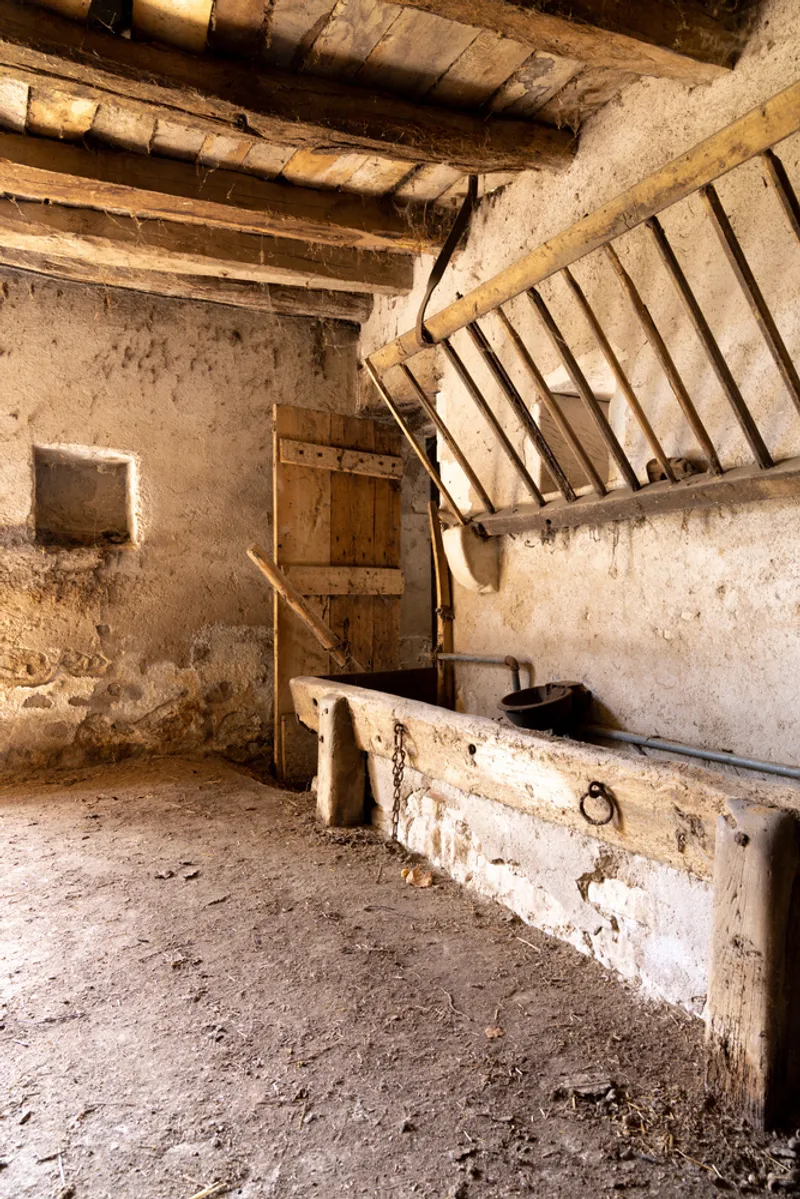
Nestled in the picturesque hamlet of Chamboirat in Auvergne, France, the Chamboirat House by COVE Architectes exemplifies a harmonious balance between preserving heritage and modernizing functionality. This adaptive reuse project transforms a two-century-old farmhouse into a comfortable family home while retaining its historical character and architectural essence.


Restoring the Past: Respecting Heritage
Maintaining Historical Integrity
The original farmhouse showcased remarkable elements, including:
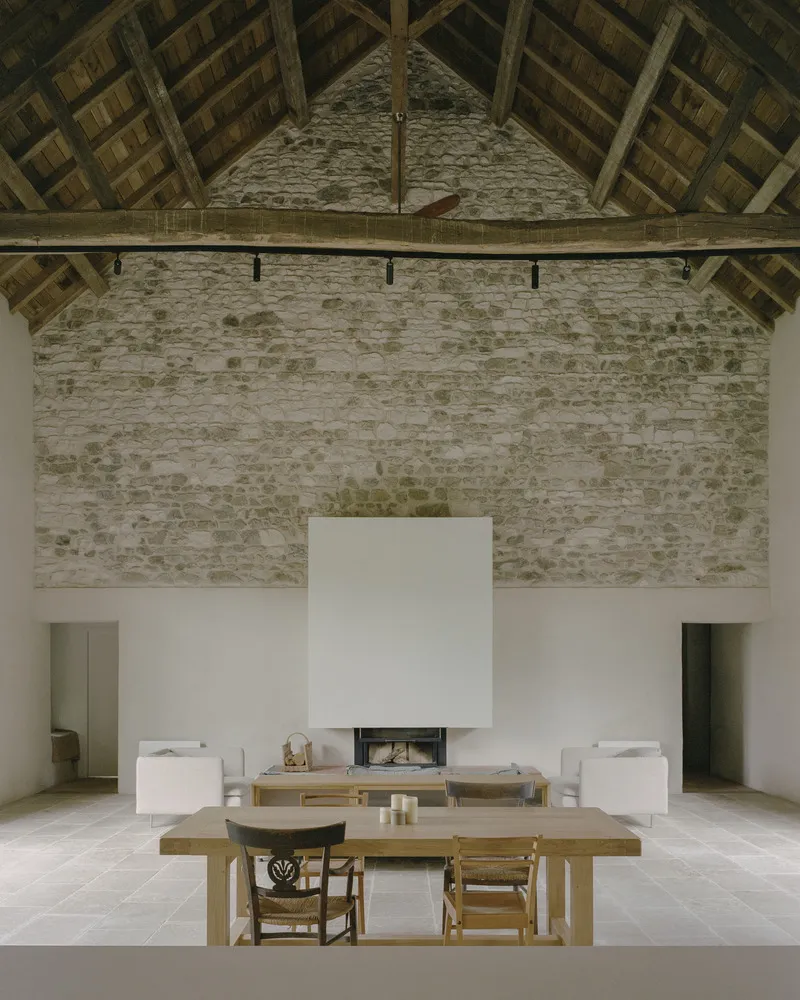
- 9-meter-high stone masonry walls
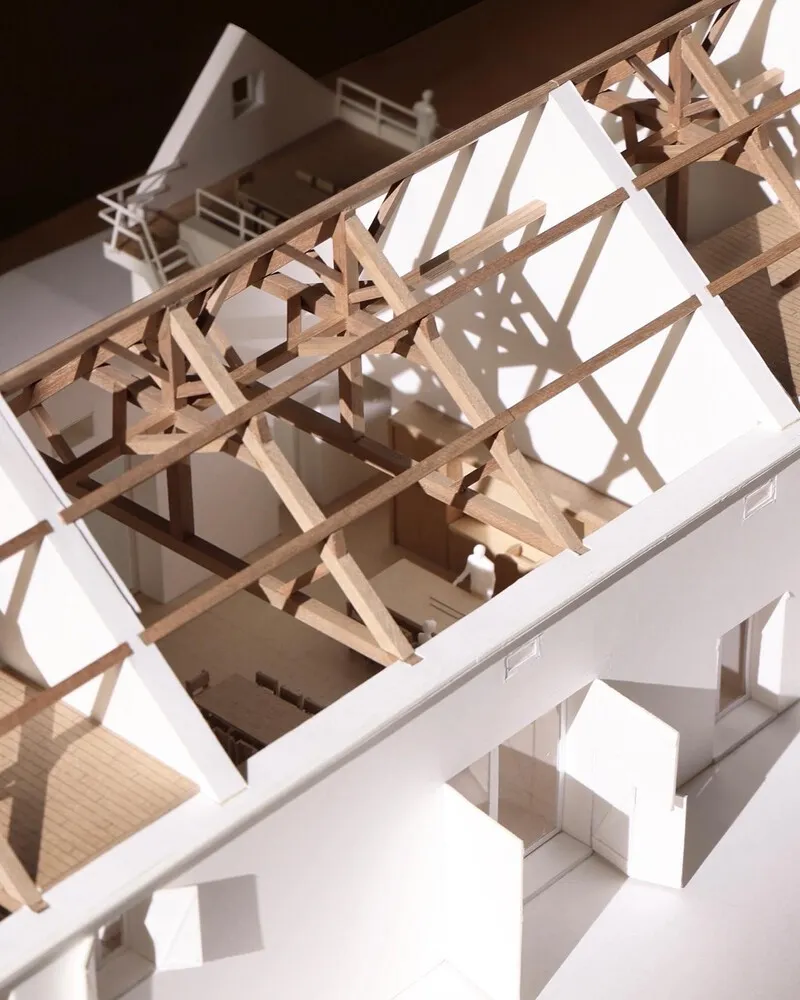
- A complex wooden framework
- Expansive volumes that highlighted its rustic charm

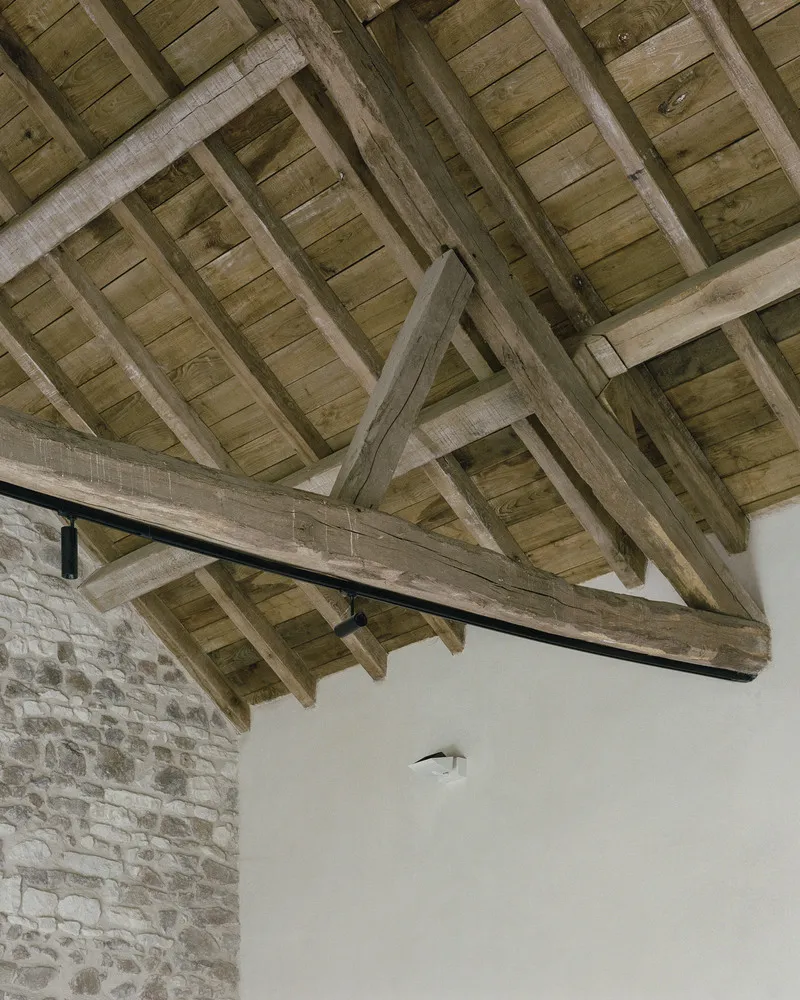
The architects employed minimally invasive techniques to honor the building's historical significance, using lime chainings and cut stones for selective repairs. The wooden framework was preserved and enhanced with new oak beams, ensuring continuity between the old and new.

Craftsmanship and Local Materials
Inspired by traditional craftsmanship, the design integrates locally sourced materials, maintaining the farmhouse's connection to its roots. The lime and hemp insulation provided a sustainable solution, while preserving the warm, raw texture of the walls.



A Home for Modern Living
Central Gathering Space
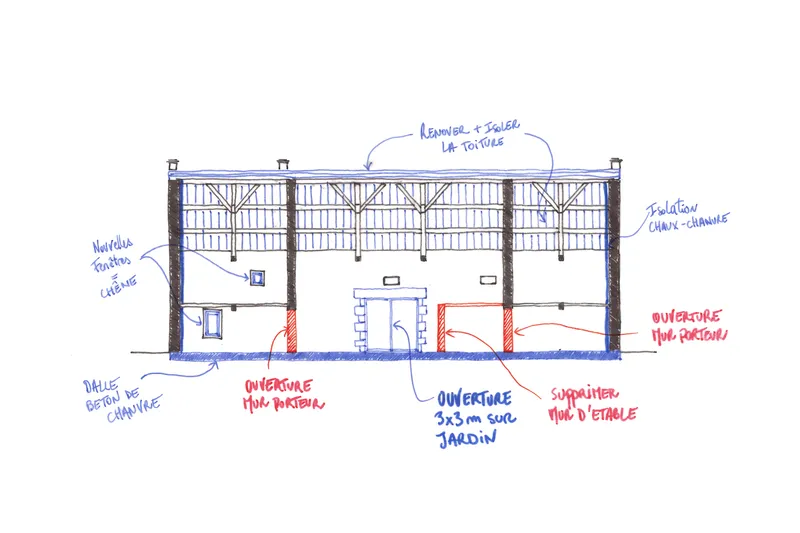
To foster familial connections, the central stable wall was removed, creating a large, open area that seamlessly integrates:
- Kitchen
- Dining Room
- Living Room

Embracing Light and Nature
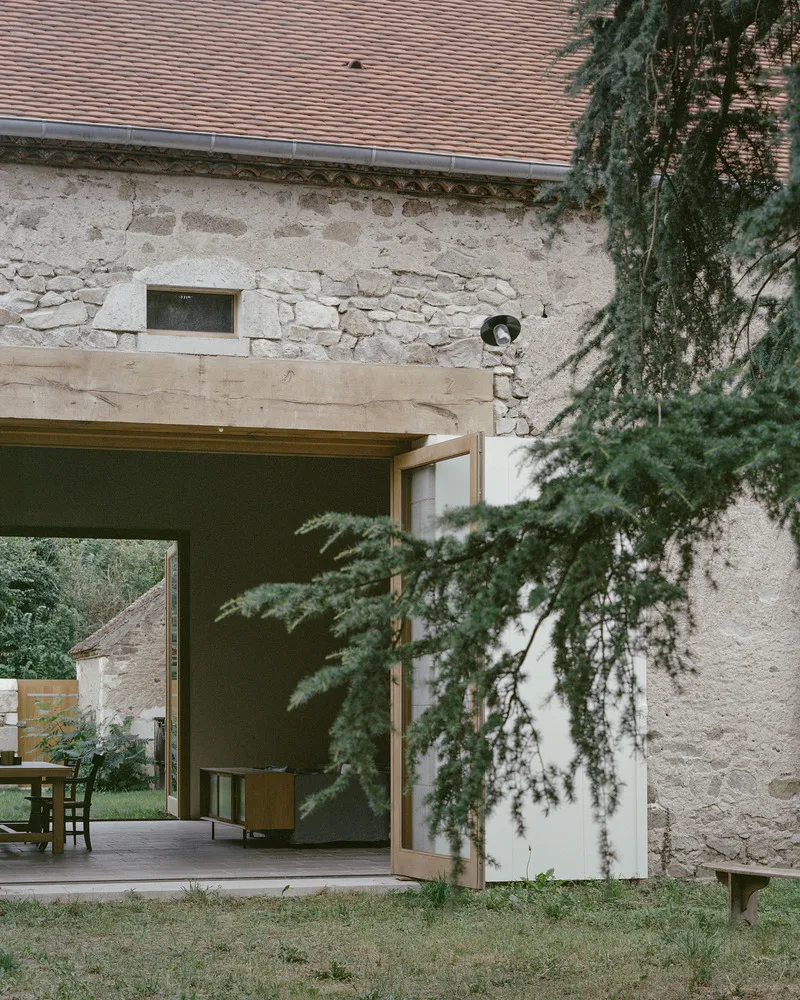
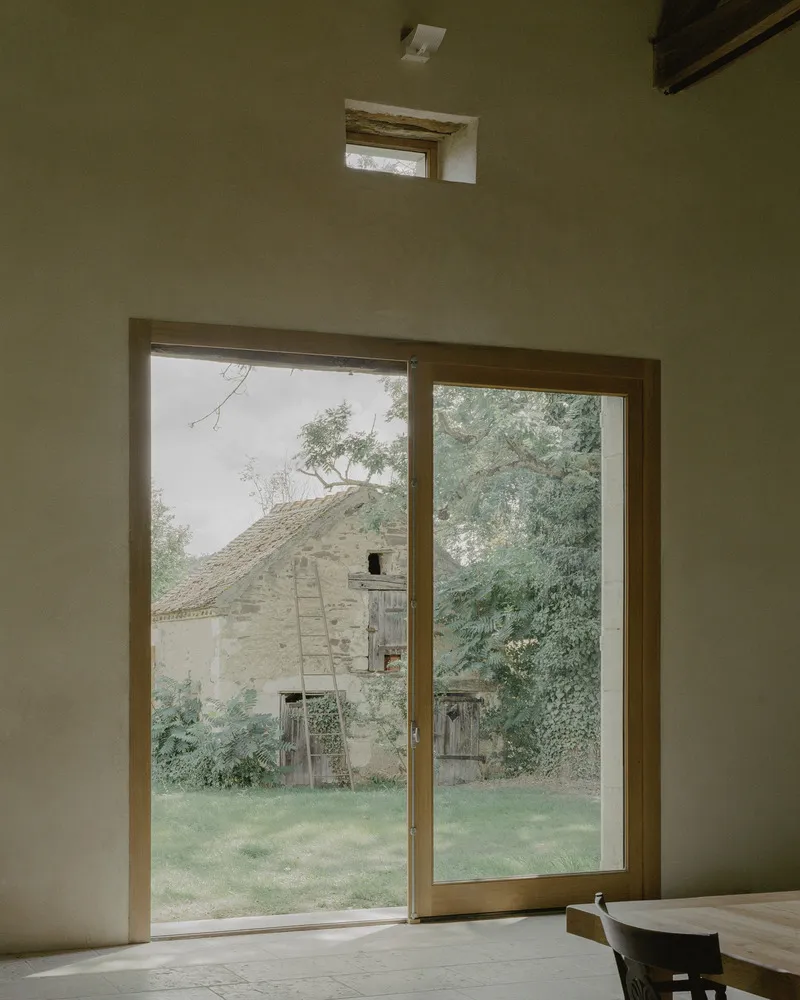
A new aperture on the north façade mirrors the existing south gateway, ensuring natural light floods the space and enhances views of the surrounding garden.

Sustainability Through Design
Eco-Friendly Enhancements
The design incorporates:
- Hemp concrete slabs combined with a ventilated crawl space for moisture control
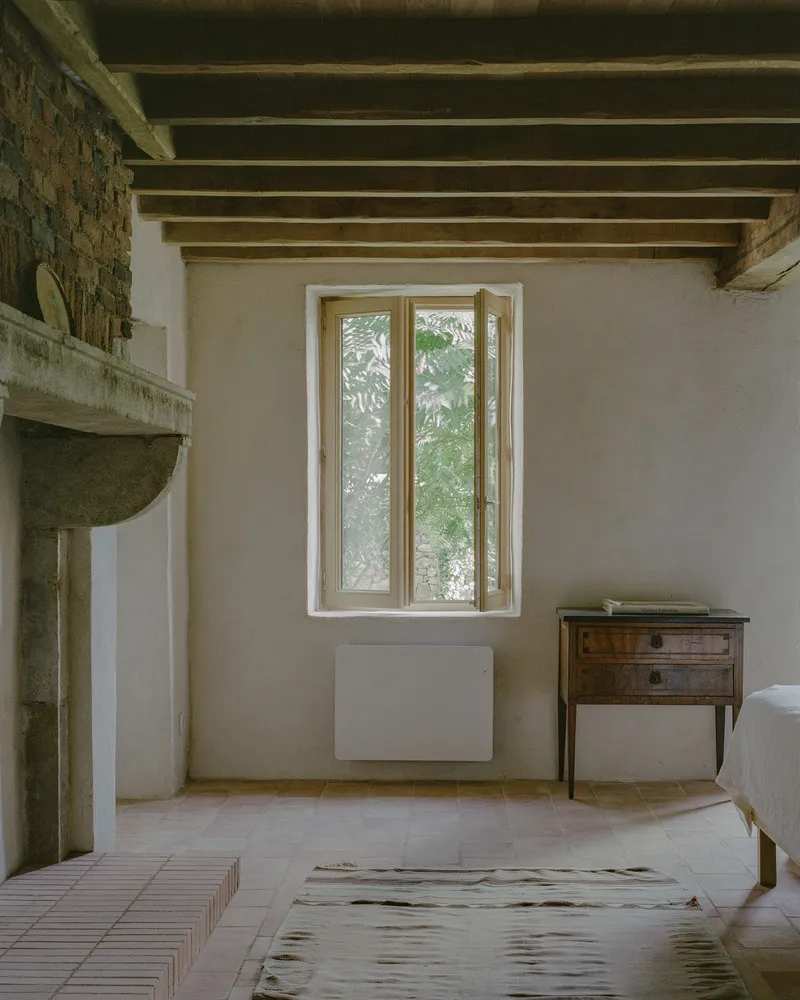
- Breathable floor coverings like natural stone and terracotta tiles
- Roof insulation with external layers, making the framework visible indoors


Passive Comfort Solutions
The lime and hemp-coated walls provide improved thermal comfort, enabling healthy and energy-efficient interiors while respecting the original structure's authenticity.



Subtle Yet Impactful Exterior Changes
Facade Preservation
The outer coatings and exposed stones were left untouched, reflecting the building’s age and authenticity. White wooden shutters and glazed oak windows were added to enhance functionality without compromising the aesthetic.

The Chamboirat House by COVE Architectes is a prime example of adaptive reuse architecture, blending history, sustainability, and modern living. By prioritizing subtle interventions, the architects preserved the farmhouse’s distinctive character while ensuring it serves as a functional and inviting family retreat for generations to come.

All Photographs are work of Charles Bouchaïb, Olivier Sabatier




Popular Articles
Popular articles from the community


The Earth Pod: 3D Printed Homes for Resilient Refugee Communities
The Earth Pod reimagines refugee housing through 3D printed homes made from clay, combining resilience, self-sufficiency, and rapid shelter.

The Musturak Paradise: Senior Living Architecture for a Connected Future in Temara, Morocco
The Musturak Paradise reimagines senior living architecture in Temara via private homes, social spaces, culture, community, and shared care.
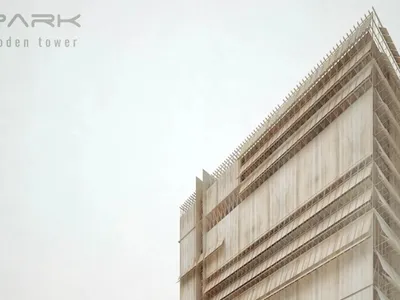
EW PARK: Sustainable Architecture Reimagines the Future of Urban Parking
EW PARK reimagines city parking as a modular wooden tower combining automation, solar energy, electric mobility, and adaptable urban design.

Co-Life: Senior Housing Design That Reconnects Older Adults With the City
Co-Life reimagines senior housing design through healing gardens, shared streets, workshops, and a sustainable community across generations.


Similar Reads
You might also enjoy these articles


Hodi-Mandai Geram
Project Function: Preservation and revitalization of the Intangible heritage and socio-spatial identity of the Hodi by Housing, Cultural Memory Center, Sacred Grove, landscape, local tourism economy


Olio Towers: A Mid-Rise for Performers That Fuses Housing, Rehearsal, and Stage
Located blocks from Houston's Theater District, this modular tower stacks living units around a central performance atrium.

Oasis: Modular Green Housing Carved into Dhaka's Urban Fabric
A shortlisted Plugin Housing entry reclaims unauthorized settlements in Dhaka with stepped concrete volumes, green roofs, and ventilation-driven design.

Black Hole: A Floating Megastructure for the Post-Physical Era
Emiliano Mazzarotto envisions a spherical, self-scaling arena where e-sports, digital hotels, and holographic stadiums replace traditional public space.
Explore Architecture Competitions
Discover active competitions in this discipline



Challenge to reimagine the Iron Throne


Photograph architecture without architects


Illustrate the lost glory of Angkor Wat - Render Challenge


Design challenge to reuse E-waste
Comments (0)
Please login or sign up to add comments
No comments yet. Be the first to comment!