

Chapel MI Residence by Atelier Ose Architecture: A Dialogue Between Heritage and Modern Lightness
Chapel MI Residence by Atelier Ose Architecture harmonizes modern timber design with historic stone structures, creating a light, elevated riverside extension.


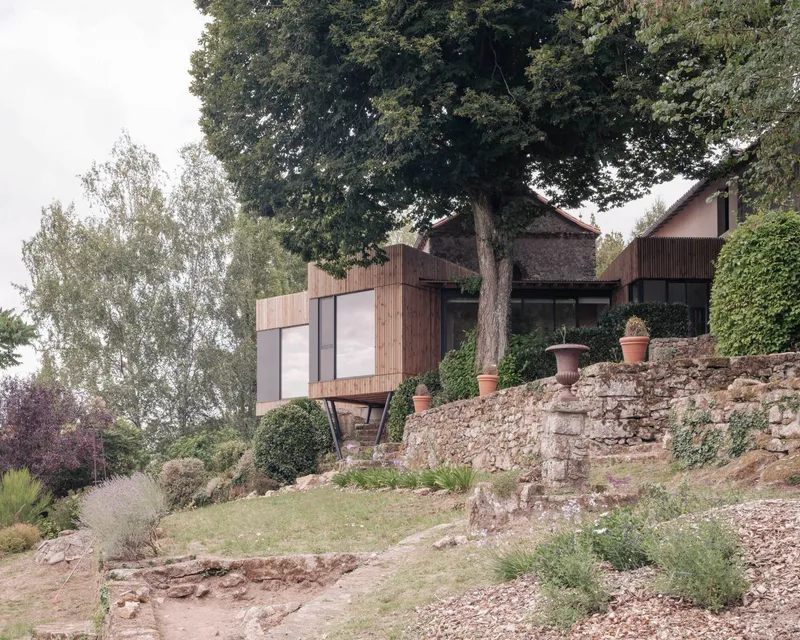
In Mortagne-sur-Sèvre, France, Chapel MI Residence by Atelier Ose Architecture is a poetic architectural intervention that bridges centuries of history with the precision of modern design. This 49-square-meter extension, built amidst a collection of heritage stone buildings, reinvents the relationship between old and new, grounding continuity in material harmony and spatial clarity.
Context and Concept
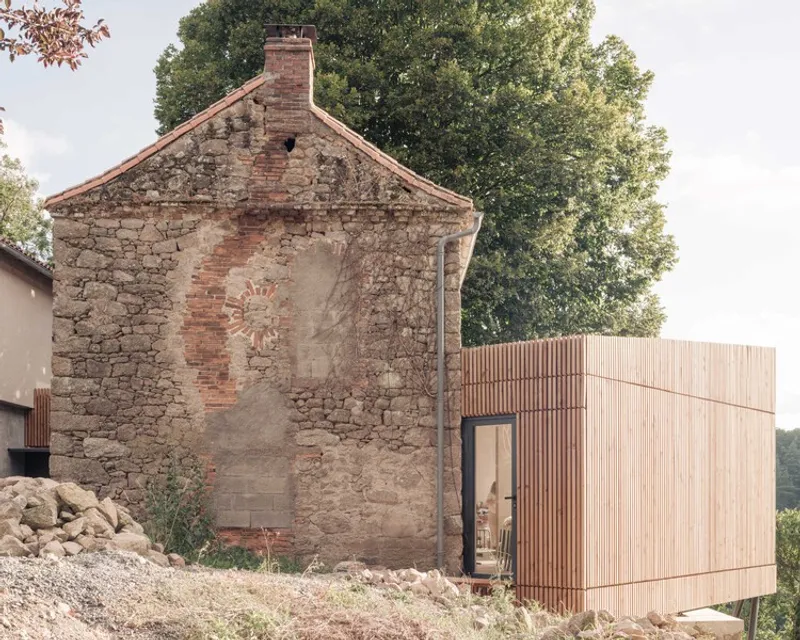
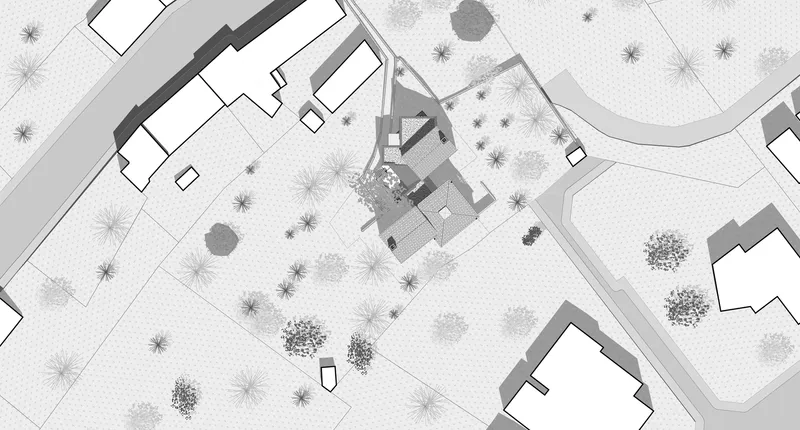
Nestled between the historic village center and the Clos Saint-Martin housing estate, the site is anchored by an ancient stone chapel surrounded by smaller agrarian structures added over generations. Rather than competing with this architectural legacy, Atelier Ose Architecture chose to respect and reframe it—crafting a composition that touches the ground lightly while extending the narrative of place.
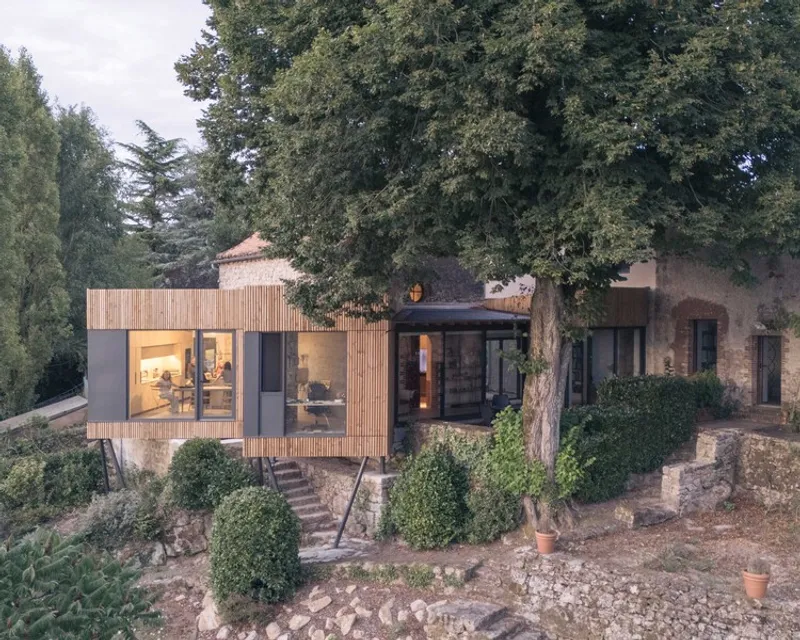
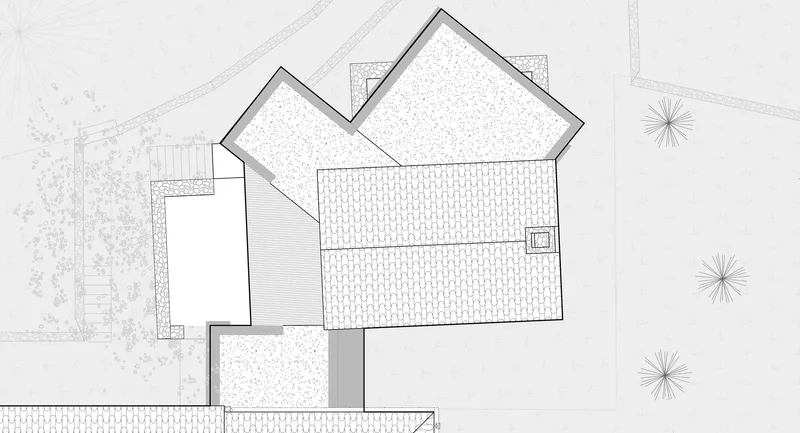
The new residence unfolds as a sequence of elevated wooden volumes that weave through the existing structures, connecting house, garden, and river views through precise alignments. This intervention does not impose but gently interprets, linking stone solidity with timber lightness and opening lines of sight between enclosed rooms and open landscape.
Architecture as Connection
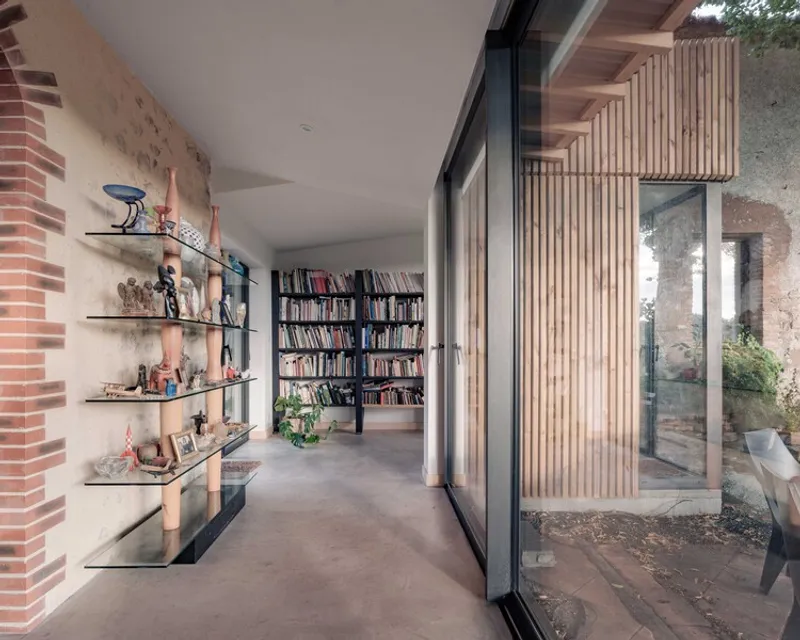
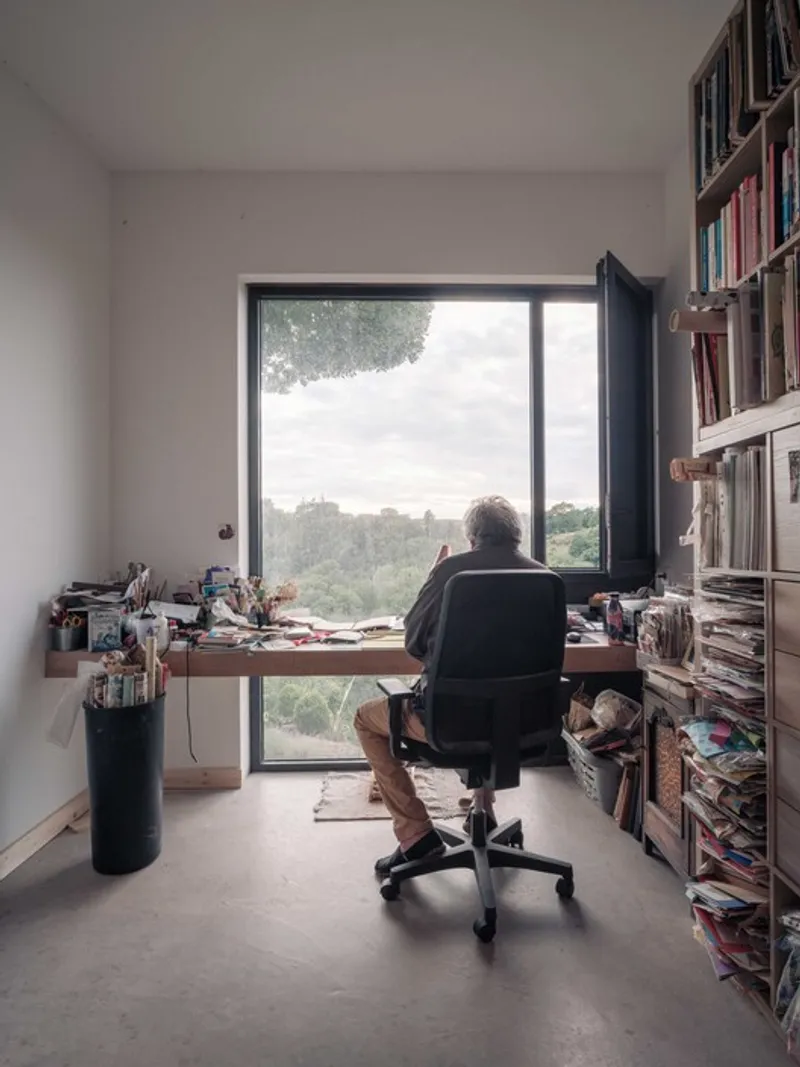
The project establishes a seamless flow between existing masonry and new lightweight extensions. A glazed vestibule marks the point of entry, framing the garden and anchoring the visitor’s first impression in transparency. From there, a glazed gallery runs toward an outdoor terrace, while a luminous office volume positions itself toward the hillside, offering uninterrupted panoramic views of the Sèvre Nantaise river.
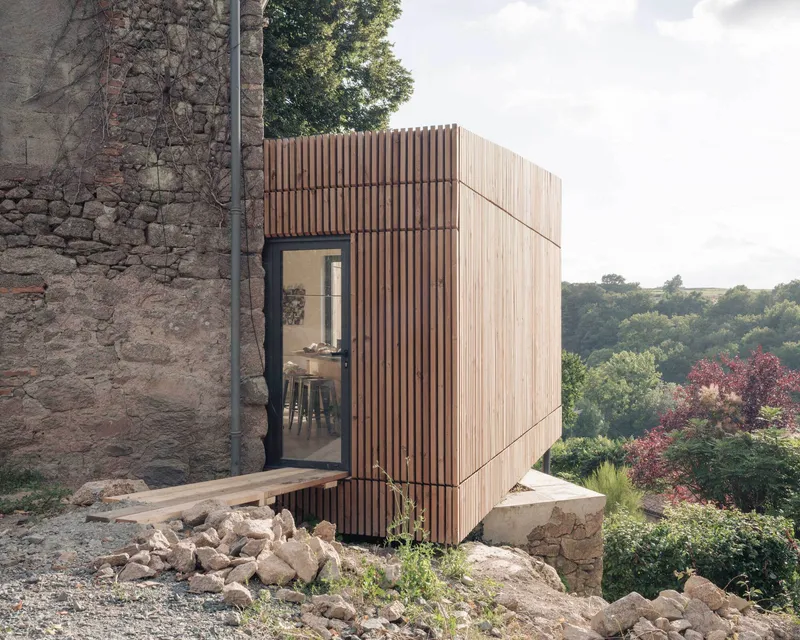
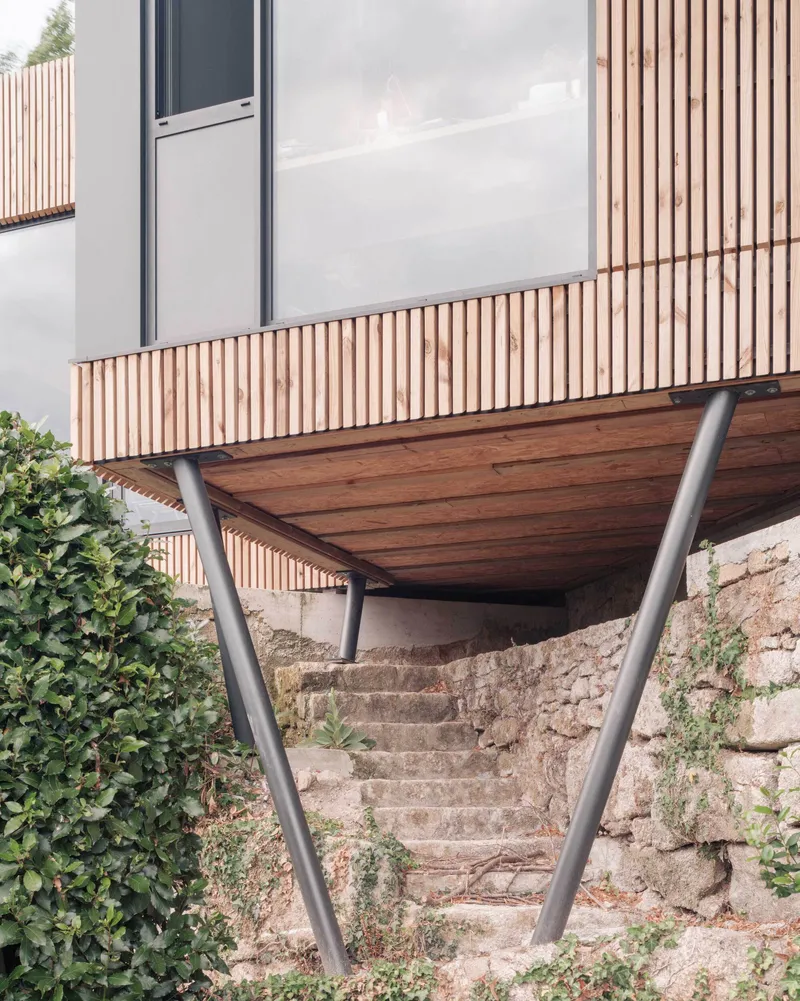
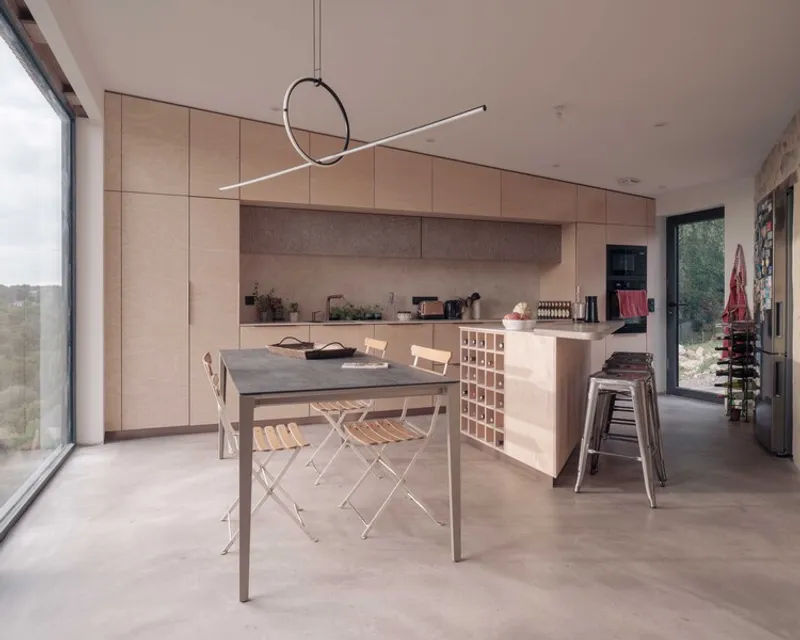
Each volume functions as both room and viewpoint, collectively forming a gradual spatial unfolding—from reception to workspace, to dining, to garden. The independent dining room, accessible from its own entrance, folds into the domestic sequence, creating a rhythm of thresholds that alternate between intimacy and openness.
Structure and Materiality
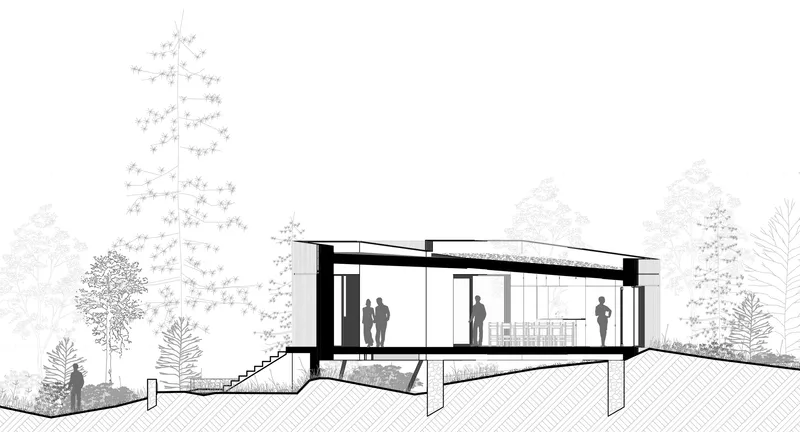
Built on wooden stilts, the extension literally hovers above the sloping terrain instead of leveling it. This construction method allows it to adapt to the site’s natural contours while minimizing environmental disturbance. The three modular units—each with a specific program—maintain a delicate presence above the landscape, their shadows forming part of the architecture itself.
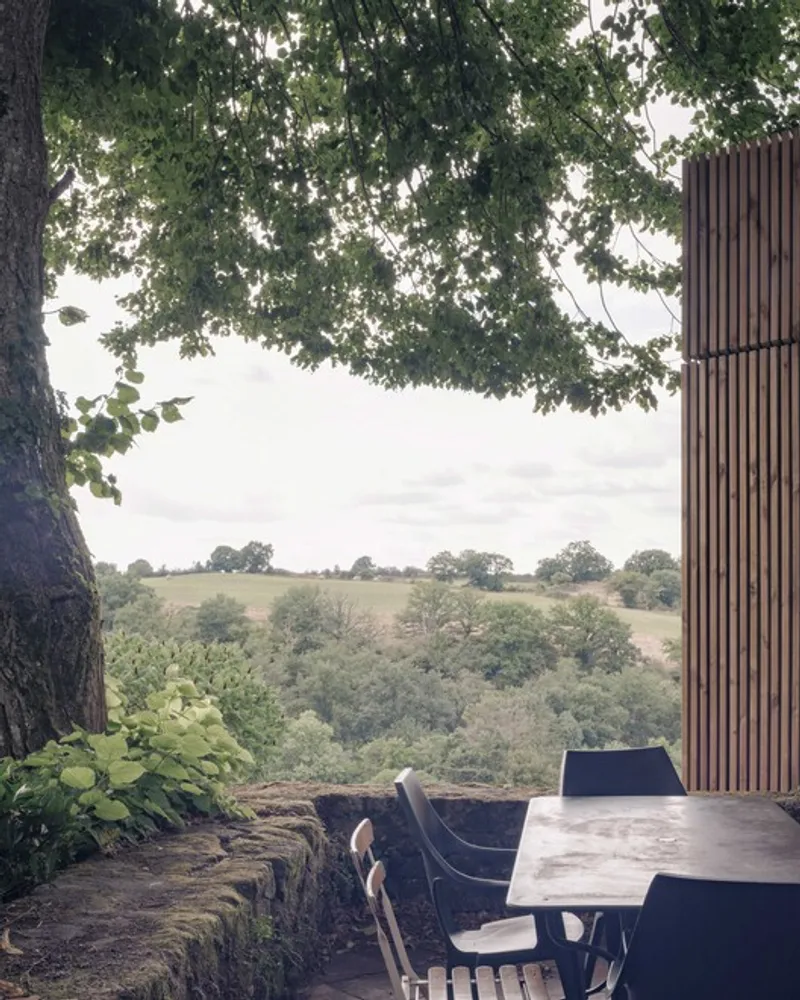
Externally, openwork timber cladding provides both texture and transparency, revealing glimpses of the stone chapel behind it. The façade materials—timber, glass, and anthracite aluminum—create quiet continuity with the existing architecture, never overshadowing the original masonry. As daylight shifts, the rhythm of vertical slats casts dynamic patterns, giving the building a meditative, time-sensitive quality.
Light, Orientation, and Atmosphere
Orientation is at the heart of the design narrative. Single-pitched roofs lean toward the landscape, inviting daylight deep into the rooms while directing attention toward the river valley. Large aluminum-framed windows by Wicona articulate a visual dialogue between interior calm and exterior movement.
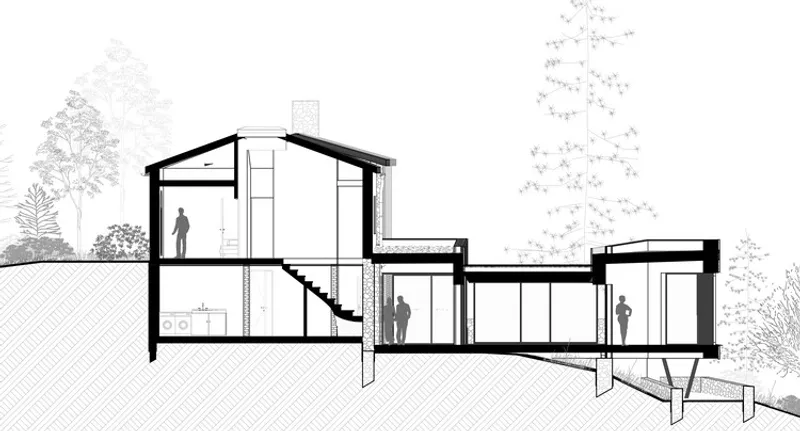
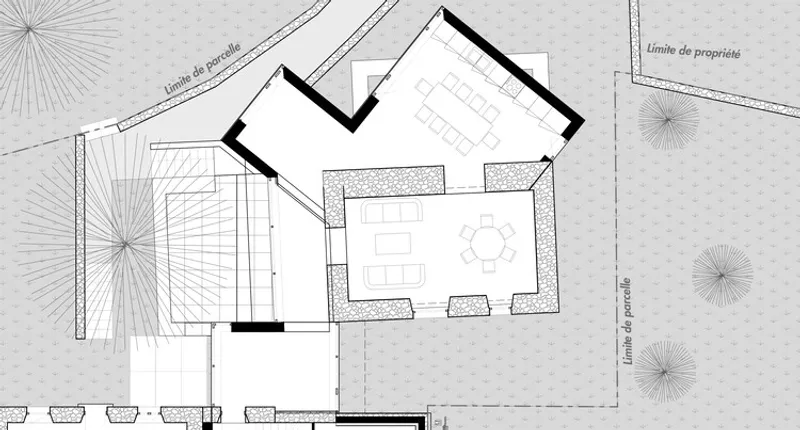
Inside, the layout reflects an intentional progression—from the transparent vestibule through a narrow circulation path to wide, open communal zones. The architecture choreographs light, shadow, and sightlines to build a cinematic experience where heritage and modern life coexist effortlessly.
Respecting History, Living Lightly
Atelier Ose Architecture approached the renovation as an act of architectural empathy. The design sustains the integrity of the historic chapel while allowing contemporary life to unfold around it. The stilts protect the natural terrain; the timber nodes preserve heritage walls; and every connection calibrates respect.
The result is a home that is both anchored and ethereal—a living bridge between eras, materials, and sensibilities. During the day, the transparency and lightness make it feel almost suspended in nature; by evening, the glowing timber filters light across the site, creating a warm beacon against the stone backdrop.
Sustainable Minimalism
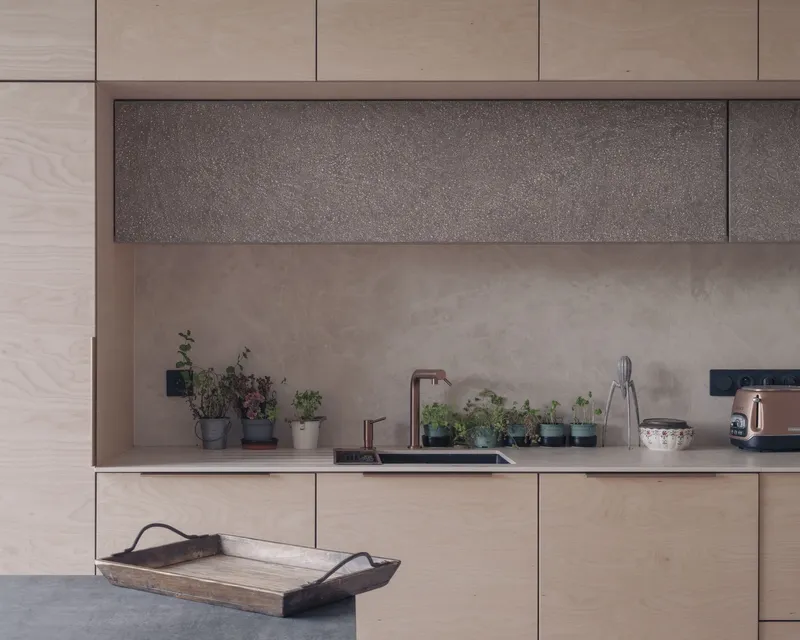
Sustainability is not an added component—it is embedded in every gesture of the project. The use of locally sourced wood from Piveteau Bois, Doerken insulation systems, and WISA panels reflects environmental responsibility. The raised timber frame minimizes ground impact and improves ventilation, while passive solar orientation enhances energy efficiency.
Through technical precision and restrained design, Chapel MI Residence demonstrates how architecture can extend time rather than replace it—revitalizing historic sites with sustainable, respectful interventions that speak softly but resonate deeply.
All the photographs are works of Vladimir Jamet




Popular Articles
Popular articles from the community


The Ocean Hive: Sustainable Architecture for a Self-Sufficient Civilization at Sea
The Ocean Hive imagines sustainable architecture at sea, where modular habitats, algae, wave power and ocean waste sustain a growing colony.

Co-life: Sustainable Architecture for Age-Friendly Community Living
Co-life reimagines sustainable architecture for seniors through courtyards, rammed earth, shared gardens, and spaces designed for belonging.

Riyadh For All: Intergenerational Urban Design for Active Aging in Rabat
Riyadh For All reimagines urban design in Rabat with intergenerational co-living, adaptive courtyards, and Moroccan cultural exchange today.

Conexión: Biophilic Design Reimagines High-Rise Living in Hong Kong
Conexión reimagines high-rise living in Hong Kong through biophilic design, green facades, shared spaces, daylight, water and nature within.


Similar Reads
You might also enjoy these articles


Hodi-Mandai Geram
Project Function: Preservation and revitalization of the Intangible heritage and socio-spatial identity of the Hodi by Housing, Cultural Memory Center, Sacred Grove, landscape, local tourism economy


Olio Towers: A Mid-Rise for Performers That Fuses Housing, Rehearsal, and Stage
Located blocks from Houston's Theater District, this modular tower stacks living units around a central performance atrium.

Oasis: Modular Green Housing Carved into Dhaka's Urban Fabric
A shortlisted Plugin Housing entry reclaims unauthorized settlements in Dhaka with stepped concrete volumes, green roofs, and ventilation-driven design.

Black Hole: A Floating Megastructure for the Post-Physical Era
Emiliano Mazzarotto envisions a spherical, self-scaling arena where e-sports, digital hotels, and holographic stadiums replace traditional public space.


Explore Chapel Competitions
Discover active competitions in this discipline



Challenge to reimagine the Iron Throne


Photograph architecture without architects


Illustrate the lost glory of Angkor Wat - Render Challenge


Design challenge to reuse E-waste
Comments (0)
Please login or sign up to add comments
No comments yet. Be the first to comment!