

CHCW House in Medellín: Adaptive Reuse, Coworking Architecture, and Hybrid Urban Living
Adaptive reuse transforms Medellín house into coworking spaces and compact apartments, centered around luminous courtyard and preserved timber structure.


In the vibrant Provenza district of Medellín, CHCW House by Plan:b arquitectos redefines the possibilities of residential renovation through a strategic blend of adaptive reuse, coworking architecture, and compact urban housing. Completed in 2024 and spanning 600 square meters, this transformative project converts a traditional two-story house into a dynamic ecosystem of shared workspaces and small apartments, demonstrating how heritage structures can evolve to meet contemporary urban lifestyles.
Adaptive Reuse in Medellín: Preserving Structure, Reinventing Program
Originally conceived as a private residence and later adapted into offices for a real estate company, the building already possessed a solid structural framework defined by load-bearing masonry walls, timber floors, pitched roofs, and wooden ceilings. Rather than pursuing demolition or radical alteration, the architects embraced a sustainable renovation strategy, choosing to preserve and reinforce the existing architectural bones.
This approach reflects a growing movement in urban regeneration and circular construction, where maintaining embodied energy and minimizing material waste become central design principles. By renewing surfaces, stabilizing structural elements, and enhancing spatial performance, CHCW House extends the life cycle of the building while introducing a completely new mixed-use program.

Ground Floor Design: Coworking Spaces Rooted in Domestic Architecture
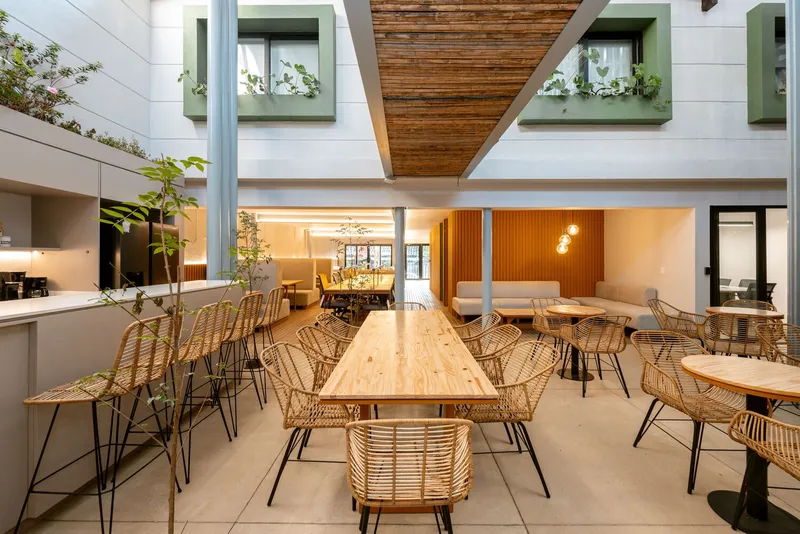
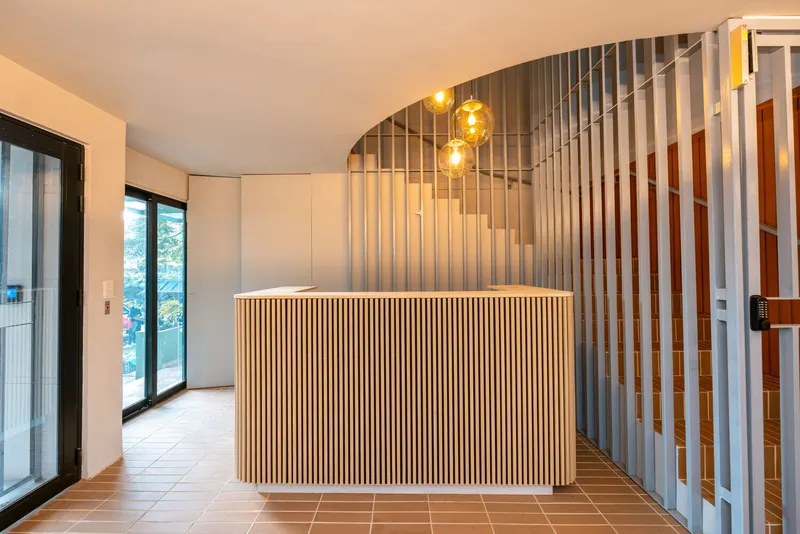
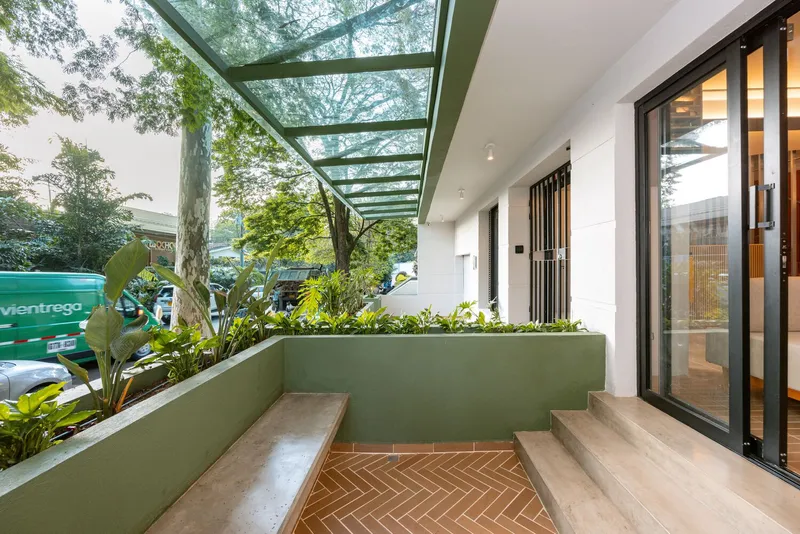
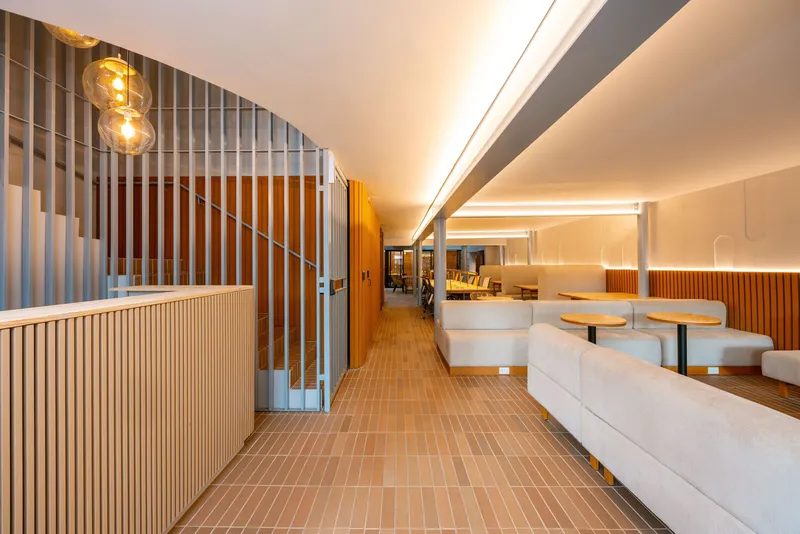
The first level establishes the communal character of the project. A revitalized front garden softens the transition between street and interior, reinforcing the building’s connection to the Provenza neighborhood. A newly defined lobby integrates seamlessly with the existing staircase, maintaining the original circulation logic while improving spatial clarity.
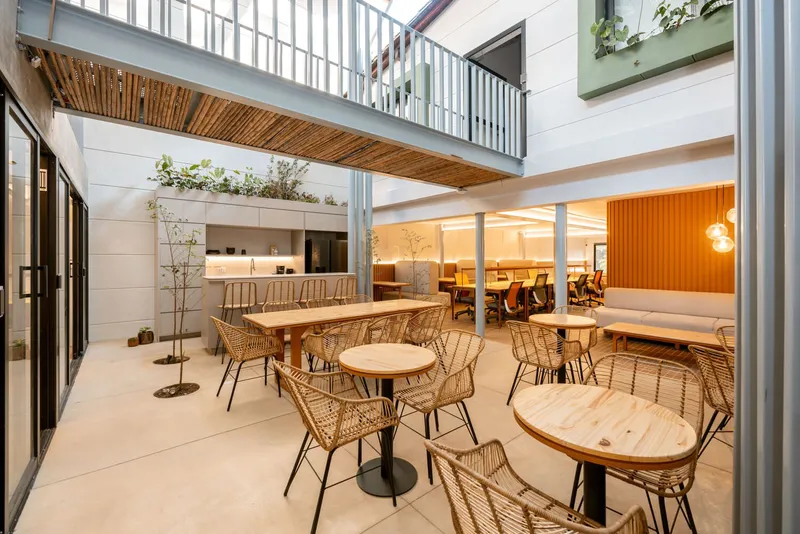
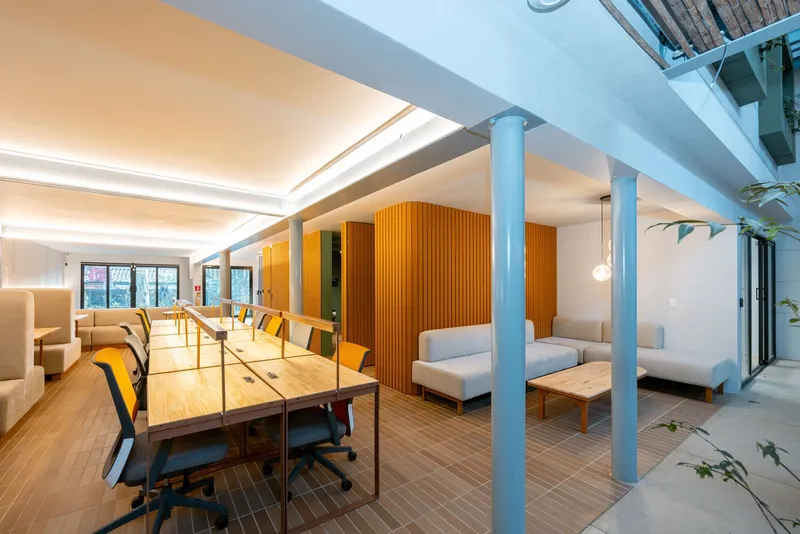
Shared work areas unfold across this floor, accompanied by private meeting rooms and communal bathrooms. The coworking spaces are designed to balance openness and intimacy, preserving the domestic proportions of the house while adapting them to collaborative use. Natural light filters through generous windows, while warm artificial lighting enhances productivity and comfort.
Material continuity plays a crucial role. Light-colored walls, timber beams, and brown tonal accents reference the house’s original palette. New materials are introduced within similar chromatic ranges, ensuring that the renovation feels cohesive rather than disruptive.

Second Level: Compact Apartments and Shared Urban Living
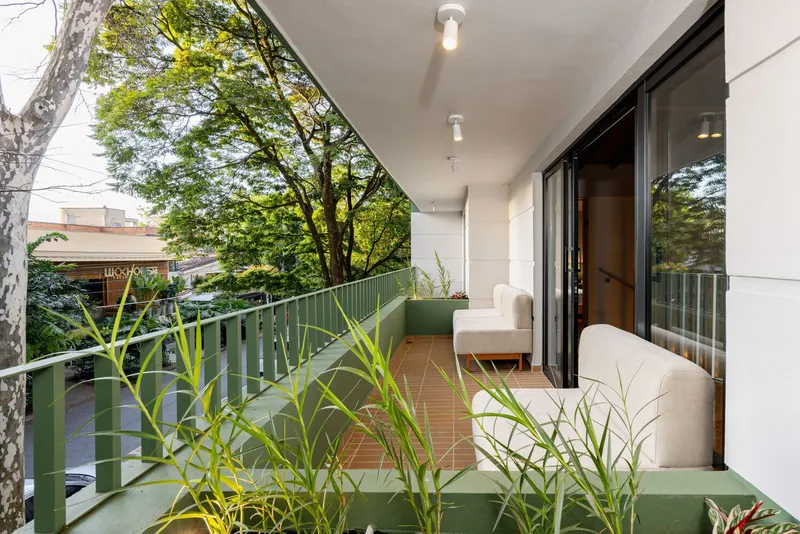
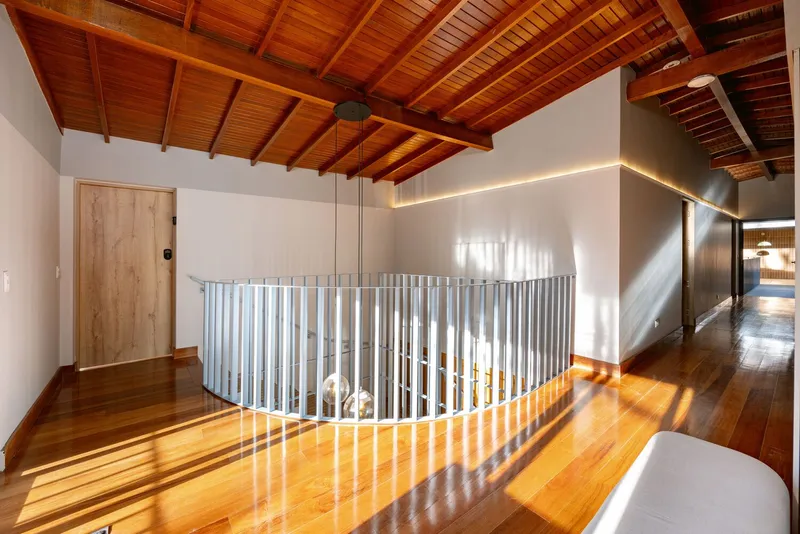
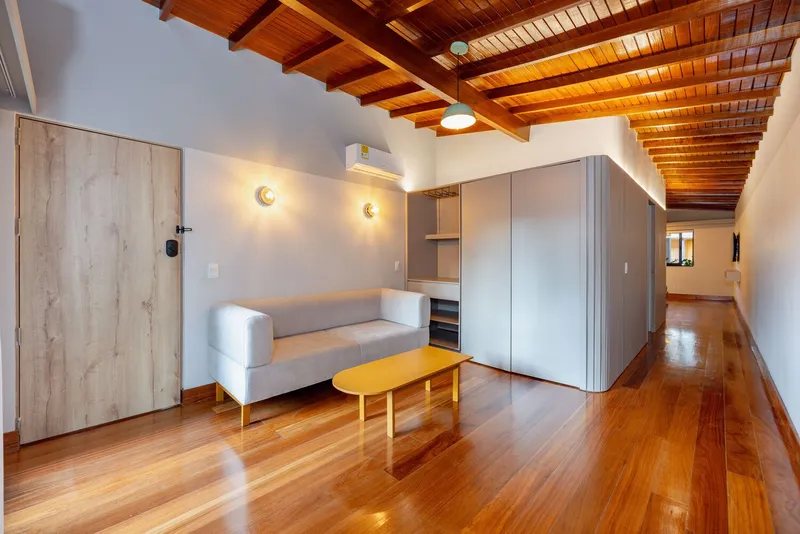
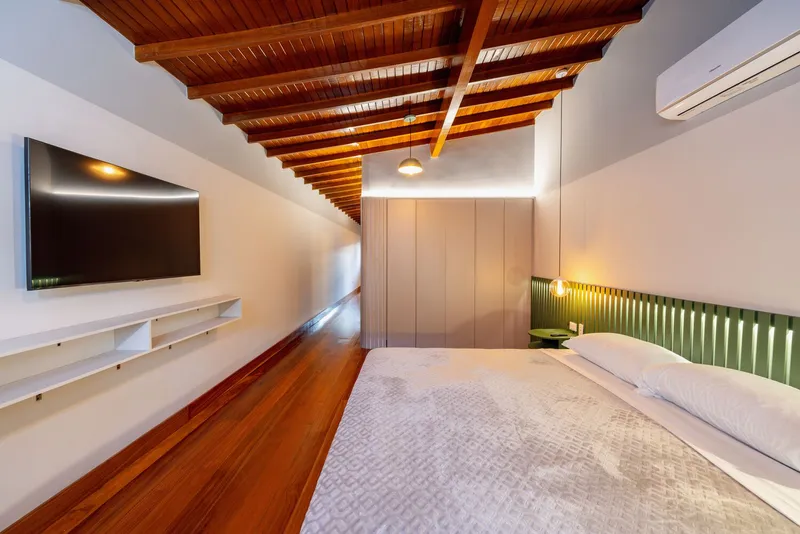
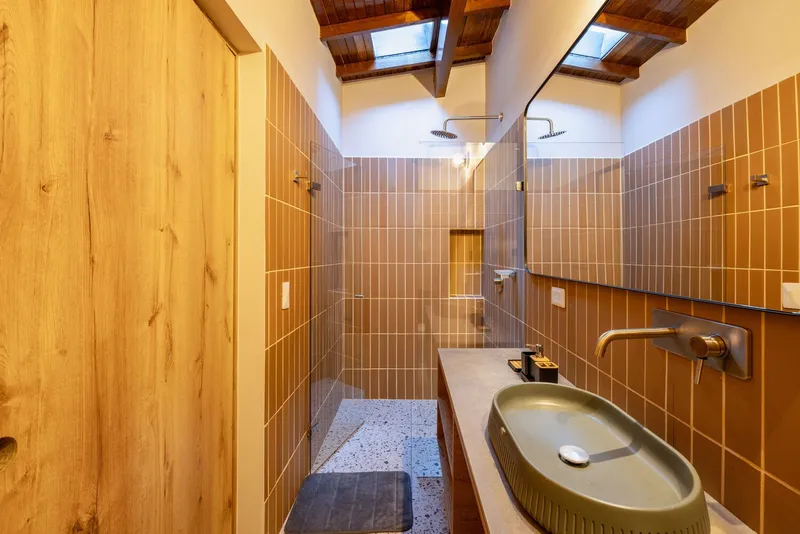
On the upper floor, the program shifts toward residential use. Four apartments of varying sizes are carefully arranged to maximize daylight, cross-ventilation, and spatial efficiency. Each unit benefits from the building’s existing window placements while incorporating subtle modifications to enhance comfort and privacy.
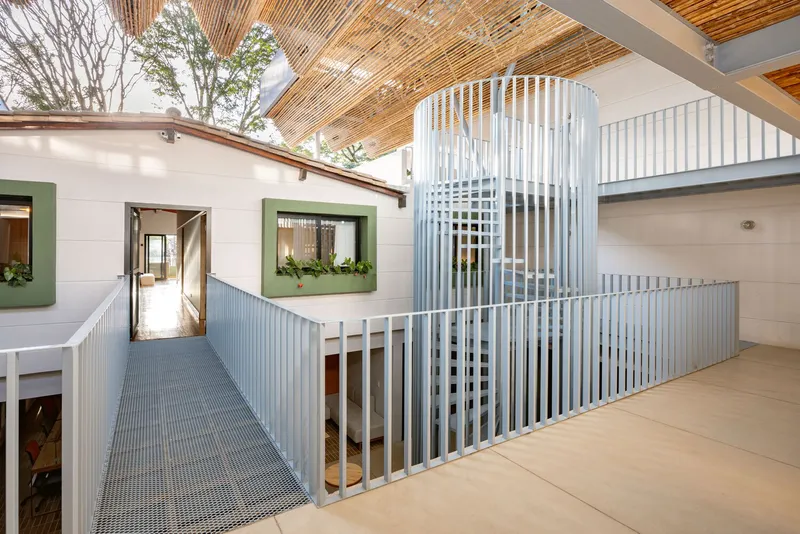
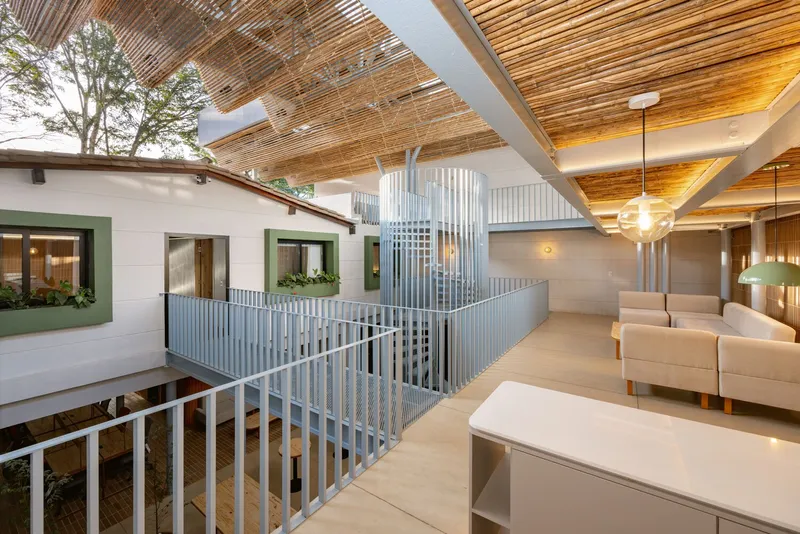
Rather than isolating the apartments, the design promotes hybrid living-working architecture. Residents share workspaces and laundry facilities, reinforcing a semi-collective lifestyle aligned with Medellín’s entrepreneurial and creative culture. A semi-private bridge connects the apartments to communal zones, creating visual links and encouraging interaction without compromising independence.
This layered approach to privacy: public coworking areas, semi-private shared platforms, and fully private residential units, demonstrates a sophisticated understanding of contemporary co-living models.

The Courtyard Transformation: Vertical Space and Diffused Light
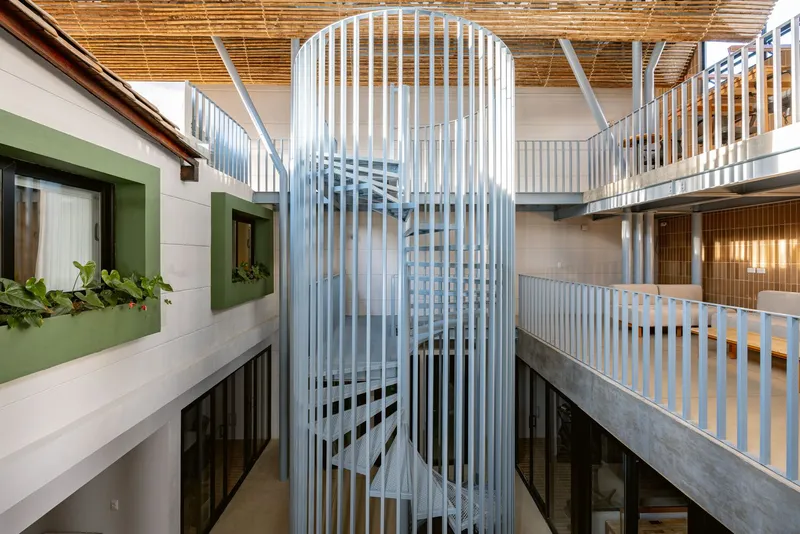
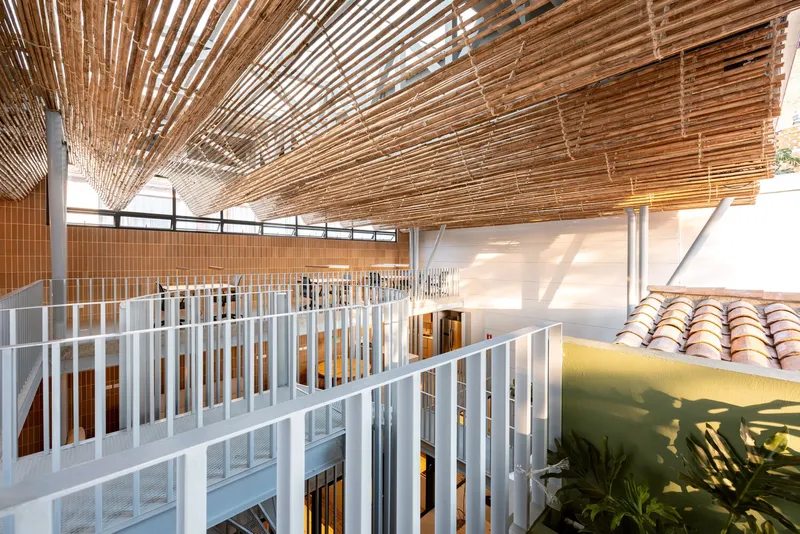
The most significant architectural intervention occurs in the former backyard. Instead of attaching new volumes to the historic walls, the architects concentrate their intervention within this open void. A triple-height translucent roof encloses the courtyard, allowing abundant natural light while protecting the space from heavy tropical rainfall.
Below the roof, a permeable wooden ceiling modulates light and acoustics, creating a warm and breathable interior atmosphere. By avoiding structural contact with the original walls, the design preserves the integrity of the existing envelope while inserting a clearly contemporary layer.
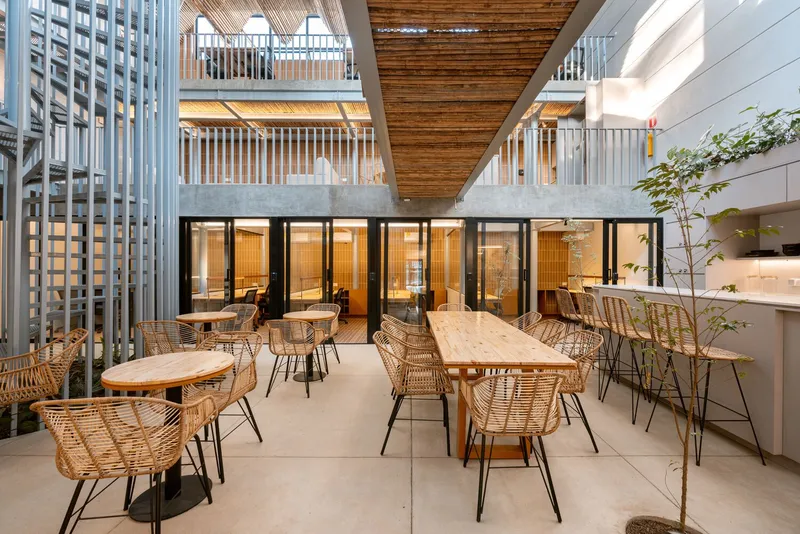
This vertical courtyard becomes the spatial heart of the project. It hosts new activity platforms, expands coworking areas, and enhances circulation. A newly introduced staircase within the patio articulates movement between levels, stitching together past and present through a luminous, central void.
Lighting, Materiality, and Environmental Strategy
The lighting strategy combines controlled natural illumination with carefully calibrated artificial warmth. The translucent roof diffuses daylight evenly, reducing glare while maintaining brightness. Interior lighting fixtures emphasize comfort and clarity, essential for both working and residential functions.
Material selections prioritize durability and coherence. Existing wooden ceilings are restored, masonry walls are maintained, and new insertions echo the tonal qualities of the original structure. This restrained palette reinforces the project’s identity as a context-sensitive architectural renovation rather than a stylistic overhaul.
A Model for Sustainable Urban Renovation in Colombia
CHCW House stands as a compelling example of adaptive reuse in Latin American cities, where rapid urban change often threatens architectural heritage. By transforming a traditional house into a mixed-use coworking and residential hub, Plan:b arquitectos propose an alternative to demolition-driven development.
The project demonstrates how:
- Historic residential typologies can accommodate contemporary programs
- Courtyard architecture can enhance natural light and ventilation
- Hybrid living-working models can activate urban neighborhoods
- Sustainable renovation can preserve identity while enabling growth
In the evolving architectural landscape of Medellín, CHCW House represents a forward-thinking approach rooted in respect for structure, material continuity, and community-oriented design.
All photographs are works of
Artefacto


Popular Articles
Popular articles from the community


Jaramillo Van Sluys Arquitectura and Urbanismo Turn a Demolished Registry Lot in Quito into an Orchard Plaza
In Quito's Centro Histórico, a 2,800 m² plaza exposes the San Agustín convent wall and redraws its lost Augustinian orchard in volcanic stone.

U.GA Architects Wraps an Oval Rooftop Pool in Curved Board-Formed Concrete on Busan's Jeollidan-gil
In Busan's Jeonpo-dong, a 454 m² mixed-use block stacks a neighborhood facility, guest rooms and an oval rooftop pool inside spiraling concrete walls.

LT2A and OPEN Architectes Thread a Brick and Glass High School Through a Wooded Belgian Campus
In Braine-l'Alleud, a 3,000 m² wing for Collège Cardinal Mercier pairs pale brick with a glazed colonnade, deferring to a small chapel and a dense wood.

longwave studio Reorganizes a 112 m² Tainan Apartment Around the Daily Routines of a Family and Two Cats
In Tainan, Taiwan, birch plywood, rust-red furniture and a freestanding plaster wall link arrival, storage, work and family life in one apartment.

Similar Reads
You might also enjoy these articles

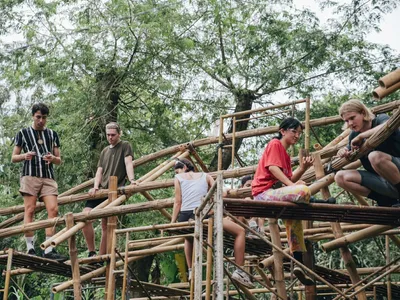
Bamboo Housing Challenge 2026: Design Affordable, Sustainable Homes Using Bamboo
An international design competition by Bamboo U and IBUKU inviting architects and designers to reimagine affordable housing using bamboo — with the winning design built full-scale in Bali.

Computational Design & Education: Beegraphy Design Awards Introduces 7th Category (Featuring Jiyun's Innovative Approach)
Dive into Beegraphy’s 7th Design Awards category, where computational design meets education to create immersive, interactive learning tools, inspired by Jiyun’s work.

From Parametric Lighting to Urban Furniture: Join the 2nd Workshop in Beegraphy’s Computational Design Series
Dive into Cutting-Edge Design Techniques and Practical Applications with Industry Experts

Last Call: Unleash Your Architectural Genius in SHAK's Kindergarten Design Competition
Urgent call for architects to join SHAK's kindergarten design competition before the looming deadline

Explore Architecture Competitions
Discover active competitions in this discipline

Challenge to reimagine the Iron Throne

Photograph architecture without architects

Illustrate the lost glory of Angkor Wat - Render Challenge

Design challenge to reuse E-waste
Comments (0)
Please login or sign up to add comments
No comments yet. Be the first to comment!