
Chigorodó Educational Institution by Taller Síntesis Arquitectura: A Climate-Responsive Community Hub in Urabá, Colombia
Chigorodó Educational Institution revitalizes learning with climate-responsive classrooms, a shaded coliseum, and community-focused spaces, fostering education and social interaction.


Architects: Taller Síntesis Arquitectura
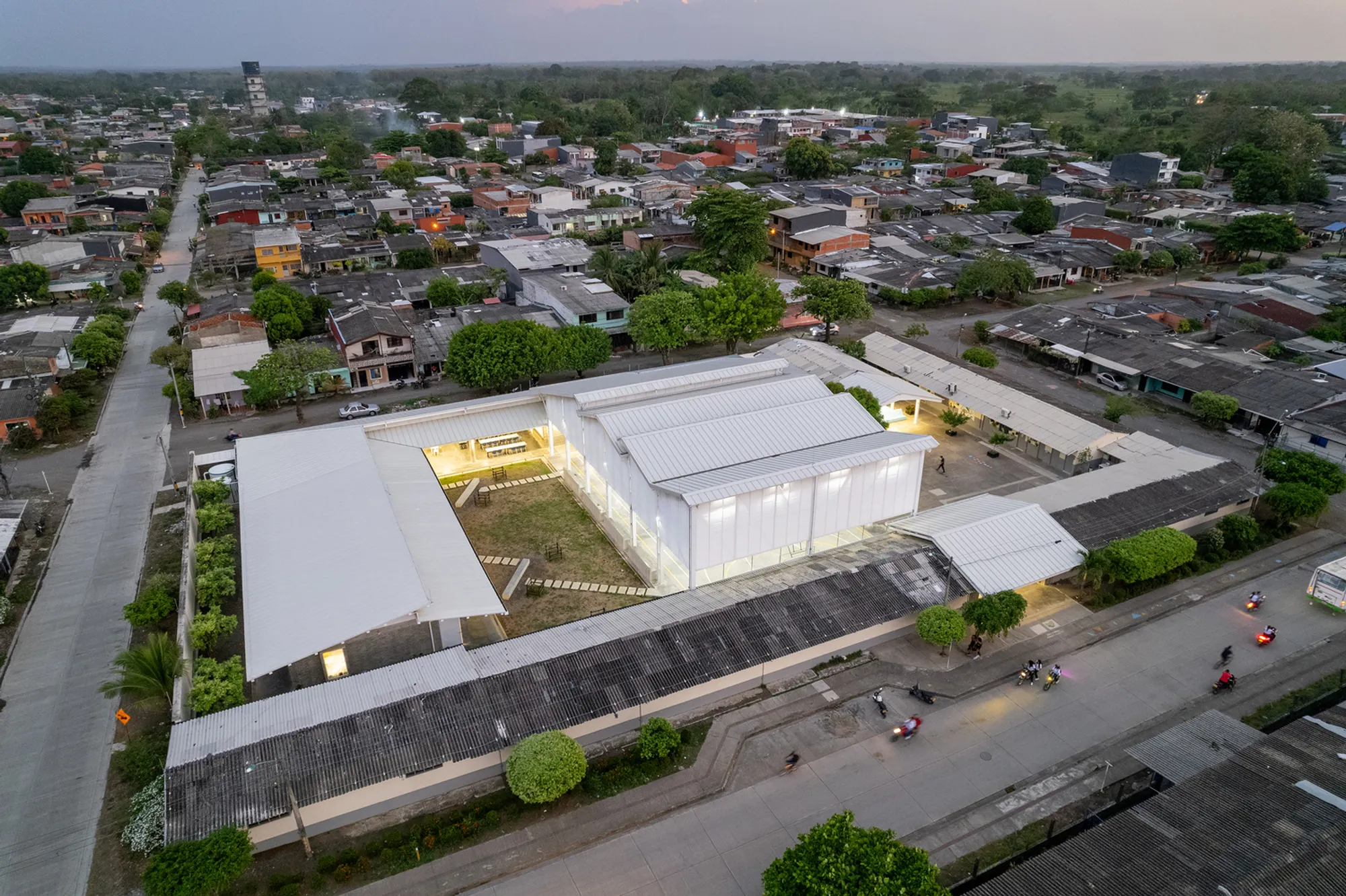
The Chigorodó Educational Institution (I.E. Chigorodó) stands as a transformative example of community-centered architecture in the heart of Urabá Antioquia. Spanning several decades, the original buildings were constructed largely through local initiatives, reflecting the community’s unwavering commitment to education. Despite this dedication, these structures faced chronic climatic and technical challenges, making them inadequate for modern learning and recreational activities.


Addressing Capacity and Community Needs
As Chigorodó’s population continued to grow, the school’s limited capacity became a pressing concern. Many families were forced to send their children to schools in neighboring municipalities, highlighting the urgent need for expansion. Recognizing this, the Fundrafut Foundation included I.E. Chigorodó in its regional improvement plan, aimed at elevating educational infrastructure across the banana-growing region. The initiative seeks not only to enhance learning spaces but also to foster community integration, making the school a hub for all residents.

Collaborative Design Process
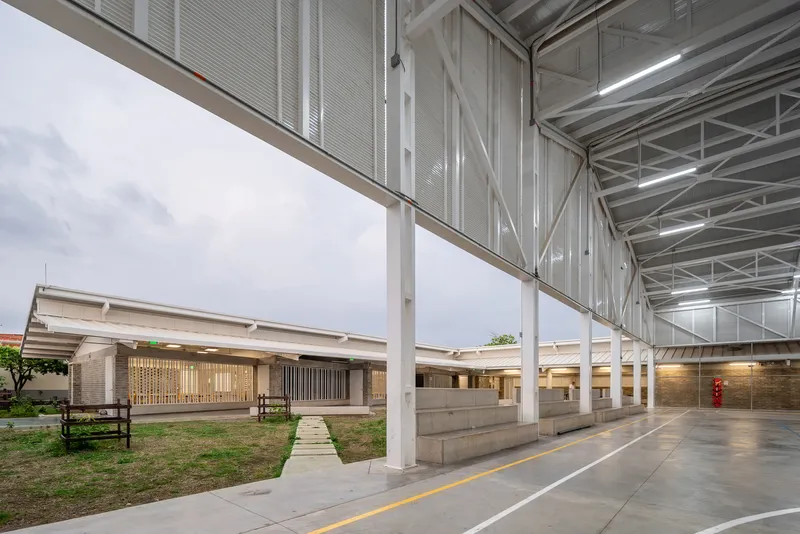
Taller Síntesis Arquitectura began the renovation by engaging directly with the community. Through participatory workshops, architects developed a program that addressed the real needs of students, teachers, and families. Priority was given to:
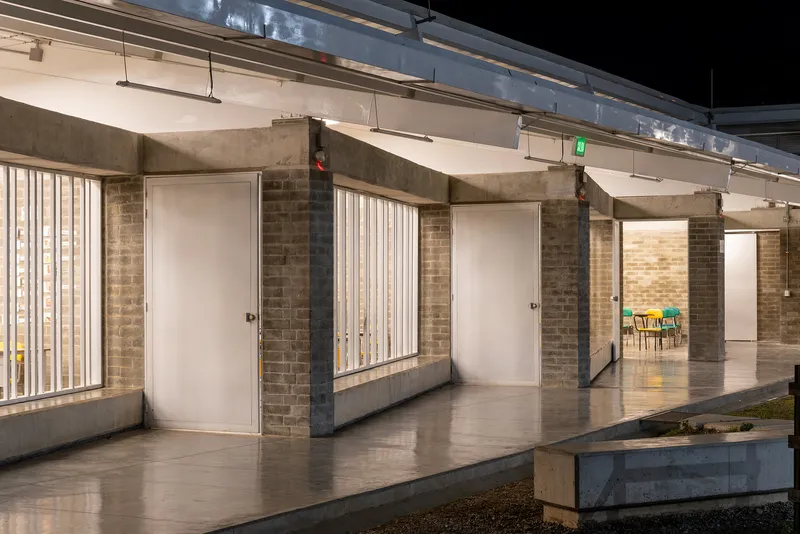
- Four new classrooms to increase capacity by 140 children
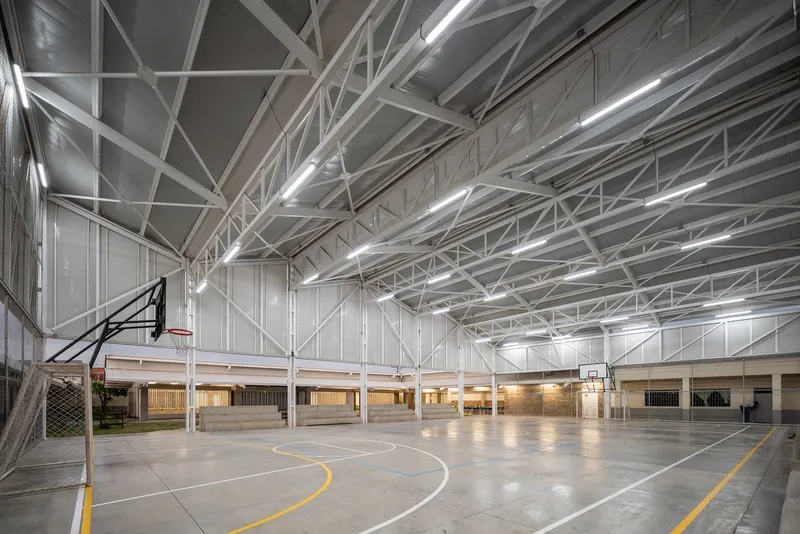
- A coliseum providing shaded space for sports and large gatherings
- Support facilities including bathrooms, a kitchen, and a dining hall
- A welcoming entrance to reinforce the school’s role as a community center
This inclusive approach ensures that the architecture responds to both educational requirements and the tropical climate of Urabá, where outdoor living, cross-ventilation, and shaded thresholds are integral to daily life.
Climate-Responsive Architecture
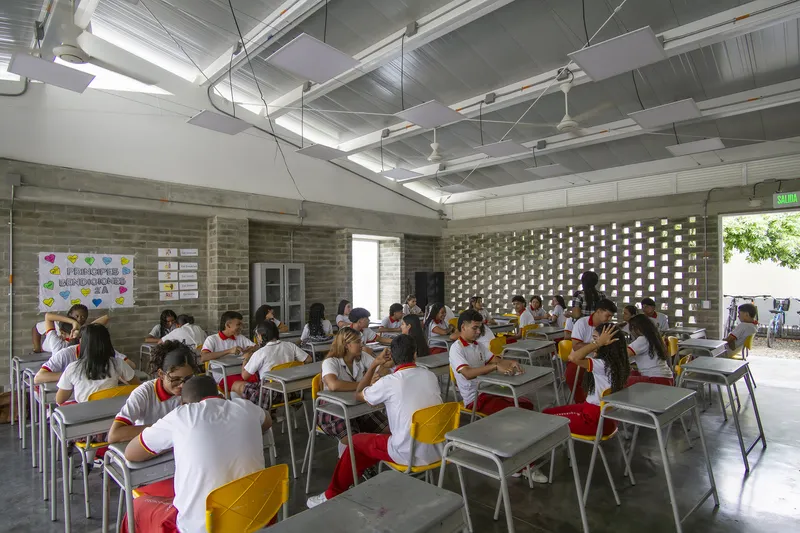
The school’s design integrates local climate strategies to protect students from high temperatures, heavy rainfall, and intense sunlight. Key features include:
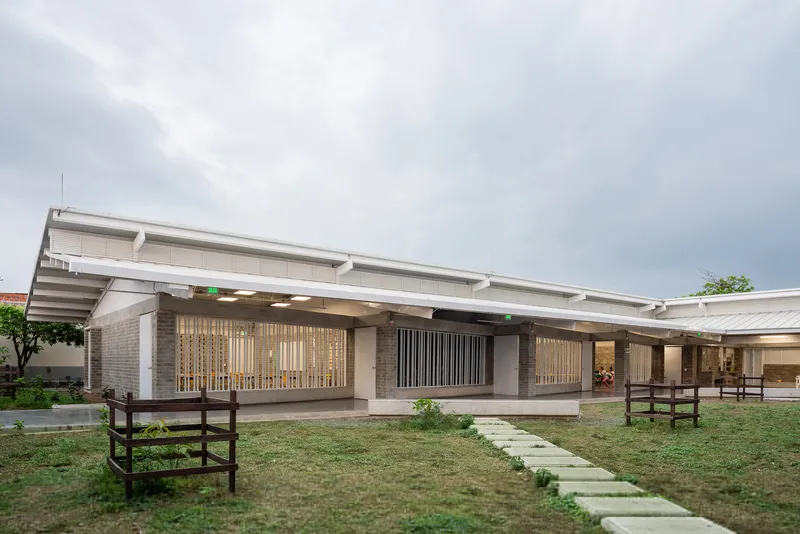
- L-shaped low-rise volumes unifying existing structures while maintaining school capacity
- Central courtyard defined by new and existing buildings, creating a collective space for learning and social interaction
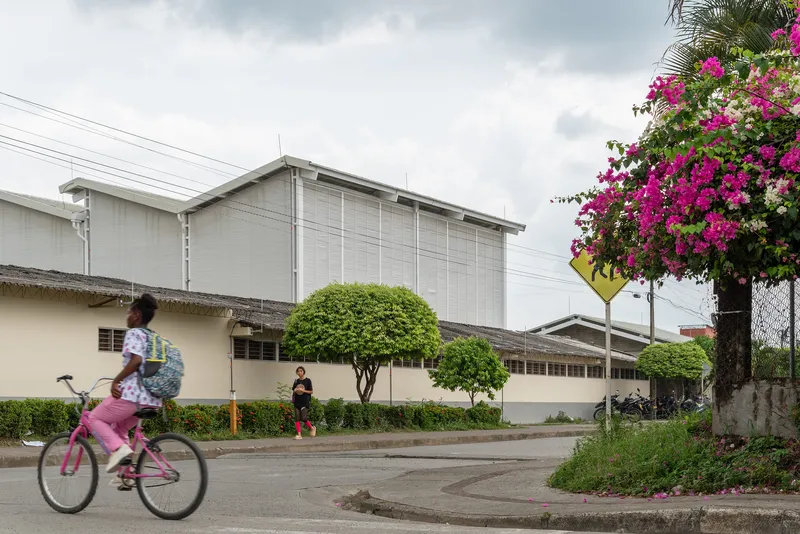
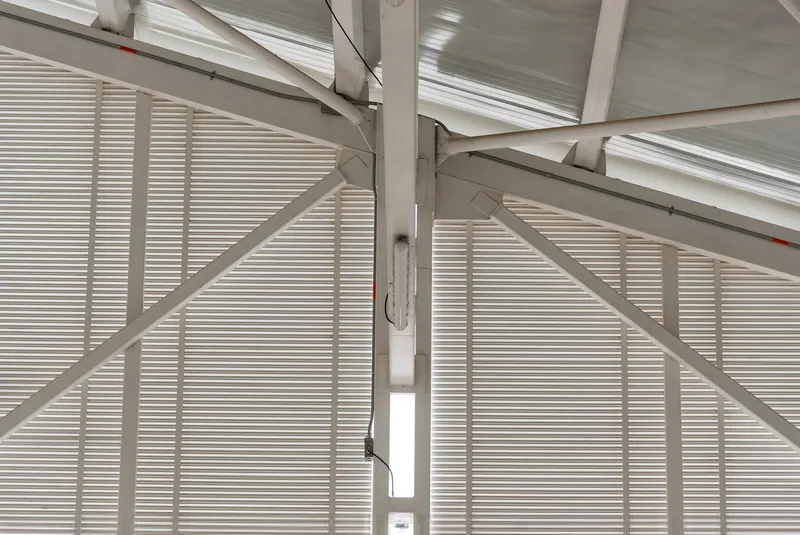
- Coliseum with unique roof design, doubling as a covered plaza for community events
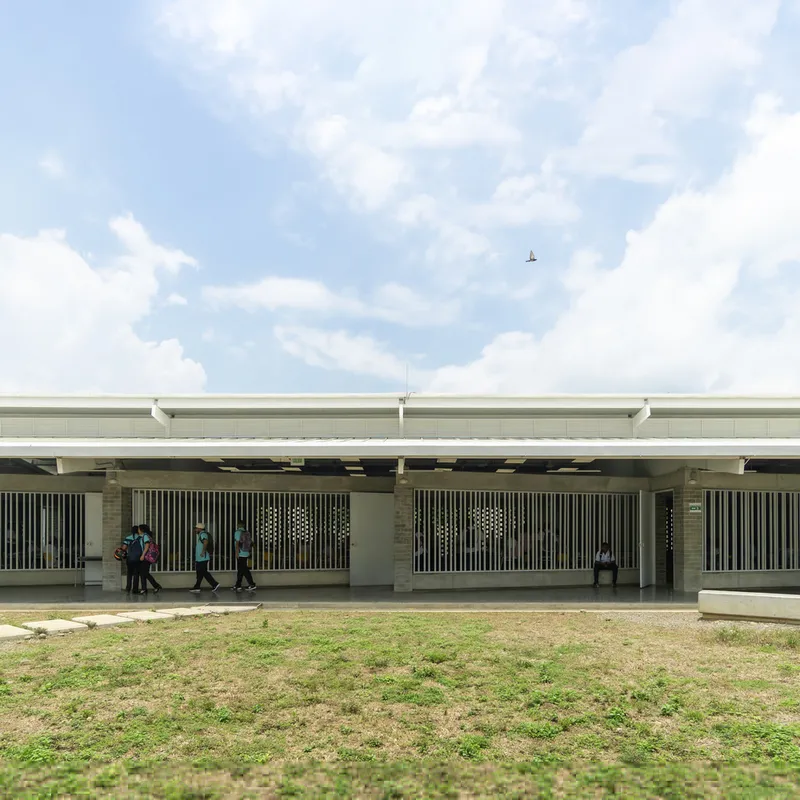
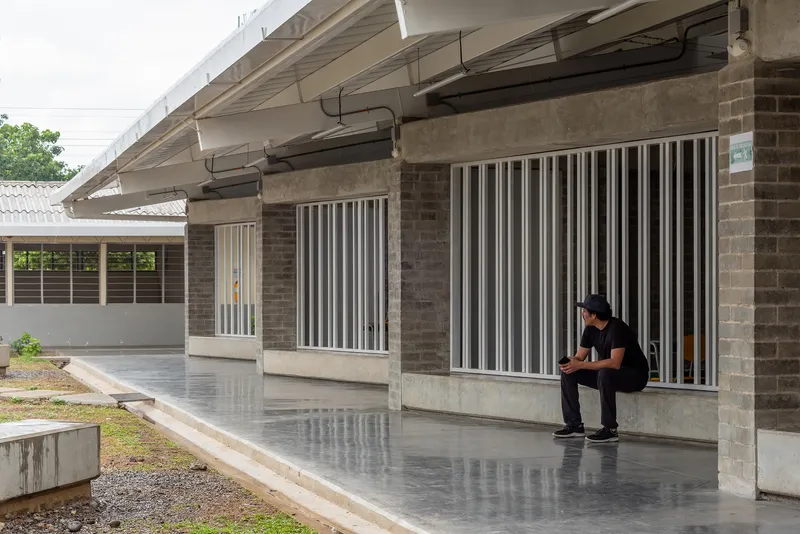
- Permeable façades and open classrooms that encourage natural ventilation and community engagement
- White-painted exteriors for light reflection and thermal comfort
- Sloped roofs directing rainwater to collection systems, ensuring water supply in a region prone to shortages

Multifunctional Community Spaces
The central courtyard and coliseum have transformed I.E. Chigorodó into more than a school. These spaces now serve as cultural, educational, and recreational hubs, hosting community activities well into the evening. The architecture promotes informal interactions, supports sports and play, and fosters a sense of belonging among residents.
By emphasizing open, flexible, and climate-adapted design, the school becomes a model for tropical educational architecture that balances functional performance with social engagement.
A Model for Future Educational Projects
The Chigorodó Educational Institution illustrates how architecture can respond to local needs and environmental conditions, creating spaces that are safe, functional, and inclusive. Taller Síntesis Arquitectura’s intervention shows that schools can be community catalysts, where design, climate awareness, and social cohesion intersect.



Popular Articles
Popular articles from the community


AL-JANNAH: Sustainable Architecture and Permaculture for Afghan Widows
AL-JANNAH uses sustainable architecture and permaculture to create resilient oasis of housing, learning, work and renewal for Afghan widows.

EW PARK: Sustainable Architecture Reimagines the Future of Urban Parking
EW PARK reimagines city parking as a modular wooden tower combining automation, solar energy, electric mobility, and adaptable urban design.

Co-Life: Senior Housing Design That Reconnects Older Adults With the City
Co-Life reimagines senior housing design through healing gardens, shared streets, workshops, and a sustainable community across generations.

Conexión: Biophilic Design Reimagines High-Rise Living in Hong Kong
Conexión reimagines high-rise living in Hong Kong through biophilic design, green facades, shared spaces, daylight, water and nature within.


Similar Reads
You might also enjoy these articles


Hodi-Mandai Geram
Project Function: Preservation and revitalization of the Intangible heritage and socio-spatial identity of the Hodi by Housing, Cultural Memory Center, Sacred Grove, landscape, local tourism economy


Olio Towers: A Mid-Rise for Performers That Fuses Housing, Rehearsal, and Stage
Located blocks from Houston's Theater District, this modular tower stacks living units around a central performance atrium.

Oasis: Modular Green Housing Carved into Dhaka's Urban Fabric
A shortlisted Plugin Housing entry reclaims unauthorized settlements in Dhaka with stepped concrete volumes, green roofs, and ventilation-driven design.

Black Hole: A Floating Megastructure for the Post-Physical Era
Emiliano Mazzarotto envisions a spherical, self-scaling arena where e-sports, digital hotels, and holographic stadiums replace traditional public space.


Explore Infrastructure Design Competitions
Discover active competitions in this discipline



Challenge to reimagine the Iron Throne


Photograph architecture without architects


Illustrate the lost glory of Angkor Wat - Render Challenge


Design challenge to reuse E-waste
Comments (0)
Please login or sign up to add comments
No comments yet. Be the first to comment!