

CIDADE RAIZ
Cidade Riaz , Community Housing - An addition to the social fabric of Lisbon

FLOOD RESILIENT NEIGHBOURHOOD DESIGN
1) CONCEPTUAL FRAMEWORK
The driving concept behind this design was to create a flood-resilient neighborhood that addresses the impending environmental challenges of rising sea levels while enhancing the social, economic, and cultural vitality of the community. Set within the context of Lisbon, a city characterized by its waterfront landscape, the trapezoidal site geometry and its vulnerability to coastal flooding became the foundation for the design. The project is an exploration of how architecture and landscape can work symbiotically to mitigate flood risks while enhancing the quality of life.
The core design feature is a “sponge” system, a multifunctional solution that harnesses natural flood management through a central depression, bio-swales, and an organic, cave-like structure beneath the surface. This system is designed to slow down, store, and percolate floodwaters before they reach residential zones, while also serving as a community space during non-flood periods. The concentric arrangement of housing units around this central feature creates a harmonious blend of built form and landscape, allowing the community to thrive alongside nature.
2) INTENT BEHIND THE SPATIAL ORDANISATION
The arrangement of architectural elements, site features, and urban interventions was meticulously designed to respond to both environmental challenges and community needs:
i) Architectural Level: Housing units are arranged concentrically around the central sponge system, with two dwelling types (30 sqm and 60 sqm). Larger units are located at ground level, with smaller units placed above to optimize sunlight and ventilation. The slender, tapering form of the buildings allows them to fit into the radial layout while maintaining.
ii) Site Level: The acute-angled edge of the site, with its steep slope, naturally channels floodwater toward the central depression. This edge is lined with bio-swales, which slow and filter the water before it reaches the central sponge system. The depression itself acts as a retention basin, with the underground cave-like structure playing a crucial role in reducing the energy of floodwaters, allowing for gradual infiltration into the ground.
iii) Urban Level: A primary diagonal runs from the acute-angled side, guiding both floodwaters and pedestrian flow. Along one side of this diagonal, bio-swales manage water, while the other side houses a community marketplace, providing a seamless transition from environmental management to social and economic interaction. The market further connects to the residential zone, creating a dynamic, active public realm that remains functional and lively even in dry conditions.
3) DESIGN ITERAIONS AND REFINEMENT
The design evolved through multiple iterations, each exploring different strategies for flood mitigation and community living. Early concepts focused primarily on engineering solutions such as levees and barriers, but these were eventually set aside in favor of more passive, nature-based interventions like bio-swales, permeable materials, and water-friendly architecture. The final layout emerged after exploring different configurations of concentric housing, balancing aesthetics, function, and environmental resilience.
4) DESIGN INVESTIGATION METHODS
A multidisciplinary approach was employed to investigate the design. Site analysis provided insights into the topography and flood patterns, while hydrological modeling helped simulate flood scenarios and test the performance of the sponge system and bio-swales. Cultural studies were equally important, ensuring that the project not only addressed environmental concerns but also resonated with the social and economic dynamics of Lisbon, particularly through the introduction of community-focused activities like oyster farming and marketplace development.
5) PROGRAMMATIC CONDENSATION
The original program was comprehensive, encompassing flood management, housing, community spaces, and sustainable economic activities. Through a process of prioritization, these diverse elements were distilled into a cohesive scheme. Flood resilience became the overarching framework, guiding the placement and design of all other features. Housing was arranged concentrically to maximize the protective function of the sponge system, while community spaces were integrated into natural drainage routes and pedestrian pathways. The inclusion of oyster farming added both economic and cultural relevance, enriching the program’s connection to Lisbon’s coastal identity.
6) MATERIAL SELECTION
Material selection was guided by sustainability, local availability, and performance. The cave-like sponge structure beneath the central depression is envisioned using semipermeable materials, likely a combination of natural stone and reclaimed concrete, designed to allow for rapid water percolation while maintaining structural integrity. For the residential units, locally sourced wood and bamboo are proposed for framing, and natural fibers are used for insulation. The paving of public spaces and pathways is permeable, allowing rainwater to seep into the ground rather than contribute to surface runoff.
7) MEETING SPECIFIC OBJECTIVES
A key objective was to shield residential units from flood damage while maintaining a close relationship with the natural environment. The concentric arrangement of dwellings around the sponge system, combined with bio-swales and permeable landscaping, achieved this balance. Another goal was to create multi-functional spaces that could serve the community in both flood and dry conditions. The underground structure meets this need, doubling as a floodwater management system and a community gathering space, ensuring year-round functionality
8)EXPANSION PLAN
The design is inherently modular, making it replicable and adaptable to other flood-prone areas. The concentric housing clusters and central sponge system can be scaled or adjusted based on the topography and community needs of different sites. The project also allows for vertical expansion, with the potential to add additional 30 sqm units above the existing structures to accommodate future population growth. The oyster farming initiative also presents an opportunity for expansion, potentially positioning the site as a regional hub for sustainable aquaculture and tourism, further enriching the local economy.
9) FUTURE EVOLUTION AND CHANGES
Over time, the neighborhood is envisioned to evolve into a self-sustaining, resilient community. The shared spaces and collective activities like oyster farming and marketplace events will foster a strong sense of community identity. As the bio-swales and forested areas mature, the site’s ecological value will increase, further enhancing its flood resilience. The housing units, designed with flexibility in mind, will be able to adapt to technological advancements, such as the incorporation of solar panels or green roofs, ensuring long-term sustainability and resilience.

Popular Articles
Popular articles from the community

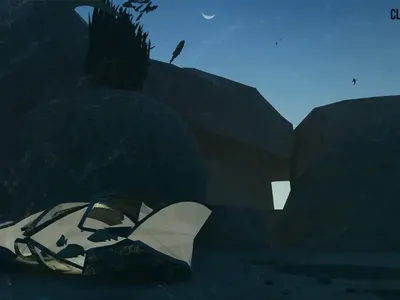
Cloaked Colonization: A Mobile Underwater Habitat That Moves Like a Fish
Micah Abaya's shortlisted EHC Pacific entry reimagines ocean settlement as a dispersed network of self-sustaining architectural organisms.
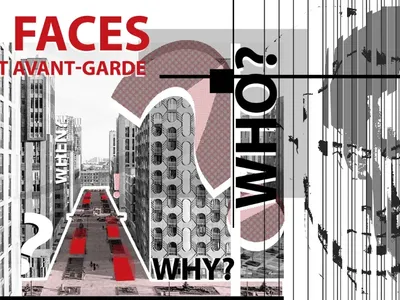
Faces of the Soviet Avant-Garde: Turning Moscow's Street Names into an Open-Air Museum
A network of sculptural installations across a Moscow residential district transforms forgotten architect names into spatial encounters with cultural memor

Singing Woman: Contemporary Architecture Inspired by Estonia’s Voice and the Sea
Singing Woman turns Estonia’s song culture into flowing opera house architecture, blending public life, landscape, sea, and national memory.
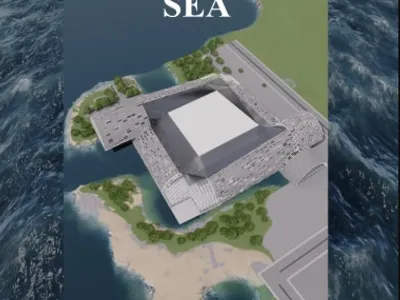
Opera on the Sea: Driftwood Logic Shapes a Timber Opera House on Estonia's Coast
Trevor Orgill's opera house translates the entangled drift of floating timber into a civic building where wood, water, and music converge.

Similar Reads
You might also enjoy these articles

Day and Night Park: A Time-Based Urban Newsstand in Beijing
A temporary urban newsstand in Beijing blending travel, light, and reading through poetic colors, compact form, and community-focused design.

Modernist Patio Renovation in El Masnou, Barcelona by Oliver Segura Arquitectura + Cebrià Arquitectura
Modernist patio renovation blending tradition and innovation with a movable pool, leveled floors, and Catalan materials in El Masnou.

Alto Residencial Coop: Cooperative Housing Development in Santiago de Compostela by Carbajo Barrios Arquitectos
A linear cooperative housing complex blending white volumes and perforated metal façades, enhancing community living, natural light, privacy, and urban integration.
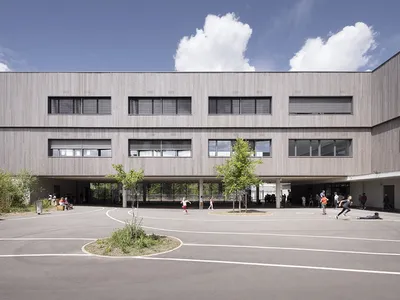
Vil Genis School by BPA ARCHITECTURE – Massy, France
Vil Genis School in Massy, France, features sustainable design, south-facing classrooms, community integration, accessible spaces, and modern educational architecture.

Comments (0)
Please login or sign up to add comments
No comments yet. Be the first to comment!