

Científica del Sur University Campus by Plan A – Innovative, Sustainable Educational Architecture in Lima, Peru
Científica del Sur University Campus in Lima, Peru combines sustainable design, innovative learning spaces, green roofs, and community-focused architecture for modern education.


Located in the northern cone of Lima, Peru, the Científica del Sur University Campus, designed by Plan A Architects in 2023, is a transformative educational complex that merges innovative design, sustainability, and community engagement. Spanning an impressive 20,300 m², this campus is strategically situated amidst densely populated neighborhoods, informal housing, and emerging urban hills, addressing both spatial and social challenges while serving as a new urban landmark along the Pan-American Highway.
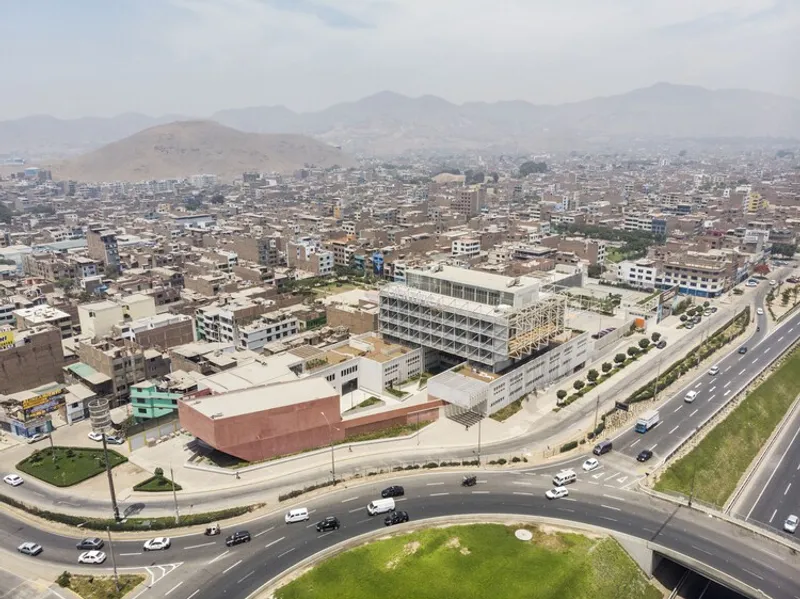
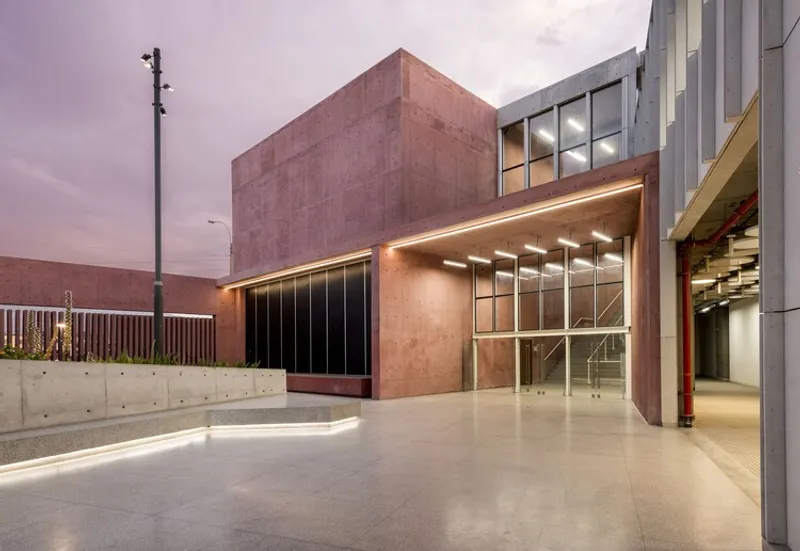
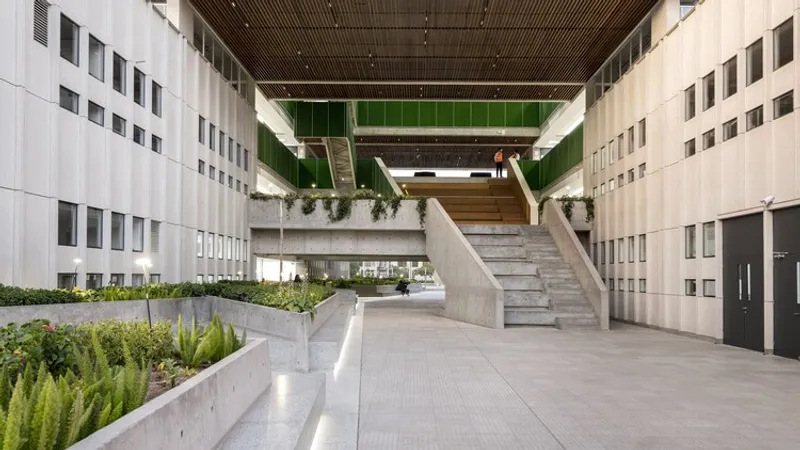
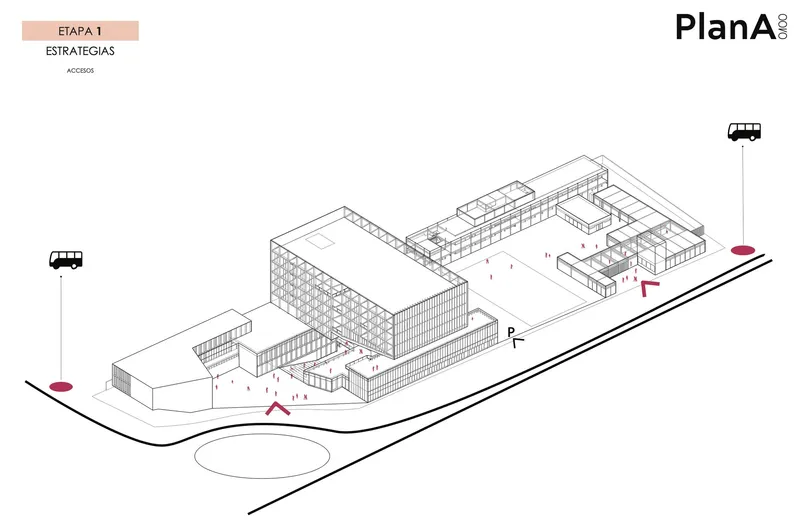
The design embodies a humanistic and forward-thinking approach to education, redefining the traditional campus model. Recognizing that learning transcends conventional classrooms, Plan A prioritizes the creation of shared spaces and public areas, ensuring students, faculty, and the local community interact organically. From the entrance, 17% of the campus lot is dedicated to public space, providing shaded benches, meeting zones, and greenery that enhance the neighborhood’s spatial quality and foster urban regeneration.
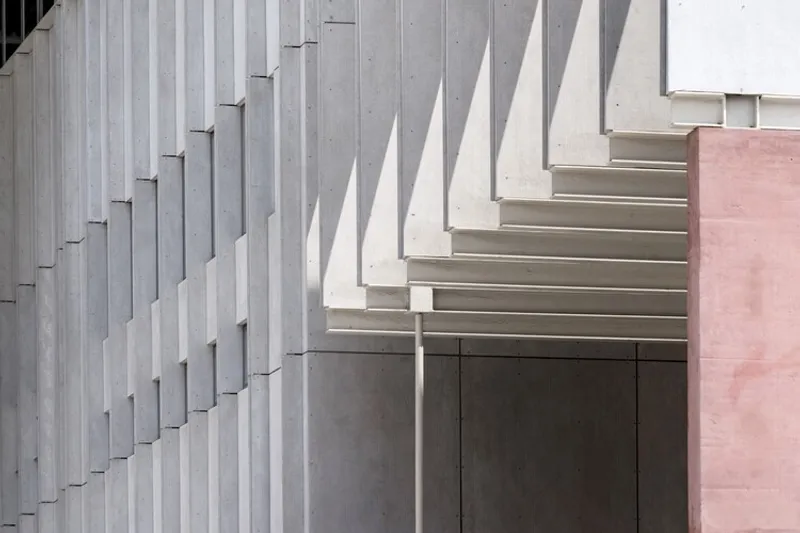


Architecturally, the campus is conceived as a horizontal tower resting atop a two-story plinth. The plinth houses laboratories for scientific disciplines and aligns with the neighborhood’s human scale, topped with a garden roof promoting sustainability and natural insulation. The upper volume contains classrooms organized around a central void, creating a visual connection to the Pan-American Highway and establishing a bold urban identity. With three floors currently in operation and provisions for three additional floors in the future, the campus anticipates scalable growth while maintaining a coherent architectural language.
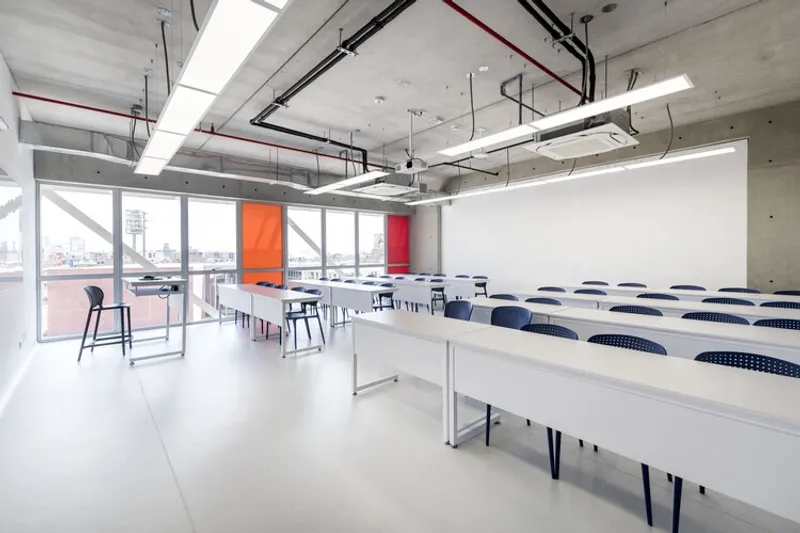
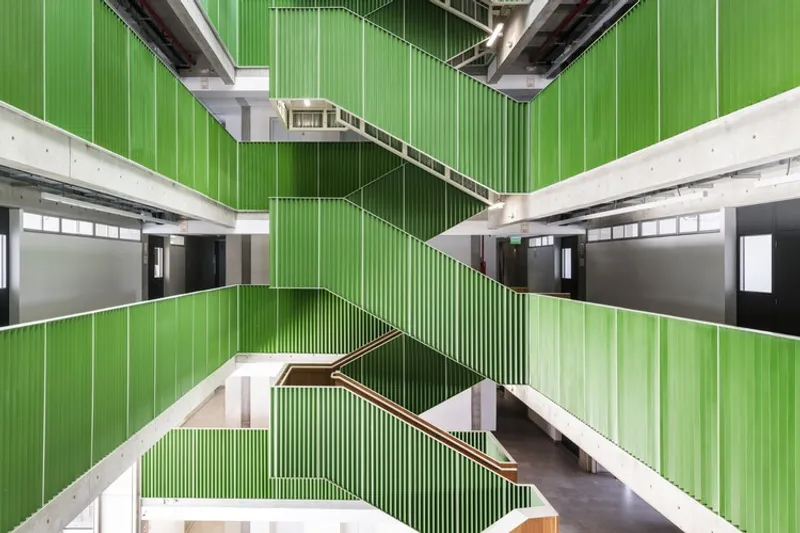

The longitudinal layout of the campus features a central boulevard that organizes spaces vertically and horizontally. Cafeterias, libraries, and auditoriums open seamlessly to the outdoors, creating a continuum of indoor-outdoor learning environments. A combination of stairs, bleachers, and hanging plazas enhances circulation while connecting ground-level spaces to garden roofs, skylight greenhouses, and intermediate terraces. These design strategies foster healthy, sustainable, and dynamic learning experiences.
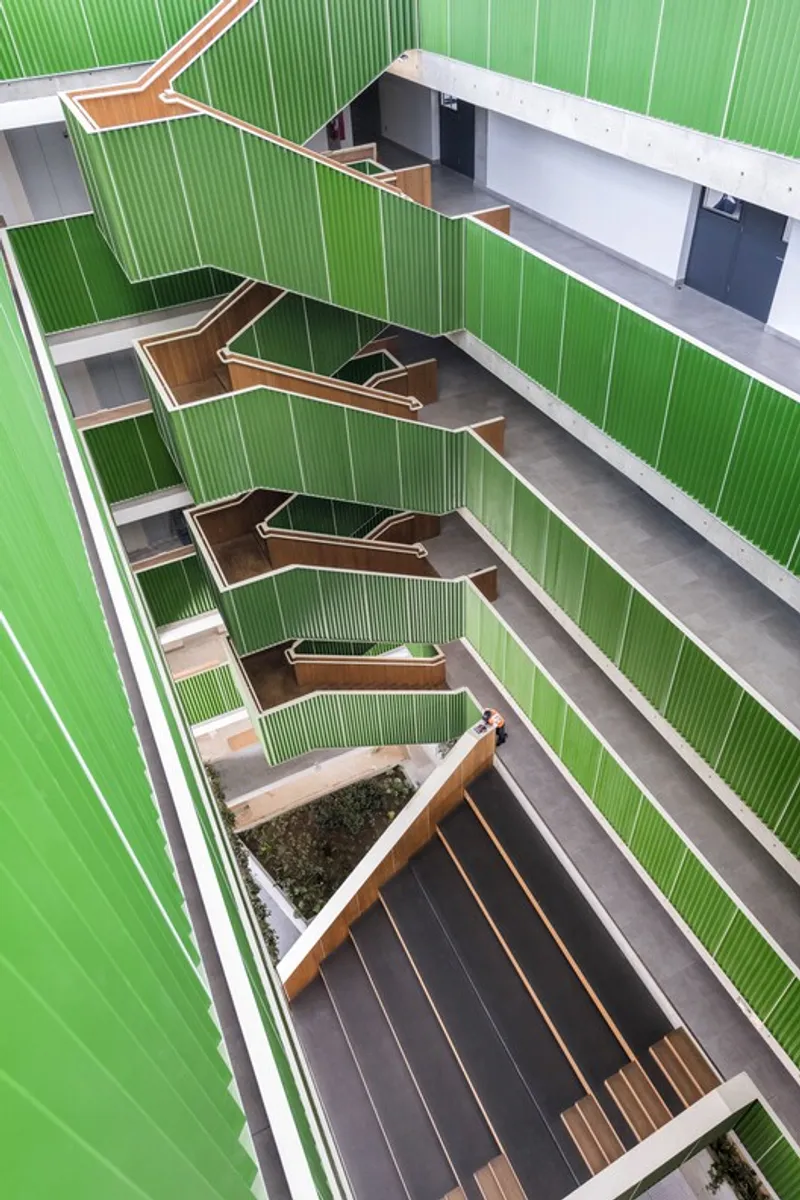


The campus façade integrates a self-supporting metal skin that provides natural illumination, durability, and ease of maintenance, while the careful material palette—exposed brick, concrete, and greenery—ensures a sustainable, energy-efficient environment. The project’s innovative approach demonstrates a deep commitment to the city, the environment, and the community, turning the campus into a model for contemporary urban educational architecture.

All the photographs are works of Renzo Rebagliati


Popular Articles
Popular articles from the community


The Amber Palace Opera: A Geological Fiction Surfaces on Tallinn's Baltic Waterfront
Pierre Brillard reimagines a Baltic legend as a public landscape, opera house, and waterfront promenade rooted in Tallinn's coastal identity.

Opera by the Sea Estonia: Three Shells Dissolving Architecture into Tallinn's Coastline
A winning opera house proposal replaces monumental form with interconnected shells that blur the boundary between building, park and Baltic Sea.
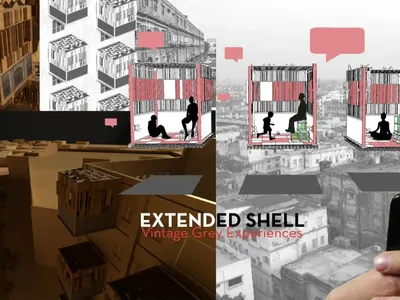
Extended Shell: Retrofitting Kolkata's Balconies as Living Urban Thresholds
A modular retrofit system recovers the social and environmental intelligence of Kolkata's historic verandas for contemporary Park Street residents.
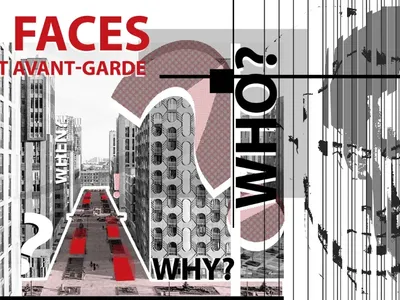
Faces of the Soviet Avant-Garde: Turning Moscow's Street Names into an Open-Air Museum
A network of sculptural installations across a Moscow residential district transforms forgotten architect names into spatial encounters with cultural memor

Similar Reads
You might also enjoy these articles


Hodi-Mandai Geram
Project Function: Preservation and revitalization of the Intangible heritage and socio-spatial identity of the Hodi by Housing, Cultural Memory Center, Sacred Grove, landscape, local tourism economy


Olio Towers: A Mid-Rise for Performers That Fuses Housing, Rehearsal, and Stage
Located blocks from Houston's Theater District, this modular tower stacks living units around a central performance atrium.

Oasis: Modular Green Housing Carved into Dhaka's Urban Fabric
A shortlisted Plugin Housing entry reclaims unauthorized settlements in Dhaka with stepped concrete volumes, green roofs, and ventilation-driven design.

Black Hole: A Floating Megastructure for the Post-Physical Era
Emiliano Mazzarotto envisions a spherical, self-scaling arena where e-sports, digital hotels, and holographic stadiums replace traditional public space.

Explore CSIIT School Of Architecture Competitions
Discover active competitions in this discipline

Challenge to design public laboratory

Challenge to reimagine the Iron Throne

Photograph architecture without architects

Illustrate the lost glory of Angkor Wat - Render Challenge
Comments (0)
Please login or sign up to add comments
No comments yet. Be the first to comment!