

Steimle Architekten Carves a Triangular Atrium Through a Concrete City Hall in Remchingen
A pentagonal precast concrete volume anchors the German town center with bold massing and a skylit interior canyon.


Municipal architecture in small German towns rarely announces itself. Most city halls sit politely in their surroundings, deferring to pitched roofs and plaster facades. Steimle Architekten's new City Hall in Remchingen does none of that. It plants a pentagonal concrete mass at the center of town and hollows it out with a triangular atrium that rises the full height of the building, pulling daylight down through a constellation of skylights. The result is a civic building that refuses to whisper.
What makes the project genuinely interesting is the tension between its monolithic exterior and the spatial generosity of its interior. From the street, the building reads as a single, assertive volume, its deep-set square windows punched into precast panels like a modernist grid pulled tight over an irregular footprint. Step inside and the atrium cracks the whole thing open: timber-clad stairs zigzag up exposed concrete walls, natural light floods down from above, and the civic program wraps around the void in a continuous ribbon. It is a building that understands the difference between being imposing and being authoritative.
A Pentagonal Mass Holds the Street
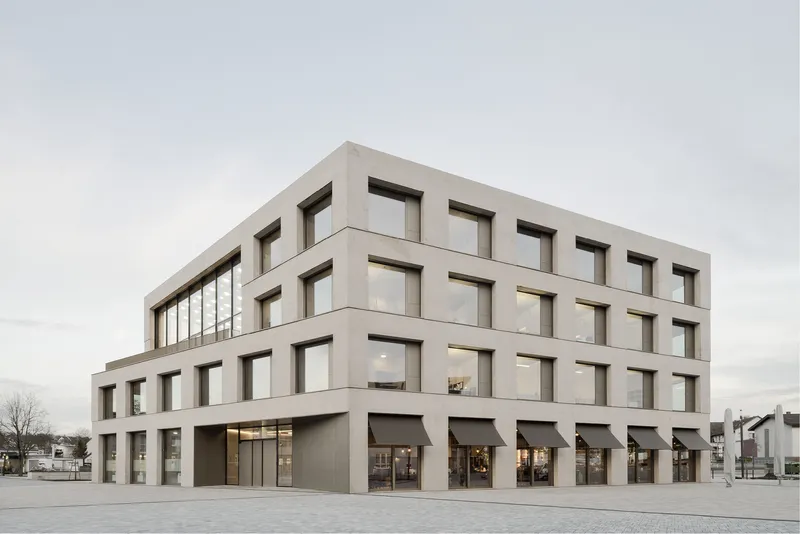
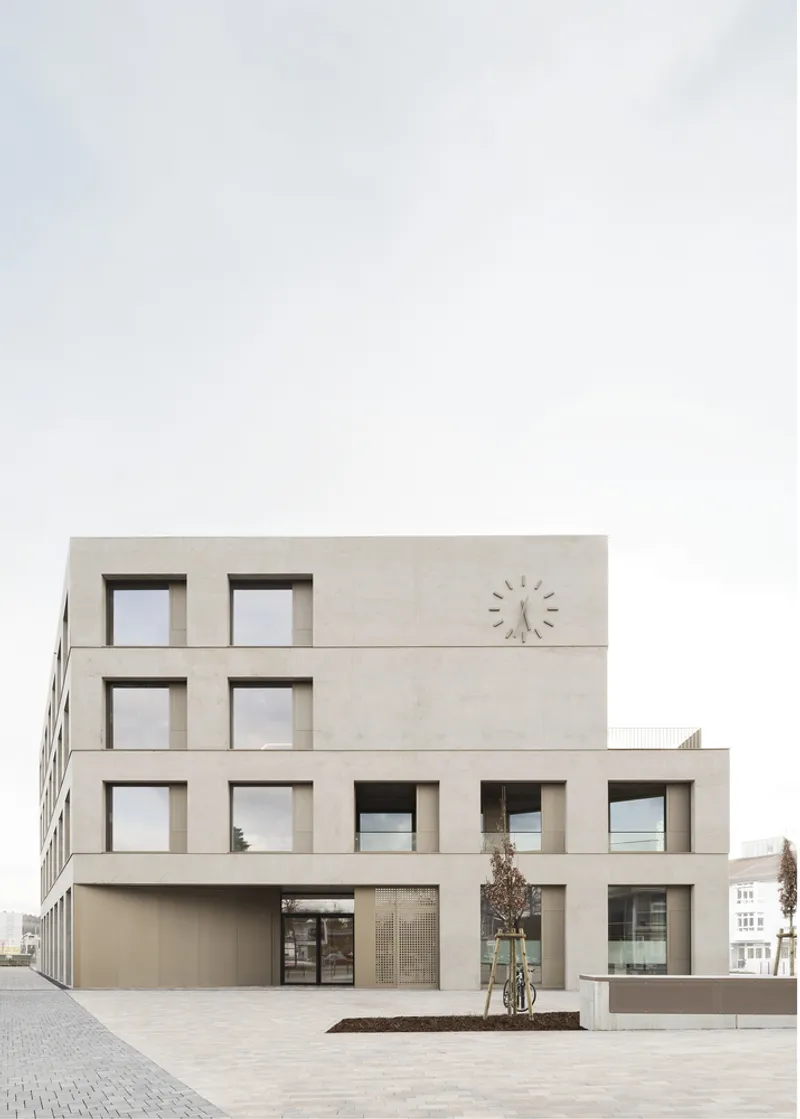
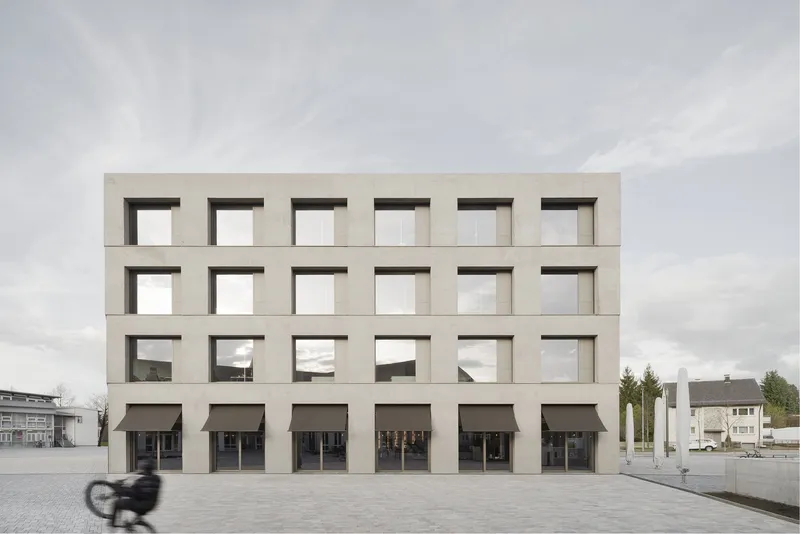
The building's pentagonal plan is not a whim. It follows the irregular geometry of the site, filling the plot edge to edge while generating a facade that addresses multiple street frontages without privileging any single one. Ground-level openings, retail awnings, and a wall-mounted clock give the base a civic informality, letting the upper floors carry the compositional weight. A cyclist passing the plaza barely glances up, which is exactly the point: the massing is confident enough to hold the urban fabric without demanding attention.
The beige precast panels unify the exterior, their board-formed texture adding a grain that softens at close range but reads as solid mass from a distance. Square windows, deeply recessed, create a rhythmic shadow pattern that shifts through the day, lending the facade a life that is entirely architectural rather than applied.
Precast Concrete as Civic Skin
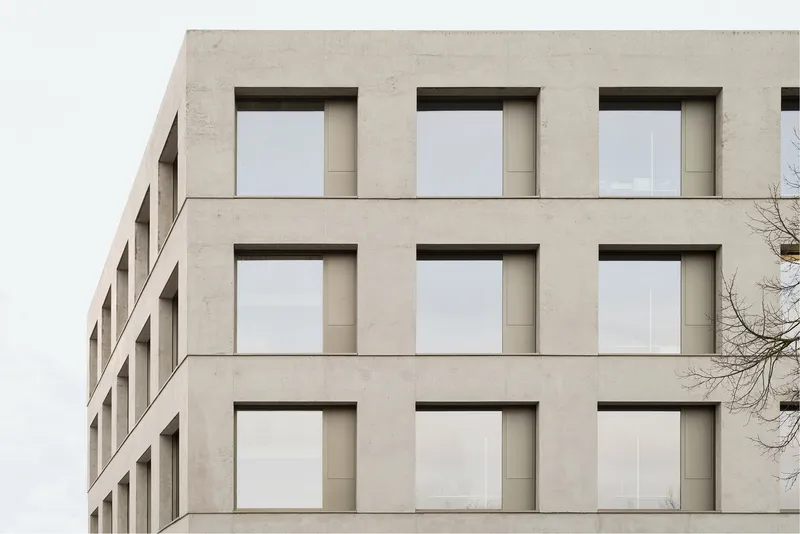
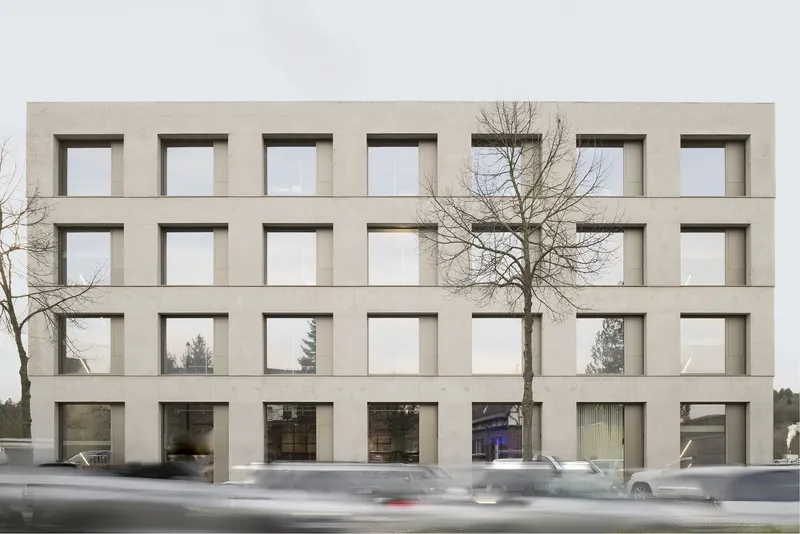
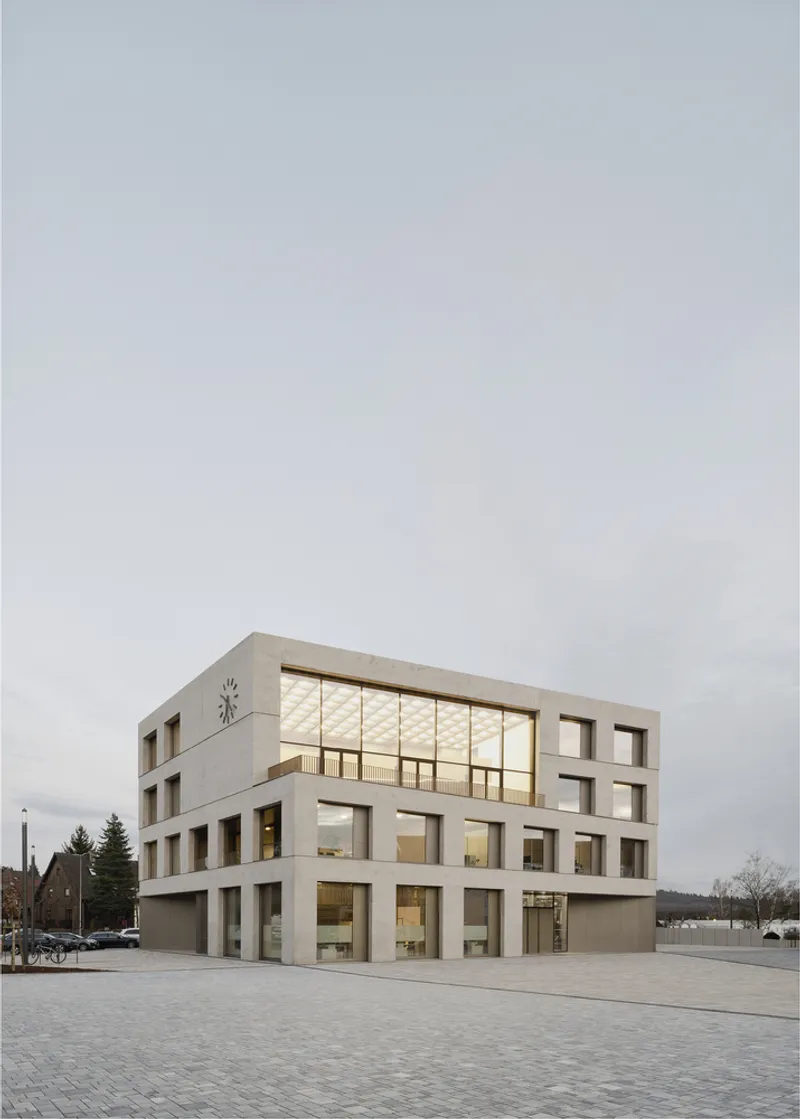
The facade's deep window reveals do real work. They control solar gain, shelter the glass plane from rain, and frame views from inside with a telescopic quality that turns each opening into a deliberate moment. At dusk, the upper level glows through these apertures, transforming the building into a lantern that signals public activity to the town.
Bare winter trees in the foreground reinforce the building's materiality: stripped of ornament, the concrete stands in dialogue with the landscape's seasonal honesty. Steimle Architekten clearly understands that good precast work is not about hiding the process but celebrating the precision of repetition. Each panel reads as a component of a larger system, and the system holds.
The Triangular Atrium as Civic Engine
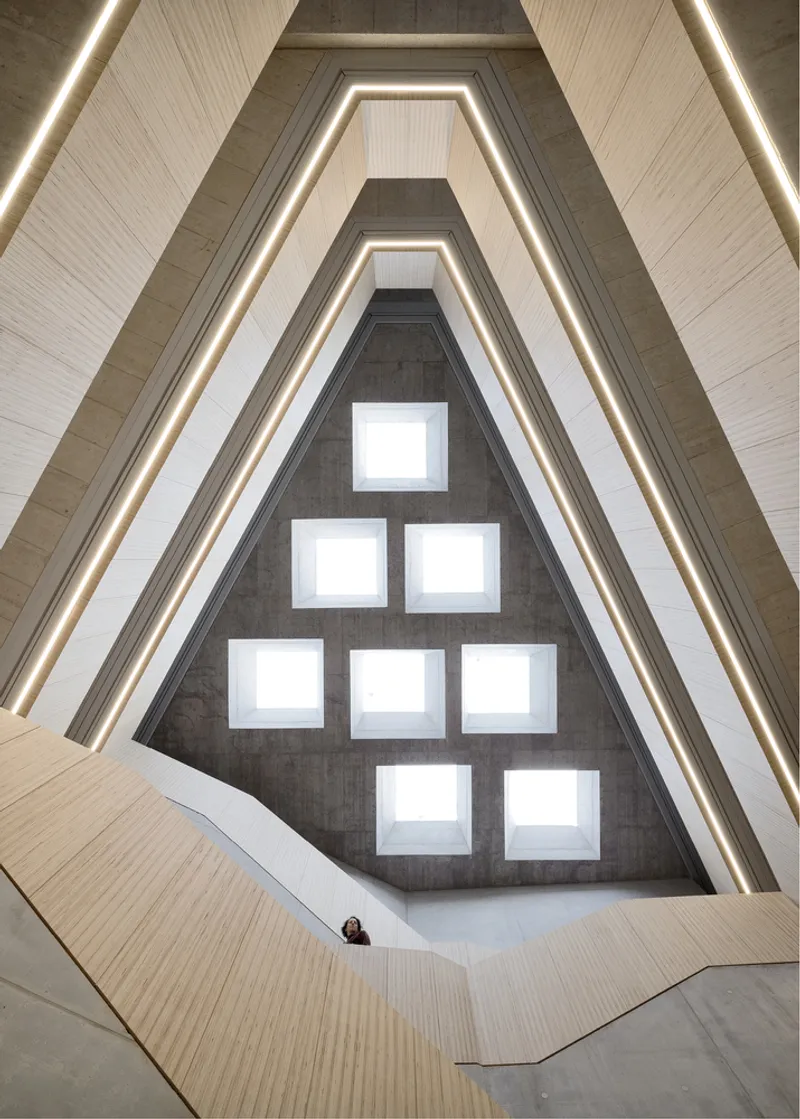
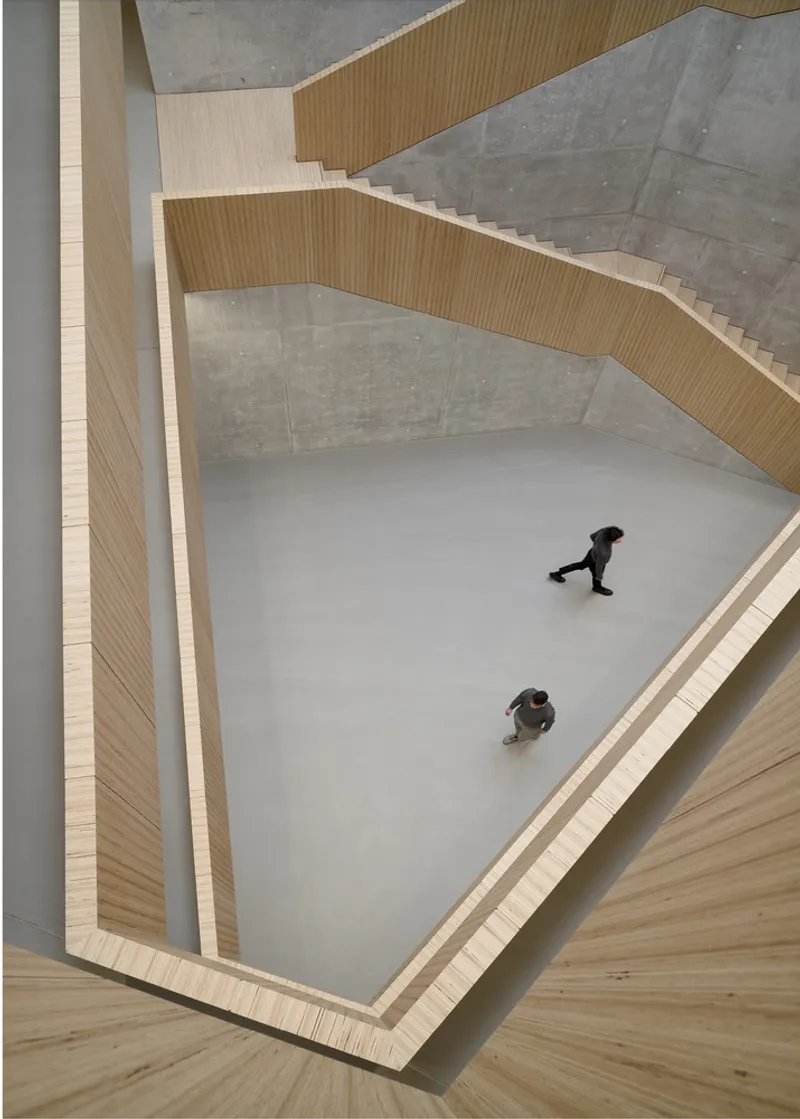
Cut through the center of the pentagonal plan, the triangular atrium is the move that elevates the project from competent to compelling. Looking up through its narrow wedge, linear lighting traces the concrete geometry while square skylights punch through the end wall, stacking daylight in layers that shift as you move. The void is tall enough to feel urban, narrow enough to feel intimate.
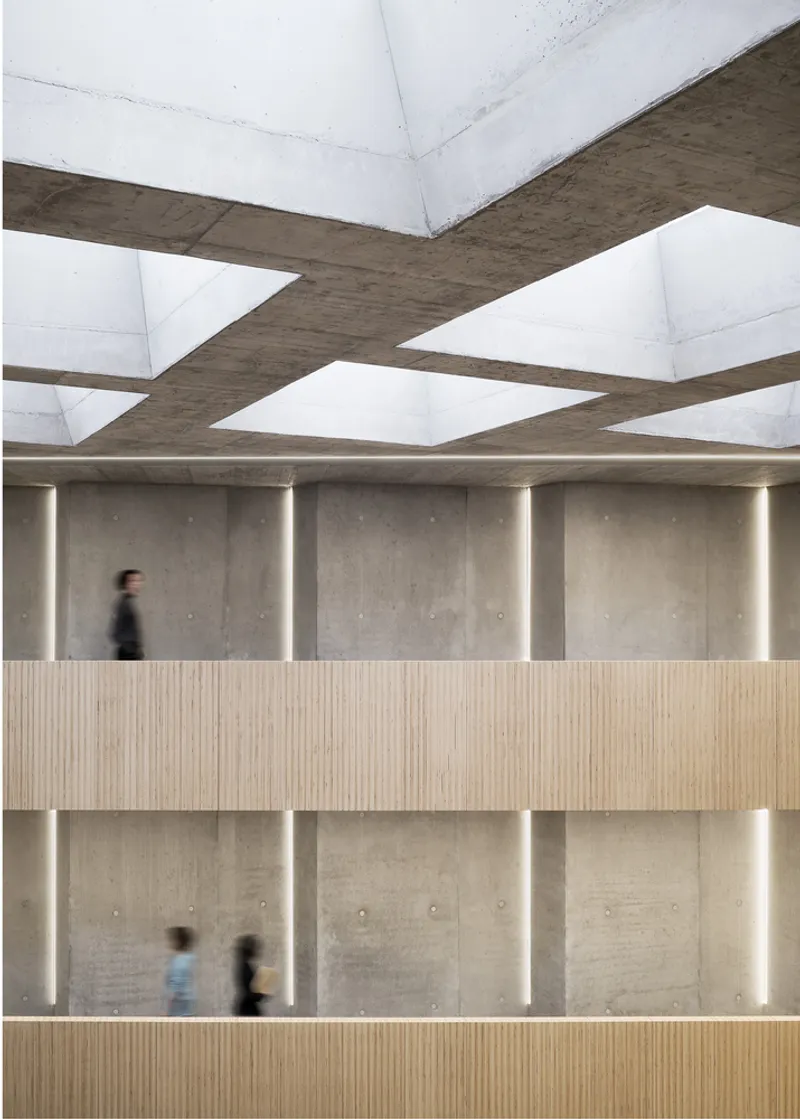
At ground level, pedestrians cross the polished floor beneath timber-clad balconies and vertical lighting slots. The top-down view reveals two figures dwarfed by the curved atrium walls, a reminder that this space is scaled for gathering, not for the individual. It functions as an interior public square, borrowing the logic of a covered street and folding it into the building's core circulation.
Timber and Concrete in Vertical Dialogue
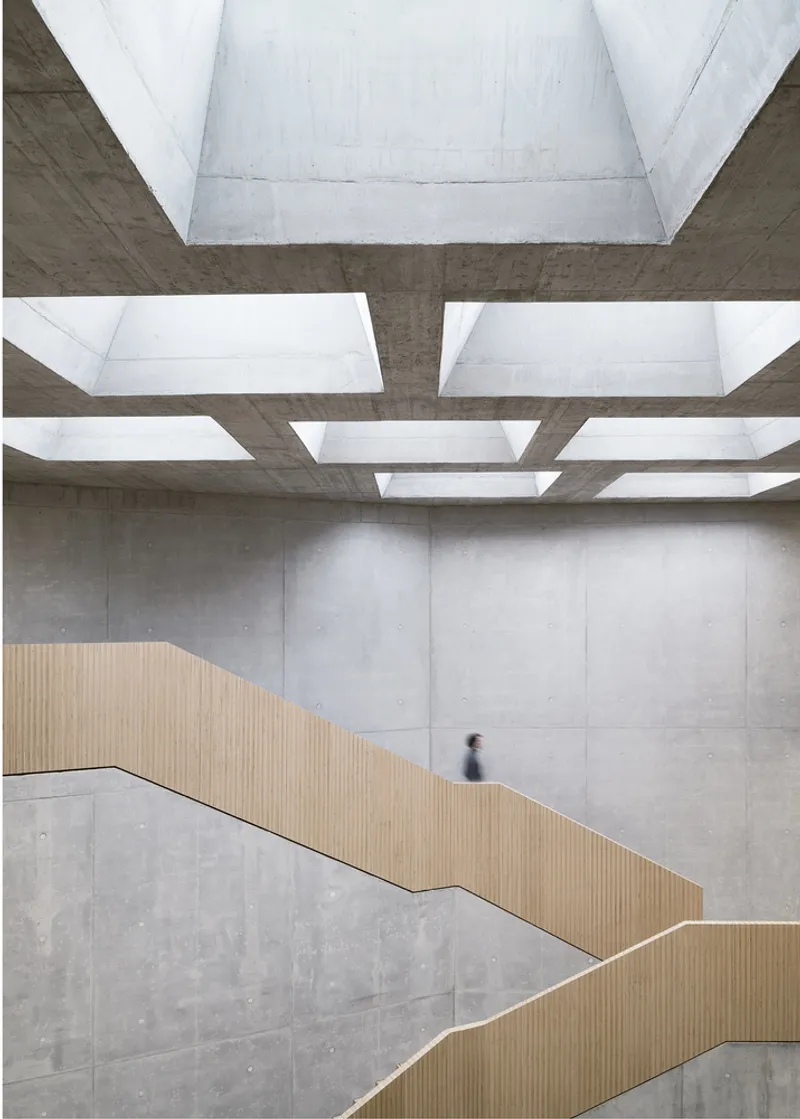
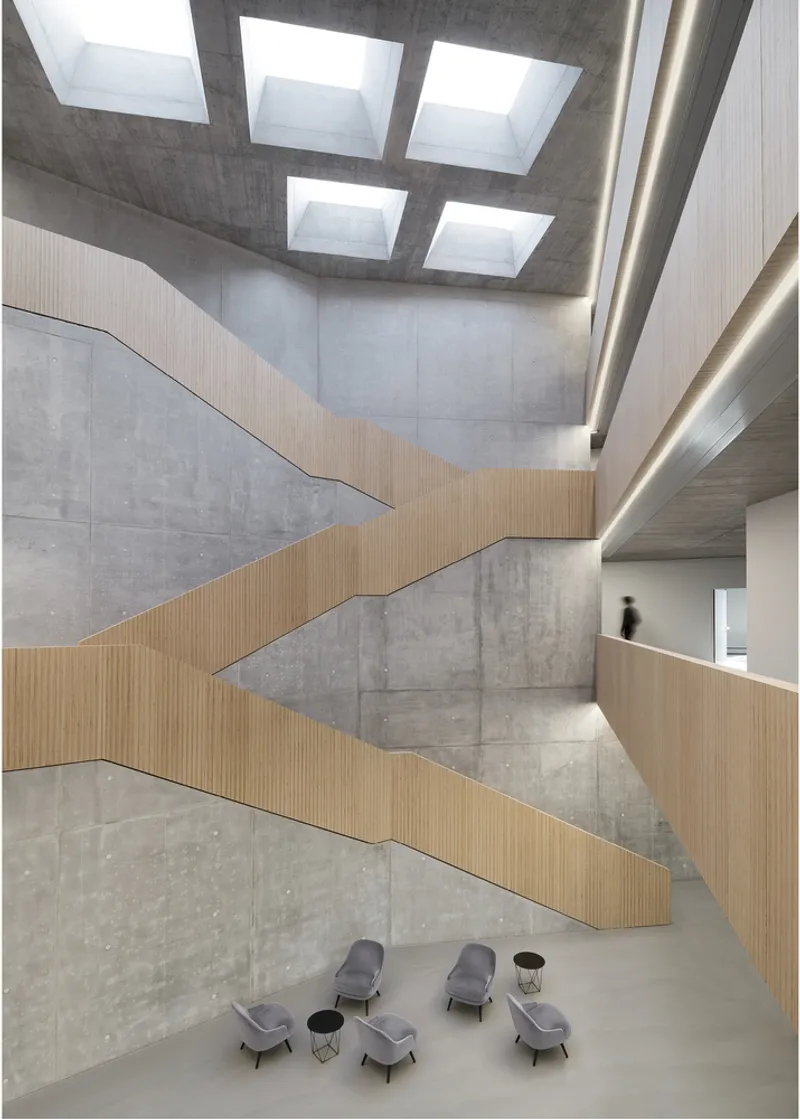
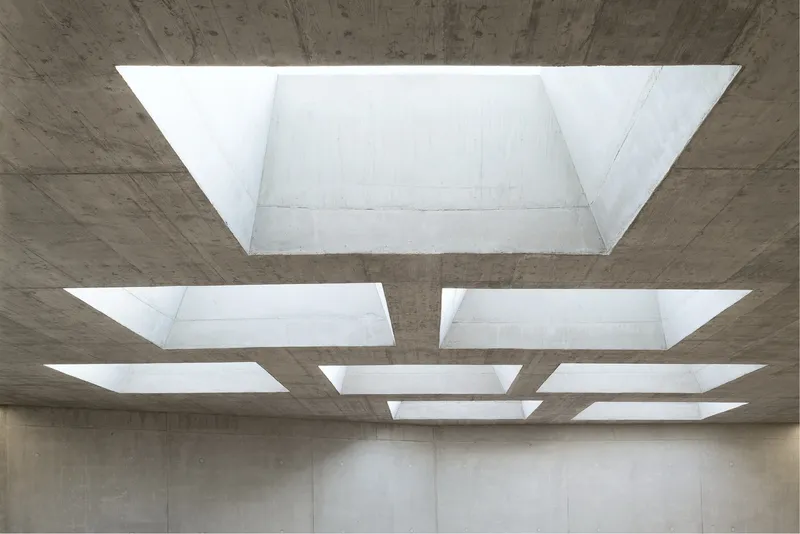
The zigzag staircase is the atrium's central element, and Steimle Architekten wraps it in timber cladding that stands in warm contrast to the raw concrete walls and coffered ceilings. The material pairing is not decorative. Timber marks the path of human movement, concrete marks structure and enclosure, and the distinction is legible at every floor. Rectangular skylights set into board-formed coffers wash the stair with daylight, making the climb an experience rather than a chore.
The skylighted ceiling deserves attention on its own terms. A grid of rectangular openings turns the roof plane into a luminous field, eliminating the need for artificial overhead lighting in the atrium during daylight hours. It is a simple strategy executed with real care, and it gives the interior its character.
Civic Rooms Framed by Light
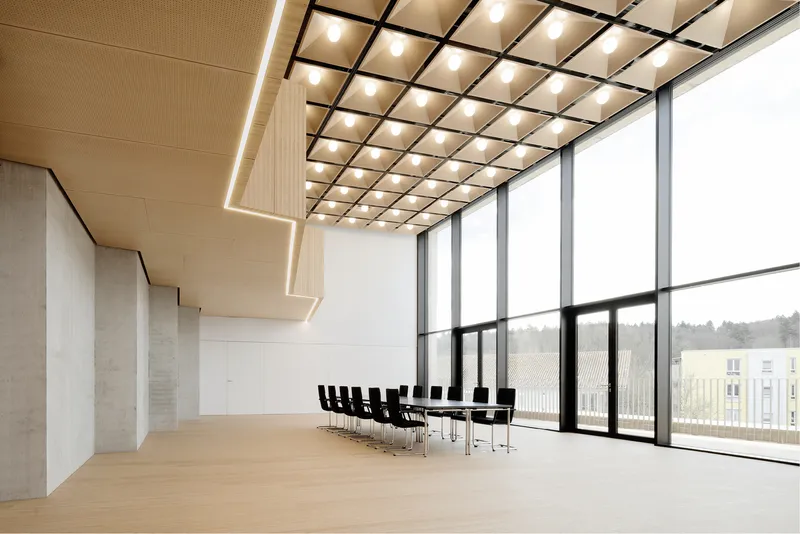
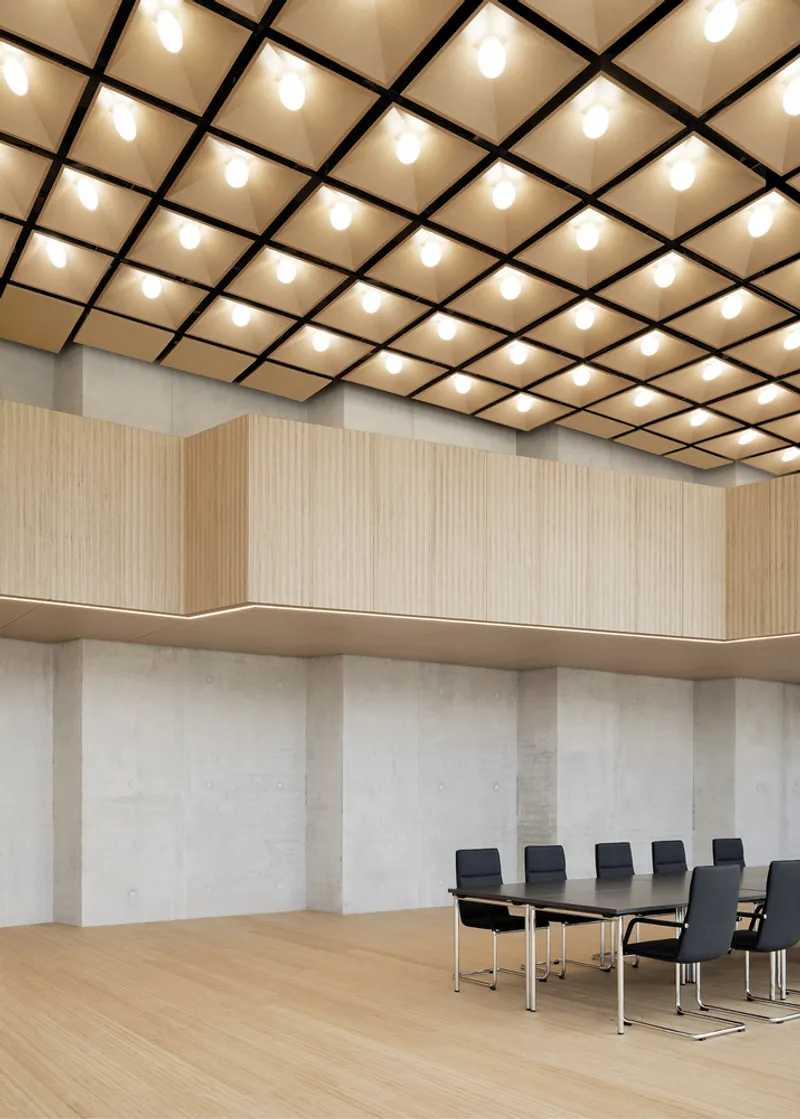
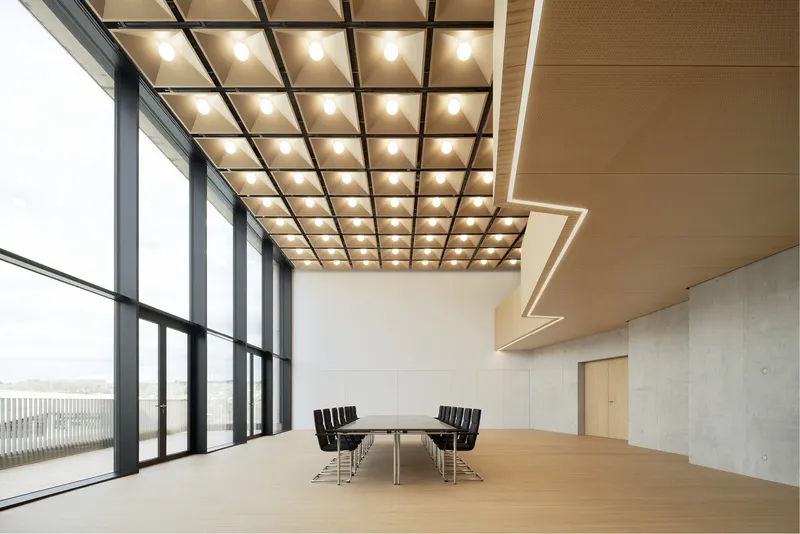
The meeting and conference rooms ringing the atrium are treated with the same material discipline as the public spaces. A double-height room with floor-to-ceiling glazing opens to distant agricultural fields, collapsing the boundary between civic interior and rural landscape. The gridded luminous ceiling panels recur across several rooms, providing even diffused light that flatters both the spaces and the people in them.
Board-formed concrete walls carry through into the conference rooms, maintaining continuity with the exterior envelope. Black-framed glazing and gridded ceiling panels add a precision that keeps the interiors from feeling raw. These are working rooms, not showcases, and the architecture respects that distinction.
Raw Rooms and Framed Views
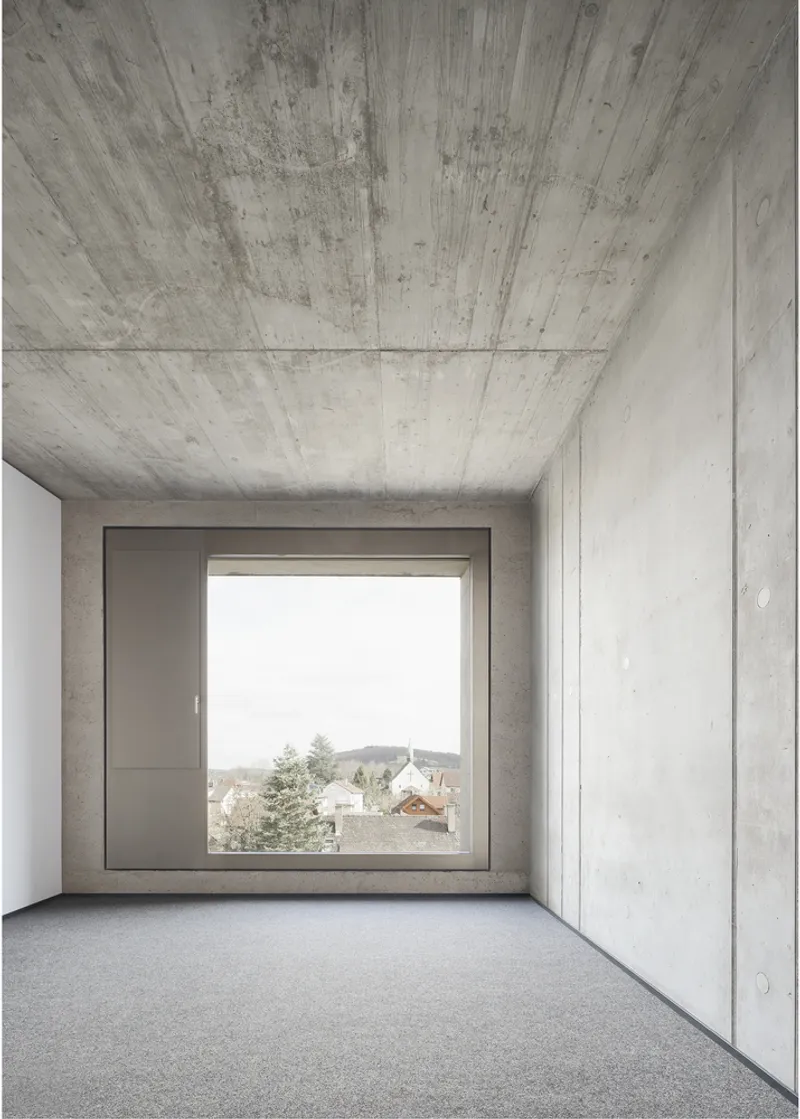
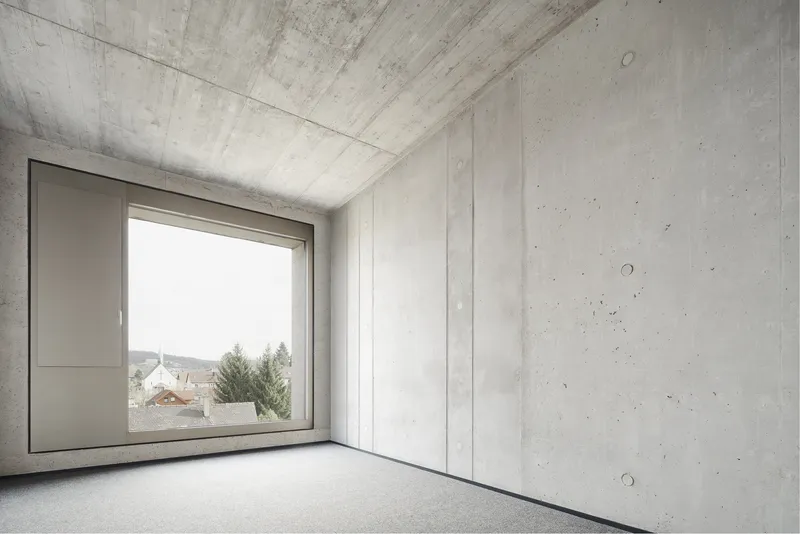
Some of the most striking images come from the unfinished or minimally furnished spaces where the architecture speaks without mediation. A bare concrete room with a single square window frames a village view with the clarity of a photograph. Another interior exposes the formwork ceiling and looks out over rooftops, offering a quiet reminder that this building belongs to its town. These moments reveal the architects' confidence in the envelope itself as the primary spatial experience.
Plans and Drawings
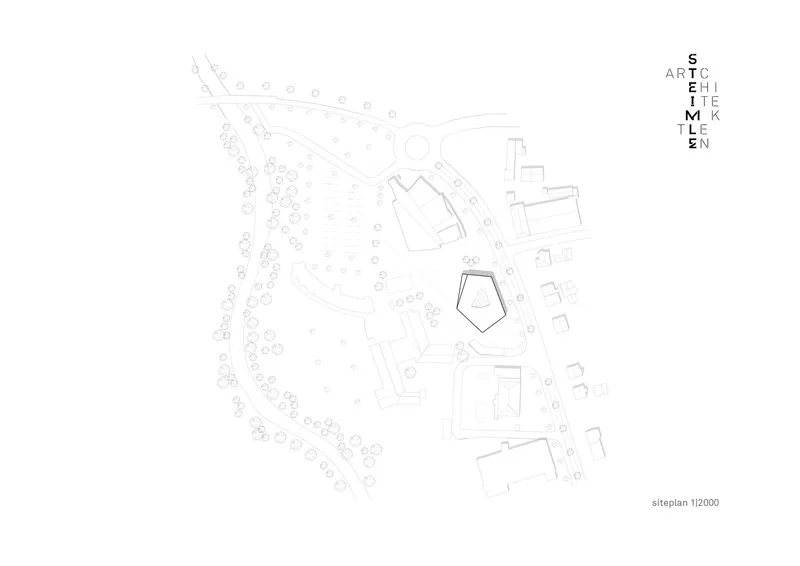
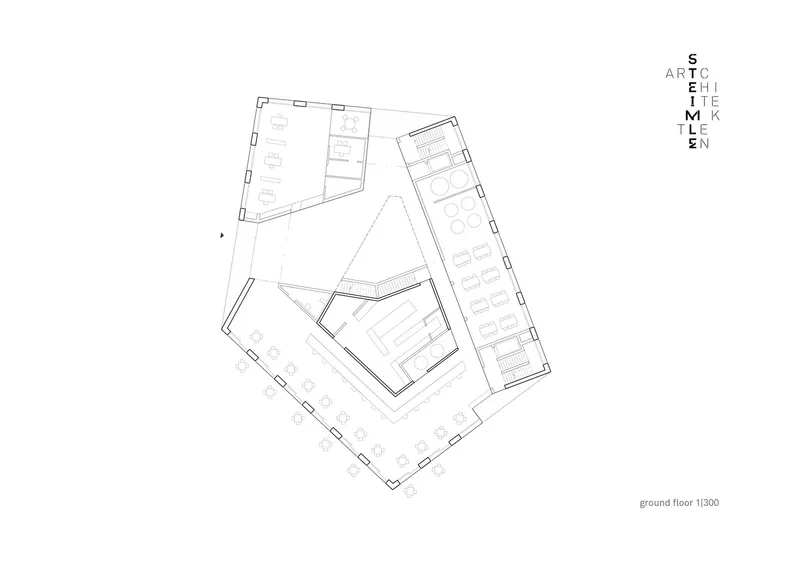
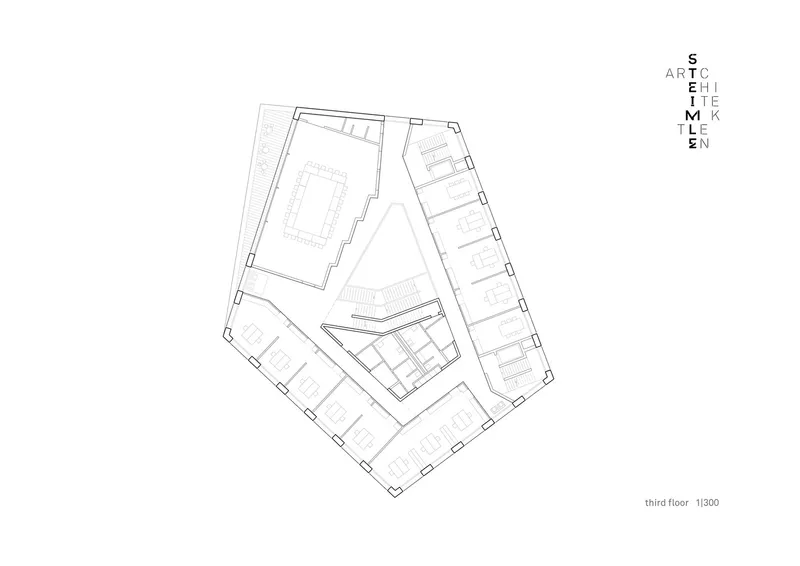
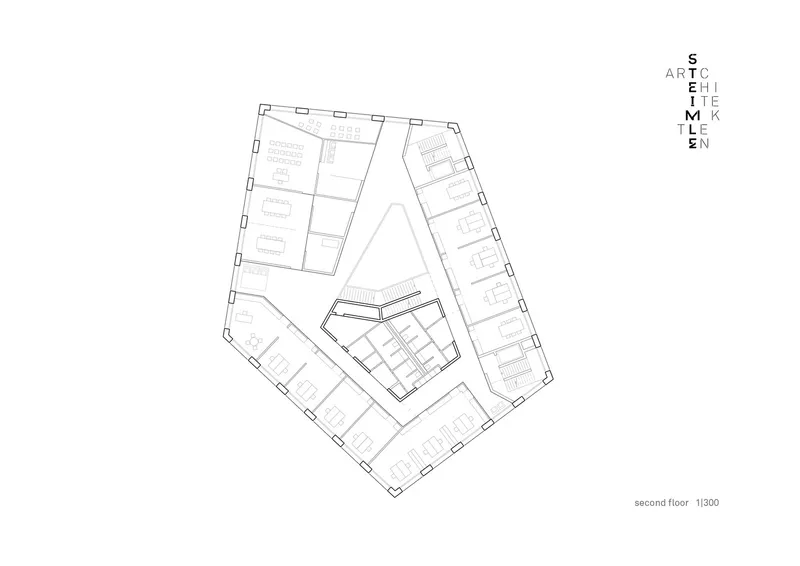
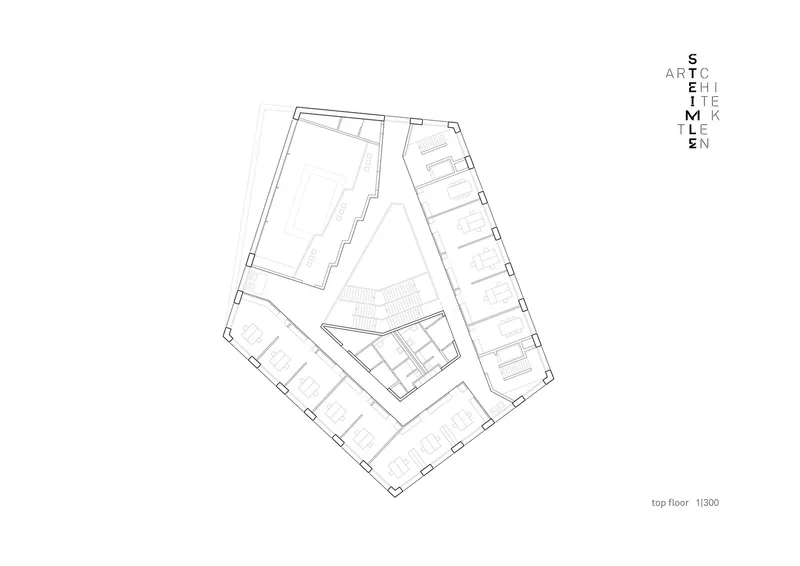
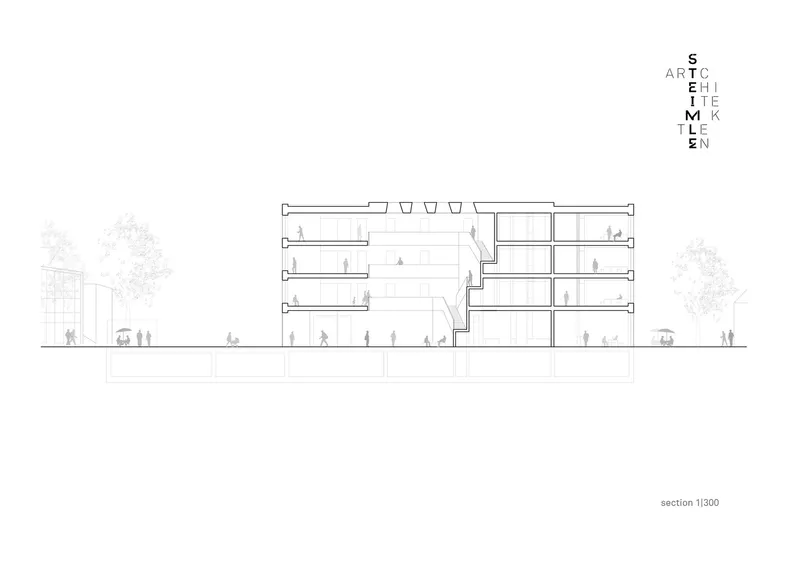
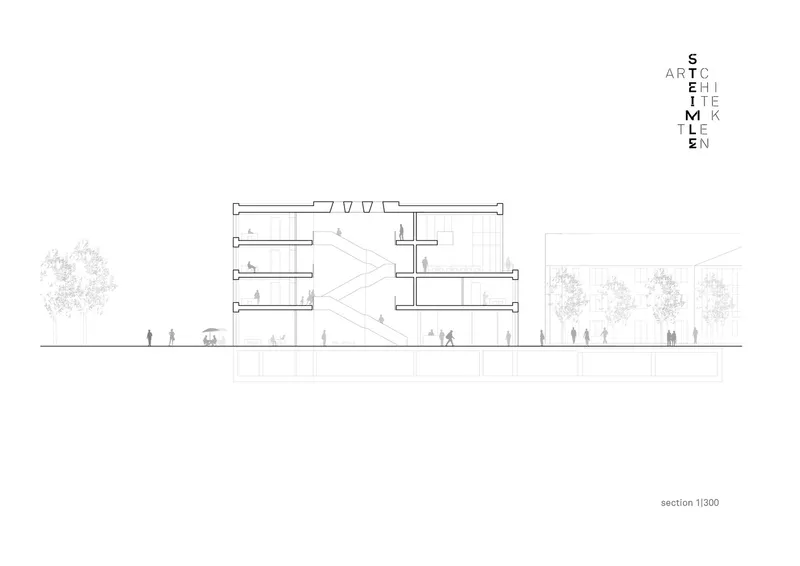
The drawings confirm what the photographs suggest: the pentagonal footprint is not a simple extrusion but a carefully negotiated response to the site's irregular geometry. The site plan shows the building threading between curved pathways and neighboring structures, occupying nearly the full plot. In plan, rooms are arranged in a continuous ribbon around the central triangular atrium, with circulation absorbed into the void rather than consuming perimeter space.
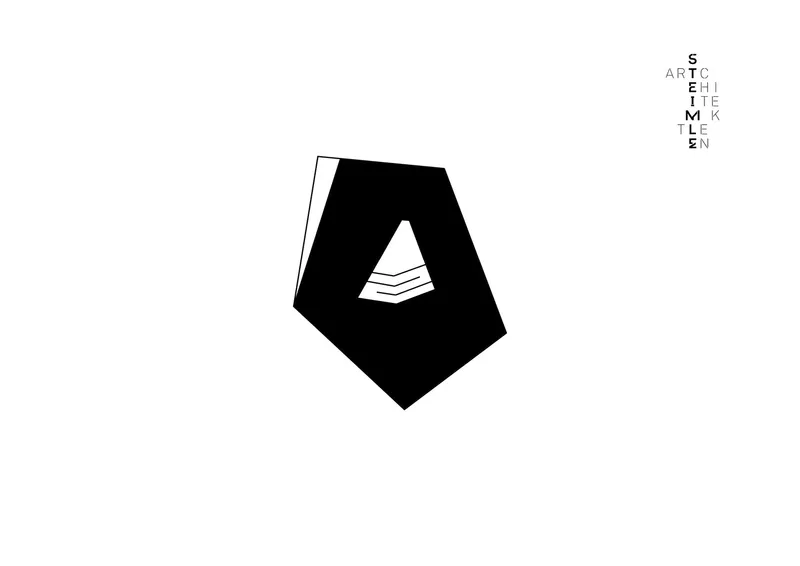
The sections are especially revealing. Staggered floor plates create double-height moments where the program demands them, and the triangular atrium volume tapers as it rises, concentrating light at the top and directing it downward. The axonometric diagram makes the formal logic unmistakable: a pentagonal solid with a triangular void punched cleanly through it. It is a diagram strong enough to organize the entire project, and the built result proves it works.
Why This Project Matters
City Hall Remchingen matters because it demonstrates that civic ambition and small-town scale are not contradictions. Too many municipal buildings in communities this size either mimic domestic architecture out of false modesty or import metropolitan gestures that feel out of place. Steimle Architekten finds a third path: a building that is unambiguously public, materially rigorous, and spatially generous without overreaching. The triangular atrium is the key, transforming what could have been a bureaucratic box into a genuine public interior.
The project also makes a quiet argument for precast concrete as a civic material. In an era when timber and sustainability narratives dominate the discourse, this building shows that well-detailed concrete can achieve thermal mass, daylight optimization, and durability with an honesty that other materials struggle to match. The skylights, the deep-set windows, and the atrium's natural ventilation potential are not bolted-on sustainability features. They are the architecture. That integration is what separates a landmark from a label.
City Hall Remchingen by Steimle Architekten, Remchingen, Germany. Photography by Brigida González.
About the Studio
Share Your Own Work on uni.xyz
If projects like this are the kind of work you want to make, uni.xyz is a place to publish your own, find collaborators, and enter design competitions.



Popular Articles
Popular articles from the community


Co-Life: Senior Housing Design That Reconnects Older Adults With the City
Co-Life reimagines senior housing design through healing gardens, shared streets, workshops, and a sustainable community across generations.

Conexión: Biophilic Design Reimagines High-Rise Living in Hong Kong
Conexión reimagines high-rise living in Hong Kong through biophilic design, green facades, shared spaces, daylight, water and nature within.

Hill & Cross Opera: Sculptural Opera House Architecture Shaped by Tallinn’s Landscape and Identity
Hill & Cross Opera reimagines opera house architecture in Tallinn through its sculptural hill, civic plaza, glass wave and a luminous cross.

AL-JANNAH: Sustainable Architecture and Permaculture for Afghan Widows
AL-JANNAH uses sustainable architecture and permaculture to create resilient oasis of housing, learning, work and renewal for Afghan widows.


Similar Reads
You might also enjoy these articles


Hodi-Mandai Geram
Project Function: Preservation and revitalization of the Intangible heritage and socio-spatial identity of the Hodi by Housing, Cultural Memory Center, Sacred Grove, landscape, local tourism economy


Olio Towers: A Mid-Rise for Performers That Fuses Housing, Rehearsal, and Stage
Located blocks from Houston's Theater District, this modular tower stacks living units around a central performance atrium.

Oasis: Modular Green Housing Carved into Dhaka's Urban Fabric
A shortlisted Plugin Housing entry reclaims unauthorized settlements in Dhaka with stepped concrete volumes, green roofs, and ventilation-driven design.

Black Hole: A Floating Megastructure for the Post-Physical Era
Emiliano Mazzarotto envisions a spherical, self-scaling arena where e-sports, digital hotels, and holographic stadiums replace traditional public space.
Explore Staarch Architects Competitions
Discover active competitions in this discipline



Challenge to reimagine the Iron Throne


Photograph architecture without architects


Illustrate the lost glory of Angkor Wat - Render Challenge


Design challenge to reuse E-waste
Comments (0)
Please login or sign up to add comments
No comments yet. Be the first to comment!