

City lights guide us into the night
The role of illumination in night architecture

Imagine if light was meant more than just to contribute to visibility, but was used not only to help us solve various visual tasks, but also convey meanings as well. Designers use light as a form of language in rooms and they purposefully structure architecture when designing a building that it may serve both as a beautiful object seen from the outside and an efficient liveable home inside. If a particular design has been created with the intention of conveying a message then consider adding this cognitive insight into your content mix. Consider what could be achieved if we could fully control the messages our content is sending? Just like light can affect mood and alter our emotions by speaking directly to our visual senses, so too can words affect how we think and feel when consumed.
According to semiotics, light can be perceived as code and a unit of information that generates a specific identity in a space. We can even consider that we might change our behaviour with different lights in different settings - for example when sitting at a table in a brightly lit room compared to a setting where the warm glow of candles illuminates the scenery, it feels like someone has confronted us with a loud appeal versus an intimate and poetic rhetoric.
Reading the code of architecture and light is only one tool among many in architectural evaluations. Identifying key contributing elements of a design is the first step for promoting a new outlook on things. Comprehending that a space has both aesthetic qualities (the existing architectural context) as well as functional qualities promotes true understanding of how aesthetics relate to function. Designers strive to create more sustainable solutions by taking a deeper look at the meaning of light and shadow throughout the process, leading to optimal and lasting results that transcend simply looking at efficiency or visibility.
Role of lighting in iconic architecture…
Accompanied by the belief that light and brilliance can help in creating iconic architecture and a better human world, glass and metal have been innovatively transformed to create crystalline images. As a result, the locus of meaning in architecture has shifted from the internal space-form towards the external surface.
Zaha Hadid’s architecturally impressive projects were not only ground breaking because of her use of material forms but also because of the light footprint she left behind. Some of the best work that has been done with her name attached to it is when it comes to working with light and how she simplified her ideas into reality by using new advances in fluidity and fragmentation. One project in particular was highly praised as an exemplary design approach: The Vitra Fire Station designed during 1990. This building, though small in size and simple on the outside, tricked people into thinking they had imagined various planes rather than articulately placing mirrors to collect a spectrum of light in myriad ways.
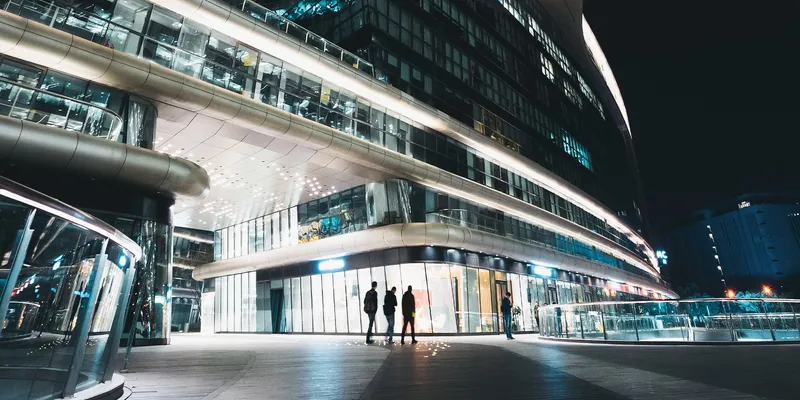
The curve elements, glass and reflective surfaces illumites the building and the surrounding area.
The right lighting can affect how things appear to us, it impacts our surroundings. We see by reflected light; the objects we see around us result from that bounced-back light. Architect Zaha Hadid used lighting in a unique and influential way. She worked skilfully to enhance her architectural imagination. Luminaires are featured prominently in her early work while luminous fields with reflections were more prominent in her later work.
The art involving media facades…
The story telling of media facade animations is chaotic. Video sequences with nature, architecture, people, text and sound symbolize an optimistic future in megacities. In this way, two worlds that are structurally far apart are merged: Urbanization with high-tech skyscrapers stand in strong contrast to the visualization of romantic, untouched landscapes which the building industry has pushed away... In addition to their political relevance, light shows have a significant role for tourism as a catalyst for the night-time economy. Environmentalists too on the other hand, have serious concerns on the amount of light pollution and pressure on electricity the new light trends are raising.
How cities are employing lighting strategies…
Numerous urban centres in cities across the globe are over saturated during their peak evening hours, with building owners doing whatever they can to attract attention to their property and therefore make a buck. They employ very bright lighting, too harsh contrasts or unlike coloured façade lighting. This oversaturated lighting doesn't acknowledge the importance of being sensitive to light levels and to nature.
In contrast, the Zurich master plan for lighting focuses on sensitive white lighting. The skyline of Zurich becomes much more intricate when the sun is going down. The presence of so many buildings of various character and purpose at once show what a harmonious city it is. Lights are adjusted in such a way that they create just the right amount of illumination in certain areas while also creating spaces where people can appreciate the interesting architecture. In most cities, competition between buildings lead to showy displays that over-claim attention. This would not be appropriate for a city on a lake with its alpine heritage, instead urban designers have decided on this mutually respectful setting where the lights come together to create a lively atmosphere but don't overshadow any one building in particular, each contributing in its own way to the completion of a perfectly balanced image.
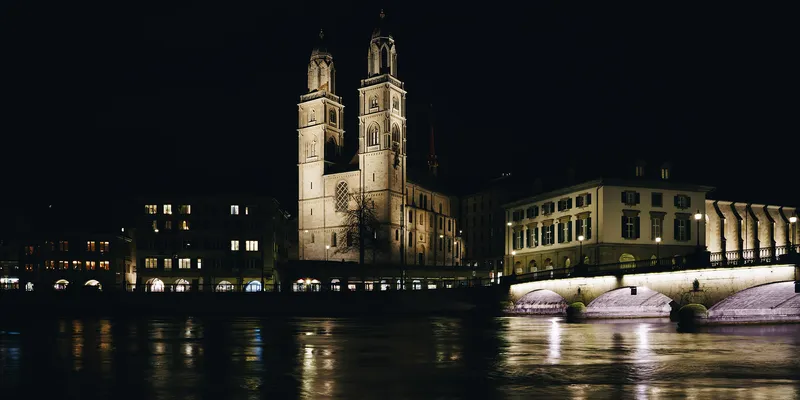
White lights used in buildings lining the lake in Zurich and neutral lights in the interior of the city.
Taking a path of understatement with modest illumination is neither an expression of indifference for regional tradition nor for tourism. It’s instead a self-conscious cultivation of a unique style that breaks the global trend for sensational communication. Hence, the buildings achieve a much more sensitive quality than they would have with the use of universal floodlights, where power, glare and light pollution are typical. Zurich’s sensitive presence at night would not have been possible without a comprehensive masterplan for urban lighting which included an awareness of regional identity in this case as an elegant standout within its immediate surroundings.
One of the most important aspects is that the design concept has focused on the illuminated space, and not staging luminaires. Using the “less is more” notion has led to an emphasis on darkness. Where instead of prescribing more light, the city has favoured different light. This approach also came with some positive side effects: the plan is friendly to environmental issues and helps avoid light pollution when trying to preserve a healthy night environment for pedestrians.
The unobtrusive night image of the city which seduces citizens and tourists with its minimally elegant appeal, creates an attractive alternative to cities that strive for particularly grandiose spotlighting and lighting designs.
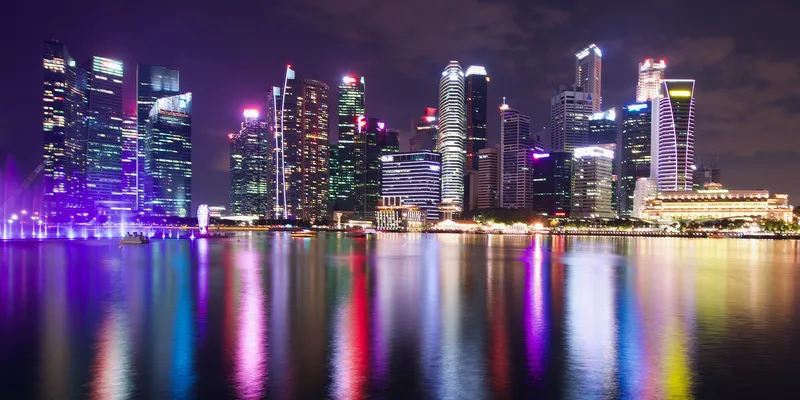
Lighting in cties is expressive of identity, economic prowess and prosperity.
Architecture may be understood as a temporal art. Peter Zumthor observes and explains that our human behaviour has evolved through an advanced emotional sensibility. He states, “As soon as we enter a place, we begin to sense its identity.” These intuitive sensations are expressed in an attempt to grasp the spirit of the space or building that we are entering. Such as emotional sensibility is further sharpened in nocturnal cities when our eyes are less dependable as a means to make sense of what surrounds us, and there's so much you can see at night time.
References (7)
Media Scapes in China: How Culture and Politics is Shaping Connected Media Facades
ISBN: None



Popular Articles
Popular articles from the community


The Earth Pod: 3D Printed Homes for Resilient Refugee Communities
The Earth Pod reimagines refugee housing through 3D printed homes made from clay, combining resilience, self-sufficiency, and rapid shelter.

Riyadh For All: Intergenerational Urban Design for Active Aging in Rabat
Riyadh For All reimagines urban design in Rabat with intergenerational co-living, adaptive courtyards, and Moroccan cultural exchange today.

The Musturak Paradise: Senior Living Architecture for a Connected Future in Temara, Morocco
The Musturak Paradise reimagines senior living architecture in Temara via private homes, social spaces, culture, community, and shared care.

Play: Fragments of Their World
Familiar architecture becomes modular playground design, creating safe spaces where displaced children can learn, connect, imagine and play.


Similar Reads
You might also enjoy these articles

Day and Night Park: A Time-Based Urban Newsstand in Beijing
A temporary urban newsstand in Beijing blending travel, light, and reading through poetic colors, compact form, and community-focused design.

Modernist Patio Renovation in El Masnou, Barcelona by Oliver Segura Arquitectura + Cebrià Arquitectura
Modernist patio renovation blending tradition and innovation with a movable pool, leveled floors, and Catalan materials in El Masnou.

Alto Residencial Coop: Cooperative Housing Development in Santiago de Compostela by Carbajo Barrios Arquitectos
A linear cooperative housing complex blending white volumes and perforated metal façades, enhancing community living, natural light, privacy, and urban integration.
Vil Genis School by BPA ARCHITECTURE – Massy, France
Vil Genis School in Massy, France, features sustainable design, south-facing classrooms, community integration, accessible spaces, and modern educational architecture.


Comments (1)
Please login or sign up to add comments
Illumination and lighting role highlighted well, good compilation of details of many aspects. Night views of city and architecture made coherent, transition could be improved. Nice job!