

Clos Pachem Winery – HARQUITECTES | Gratallops, Spain
Clos Pachem Winery by HARQUITECTES in Gratallops, Spain combines biodynamic winemaking, passive design, brick architecture, and immersive visitor experiences.


Clos Pachem Winery, designed by HARQUITECTES, is a state-of-the-art biodynamic winery located in the historic village of Gratallops, Spain. Completed in 2019, this 1,117 m² facility integrates advanced passive design principles with traditional architectural elements, creating a sustainable environment optimized for winemaking. The project demonstrates a seamless balance between architectural innovation, functional winery spaces, and environmental sensitivity.
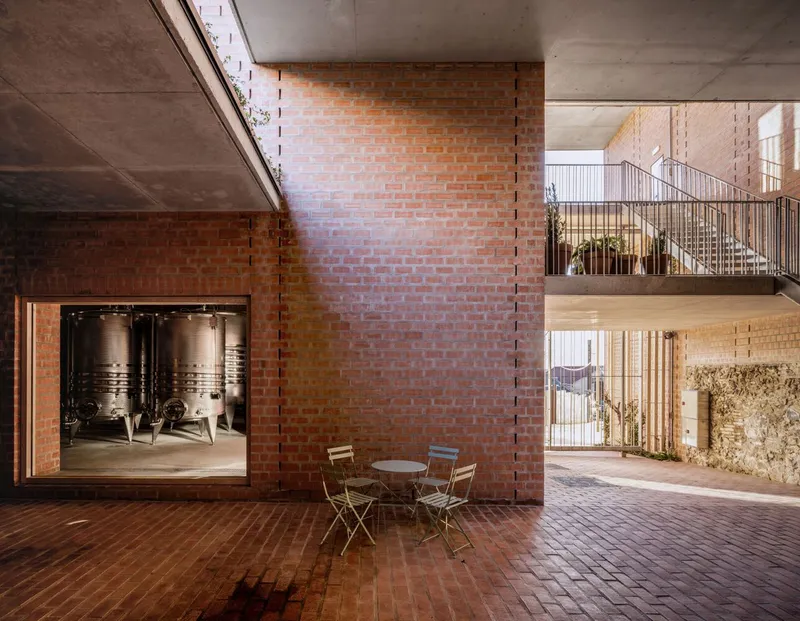
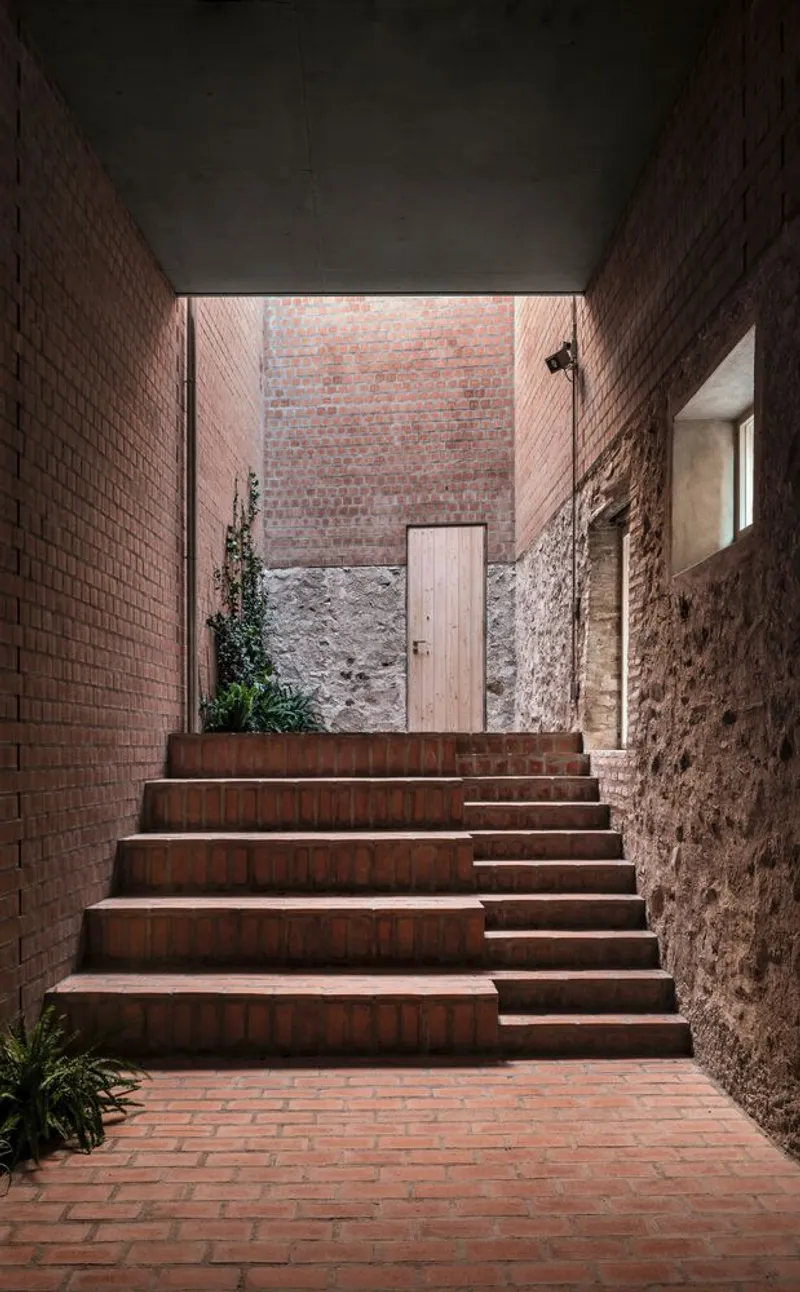
Site & Context Situated on an L-shaped polygonal plot in the heart of Gratallops, the winery is surrounded by narrow streets and historic row houses. The site’s defining feature is its boundary stone wall, a remnant of a former handball structure that rises up to 10 meters, providing a unique starting point for the project’s geometry. The building’s design carefully respects the village’s historic context while introducing contemporary functionality.
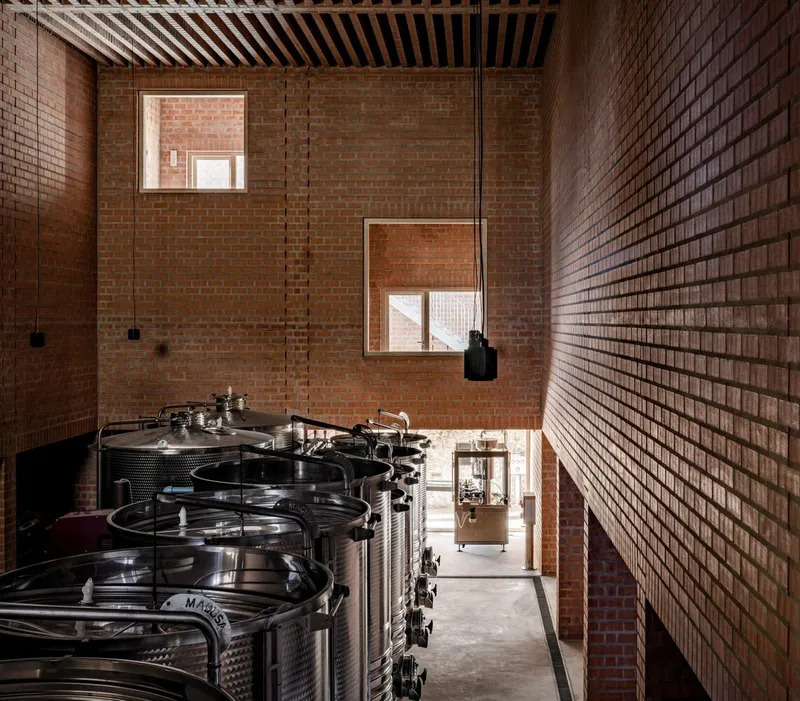
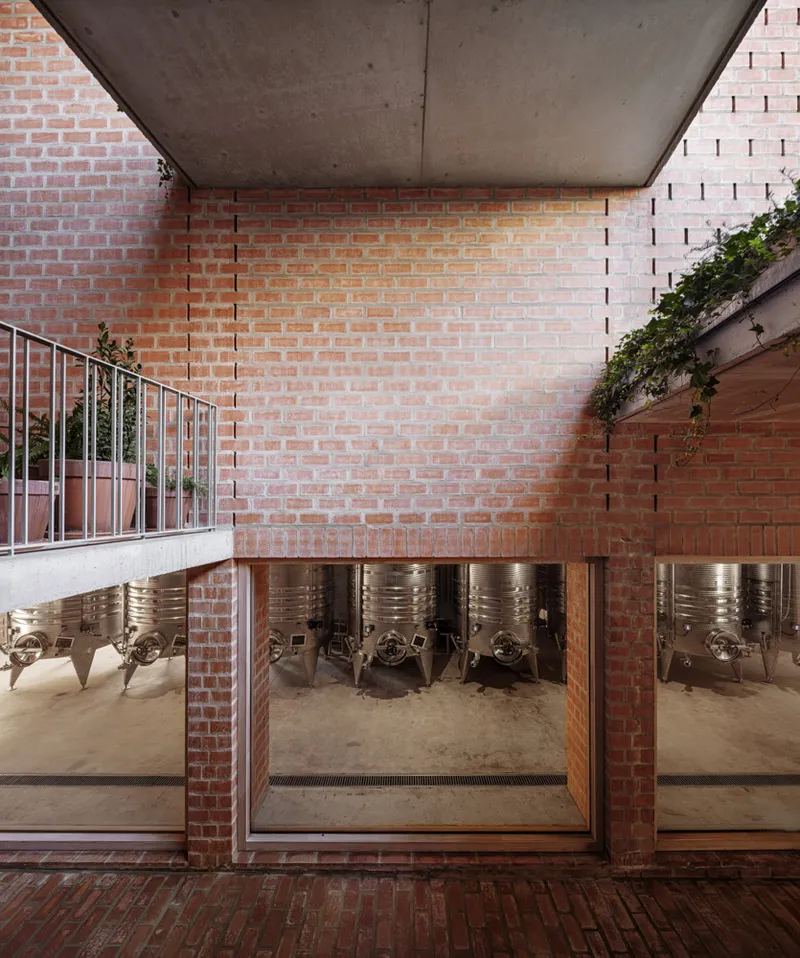
Architectural Concept & Layout The design divides the winery into two main zones:
- The Winemaking Pavilion – A large, high-volume space that houses fermentation vats and acts as the project’s heart. Its three-story interior is insulated with 1.75-meter-thick walls and features a bioclimatic cooling system using multi-layered brick walls to maintain optimal temperature and air circulation.
- The Passage (Z-shaped zone) – Encircling the main pavilion, this multifunctional corridor follows the irregular line of the stone wall, serving as a reception, circulation, and tasting space for visitors. The passage functions like a terraced garden with varying roof heights and slabs, allowing rainwater management and passive cooling while providing sheltered areas for outdoor wine tasting events.
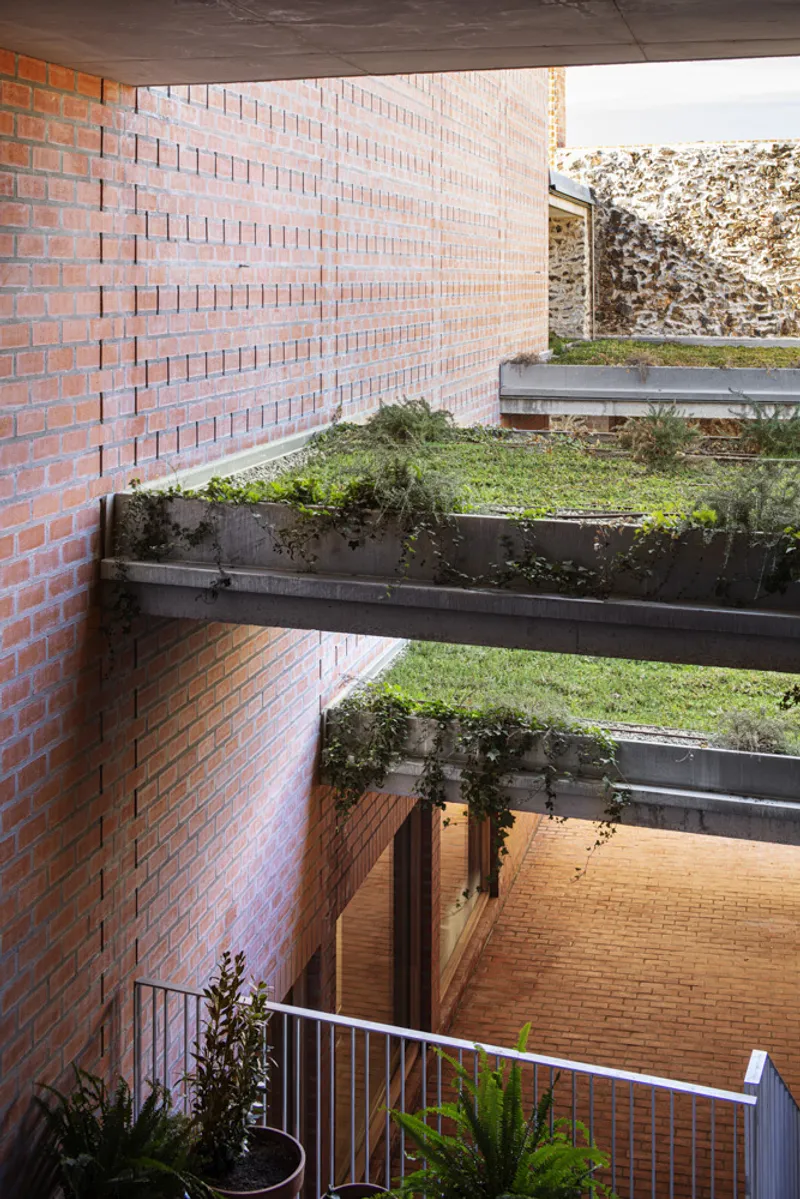

Bioclimatic & Sustainable Design Clos Pachem Winery employs innovative passive strategies to support biodynamic winemaking:
- Thermal Inertia: Thick walls and high ceilings facilitate natural stratification of warm and cool air.
- Roof Cooling System: A closed-circuit water cycling system leverages night-time radiation to refrigerate interior spaces efficiently.
- Water Management & Green Roofs: Rainwater is collected and gently released through successive roof levels, irrigating vegetation and cooling the passage naturally.
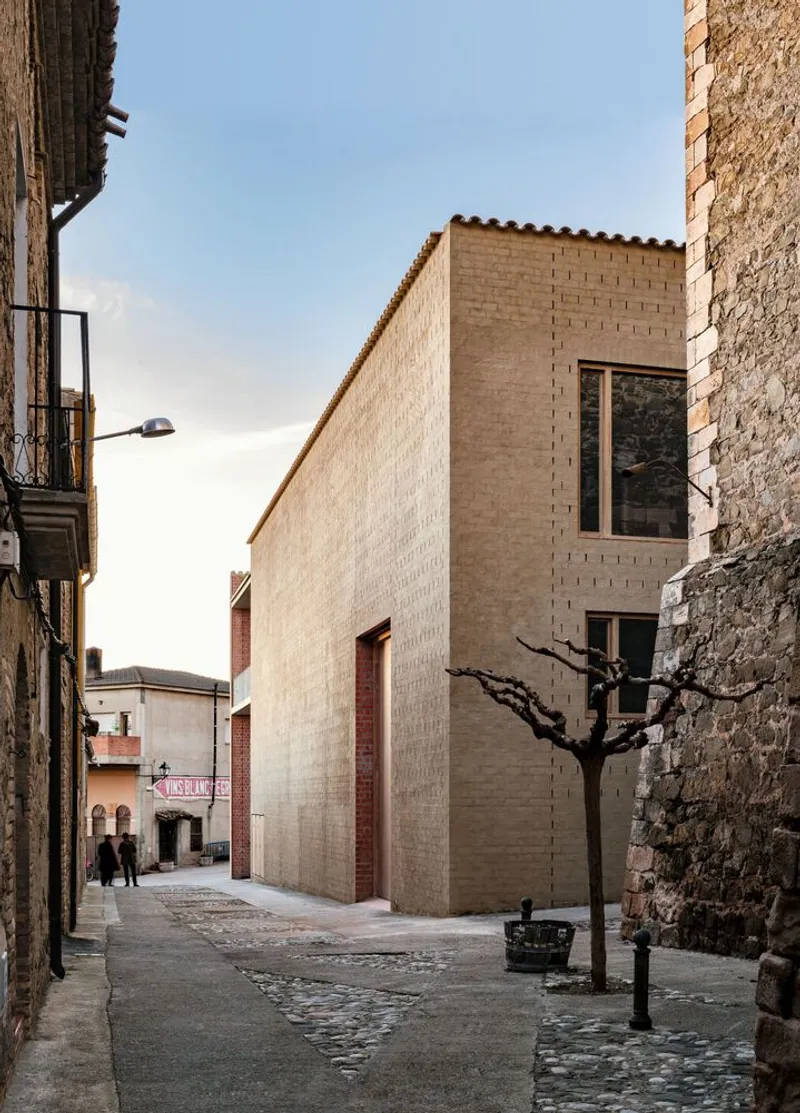

Materiality & Aesthetic Externally, the winery features a vernacular aesthetic with lime mortar walls and tile-capped facades that harmonize with the village context. Internally, brick, timber, and deep structural walls convey robustness, while chapel-like cavities along the perimeter allow functional storage and circulation. The architectural language shifts from a modest street presence to a complex, high-tech interior that slowly reveals the building’s systems and processes.


Winery Functionality & Visitor Experience The facility balances production needs with visitor engagement. The vinification hall, barrel storage, and bottled wine storerooms are carefully controlled for temperature and humidity. Visitors experience a journey from the light-filled, welcoming passage to the dark, dense fermentation spaces, highlighting the contrast between public interaction and technical winemaking.

Clos Pachem Winery is a masterclass in sustainable winery architecture, combining passive bioclimatic strategies, historic context, and biodynamic production needs. HARQUITECTES has created a building that is both functional and experiential, offering a unique narrative of wine,architecture, and environment.
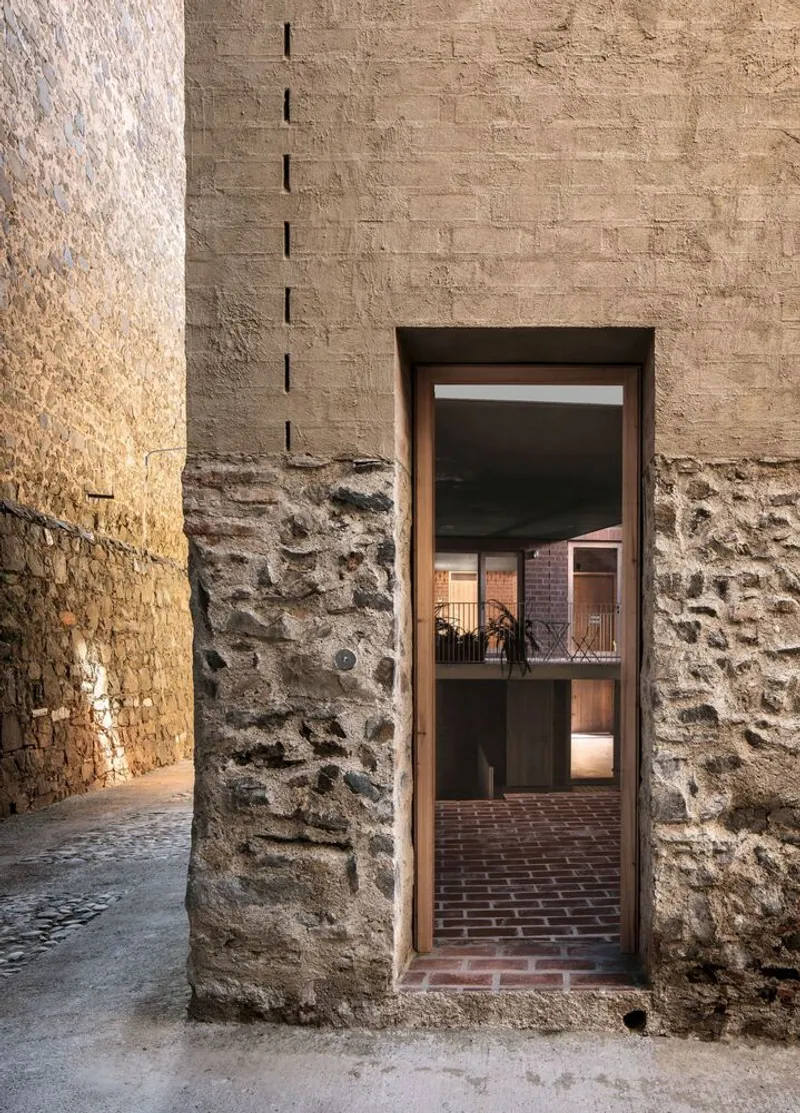

All Photographs are works of Adrià Goula



Popular Articles
Popular articles from the community


The Musturak Paradise: Senior Living Architecture for a Connected Future in Temara, Morocco
The Musturak Paradise reimagines senior living architecture in Temara via private homes, social spaces, culture, community, and shared care.

Hill & Cross Opera: Sculptural Opera House Architecture Shaped by Tallinn’s Landscape and Identity
Hill & Cross Opera reimagines opera house architecture in Tallinn through its sculptural hill, civic plaza, glass wave and a luminous cross.

Conexión: Biophilic Design Reimagines High-Rise Living in Hong Kong
Conexión reimagines high-rise living in Hong Kong through biophilic design, green facades, shared spaces, daylight, water and nature within.

The Earth Pod: 3D Printed Homes for Resilient Refugee Communities
The Earth Pod reimagines refugee housing through 3D printed homes made from clay, combining resilience, self-sufficiency, and rapid shelter.
Similar Reads
You might also enjoy these articles


Hodi-Mandai Geram
Project Function: Preservation and revitalization of the Intangible heritage and socio-spatial identity of the Hodi by Housing, Cultural Memory Center, Sacred Grove, landscape, local tourism economy


Olio Towers: A Mid-Rise for Performers That Fuses Housing, Rehearsal, and Stage
Located blocks from Houston's Theater District, this modular tower stacks living units around a central performance atrium.

Oasis: Modular Green Housing Carved into Dhaka's Urban Fabric
A shortlisted Plugin Housing entry reclaims unauthorized settlements in Dhaka with stepped concrete volumes, green roofs, and ventilation-driven design.

Black Hole: A Floating Megastructure for the Post-Physical Era
Emiliano Mazzarotto envisions a spherical, self-scaling arena where e-sports, digital hotels, and holographic stadiums replace traditional public space.

Explore Wineyard Competitions
Discover active competitions in this discipline


Challenge to design luxury tourism on rails


Challenge to reimagine the Iron Throne


Photograph architecture without architects


VR headsets Storefront design competition
Comments (0)
Please login or sign up to add comments
No comments yet. Be the first to comment!