
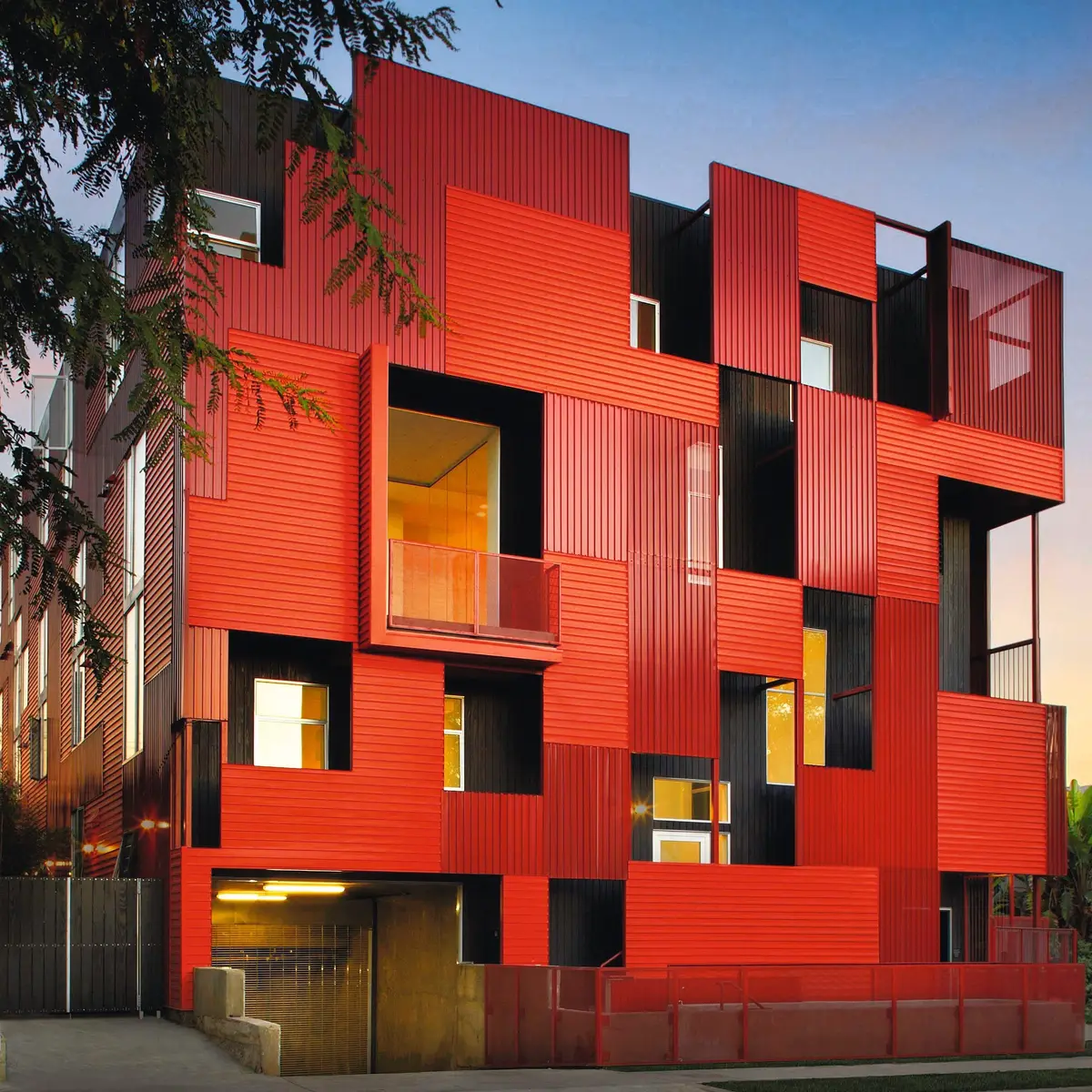
Cocoon
This project designed for Playground in Poland Warsaw
Childhood process is the basic process in life where the development process is a whole. As a part of the basic process, the child's place, behavior and play practices transform this process into an instructive process. In this study, environmental data and pedagogical method were evaluated with the regio emilia method using the Grasoppher program. The data obtained were transformed into playgrounds according to the children's play types.
Playgrounds are where the transformation begins at this point. It acts as a cocoon as the place where a caterpillar turns into a butterfly. For this reason, they need to carry out the learning process and their imagination in playgrounds without restricting them.
1. Historical Process and Approach to the Field
The project area, located in Park Sady Żoliborskie, is within the post-war housing estate of the historic city of Warsaw. The practice of rebuilding is strong. Thus, it constitutes an important data for the project. Housing, people, built environment, social facilities and environmental effects on the land and its immediate surroundings were examined. Data transfer to the design was provided. With these data, an original design was tried to be revealed with strong construction and production techniques.
Road routes and city circulation of the project area were examined. The effects of pedestrian and vehicle crossings on the land environment were examined. These analyzes yielded information on child safety, accessibility, and potential population density. When the natural data were examined, the field solar simulation was examined, since the information was not directly accessible. Data was obtained with the ladybug plugin from Grassopher. These data became an important data used in the next process for children's circulation and game decisions in the area. Availability of Data affects not only a part of the decisions but also the whole production. Because space orientation directly affects sustainability and use.
2. Regio Emilia
Piaget, Similansky and Parten, who enable the development of thinking, aim at thinking based on the game. For this reason, they tried to explain the game practices and behaviors. Behaviors classified according to the age of the child make it easier to understand the childhood process. Patterns of behavior by age classification presented layers of child development. 0-2 age group practical game, 2-7 age group symbolic game and 7-12 age group play according to the team and rules. Categories are fundamental in the formation of the rules of the codes to be given for the formation of the space. Categories are the basic theories that can be the basis for the formation of space.
3. Child Movements, Position and Behavior
Children's movements were examined on 6 basic game types in Reggio Emilia . These game types are: Free Game, Alone Game, Together Game, Join Game, Parallel Game, Audience Behavior. Children play different games at different developmental stages. The difference of the games is seen not only in the toy (the thing played), but also in the environment and friendship relations. For this reason, an approach was taken to include different friendships and game types in the same venue. 6 basic game types were included in the diagrams and a path that turned into a place from these game types was followed.
4. Rules of Spatial Formation
When the specification was examined, it was necessary to produce the space with codes as a way of providing modular and multiple activities together. The basic quality of these codes was created based on environmental data and child movements. First of all, the area was defined, in this area, the data obtained from the Regio emilia game categories and the natural lighting times of the environment were matched, in this way the places of the game types on the area were determined. After the safety distance was given in accordance with the road and transportation analysis, the intervention area was determined as the center of the settlement area. As a potential for child soil and light interaction, the ground level of the part outside the tree area was lowered by 1.5m. All of these processes were done using the grassopher Kangroo Plugin. The series of points of the intervention area were reproduced in the z plane and turned into a point cloud. The point cloud was kept to the 5m limit as per the specification and rendered to be active outside the trees. Volumetric data of the movement, position and interaction of the children with each other of the game types played in this area were taken. A point map of the children in this area was obtained from the point cloud segment with volumetric data. This data carries the potential of any other game that can be made not only with their code entries. Network was created in the code using the Proximty of the point map. A change was also achieved in the network according to the intensity of movement and different factors. In this way, it is possible to make different productions with the same system with the data of different playgrounds. With the obtained network, it forms a structural body in the area. The structure can be an element, director, participant of the game and at the same time the carrier of the indoor space. After the potential of this is realized, the child in the playground will make the decision.
4.1 Detail Solutions
When the building was subjected to the production process, when the idea of building was activated, it was considered how the units that make up the building came together. The formed steel units formed the main structural structure of the building. Cocoons in organic form were formed between the steel structures, and these cocoons enriched the playing field. Cocoons; wooden units were combined and brought together. The textil material surrounding this wooden structure was chosen to be suitable for the children's playground and the structure. The textile material was considered as linen produced from organic raw materials
Conclusion
As a method of creating space, codes are one of the ways to see the potential of production and unpredictable alternatives. The first aim was to create an area where he could stage his dream world, beyond the difficulty of catching up with his dream world. In this way, the playground, which is the place where children are located from the first stage of their development, is also an education area. This area was evaluated with the environmental data and the regio emilia method as a pedagogical method. The data obtained were transformed into spaces according to children's play types.
Referances:
Hatice Zeynep İnan, (2012/2017) Contemporary Approaches in Preschool Education: Reggio Emilia Approach and Project Approach, Anı Publishing, Ankara.
Hatice Zeynep Inan, Kathy Cabe Trundle & Rebecca Kantor (2010), Understanding Natural Science Education in a Reggio Emilia Inspired Kindergarten, Journal of Research in Science Teaching [JRST], 47(10), 1186-1208.

Popular Articles
Popular articles from the community

Faces of the Soviet Avant-Garde: Turning Moscow's Street Names into an Open-Air Museum
A network of sculptural installations across a Moscow residential district transforms forgotten architect names into spatial encounters with cultural memor

Opera on the Sea: Driftwood Logic Shapes a Timber Opera House on Estonia's Coast
Trevor Orgill's opera house translates the entangled drift of floating timber into a civic building where wood, water, and music converge.

The Amber Palace Opera: A Geological Fiction Surfaces on Tallinn's Baltic Waterfront
Pierre Brillard reimagines a Baltic legend as a public landscape, opera house, and waterfront promenade rooted in Tallinn's coastal identity.
Opera by the Sea Estonia: Three Shells Dissolving Architecture into Tallinn's Coastline
A winning opera house proposal replaces monumental form with interconnected shells that blur the boundary between building, park and Baltic Sea.

Similar Reads
You might also enjoy these articles
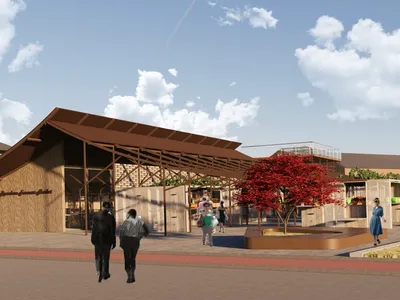
The Rhythm of Seasons
A Farmers' Market Connecting Nature and the City
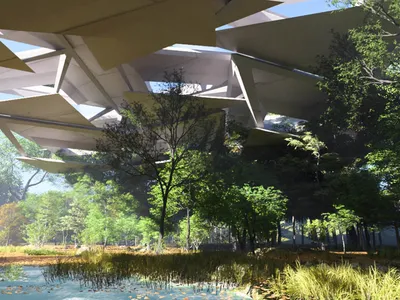

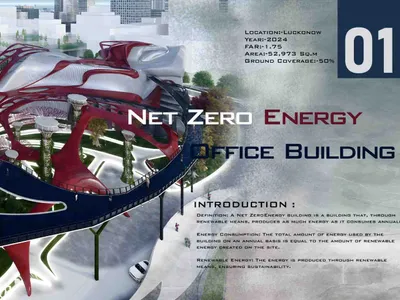
More Than a Building-Designing a Living System
More Than a Building-Designing a Living System
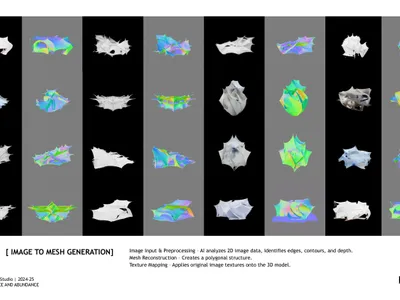
Base Beyond
DESERT COMPOUND ARID: TOURISM OF ABSENCE AND ABUNDANCE

Explore Playground Competitions
Discover active competitions in this discipline


Challenge to reimagine the Iron Throne

Photograph architecture without architects

Illustrate the lost glory of Angkor Wat - Render Challenge

Design challenge to reuse E-waste
Comments (0)
Please login or sign up to add comments
No comments yet. Be the first to comment!