
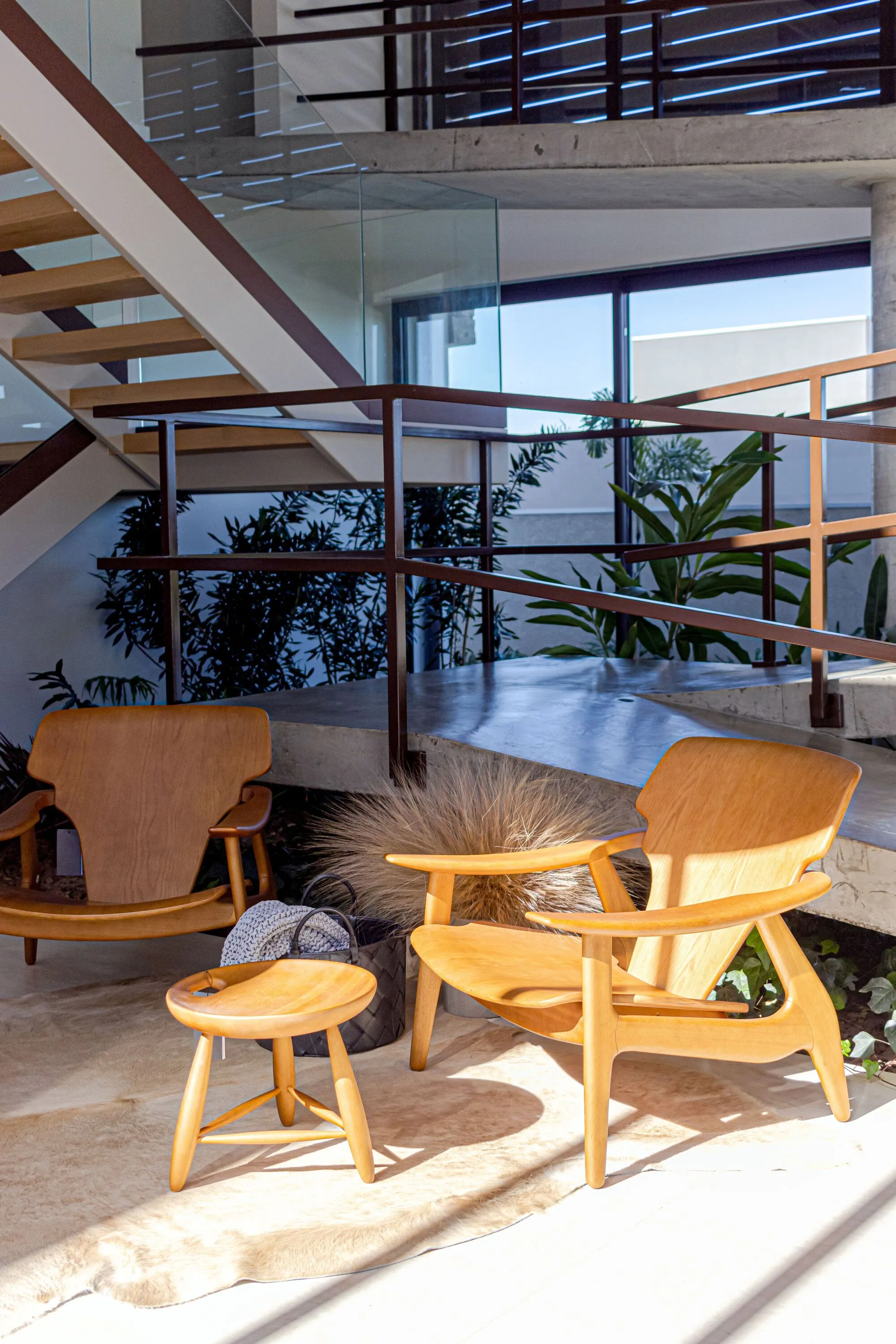
Coelho Neto Arquitetura Organizes a Brazilian Valley House Around a Central Ramp and Planted Atrium
In Apucarana, Paraná, a 603-square-meter residence splits into two blocks linked by a ramp that doubles as its spatial spine.


A ramp is an ordinary piece of architecture. It moves people between levels, satisfies accessibility codes, and rarely gets its name on the marquee. In the Ramp House by Coelho Neto Arquitetura, the ramp does something more: it becomes the connective tissue between two distinct domestic blocks, threading social and intimate zones together while carving out a double-height atrium flooded with light and planted beds. Designed by lead architect Benedito Coelho Neto and completed in 2022 after a two-year construction period extended by the pandemic, the 603-square-meter residence sits in a valley outside Apucarana, Paraná, oriented to frame the sunset across an expansive landscape.
What makes the house genuinely interesting is the decision to treat circulation not as leftover space but as the project's primary architectural event. The ramp, the bridges, and the walkways that connect the two blocks generate the most spatially dramatic moments in the house, hovering above planted courtyards, catching sharp shadows from overhead skylights, and turning a simple change in elevation into a sequence of views. The result is a house that feels larger and more varied than its footprint suggests, precisely because its in-between spaces are the most generous.
Stone, Timber, and a Grounded Street Presence
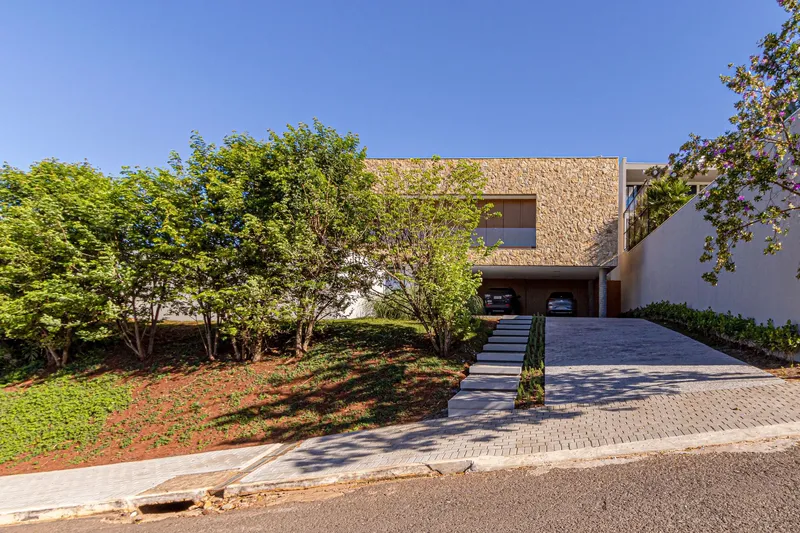

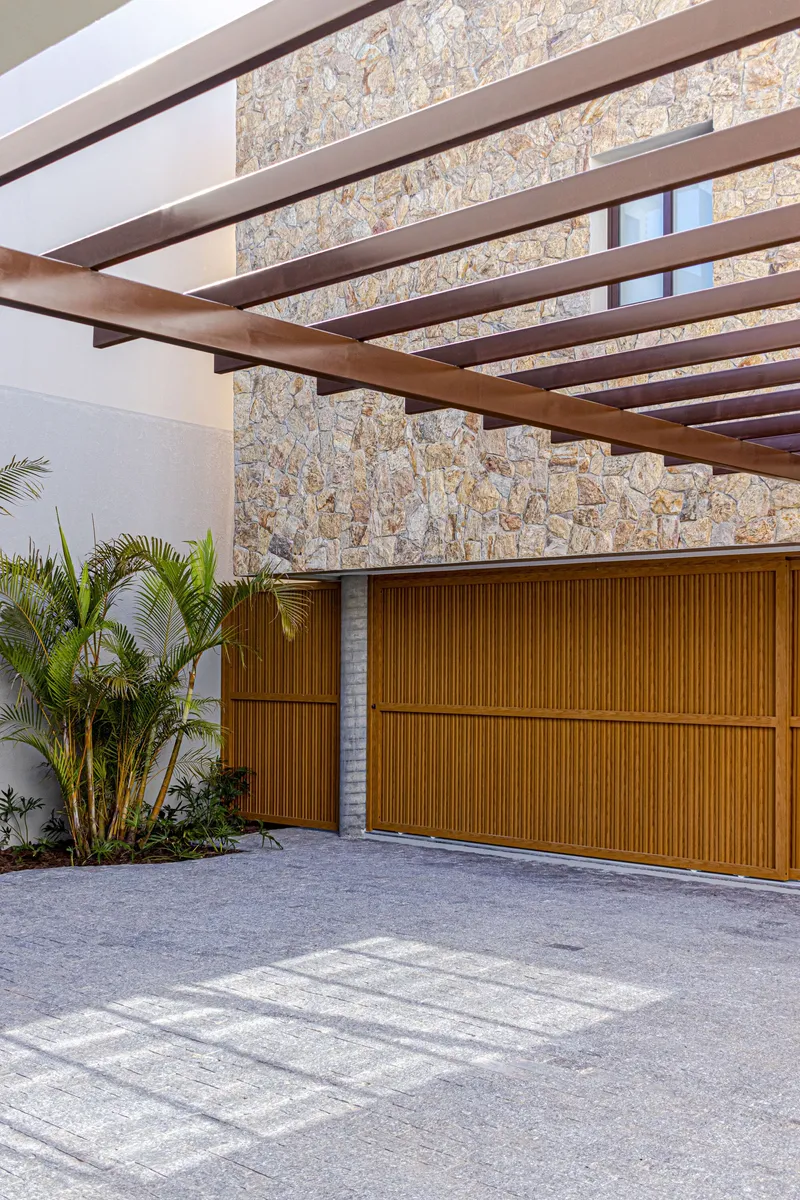
From the street, the Ramp House presents a restrained face. A rough stone wall anchors the facade, grounding the building in a material palette that reads as both regional and deliberate. Vertical timber slats form the garage door and pergola overhead, introducing a rhythm of shadow and light that softens the mineral heaviness of the stone. Concrete steps cut into a sloped lawn lead visitors upward, hinting at the sectional play inside without giving it away.
The carport, nestled beneath slatted timber beams and flanked by palm trees, demonstrates how seriously the project takes the threshold between public and private. There is no grand entry portal here, just a careful calibration of opacity: stone gives way to timber, which gives way to the planted strip alongside the concrete walkway. The clients requested wood, stone, and cement as their primary materials, and the facade delivers all three in a composition that feels earned rather than decorative.
The Atrium as the Heart of the House
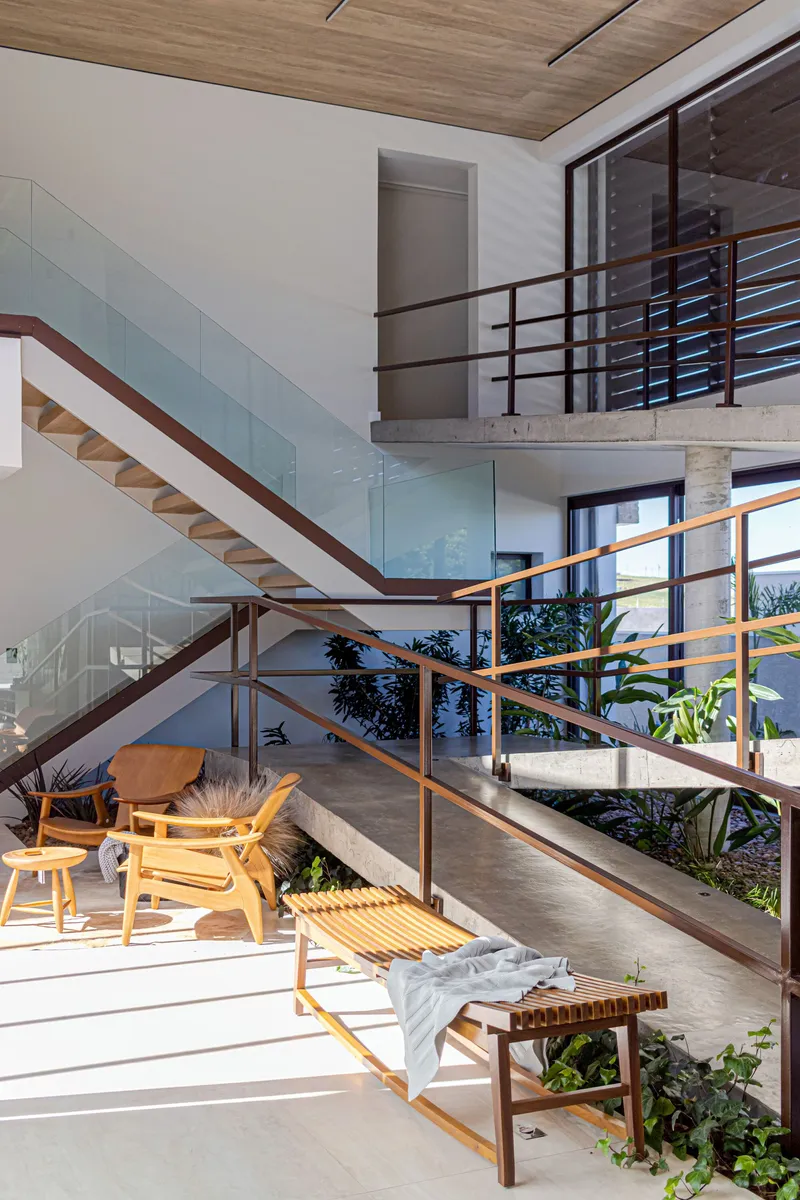


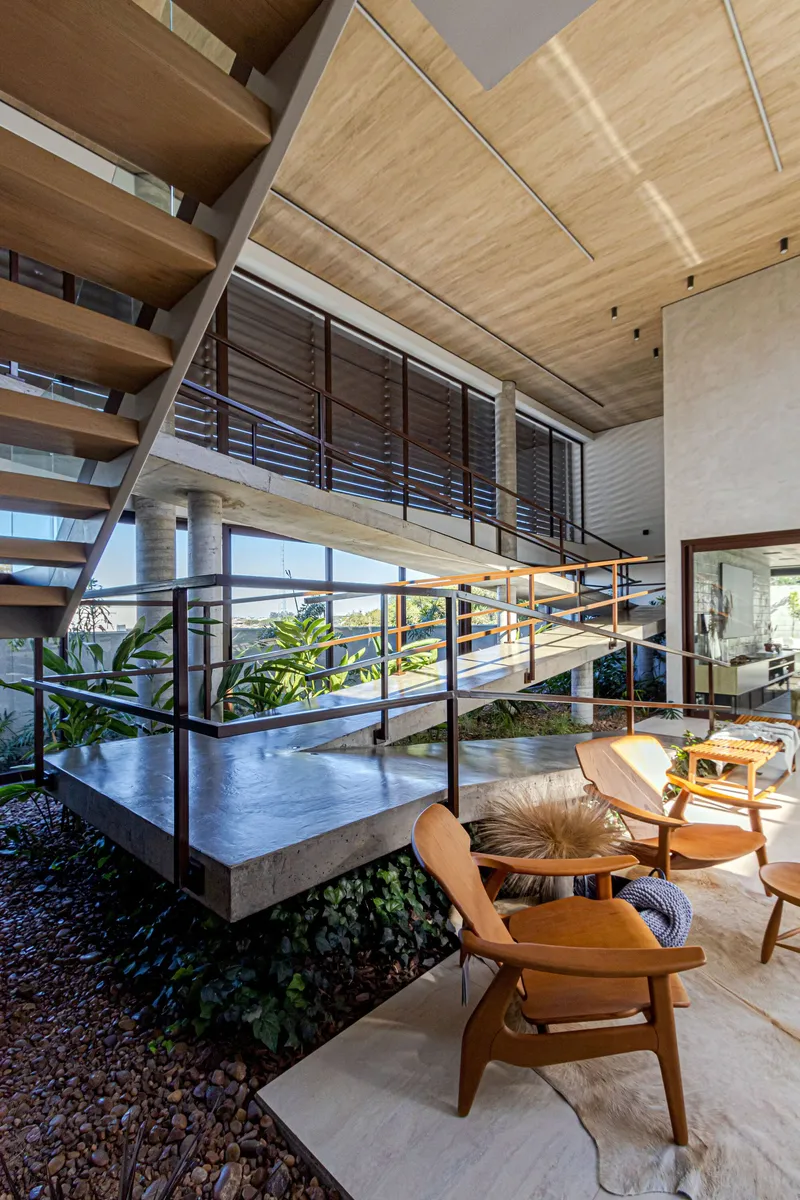
The interior courtyard is where the house reveals its ambition. A double-height void opens at the center of the plan, planted with greenery at the ground level and ringed by walkways, timber stairs, and steel railings above. Sunlight pours in from overhead, hitting the planted beds and bouncing off concrete and timber surfaces in constantly shifting patterns. It is less a courtyard than a vertical garden room, the kind of space that makes you look up.
The multi-level atrium serves a practical purpose too. It organizes the house's two blocks, placing the social program on the ground floor with free circulation between kitchen, living, and entertaining areas, while the three suites occupy the upper level. The atrium ensures that even the most private rooms maintain a visual connection to the communal life of the house below. Every suite opens onto a wide balcony facing the valley, but the atrium gives them an inward view as well, toward light and green rather than corridor walls.
Bridges and Walkways That Earn Their Drama

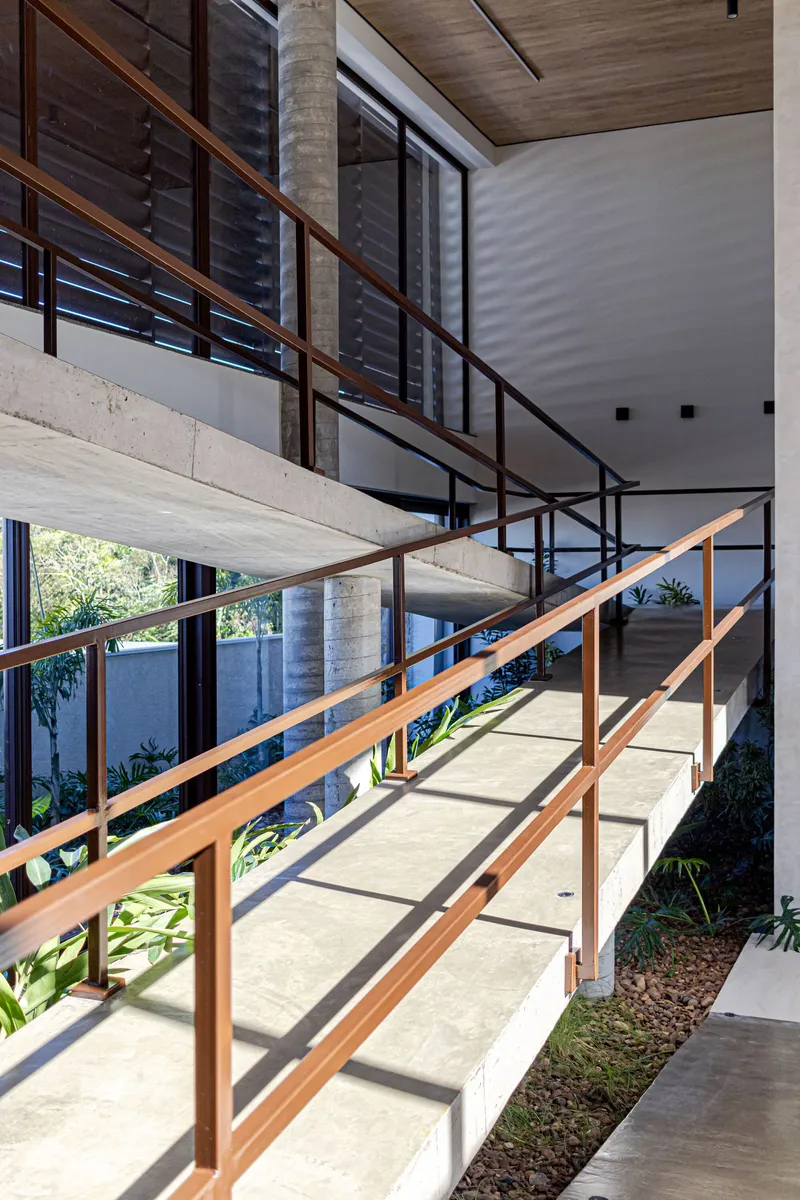
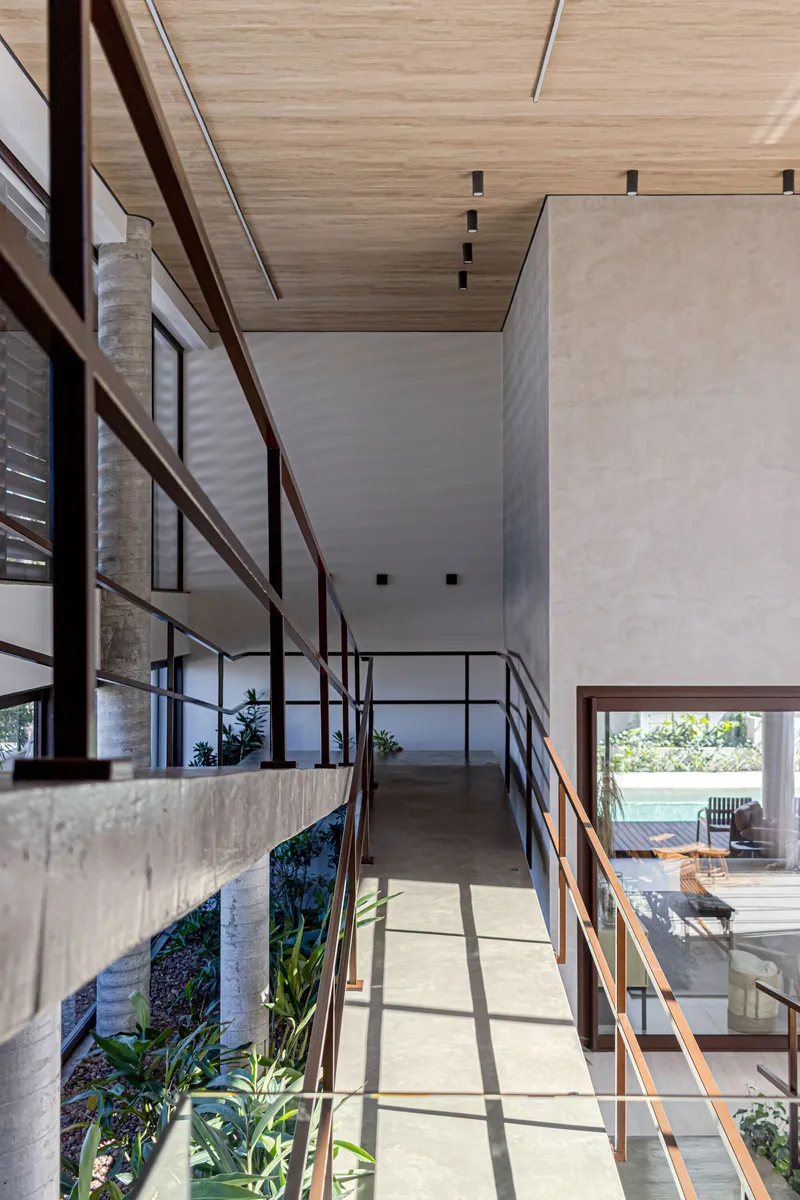
The ramp and its associated bridges are the most photogenic elements of the house, and for good reason. A cantilevered concrete walkway with timber handrails spans the sunlit courtyard, casting a grid of shadows below. Overhead skylights turn the bridge into a sundial, marking the passage of afternoon light across concrete surfaces. These are not merely corridors connecting bedrooms to stairs. They are spatial events, moments where the house asks you to pause and register where you are.
The exposed concrete beams that support the upper walkways are left unapologetically raw, their formwork marks visible. Steel railings and louvered windows modulate the edges, allowing air and light to pass through rather than creating sealed tubes. The architects understood that a bridge over a planted courtyard is only interesting if you can see, hear, and feel the space it crosses. The result is a circulatory system that privileges experience over efficiency.
Ground Floor: Cooking, Gathering, and the Perforated Screen
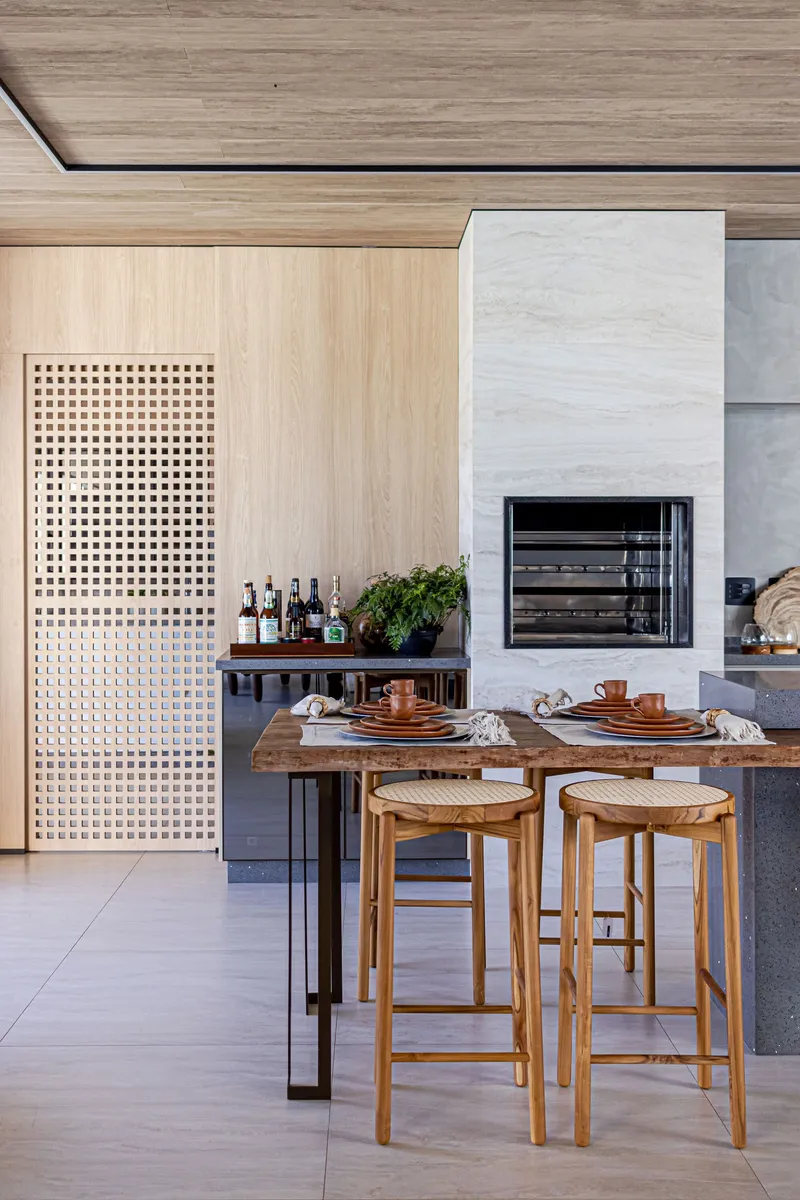
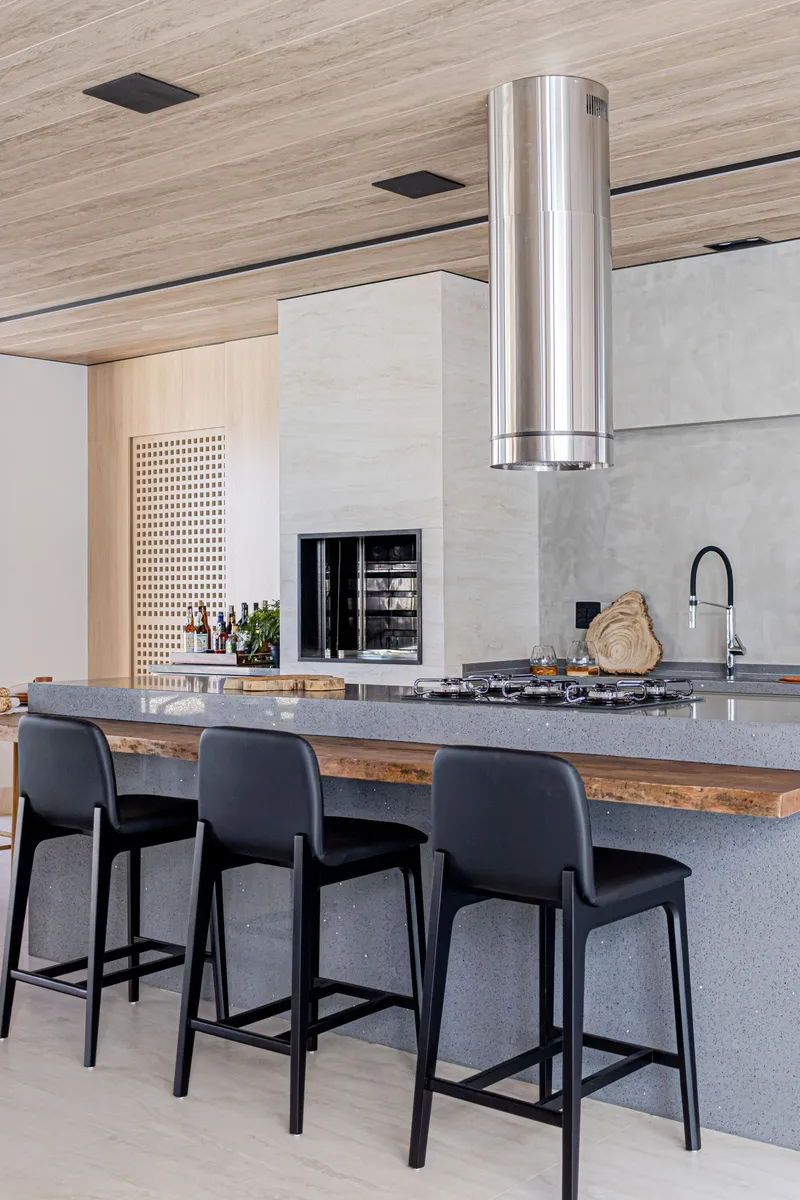

The ground floor social block is designed for hospitality at scale. The clients wanted a house that could receive friends and family in large numbers, and the open kitchen and outdoor cooking area deliver on that brief. A polished stone island anchored by a cylindrical steel hood occupies the kitchen, its edges finished with reclaimed timber that ties it to the ceiling above. The detailing here is confident: nothing is overwrought, but nothing is cheap either.
Adjacent to the kitchen, an outdoor area is defined by a pale stone fireplace and a perforated timber screen that filters light into a warm pattern of dots and lines. A close-up of the screen reveals its precision: circular perforations cut in a regular grid, turning a partition into a light instrument. A timber breakfast bar with stools sits beneath it, offering a casual counterpoint to the more formal kitchen. The screen is one of the project's quiet wins, a relatively simple move that transforms the quality of light in the room.
Living Spaces and the Filtered Edge
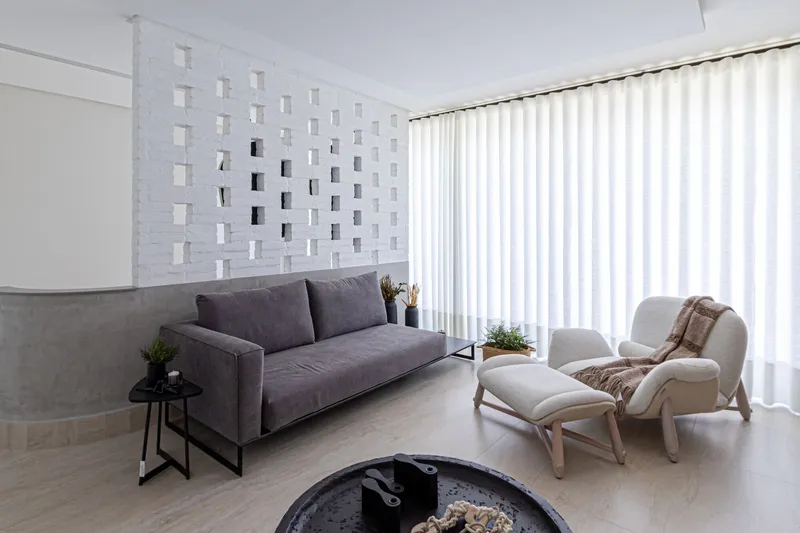
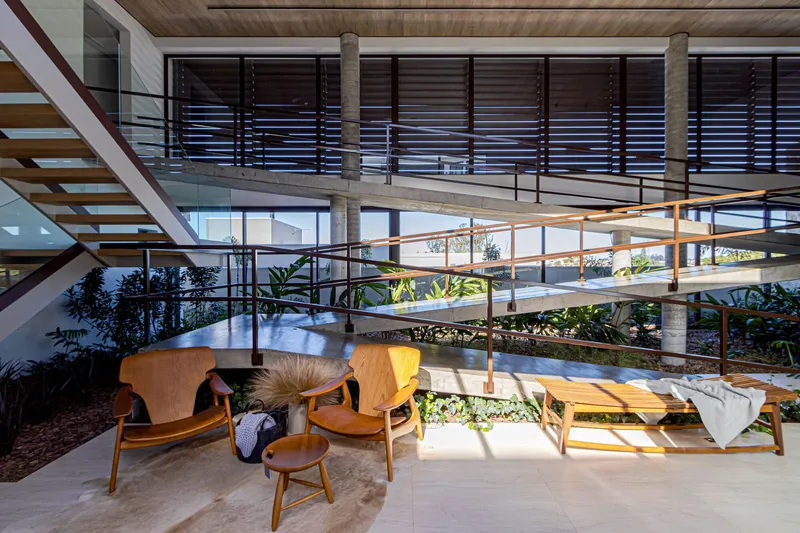
The living room deploys a perforated white brick screen wall that diffuses daylight into a soft, even glow. Full-height curtains add a second layer of filtration, so the room reads as luminous without being exposed. It is a Brazilian house that takes sun seriously, not as decoration but as something to manage. The screen wall does double duty: it provides privacy from exterior views while maintaining the room's connection to the outside through pattern and light.
Beneath one of the concrete footbridges, a seating area takes advantage of the dappled light filtering through the courtyard above. This is a zone that emerged from the house's structural logic rather than a programmed room on a plan. The planted bed beside it, the shadow of the bridge overhead, and the horizontal louver screens in the background create a layered atmosphere that would be impossible in a conventional layout. The house earns these moments by committing to its sectional idea.
The Intimate Block: Suites, Bathrooms, and Built-In Millwork
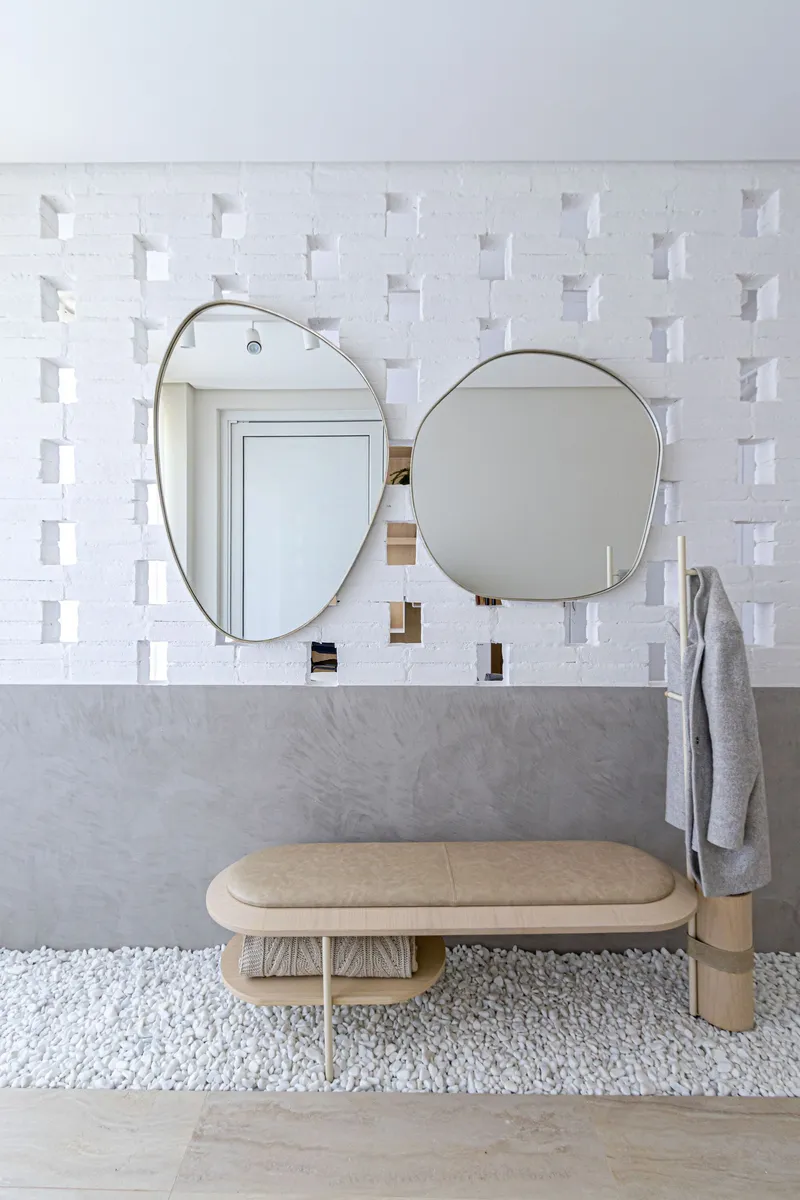
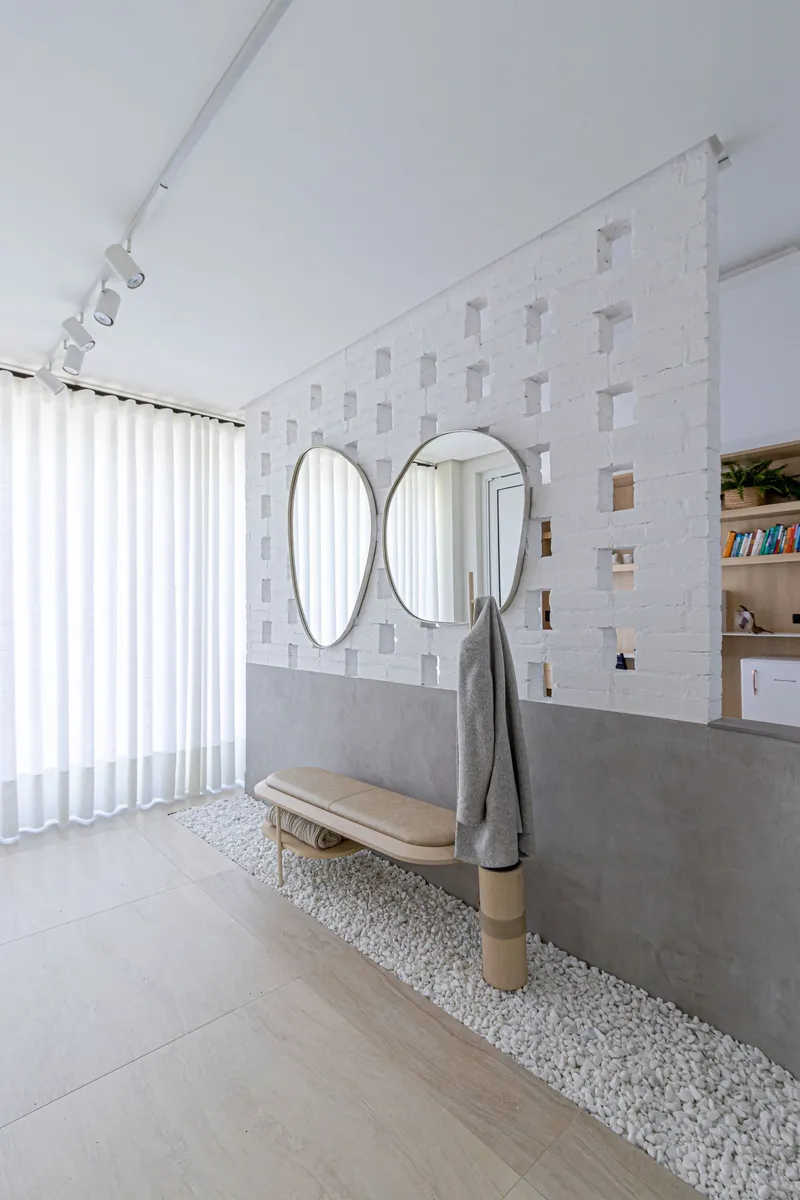
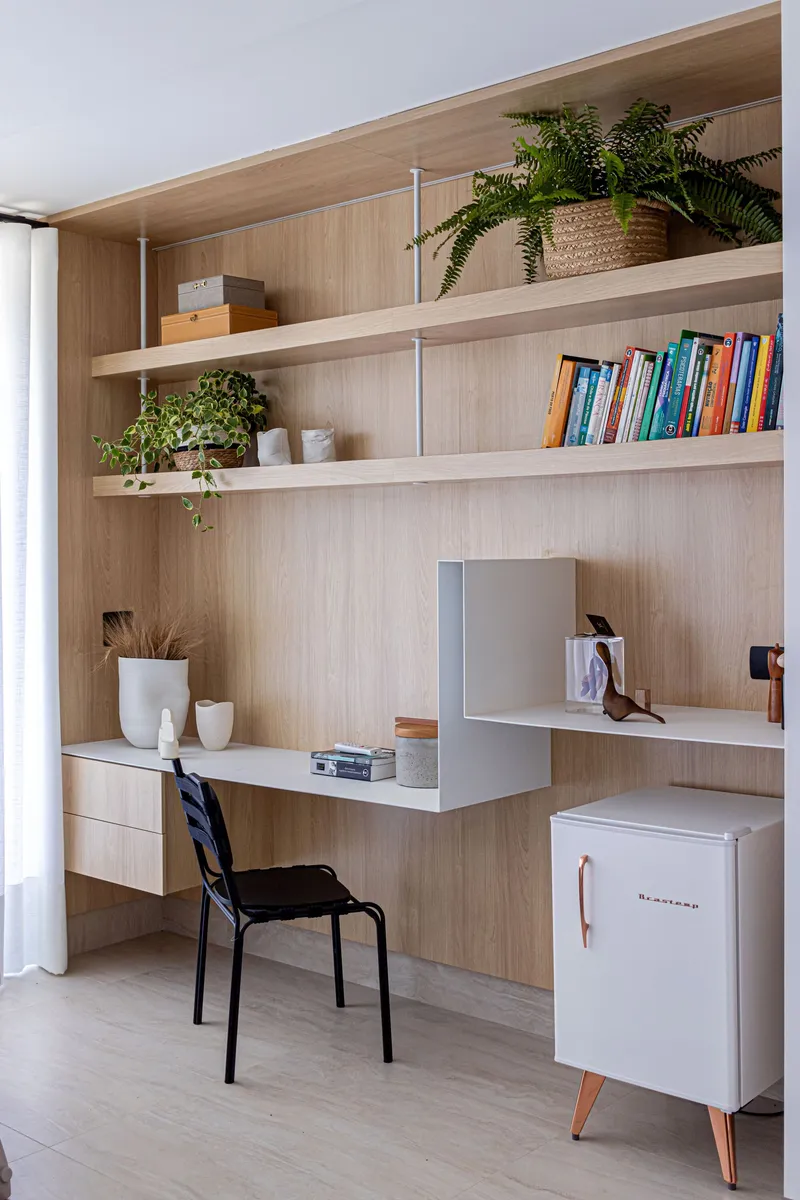
Upstairs, the three suites are oriented toward the main facade and the valley beyond. The master suite is accessed through a walk-in closet, and its bathroom is designed for individual use by the couple: each partner gets their own shower, bench, and toilet space, with an internal garden integrated into the room. The bathroom detailing is restrained and specific. Two oval mirrors sit above a timber bench and white geometric tile in one configuration; in another, three oval mirrors line a textured white wall above a concrete ledge filled with white pebbles. These rooms are clearly designed for daily life, not Instagram.
Built-in timber desks and shelving units appear throughout the private zones, offering home office nooks and study areas that are integrated into the wall plane rather than added as afterthoughts. A vertical slat partition separates one workspace from the corridor, providing acoustic separation without blocking light. The millwork is warm and consistent, reinforcing the timber-and-concrete material language that runs through the entire house.
Vertical Circulation and the Planted Section
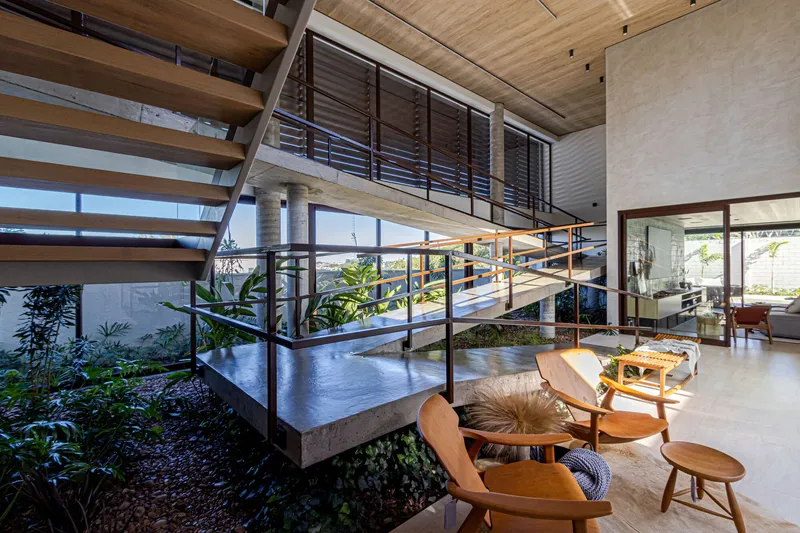
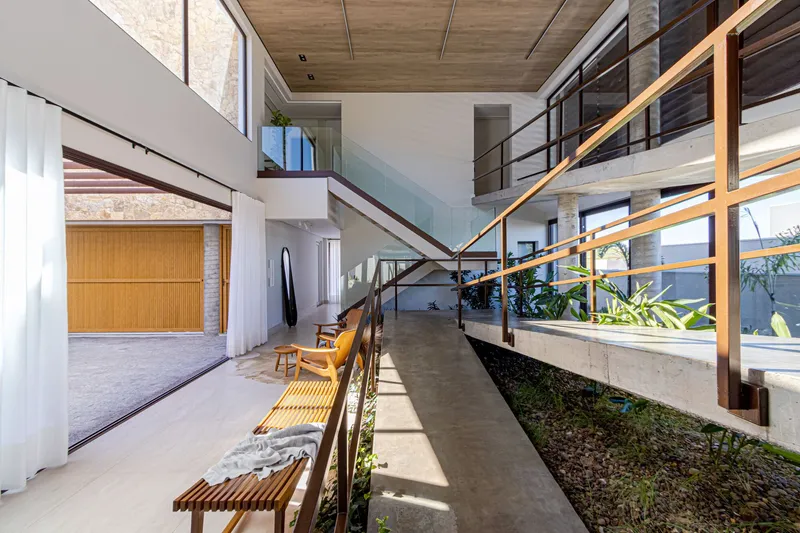

A multi-level interior void with an open timber stair, concrete platforms, and metal railings reveals the full sectional ambition of the project. The stair is not tucked into a corner. It occupies the center of the void, its open treads allowing light and sight lines to pass through. The planted courtyard below is visible from multiple levels, and horizontal louver screens above modulate the quality of light reaching the lower floors.
Louvered windows at the upper walkway level introduce cross ventilation through the atrium, a strategy that is as practical as it is atmospheric. The interior bridge walkway hovers above the courtyard with horizontal metal railings, offering a vantage point down into the garden that changes character with the time of day. The architects treated the section as a working drawing, not just a representational one: every level change, every opening, every planted bed is calibrated to produce a specific environmental effect.
The Workspace Nooks
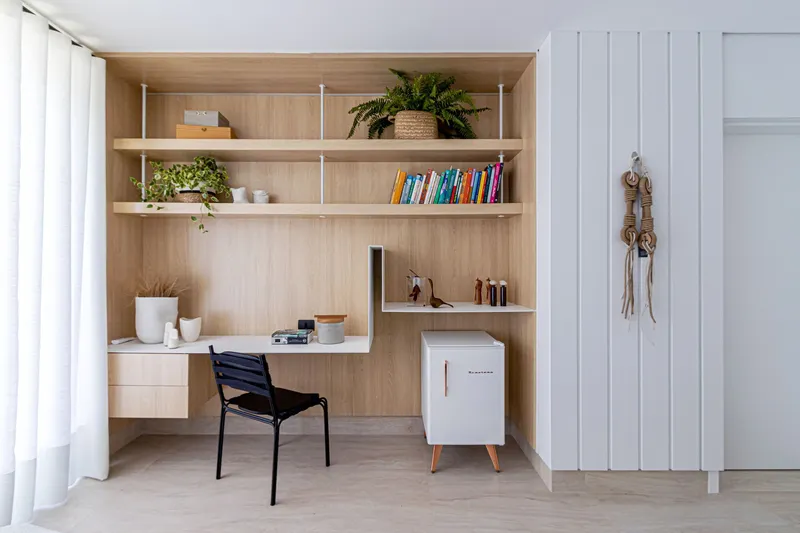
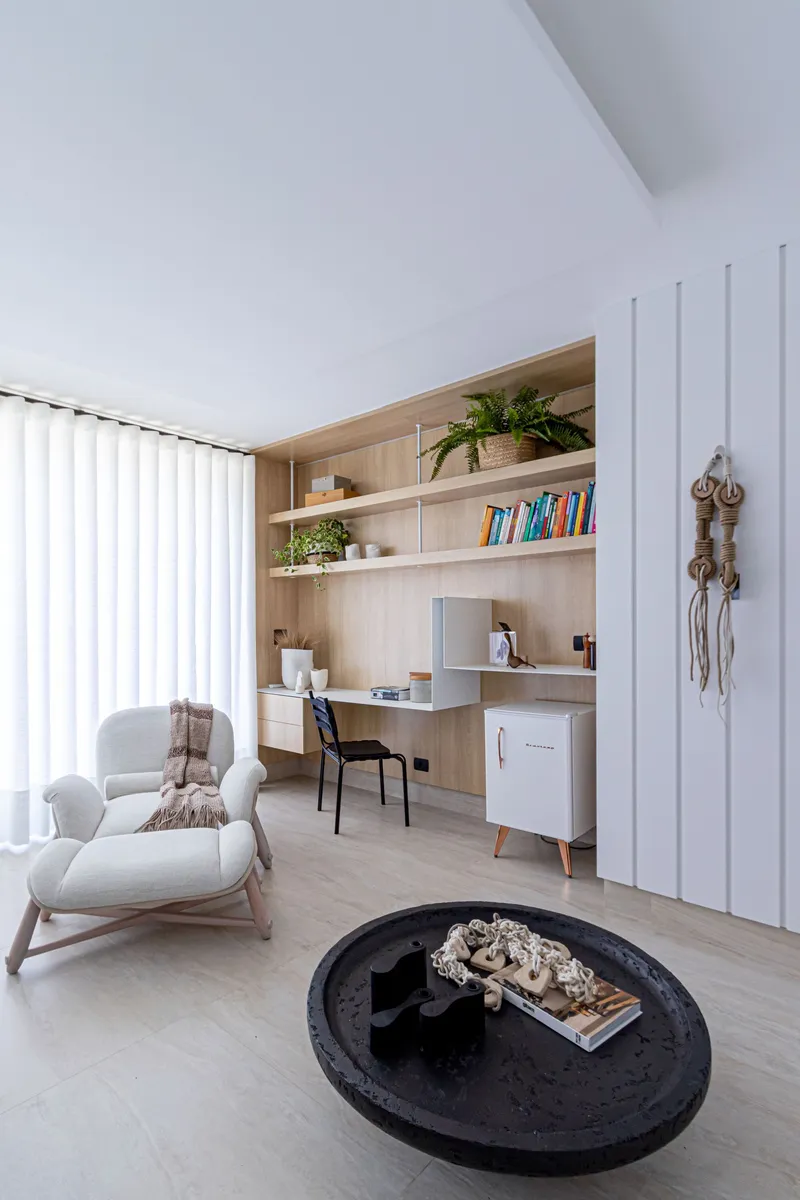
The pandemic extended the Ramp House's construction by two years, and it is tempting to read the generous provision of home office spaces as a response to that experience. Recessed workspace niches with timber shelving and white cabinetry appear at several points in the plan, separated from adjacent rooms by vertical slat partitions that filter light without creating isolation. These are not token alcoves. They are properly dimensioned rooms with storage, surface area, and natural light.
Why This Project Matters
The Ramp House succeeds because it takes a single organizational idea, the ramp as connective spine, and follows it through to its spatial consequences. The double-height atrium, the bridges, the planted beds, the shifting light: none of these would exist without the decision to split the program into two blocks and link them with an accessible ramp. That decision generates the house's most compelling spaces, turning what could have been a corridor into a garden, a bridge, and a light well.
It also matters as a demonstration that accessibility and architectural ambition are not competing goals. The ramp is not a concession here. It is the generator. The house is more interesting because of it, not in spite of it. In a residential market where accessibility features are often treated as afterthoughts or code-compliance checkboxes, Coelho Neto Arquitetura shows that they can be the idea itself. The valley, the sunset, and the view are all present, but the house's real subject is the act of moving through it.
Ramp House by Coelho Neto Arquitetura, lead architect Benedito Coelho Neto. Apucarana, Paraná, Brazil. 603 m². Completed 2022. Photography by Tatiana Galindo.
About the Studio
Share Your Own Work on uni.xyz
If projects like this are the kind of work you want to make, uni.xyz is a place to publish your own, find collaborators, and enter design competitions.



Popular Articles
Popular articles from the community


Riyadh For All: Intergenerational Urban Design for Active Aging in Rabat
Riyadh For All reimagines urban design in Rabat with intergenerational co-living, adaptive courtyards, and Moroccan cultural exchange today.

The Musturak Paradise: Senior Living Architecture for a Connected Future in Temara, Morocco
The Musturak Paradise reimagines senior living architecture in Temara via private homes, social spaces, culture, community, and shared care.

The Ocean Hive: Sustainable Architecture for a Self-Sufficient Civilization at Sea
The Ocean Hive imagines sustainable architecture at sea, where modular habitats, algae, wave power and ocean waste sustain a growing colony.

Hill & Cross Opera: Sculptural Opera House Architecture Shaped by Tallinn’s Landscape and Identity
Hill & Cross Opera reimagines opera house architecture in Tallinn through its sculptural hill, civic plaza, glass wave and a luminous cross.


Similar Reads
You might also enjoy these articles

Bao Huynh Watercolor Atelier: A Serene Art Retreat in Hội An
Bao Huynh Watercolor Atelier in Hội An blends multifunctional art spaces, sustainable design, local materials, and family-friendly living in a serene environment.

Atelier Macri Concept Store Interior Design by CASE-REAL
Atelier Macri store features a "ko" counter, walnut wood details, cork displays, blending retail, gallery, and seamless customer experiences.

Manuel Vargas Izquierdo Stadium and High-Performance Sports Center: Architectural Excellence in Jalpa de Méndez
The Manuel Vargas Izquierdo Stadium blends sustainable design, inclusive sports facilities, and cultural-inspired architecture, revitalizing Jalpa de Méndez’s public spaces.
KAKR Buluh Awar Hall: Revitalizing Community and Ecology Through Bamboo Architecture
Community built bamboo hall revitalizes Buluh Awar village, empowering youth, restoring ecology, celebrating vernacular craftsmanship through sustainable architecture and culture.


Explore Plug-In House Competitions
Discover active competitions in this discipline


Challenge to design mud housing for contemporary communities


Challenge to reimagine the Iron Throne


Photograph architecture without architects


Illustrate the lost glory of Angkor Wat - Render Challenge
Comments (0)
Please login or sign up to add comments
No comments yet. Be the first to comment!