
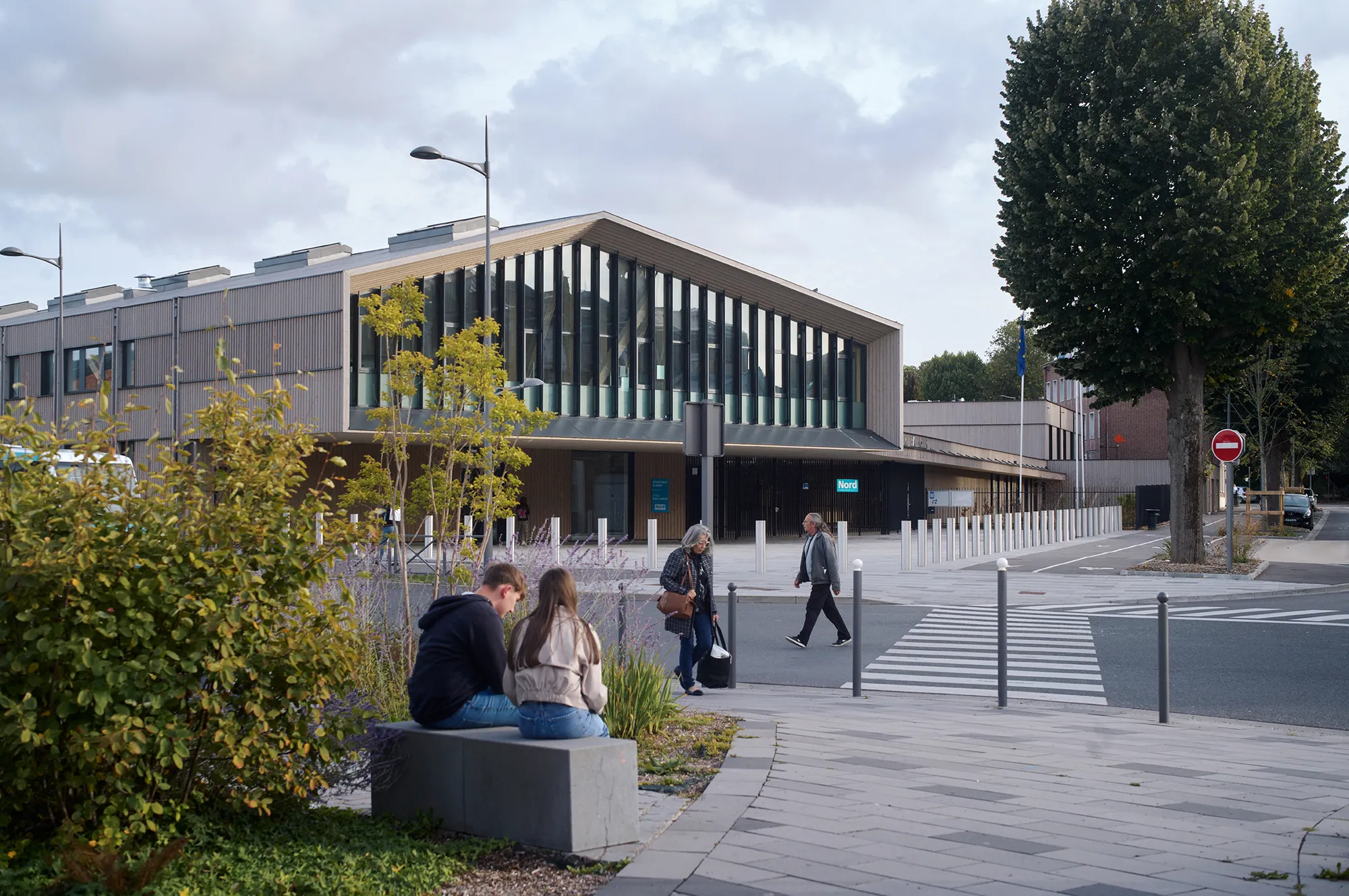
College Robert Badinter by Coldefy – Northern France’s First Timber-Framed Secondary School
College Robert Badinter is a sustainable timber-framed school blending modern design, natural light, and community-focused spaces inspired by industrial heritage.


College Robert Badinter, designed by Coldefy in collaboration with Relief Architecture, stands as a landmark achievement in sustainable educational architecture. As the first timber-framed secondary school in northern France, the 650-pupil campus reflects a powerful blend of ecological responsibility, contemporary design, and respect for local industrial heritage. Located on a former railyard site near the historic 1858 train station, the school is a centerpiece of an ambitious urban renewal project aimed at revitalizing the city’s mobility and public spaces.
Situated just ten minutes from the town center, the new school forms part of a consolidated public transport hub surrounded by civic amenities. The site—once home to Vauban fortification moats and subterranean chalk quarries known as catiches—required extensive ground stabilization before construction, further emphasizing the complexity and ambition of the project.
A Public Landmark Rooted in Timber Architecture
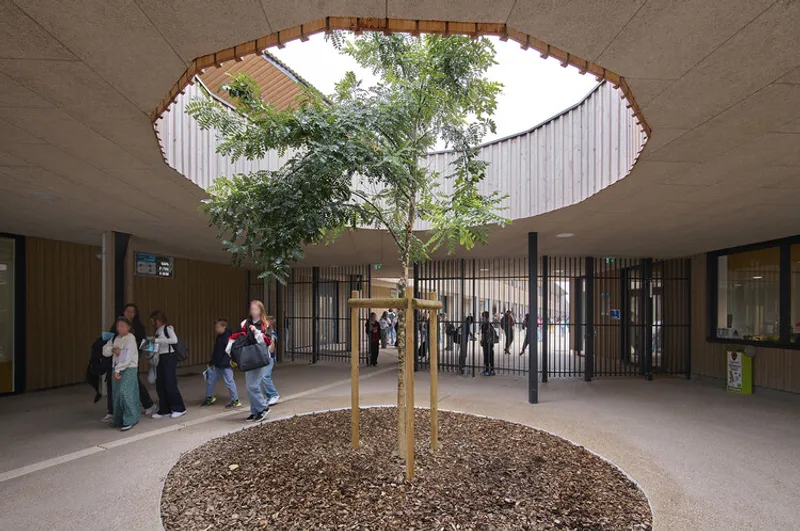
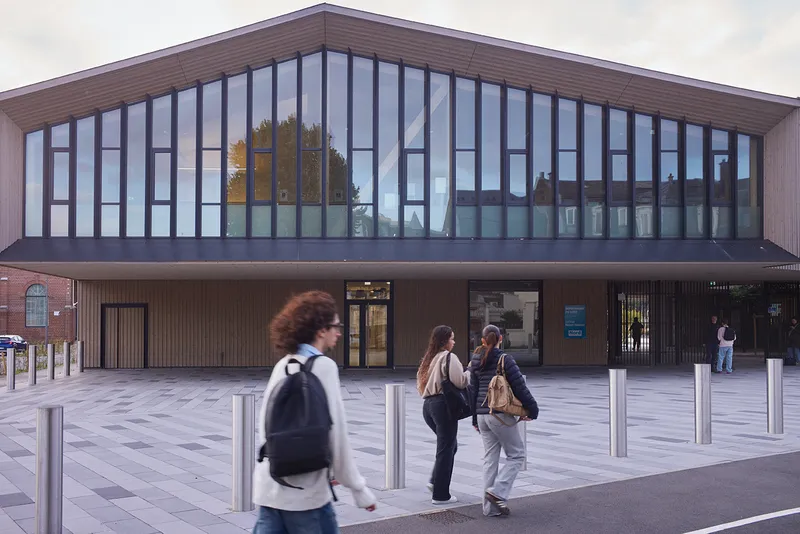
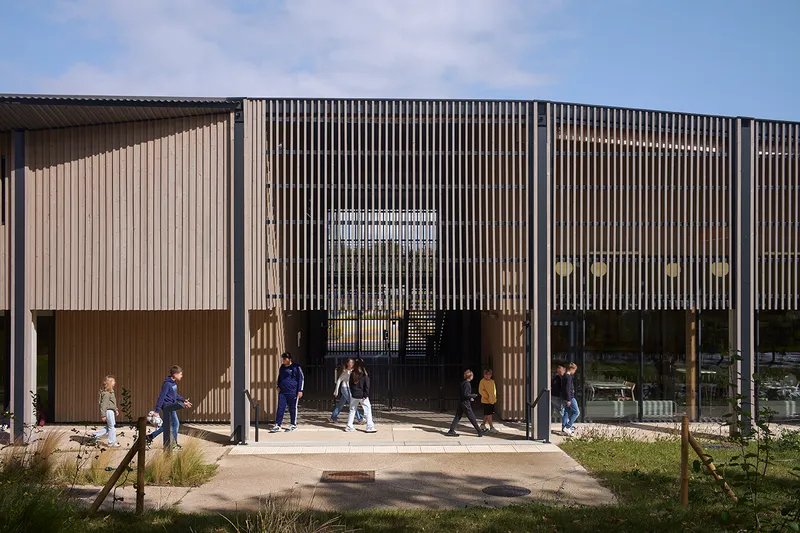
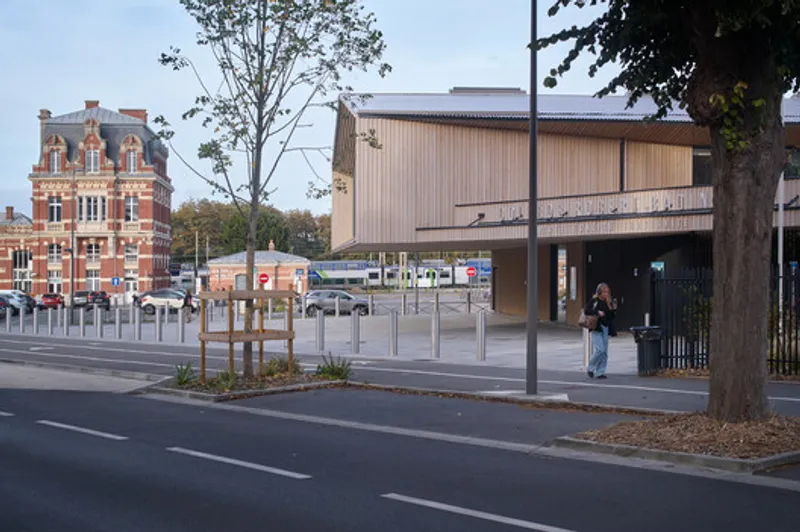
The architecture is conceived as a welcoming public landmark. Its striking cantilevered volume faces the train station, creating a bold identity for the school while inviting the community in through a generous timber porch. This entryway gracefully transitions visitors from the open urban realm into the protected internal courtyard and playground.
A thoughtful cut-out in the porch roof preserves a mature tree, symbolically anchoring the new building within its historic and natural context. The main teaching block runs parallel to a long row of existing trees, reinforcing the streetscape and enhancing the site’s connection to the surrounding urban fabric.
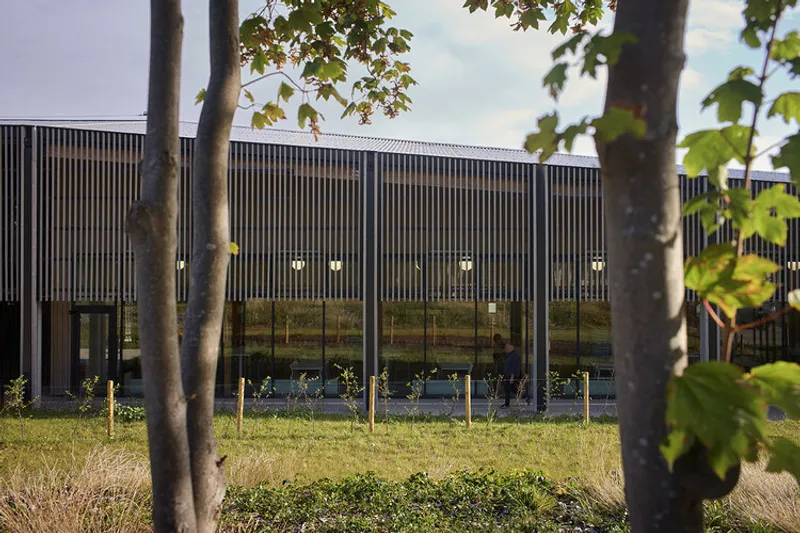
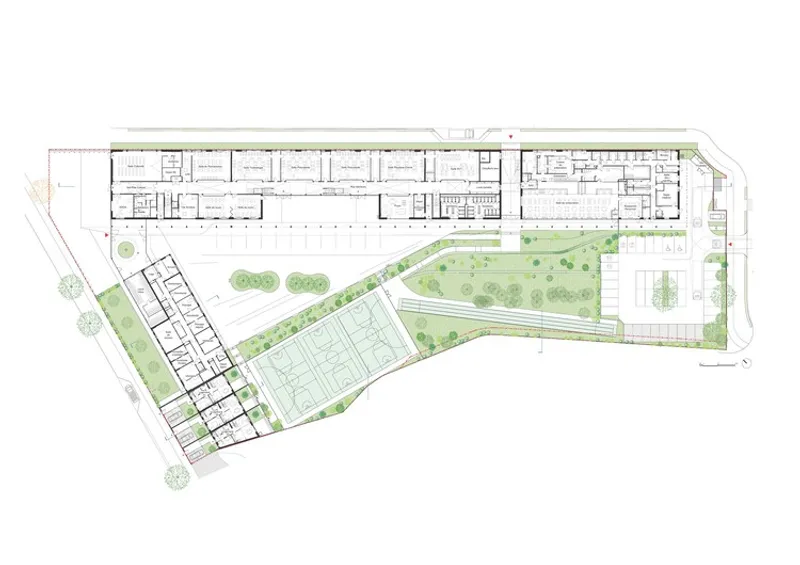
A smaller volume containing the cafeteria and staff areas sits slightly recessed, bordered by landscaped greens that soften the architecture and enhance walkability.
A Courtyard Organized for Learning, Play, and Community
The two timber-framed blocks enclose a generous courtyard featuring:
- A playground
- Sports fields with a running track
- A 40-space staff parking area
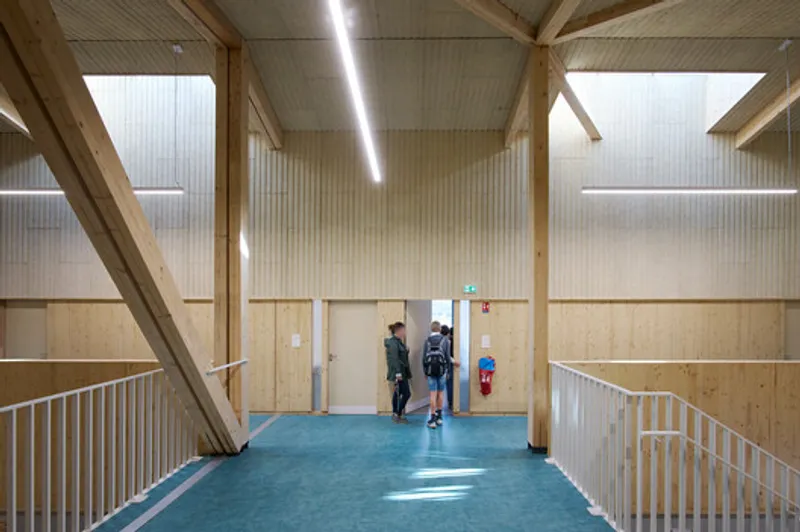
The architectural expression draws inspiration from industrial typologies; the double-pitched roof echoes traditional railway halls while embracing a modern aesthetic. Timber dominates both structure and interiors, offering warmth, natural texture, and a bioclimatic performance that supports sustainability goals.
Inside, an 80-seat Knowledge and Cultural Centre opens directly to the street, allowing local residents to use the space outside school hours. This strong emphasis on community integration underscores the school’s role as both an educational and civic asset.
Light-Filled Circulation and Human-Centered Design
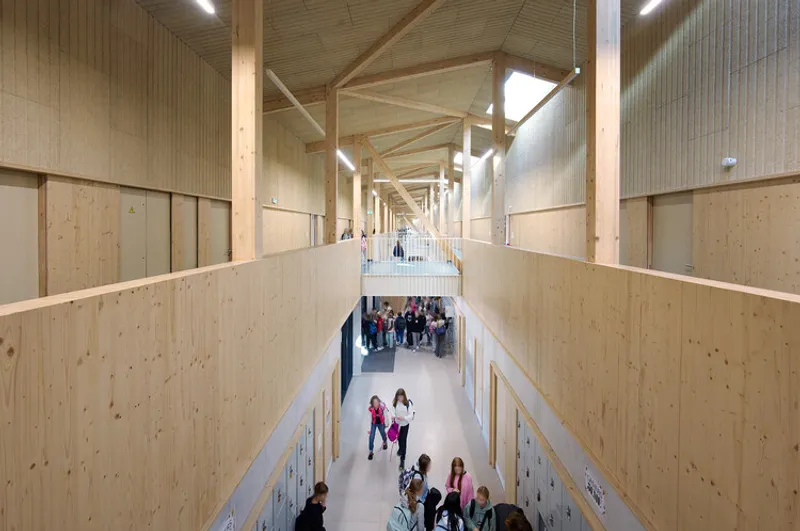
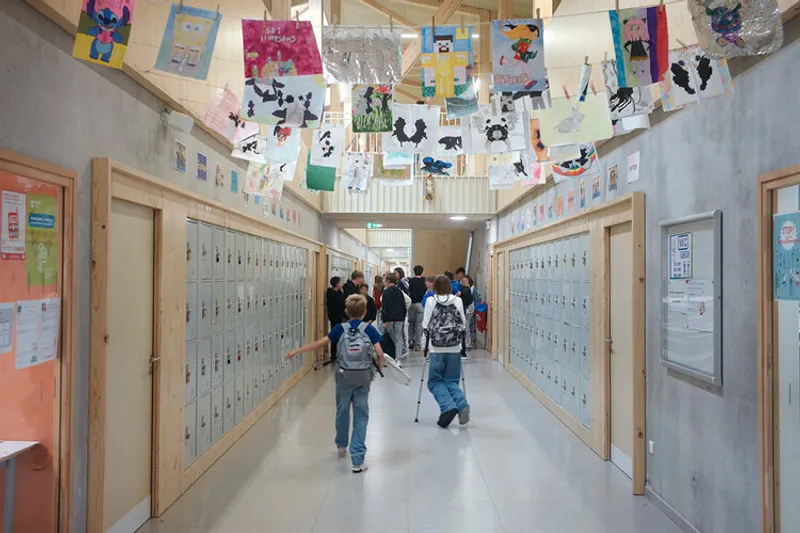
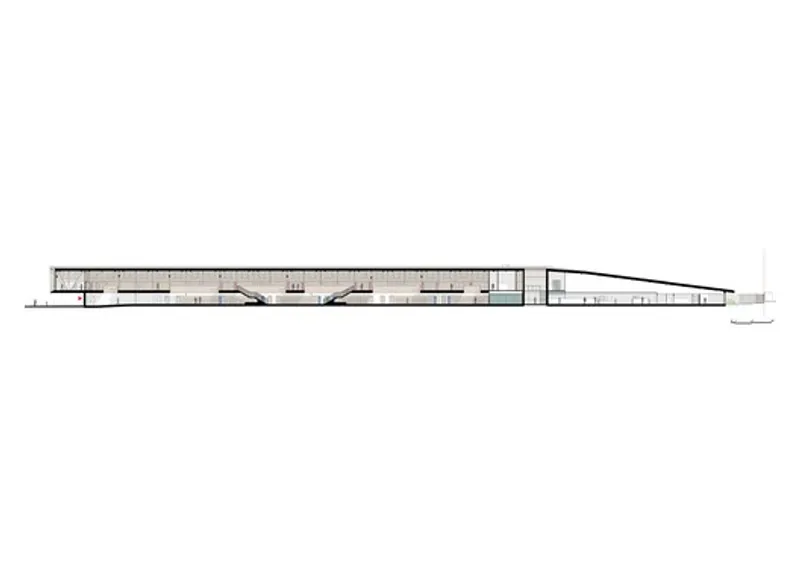
The school’s layout revolves around a floor-to-ceiling open hall that connects classrooms, staff rooms, and shared spaces across two floors. A balcony on the upper level overlooks the central atrium, while skylights softly illuminate circulation zones, encouraging movement and social interaction.
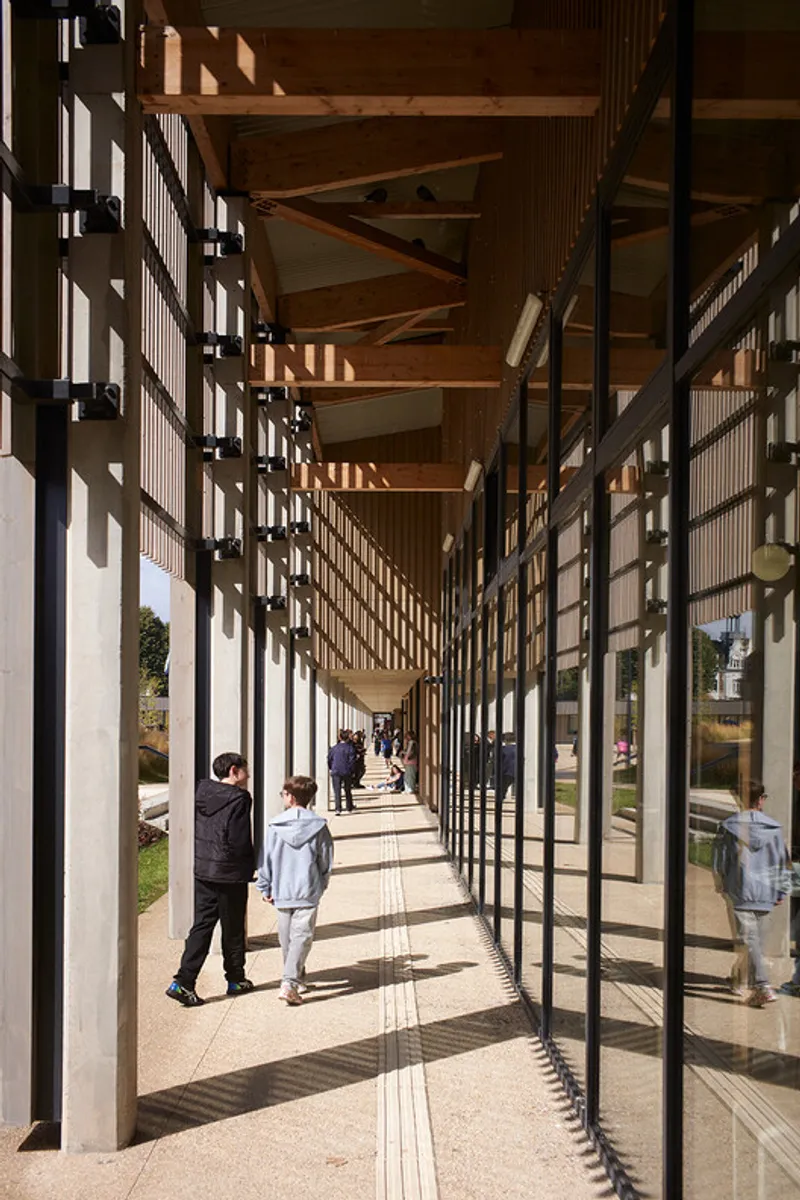
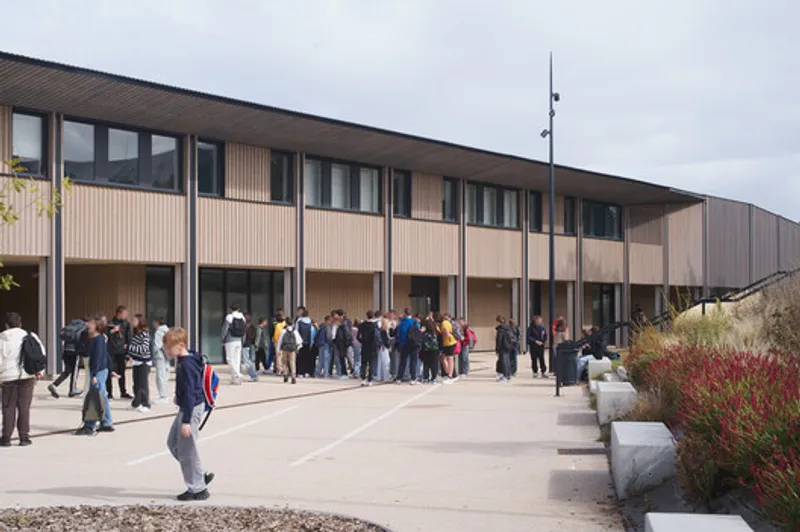
A covered ground-floor walkway provides sheltered links between the teaching areas, cafeteria, staff spaces, and a partially covered playground. This flexible transition zone operates as an all-weather social space, helping students move comfortably between indoor and outdoor environments.
A large, south-facing roof overhang provides essential passive shading, reducing glare and heat gain during warm months.
A Cafeteria Embraced by Landscape
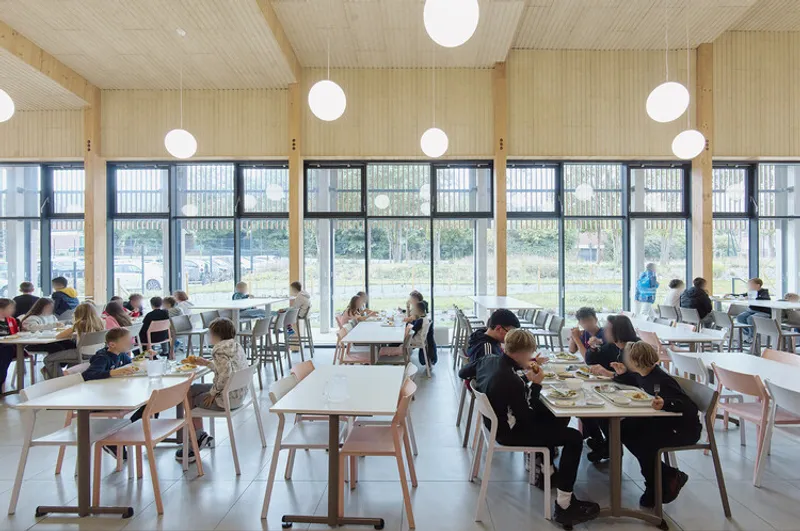
The single-storey cafeteria opens directly onto lush gardens. A fully glazed frontage creates a seamless visual connection to the outdoors, offering students a tranquil, nature-filled lunchtime environment. Even the parking area at the rear is softened with heavy planting and is intentionally designed to allow future urban expansion.
Timber cladding emphasizes the modular system used in construction, offering adaptability, durability, and a warm architectural identity.
Transforming a Historic Train Shed into a Public Sports Hall
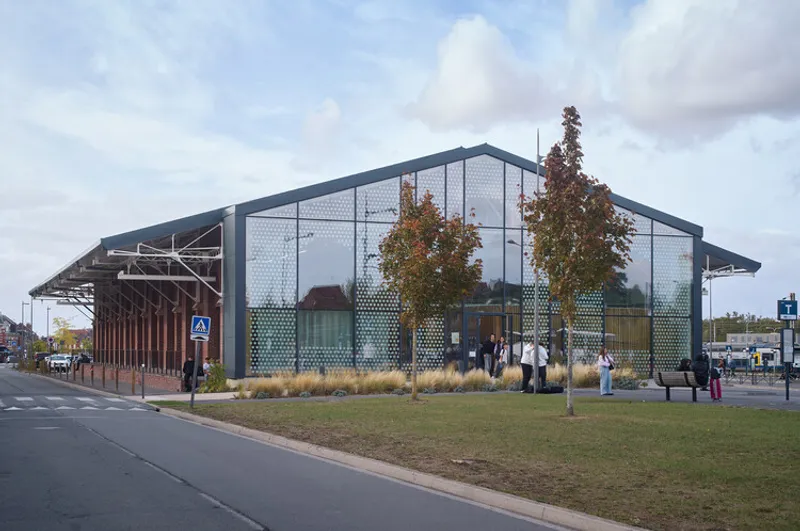
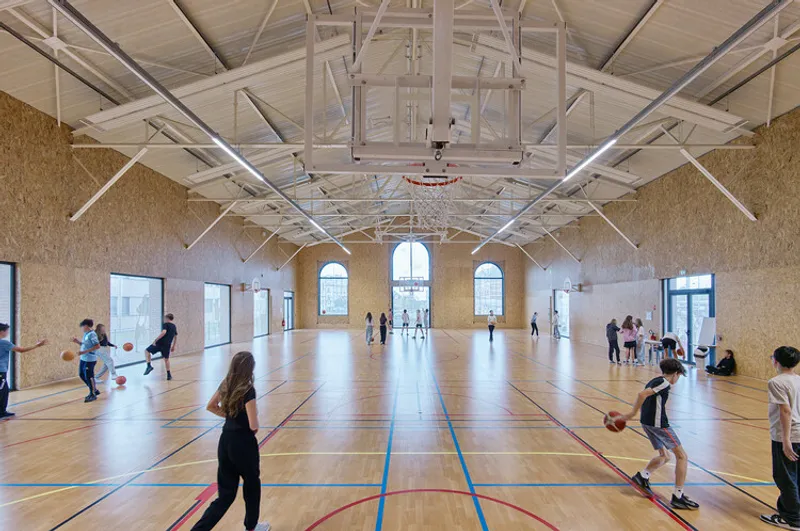
Across the street, Coldefy and Relief Architecture restored the remaining portion of an early-20th-century train shed. Once 150 meters long, this 30-meter-wide structure is now a 934 m² multi-purpose sports hall featuring:
- A restored red-brick façade
- A bright interior lined with OSB panels
- Exposed iron trusses celebrating industrial heritage
The hall is open for public use outside school hours, strengthening the school’s relationship with the community and preserving valuable heritage.
Sustainable Design and High Environmental Performance
College Robert Badinter is certified HQE ‘Excellent’ and holds a Low Carbon Building certification. The project integrates state-of-the-art, energy-efficient strategies, including:
- Biomass boiler using locally sourced pellets – supplying 80% of heating
- Photovoltaic panels – generating 15% of electricity
- Rainwater harvesting – providing up to 50% of water for restroom facilities
These strategies, combined with timber construction and bioclimatic design, significantly reduce the building’s ecological footprint.
Voices from the Project
Isabel Van Haute, Founding Partner at Coldefy, highlights the school’s dual mission: “We wanted to create a space that is open, useful, sustainable, and generous—true to its industrial history while looking toward the future.”
Sandrine Beauvois, Principal of the school, adds: “This beautiful secondary school is a true educational tool that supports project-based learning, student autonomy, and cultural exposure.”
College Robert Badinter stands as a new benchmark in sustainable school architecture in France. By merging ecological innovation, timber construction, heritage preservation, and community engagement, Coldefy has created a learning environment that not only supports students today but also shapes the city’s future.
All the photographs are works of Julien Lanoo




Popular Articles
Popular articles from the community


Conexión: Biophilic Design Reimagines High-Rise Living in Hong Kong
Conexión reimagines high-rise living in Hong Kong through biophilic design, green facades, shared spaces, daylight, water and nature within.

The Musturak Paradise: Senior Living Architecture for a Connected Future in Temara, Morocco
The Musturak Paradise reimagines senior living architecture in Temara via private homes, social spaces, culture, community, and shared care.

The Earth Pod: 3D Printed Homes for Resilient Refugee Communities
The Earth Pod reimagines refugee housing through 3D printed homes made from clay, combining resilience, self-sufficiency, and rapid shelter.

Lunar Spiral: Space Architecture Shaped by the Mathematics of the Universe
Lunar Spiral reimagines space architecture through Fibonacci geometry, lunar regolith, levitating habitats, and self-sustaining Moon living.


Similar Reads
You might also enjoy these articles


Hodi-Mandai Geram
Project Function: Preservation and revitalization of the Intangible heritage and socio-spatial identity of the Hodi by Housing, Cultural Memory Center, Sacred Grove, landscape, local tourism economy


Olio Towers: A Mid-Rise for Performers That Fuses Housing, Rehearsal, and Stage
Located blocks from Houston's Theater District, this modular tower stacks living units around a central performance atrium.

Oasis: Modular Green Housing Carved into Dhaka's Urban Fabric
A shortlisted Plugin Housing entry reclaims unauthorized settlements in Dhaka with stepped concrete volumes, green roofs, and ventilation-driven design.

Black Hole: A Floating Megastructure for the Post-Physical Era
Emiliano Mazzarotto envisions a spherical, self-scaling arena where e-sports, digital hotels, and holographic stadiums replace traditional public space.


Explore Pont-Aven School Competitions
Discover active competitions in this discipline



Challenge to design public laboratory


Challenge to reimagine the Iron Throne


Photograph architecture without architects


Illustrate the lost glory of Angkor Wat - Render Challenge
Comments (0)
Please login or sign up to add comments
No comments yet. Be the first to comment!