
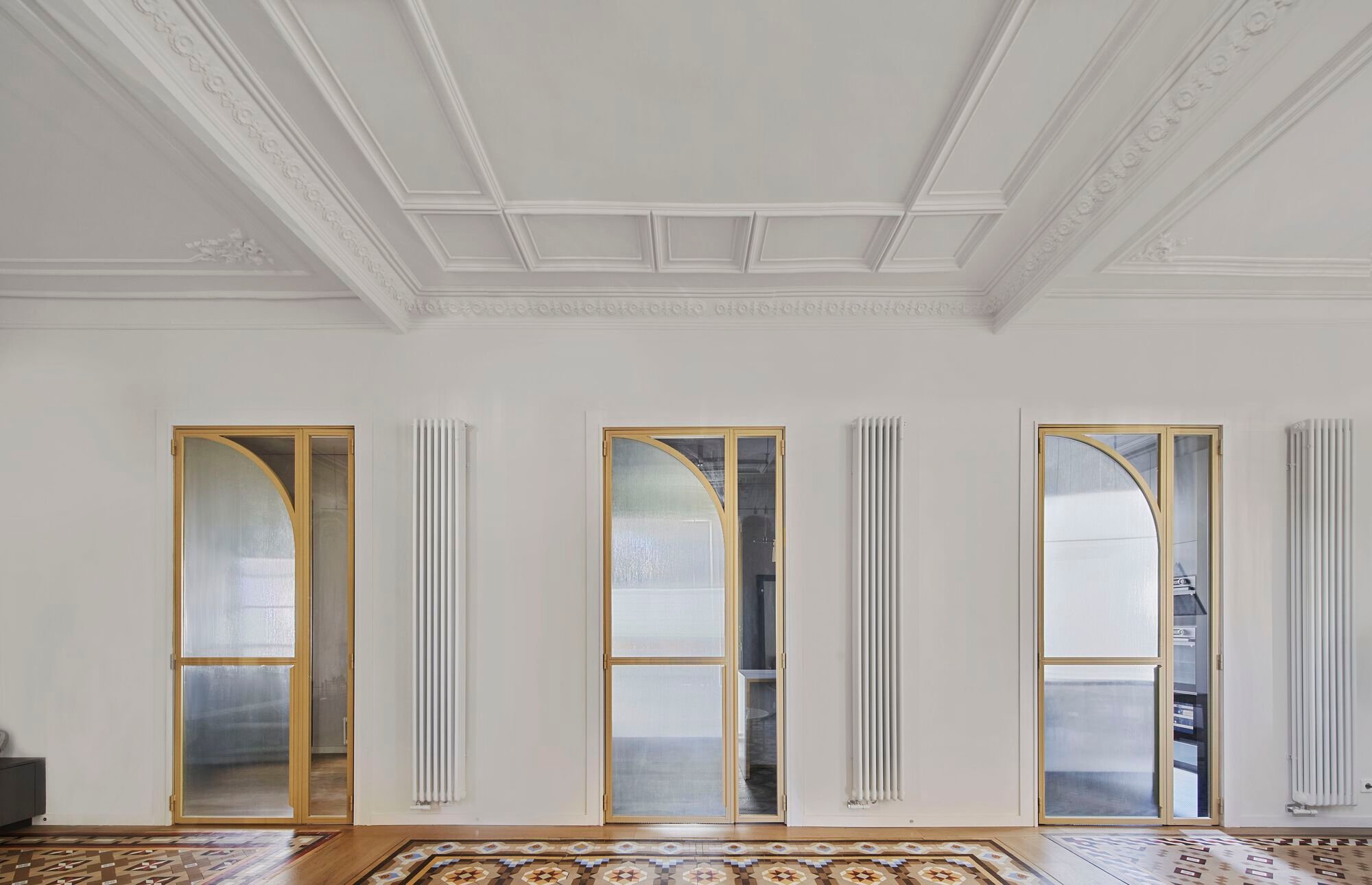
Cometa Architects Turns a Dark Barcelona Modernista Apartment into a Cinematic Sequence of Brass and Glass
A 250 m² early twentieth century flat in Barcelona is reborn through scenographic doors, restored mosaics, and post-pandemic flexibility.

Most apartment renovations in Barcelona's Eixample district follow a familiar script: strip out the partition walls, flood the plan with light, keep a few decorative ceilings, done. Cometa Architects started from a similar impulse with The Bruc Apartment but pushed the logic much further, treating the door, not the wall, as the primary design element. In this 250 m² early twentieth century Modernista flat, six load-bearing walls had to stay. Rather than hide them, the studio punched large steel-framed openings through them and filled those openings with full-height brass and fluted glass doors that serve simultaneously as structure, ornament, and spatial switch.
The result owes as much to cinema as to architecture. Cometa cites the filmmaker Peter Greenaway's linear yet perpetually surprising camera journeys as an influence, and you can feel it in the apartment's sequencing: every threshold reframes your view, every door that pivots open reveals a new depth of field. The original flat suffered from the typical ailments of its era, copious service rooms, long dark corridors, a kitchen banished from social life. The renovation replaces all non-structural partitions with a loggia corridor of rhythmically placed custom doors, creating a spine that connects living, cooking, sleeping, and bathing in a continuous scenographic loop.
The Door as Protagonist
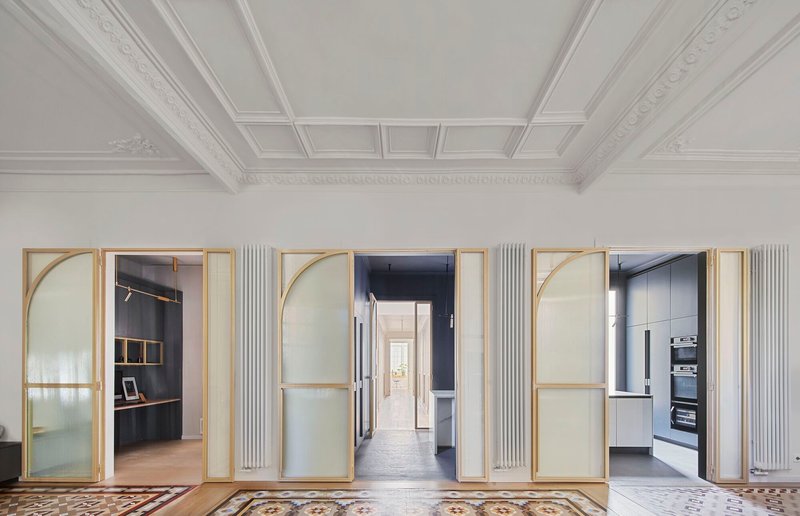
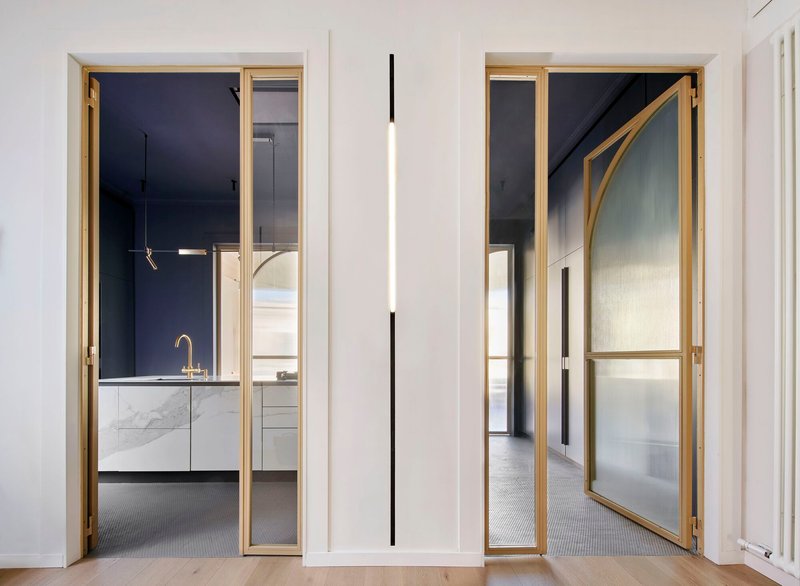
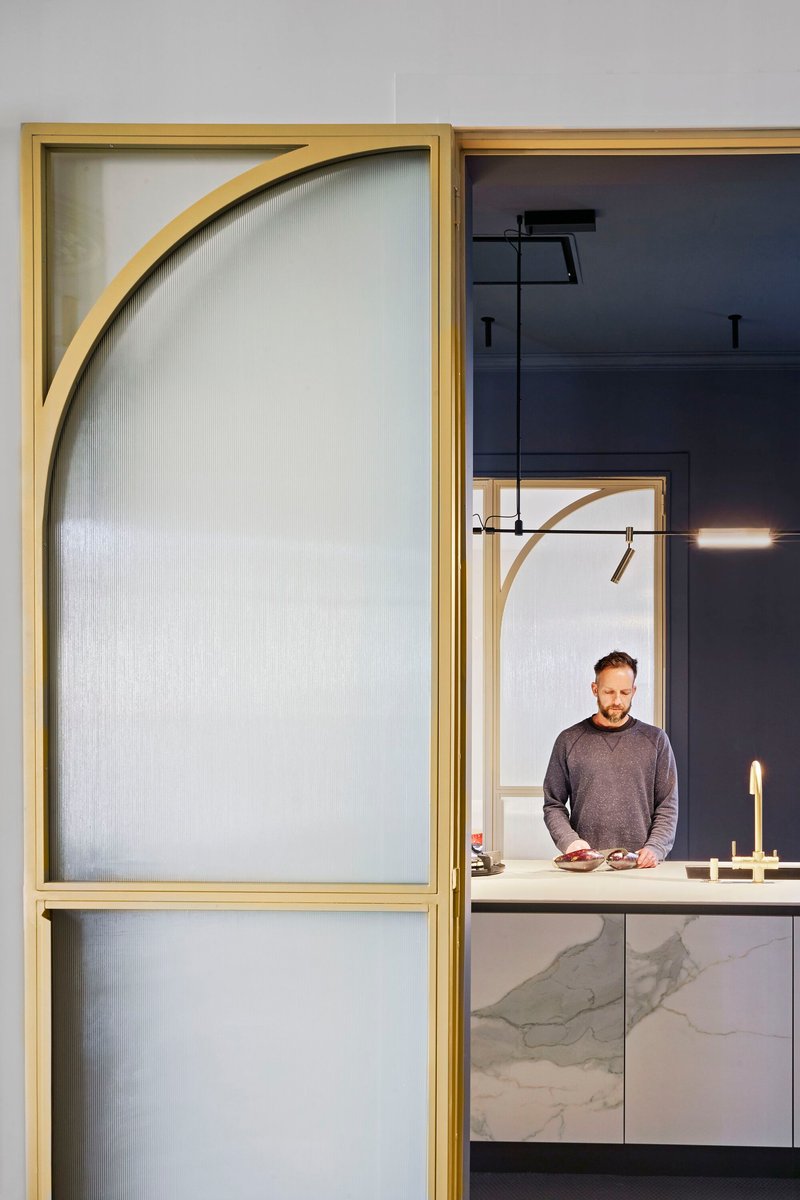
The brass-framed glass doors are the single most consequential decision in this project. They are not decorative afterthoughts or catalog hardware. Each one is custom-made, full height, and fitted with translucent fluted glass panels that let light pass while blurring what lies behind. Arched structural braces at the top nod to Art Nouveau detailing without reproducing it literally. When all doors stand open, the apartment reads as one generous loft. When closed, it breaks into intimate rooms. The system gives a family of four the ability to toggle between openness and privacy without any spatial compromise.
What makes this move especially smart is the way the doors interact with the load-bearing walls they occupy. Steel structure was calculated to allow the large-scale openings, and the brass frames sit inside those openings like jewels in a setting. The material pairing, warm brass against cool plaster, creates a visual rhythm that recurs at nearly every threshold in the apartment.
The Great Hall
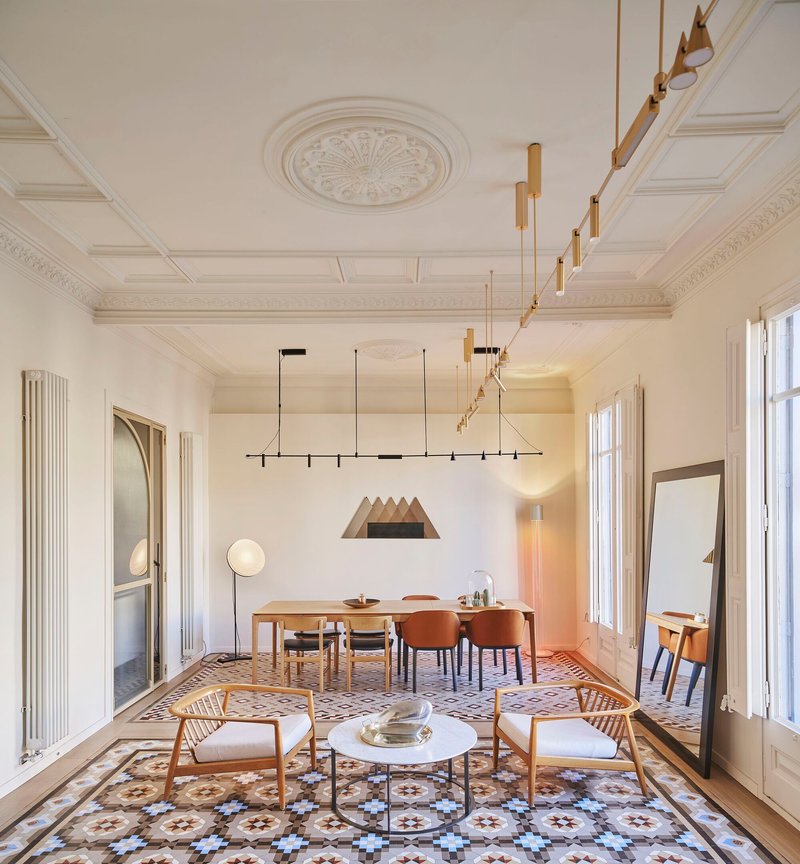
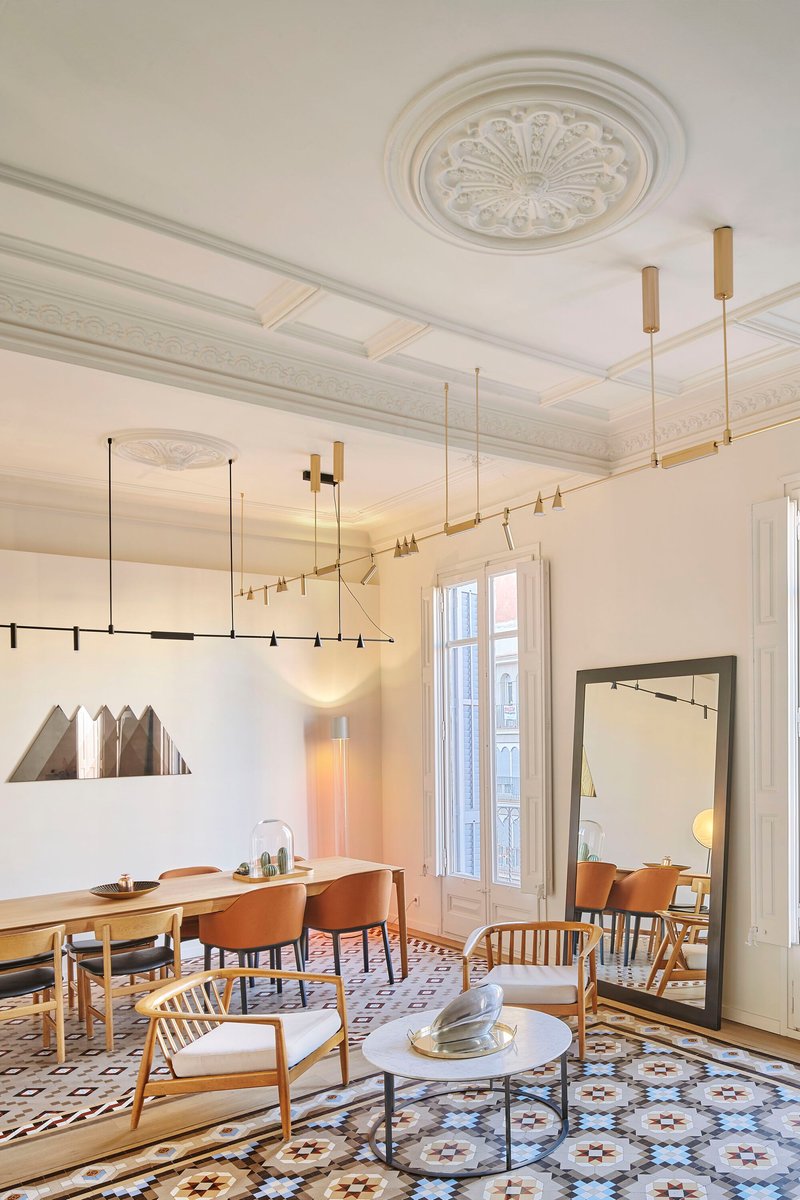
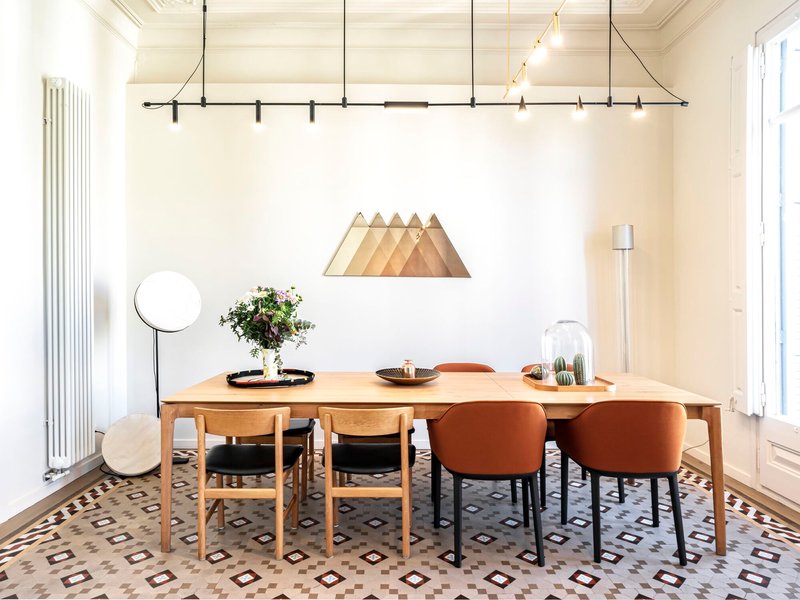
Cometa calls the combined living and dining area the "great hall," and the term is earned. Original Noia mosaic floors have been meticulously restored, their geometric patterns anchoring the room with the kind of texture no contemporary tile can replicate. Above, a coffered ceiling with ornamental medallions speaks to the building's Modernista pedigree. Brass chandeliers and a track lighting system hover below the coffers, concealing climate control and audio equipment within an apparently effortless decorative layer.
The room's proportions do the heavy lifting. With partition walls removed, the living and dining zones flow together but remain legible thanks to the furniture arrangement: a long timber table with mixed seating occupies one end, a softer living zone the other. The patterned floor unifies everything while subtly indicating the historic room boundaries beneath.
The Secret Restaurant
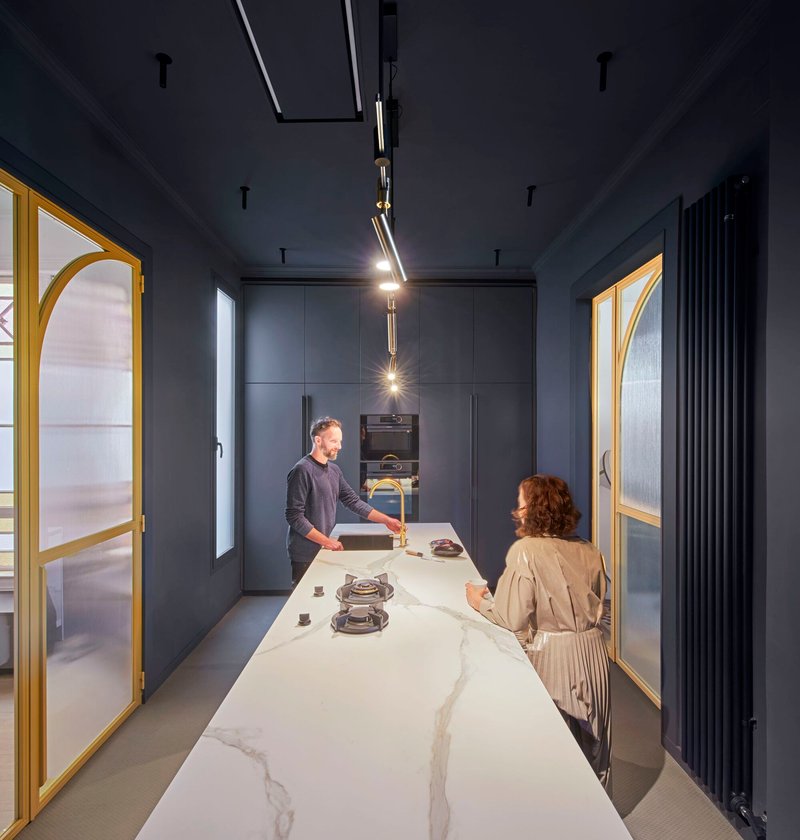
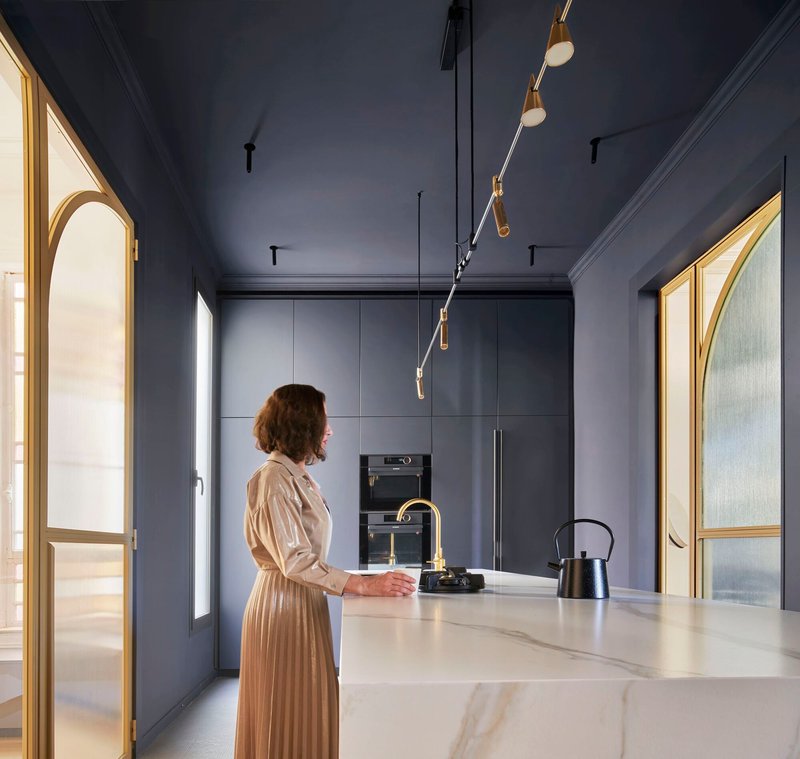
The kitchen was one of the original apartment's weakest points, a small disconnected room cut off from daily life. Cometa repositioned it as what they describe as a "secret restaurant," visible through the fluted glass doors but veiled enough to maintain mystery. Inside, slate blue lacquered cabinetry wraps the perimeter in darkness, while a bright monolithic marble island commands the center. The contrast is deliberate: the island glows against its moody backdrop, drawing the eye and the cook to its surface.
An articulated linear pendant light runs the length of the island, providing task illumination without competing with the cabinetry's matte surfaces. The brass faucet and door frames tie the room back to the apartment's broader material story. It is a kitchen that looks like it belongs in a boutique restaurant, which is exactly the point.
The Loggia Corridor and Private Quarters
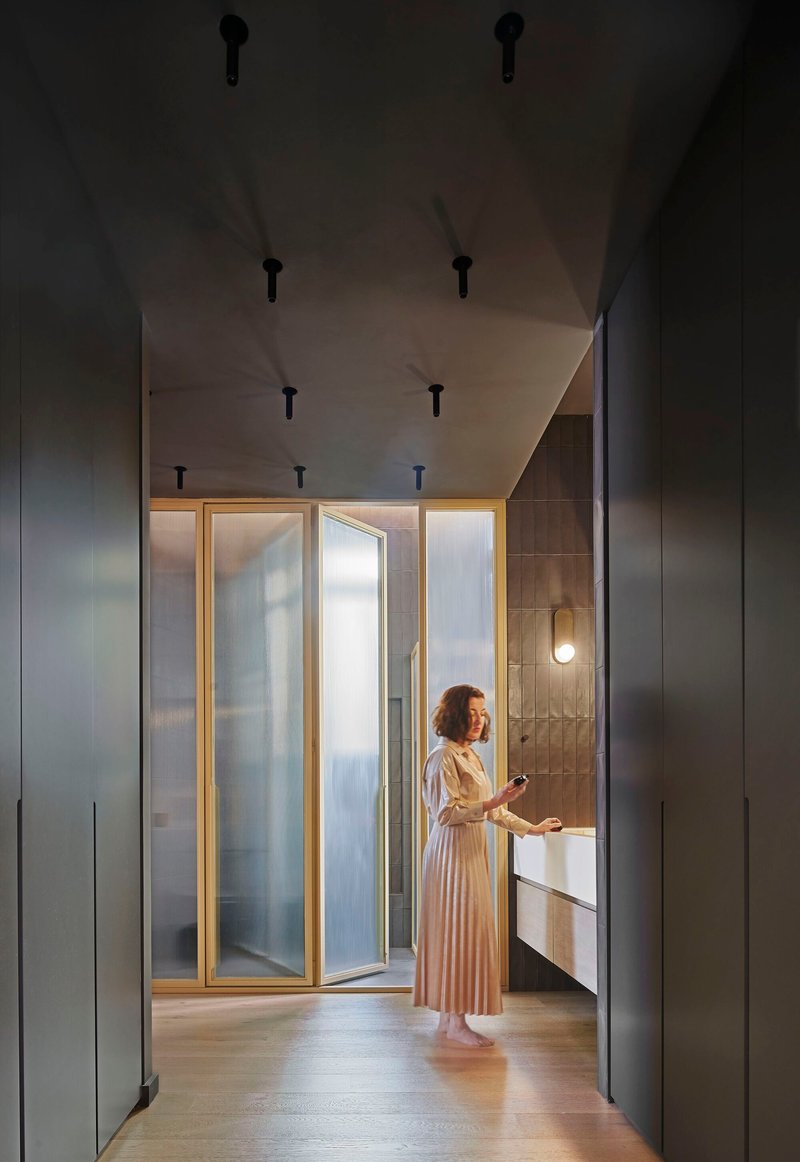
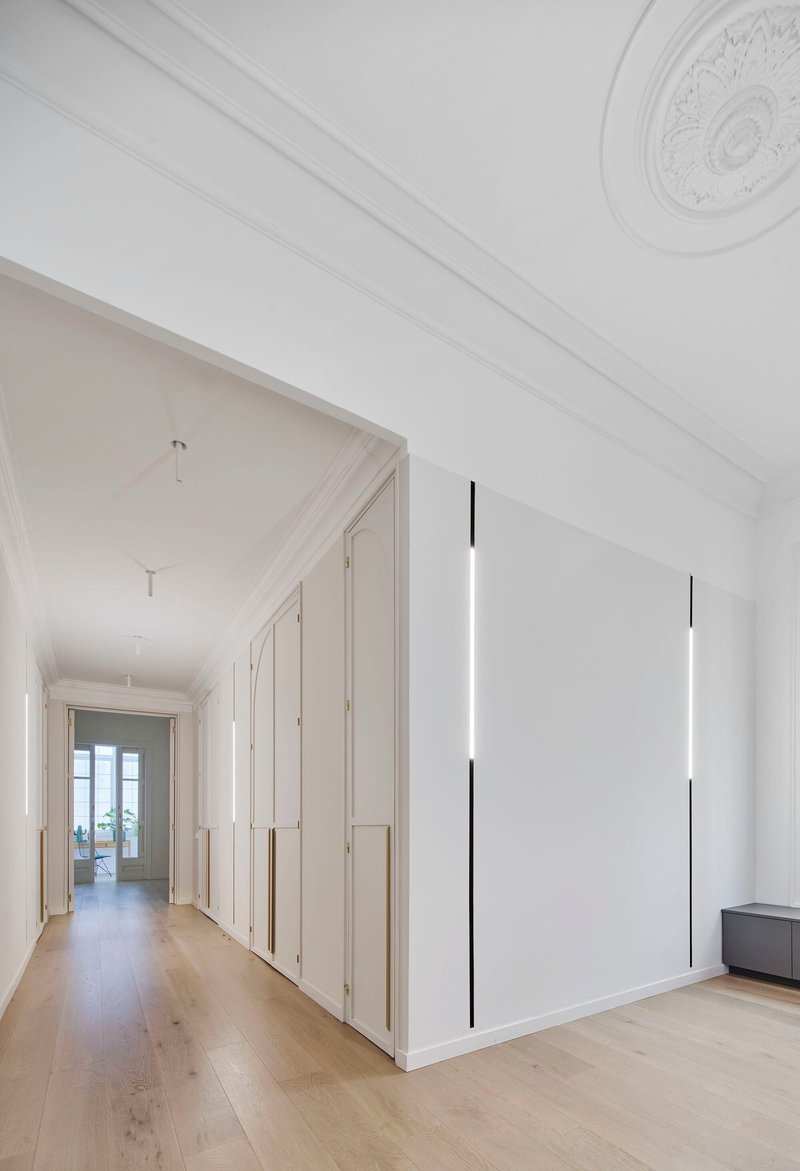
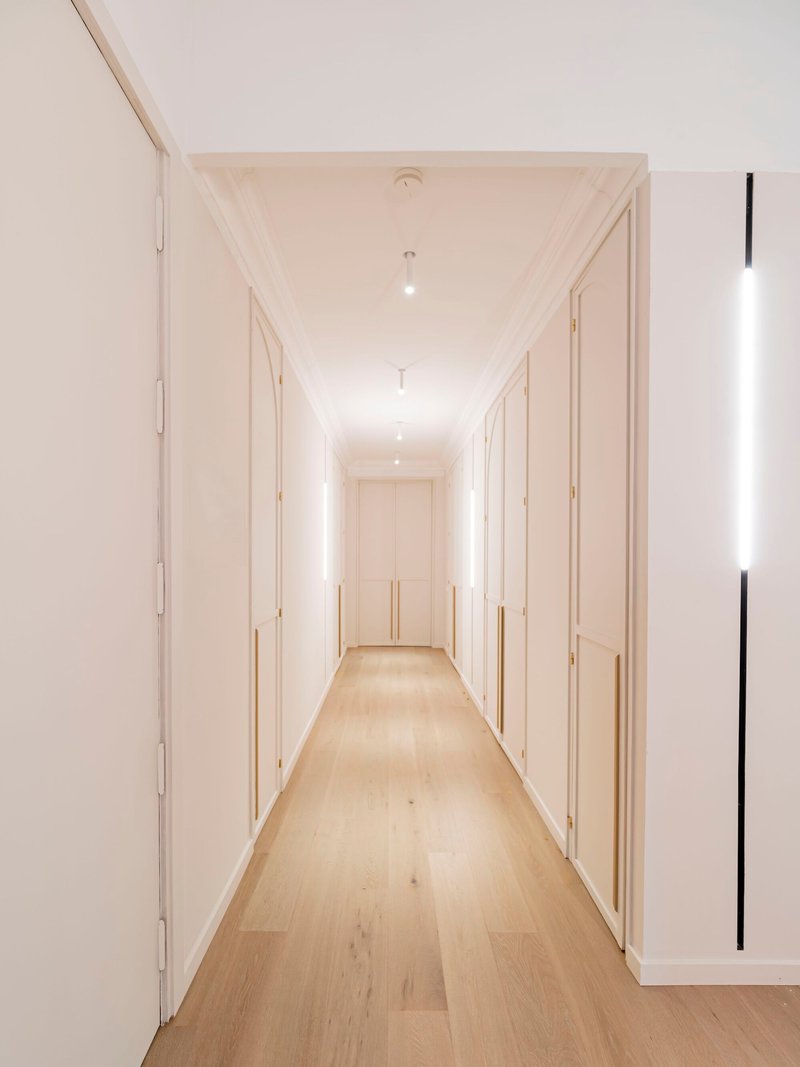
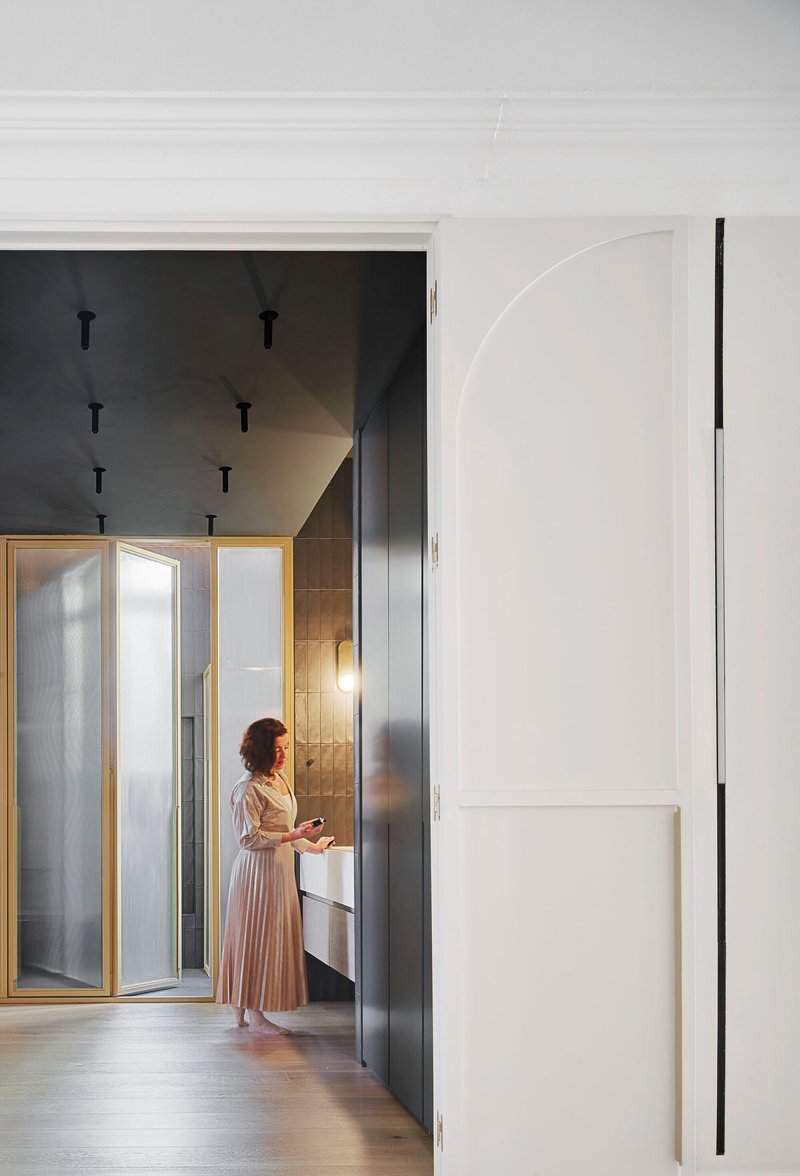
The loggia corridor is the apartment's circulatory system. Pale plywood ceilings and dark grey storage walls line its length, with brass-framed folding glass partitions punctuating the passage at key moments. Where the old layout forced residents through narrow dark hallways, this one offers generous width and layered light. White paneled wardrobes along the bedroom wing create a flush, almost gallery-like quality, their surfaces broken only by ceiling rose medallions that survive from the original plan.
The corridor's double-door system allows the private quarters to open toward public space or seal off completely. It is a post-pandemic concession that feels architecturally resolved rather than reactive: a parent can work from the built-in desk while a child reads on the bunk bed, both separated by a single brass-framed pivot.
Children's Rooms and Built-In Life
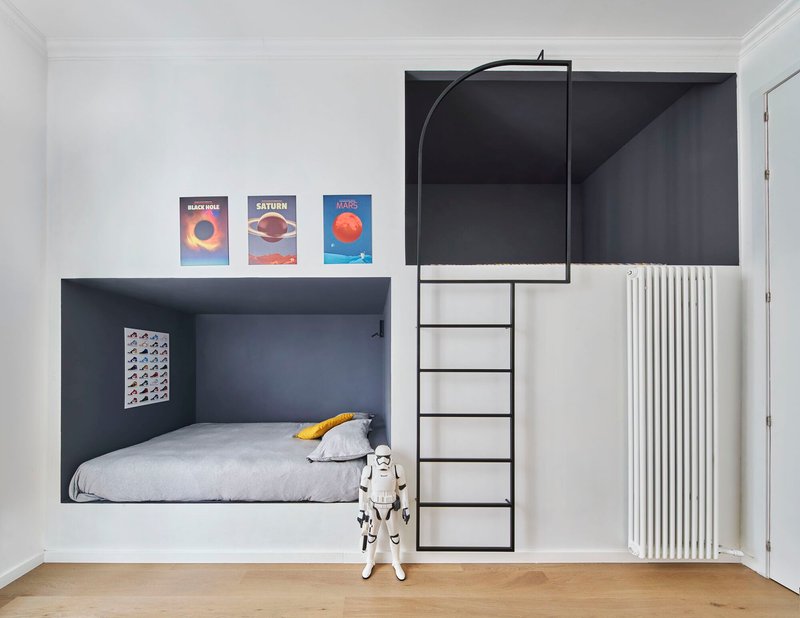
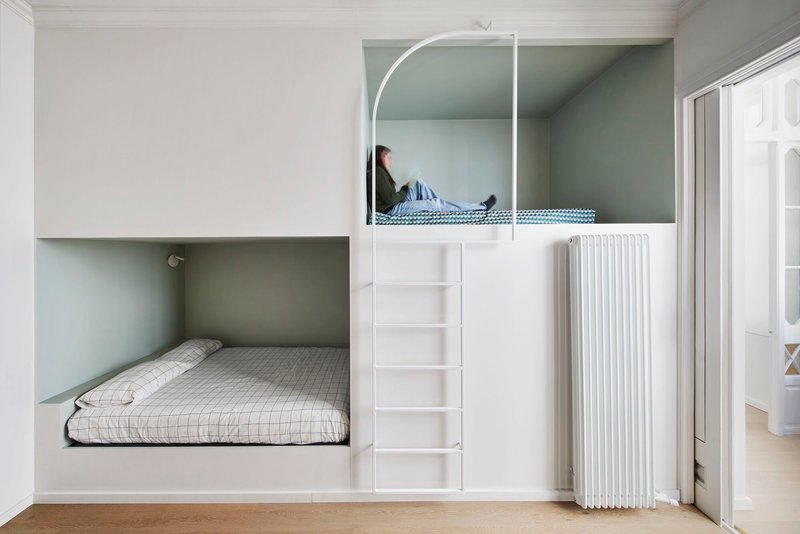
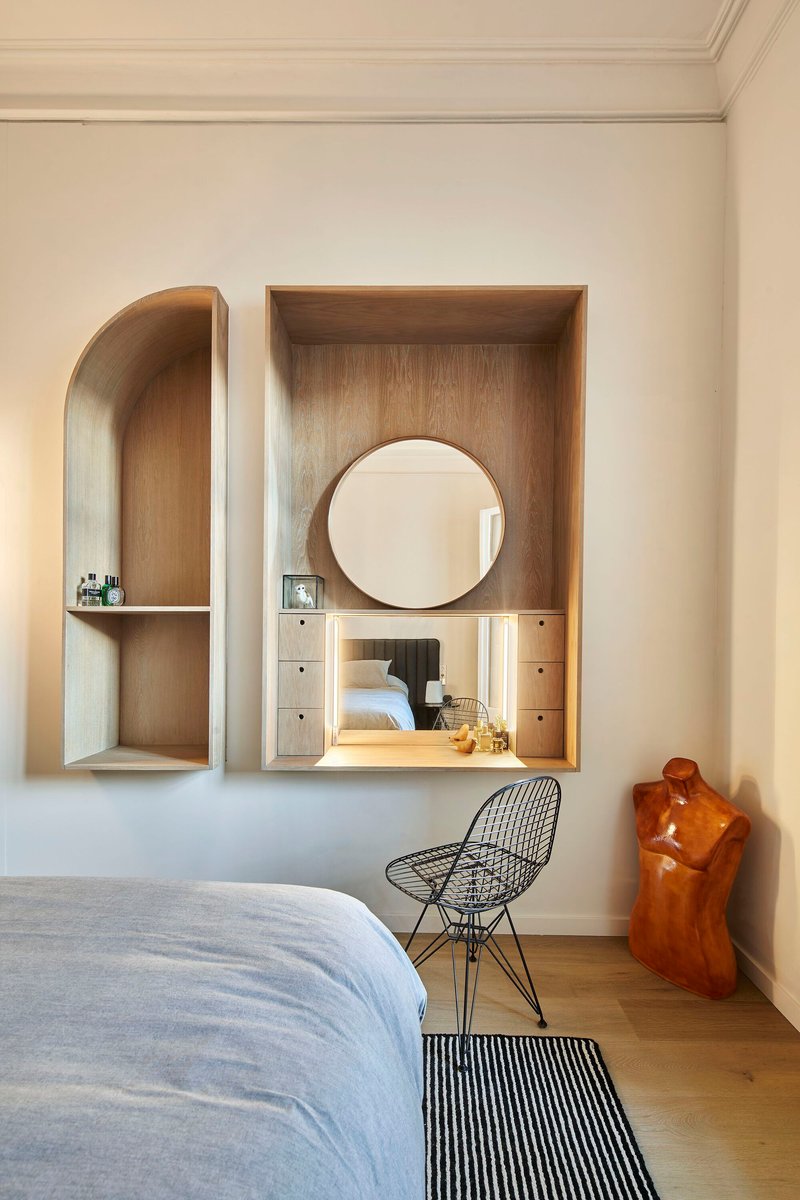
Built-in bunks in the children's bedrooms are painted in a darker tone that sets them apart from the white walls, turning each sleeping niche into a small world. One bunk features an arched upper alcove that gives the top sleeper a sense of enclosure and privacy. Black steel ladders and integrated storage keep the rooms compact without feeling cramped. These are spaces designed for kids who will grow into teenagers, robust enough for rough use and composed enough to age well.
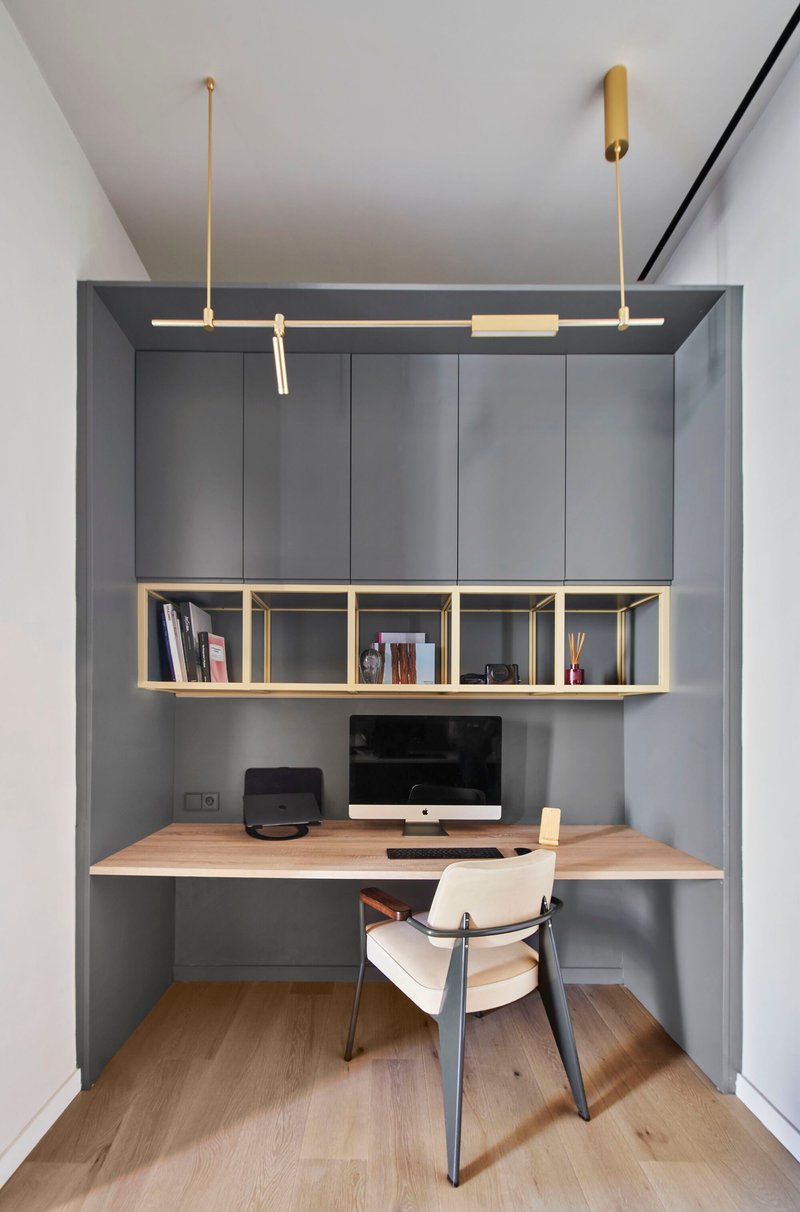
A built-in workspace alcove nearby, with grey cabinetry and a timber desk beneath brass-framed open shelving, addresses the work-from-home reality without surrendering a full room to it. The niche is generous enough for a day of focused work but discrete enough to disappear behind a closed door when the workday ends.
Bathrooms and Material Counterpoint
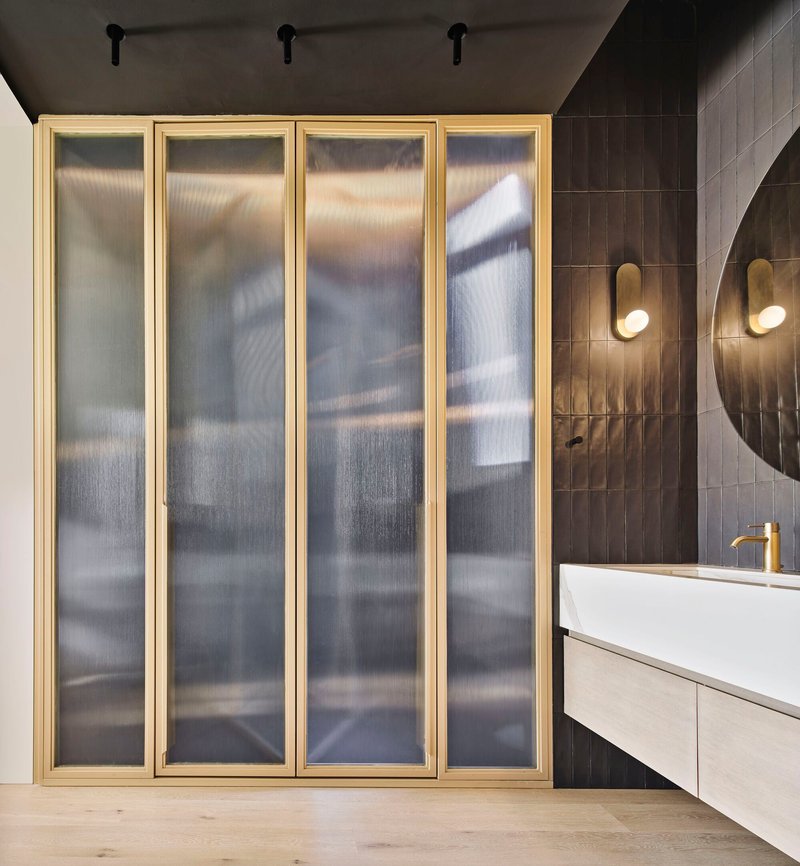
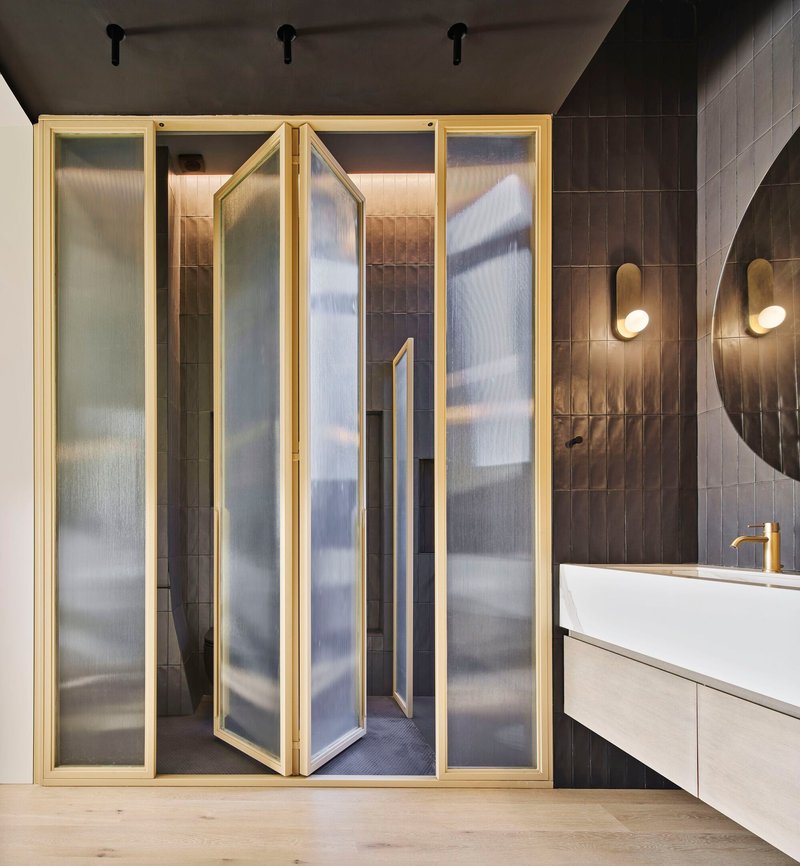
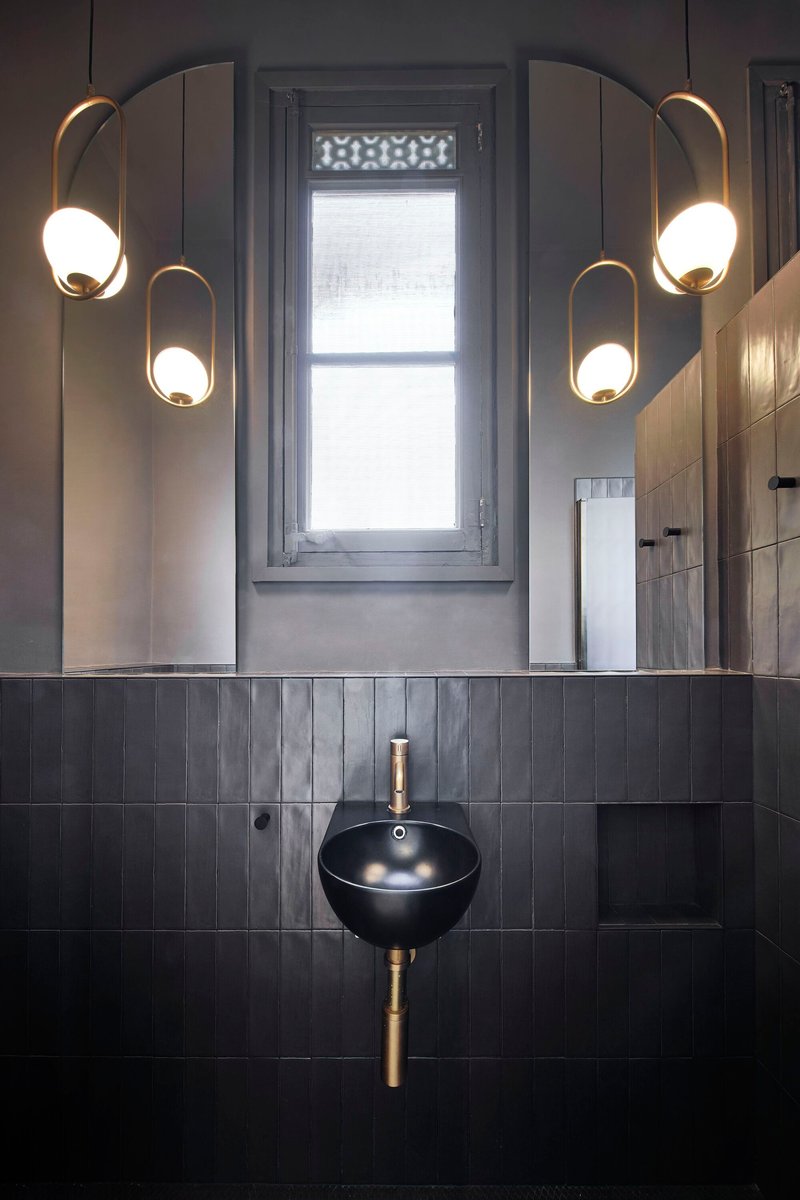
The bathrooms introduce the apartment's darkest tones. Vertical dark tiles clad the walls, black bowl sinks sit atop floating vanities, and paired brass pendant lights or sconces provide warm, localized illumination. Circular mirrors, a recurring motif, soften the geometry of the tile grid. These rooms are deliberately moody, a counterpoint to the luminous public spaces that makes the transition between zones feel genuinely atmospheric.
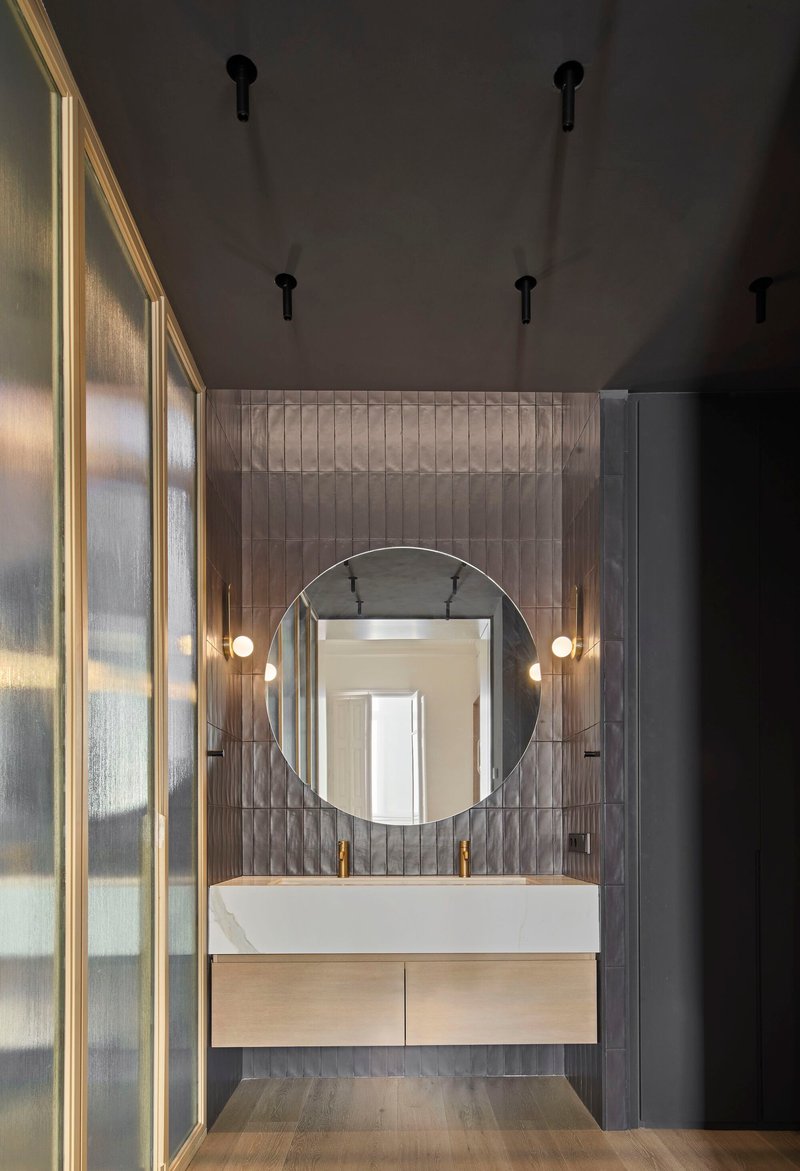
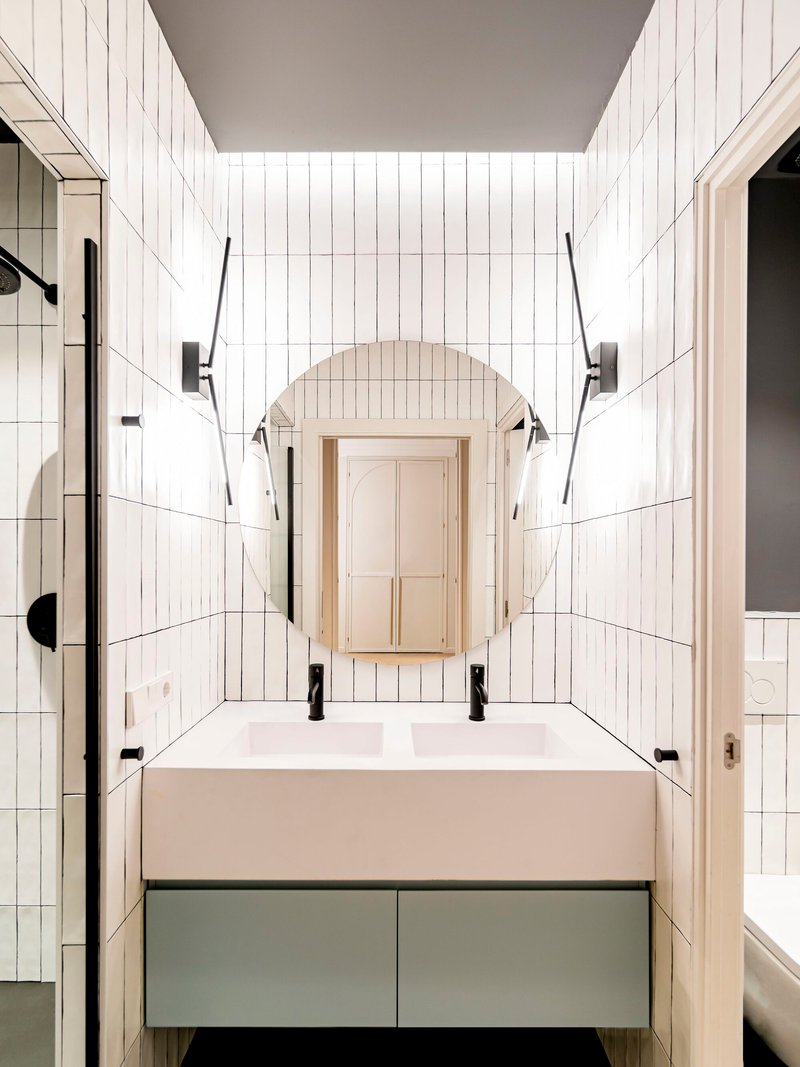
Fluted glass partitions separate the shower zone from the dressing area in the master suite, maintaining visual continuity while containing moisture. The same brass framing that appears throughout the apartment holds these panels, so even the most utilitarian boundary reads as part of the scenographic whole. A secondary bathroom in white vertical tile and grey ceiling offers a lighter alternative, proving the palette can shift without losing coherence.
Light, View, and Domestic Atmosphere
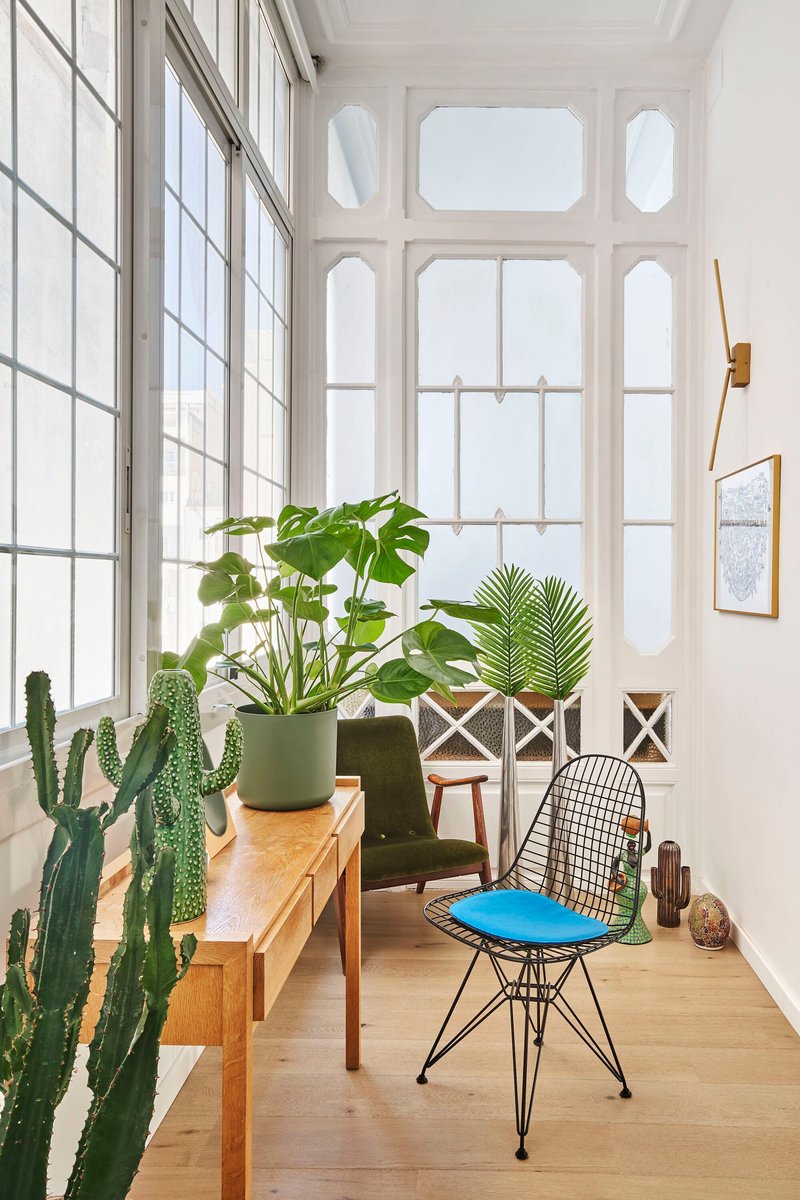
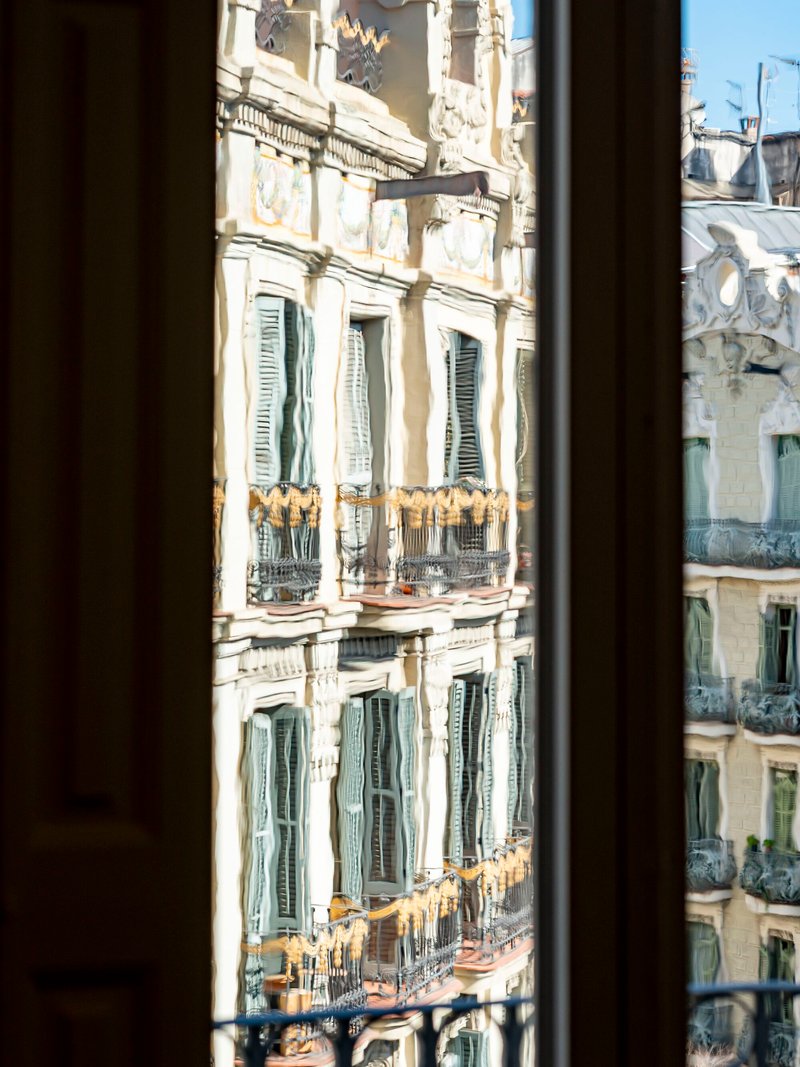
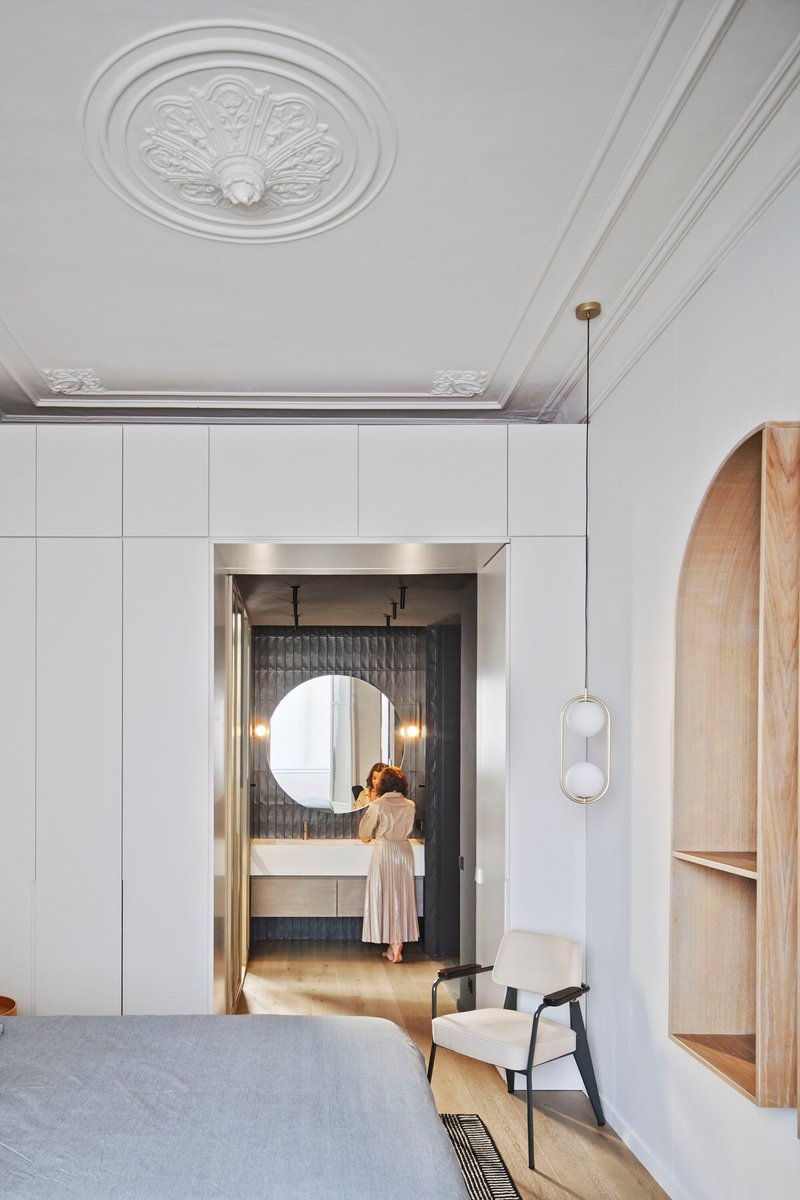
A sunlit corner with tall gridded windows, potted plants, and wire chairs on oak flooring captures the best of Barcelona's afternoon light. Outside, the neighboring facades with their ornamental balconies confirm the Eixample context and remind you that this apartment sits inside a dense urban block. The bedroom's view through a doorway to the ensuite bathroom, where a figure stands at the vanity, collapses foreground and background into a single cinematic frame. Cometa's interest in perspective, in changing, multiplying, and fragmenting the line of sight, is most legible in moments like these.
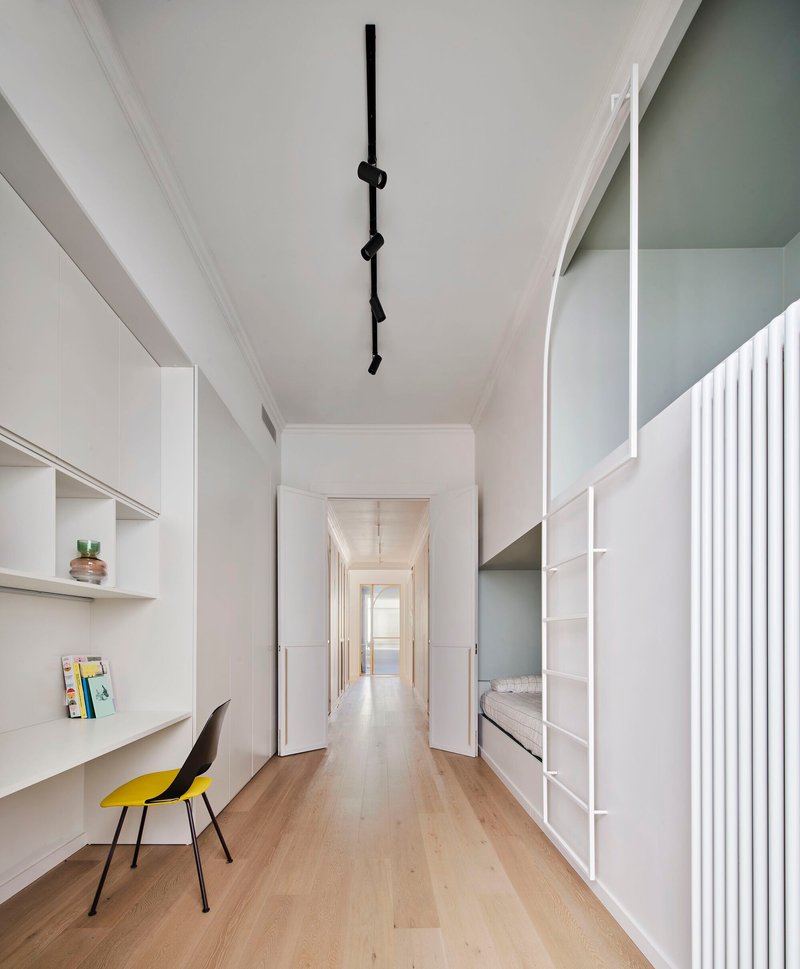
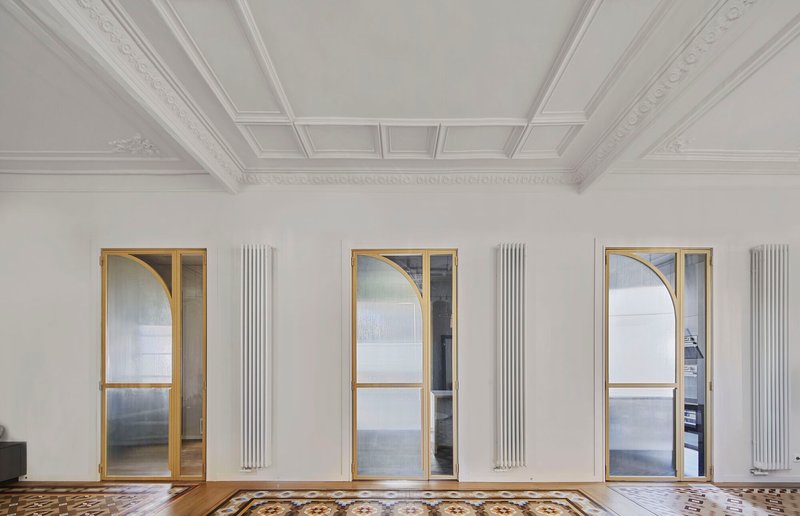
Even the purely functional zones carry this quality. A white corridor with built-in desk and storage along both walls is crowned by a sculptural black ceiling light that transforms a pass-through into an event. Vertical radiators sit between the arched doorways of the great hall, their slender profiles reading as columns rather than appliances. Every element, structural, mechanical, decorative, has been considered as part of a single spatial narrative.
Plans and Drawings
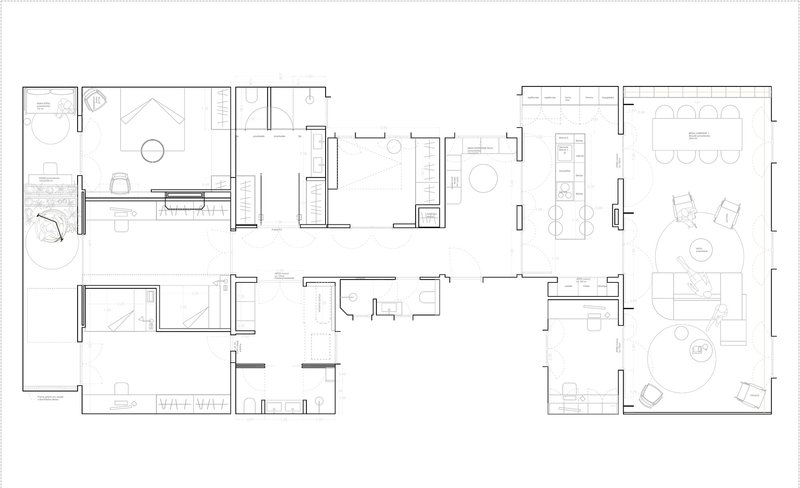
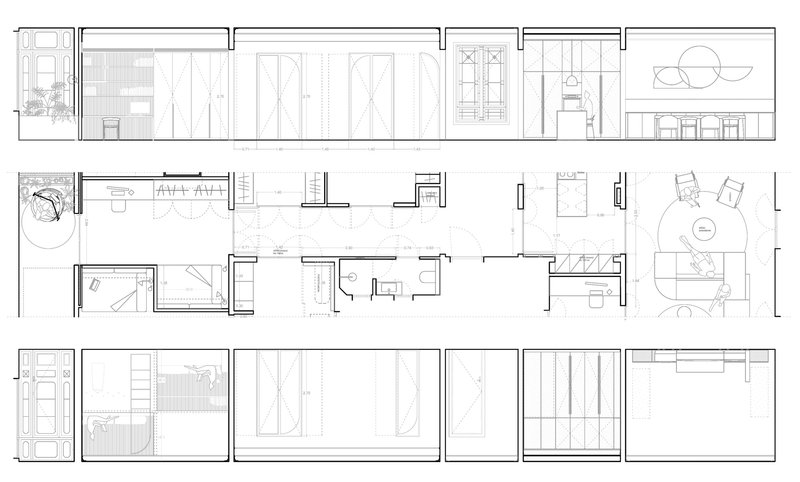
The floor plan reveals how thoroughly the apartment was reorganized around the six retained load-bearing walls. The loggia corridor runs like a datum line through the center, with public rooms opening toward the street facade and private quarters retreating to the interior. The combined plan and elevation drawing illustrates the wall treatments and door placements, making clear that the brass-framed openings are not scattered casually but follow a strict rhythm dictated by the structural grid.
Why This Project Matters
The Bruc Apartment is a convincing argument that renovation in a heritage context does not have to choose between preservation and invention. Cometa Architects kept what mattered, the load-bearing walls, the mosaic floors, the coffered ceilings, and replaced what did not work with a system of brass and glass doors that gives the apartment a genuinely new spatial logic. The cinematic sequencing of thresholds makes 250 square meters feel both larger and more intimate than the original layout ever managed.
More broadly, the project demonstrates that the post-pandemic demand for flexible domestic space need not produce bland open plans or awkward Zoom nooks. Here, flexibility is embedded in the architecture itself: a door that pivots open or folds shut changes the apartment's character without any compromise in material quality or spatial drama. That is a model worth paying attention to, not just in Barcelona but in any city where families are renegotiating what home needs to be.
The Bruc Apartment by Cometa Architects. Located in Barcelona, Spain. 250 m². Completed in 2022. Photography by José Hevia.
About the Studio
Share Your Own Work on uni.xyz
If projects like this are the kind of work you want to make, uni.xyz is a place to publish your own, find collaborators, and enter design competitions.



Popular Articles
Popular articles from the community

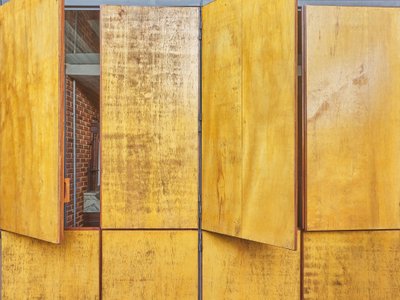
gru.a Builds a 70 m² Timber Shelter That Opens Like a Farm Door in Brazil's Valley of the Vines
In the mountainous region near Rio de Janeiro, a compact retreat uses plywood panels and deep eaves to blur the line between inside and out.
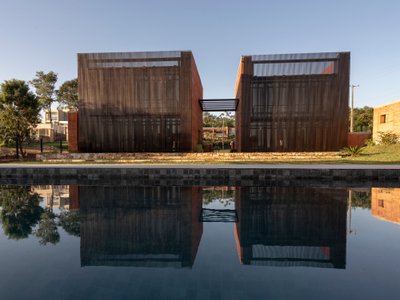
BAUEN Builds Two Rammed Earth Volumes in Paraguay Inspired by the Ovenbird's Nest
In San Bernardino, a house of compacted earth channels the instinct of a constructive bird to shelter life from the Paraguayan summer.
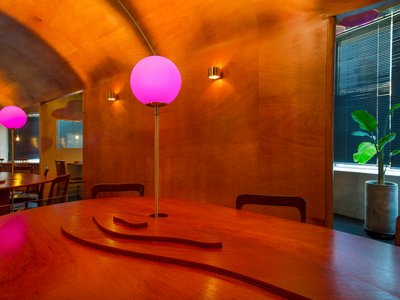
Indiesalon Carves a Plywood Cave into a Seoul Bistro's Second Floor
Munhwa Bistro's second Seongsu branch wraps diners in a laminated timber vault laced with colored light and mirror illusions.
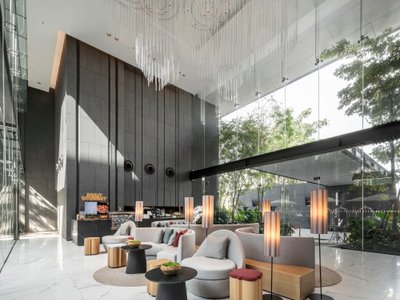
IDIN Architects Wraps a Hua Hin Hotel Around a Private Courtyard to Escape the City
Dusit D2 Hua Hin turns an urban infill site in Thailand's family vacation heartland into a self-contained resort through courtyard planning.

Similar Reads
You might also enjoy these articles

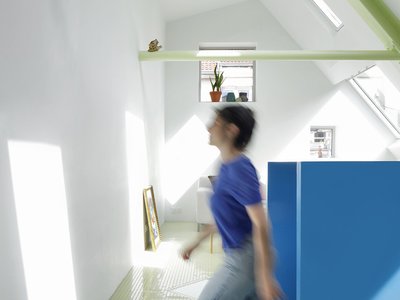
127af Flips a Tiny Bagnolet Rowhouse Upside Down with a Handcrafted Roof Extension
A 55-square-meter terraced house on the edge of Paris gains a luminous upper living floor through lightweight timber and steel.
1.61 Design Workshop Wraps a 600-Square-Meter Café in Vietnam in Sculptural Burgundy Drama
Reden Café & Bistro pairs a helical staircase, mosaic floors, and deep red interiors to rethink Vietnamese hospitality space.

The Unbound Brain: A School Shaped by Cognitive Architecture
Cylindrical learning pods radiate like neurons from a central cortex, turning the floor plan into a spatial model of human thought.
Revival Vernacular Architecture: Rammed Earth Settlements for the Sahara
A modular desert community in Mauritania that fuses passive cooling techniques with earthen construction and local craftsmanship.

Explore Interior Design Competitions
Discover active competitions in this discipline




The Global Benchmark for Architecture Dissertation Awards


The Global Benchmark for Graduation Excellence


Challenge to design luxury tourism on rails


VR headsets Storefront design competition
Comments (0)
Please login or sign up to add comments
No comments yet. Be the first to comment!