

Commercial Space in Minato by ROOVICE: Adaptive Reuse and Modern Renovation in Tokyo
Commercial Space in Minato by ROOVICE transforms a 1960s wooden apartment into a bright, open, modern commercial space blending history and contemporary design.


Located in the vibrant Minato Ward of Tokyo, the Commercial Space in Minato by ROOVICE exemplifies thoughtful adaptive reuse architecture, transforming a 1960s wooden apartment building into a modern, functional commercial rental property. Originally composed of six separate units, the building has been reimagined as a single cohesive space, blending historical elements with contemporary design interventions.
Transforming a 1960s Wooden Apartment into a Modern Commercial Space
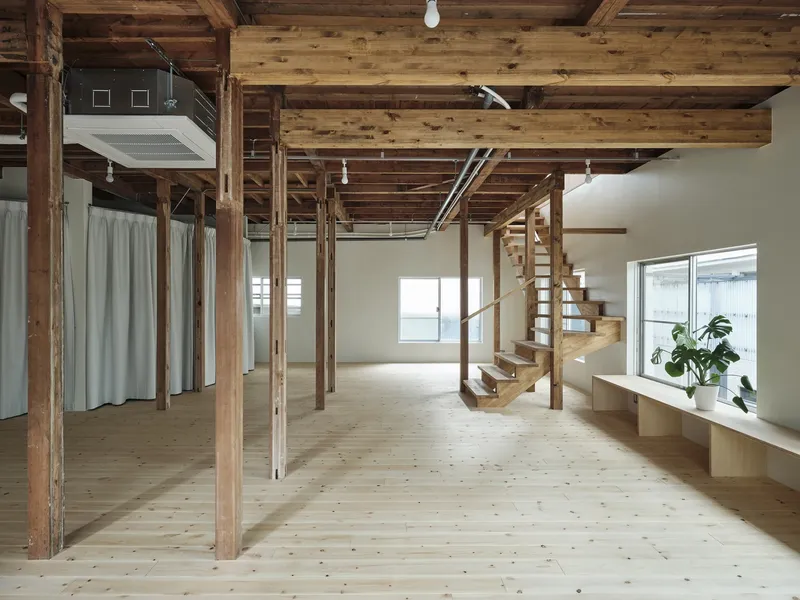
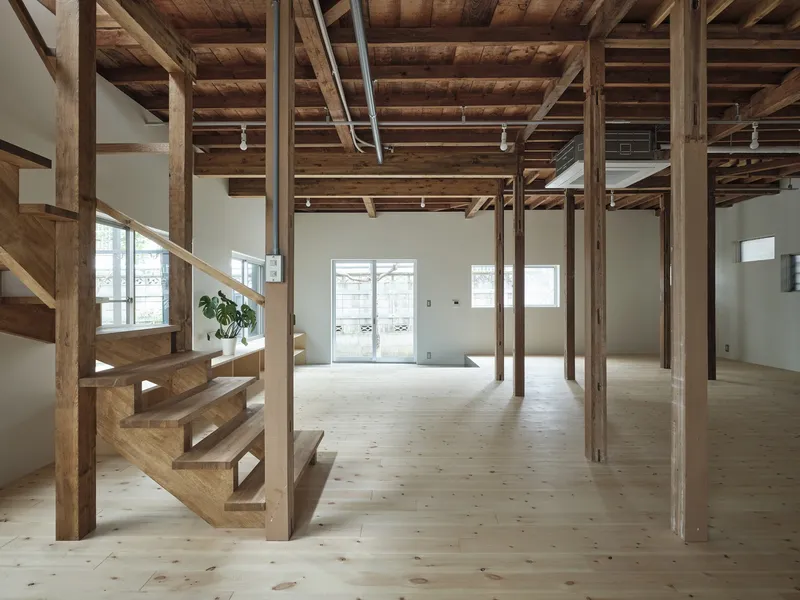
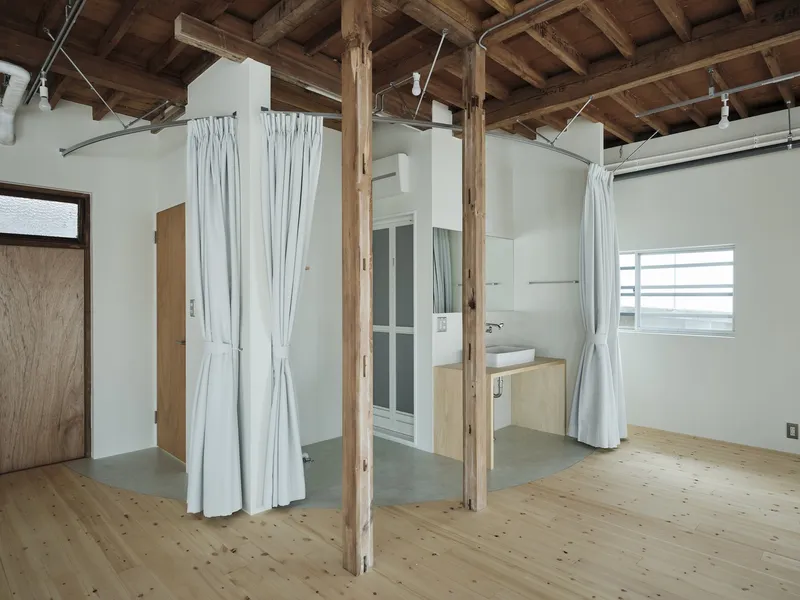
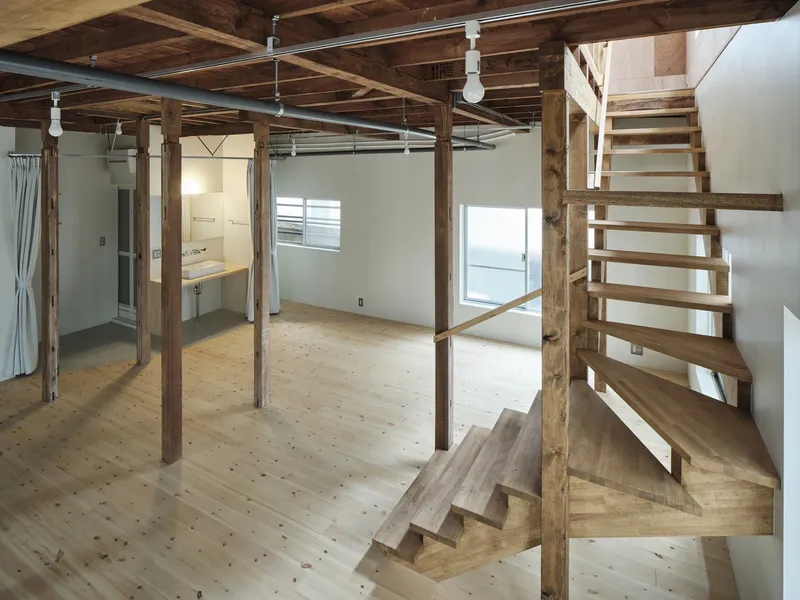
The renovation project involved a complete internal reconstruction, removing all interior walls to create an open, flexible layout. This approach maximized natural light and spatial continuity, redefining the building’s functionality while respecting its original structure. The ground floor, once dim and enclosed, was carefully redesigned to enhance brightness and openness. Existing windows were preserved wherever possible, and finishes were selected to amplify available light. Knotty red pine wood flooring and elevated ceilings contribute to a warm, inviting atmosphere.
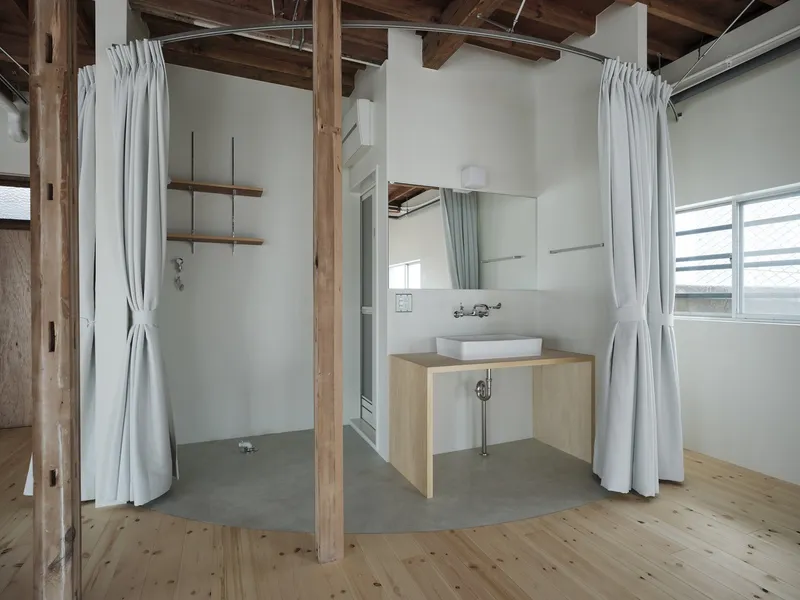
Wet areas were subtly distinguished using curved PVC tile flooring, complemented by rounded curtains that harmonize with the flooring pattern, creating soft transitions between functional zones. A newly constructed wooden staircase connects the ground floor to the upper level, emphasizing flow and accessibility.


Reimagining the Entrance for Functionality and Tradition
A major focus of the renovation was the entrance. Previously set back and poorly lit, the entrance was relocated to improve accessibility and user experience. Following traditional Japanese design principles, a lowered floor area with smooth trowel-finished mortar accommodates bicycles, skateboards, and other tenant needs, reflecting a lifestyle-conscious approach.

Exposing Natural Elements on the Upper Floor
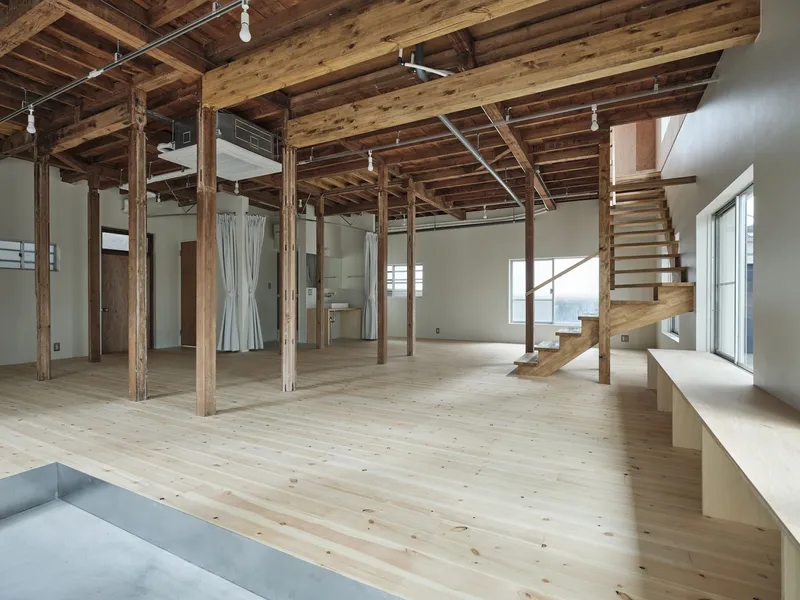
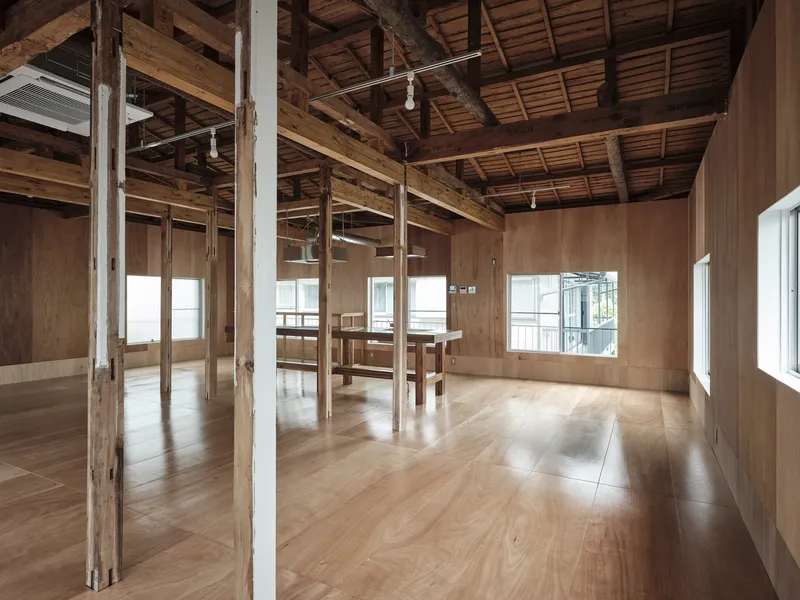
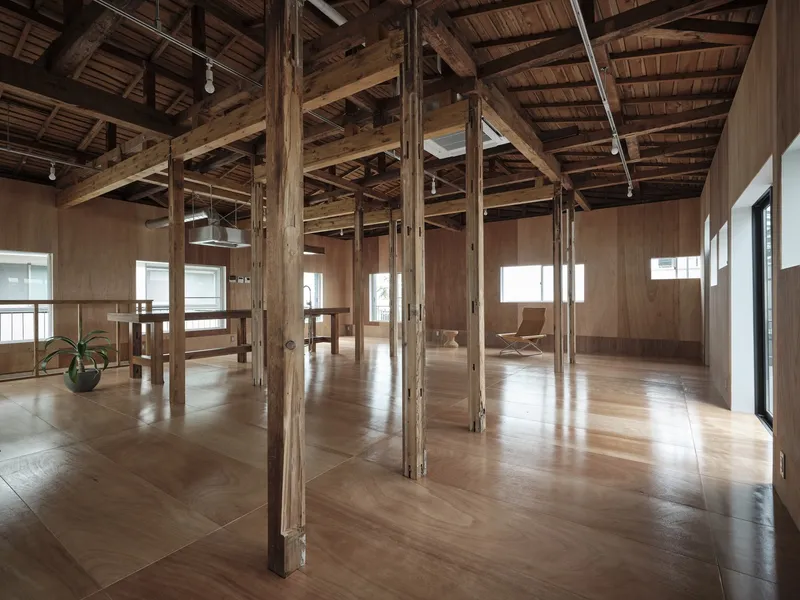
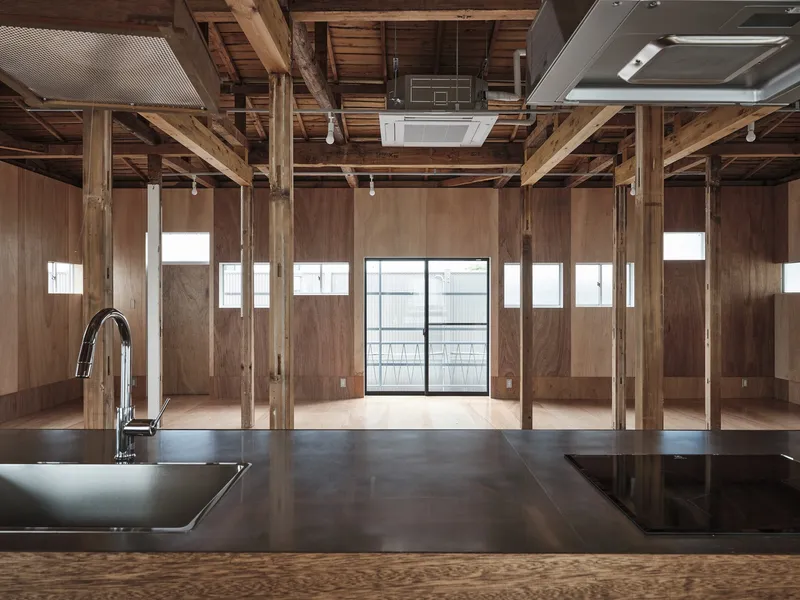
On the second floor, the renovation revealed the original roof boards, highlighting the building’s natural wooden charm. External insulation preserved the wood while improving energy efficiency, creating a rustic, warm atmosphere. Several original columns were removed to expand the space, with reinforcement beams strategically installed for structural integrity.
Old columns were repurposed as supports for a centrally positioned modern kitchen counter, blending historical elements with contemporary interior design. This integration of heritage architecture and modern interventions exemplifies ROOVICE’s design philosophy: respecting the past while innovating for the future.

Materiality and Playful Detailing
Removing walls uncovered windows of varying sizes, creating opportunities for playful visual effects. Lauan plywood boards on the walls and glossy urethane-coated flooring introduced a cohesive yet dynamic pattern. Custom-made lauan fixtures, including light switches and kitchen lighting, reinforce the bespoke character of the space.
The original external staircase was retained, maintaining flexibility for multi-use purposes. This enables the building to function independently on the upper and lower floors, allowing adaptability for commercial tenants.

A Successful Example of Adaptive Reuse in Tokyo
The Commercial Space in Minato demonstrates how outdated architecture can be transformed to meet modern needs without erasing its historical value. By carefully preserving original elements, enhancing natural features, and introducing thoughtful contemporary interventions, ROOVICE created a unique commercial property that balances tradition with modern functionality.
All photographs are works of Akira Nakamura


Popular Articles
Popular articles from the community


Architekt Andreas Gruber Scatters 23 Dark Timber Chalets Across a South Tyrolean Forest Edge
In Molini di Tures, Amonti Chalets breaks a resort into a hamlet of gabled timber houses, with parking, storage and services pushed into the slope.

LT2A and OPEN Architectes Thread a Brick and Glass High School Through a Wooded Belgian Campus
In Braine-l'Alleud, a 3,000 m² wing for Collège Cardinal Mercier pairs pale brick with a glazed colonnade, deferring to a small chapel and a dense wood.

David Macias Steps a Doorless Stone and Plaster House Down a Tropical Colombian Hillside
In the humid hills of Colombia, Threshold House replaces the front door with an open void and terraces its 850 m² down the slope instead of fighting it.

U.GA Architects Wraps an Oval Rooftop Pool in Curved Board-Formed Concrete on Busan's Jeollidan-gil
In Busan's Jeonpo-dong, a 454 m² mixed-use block stacks a neighborhood facility, guest rooms and an oval rooftop pool inside spiraling concrete walls.

Similar Reads
You might also enjoy these articles


Hodi-Mandai Geram
Project Function: Preservation and revitalization of the Intangible heritage and socio-spatial identity of the Hodi by Housing, Cultural Memory Center, Sacred Grove, landscape, local tourism economy


Olio Towers: A Mid-Rise for Performers That Fuses Housing, Rehearsal, and Stage
Located blocks from Houston's Theater District, this modular tower stacks living units around a central performance atrium.

Oasis: Modular Green Housing Carved into Dhaka's Urban Fabric
A shortlisted Plugin Housing entry reclaims unauthorized settlements in Dhaka with stepped concrete volumes, green roofs, and ventilation-driven design.

Black Hole: A Floating Megastructure for the Post-Physical Era
Emiliano Mazzarotto envisions a spherical, self-scaling arena where e-sports, digital hotels, and holographic stadiums replace traditional public space.

Explore Office Building Competitions
Discover active competitions in this discipline

Challenge to reimagine the Iron Throne

Photograph architecture without architects

Illustrate the lost glory of Angkor Wat - Render Challenge

Design challenge to reuse E-waste
Comments (0)
Please login or sign up to add comments
No comments yet. Be the first to comment!