

Community Center Rottenbach By atelier st | Sustainable Cultural Hub in Thuringian Forest, Germany
Community Center Rottenbach by atelier st blends sustainable timber construction, energy efficiency, and Thuringian Forest vernacular for a functional, welcoming cultural space.


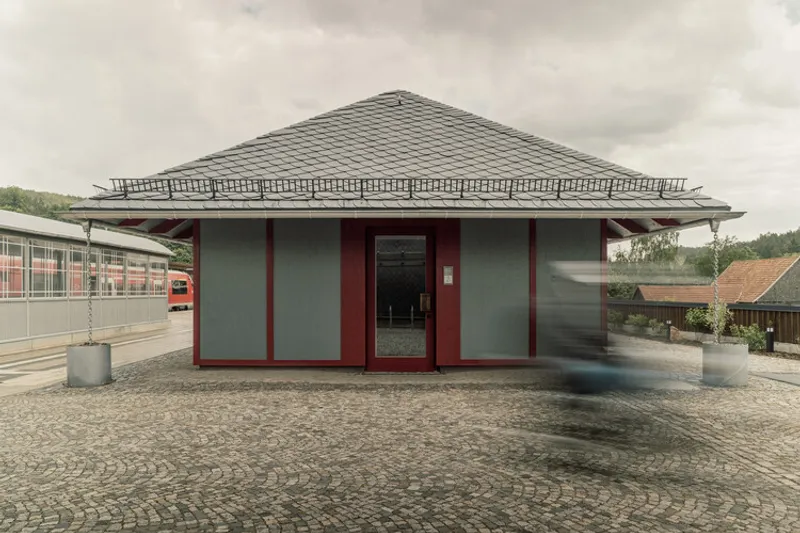
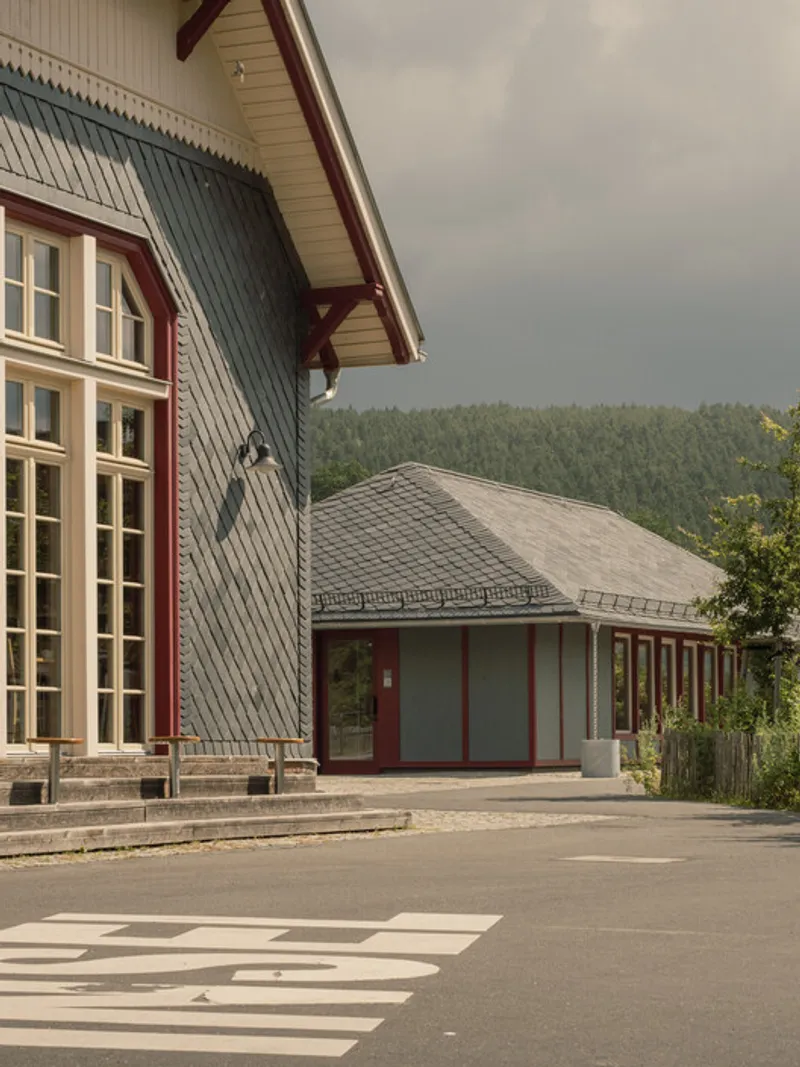
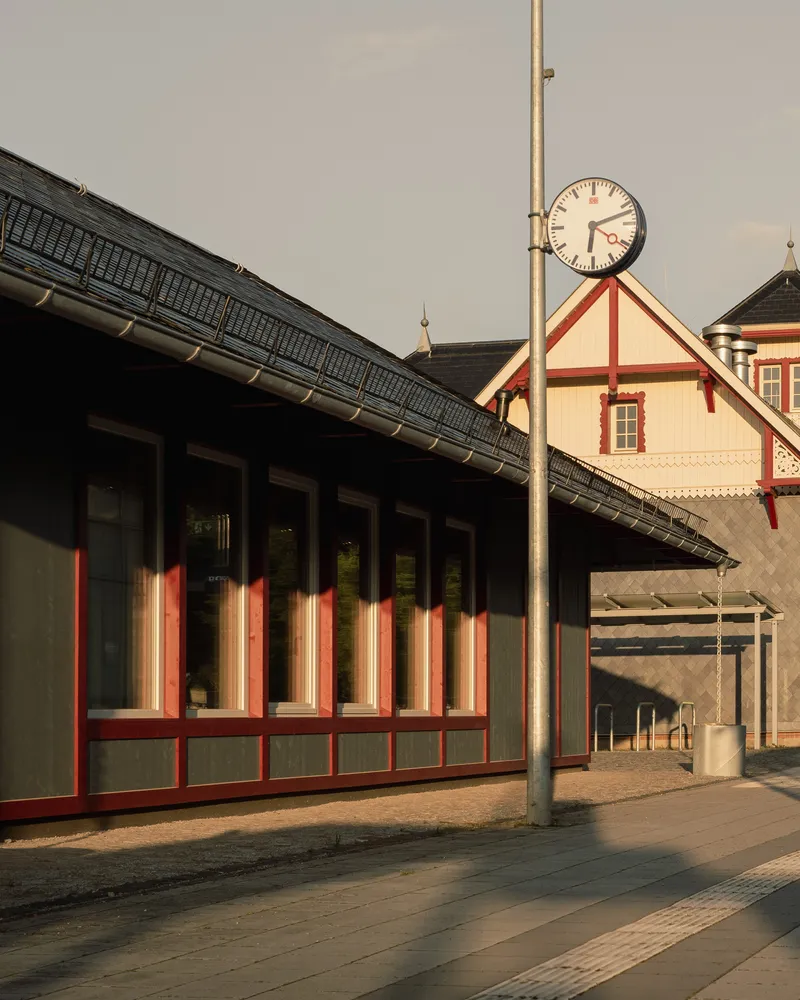
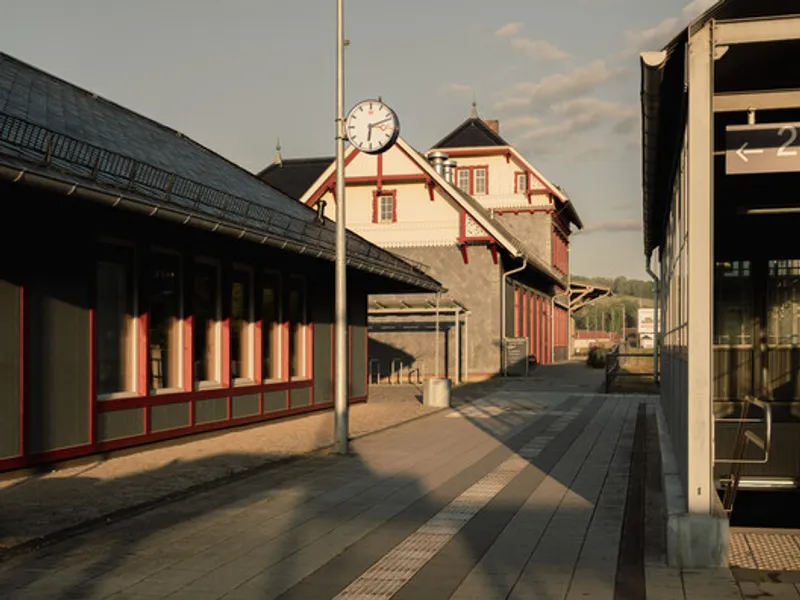
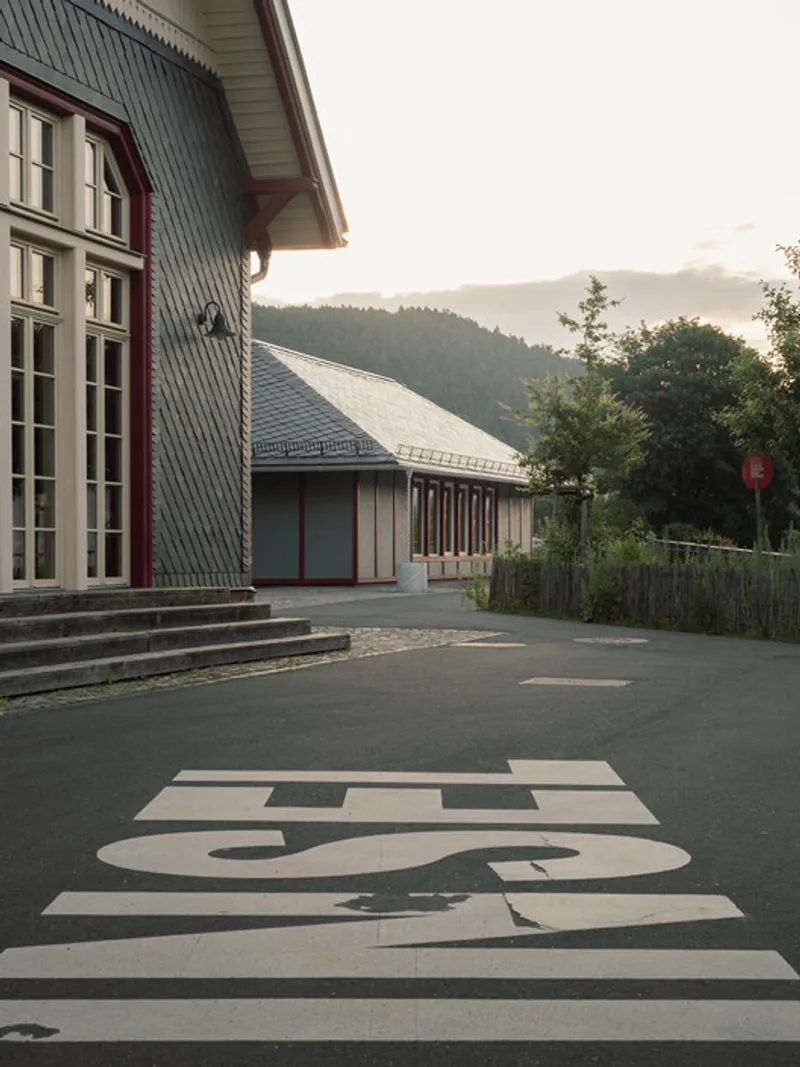
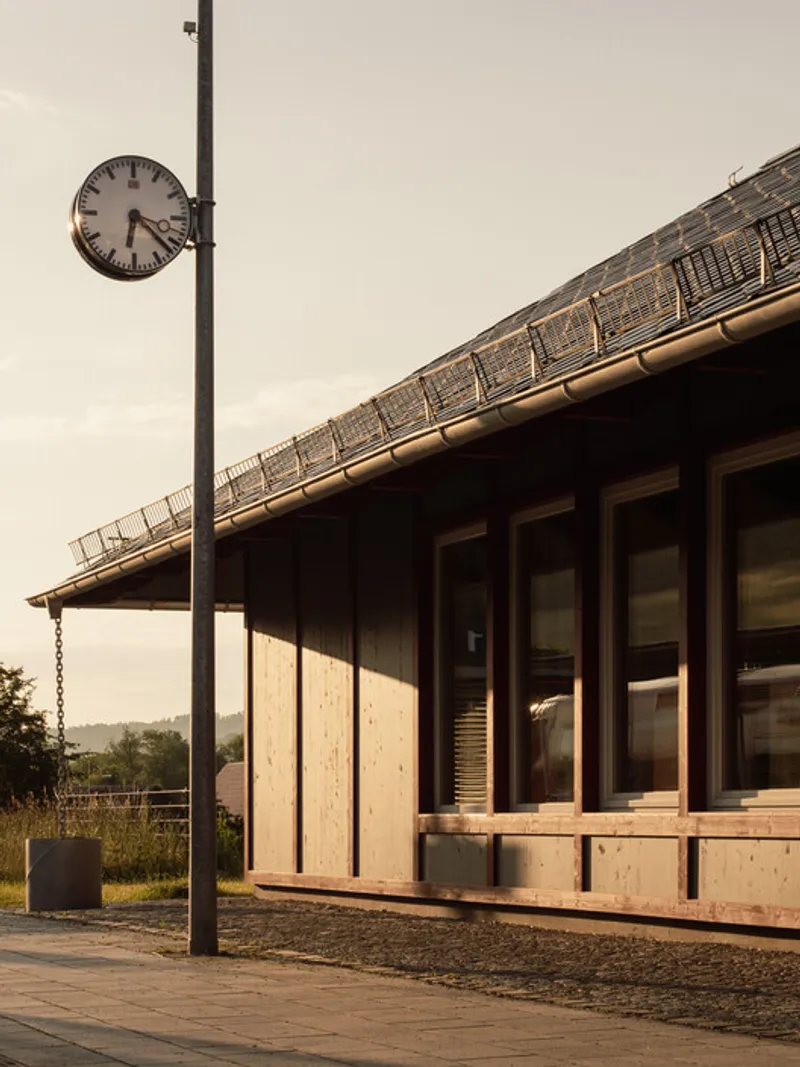
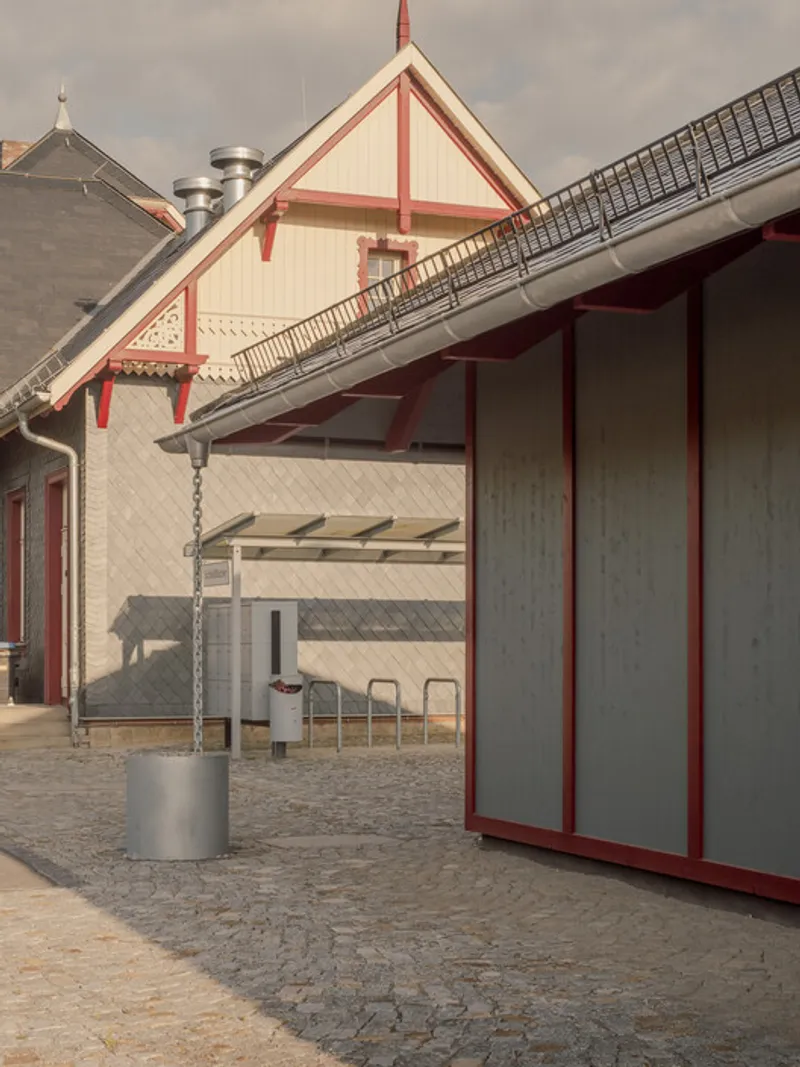
The Community Center in Rottenbach, designed by atelier st, is a thoughtfully crafted cultural building located on the edge of the Schwarzatal Valley in the Thuringian Forest, Germany. Nestled among rolling hills, historic villages, and slate-roofed structures, the center is adjacent to a renovated historic railway station, evoking the nostalgic charm of a model railway landscape while serving as a functional, modern community space.
Context and Concept
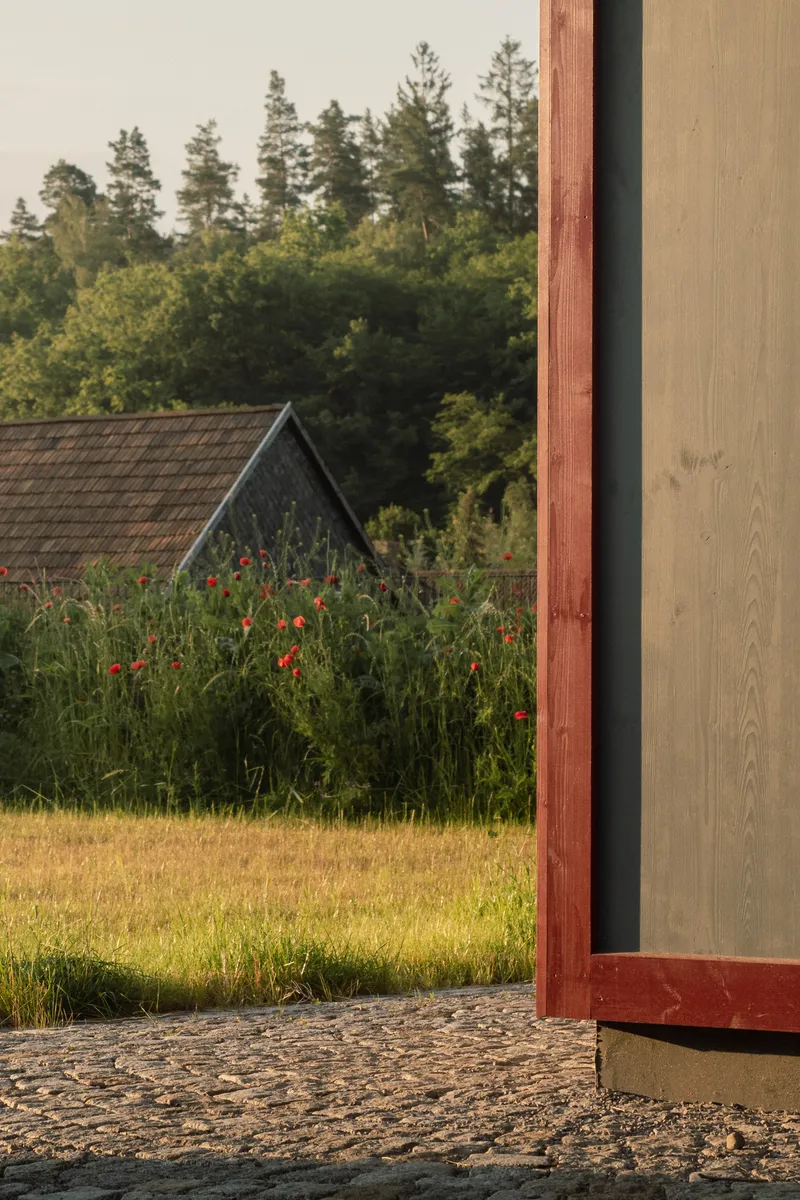
The project was conceived as a small replacement building for the local community, positioned within the eastern extension of the listed station ensemble. Supported by IBA Thüringen, the design seeks to blend simplicity, familiarity, and local identity while providing a neutral, public space accessible to residents. The architectural form, a straight, rectangular building with a pitched roof, draws inspiration from typical Thuringian Forest building types, maintaining harmony with the surrounding historic structures.
Spatial Organization
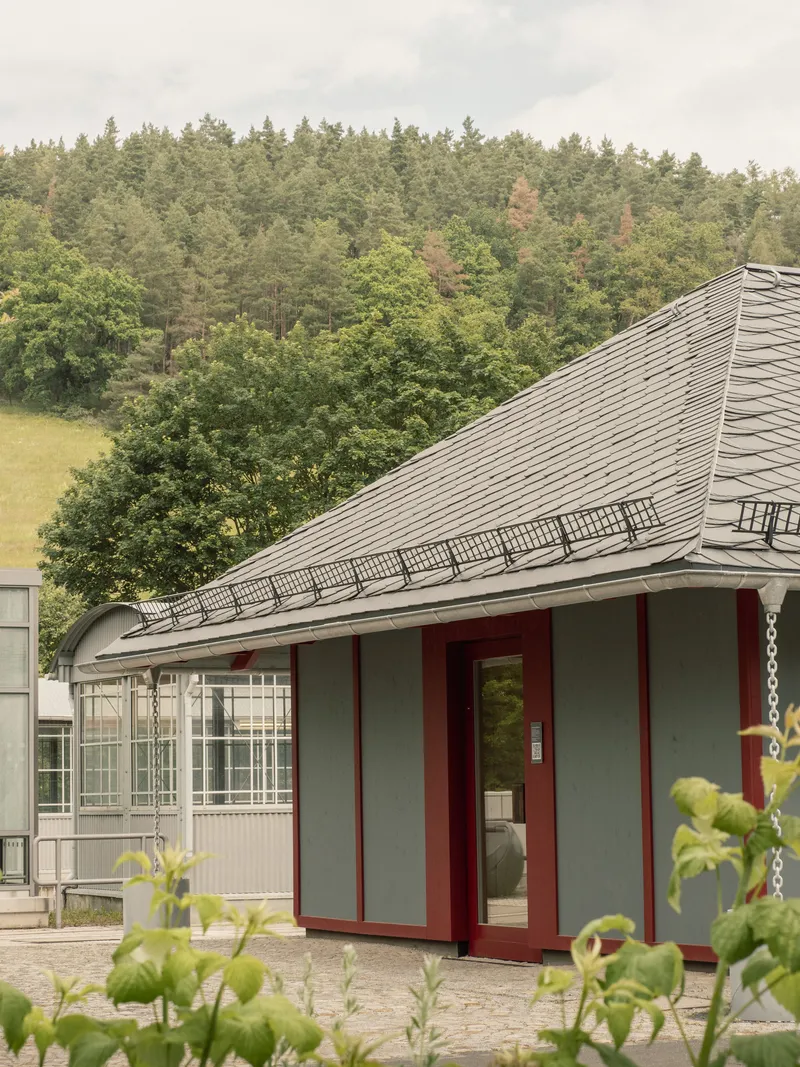
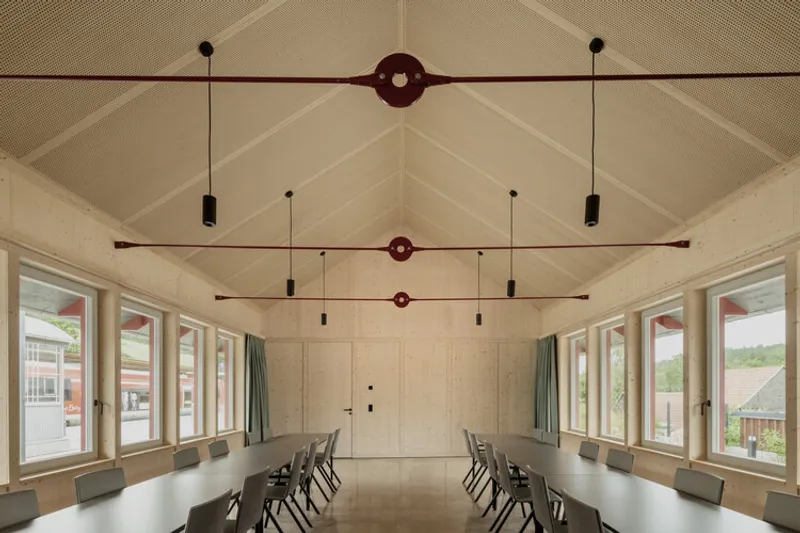
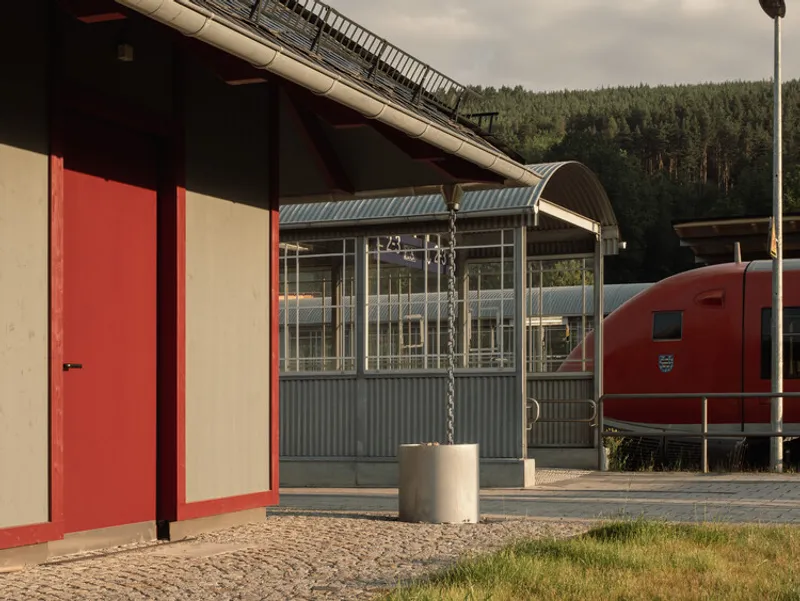
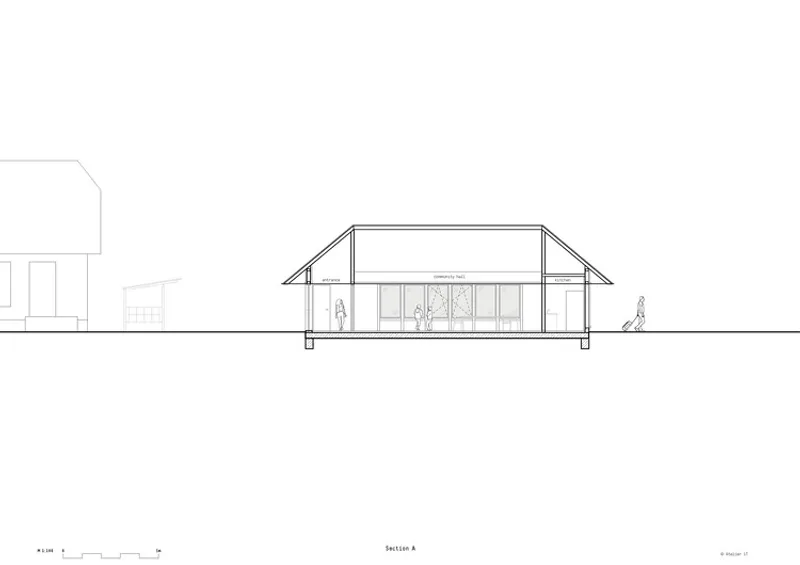
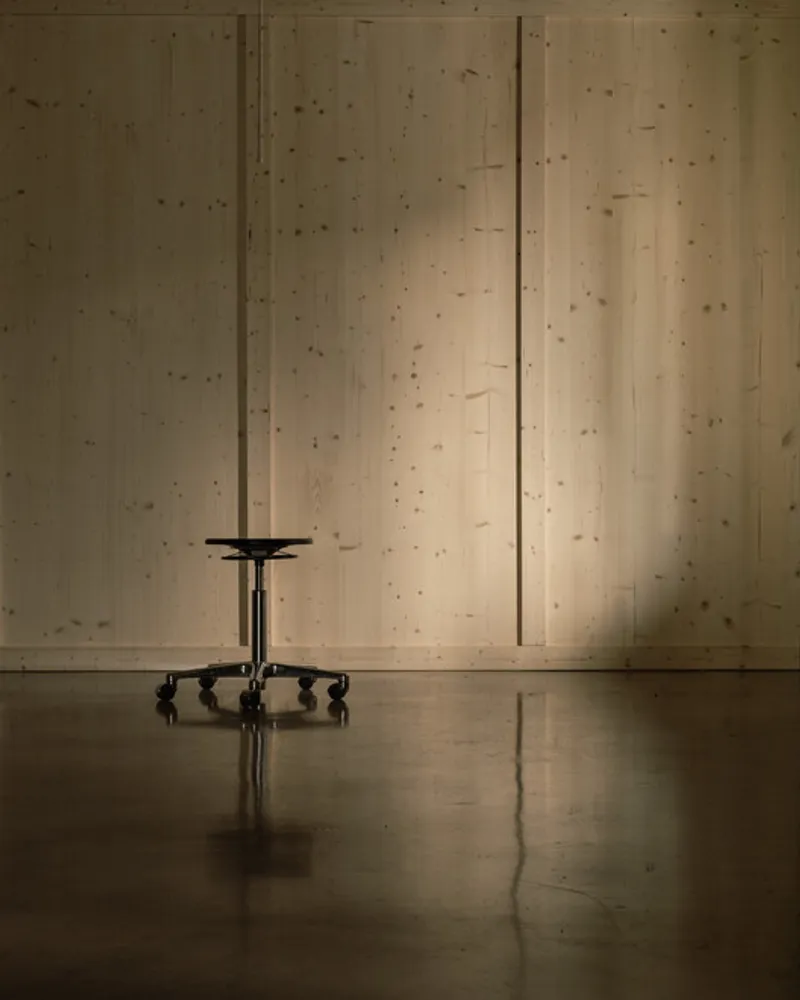
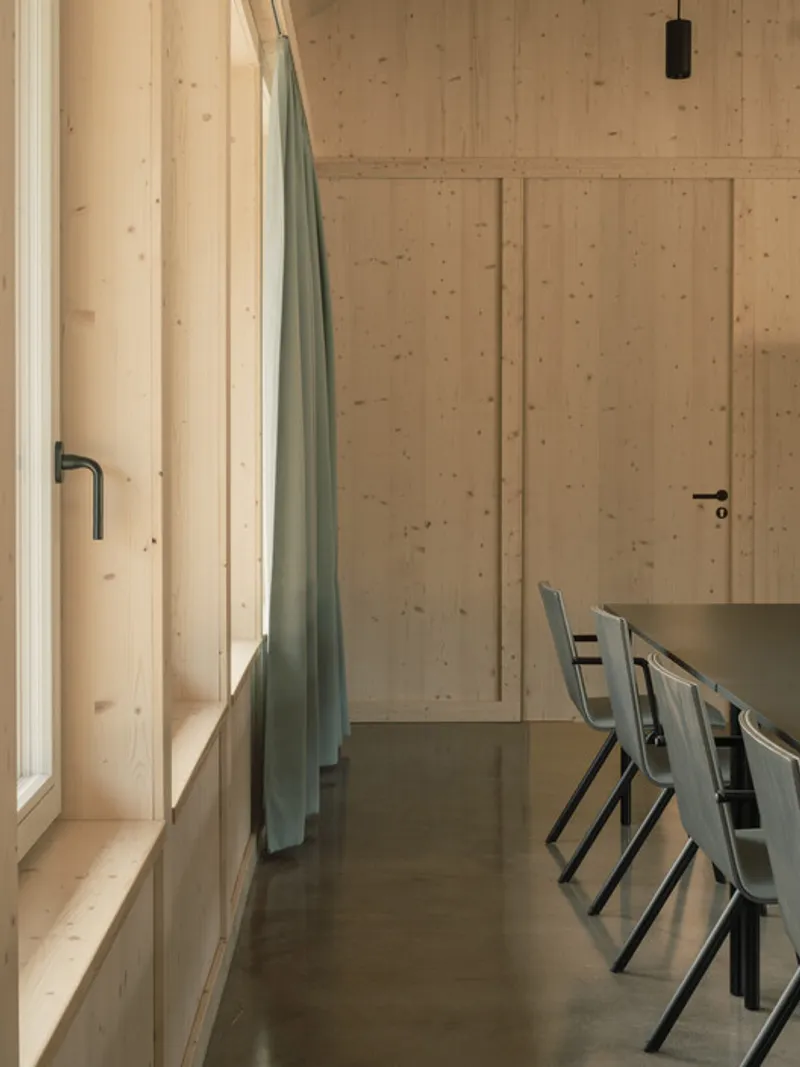
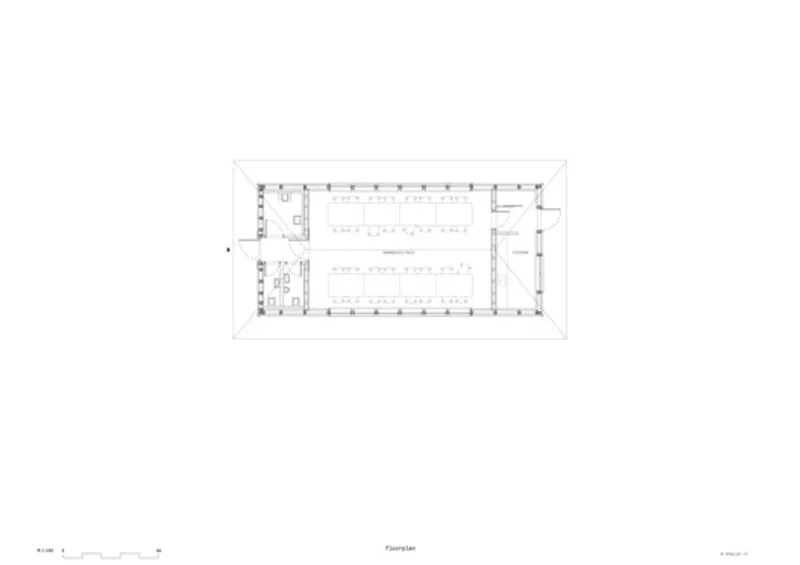
With a floor area of approximately 103 m², the center integrates toilets, kitchen, and a surprisingly spacious communal hall. The hall extends up to the roof and is fully clad in warm timber, creating an inviting and atmospheric interior. A transparent, barrier-free main entrance with an adjoining breezeway provides direct access opposite the station building, while the kitchen and storage area are positioned to the west and can be accessed independently. A wrap-around cantilevered roof allows for sheltered outdoor activities, enhancing the usability of the space year-round.
Materiality and Construction
The center’s design emphasizes clarity, simplicity, and durability. The structure rests on strip foundations with a reinforced concrete slab, while the main building is a timber construction. The uniform 1.25 m grid organizes both structural and aesthetic elements, visible inside and out through cover strips and cassettes. The rafter roof construction is expressed internally, with overlapping insulation and natural slate roofing referencing the traditional local architecture. The exterior is clad in color-coated timber panels with vertical profiles that provide protection against weather while evoking a subtle plasticity in form.
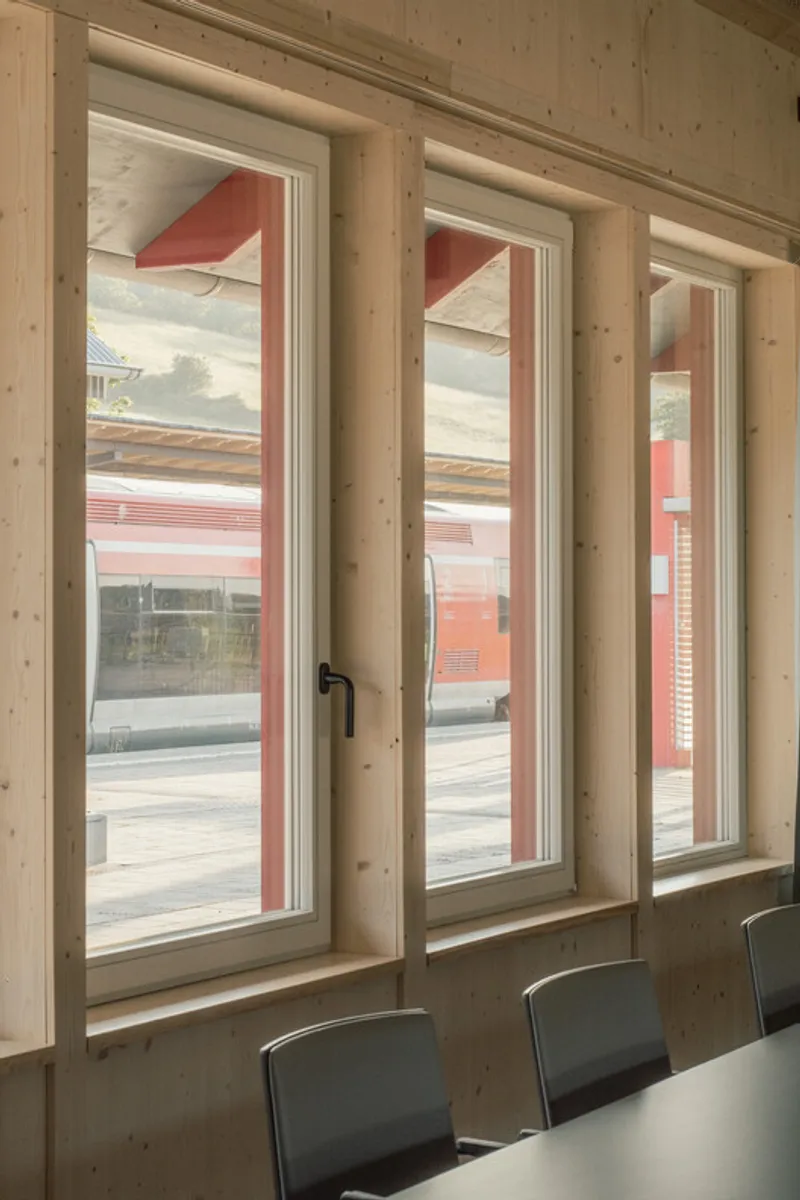
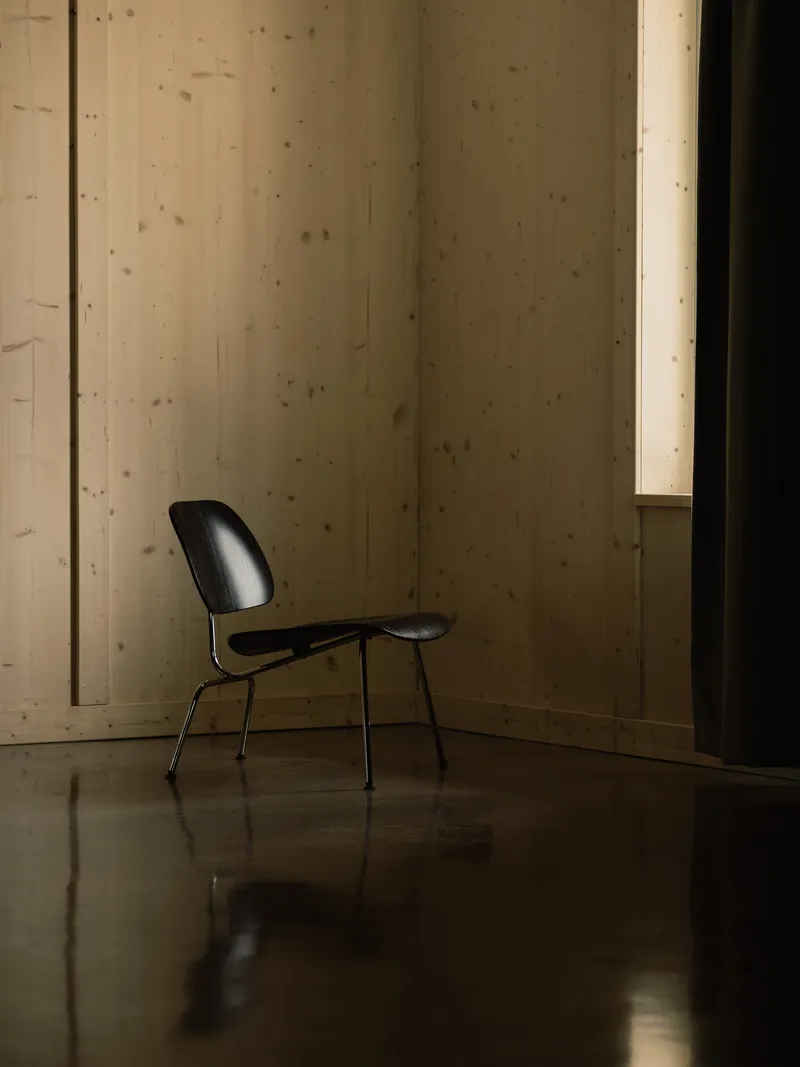
Inside, polished exposed concrete floors mixed with dark local sand complement the visible timber structure, which is protected with a clear coating to retain the natural material expression. Windows feature highly insulated timber frames with triple glazing, maintaining comfort and energy efficiency.
Sustainability and Energy Efficiency
The building’s compact, largely closed volume with a low A/V ratio ensures optimized energy performance. Large roof overhangs shade the minimal glazing, preventing overheating in summer. The choice of locally sourced timber reflects sustainability, while prefabricated construction elements enhance economic efficiency. Combined with wood-fibre insulation boards, heavy roof insulation, and triple-glazed windows, the design minimizes heating costs and ensures efficient energy use, with heat supplied via the adjacent station building.
Community Integration
The Community Center Rottenbach is a model of sustainable, contextually sensitive architecture. It successfully merges cultural heritage, material honesty, and contemporary design, providing a welcoming space for residents while respecting the historic railway station complex and Thuringian Forest vernacular.
All the photographs are works of Atelier ST / Viet duc Nguyen


Popular Articles
Popular articles from the community


Co-life: Sustainable Architecture for Age-Friendly Community Living
Co-life reimagines sustainable architecture for seniors through courtyards, rammed earth, shared gardens, and spaces designed for belonging.

Hill & Cross Opera: Sculptural Opera House Architecture Shaped by Tallinn’s Landscape and Identity
Hill & Cross Opera reimagines opera house architecture in Tallinn through its sculptural hill, civic plaza, glass wave and a luminous cross.

The Musturak Paradise: Senior Living Architecture for a Connected Future in Temara, Morocco
The Musturak Paradise reimagines senior living architecture in Temara via private homes, social spaces, culture, community, and shared care.

The Ocean Hive: Sustainable Architecture for a Self-Sufficient Civilization at Sea
The Ocean Hive imagines sustainable architecture at sea, where modular habitats, algae, wave power and ocean waste sustain a growing colony.
Similar Reads
You might also enjoy these articles


Hodi-Mandai Geram
Project Function: Preservation and revitalization of the Intangible heritage and socio-spatial identity of the Hodi by Housing, Cultural Memory Center, Sacred Grove, landscape, local tourism economy


Olio Towers: A Mid-Rise for Performers That Fuses Housing, Rehearsal, and Stage
Located blocks from Houston's Theater District, this modular tower stacks living units around a central performance atrium.

Oasis: Modular Green Housing Carved into Dhaka's Urban Fabric
A shortlisted Plugin Housing entry reclaims unauthorized settlements in Dhaka with stepped concrete volumes, green roofs, and ventilation-driven design.

Black Hole: A Floating Megastructure for the Post-Physical Era
Emiliano Mazzarotto envisions a spherical, self-scaling arena where e-sports, digital hotels, and holographic stadiums replace traditional public space.
Explore Cultural Architecture Competitions
Discover active competitions in this discipline



Challenge to reimagine the Iron Throne


Photograph architecture without architects


Illustrate the lost glory of Angkor Wat - Render Challenge

Bring back Drive In's
Comments (0)
Please login or sign up to add comments
No comments yet. Be the first to comment!