

Concrete Collage Office by COLLAGE DESIGN STUDIO: A Minimalist Concrete Workspace in Bangkok
Compact Bangkok office using post-tension concrete, L-shaped plan, preserved tamarind tree, minimalist materials, and flexible open workspace design.


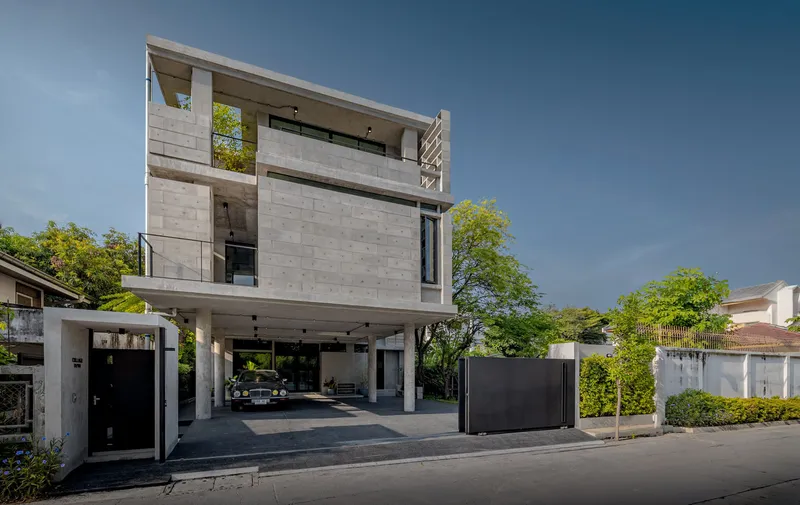
Located in Khet Din Daeng, Bangkok, the Concrete Collage Office by COLLAGE DESIGN STUDIO is a 354-square-meter, three-story workspace completed in 2024. Built on a compact 82-square-meter urban plot in Soi Ratchadaphisek 32, this office architecture project explores the intersection of structural innovation, budget-conscious construction, and minimalist material expression.
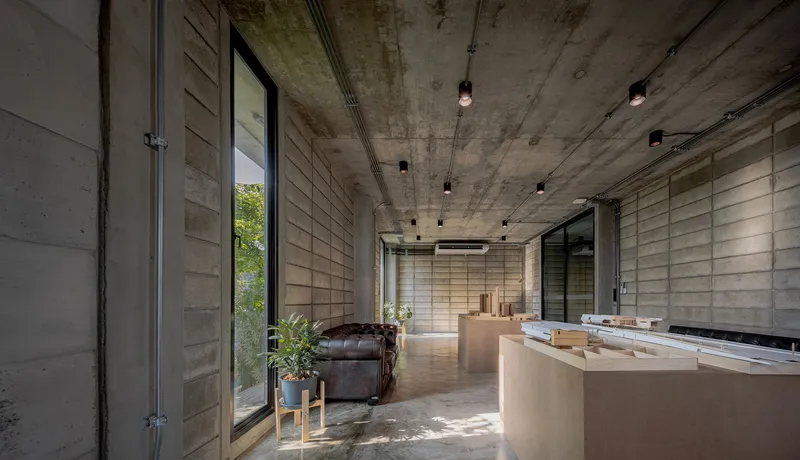
Designed by lead architects Cherdsak Soisuwan and Puttichart Wanichtat, the project redefines what is possible within limited spatial and financial constraints. Rather than allowing restrictions to dictate compromise, the architects transformed them into opportunities for architectural experimentation and tectonic clarity.

Post-Tension Structure as a Strategic Urban Solution
The narrow urban site, flanked by adjacent buildings, presented logistical and structural challenges. Traditional post-and-lintel construction methods were deemed inefficient for the spatial limitations and structural demands of a three-story office building.
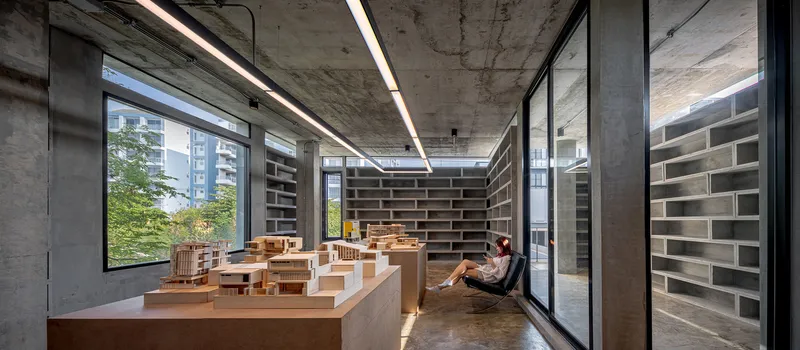
In response, the architects adopted a post-tension concrete system, enhancing both construction economy and spatial flexibility. This structural strategy reduces beam depth, maximizes ceiling height, and allows for more open interior layouts, a crucial advantage for compact office design in dense urban Bangkok.
The result is a flexible and adaptable workspace that supports collaborative design practice while maintaining structural efficiency. The exposed concrete structure becomes both load-bearing framework and architectural language, reinforcing the building’s identity through material clarity.
L-Shaped Plan and the Preservation of a Tamarind Tree
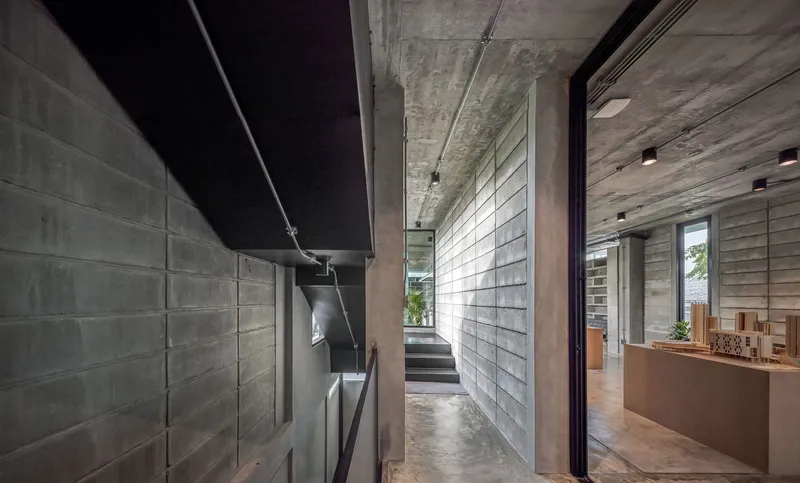
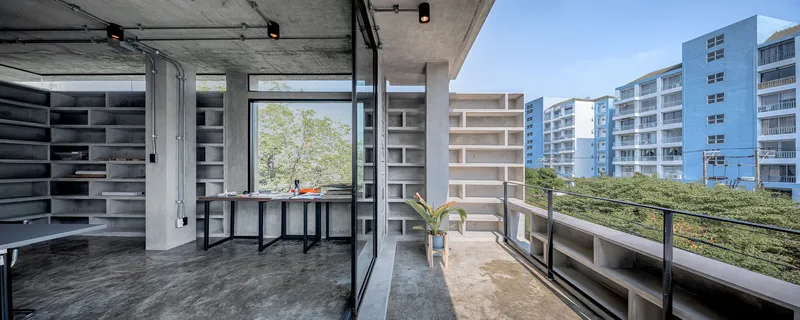
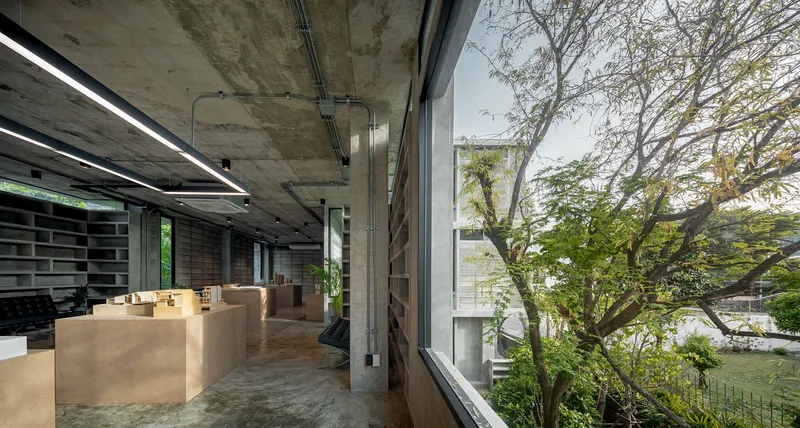
A defining gesture of the project is the preservation of an existing tamarind tree on site. Rather than removing it, the architects developed an L-shaped floor plan that wraps around the tree, integrating nature directly into the architectural composition.
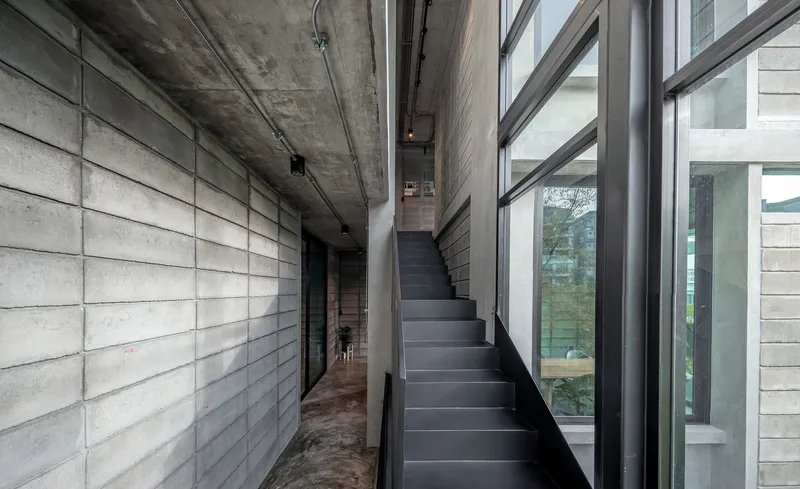
The staircase is positioned as an axial element within this configuration, strengthening vertical circulation while visually connecting interior and exterior spaces. This strategy:
- Encourages natural ventilation and daylight penetration
- Establishes continuous visual engagement with greenery
- Softens the raw concrete aesthetic with organic contrast
The tamarind tree functions as both environmental device and symbolic anchor, grounding the office within its urban context and reinforcing biophilic design principles.
Minimalist Architecture and Material Experimentation
Facing budget fluctuations and evolving project requirements, the architects embraced a minimalist architectural approach focused on structural clarity and material integrity.
The building features:
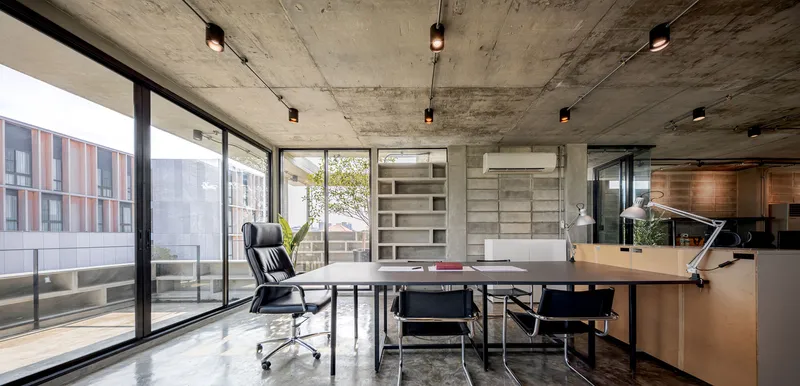
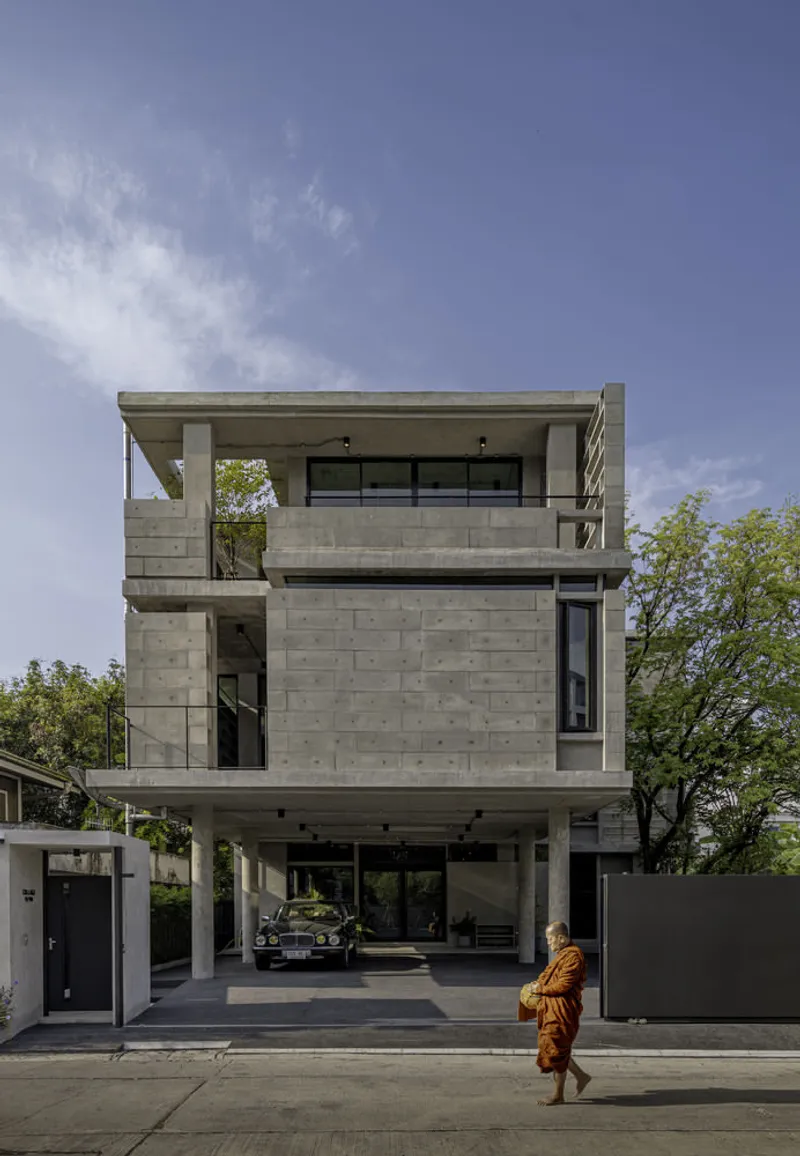
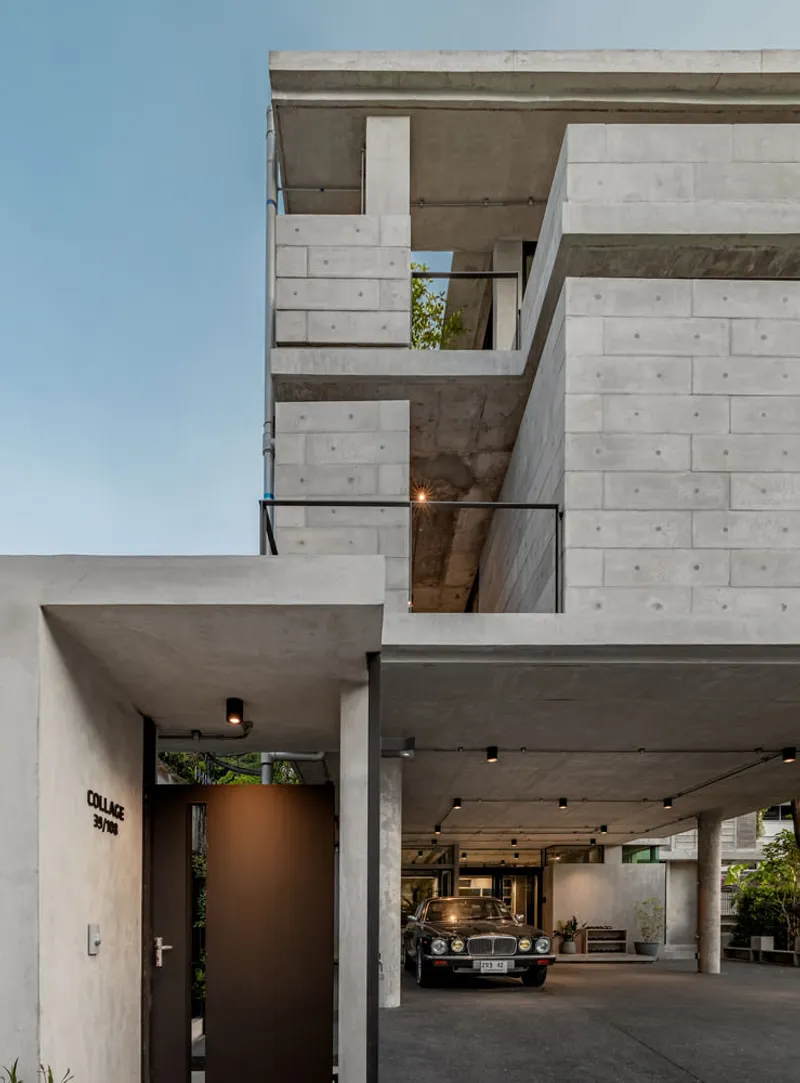
- Repurposed special-sized concrete blocks sourced from Ayutthaya
- Prefabricated concrete plant pots commonly found across Thailand
- Exposed concrete surfaces that celebrate tectonic expression
These elements are assembled in a manner true to the concept of a “collage”, a deliberate composition of disparate yet contextually familiar components unified into a coherent architectural statement.
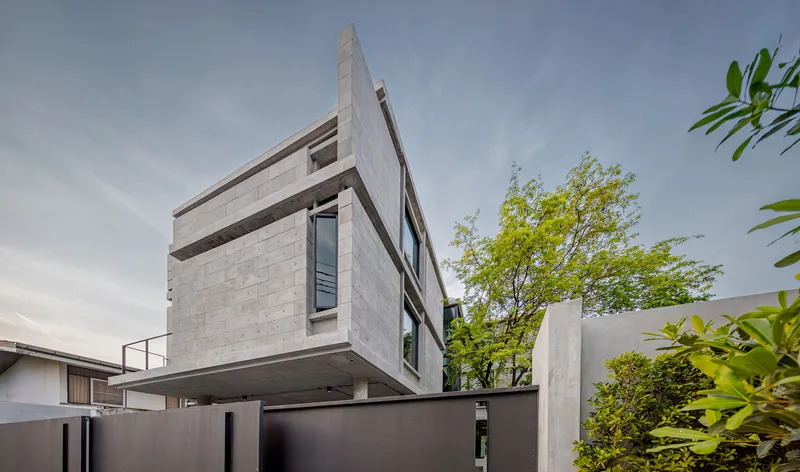
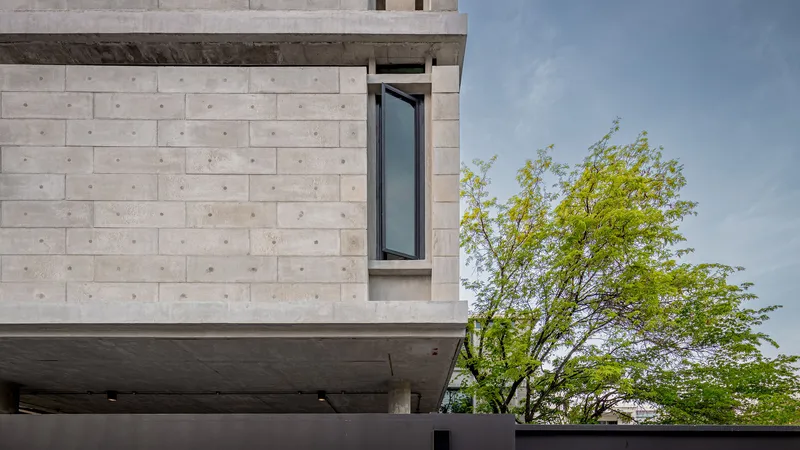
The use of ordinary construction materials in innovative ways elevates the project beyond utilitarianism. The facade’s textured concrete blocks create depth and shadow play, while maintaining thermal performance and visual privacy.
Interior Spatial Experience: Raw, Flexible, and Contextual
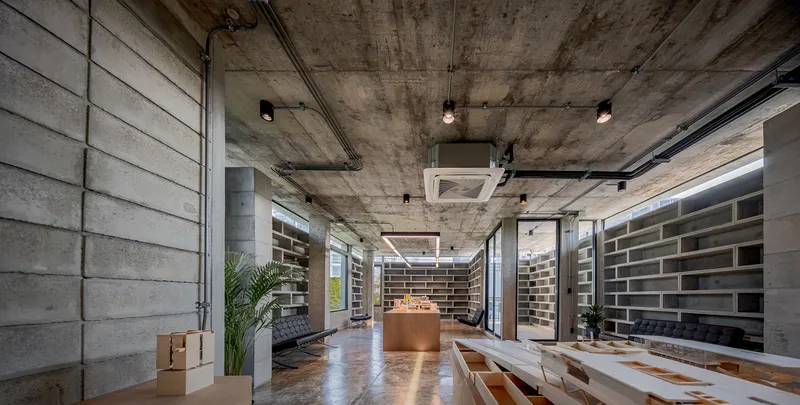
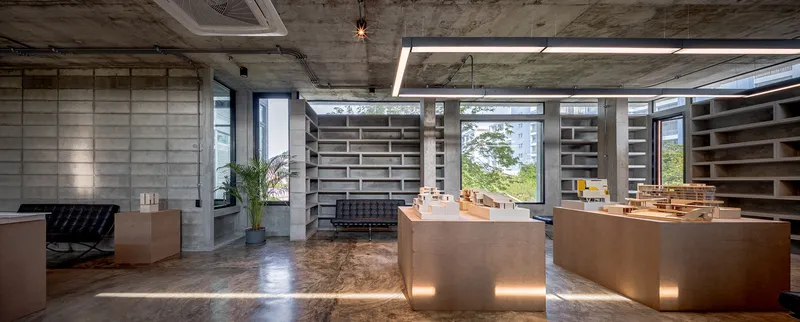
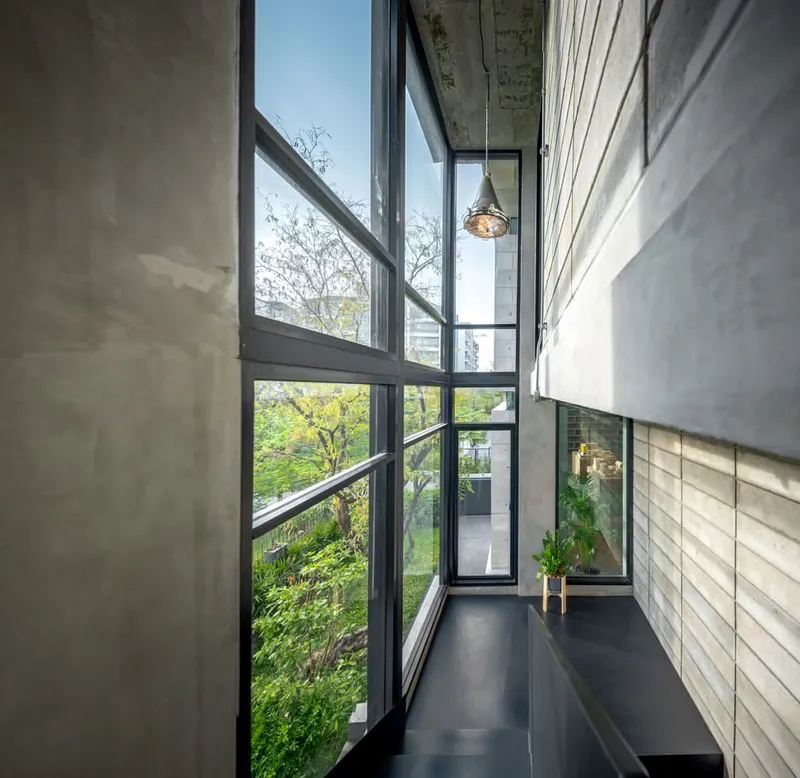
Inside, the office interior reflects a continuation of the exterior’s material narrative. Concrete surfaces remain exposed, eliminating unnecessary finishes and reinforcing the ethos of material honesty.
Natural light filters through strategically placed openings, softening the concrete interior and enhancing spatial comfort. The open-plan work areas support collaboration, while vertical circulation along the staircase maintains visual continuity throughout the three levels.
Lighting consultants Light Indeed contributed to a restrained lighting scheme that accentuates textures without overpowering the architecture. Contractors 225 Engineering Co., Ltd executed the structural precision required for the post-tension system.
Concrete as Identity: A Manifesto of Experimental Architecture
The Concrete Collage Office stands as more than a workplace; it is a built manifesto of the studio’s architectural philosophy. Through experimental use of concrete, adaptive structural systems, and contextual responsiveness, the building embodies:
- Urban infill architecture
- Sustainable small-plot design
- Budget-conscious innovation
- Biophilic integration
- Structural expressionism
By synthesizing local materials, structural ingenuity, and environmental awareness, the project demonstrates how small-scale office architecture can achieve strong identity and spatial richness.
In an era where commercial architecture often prioritizes spectacle, this Bangkok office instead champions restraint, craftsmanship, and contextual dialogue. It proves that limited land area and constrained budgets can catalyze creative solutions rather than restrict them.
All photographs are works of
Witsawarut Kekinna


Popular Articles
Popular articles from the community


U.GA Architects Wraps an Oval Rooftop Pool in Curved Board-Formed Concrete on Busan's Jeollidan-gil
In Busan's Jeonpo-dong, a 454 m² mixed-use block stacks a neighborhood facility, guest rooms and an oval rooftop pool inside spiraling concrete walls.

LT2A and OPEN Architectes Thread a Brick and Glass High School Through a Wooded Belgian Campus
In Braine-l'Alleud, a 3,000 m² wing for Collège Cardinal Mercier pairs pale brick with a glazed colonnade, deferring to a small chapel and a dense wood.

Architekt Andreas Gruber Scatters 23 Dark Timber Chalets Across a South Tyrolean Forest Edge
In Molini di Tures, Amonti Chalets breaks a resort into a hamlet of gabled timber houses, with parking, storage and services pushed into the slope.

Cube Design Draws an Ecological Corridor Between Two Shenzhen Hills with the Nankai Building
Beside Shenzhen's container docks, the Nankai Building pairs stacked balconies with a climbing green screen to connect two hillsides across its height.

Similar Reads
You might also enjoy these articles

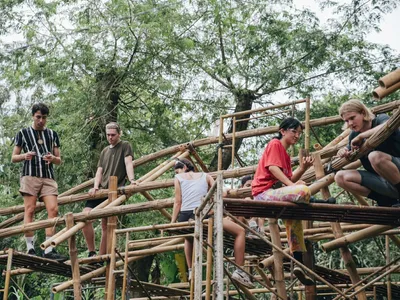
Bamboo Housing Challenge 2026: Design Affordable, Sustainable Homes Using Bamboo
An international design competition by Bamboo U and IBUKU inviting architects and designers to reimagine affordable housing using bamboo — with the winning design built full-scale in Bali.

Computational Design & Education: Beegraphy Design Awards Introduces 7th Category (Featuring Jiyun's Innovative Approach)
Dive into Beegraphy’s 7th Design Awards category, where computational design meets education to create immersive, interactive learning tools, inspired by Jiyun’s work.
From Parametric Lighting to Urban Furniture: Join the 2nd Workshop in Beegraphy’s Computational Design Series
Dive into Cutting-Edge Design Techniques and Practical Applications with Industry Experts

Last Call: Unleash Your Architectural Genius in SHAK's Kindergarten Design Competition
Urgent call for architects to join SHAK's kindergarten design competition before the looming deadline

Explore Architecture Competitions
Discover active competitions in this discipline

Challenge to reimagine the Iron Throne

Photograph architecture without architects

Illustrate the lost glory of Angkor Wat - Render Challenge

Competition to design a workstation for architects
Comments (0)
Please login or sign up to add comments
No comments yet. Be the first to comment!