

Contemporary Iranian Villa Architecture Reimagined: Villa 144 by Lin3rd Architects
Villa 144 redefines contemporary Iranian villa architecture by blending local heritage, spatial fluidity, and climate-responsive design.

Introduction to Contemporary Iranian Villa Design
In the sun-drenched coastal city of Bushehr, Iran, Villa 144 by Lin3rd Architects redefines contemporary Iranian villa architecture through a deeply contextual and culturally resonant design language. Drawing from centuries of vernacular tradition and reframing them through a modern lens, the villa establishes a compelling dialogue between local memory and spatial innovation.


A Site-Specific Vision in Bushehr
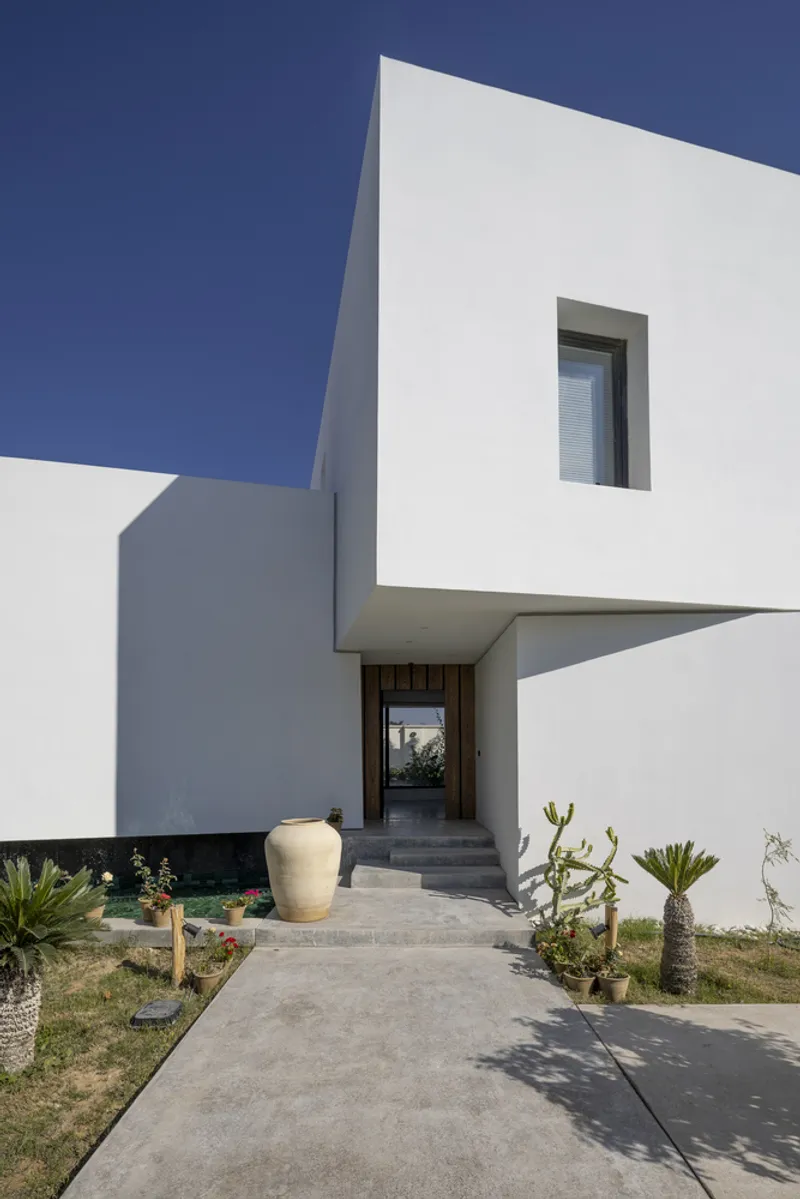
Situated along the Persian Gulf, Bushehr’s harsh, humid climate and rich architectural history significantly informed the conception of Villa 144. The site-specificity of the design is immediately evident in its spatial orientation and the use of materials evocative of local traditions. The villa references the historic labyrinthine alleys and expressive homes of 18th and 19th-century Bushehr while offering a distinct spatial logic suited to modern living.
Interlocking Volumes and Floating Geometry
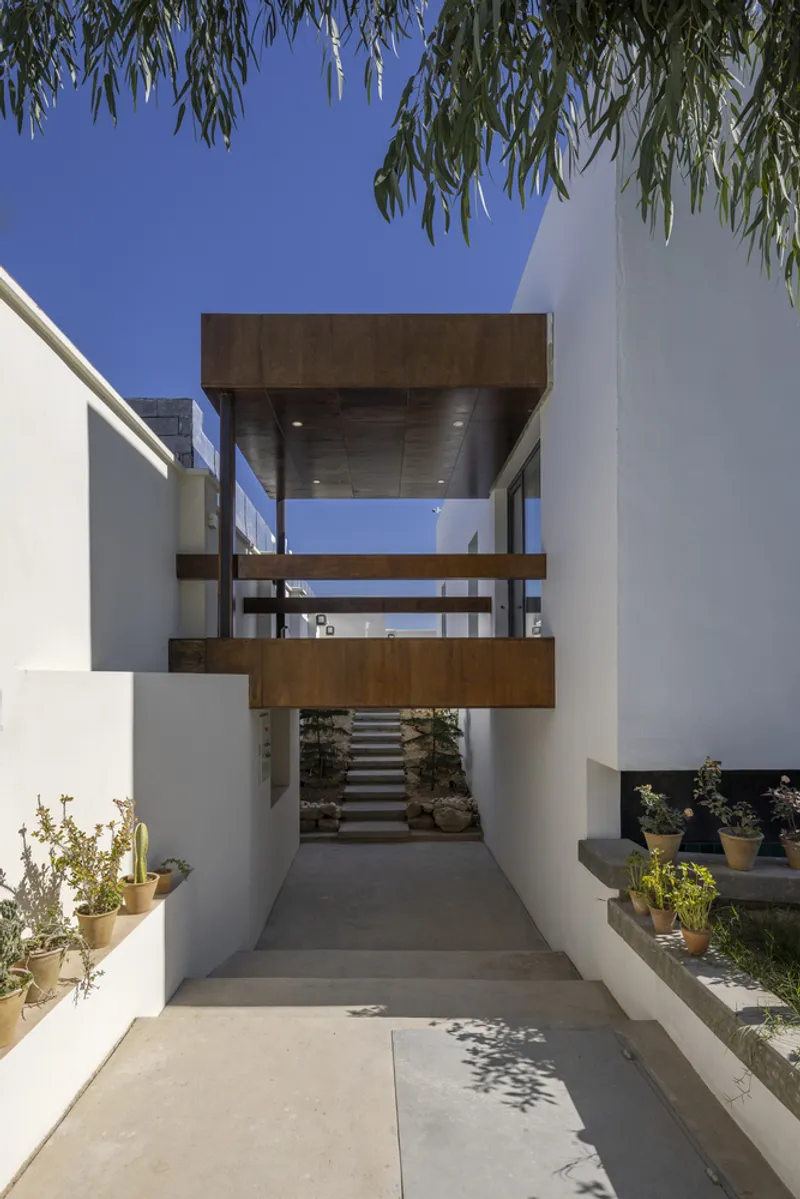
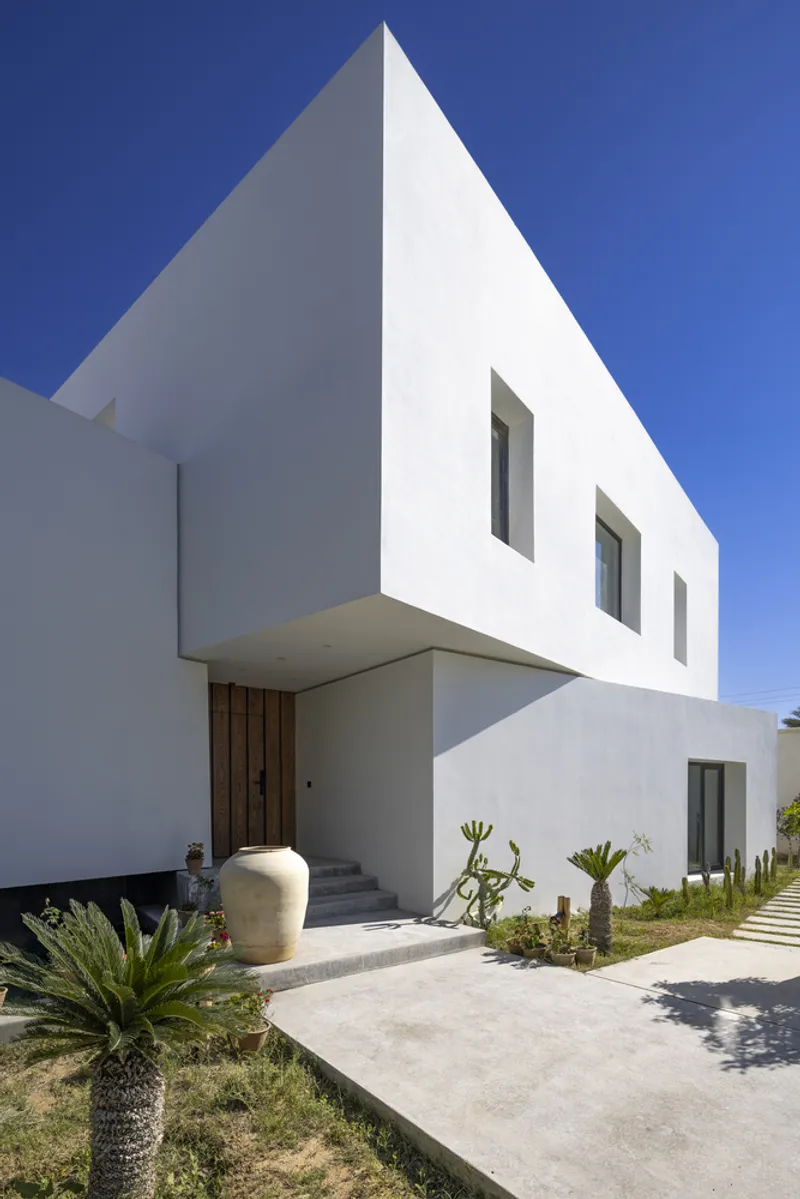
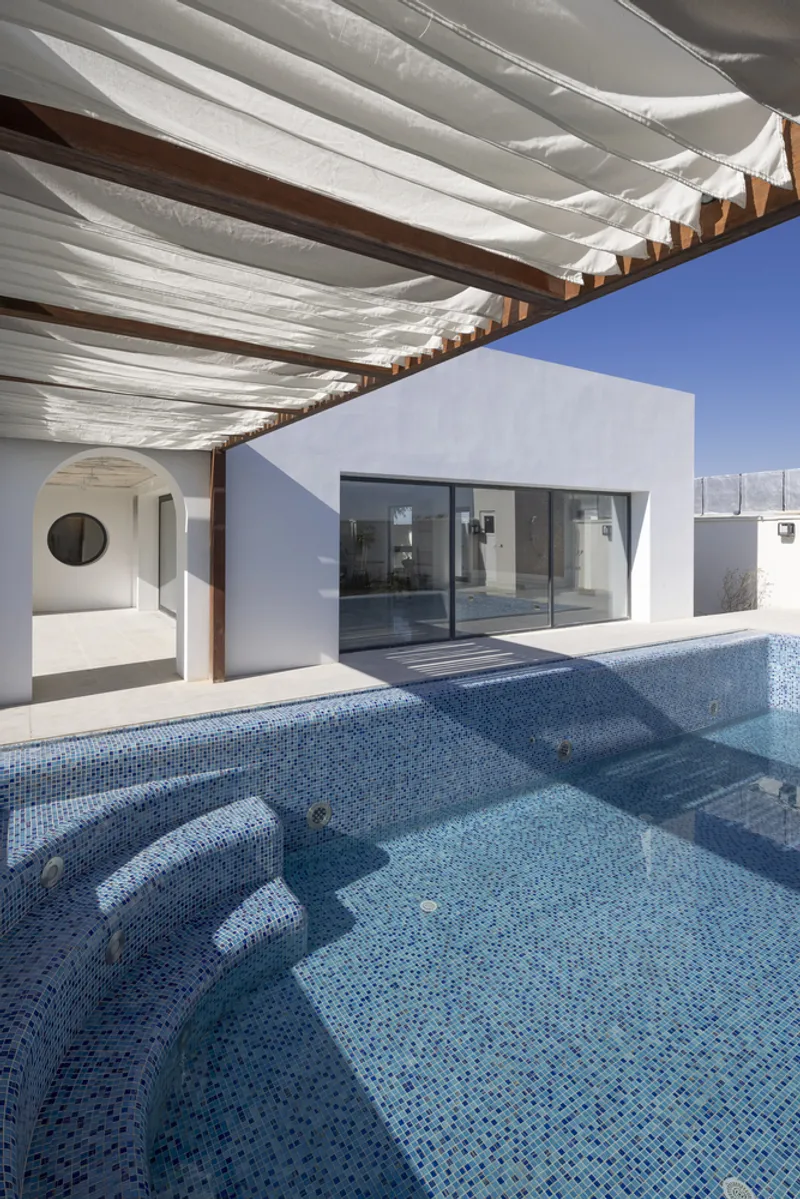
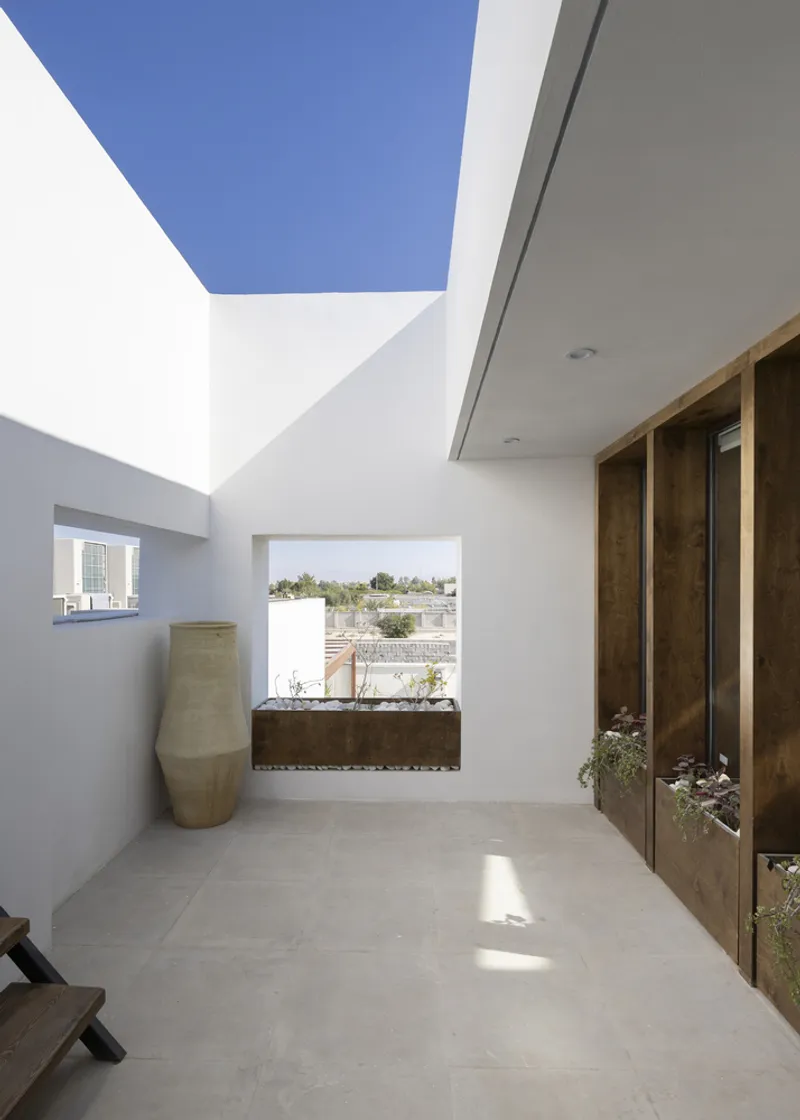
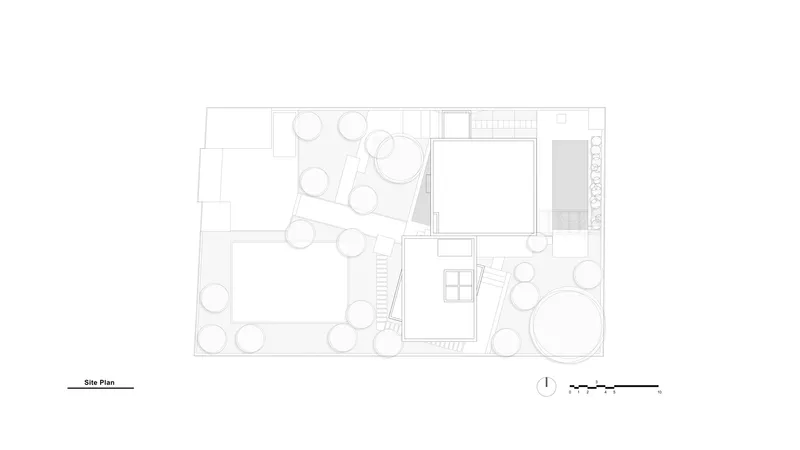
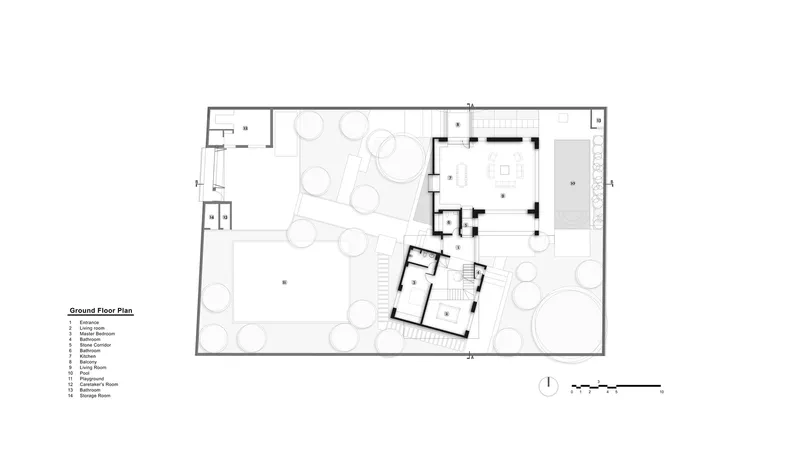
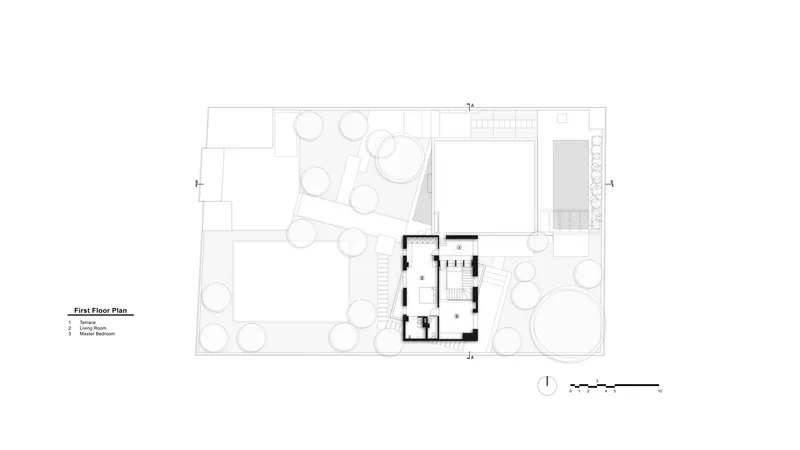
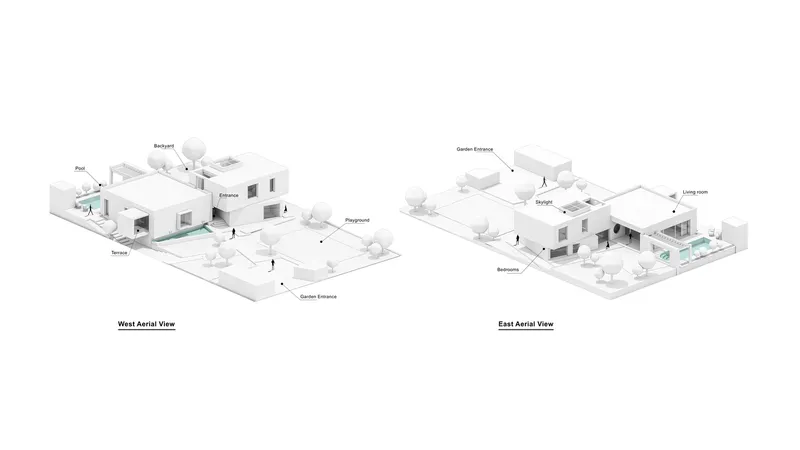
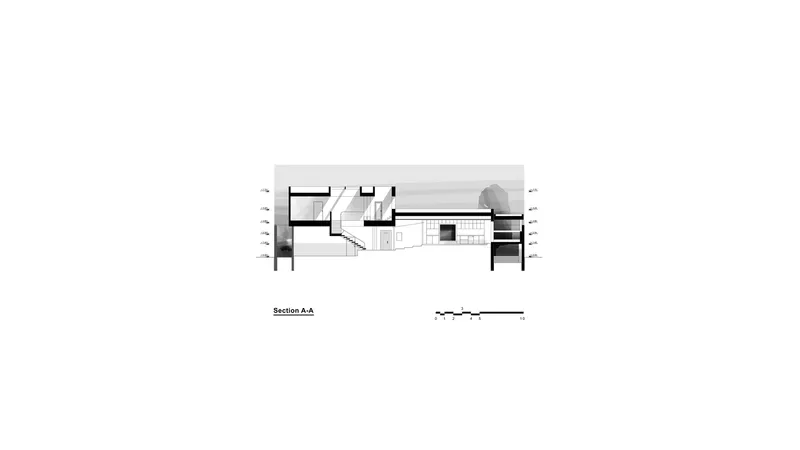
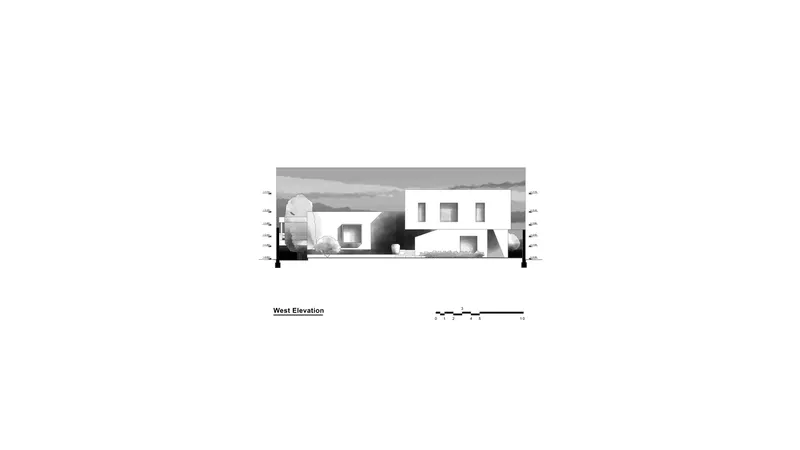
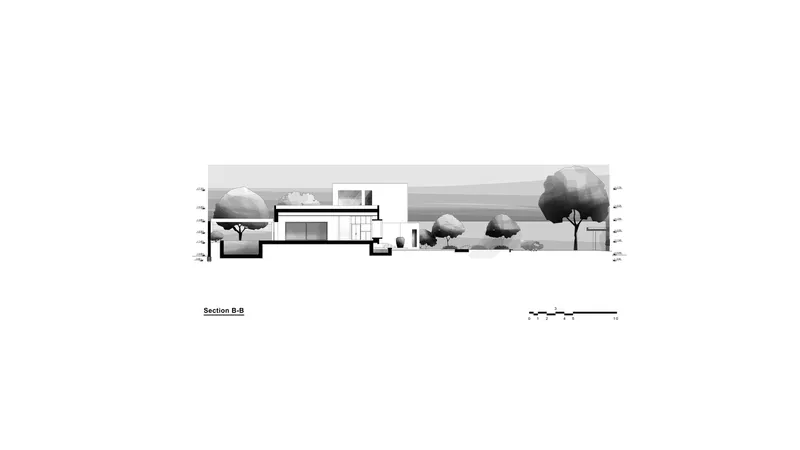
Villa 144 is composed of three pristine white cubes that interlock at staggered levels, forming a layered composition of voids and solids. This architectural geometry is not merely formal—it choreographs spatial experience. At the nexus of these cubes sits the main entrance, marking the threshold between private and communal functions while linking the eastern and western courtyards.
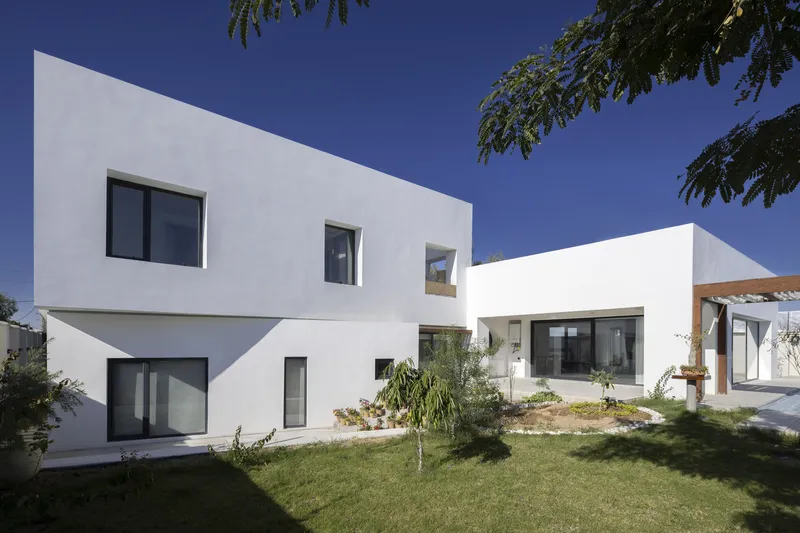
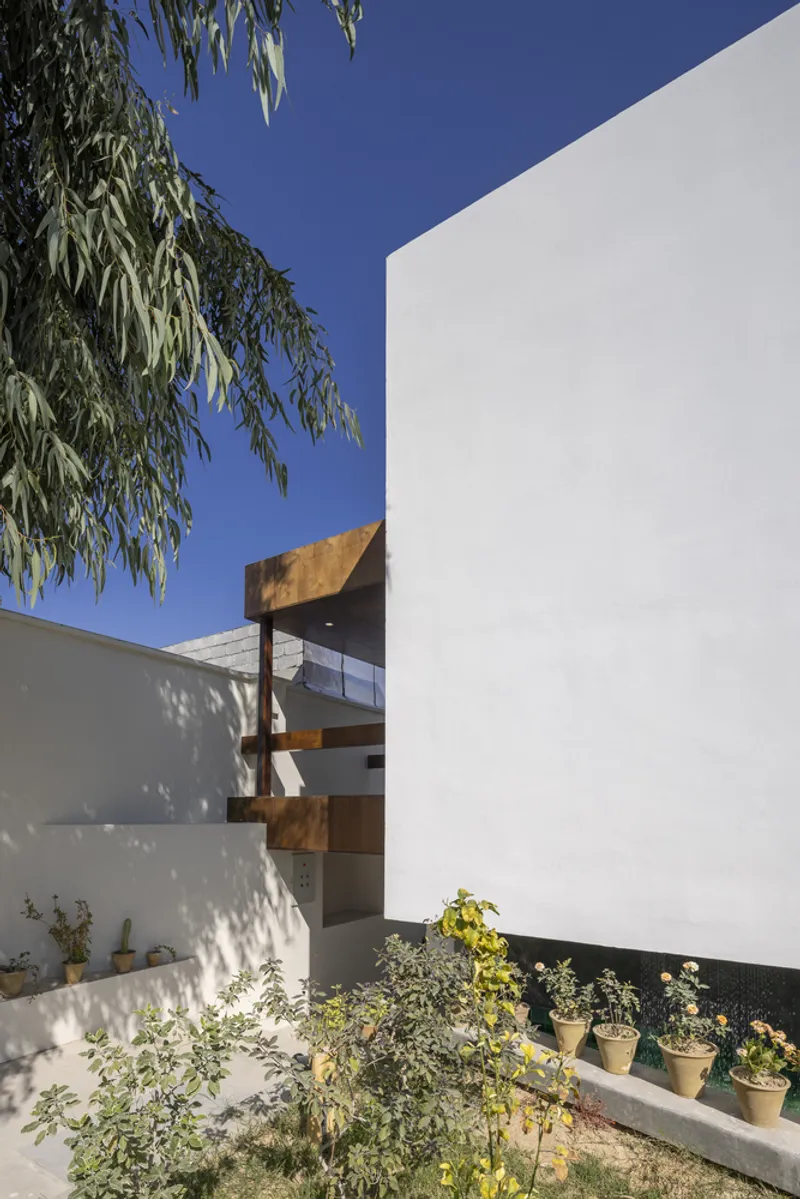

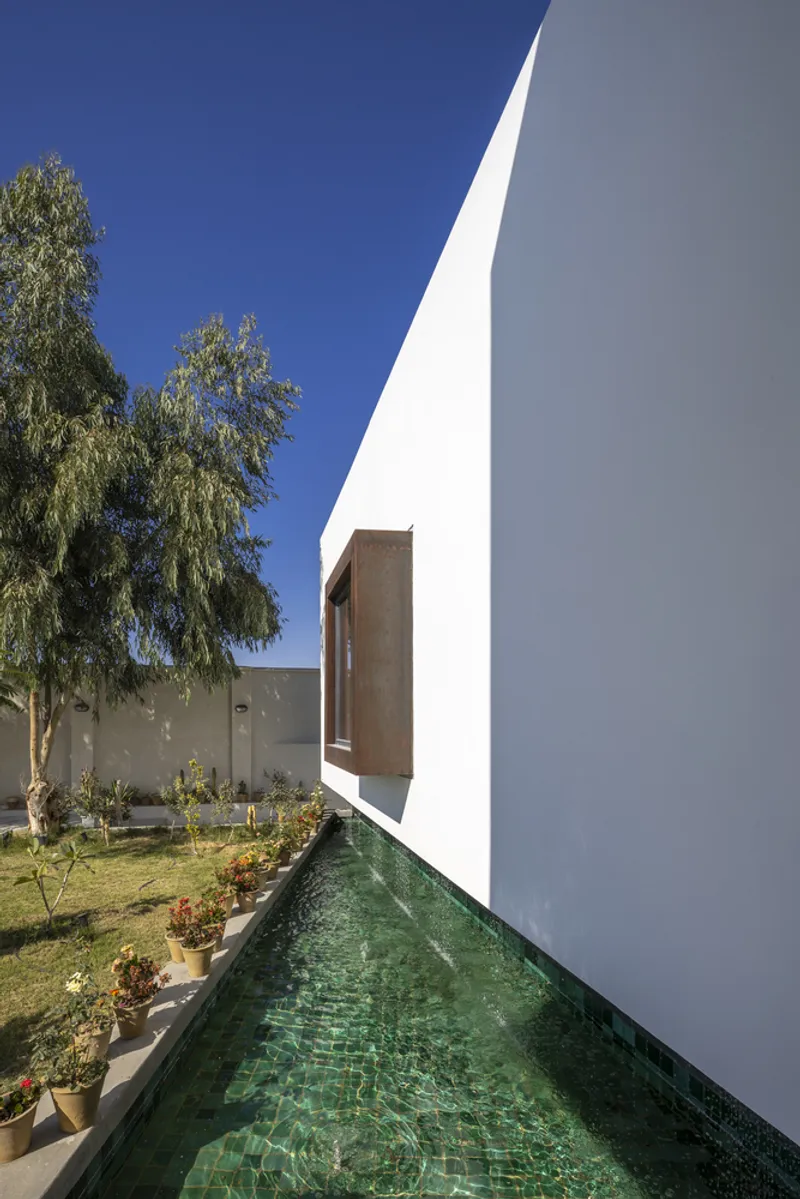
The most iconic gesture lies in the elevated main living volume, which appears to hover over a tranquil reflecting pool lined with turquoise Iranian tiles. This element captures a sensory moment of pause, anchoring the contemporary villa in Iran’s long-standing relationship with water as a design and climatic strategy.
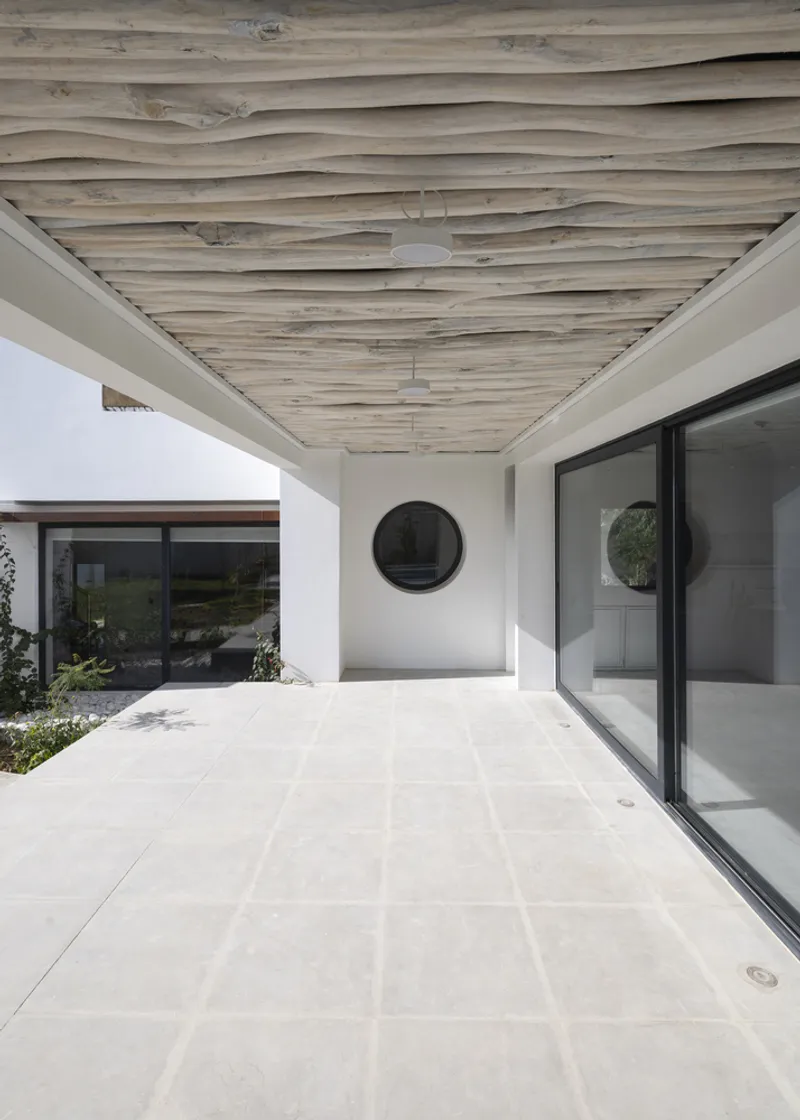
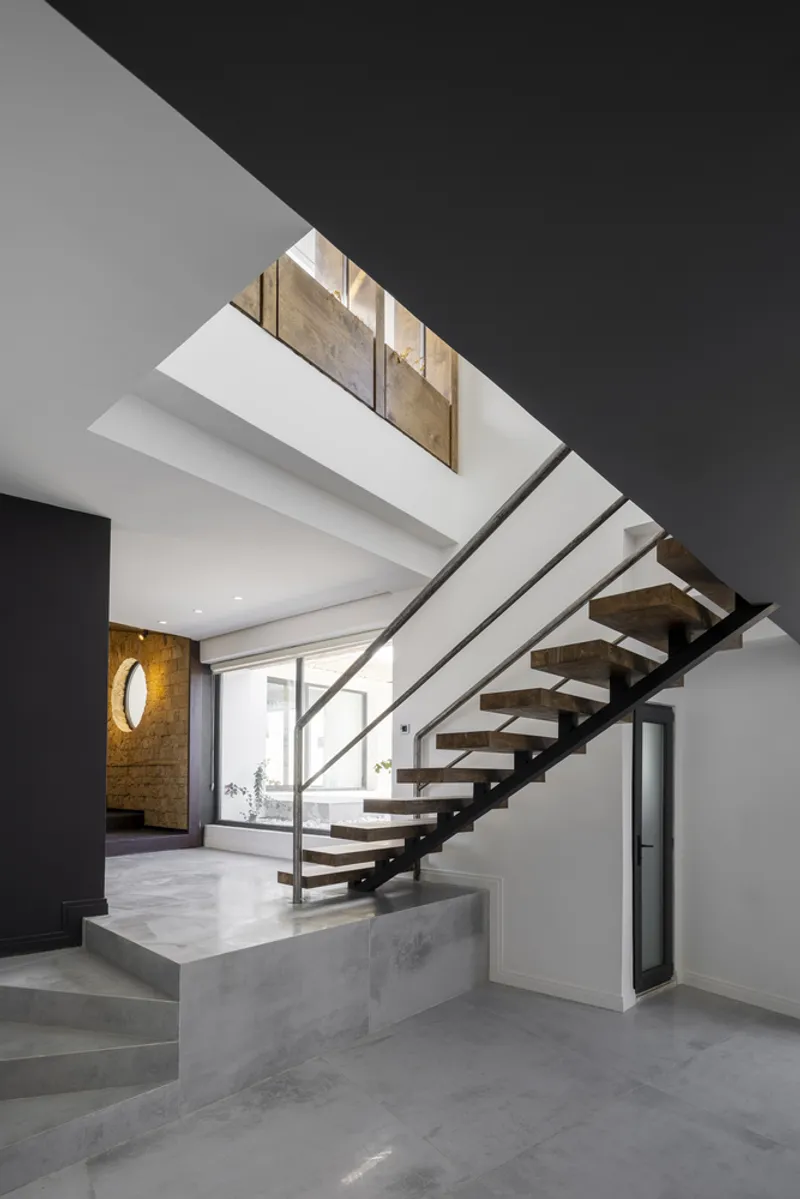
Persian Carpets as Spatial Narratives
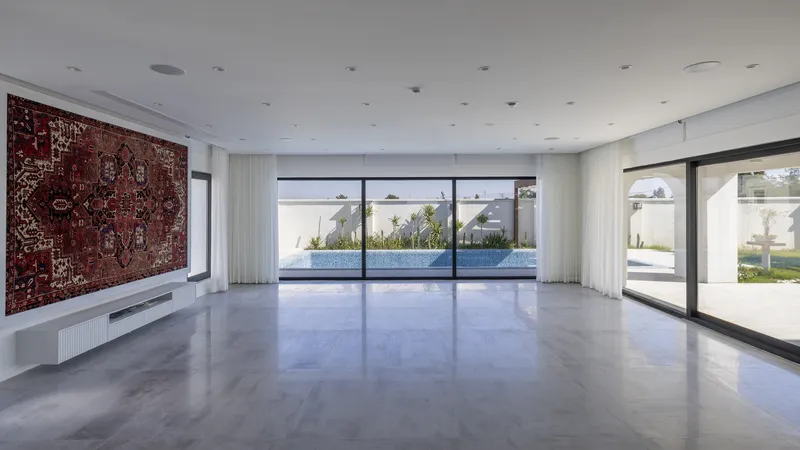
One of the most evocative interior gestures is the framing of a vintage Heriz carpet in the living room—a nod to Persian textile heritage reimagined as architectural ornament. The designers strategically position these elements not as secondary decoration but as spatial protagonists. A kitchen window seat adorned with handwoven Zanjan rugs echoes this philosophy, making everyday rituals part of a larger cultural continuum.
Materiality Rooted in Regional Memory
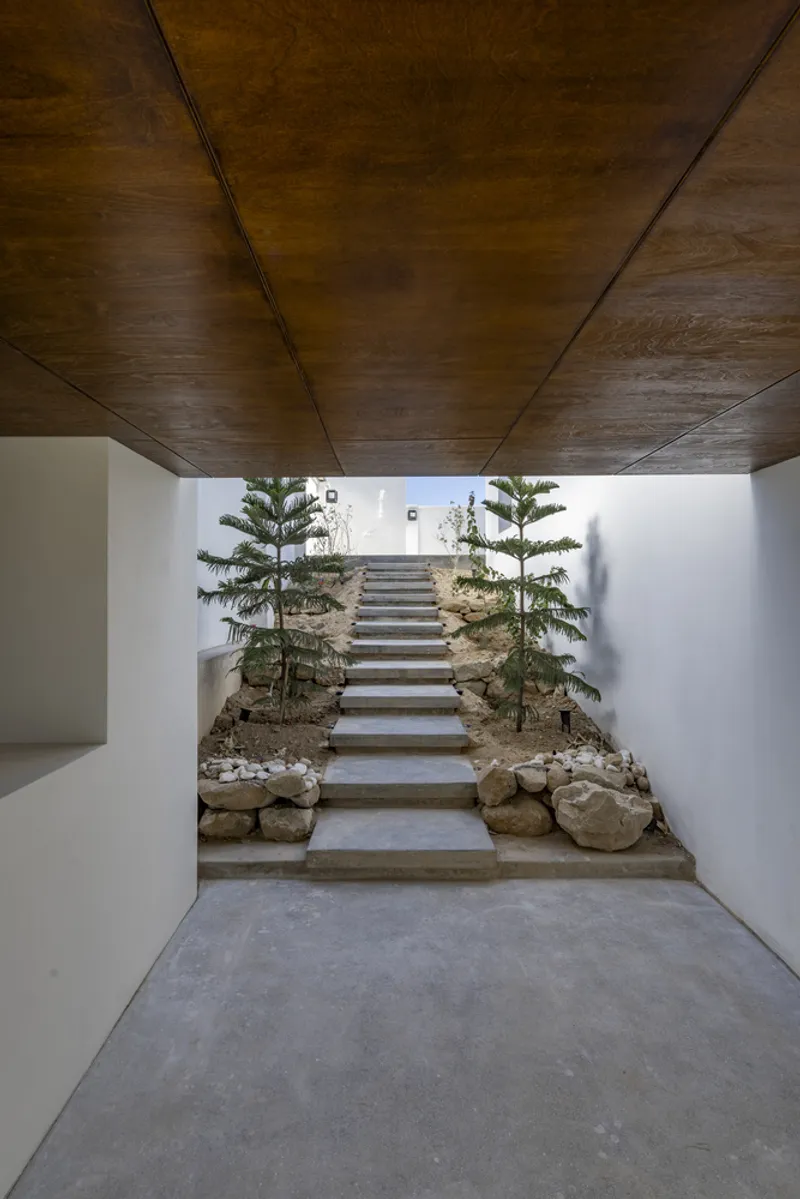
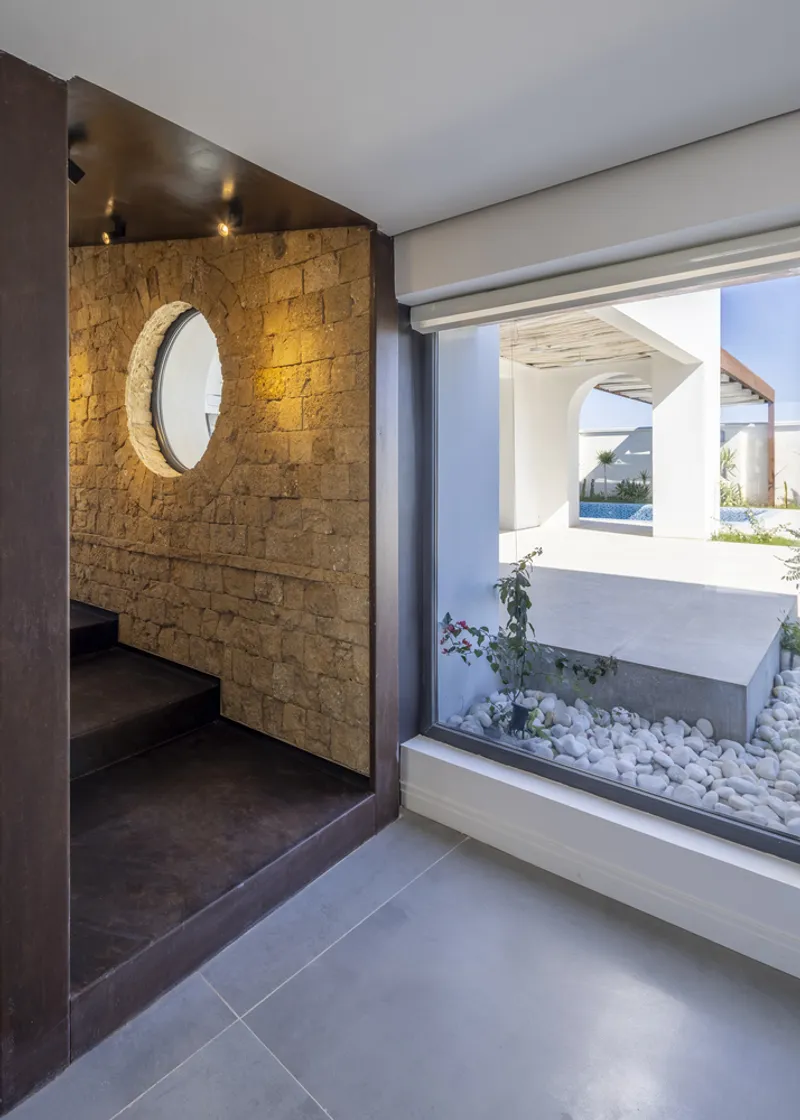
Materials play a crucial narrative role. Coral stone from Bushehr’s coast forms the corridor walls, referencing historic local construction methods. The juxtaposition of these walls with raw iron-sheet floors and ceilings creates a stark, tactile honesty. This corridor—3.3 meters long—acts as a physical and symbolic passage between past and present.

The Garden as a Multisensory Exploration
Villa 144's landscape design continues the narrative richness. The garden is curated with native and culturally nostalgic species such as bougainvillea, various ficus trees, mature eucalyptus, and the silk tree—the botanical icon of Bushehr. Visitors navigate the landscape through multiple intended and accidental pathways, reinforcing an open-ended, experiential relationship with nature and built form.
Labyrinthine Movement Without Dead Ends
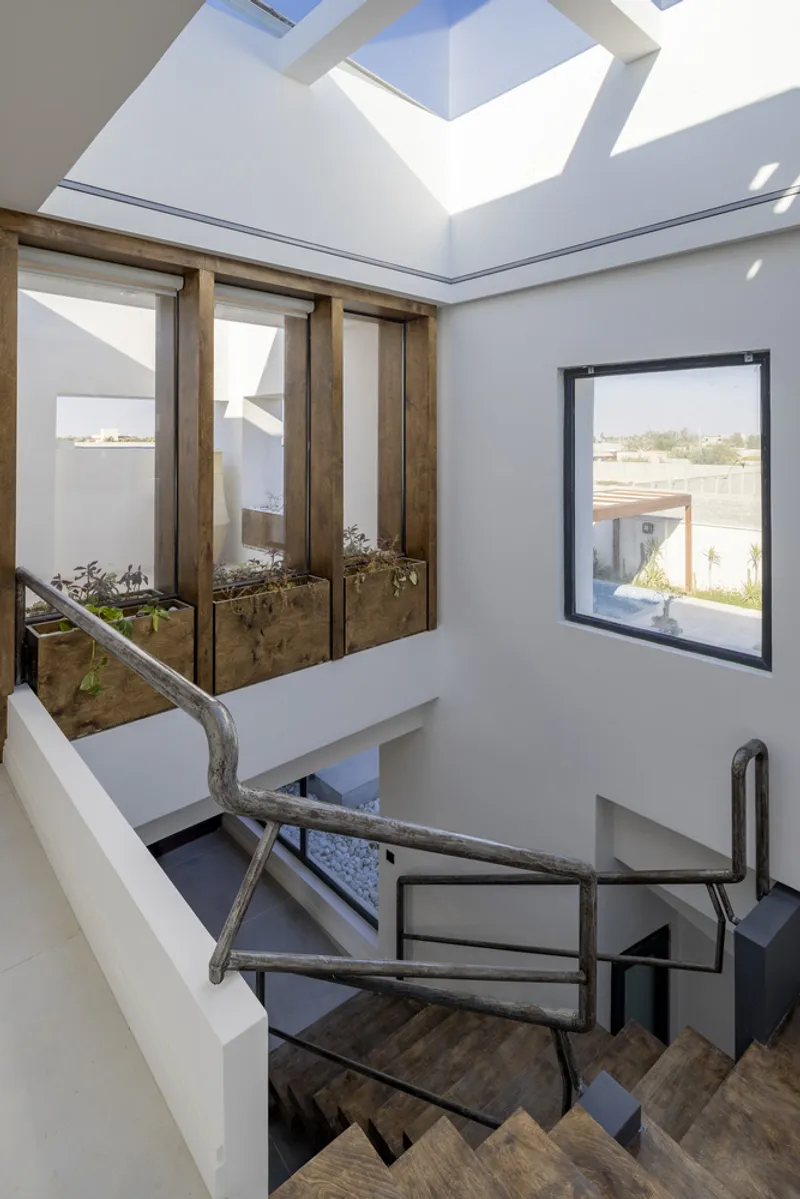
Inspired by the spatial grammar of traditional Bushehri alleys, the villa is intentionally free of cul-de-sacs. Circulation is fluid and layered, encouraging an intuitive engagement with space. This approach mirrors the idea of Borges’ labyrinths—not as a maze of confusion but as a poetic sequence of discovery and narrative depth.
Reconfiguring Archetypes for Modern Iranian Living
Throughout the project, Lin3rd Architects distilled archetypes from traditional Persian and Bushehri architecture, reconfiguring them to meet contemporary demands. Villa 144 does not replicate history—it translates and reinvents it, forging a unique model for modern Iranian domestic architecture that is both timeless and forward-looking.
A New Chapter in Contemporary Iranian Villa Architecture
Villa 144 stands as a benchmark for contemporary Iranian villa architecture—rooted in local context yet globally resonant. Its interplay of geometry, cultural symbolism, and spatial fluidity offers a compelling vision of how traditional values can be reinterpreted to enrich modern architectural narratives in Iran and beyond.

All Photographs are works of Parham Taghioff

Popular Articles
Popular articles from the community


GROUP A Strips a 1969 Rotterdam Harbor Headquarters to Its Frame and Wraps It in Timber Louvers
In Rotterdam's M4H harbor district, Ferro Offices reuses a 1969 frame, adds one timber storey and reaches BREEAM-NL Outstanding.

U.GA Architects Wraps an Oval Rooftop Pool in Curved Board-Formed Concrete on Busan's Jeollidan-gil
In Busan's Jeonpo-dong, a 454 m² mixed-use block stacks a neighborhood facility, guest rooms and an oval rooftop pool inside spiraling concrete walls.

longwave studio Reorganizes a 112 m² Tainan Apartment Around the Daily Routines of a Family and Two Cats
In Tainan, Taiwan, birch plywood, rust-red furniture and a freestanding plaster wall link arrival, storage, work and family life in one apartment.

Architekt Andreas Gruber Scatters 23 Dark Timber Chalets Across a South Tyrolean Forest Edge
In Molini di Tures, Amonti Chalets breaks a resort into a hamlet of gabled timber houses, with parking, storage and services pushed into the slope.

Similar Reads
You might also enjoy these articles

Gil Mello Arquitetura Tilts a Single Roof Toward the Waterfalls on a Plateau Above Aiuruoca, Brazil
In Aiuruoca, Minas Gerais, a 200 m² house of local labor and reclaimed poles pairs a low valley veranda with a tall mountain one.
U.GA Architects Wraps an Oval Rooftop Pool in Curved Board-Formed Concrete on Busan's Jeollidan-gil
In Busan's Jeonpo-dong, a 454 m² mixed-use block stacks a neighborhood facility, guest rooms and an oval rooftop pool inside spiraling concrete walls.

Felipe Hess Arquitetos Turns a Blind Stone Wall to the Street and Opens a Brazilian House onto a Courtyard and Canal
A canal-front house in Brazil hides behind painted stone and planting, then opens to an olive-tree courtyard, a reed-ceilinged porch and a curving pool.

David Macias Steps a Doorless Stone and Plaster House Down a Tropical Colombian Hillside
In the humid hills of Colombia, Threshold House replaces the front door with an open void and terraces its 850 m² down the slope instead of fighting it.

Explore Persian Architecture Competitions
Discover active competitions in this discipline


Challenge to reimagine the Iron Throne

Photograph architecture without architects

Illustrate the lost glory of Angkor Wat - Render Challenge

Design challenge to reuse E-waste
Comments (0)
Please login or sign up to add comments
No comments yet. Be the first to comment!