
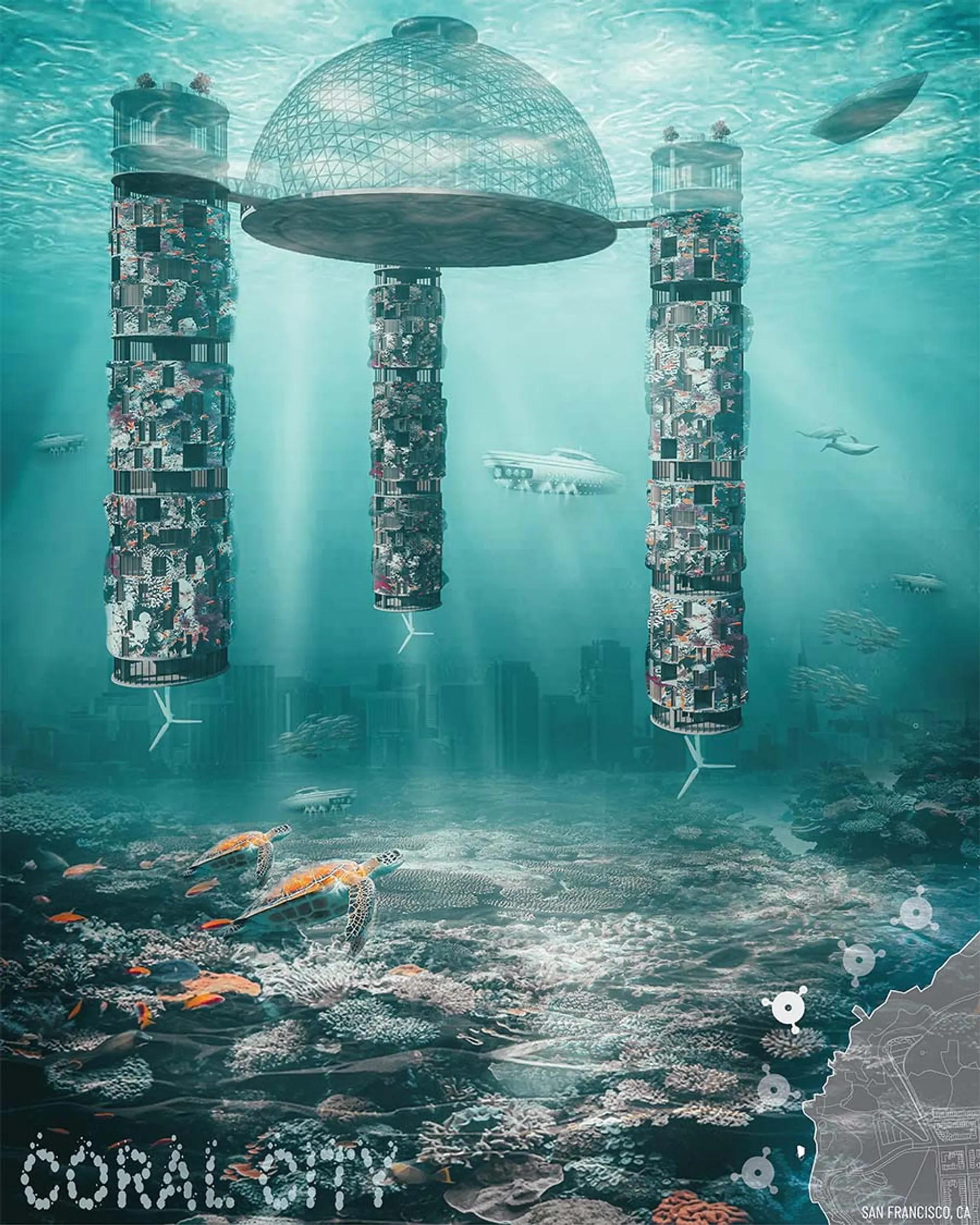
Coral City
Atlantis Competition Entry

San Francisco, California 2122. Mass amounts of flooding are threatening our way of life each and every year. Growing concerns as to the future of mankind hang in the balance. It is up to the architects of the future to determine a plausible solution to satisfy the ever changing natural environment that we live in. The architects of the current day should step up and prepare for a different future than what we may anticipate. Coral City, designed and thoroughly crafted to ensure maximum amount of retention for future generations, designs itself in three stages. These stages allow for the people of the world to maneuver through difficult times and transition into a new way of life.
Overarching Concept
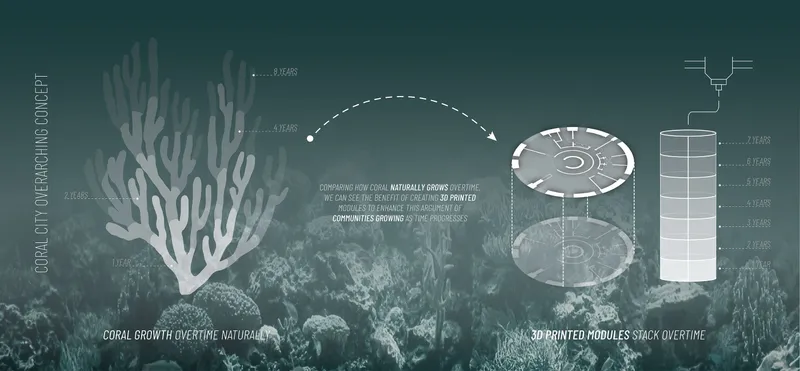
Coral City allows for a direct connection to the existing wildlife in the San Francisco Bay. Coral is a major element in the natural ecosystem in our oceans across the globe, giving the project a strong base to be expanded out into many cities and countries. Coral's natural growth overtime allows for its strength to grow as the years progress and the size of the project further increases.
3D Printing allows for this process to be emulated and used in architectural representation. The overall idea of growing the project as the need for life underwater becomes more and more required each and every day. Breaking this concept down into three phases shows the design process as well and the overarching concept takes form in different steps along the flooding phases of our future. Future structures can be further adapted based on the first structure that was created as the 3D printing technology will be placed in the center of the public dome allowing for future development of similar structures.
Phase 1 - Public Dome Construction
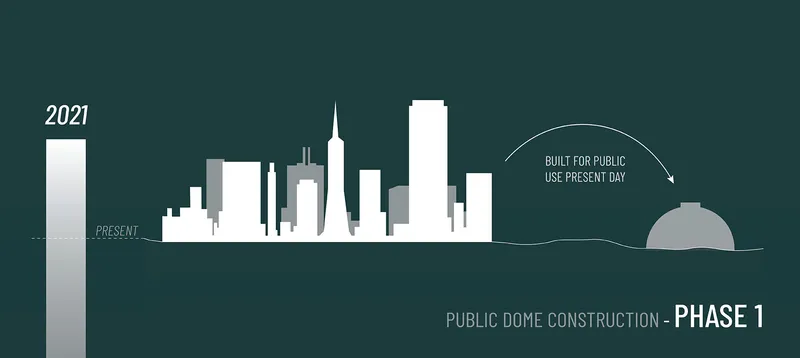
Phase 1 looks to set up the future built form by developing the large public dome structure. Constructing this dome out in the ocean allows for future connections to be added as the water levels rise. This dome creates a unique public atmosphere that can be used during the present day and connects the current population out to a future site that has a shift in use overtime as necessary. The shift in this public structure overtime from a public event space to a space of public necessities is seen in the future phasing steps.
Phase 2 - 3D Printing Modules
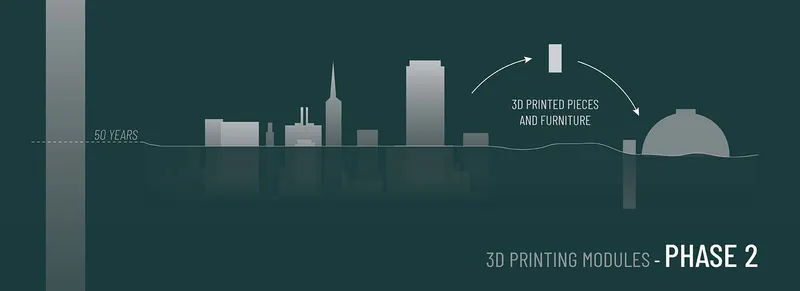
Phase 2 starts to use the 3D printing technology of concrete to construct and drop the large towers into the water and connect them to the large public dome. This phase should be started as soon as the water levels start to rise above standard single family structures in order to shift the population over into the towers as soon as possible. Transferring the furniture and other space usage items from the mainland as the water rises is also embedded in this phase as the need for furniture in the homes should be maintained as much as needed for the residents in the towers. Future phasing connects the residents to their homes and sees the rise of the water above our current built environment.
Phase 3 - Placing Towers + Homes
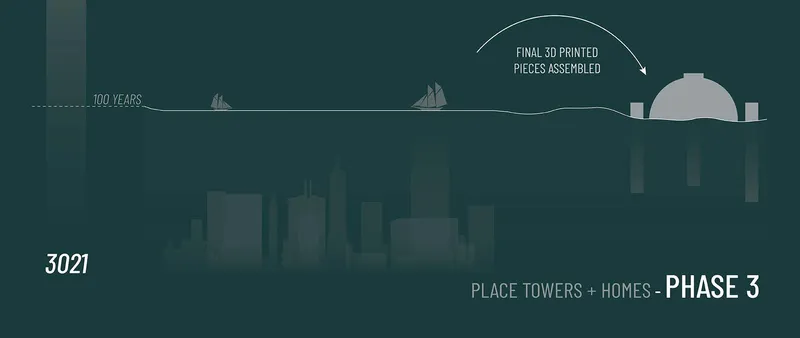
Phase 3 sees the installation of the final 3D printed elements and the many various pieces for each home module. Boats and other means of transportation are maintained as strong modes of transportation from one community to another in the future. This idea can be sped up and the process adapted based on the needed adjustments in our flooding timetable. The top of the concrete towers act as a place outside of the water in which residents can rest and get fresh air without being confined to their individual homes. These places include greenspaces and other necessities for living. The public dome transitions into a public health and wellness center with the needed crops and food growth environments and access to medicine.
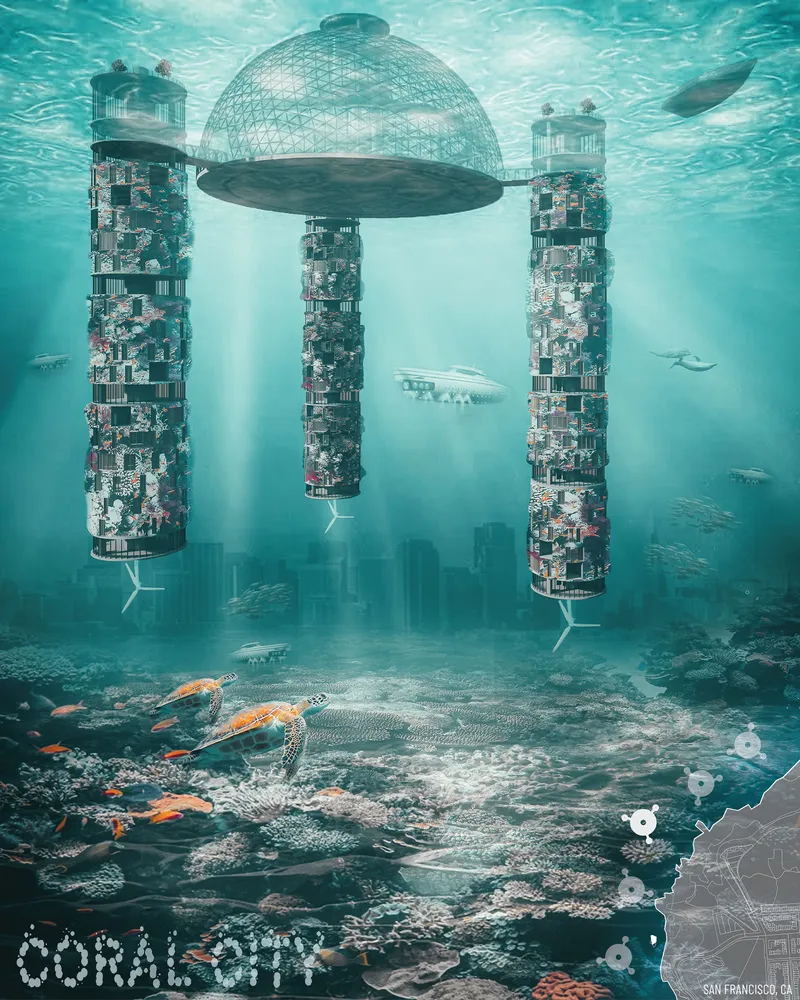
To conclude, the main objective of Coral City is to mimic the environmental ideas seen in natural Coral Reef growth overtime. Having access to the project with different uses overtime allows for the structure to be used overtime rather than be built for a future that could take hundreds of years to come to fruition. 3D printing the concrete structural towers allows for the elements to be developed in the future. Mining the necessary materials to 3D print new structures as the population grows is also developed in the main public dome structure when the time comes.




Popular Articles
Popular articles from the community


The Ocean Hive: Sustainable Architecture for a Self-Sufficient Civilization at Sea
The Ocean Hive imagines sustainable architecture at sea, where modular habitats, algae, wave power and ocean waste sustain a growing colony.

The Earth Pod: 3D Printed Homes for Resilient Refugee Communities
The Earth Pod reimagines refugee housing through 3D printed homes made from clay, combining resilience, self-sufficiency, and rapid shelter.

Hill & Cross Opera: Sculptural Opera House Architecture Shaped by Tallinn’s Landscape and Identity
Hill & Cross Opera reimagines opera house architecture in Tallinn through its sculptural hill, civic plaza, glass wave and a luminous cross.

Conexión: Biophilic Design Reimagines High-Rise Living in Hong Kong
Conexión reimagines high-rise living in Hong Kong through biophilic design, green facades, shared spaces, daylight, water and nature within.

Similar Reads
You might also enjoy these articles

The Rhythm of Seasons
A Farmers' Market Connecting Nature and the City

More Than a Building-Designing a Living System
More Than a Building-Designing a Living System
Base Beyond
DESERT COMPOUND ARID: TOURISM OF ABSENCE AND ABUNDANCE



Comments (0)
Please login or sign up to add comments
No comments yet. Be the first to comment!