

Courtyard by Marriott Restaurant Interior, Yerevan
El restaurante del Courtyard by Marriott en Ereván combina diseño contemporáneo, artesanía local, materiales naturales y una atmósfera culturalmente inmersiva.


A Contemporary Hospitality Space Rooted in Armenian Materiality
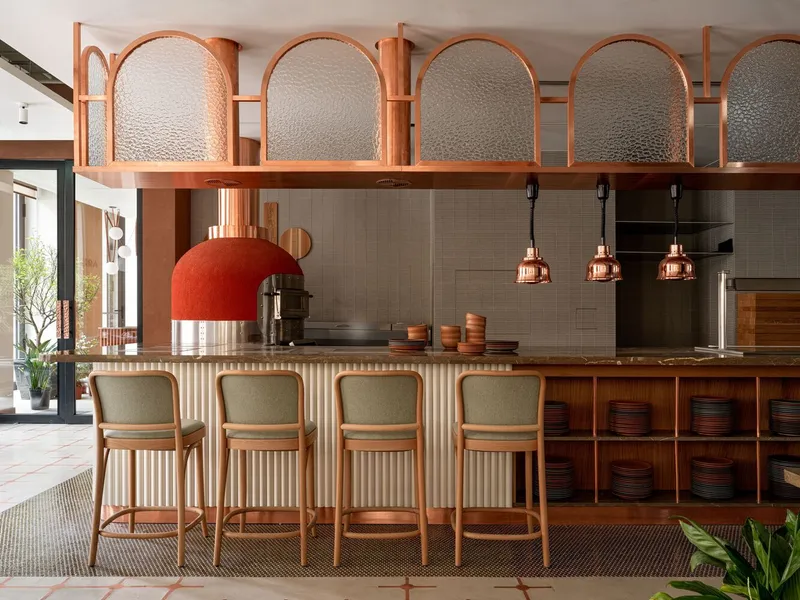
The newly opened Courtyard by Marriott in Yerevan marks a significant addition to Armenia’s rapidly evolving hospitality landscape. Located on Teryan Street in the heart of the capital, the hotel introduces a refined yet locally grounded dining experience through the interior design of its restaurant, terrace, and lounge, conceived by STUDIO SHOO. Spanning an area of 395 square meters, the project translates the global Courtyard by Marriott brand ethos into a space that resonates deeply with local culture, craftsmanship, and material expression.


Commissioned by Marriott International and the Galaxy Group, STUDIO SHOO approached the project with the ambition of creating a destination that extends beyond hotel guests to attract Yerevan’s urban community. The design balances international brand standards with a strong sense of place, embedding Armenian identity into a contemporary hospitality interior that feels both welcoming and distinctive.

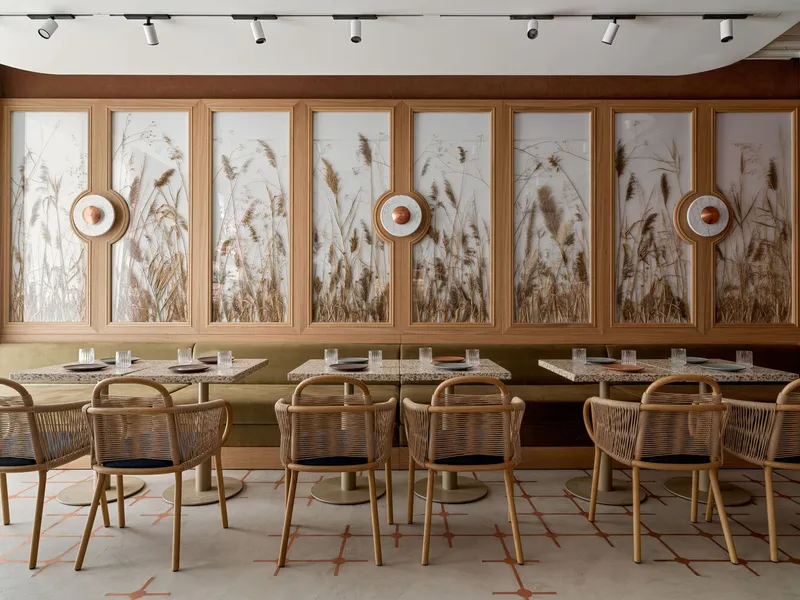
The interior concept is inspired by natural landscapes and regional gastronomy, drawing from the Mediterranean and Middle Eastern culinary traditions that define the restaurant’s menu. Earth, sea, and environment become guiding themes, expressed through a carefully curated palette of terracotta, ochre, rich burgundy, brick tones, and softened accents of green and blue. These colours establish a warm, immersive atmosphere while reinforcing a connection to the surrounding landscape.

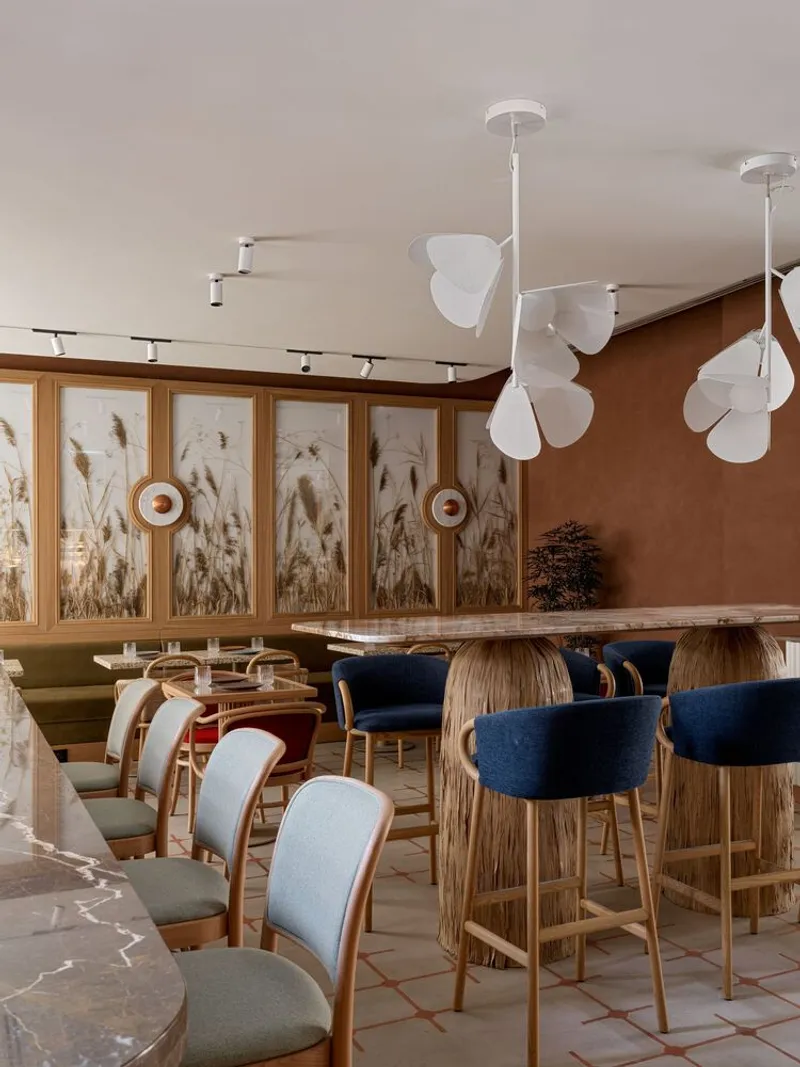
Upon entering the restaurant, guests are immediately greeted by an open kitchen anchored by a striking burgundy pizza oven. This focal point emphasizes transparency and craftsmanship, allowing diners to observe every stage of food preparation. The spatial layout encourages movement and interaction, reinforcing the restaurant’s role as a social hub within the hotel.
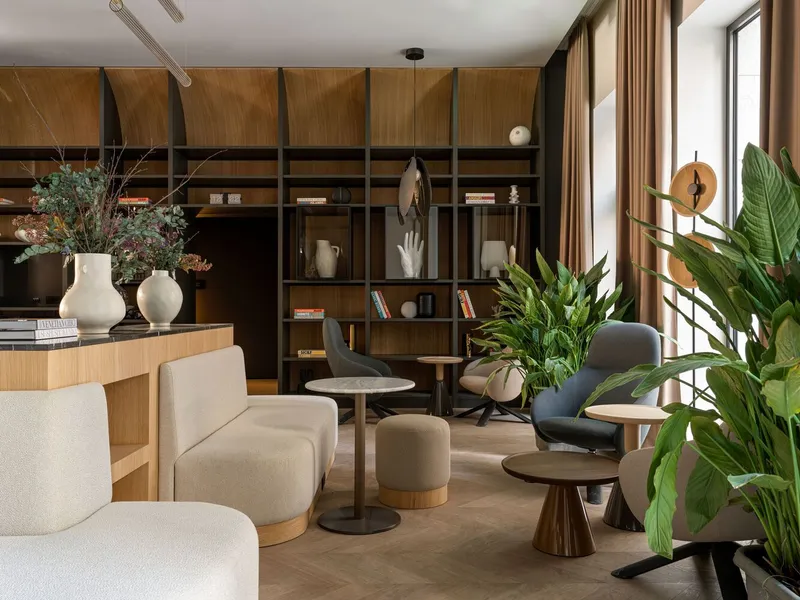
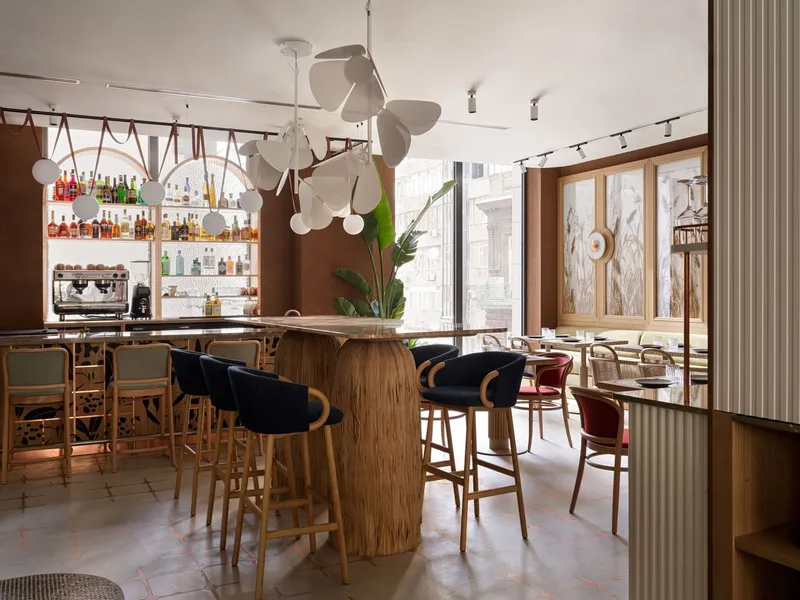
Seating arrangements are deliberately varied to accommodate different dining experiences, ranging from round and square tables to an oval communal table that encourages shared dining. Comfortable sofas, bar seating, and flexible arrangements ensure adaptability throughout the day, supporting casual gatherings as well as more intimate dining moments. This diversity of seating enhances the restaurant’s appeal to both hotel guests and local residents.


Materiality plays a central role in defining the interior character. Natural veneer is extensively used for custom shelving, tables, sofas, and service stations, all crafted by local furniture makers. The floor design becomes a standout feature of the project, incorporating handcrafted copper inlays arranged in a precise pattern derived from the overall design concept. These copper elements are set into concrete, creating a tactile surface that subtly reflects light and reinforces the artisanal quality of the space.


Handcrafted details are woven throughout the interior, adding layers of texture and narrative depth. Panels made from hand-picked dried flowers sourced from Armenian fields introduce organic softness and a direct connection to nature. At the bar counter, floral and leaf motifs designed by a local artist further strengthen the dialogue between architecture, craft, and cultural expression. Copper, marble, rattan, and dried botanicals collectively enrich the interior with authenticity and warmth.


Popular Articles
Popular articles from the community

Extended Shell: Retrofitting Kolkata's Balconies as Living Urban Thresholds
A modular retrofit system recovers the social and environmental intelligence of Kolkata's historic verandas for contemporary Park Street residents.

The Amber Palace Opera: A Geological Fiction Surfaces on Tallinn's Baltic Waterfront
Pierre Brillard reimagines a Baltic legend as a public landscape, opera house, and waterfront promenade rooted in Tallinn's coastal identity.

Opera on the Sea: Driftwood Logic Shapes a Timber Opera House on Estonia's Coast
Trevor Orgill's opera house translates the entangled drift of floating timber into a civic building where wood, water, and music converge.

Cloaked Colonization: A Mobile Underwater Habitat That Moves Like a Fish
Micah Abaya's shortlisted EHC Pacific entry reimagines ocean settlement as a dispersed network of self-sustaining architectural organisms.

Similar Reads
You might also enjoy these articles


Hodi-Mandai Geram
Project Function: Preservation and revitalization of the Intangible heritage and socio-spatial identity of the Hodi by Housing, Cultural Memory Center, Sacred Grove, landscape, local tourism economy


Olio Towers: A Mid-Rise for Performers That Fuses Housing, Rehearsal, and Stage
Located blocks from Houston's Theater District, this modular tower stacks living units around a central performance atrium.

Oasis: Modular Green Housing Carved into Dhaka's Urban Fabric
A shortlisted Plugin Housing entry reclaims unauthorized settlements in Dhaka with stepped concrete volumes, green roofs, and ventilation-driven design.

Black Hole: A Floating Megastructure for the Post-Physical Era
Emiliano Mazzarotto envisions a spherical, self-scaling arena where e-sports, digital hotels, and holographic stadiums replace traditional public space.

Explore Courtyard Competitions
Discover active competitions in this discipline

Challenge to reimagine the Iron Throne

Photograph architecture without architects

Illustrate the lost glory of Angkor Wat - Render Challenge

Design challenge to reuse E-waste
Comments (0)
Please login or sign up to add comments
No comments yet. Be the first to comment!