

Courtyard House Design in China: Spacework Architects’ Longan Tree Residence
A nature-integrated courtyard house in Quanzhou, China, designed around existing longan trees, blending living spaces with creative and communal functions.


A Residence Rooted in Nature
In Quanzhou, China, Spacework Architects have created a remarkable example of courtyard house design in China with the “Courtyard under Longan Trees” project. This unique residence and studio for a photography curator is situated in a quiet corner of Quanzhou Huaguang Vocational College, surrounded by an existing grove of mature longan trees. The design began with one non-negotiable principle: retain every single tree.
Integrating Architecture and Landscape
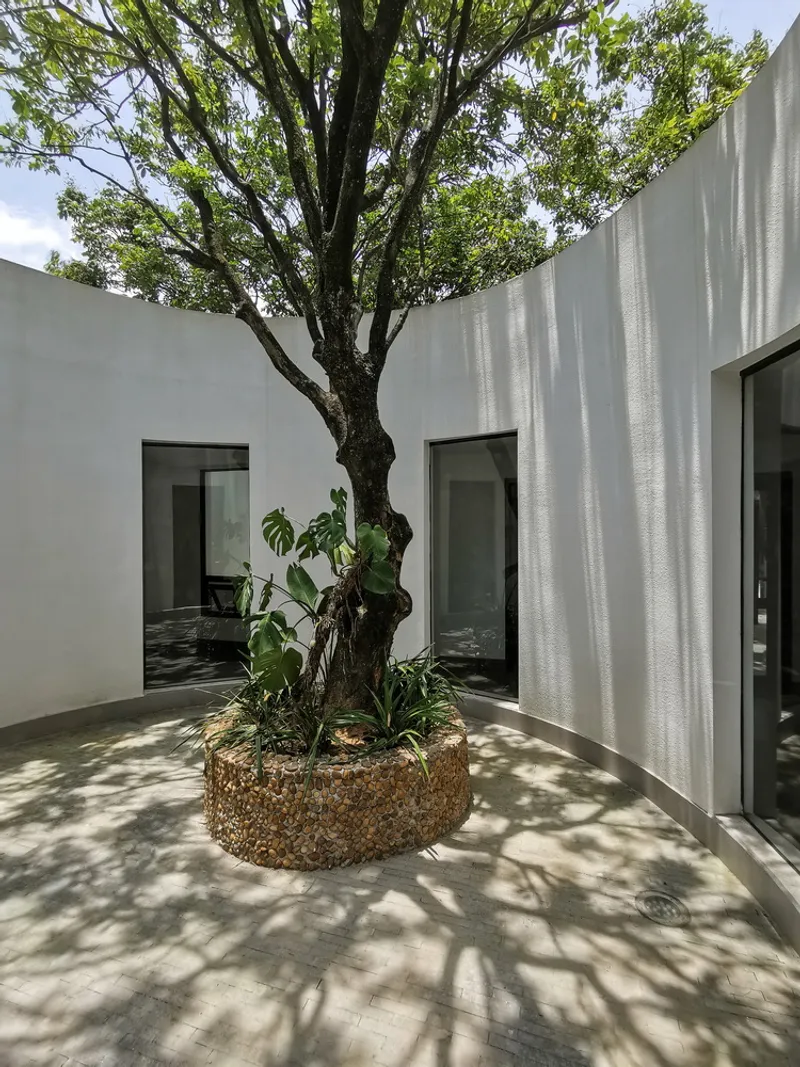
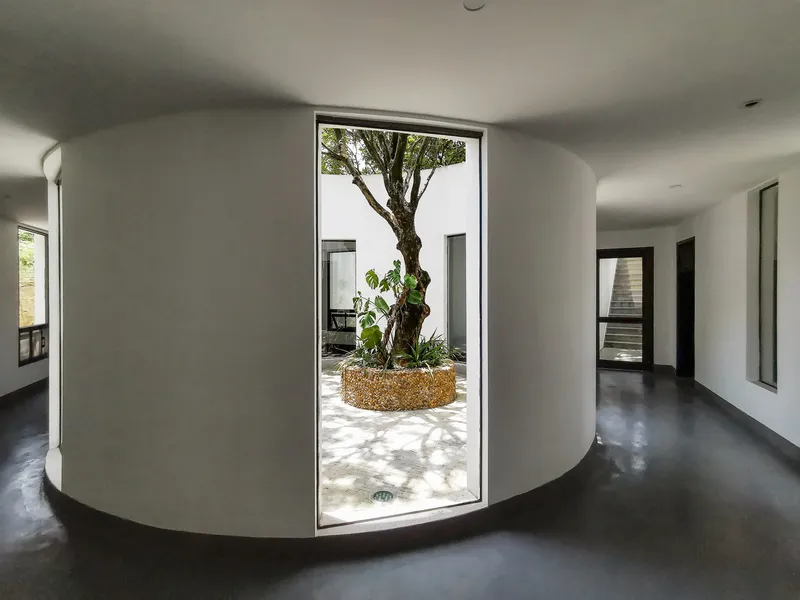
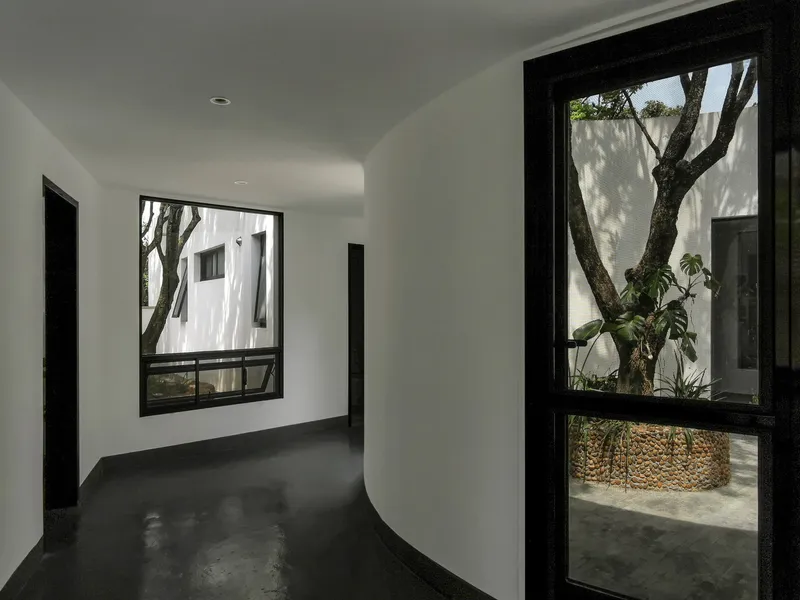
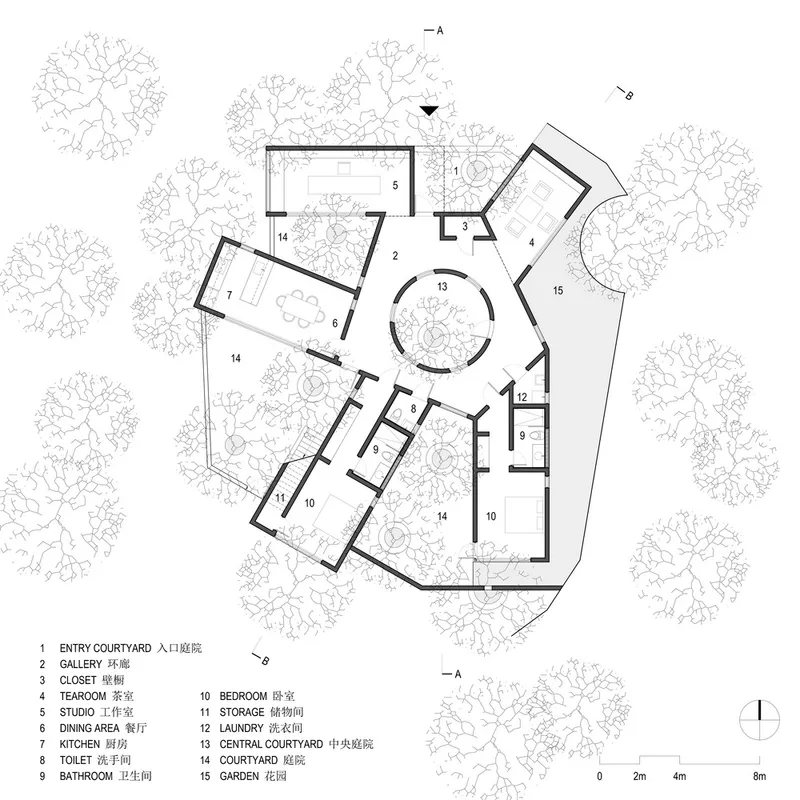
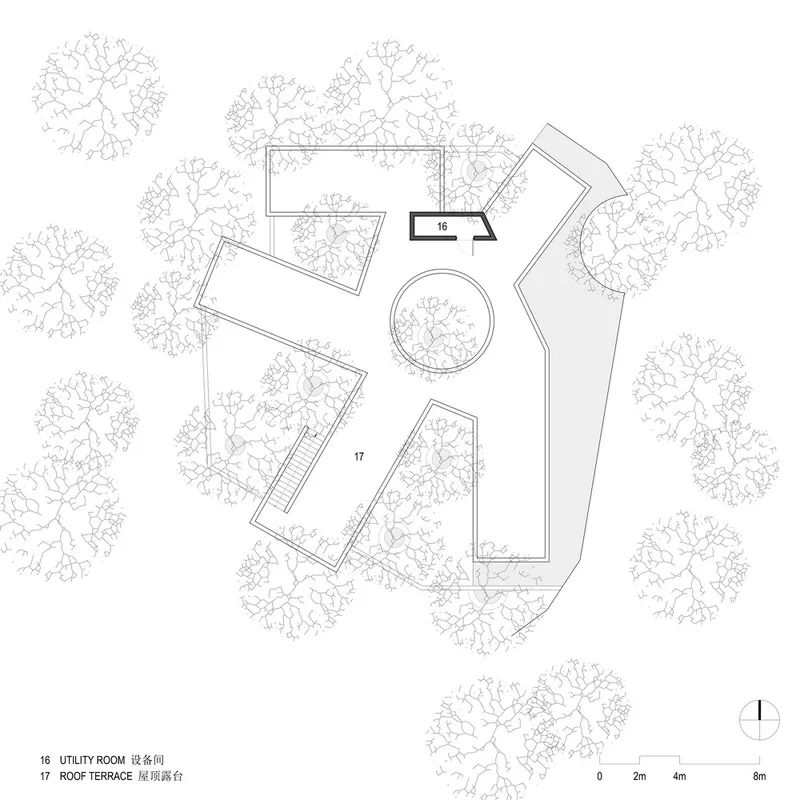
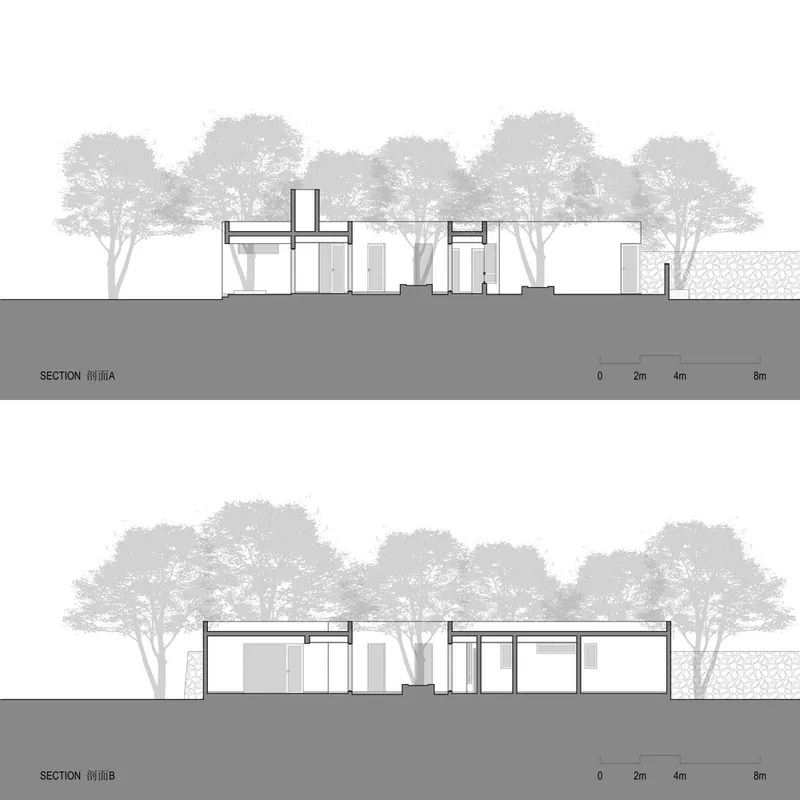
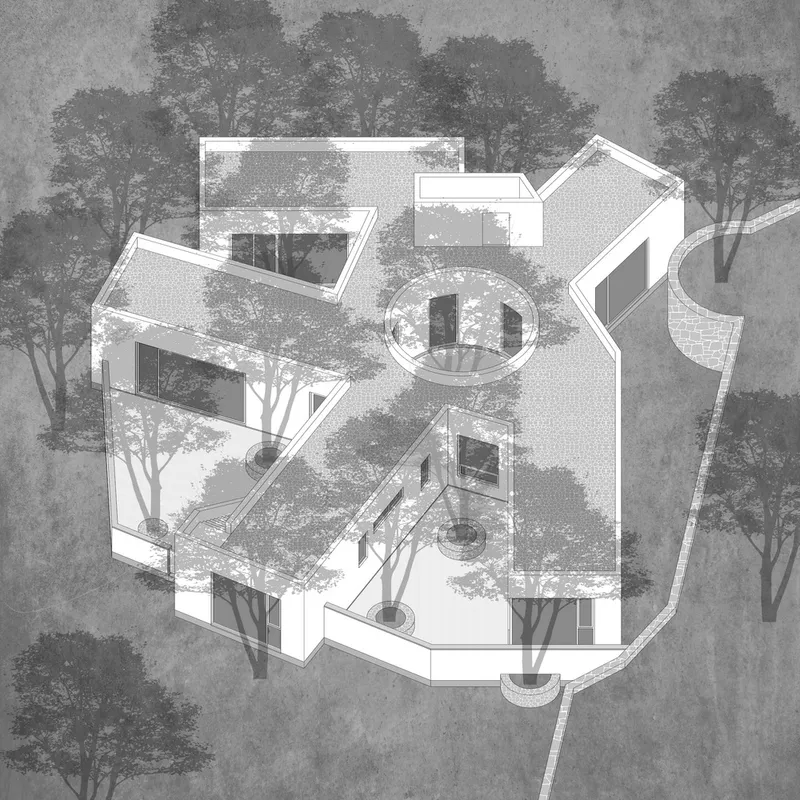
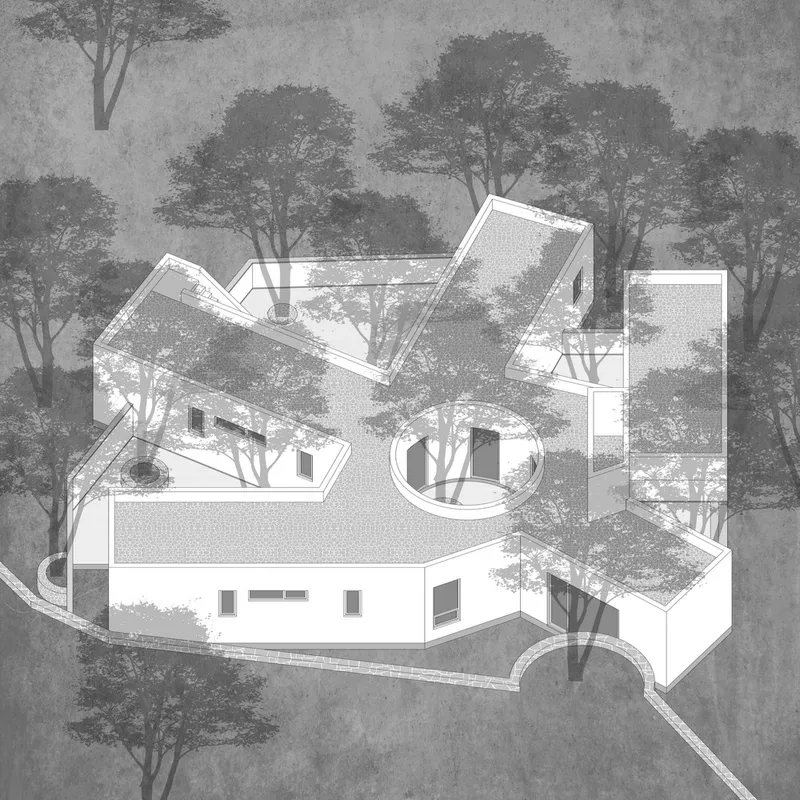
Instead of imposing a singular building form, the architects allowed the natural arrangement of the longan grove to shape the layout. Five main volumes—housing a dining room with open kitchen, studio, tea room, and two bedrooms—are interwoven with the trees, connected by a ring-shaped gallery. This configuration frames a central circular courtyard, along with several peripheral courtyards, each with its own atmosphere.
Site-Responsive Courtyard Variety
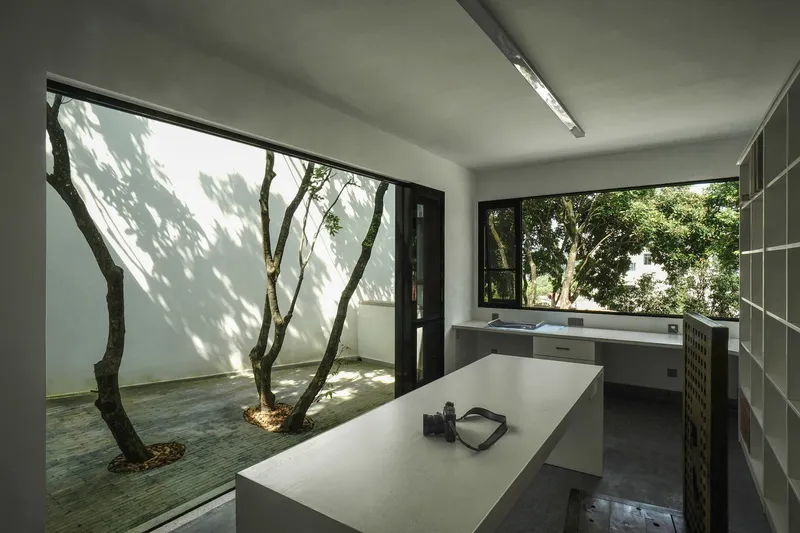
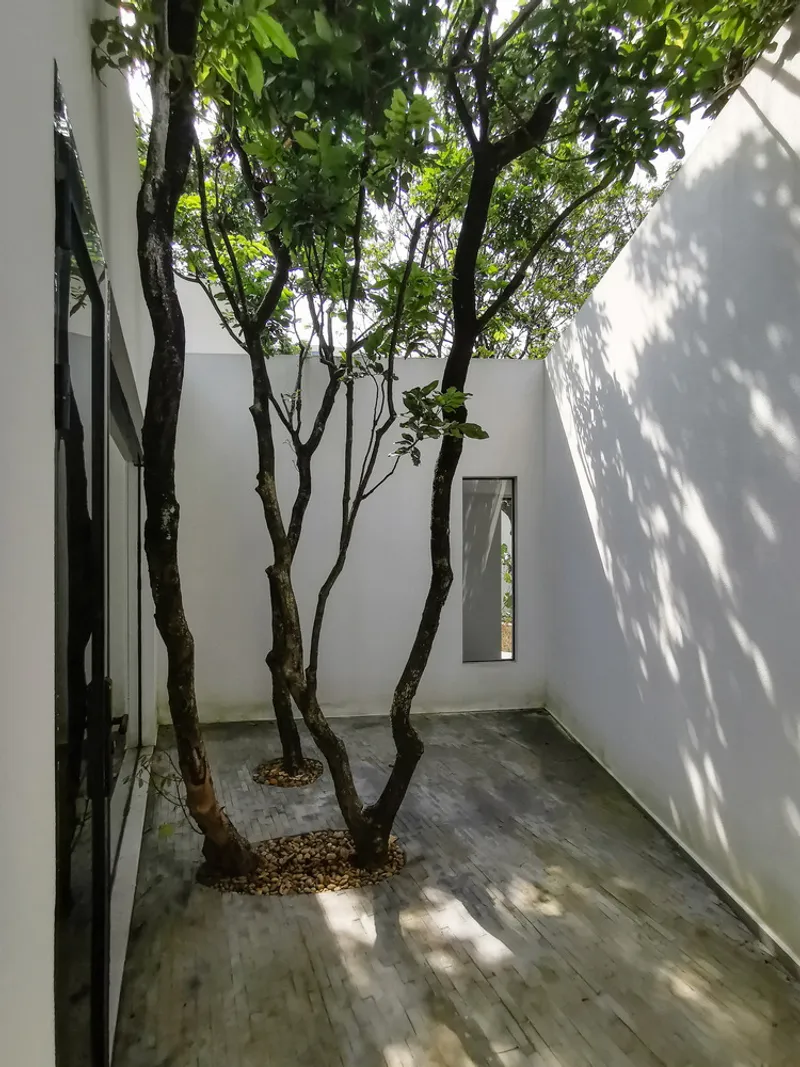
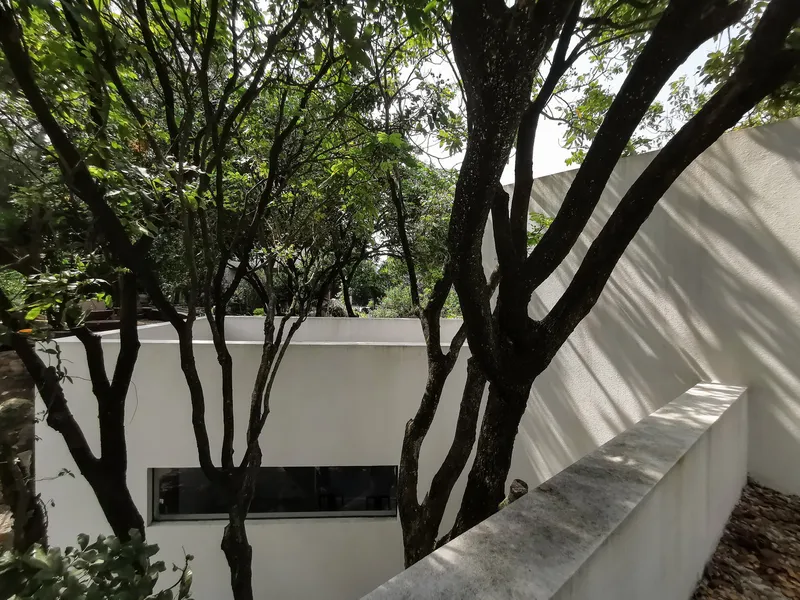
Each courtyard serves a different function and interacts with its surroundings in distinct ways. The northern entry courtyard welcomes visitors from a campus road, marked by a cantilevered canopy. The studio opens to a secluded courtyard with a solid wall backdrop, creating a quiet workspace. The tea room faces a linear garden along a retaining wall, while the bedroom courtyard opens to the south. The largest courtyard lies outside the dining room, facing southwest, with stairs leading to a roof terrace that immerses visitors in the tree canopy.
Design Precision Guided by Nature
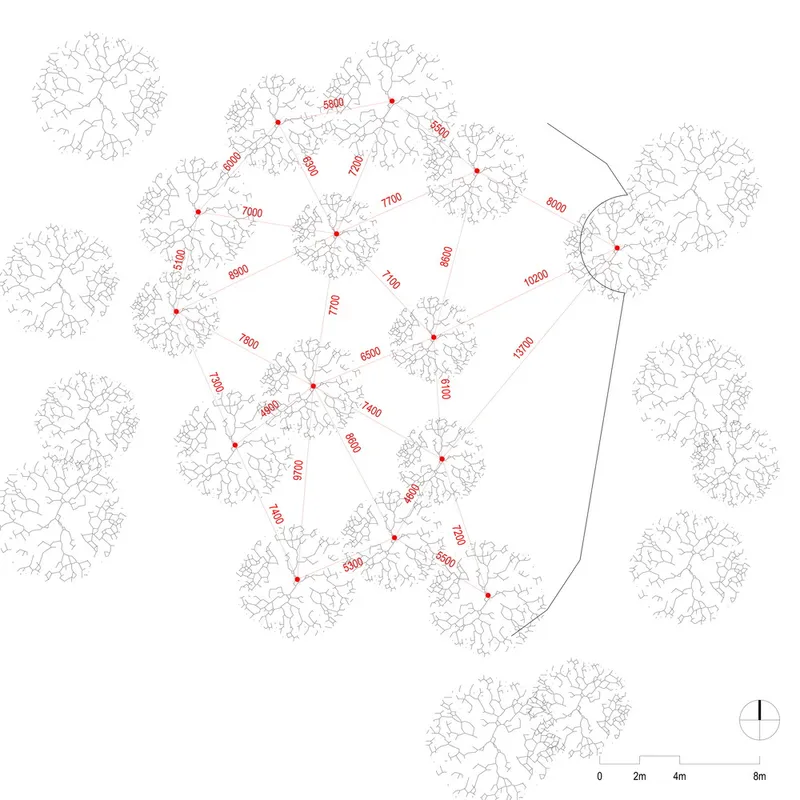
Before construction, the architects carefully measured the distances between every tree trunk, mapping them using triangular geometry. This meticulous survey ensured that the building footprints harmonized with the grove. Even the planter heights reflect the site’s natural grade changes, and the white walls act as canvases for shifting tree shadows throughout the day.
Simple Materials, Timeless Atmosphere
Built with a modest load-bearing wall structure and flat concrete roof, the residence uses locally available materials: white plastered walls, cement floors, grey bricks for courtyard paving, and pebbles matching the hue of longan fruit. These choices allow the longan trees to be the true stars of the design, making the architecture feel like a quiet frame for nature.
A Shared Space for Living and Creativity
Beyond being a private residence, the house functions as a cultural venue for the curator and his wife to host and collaborate with fellow artists. While low walls ensure privacy, they don’t fully block views, allowing the home to become an informal campus landmark, drawing teachers and students to explore the space.
A Model for Modern Courtyard House Design in China
The “Courtyard under Longan Trees” stands as a thoughtful, environmentally sensitive example of how traditional courtyard principles can be adapted for modern living—placing nature not just beside architecture, but at its very heart.
All photographs are works of Spacework Architects, Rui Fu, Qicui Wu


Popular Articles
Popular articles from the community


Singing Woman: An Opera House That Performs Before the Curtain Rises
Ovidiu Cristian Pavel's conceptual opera house translates Estonia's choral identity into a sculpted waterfront landmark facing the Baltic Sea.

Tsunami Convergenics: Turning Catastrophic Ocean Forces into Underwater Housing Infrastructure
A speculative underwater settlement off the coast of Onagawa, Japan, treats tsunamis and typhoons as energy sources rather than threats.

Opera by the Sea Estonia: Three Shells Dissolving Architecture into Tallinn's Coastline
A winning opera house proposal replaces monumental form with interconnected shells that blur the boundary between building, park and Baltic Sea.

Manzana Morphosis: Stretching Barcelona's Grid into a Living Landscape for 2050
A radical reworking of the Eixample manzana turns density into a tool for generous public space, vertical ecology, and environmental performance.

Similar Reads
You might also enjoy these articles

Bamboo Housing Challenge 2026: Design Affordable, Sustainable Homes Using Bamboo
An international design competition by Bamboo U and IBUKU inviting architects and designers to reimagine affordable housing using bamboo — with the winning design built full-scale in Bali.

Computational Design & Education: Beegraphy Design Awards Introduces 7th Category (Featuring Jiyun's Innovative Approach)
Dive into Beegraphy’s 7th Design Awards category, where computational design meets education to create immersive, interactive learning tools, inspired by Jiyun’s work.

From Parametric Lighting to Urban Furniture: Join the 2nd Workshop in Beegraphy’s Computational Design Series
Dive into Cutting-Edge Design Techniques and Practical Applications with Industry Experts

Last Call: Unleash Your Architectural Genius in SHAK's Kindergarten Design Competition
Urgent call for architects to join SHAK's kindergarten design competition before the looming deadline

Explore Courtyard Competitions
Discover active competitions in this discipline

Challenge to reimagine the Iron Throne

Photograph architecture without architects

Illustrate the lost glory of Angkor Wat - Render Challenge

Design challenge to reuse E-waste
Comments (0)
Please login or sign up to add comments
No comments yet. Be the first to comment!