
CRA – Center for Artistic Residencies at Matadero Madrid by BURR Studio
Modular, temporary structures transform Matadero Madrid into flexible artistic residencies, fostering creativity, privacy, and collaboration through adaptive design.


Transforming Space for Creativity: A Modular Residency Hub in Madrid
In the heart of Matadero Madrid, a former slaughterhouse turned contemporary art center, BURR Studio introduces an adaptable architectural intervention known as the CRA (Center for Artistic Residencies). This 2,000-square-meter project reimagines one of the expansive warehouses into a flexible, collaborative environment designed to support artists-in-residence with an architecture that is both responsive and non-intrusive.
Drawing inspiration from Céline Condorelli’s “Support Structures Manifesto”, the CRA embraces architecture not as a finished object but as an enabler of social processes, relationships, and creative practice. It offers a new spatial typology for artist residencies, placing emphasis on modularity, impermanence, and user-centric design.
A Spatial System of Support and Autonomy
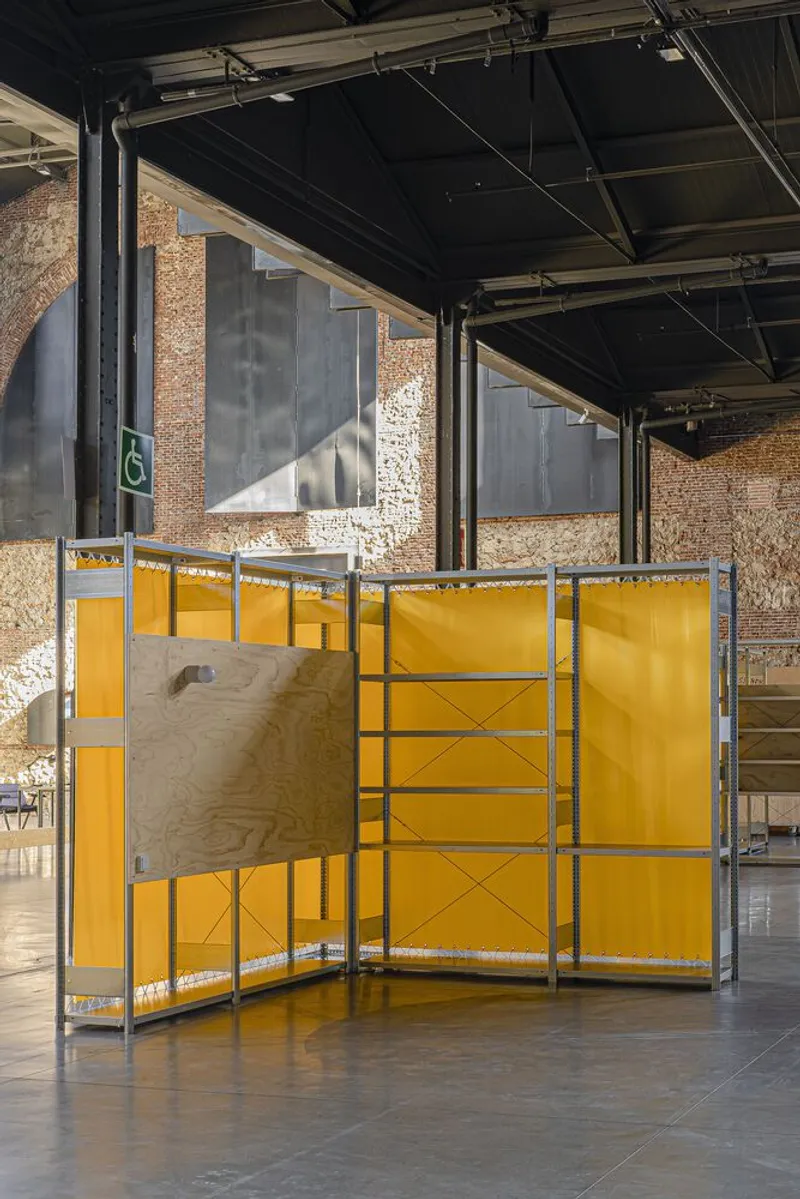
The CRA project consists of a series of modular and reconfigurable elements that transform the warehouse into a multifunctional artistic environment. Each element is designed to address specific residency needs—privacy, shared community space, storage, workshops, and presentations.
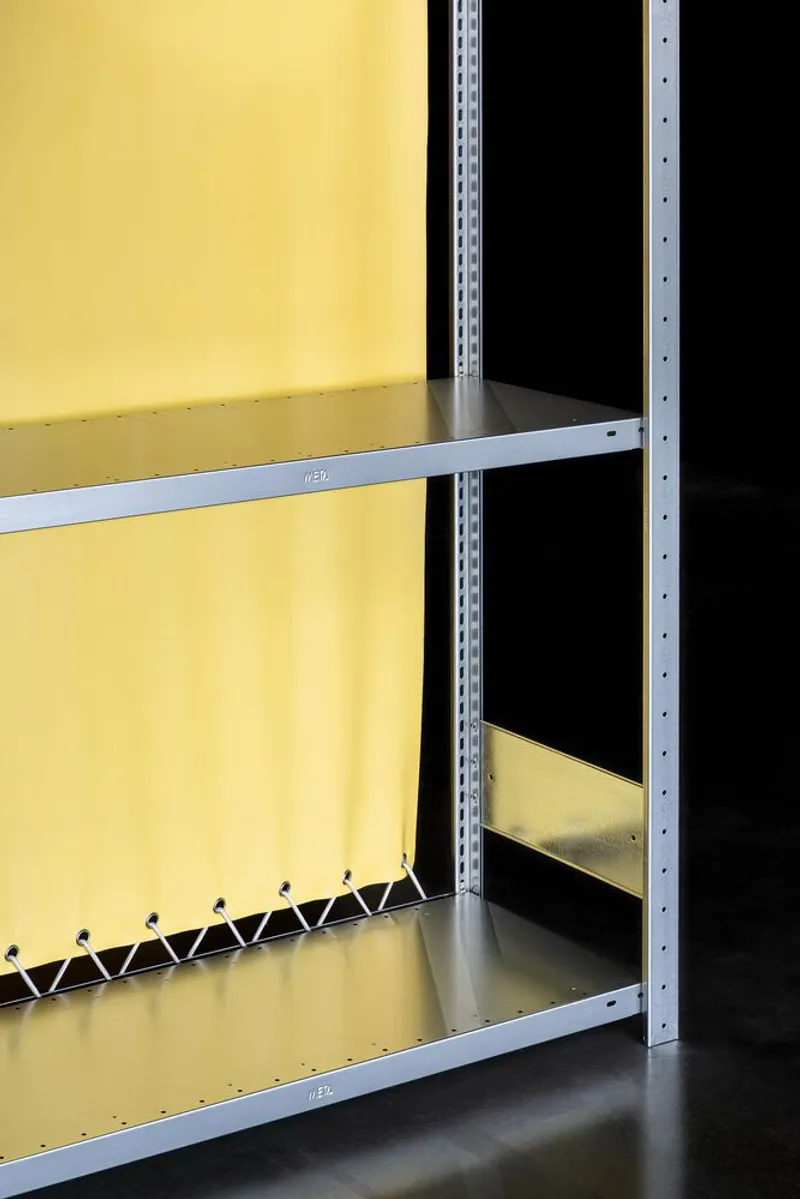
At the core of the spatial organization are large, freestanding storage structures shaped like “+”, “T”, and “L” forms. These create independent yet equal quadrants, giving each of the four resident artists their own defined work area. Each module features dedicated lighting, built-in storage, and acoustic buffering—promoting focused, self-directed artistic production within a shared framework.
Despite their individuality, these quadrants are arranged in such a way that they all face and connect to a central common space—a more communal, semi-private zone shielded from external views. This organizational approach fosters both collaborative dialogue and individual reflection, offering artists autonomy without isolating them.

Temporary Architecture as Intentional Design
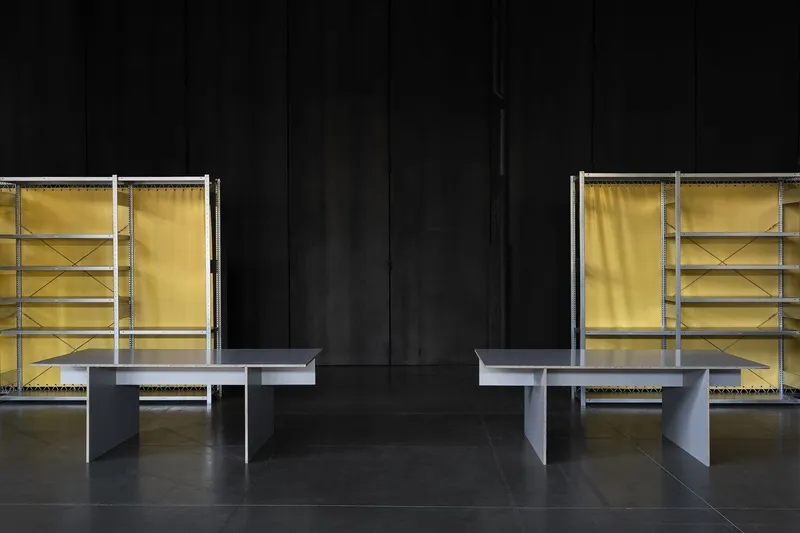
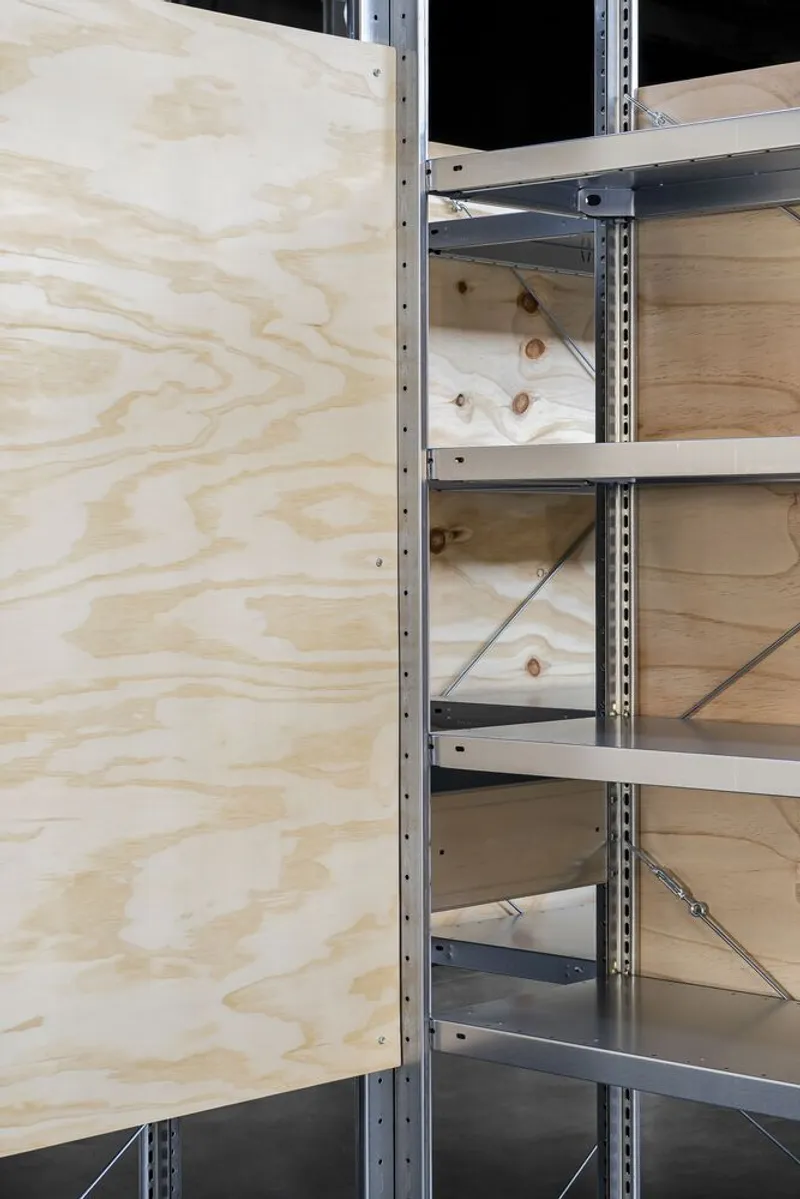
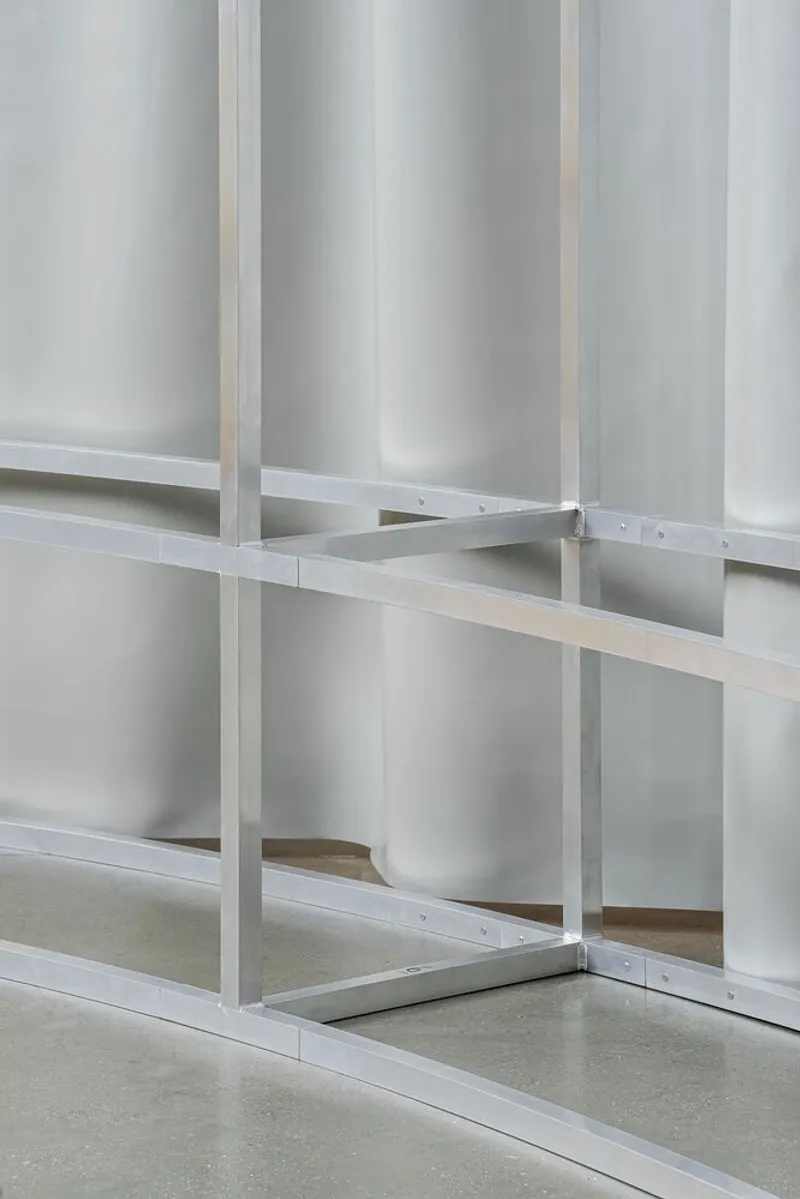
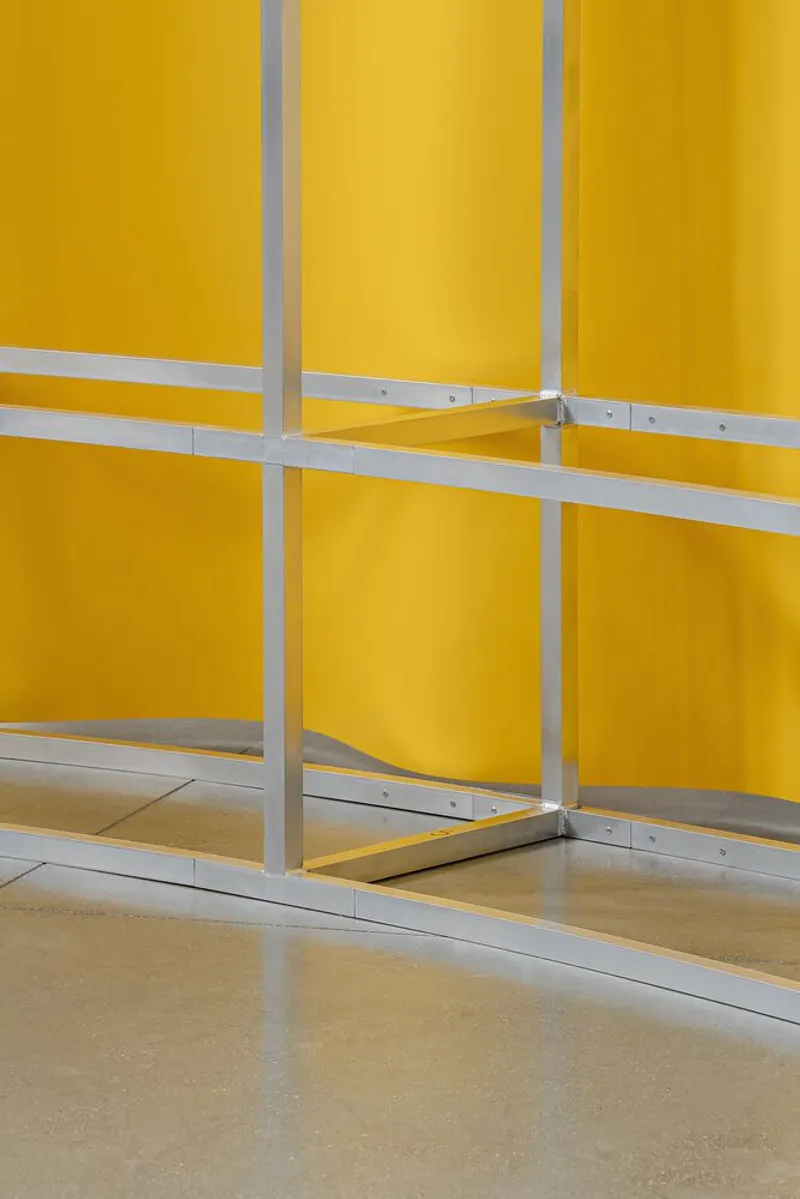
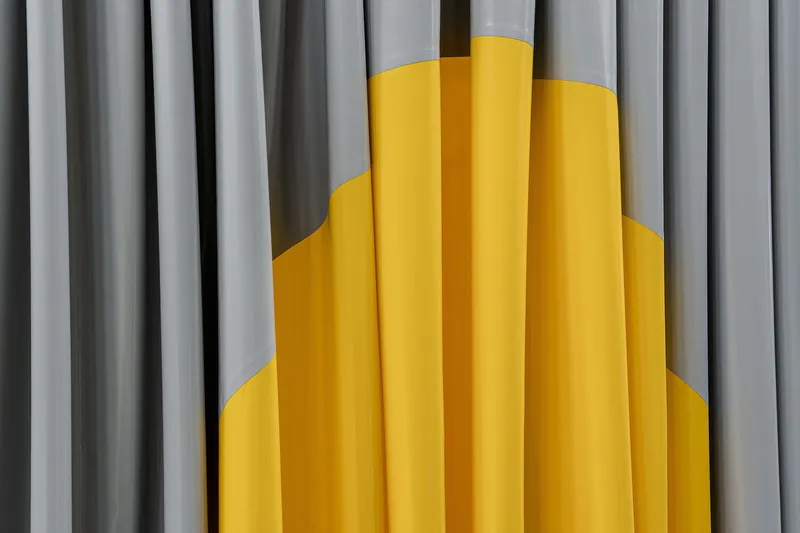
The intervention avoids permanence in both material and form. It employs lightweight materials like stretched tarpaulins, aluminum structures, and textile barriers to define space without heavy architectural imposition. This deliberate ephemerality underscores BURR Studio’s intention to serve—not dominate—the artistic process.
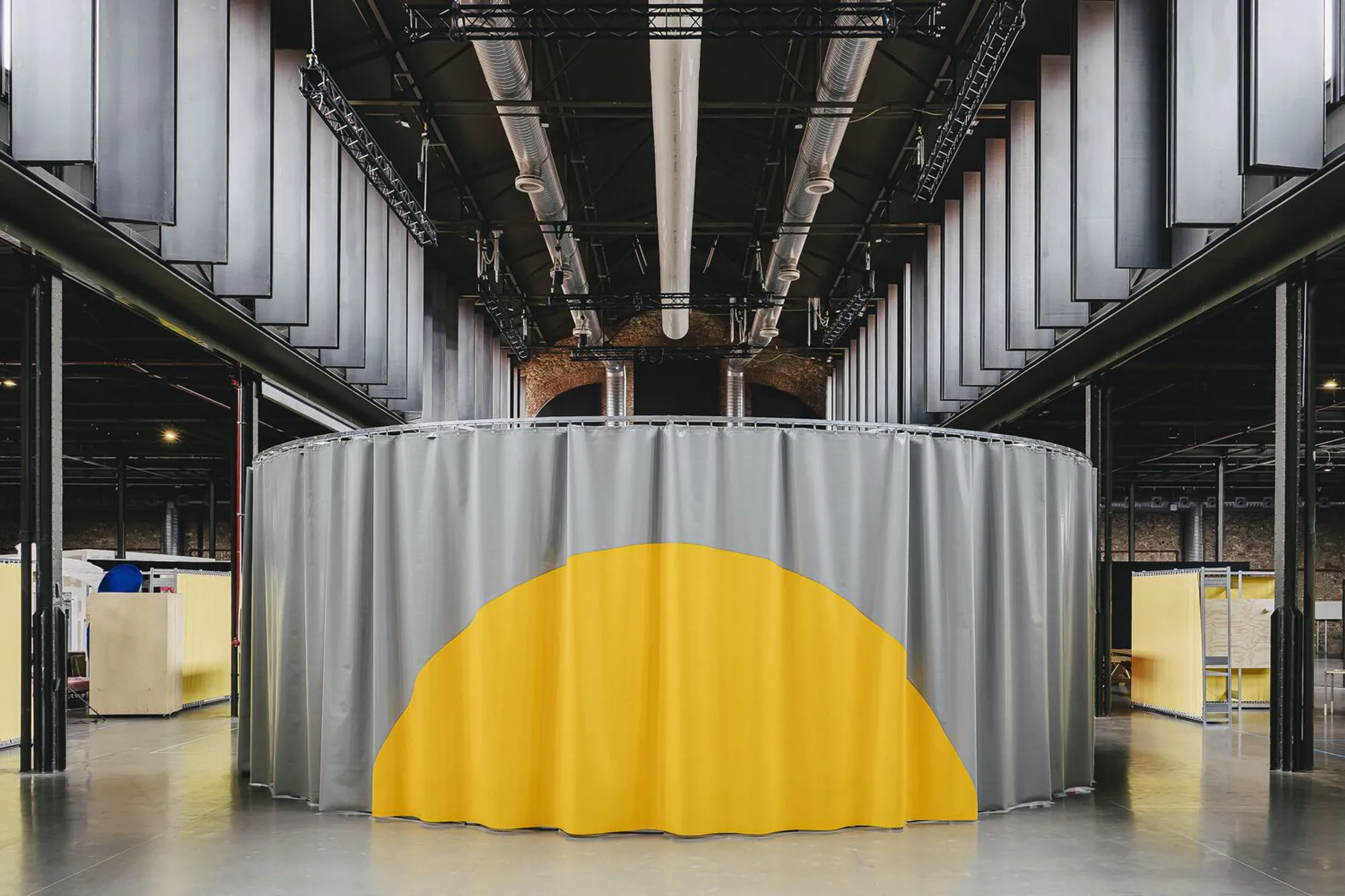
A mobile semicircular aluminum structure with a curtain acts as a presentation space or meeting backdrop. It can be repositioned easily, allowing for spontaneous gatherings or formal showcases. Meanwhile, additional workspaces and storage areas are separated from the rest by translucent textile walls—offering visual permeability while subtly delineating functions.
The entire intervention is conceived as a support system—neutral in its materiality, democratic in its spatial distribution, and dynamic in its adaptability.
Architecture That Supports, Not Distracts
By choosing a language of neutrality and temporality, BURR Studio avoids the pitfalls of over-design. The structures within the CRA are intentionally restrained, allowing the residents' work to take visual and conceptual precedence. The architecture positions itself as a facilitator, never a spectacle—demonstrating how thoughtful spatial design can empower artistic practice through subtlety and flexibility.

A New Paradigm for Artistic Residency Design
The CRA at Matadero Madrid is more than a temporary installation; it’s a prototype for collaborative creative environments. BURR Studio challenges conventional approaches to artist residencies by focusing on support, adaptability, and cohabitation. Through a sensitive balance between public and private, rigid and flexible, temporary and structured, the CRA sets a precedent for future residency and cultural production spaces around the world.
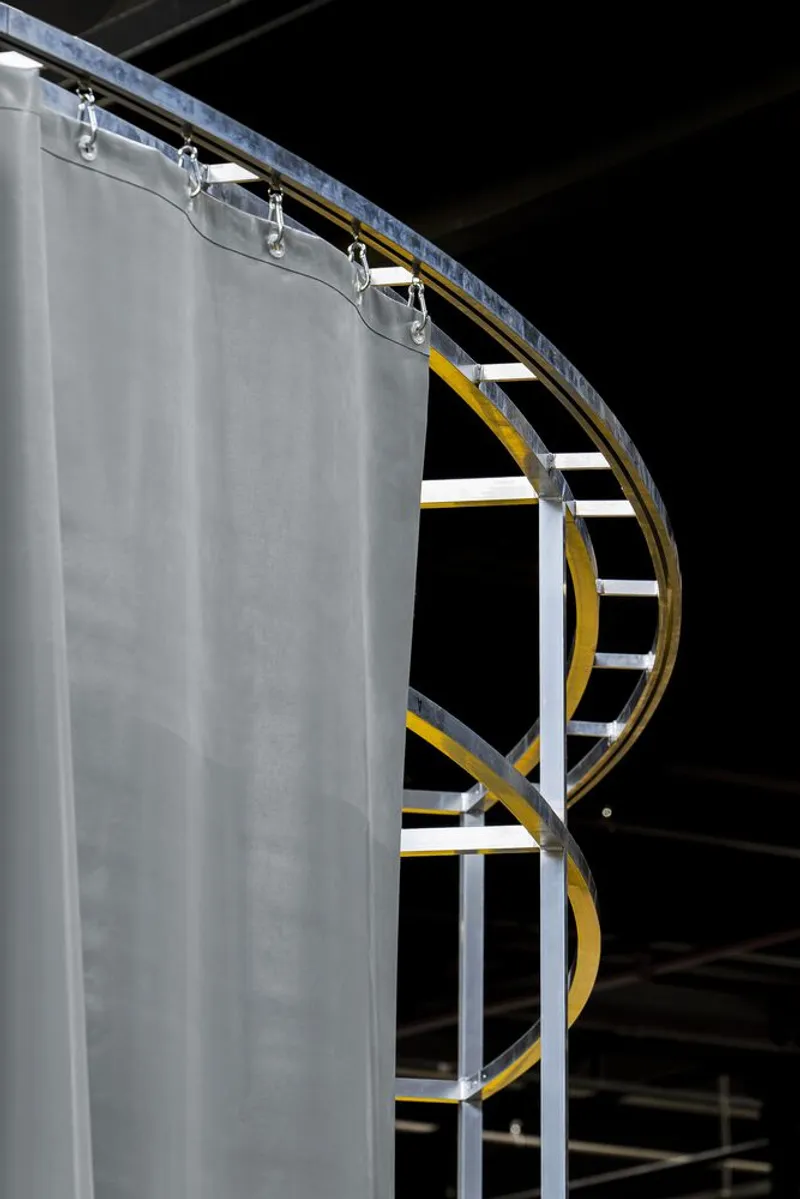
All photographs are works of Maru Serrano



Popular Articles
Popular articles from the community


The Earth Pod: 3D Printed Homes for Resilient Refugee Communities
The Earth Pod reimagines refugee housing through 3D printed homes made from clay, combining resilience, self-sufficiency, and rapid shelter.

Co-life: Sustainable Architecture for Age-Friendly Community Living
Co-life reimagines sustainable architecture for seniors through courtyards, rammed earth, shared gardens, and spaces designed for belonging.

Riyadh For All: Intergenerational Urban Design for Active Aging in Rabat
Riyadh For All reimagines urban design in Rabat with intergenerational co-living, adaptive courtyards, and Moroccan cultural exchange today.

The Musturak Paradise: Senior Living Architecture for a Connected Future in Temara, Morocco
The Musturak Paradise reimagines senior living architecture in Temara via private homes, social spaces, culture, community, and shared care.

Similar Reads
You might also enjoy these articles


Hodi-Mandai Geram
Project Function: Preservation and revitalization of the Intangible heritage and socio-spatial identity of the Hodi by Housing, Cultural Memory Center, Sacred Grove, landscape, local tourism economy


Olio Towers: A Mid-Rise for Performers That Fuses Housing, Rehearsal, and Stage
Located blocks from Houston's Theater District, this modular tower stacks living units around a central performance atrium.

Oasis: Modular Green Housing Carved into Dhaka's Urban Fabric
A shortlisted Plugin Housing entry reclaims unauthorized settlements in Dhaka with stepped concrete volumes, green roofs, and ventilation-driven design.

Black Hole: A Floating Megastructure for the Post-Physical Era
Emiliano Mazzarotto envisions a spherical, self-scaling arena where e-sports, digital hotels, and holographic stadiums replace traditional public space.
Explore Cultural Architecture Competitions
Discover active competitions in this discipline



Challenge to reimagine the Iron Throne


Photograph architecture without architects


Illustrate the lost glory of Angkor Wat - Render Challenge

Bring back Drive In's
Comments (0)
Please login or sign up to add comments
No comments yet. Be the first to comment!