
Cut(outs) House: A Faro Refurbishment by Corpo Atelier
Corpo Atelier kept the facade of a Faro corner house and remade its interior with a new pine roof, a single white pillar, and framed wall cuts.


Faro is a small city on the southern coast of Portugal that almost no one in the international architecture press writes about. The Algarve is mostly known for tourism, white-painted villages, and the kind of light that makes any building photograph well. Cut(outs) House, a 150 square metre refurbishment of a corner house in Faro completed in 2025 by Corpo Atelier, is one of the more interesting recent answers to a familiar question: what do you do with a vernacular Portuguese corner house when the original interior no longer works?
The architects' answer is unusually clear. Keep the outside almost exactly as it was. Then, on the inside, treat the project as a series of cuts: through the ceiling, through the walls, around a single new pillar. The name of the project, Cut(outs), refers to these literal openings. The result is a small house that does very little to its facade and a great deal to its interior, and the contrast between the two is the project's whole argument.
The Facade, Untouched
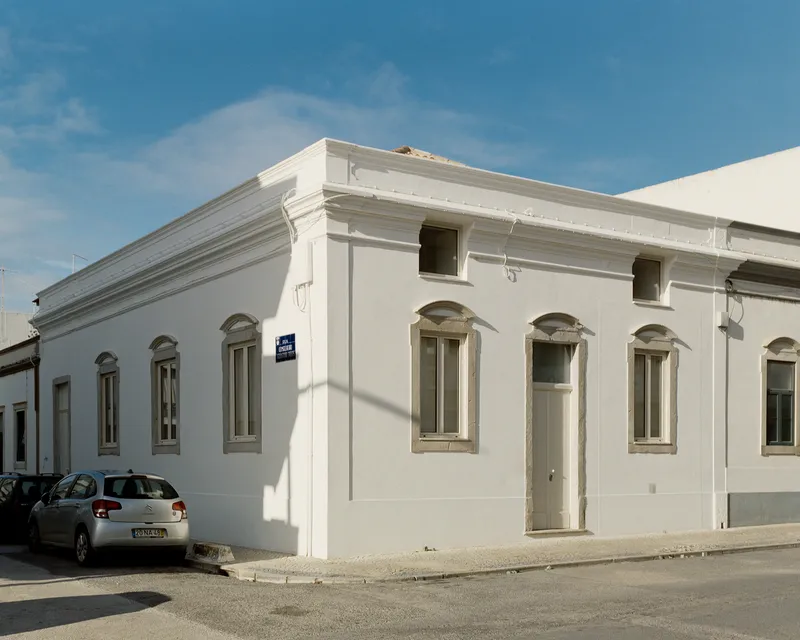
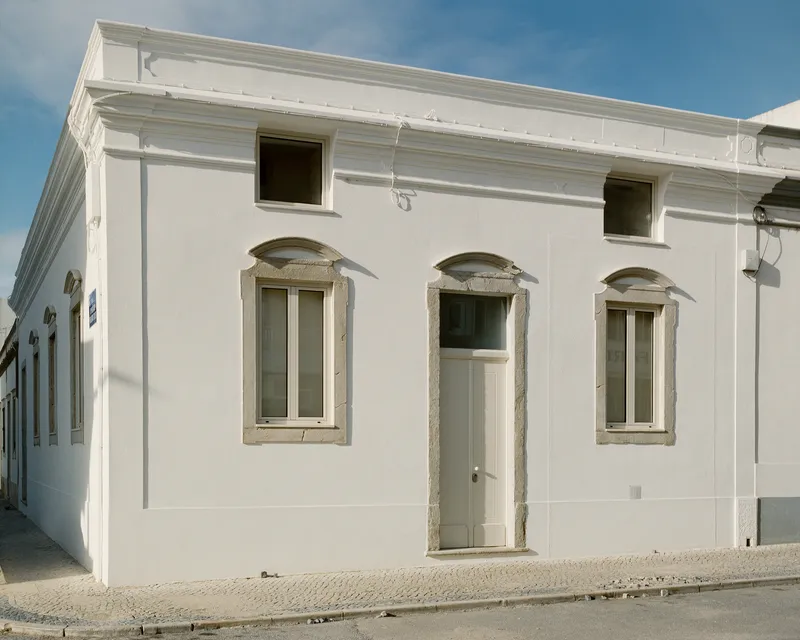
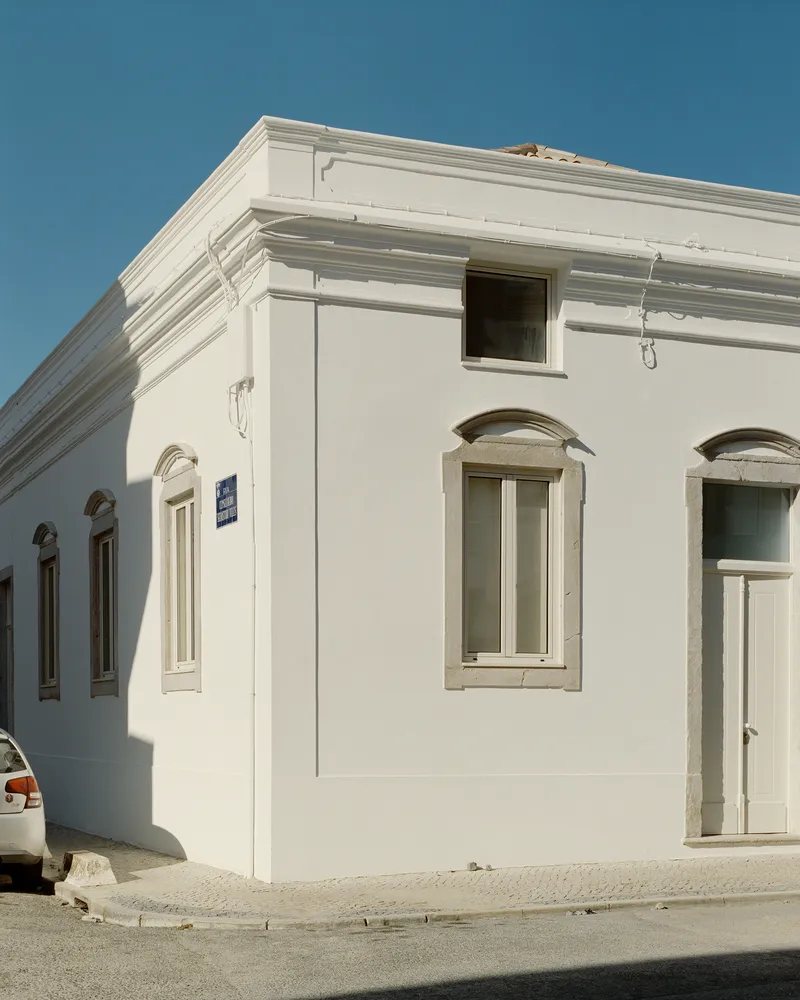
From the street, the house is unchanged. The whitewashed stucco walls, the cornice, the stone surrounds around the openings, the asymmetric rhythm of windows and doors are all preserved. There is no plaque announcing the renovation. There is no contemporary signage at the entrance. If you walked past it, you would not know that anything had happened inside.
This is the project's first deliberate decision. Vernacular corner houses in Faro and similar Portuguese towns carry a lot of collective memory. They are the building blocks of the street, the kind of structure that gives small Portuguese cities their identity. Demolishing or even visibly modernising them would erase a piece of the urban fabric. Corpo Atelier chose to leave that fabric intact and let the renovation happen behind it.
The Roof Cut
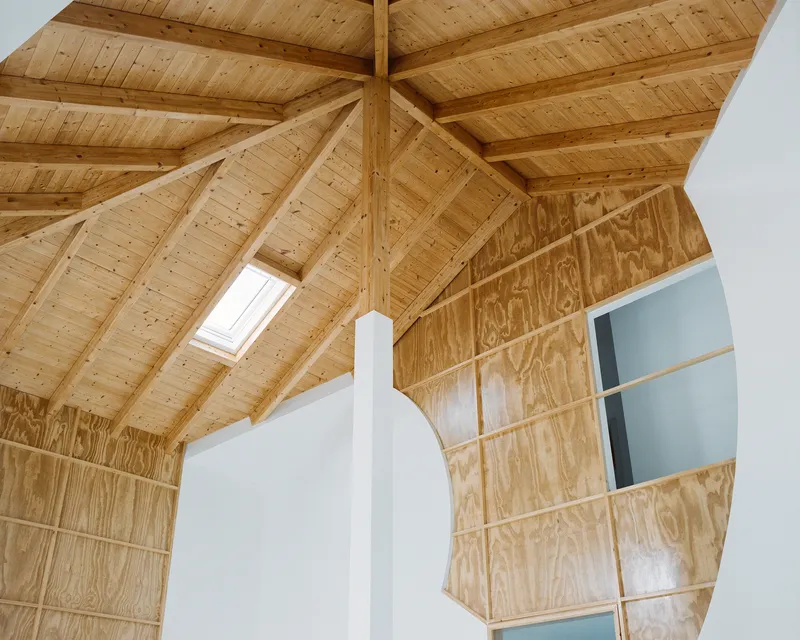
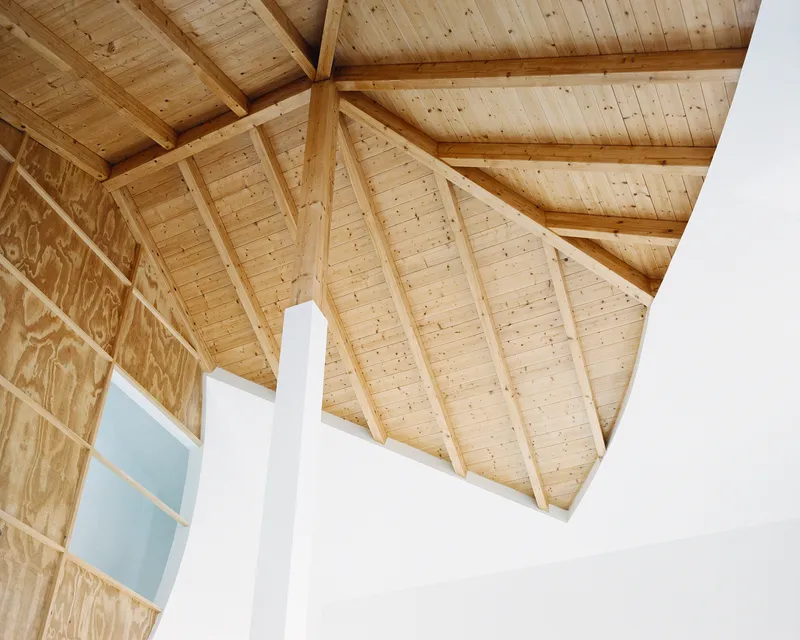
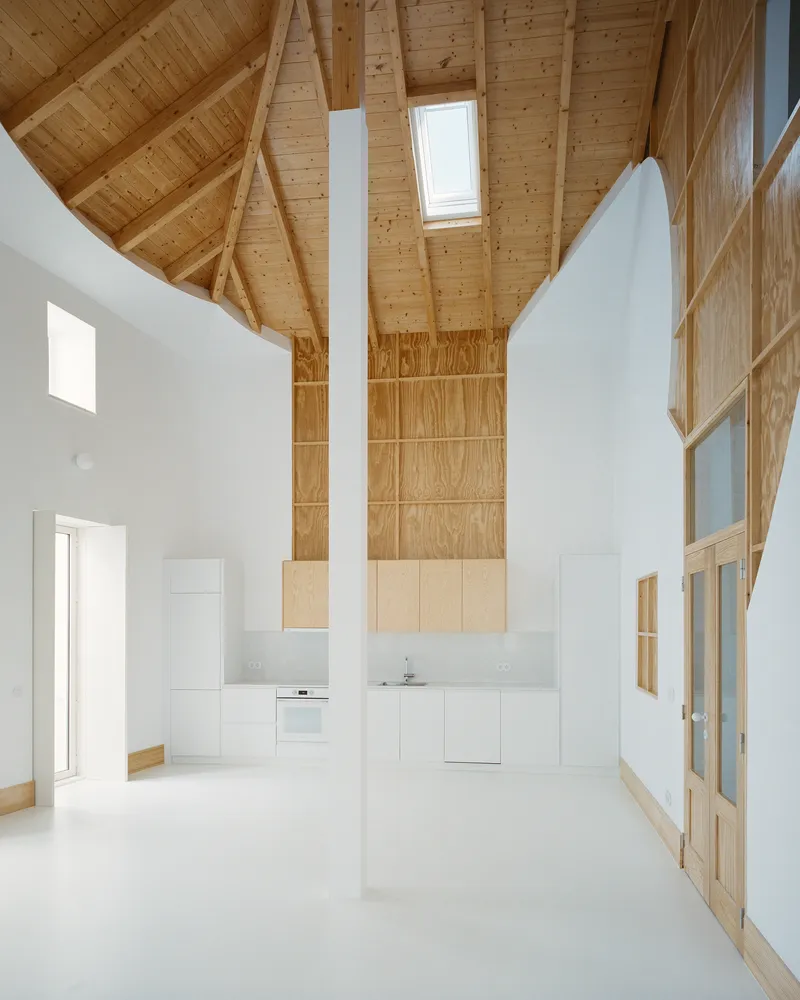
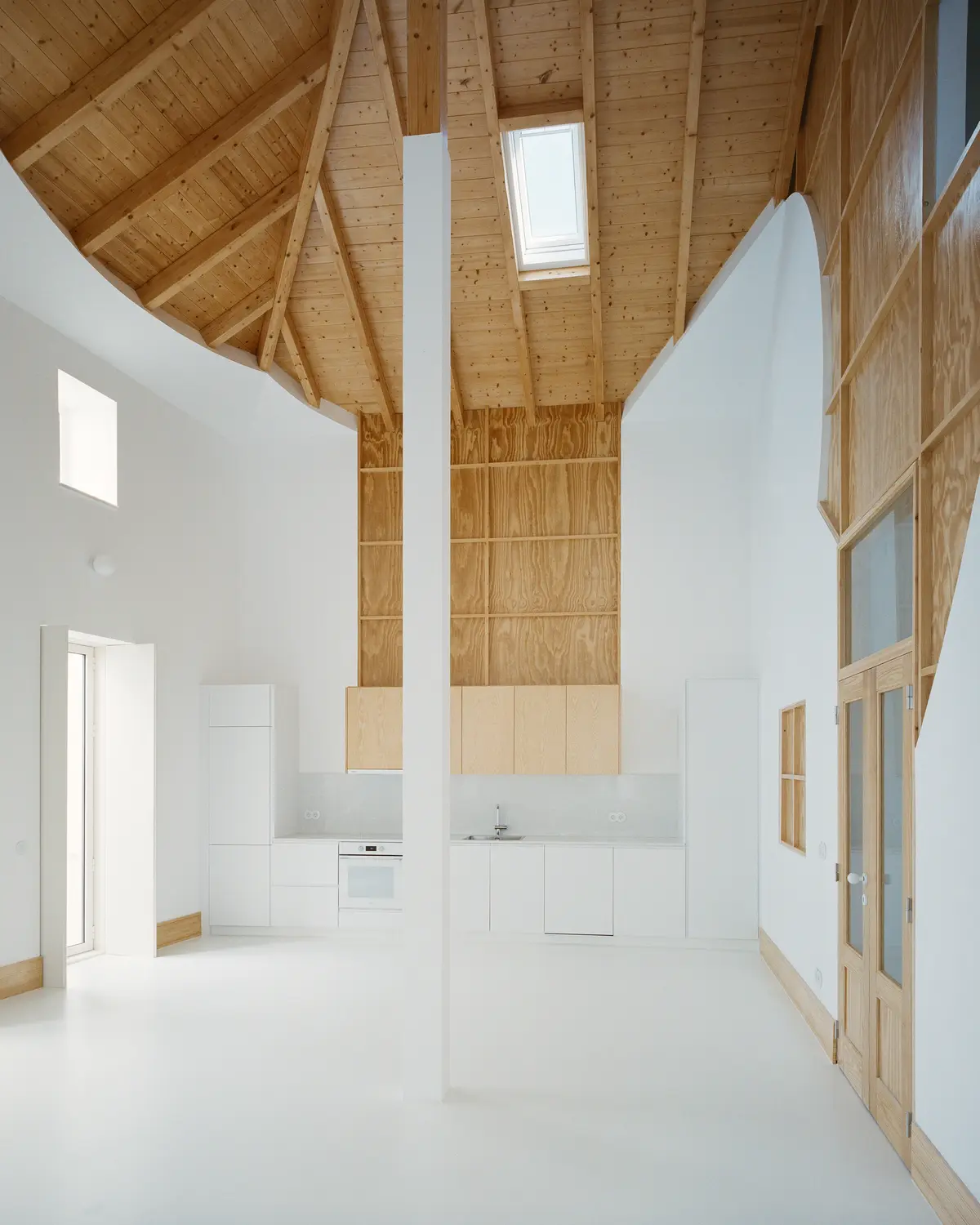
The first thing you see when you step inside is the new roof. The architects removed the existing ceiling and exposed a freshly built timber structure: pine rafters, a plywood-lined surface, and a curved plywood wall that wraps around the upper part of the room. The old volume becomes a much taller, much lighter space than the facade would suggest.
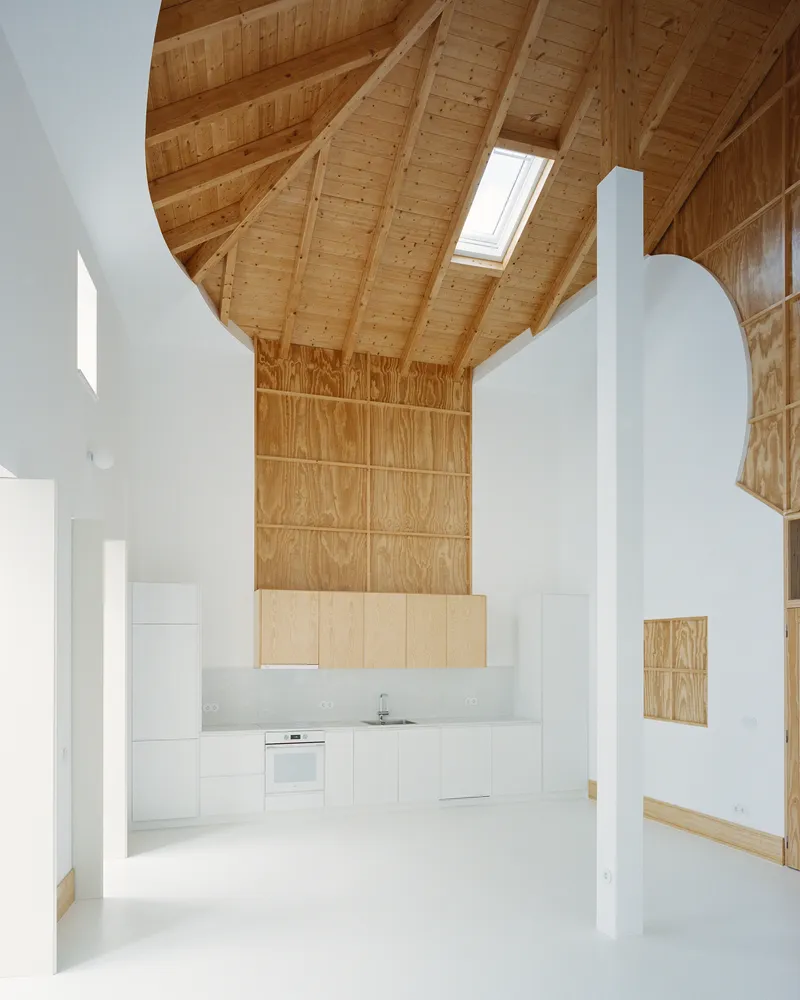
This is the most theatrical of the cuts. The pine roof is unfinished and warm, the plywood curves are precise and a little playful, and the contrast against the white walls below is the kind of move that makes you stop and look up. A small skylight is set into the highest point of the slope, dropping a single column of daylight onto the kitchen counter.
The Pillar
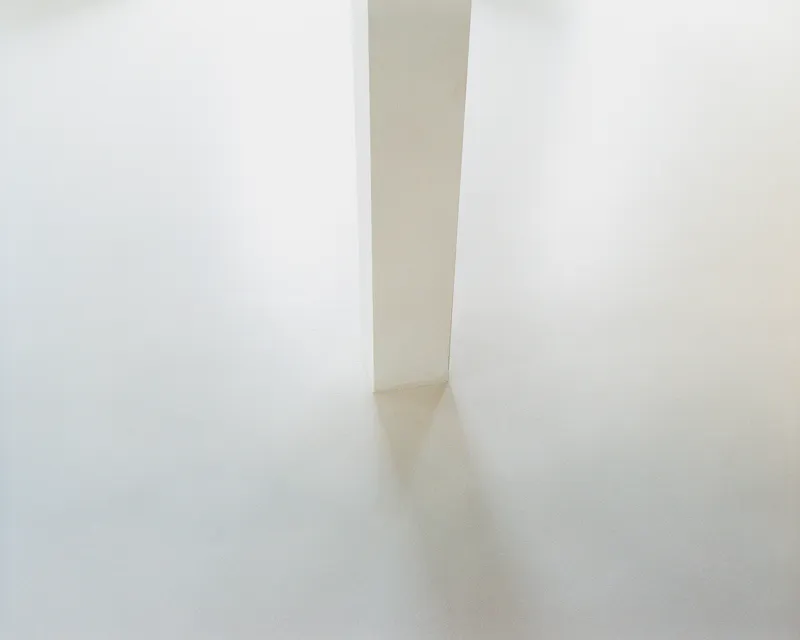
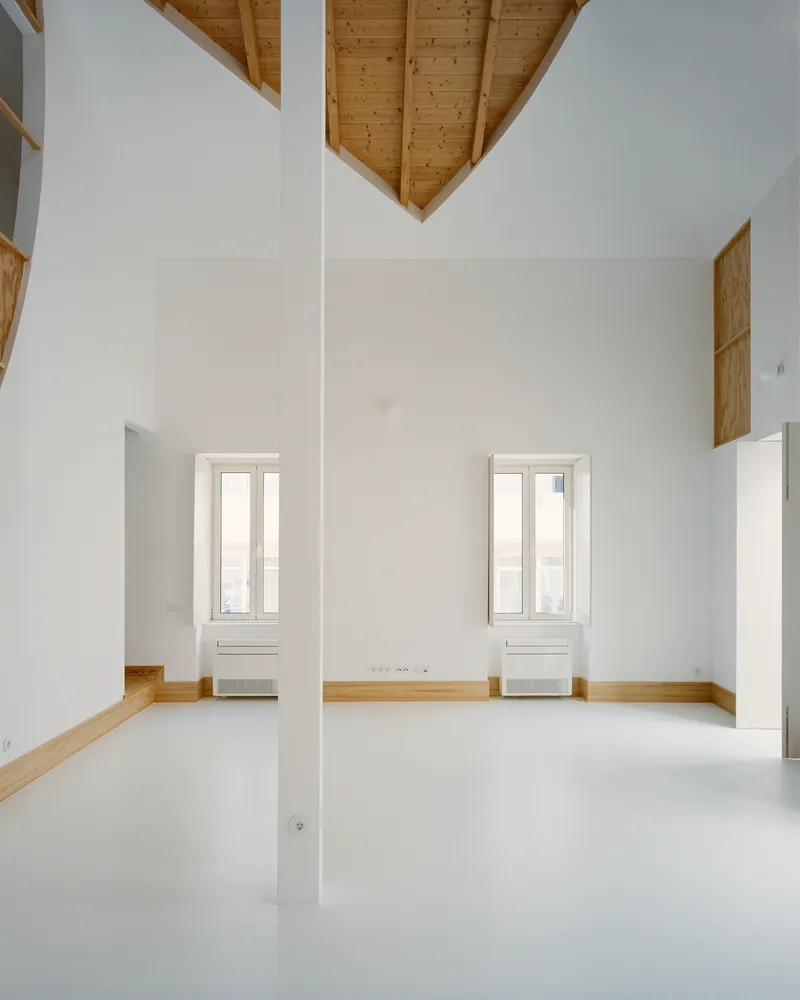
The single new pillar is the project's other defining gesture. A slim white column stands roughly in the middle of the open volume, doing the structural work of supporting the new roof while also dividing the floor visually into two zones. The pillar is unapologetic. It is not hidden inside a wall or disguised as part of the kitchen joinery. It stands in the room, on the polished concrete floor, like a piece of sculpture.
Most architects would have removed the original load-bearing walls and built a hidden steel beam. Corpo Atelier did the opposite. They made the new structural element visible and used its visibility as the spatial anchor of the whole interior. Walking around the pillar, you understand exactly how the new roof is held up and how the room is organised.
The Wall Cuts
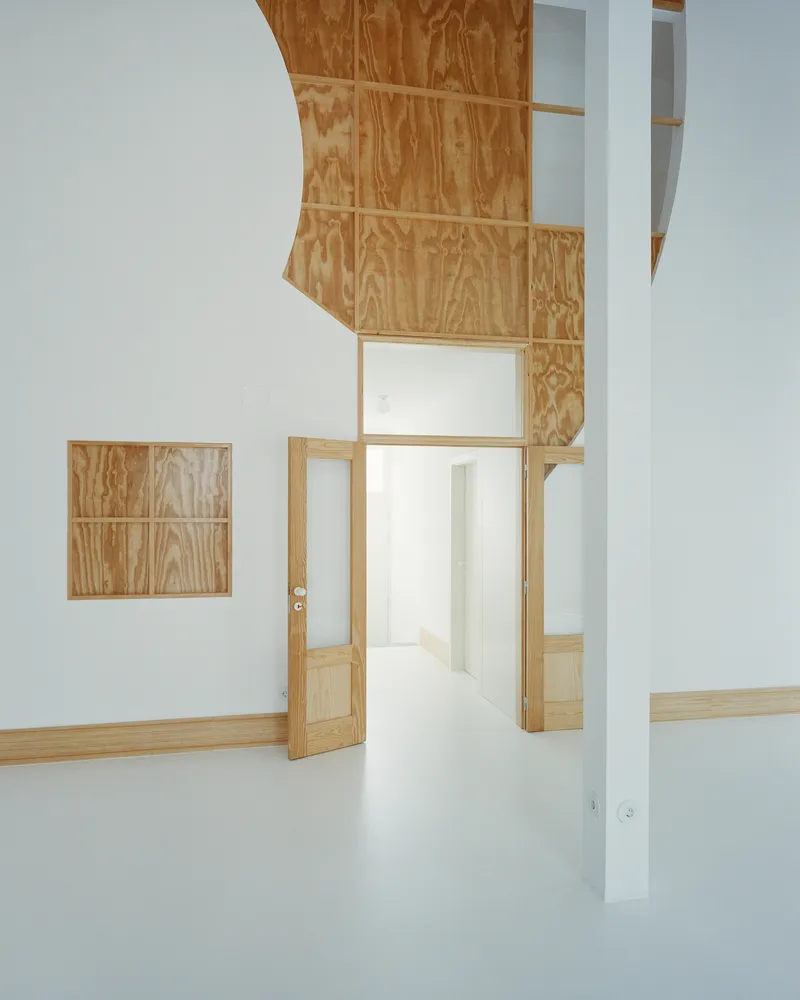
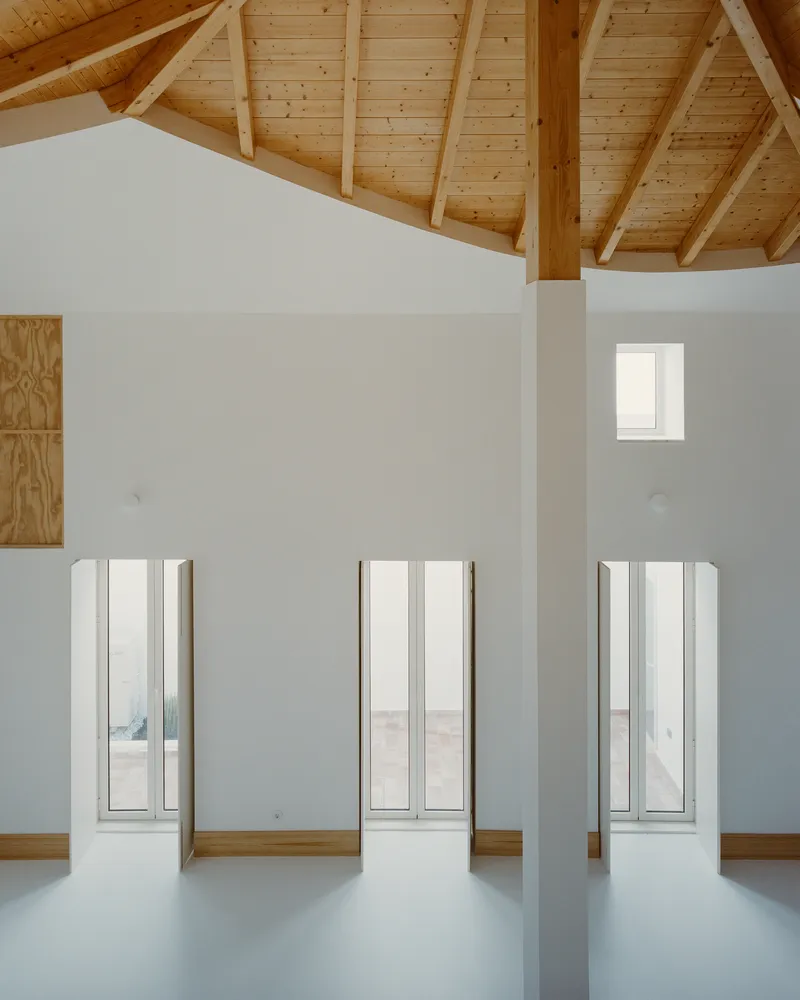
The third set of cuts happens in the walls. The architects opened the original masonry partitions in carefully chosen places, framing each cut with plywood and creating a series of partial connections between rooms. Some of the openings are square, some are tall and narrow, some are arched. The geometry varies depending on what is happening on the other side.
The white wall with three tall window slots is one of the project's quietest moments. The slots are framed with timber on the inside, the proportions are generous, and the light falling through them animates the otherwise empty room. This is exactly the kind of move that needs the rest of the project to be restrained, because if everything were a feature, none of it would register.
Inside the Bedrooms
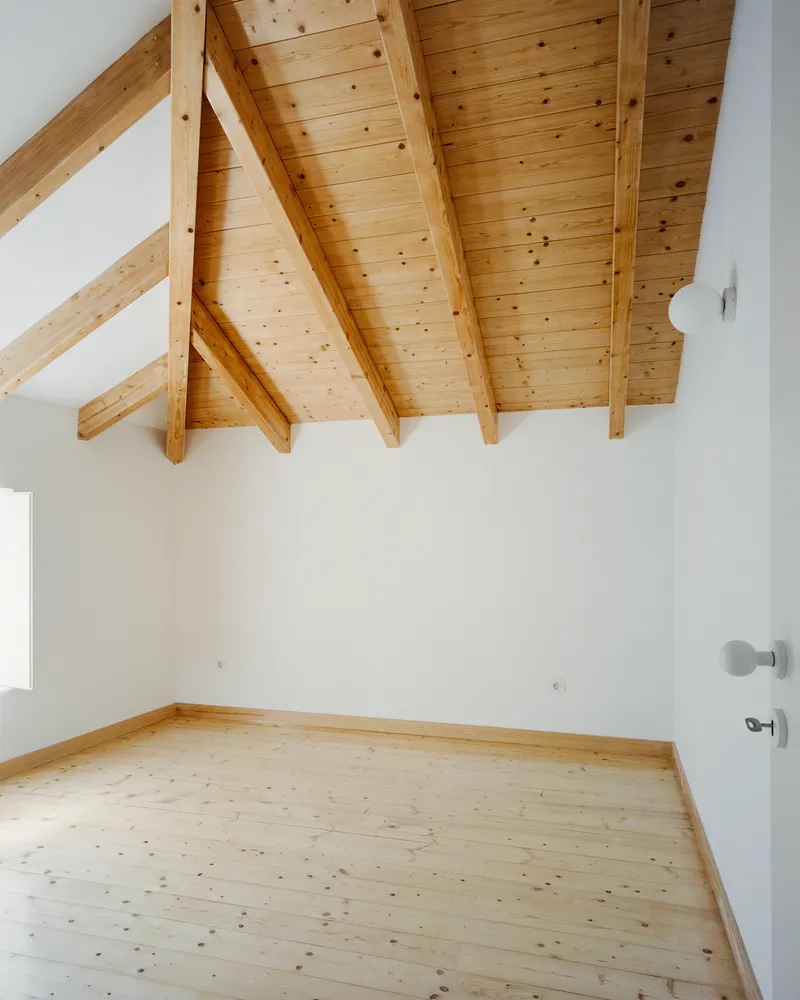
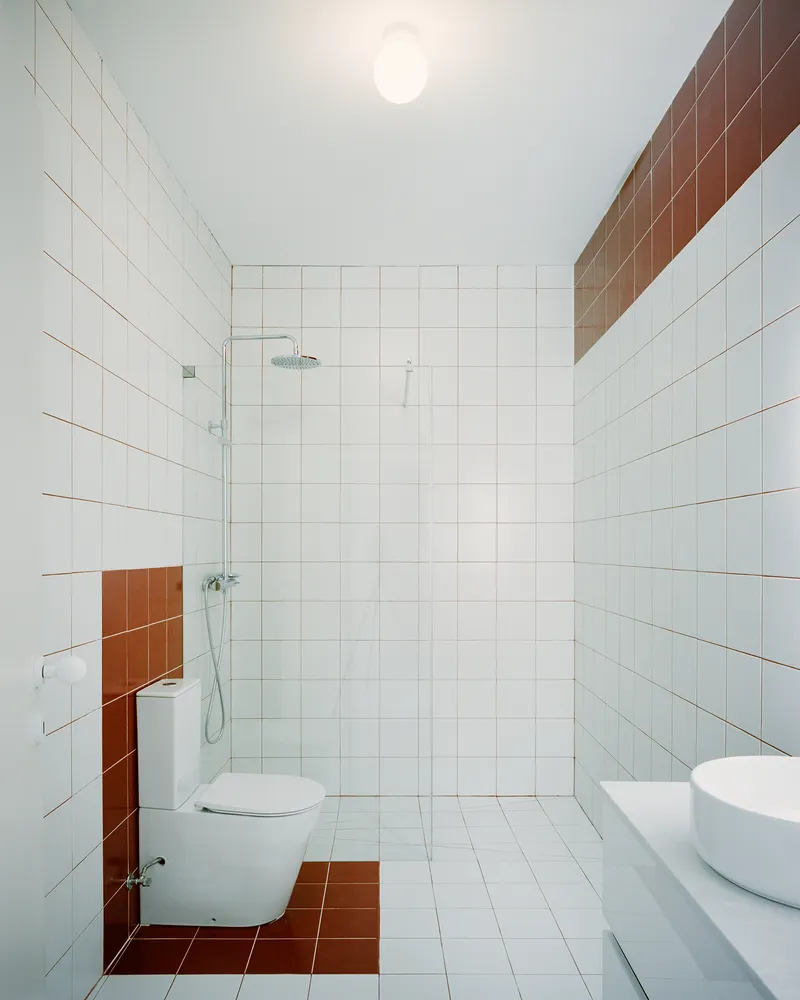
The bedrooms and bathrooms are quieter than the main living spaces. The bedroom photographed here sits under the pine roof, with the rafters exposed and a single small window letting in a slot of light. The bathroom uses square white tiles with terracotta accents to introduce a single warm colour into an otherwise neutral palette.
This restraint is essential. A house with a strong central architectural idea needs the secondary rooms to be calm, otherwise the whole project starts to feel like an installation rather than a place to live. Corpo Atelier got the balance right. The kitchen and living room are the architectural events. The bedrooms and bathrooms are where you sleep and shower.
Why This Project Matters
Most refurbishments of vernacular houses fall into one of two traps. They either gut the interior and add a generic contemporary kitchen-and-bedroom layout, or they preserve everything in amber and end up with a museum that no one wants to live in. Cut(outs) House does neither. It keeps the facade because the facade is worth keeping, and it remakes the interior with a small number of decisive moves: a new timber roof, a single visible pillar, a few framed wall openings, and a polished concrete floor.
The lessons are transferable to anyone working on small heritage refurbishments. Decide what you are keeping. Decide what you are adding. Make the additions visible rather than hidden. Use one or two materials at the highest possible quality. Trust the existing facade to do the work it was designed to do. Corpo Atelier has produced a small project that is unusually easy to learn from, and the photographs by Francisco Ascensão show the result with the calm precision the architecture deserves.
Drawings
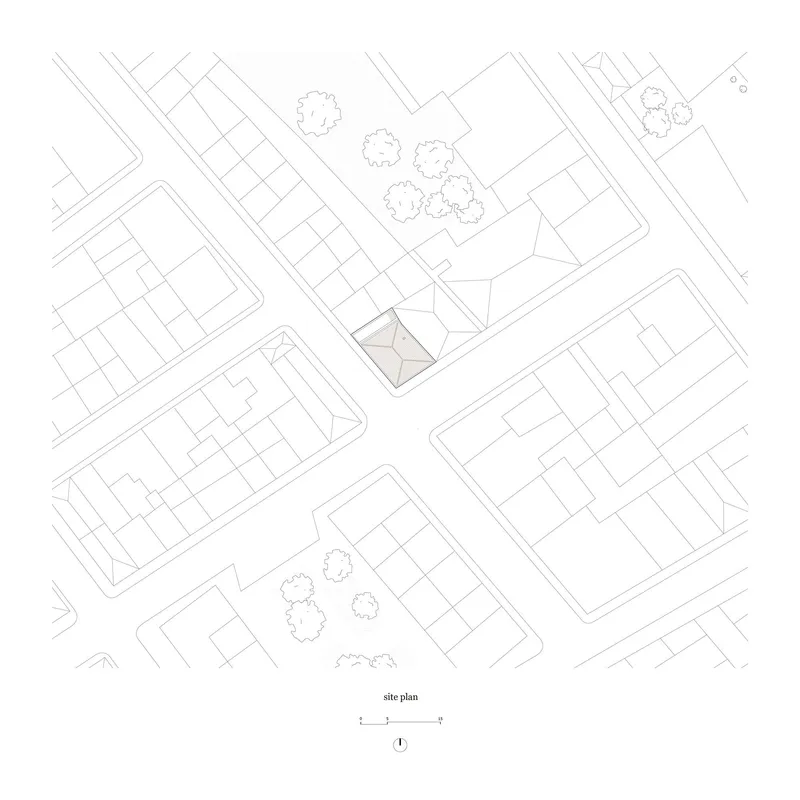
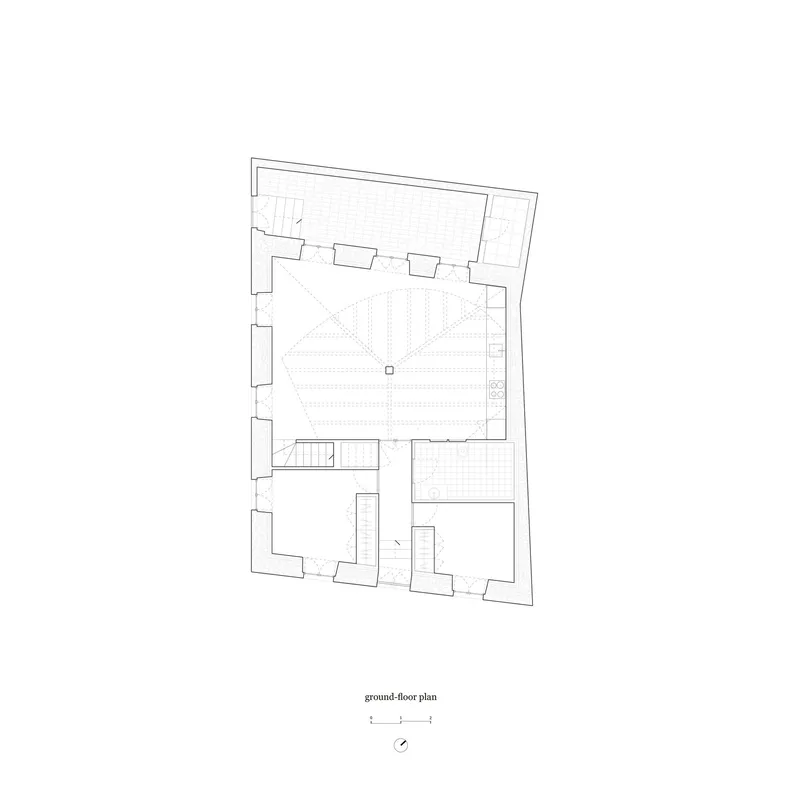
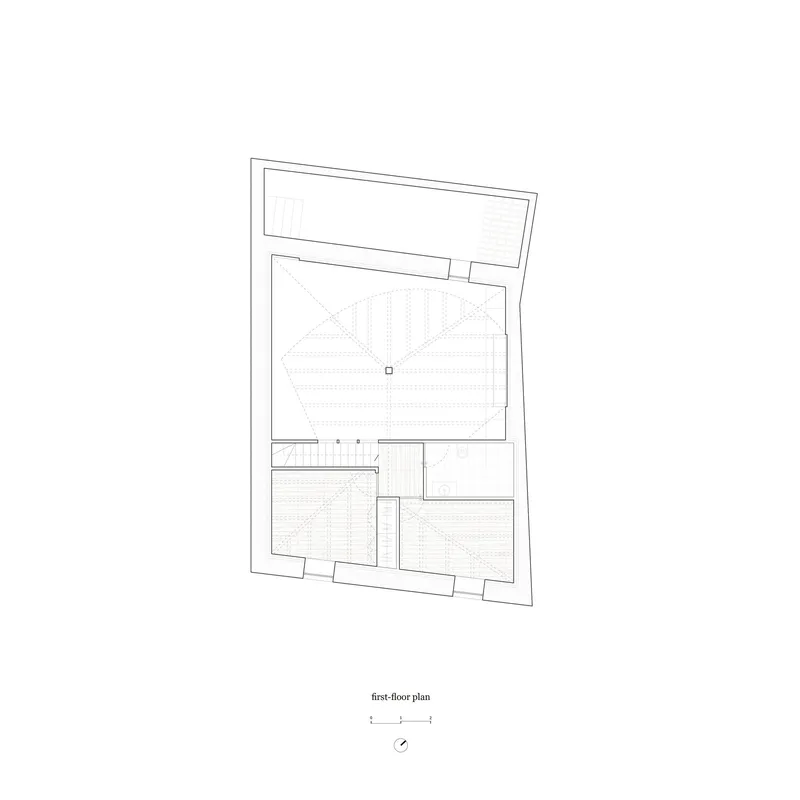
The plans explain the cuts. The circular and fan-shaped geometries inscribed on the ground-floor plan are the outlines of the new ceiling and wall openings, drawn as if the ceiling were a lid on the rooms below. The first-floor plan shows the same geometries from above, where the structure sits.
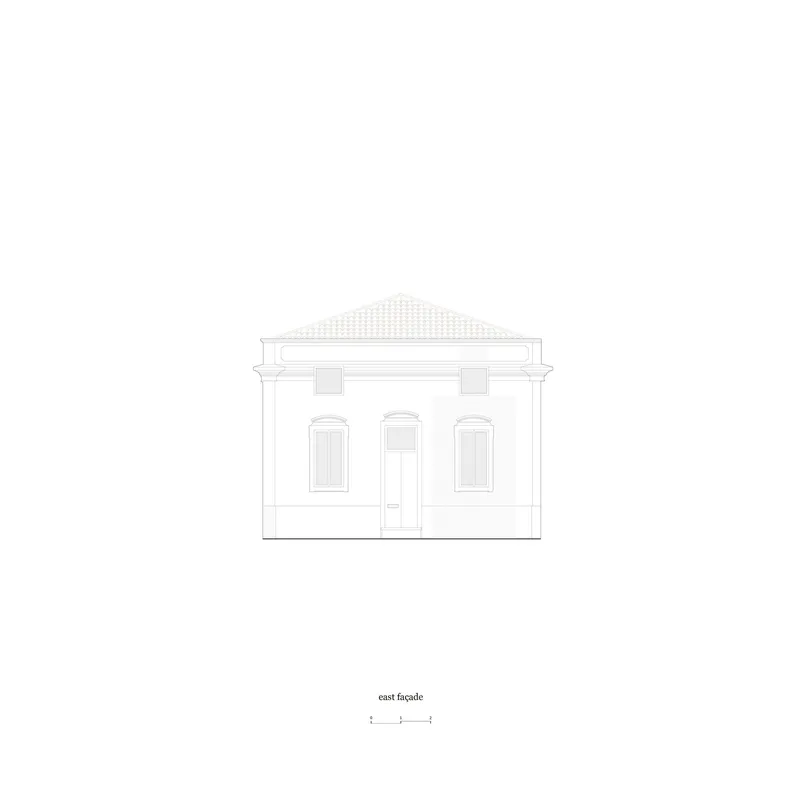
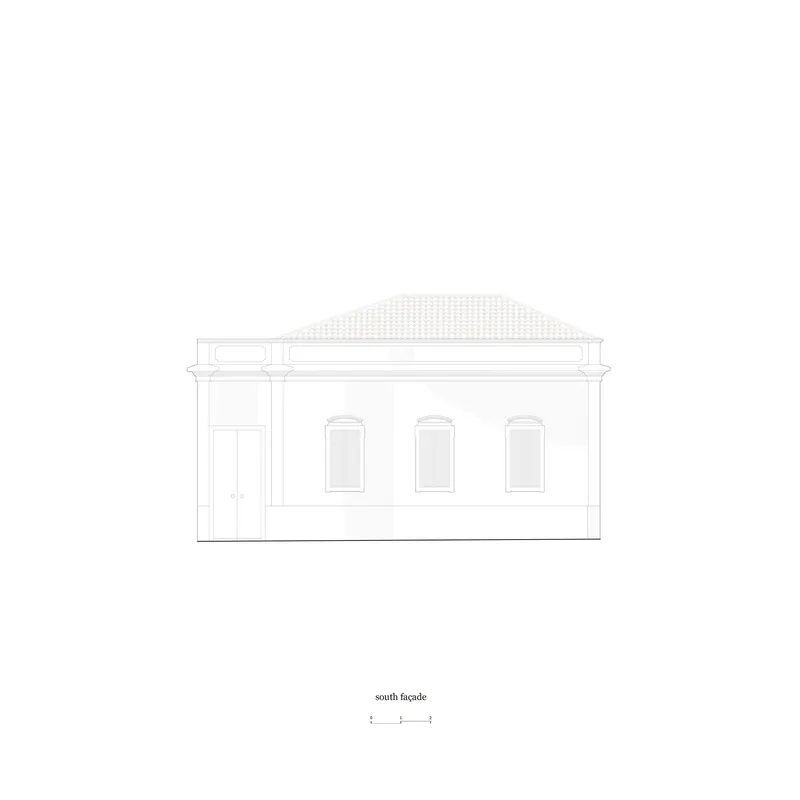
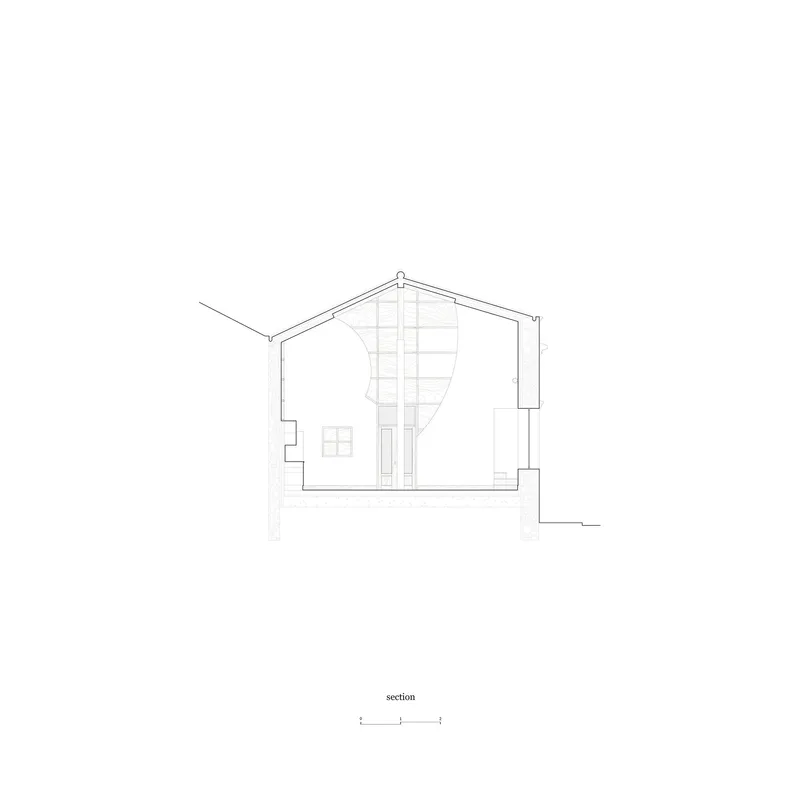
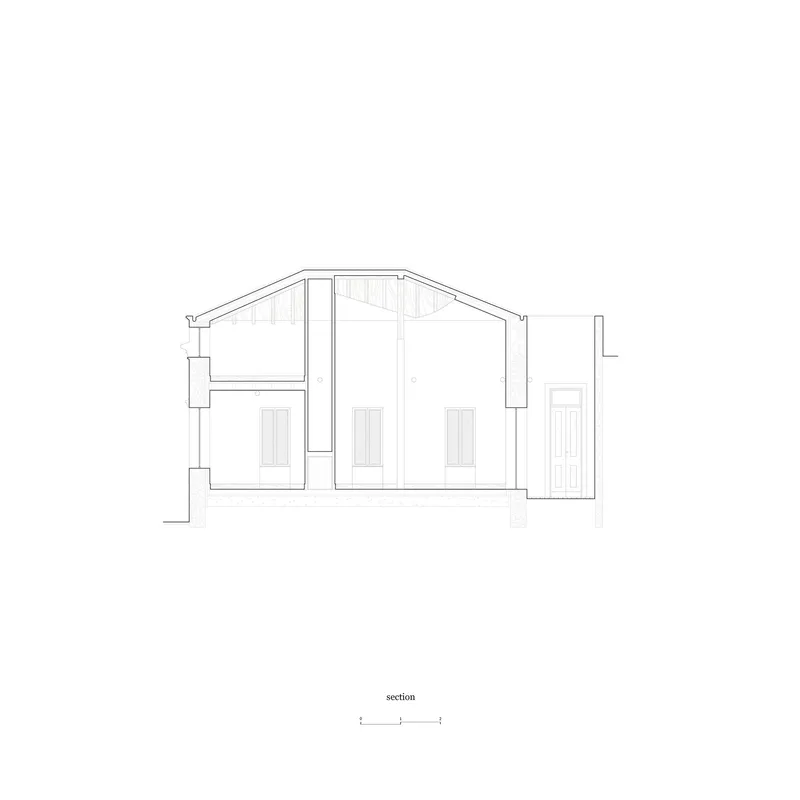
The sections are the most revealing drawings. You can see how the new pine roof structure sits inside the original walls, how the curved plywood wall wraps around the main space, and how the single pillar carries the new load. The facade elevations, drawn in a deliberately pale line, confirm how little was changed on the outside.
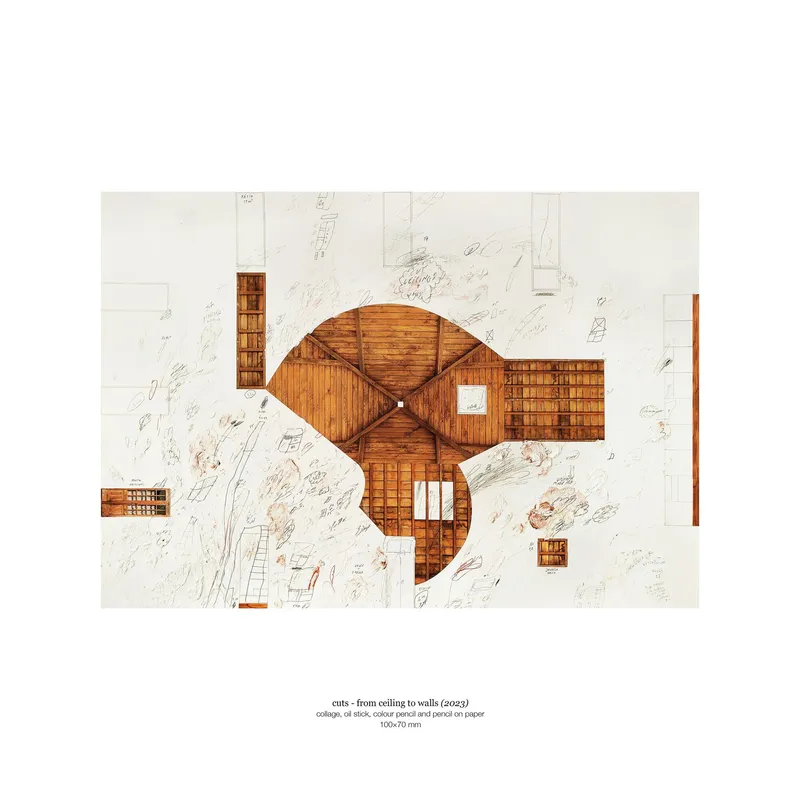
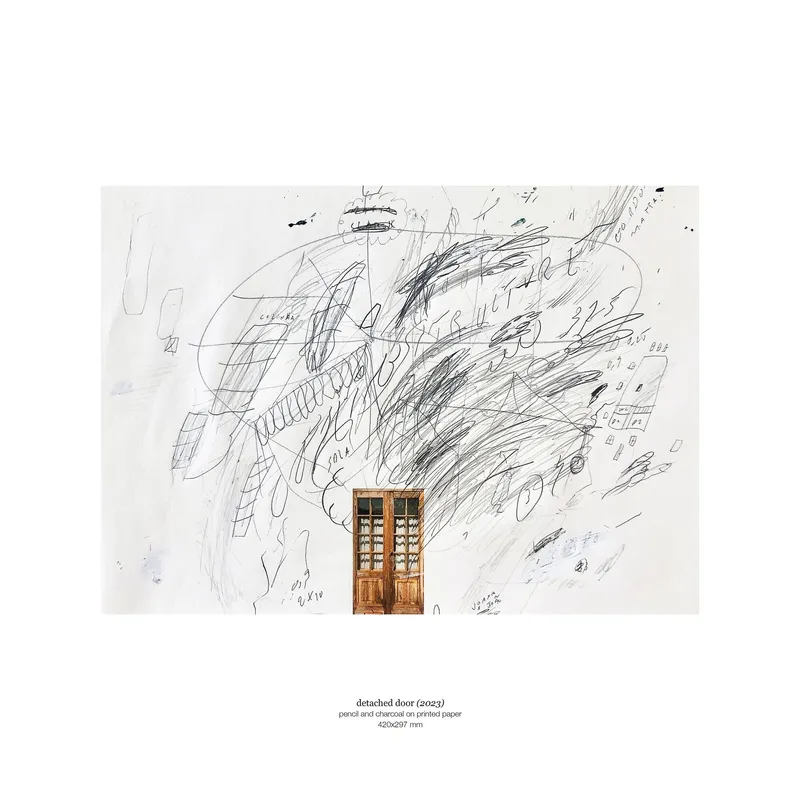
Two concept drawings by Corpo Atelier are worth including alongside the technical sheets. The collage Cuts — from ceiling to walls works out the geometry of the new openings on paper, and the Detached Door drawing explores how a preserved vernacular element can be pulled free of its original context.
About the Studio
Share Your Own Work on uni.xyz
If you are working on heritage refurbishment, residential conversion, or vernacular architecture projects, uni.xyz is a place to publish your work, find collaborators, and enter design competitions.
Project credits: Cut(outs) House — Ceiling, Walls and Pillar by Corpo Atelier. Faro, Portugal. 150 m². Completed 2025. Project team: Filipe Paixão, Diogo Silva, Theodora Skillo. Photographs: Francisco Ascensão.


Popular Articles
Popular articles from the community


Juan García Correa, John González and Claudia Rueda Sink a Circular Amphitheater into a Manizales Engineering Building
On the La Nubia campus in Manizales, Colombia, the S1 Building folds labs and offices into a hillside of ramped lawns that double as a campus route.

David Ortega Stacks a Two-Story Mexico City Penthouse Around a Steel Stair and a Pergola-Shaded Roof Terrace
In Colonia Roma, a 300 m² penthouse uses oak joinery, a planted steel stair and a slatted roof pergola to make a new-build apartment feel like a house.

David Macias Steps a Doorless Stone and Plaster House Down a Tropical Colombian Hillside
In the humid hills of Colombia, Threshold House replaces the front door with an open void and terraces its 850 m² down the slope instead of fighting it.

LT2A and OPEN Architectes Thread a Brick and Glass High School Through a Wooded Belgian Campus
In Braine-l'Alleud, a 3,000 m² wing for Collège Cardinal Mercier pairs pale brick with a glazed colonnade, deferring to a small chapel and a dense wood.

Similar Reads
You might also enjoy these articles


LAVA Architecten Gives Vocational Education a Sawtooth-Roofed Face on a Mechelen School Campus
In Mechelen, Belgium, a 2,053 m² STEM school on a 6×6 m grid turns workshops and classrooms into rooms that can be rearranged as teaching changes.

KEMA Studio Turns a Derelict Marvila Attic into a 60 m² Lighthouse Apartment Above Lisbon
In Lisbon's Marvila district, a rebuilt roof, four skylights and two plywood volumes turn an unlivable attic into a bright home facing the Tagus.

Pixel Gardens: One Repeated Module Stacked Into a Terraced Social Housing Tower for Famagusta
Salem Bader's shortlisted housing tower builds a vertical neighbourhood from one repeated module, offsetting units to carve terraces, light and air.

Bao Huynh Watercolor Atelier: A Serene Art Retreat in Hội An
Bao Huynh Watercolor Atelier in Hội An blends multifunctional art spaces, sustainable design, local materials, and family-friendly living in a serene environment.

Explore Interior Design Competitions
Discover active competitions in this discipline

Challenge to design mud housing for contemporary communities

Challenge to design luxury tourism on rails

VR headsets Storefront design competition

Designing a staircase for a client
Comments (0)
Please login or sign up to add comments
No comments yet. Be the first to comment!