
DAFdf Arquitectura Threads a Concrete and Timber House Through the Pines of Valle de Bravo
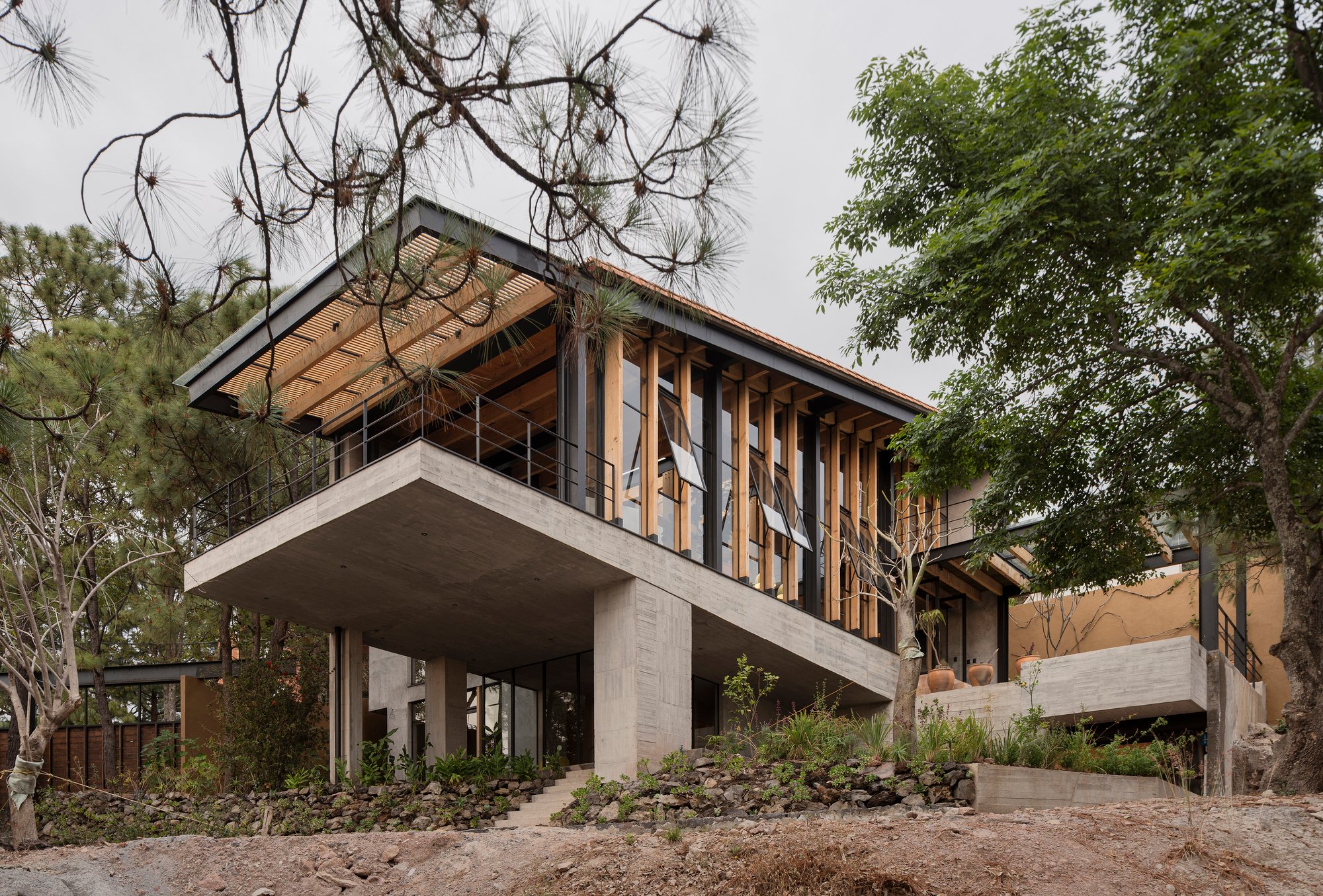
A 425-square-meter hillside residence in central Mexico hovers over rocky terrain on a cantilevered concrete platform among pine canopies.

Valle de Bravo sits at roughly 1,800 meters above sea level in the mountains west of Mexico City, a lakeside town ringed by steep, forested slopes that have attracted weekend houses for decades. Most of those houses play it safe: they flatten a pad, build a box, and frame a view. DAFdf arquitectura y urbanismo, led by Gabriela Bojalil and Paul van der Voort, chose a more combative path with Casa Valle. They accepted the site's irregular polygon and severe grade change as co-authors of the design, letting the topography and the existing pines dictate where the building could and could not go.
The result is a house that reads less like an object placed on a hillside and more like an event that occurs within one. A concrete platform launches forward past the tree canopies, hovering above the slope rather than reshaping it. Behind that platform, vertical planes of glass, steel, and wood rise between the trunks, so the structure seems threaded into the forest rather than cleared from it. At 425 square meters the program is generous, yet the house never announces its full volume at once. You discover it in pieces as you climb.
Arriving Through the Canopy
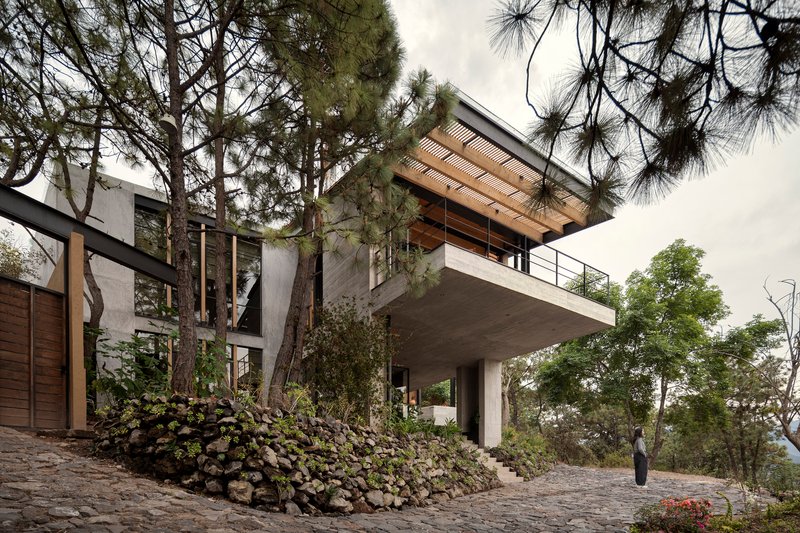
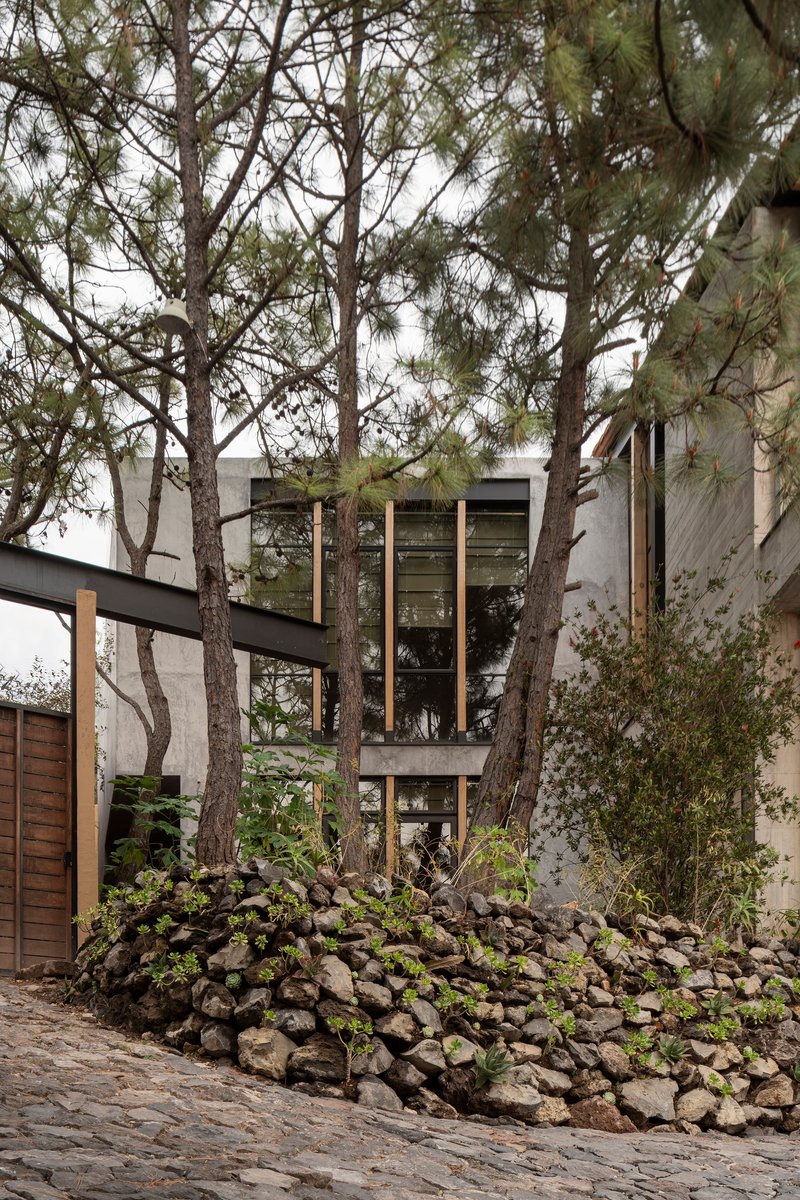
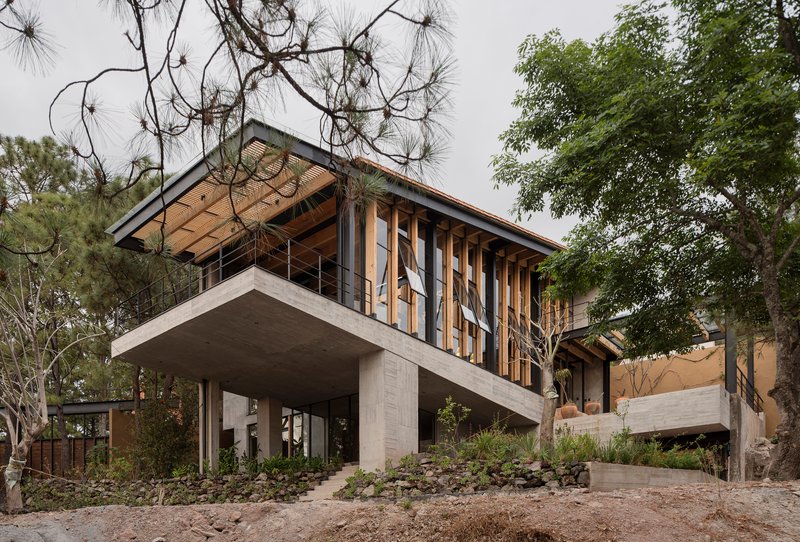
Approach is everything here. A steep ascent brings you to the entry level, where a stone retaining wall holds back the grade and board-formed concrete rises to meet tall glazed openings framed by existing pine trunks. The cantilevered terrace, finished with a timber slatted soffit and simple metal railing, projects out among the trees at a height where you are eye-level with the canopy rather than looking up at it. The vertical timber louvers on the upper volume filter light and views selectively, giving the facade a rhythmic grain that echoes the surrounding trunks.
What's notable is how the architects avoided a single heroic gesture. The cantilever is confident but not theatrical. The concrete reads as mass, yet the openings prevent it from feeling heavy. And the stone base ties the structure visually to the rocky slope beneath it, making the transition from ground to architecture almost geological.
A Double-Height Core That Organizes Everything
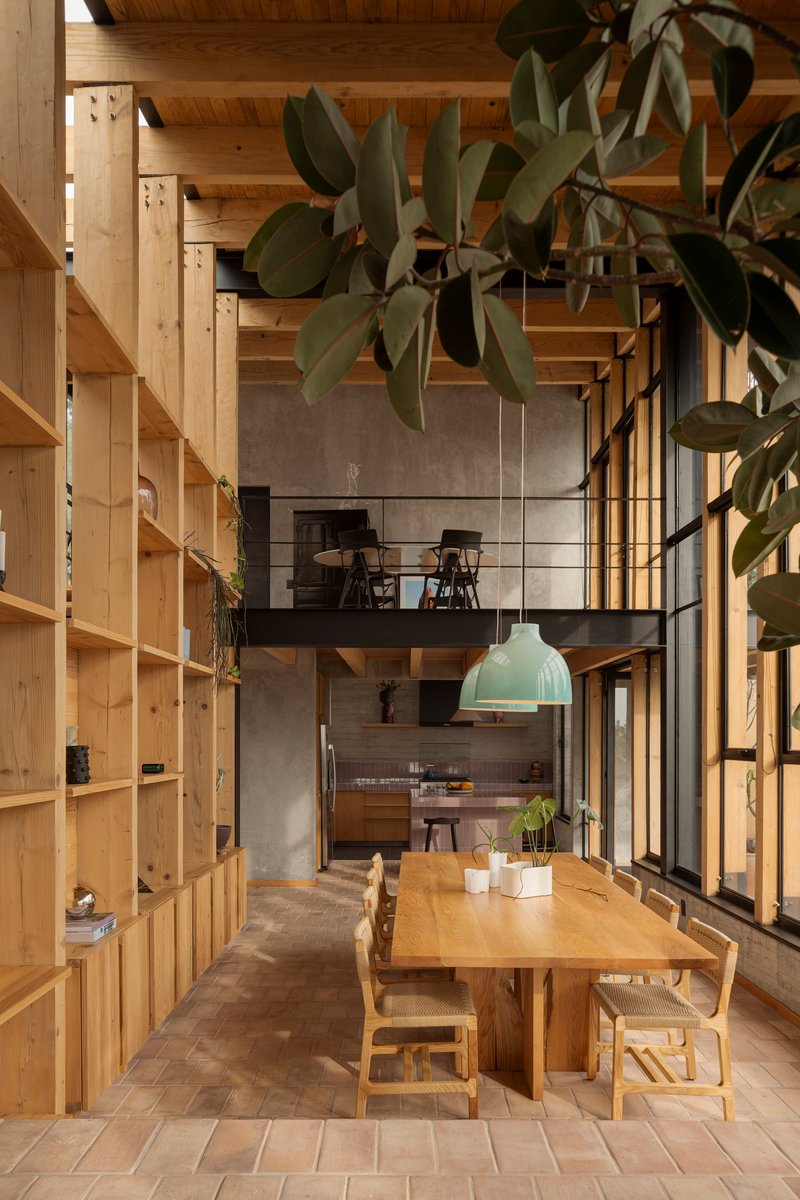
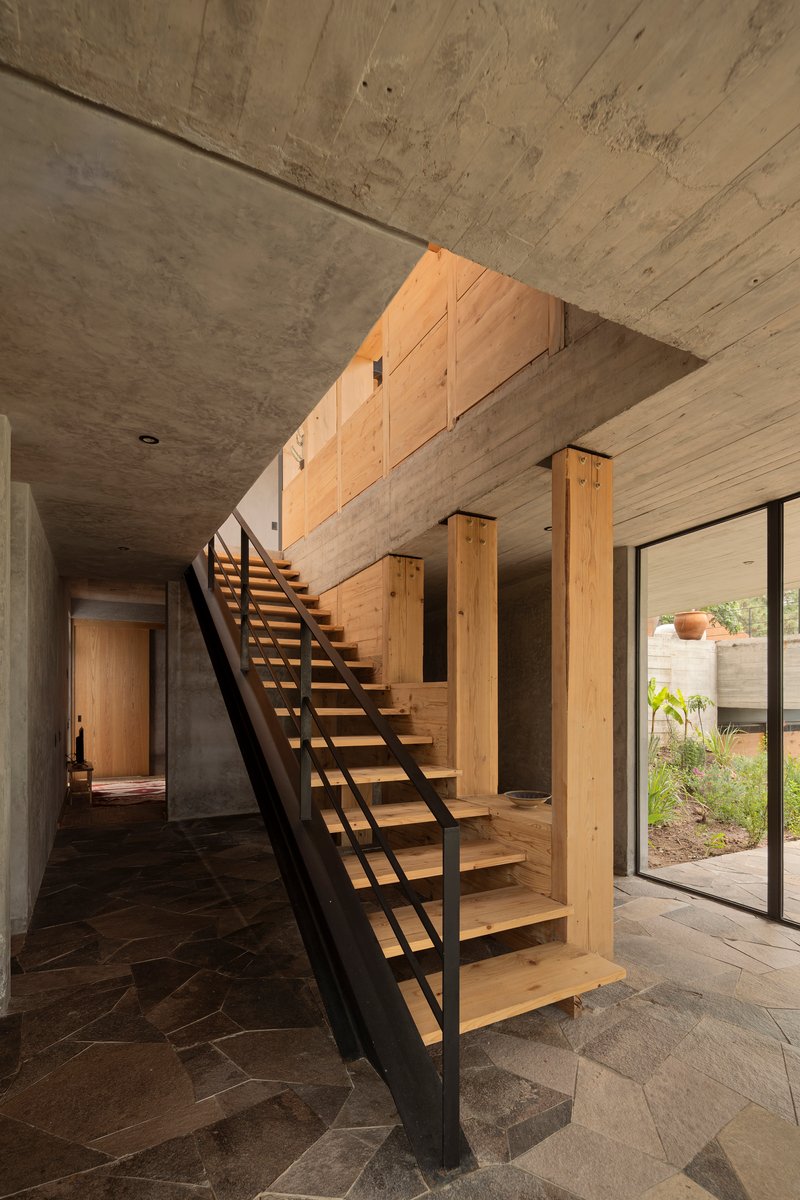
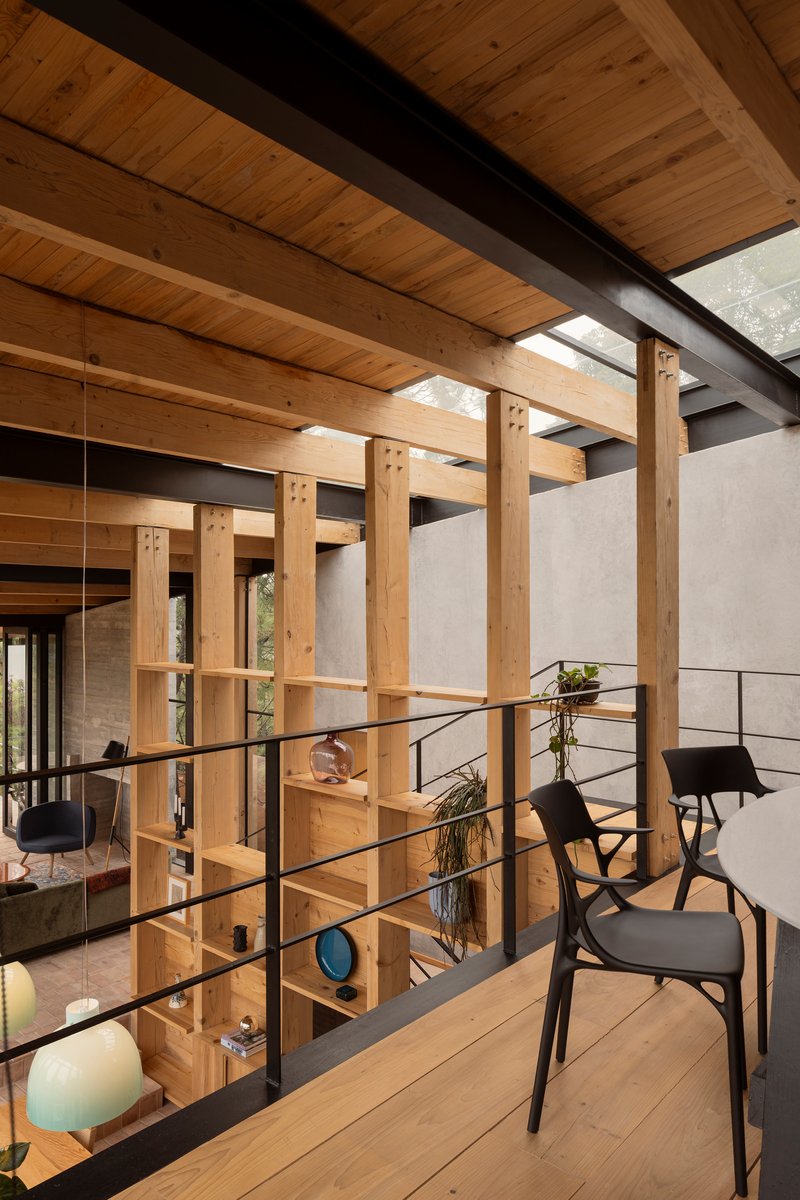
The interior pivots around a double-height dining and living zone that connects the two main levels vertically and visually. A wall of floor-to-ceiling plywood shelving acts as both spatial divider and library, while a suspended metal mezzanine with a potted rubber plant creates an inhabited threshold overhead. The open-tread timber staircase, carried on black metal stringers against board-formed concrete walls, reinforces the material honesty that runs through the project: every structural element is left exposed and legible.
DAFdf treats the stair not as a utilitarian connector but as a sculptural spine. Skylighting washes natural light down the concrete walls beside it, and the clay tile flooring at the corridor level grounds the palette in a warm, earthy tone. The upper-level metal railing and timber shelving screen continue the theme of layered transparency, letting sightlines pass through while still defining discrete zones.
Living at the Tree Line
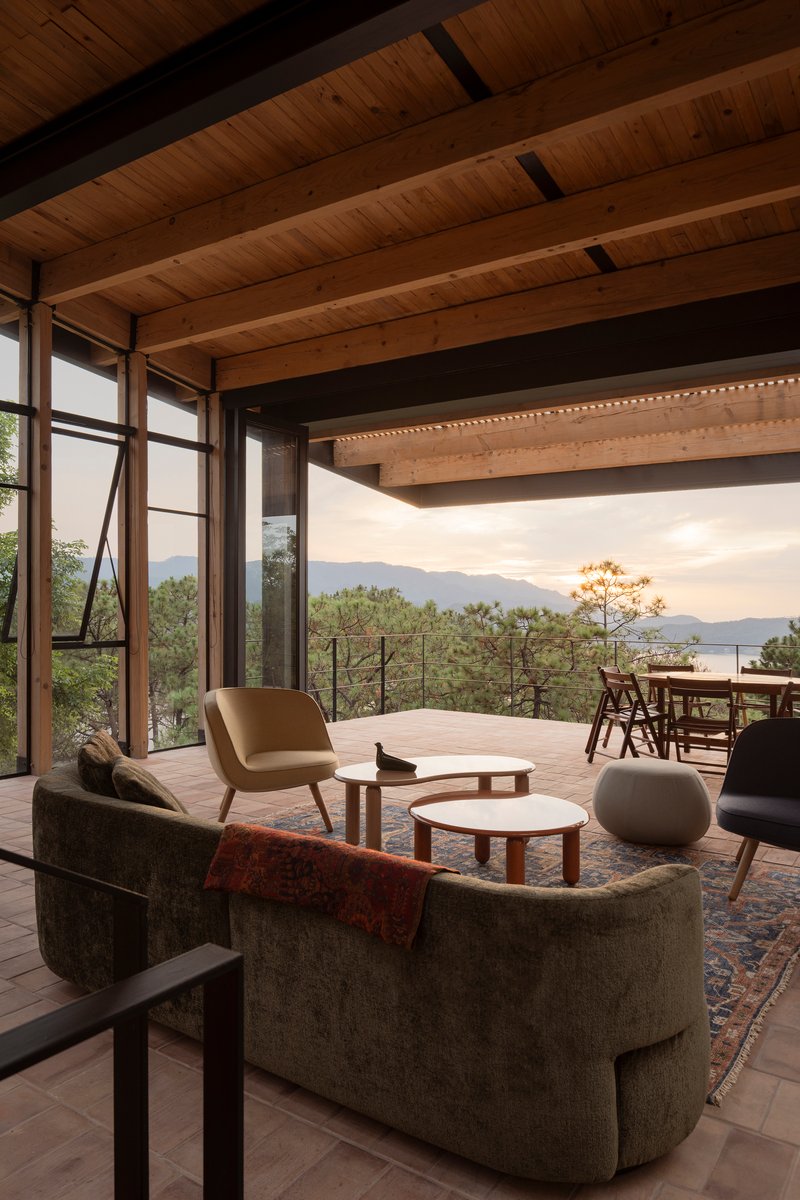
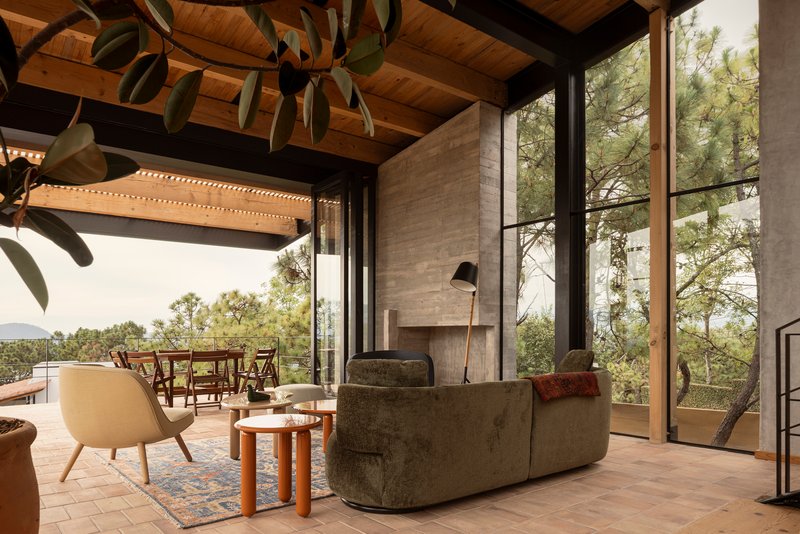
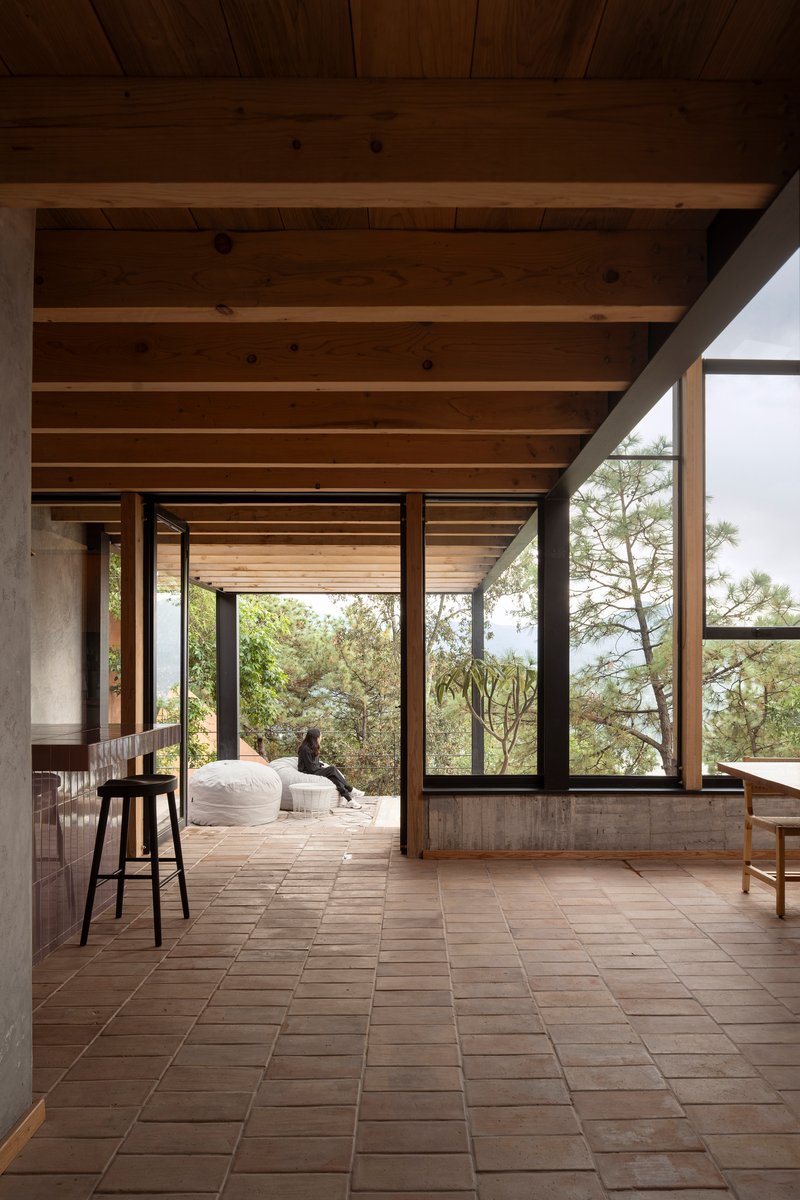
The primary living spaces orient themselves outward with a conviction that borders on recklessness. A curved sofa faces steel-framed windows that dissolve the wall plane entirely at dusk, pulling distant mountain silhouettes into the room. Elsewhere, the living area opens onto a clay-tile terrace where exposed timber beams and steel-framed glazing create an intermediary zone between inside and forest. The effect is not panoramic in the postcard sense; it is immersive, because the pine trunks remain in the foreground, refusing to let you forget where you are.
The steel framing is worth noting. Rather than minimizing the mullion profiles to chase invisibility, DAFdf gives them enough presence to read as a drawn grid against the landscape. It is an honest acknowledgment that a window is a piece of construction, not a magic trick.
Material Palette: Concrete, Timber, and a Flash of Pink
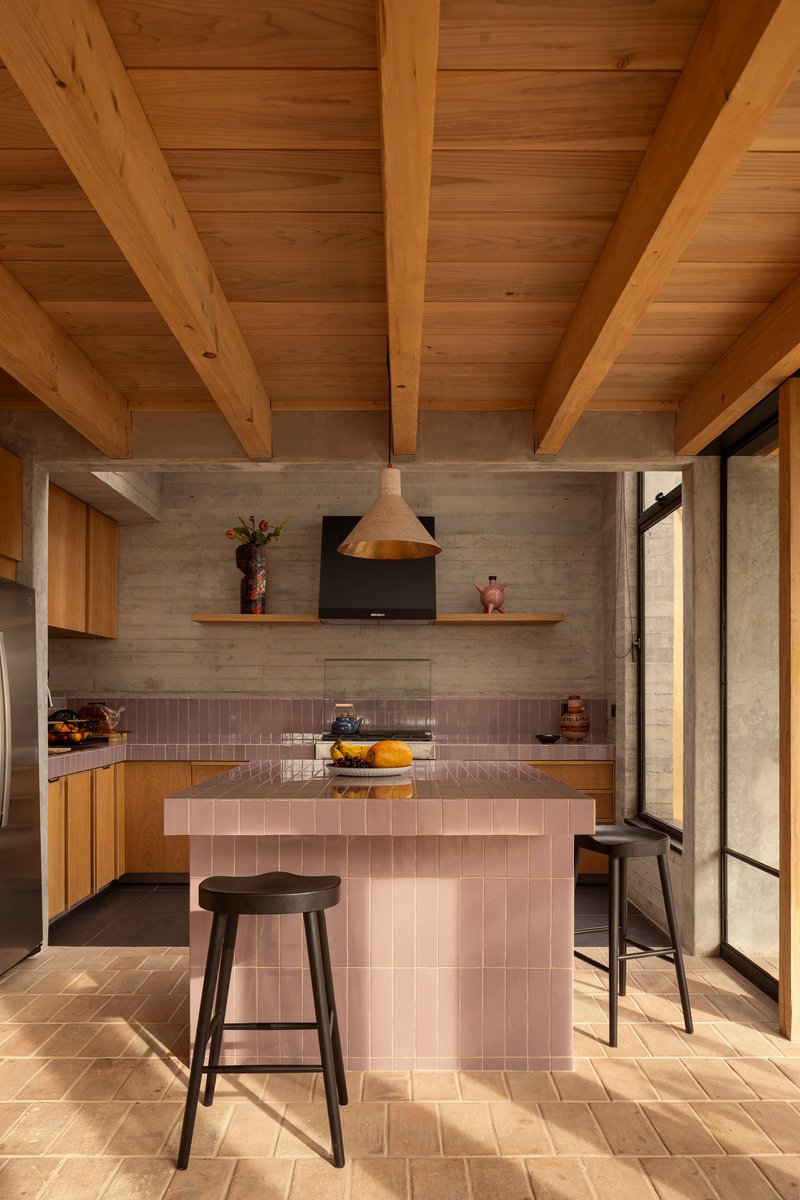
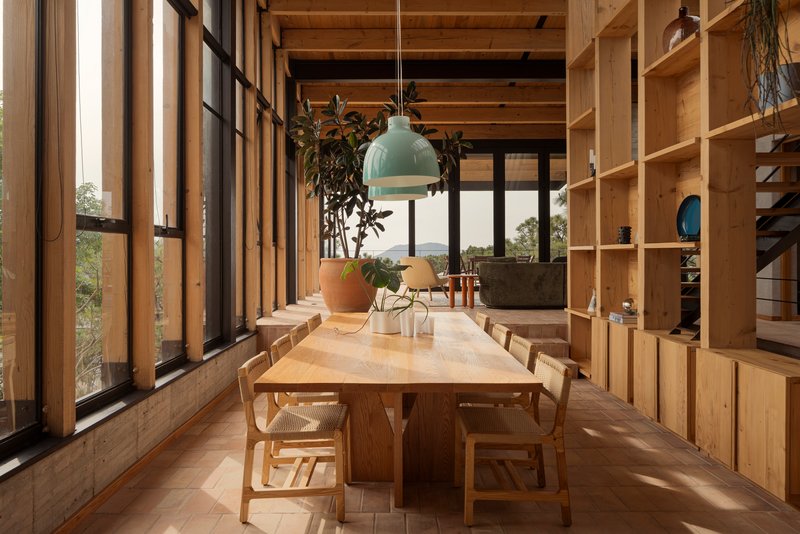
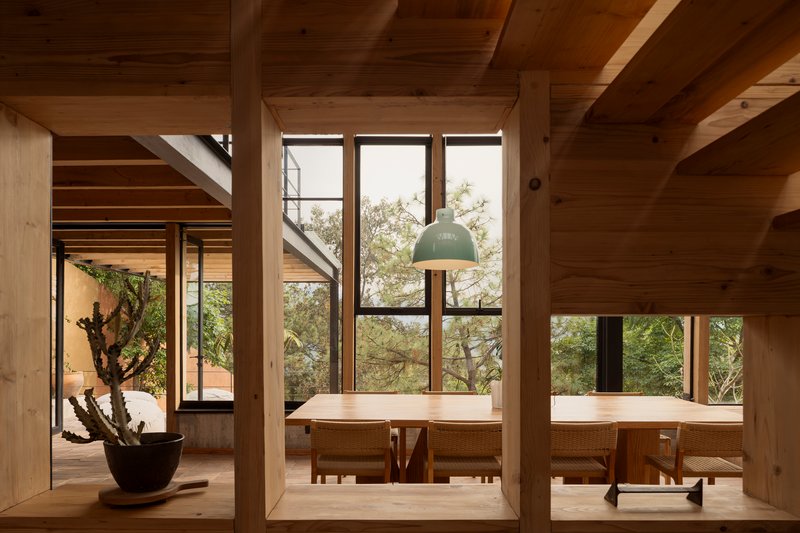
The kitchen delivers the project's most playful moment: a pink-tiled island, supplied by Interceramic and Kolorines, set against a board-formed concrete backsplash under an exposed timber joist ceiling. It is a controlled burst of color in a house that otherwise operates within a restrained register of grey concrete, warm wood, and black steel. The dining nook nearby reinforces the quieter end of that spectrum, with built-in timber benches tucked beneath tall windows framed by exposed wood columns and beams.
Throughout the interiors, the ceiling plane does the heaviest atmospheric lifting. Timber planks and joists run continuously, unifying rooms that shift in proportion and orientation. The wood is left in a natural finish that will patina over time, linking the interior climate to the pine forest outside in a way paint never could.
Courtyards, Pools, and the In-Between
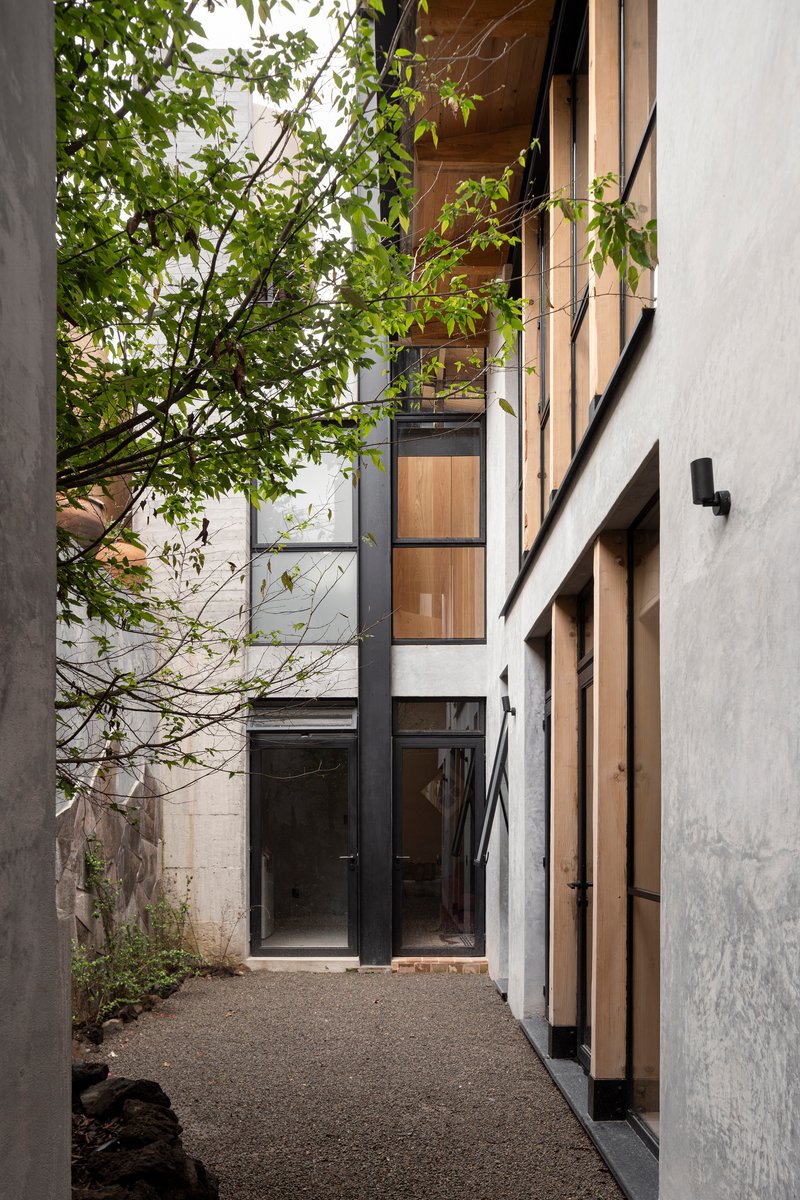
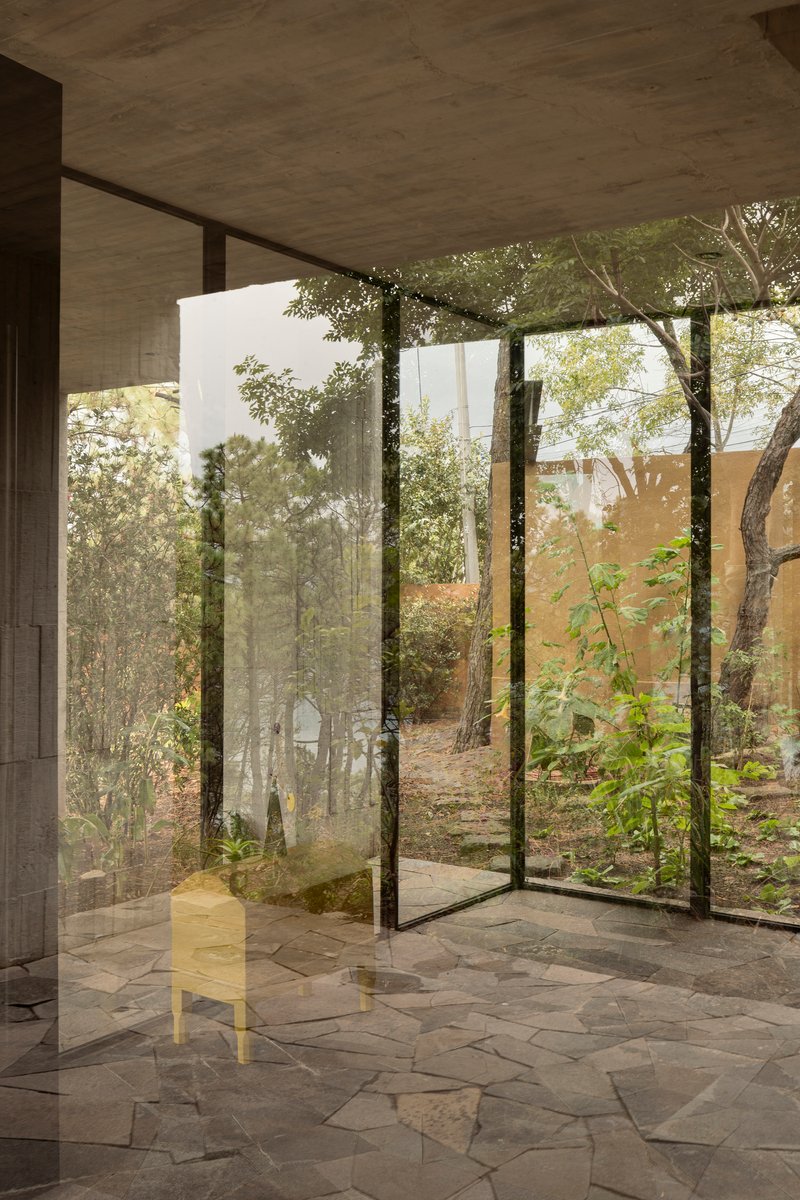
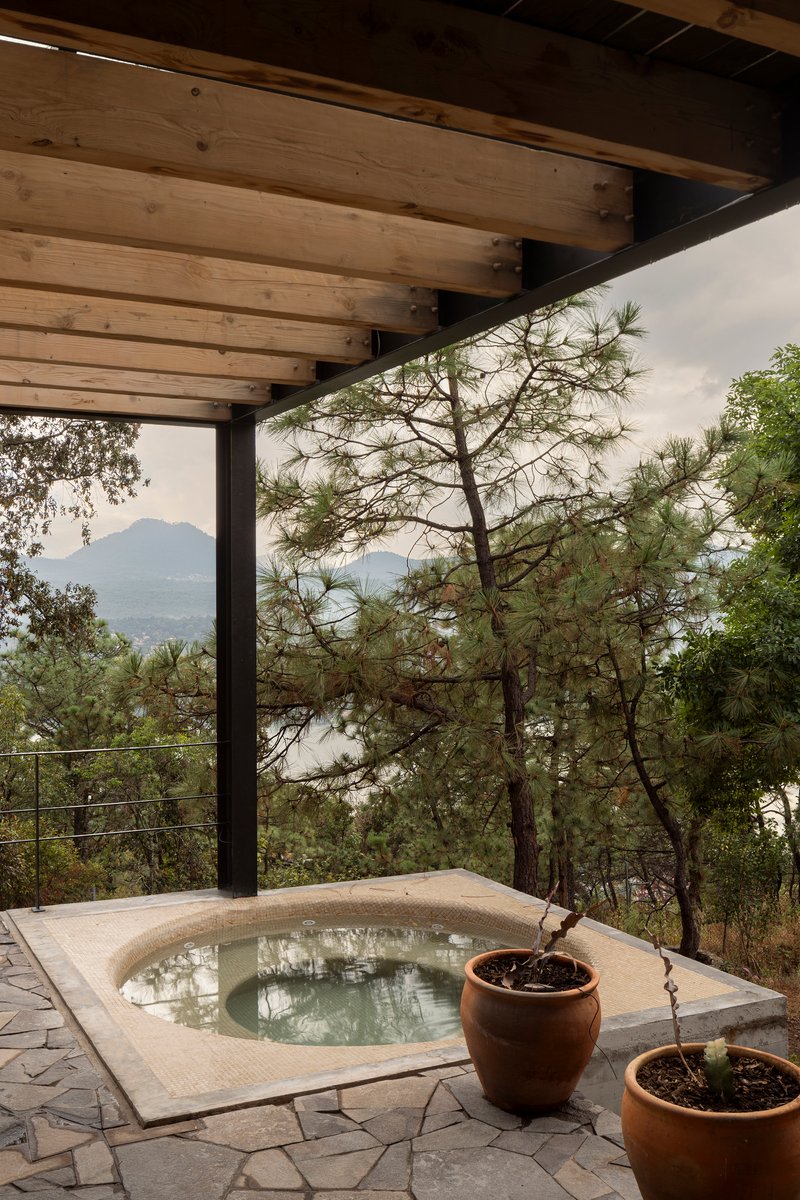
For a house on a steep slope, Casa Valle is remarkably generous with outdoor space at grade. A gravel courtyard framed by rendered walls and glazed timber doors captures a leafy tree at its center, offering a sheltered pause before the terrain drops away. At the opposite end of the experience, a sunken stone-clad plunge pool occupies a terrace framed by timber beams and cable railing, overlooking the forested hills below. Between these two conditions, a floor-to-ceiling glass corner opens onto a planted courtyard where existing trees push up through stone paving.
These exterior rooms are not afterthoughts. They negotiate the grade changes that the main volume cannot absorb, and they bring light and air deep into the plan. The gravel courtyard in particular functions as a decompression chamber: after the steep climb up, you arrive in a calm, shaded enclosure before the house reveals its outward views.
Private Quarters
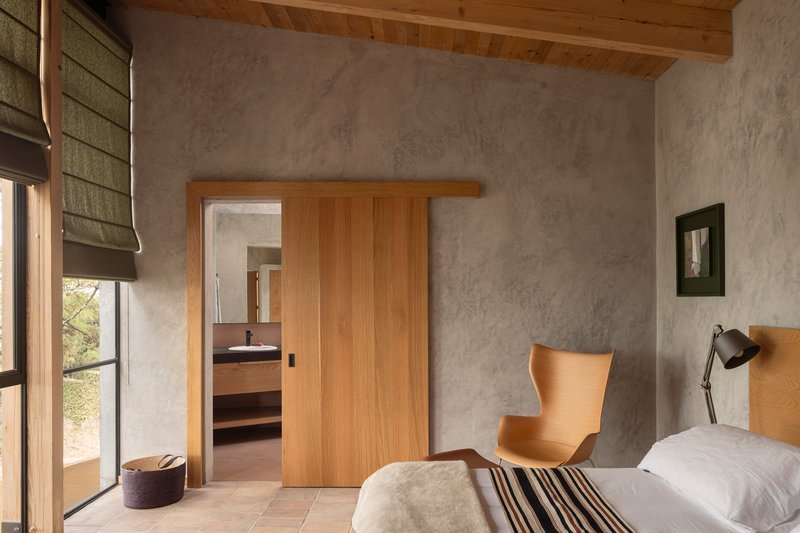
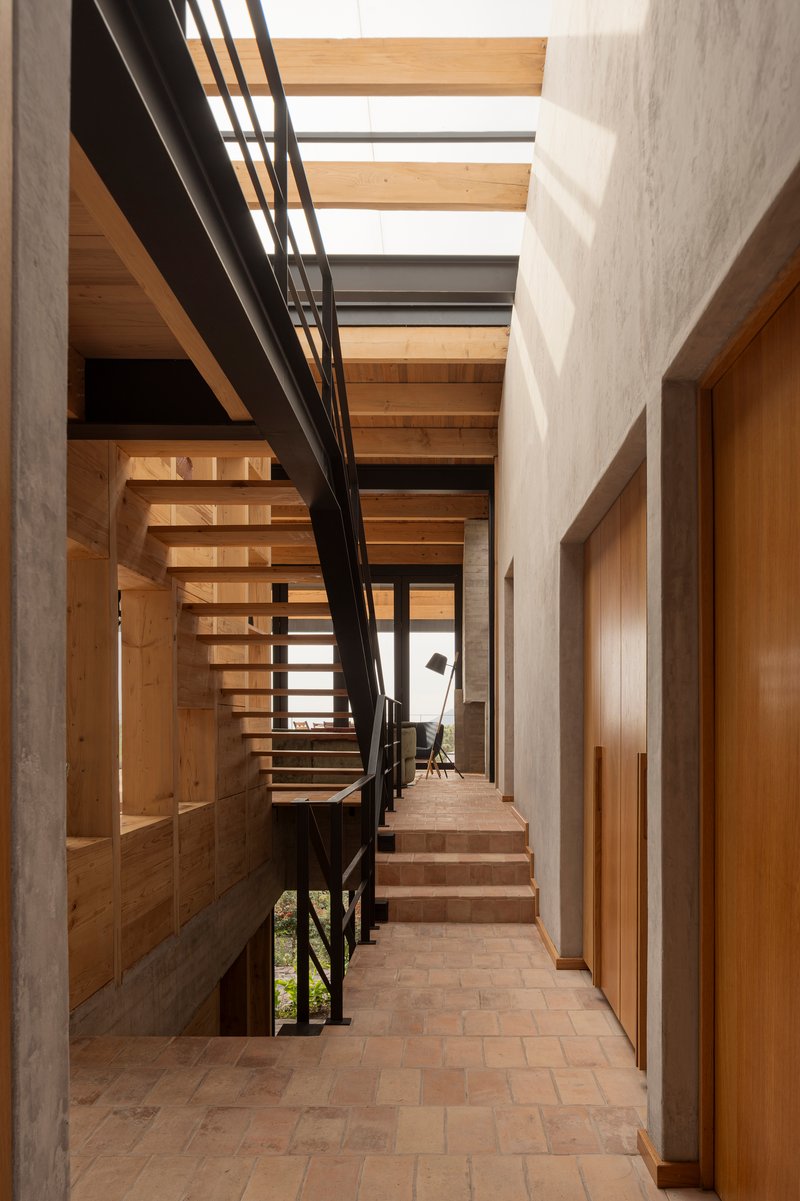
The bedrooms retreat from the drama of the public spaces. Sliding timber doors separate sleeping areas from en-suite bathrooms, and the exposed wood beam ceiling continues here at a more intimate scale. The corridor connecting these rooms is lit from above by natural skylighting that falls along the concrete walls, turning circulation into a quiet event of its own. There is no drywall anywhere; the materials remain consistent from the most public room to the most private, which gives the entire house a structural legibility that many residential projects abandon once you pass the threshold of the bedroom wing.
Plans and Drawings
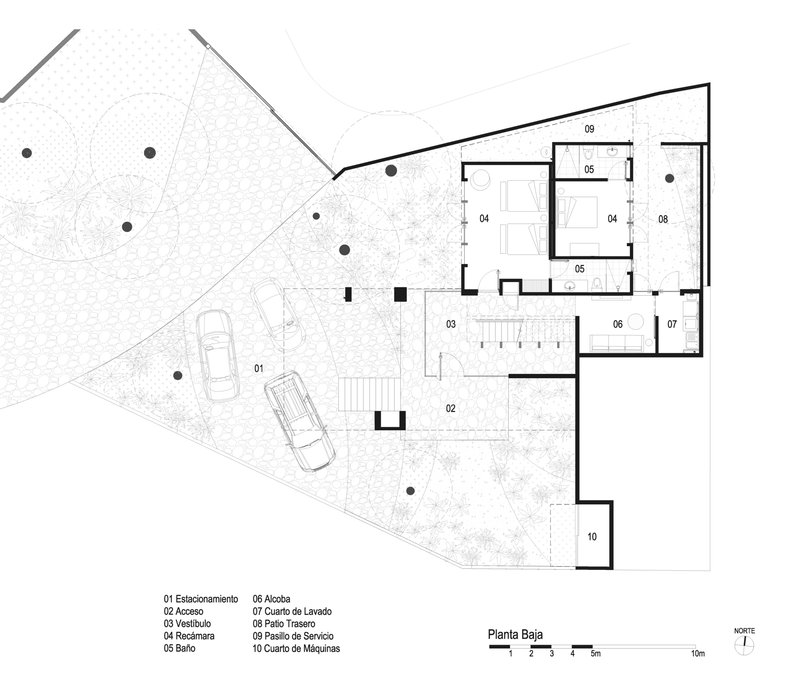
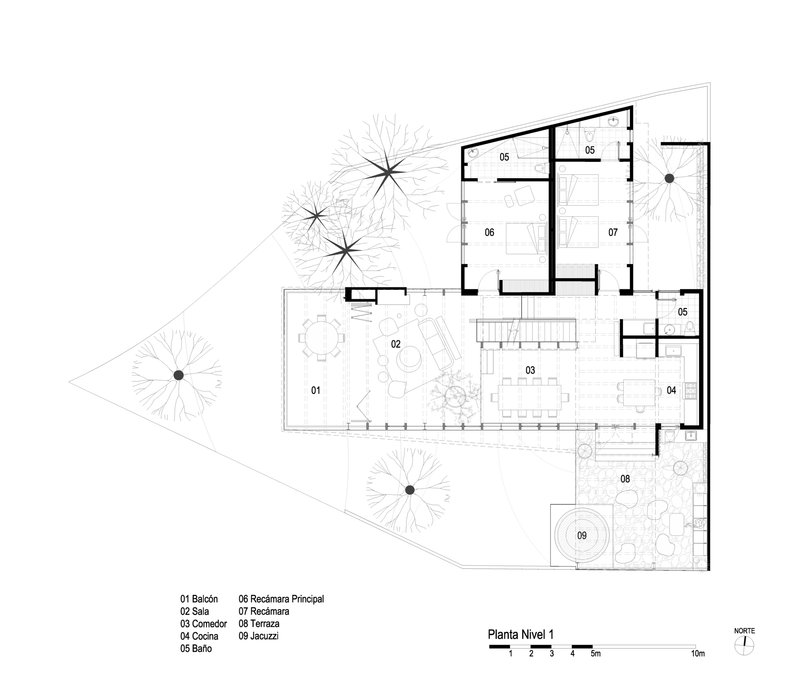
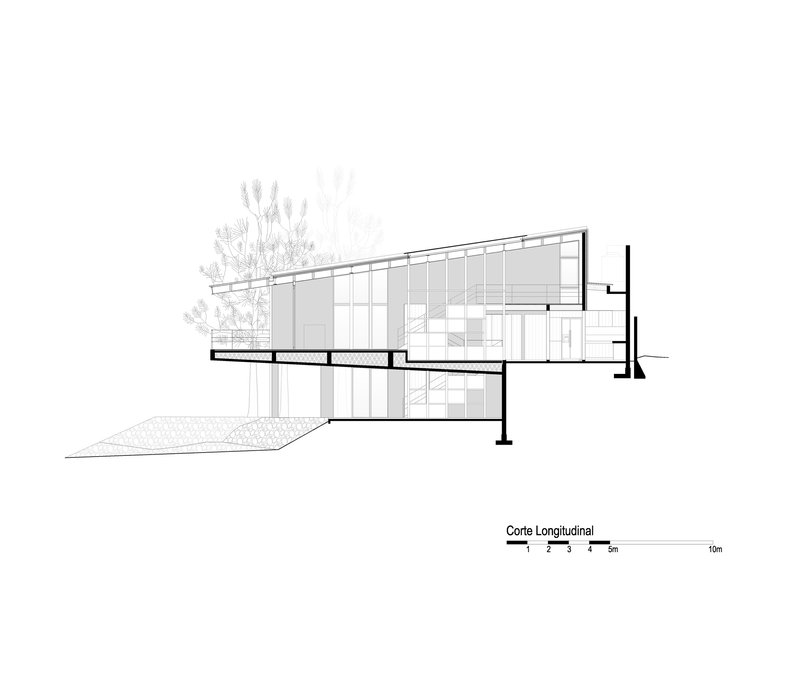
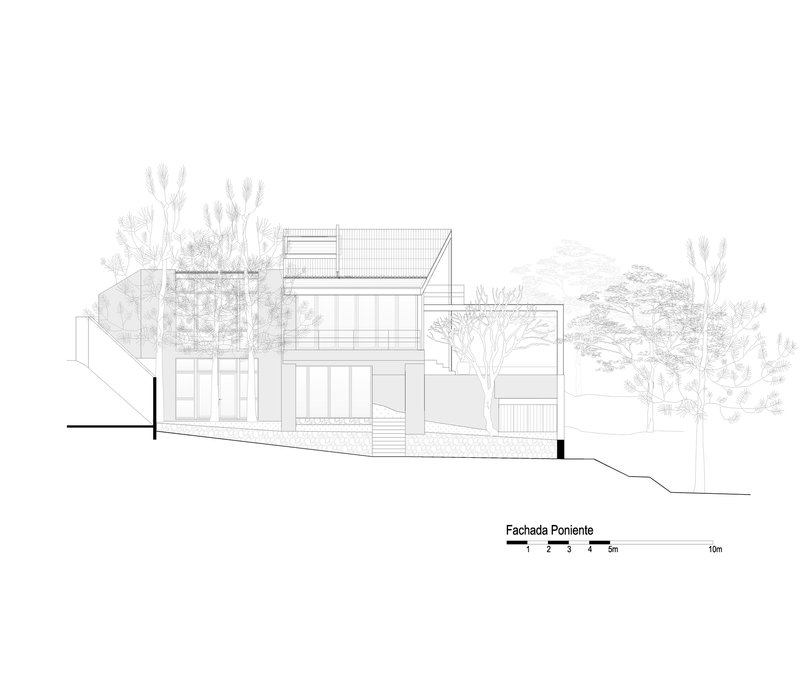
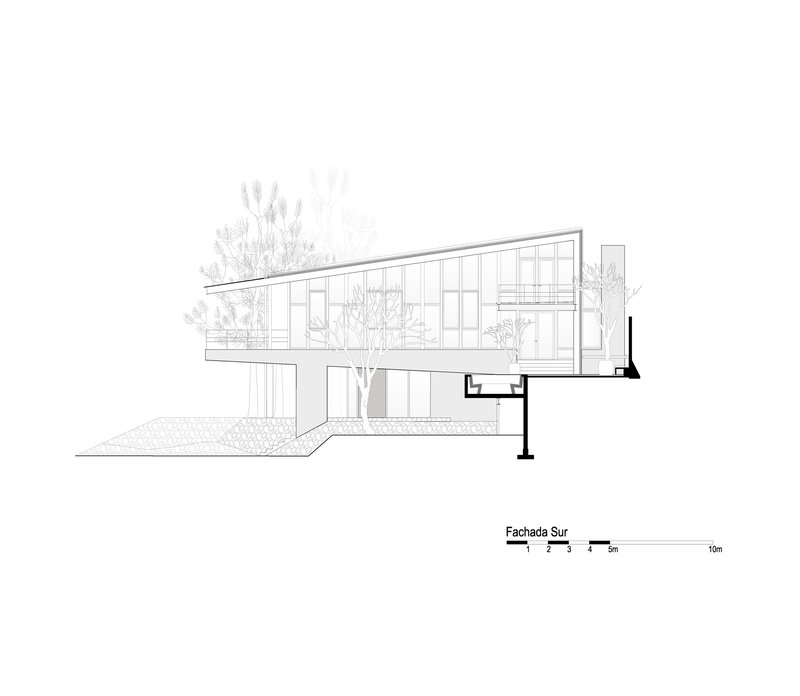
The floor plans reveal the angled footprint that responds to the site's complex polygon. The ground level accommodates parking and a bedroom wing alongside the courtyard, while the upper plan shows the irregular perimeter wrapping around interior rooms and the projecting outdoor terrace. The longitudinal section is the most telling drawing: it exposes the two-level structure's relationship to the sloped terrain, with the roof pitching to shed water and the lower level embedding itself into the hillside. The west and south elevations confirm the cantilever's scale and show how the stacked volumes, vertical glazing, and surrounding vegetation create a layered composition that never presents a single flat face to the world.
Why This Project Matters
Valle de Bravo is full of houses that treat their sites as inconveniences to be engineered away. Casa Valle does the opposite. By accepting the slope, the irregular lot boundaries, and the existing pine trees as non-negotiable constraints, Bojalil and van der Voort produced a building that could only exist on this particular piece of ground. That specificity is the project's greatest achievement. The cantilever, the courtyards, the angled plan: none of these are formal indulgences. They are direct responses to conditions that a more conventional approach would have erased.
The material strategy reinforces the argument. Concrete, timber, steel, and glass are deployed without concealment, each doing visible structural or environmental work. The pink kitchen island is a welcome reminder that discipline does not require austerity. For a practice working at the intersection of architecture and urbanism, DAFdf demonstrates here that the most productive urbanism sometimes starts at the scale of a single house that refuses to pretend its site is flat.
Valle House (Casa Valle) by DAFdf arquitectura y urbanismo, led by Gabriela Bojalil and Paul van der Voort. Valle de Bravo, Mexico. 425 m². Completed 2025. Photography by César Belio.
About the Studio
Share Your Own Work on uni.xyz
If projects like this are the kind of work you want to make, uni.xyz is a place to publish your own, find collaborators, and enter design competitions.




Popular Articles
Popular articles from the community

Guangzhou's Twin Towers Interiors Move Like Water
DuShe Architectural Design shapes the lobbies of a massive Guangzhou transit hub with undulating ceilings and deep geological materiality.
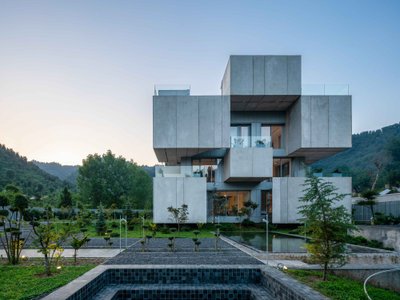
Bood Design Bureau Splits a Gilan Residence in Two to Let the Forest In
Double Side House negotiates privacy and openness through interlocking concrete volumes and planted courtyards in northern Iran's humid Caspian lowlands.
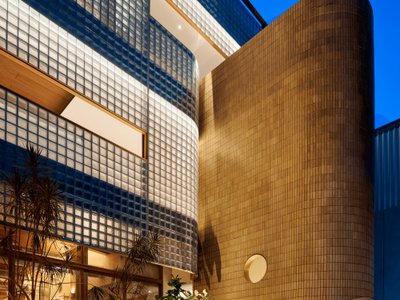
Gunawarman 35: Jakarta's Corner of Quiet Complexity
WOFF's mixed-use building in Jakarta pairs translucent glass block walls with a buff brick cylinder to hold coffee, wellness, and work under one roof.
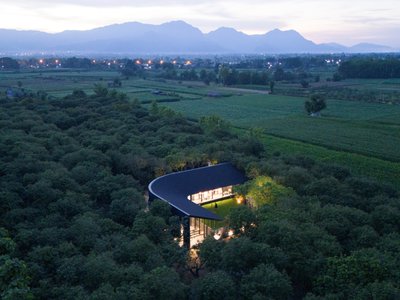
Cafe MADA: A Chiang Rai Pavilion in a Mango Orchard
BodinChapa Architects threaded a 254 m² black-roofed cafe through an existing mango orchard in Chiang Rai, Thailand, built around mature trees.


Similar Reads
You might also enjoy these articles

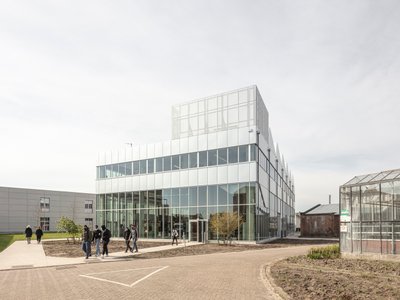
STEM School Mechelen by LAVA Architecten: A Future-Ready Educational Architecture in Belgium
Flexible, sustainable STEM school in Mechelen featuring modular classrooms, acoustic innovation, and energy-efficient design supporting future-focused collaborative learning environments.
Marvila Apartment Renovation in Lisbon: A Bright Minimalist Attic Transformation by KEMA Studio
Bright attic transformed into minimalist Lisbon apartment with skylights, sustainable materials, open plan layout, and industrial-inspired interior design elements.

20 Most Popular Commercial Architecture Projects of 2025
From sustainable market concepts to heritage factories, the commercial buildings and proposals that drew the most attention on uni.xyz this year.
Mantiqueira House by SysHaus and M Magalhães Estúdio
A linear modular house embedded in Serra da Mantiqueira, integrating panoramic views, sustainable prefabrication, minimal terrain impact, and contemporary interiors.

Comments (0)
Please login or sign up to add comments
No comments yet. Be the first to comment!