
epos architecture Wraps a Sichuan Mountainside in Red Sandstone Volumes at Danling Lao'e Resort
Four rotated blocks cascade down a tea-field hillside at 1,100 meters, linked by a circular climbing path that doubles as a landscape journey.

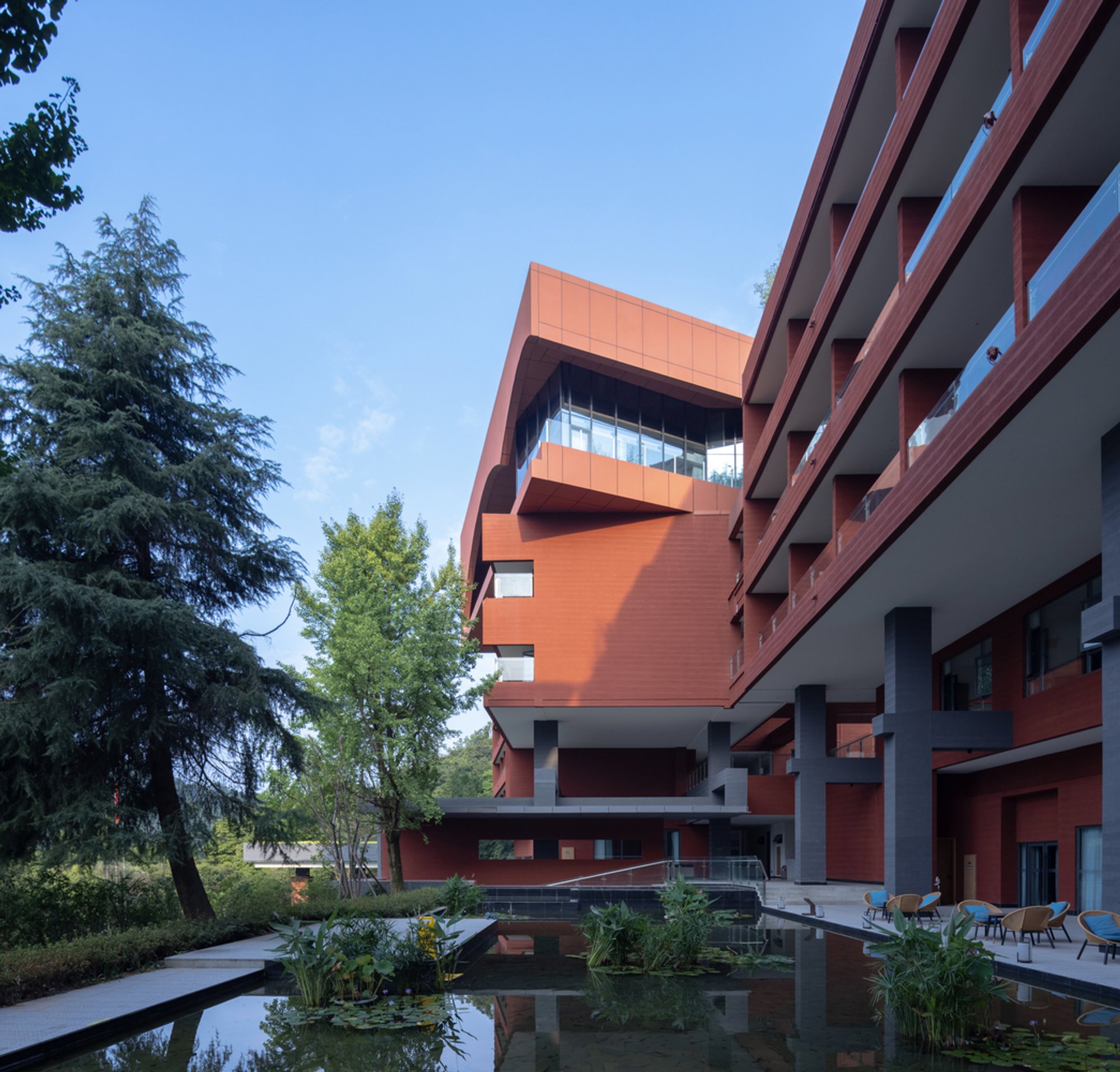
Halfway up Lao'e Mountain, on the southwest rim of the Chengdu Plain, a government guesthouse once occupied a flat ledge between tea fields and a valley view. epos architecture, led by Cai Kefei, replaced that building with something more ambitious: a 11,212 square meter resort that splits into four discrete blocks, each rotated to face a different slice of the surrounding landscape. The red sandstone geology of the region dictated the facade color, tying the complex to the mountain even as its terraced silhouette steps down the slope like a geological formation in its own right.
What makes the project genuinely interesting is not the red cladding or the mountaintop setting, both of which are photogenic enough. It is the decision to thread a continuous, independent climbing path through the entire complex: corridors, zigzag stairs, and open walkways that connect every part of the building without overlapping the hotel's primary circulation. The route converts the resort into a vertical garden walk, passing lotus ponds, pavilions, and framed views of distant peaks and bamboo forests. It is a spatial argument that a hotel should not just house guests but choreograph how they encounter a place.
A Red Ridge on the Hillside
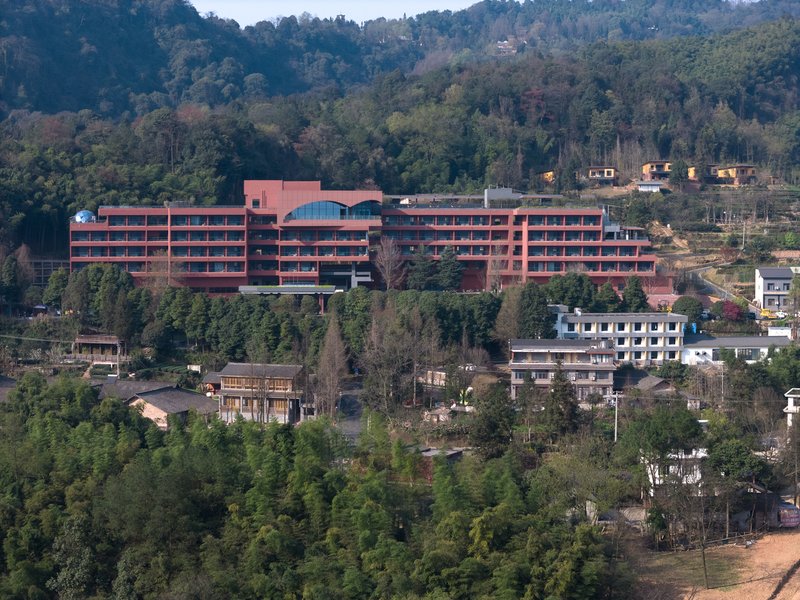
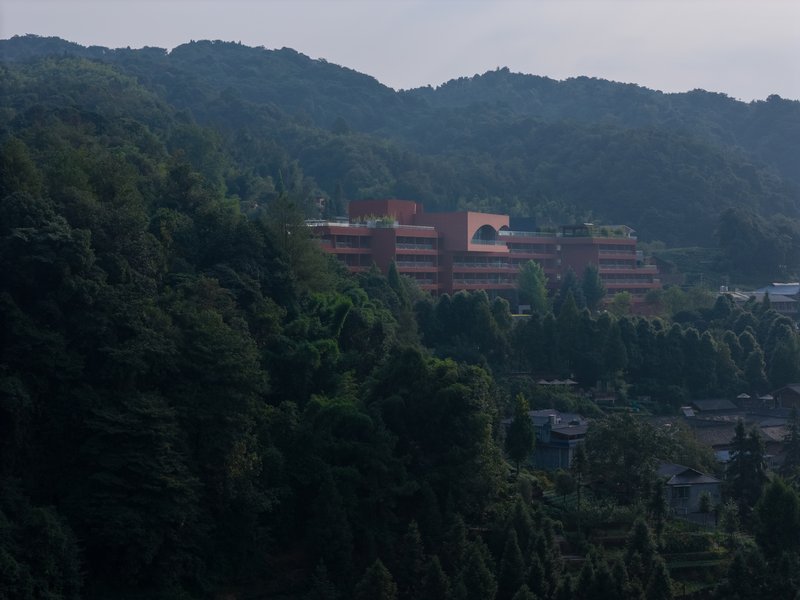
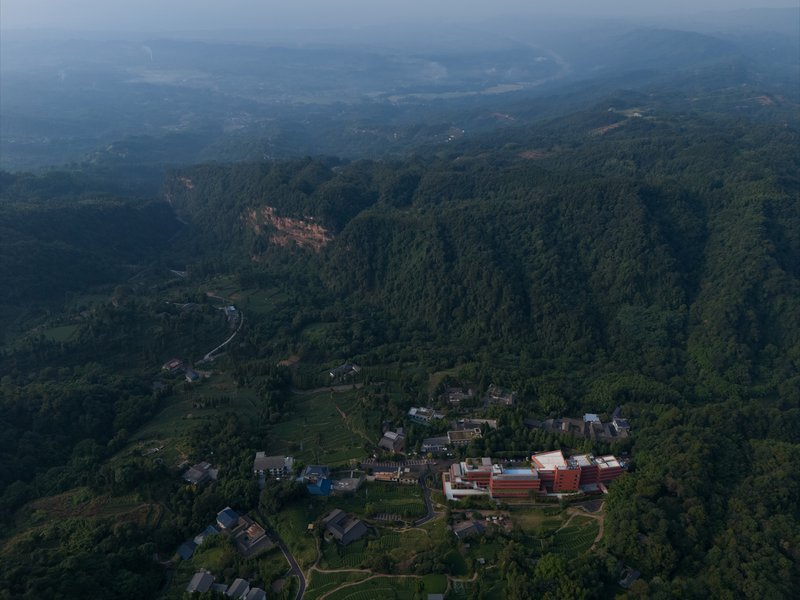
From a distance, the resort reads as a single horizontal band of terracotta stepping through the forest canopy. The muted red sits comfortably against the green of bamboo and tea fields, pulling its saturation from the local sandstone rather than from any imported palette. In morning mist, the building nearly disappears into the hillside; at dusk, its warm surfaces glow against the darkening slopes. The restraint is notable. At 1,100 meters altitude, surrounded by scattered village houses, a resort of this size could easily dominate its context. Instead, the four fragmented blocks break the mass into digestible pieces that defer to the topography.
Four Blocks, Four Orientations
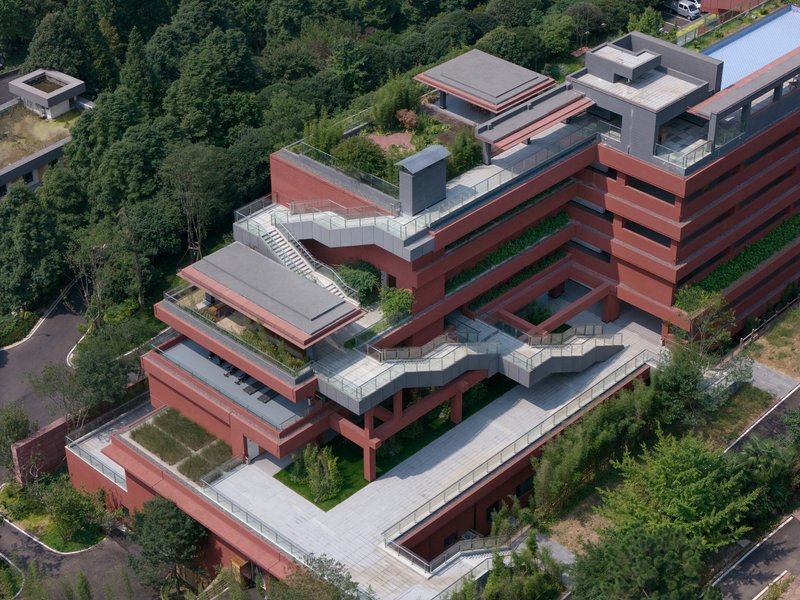
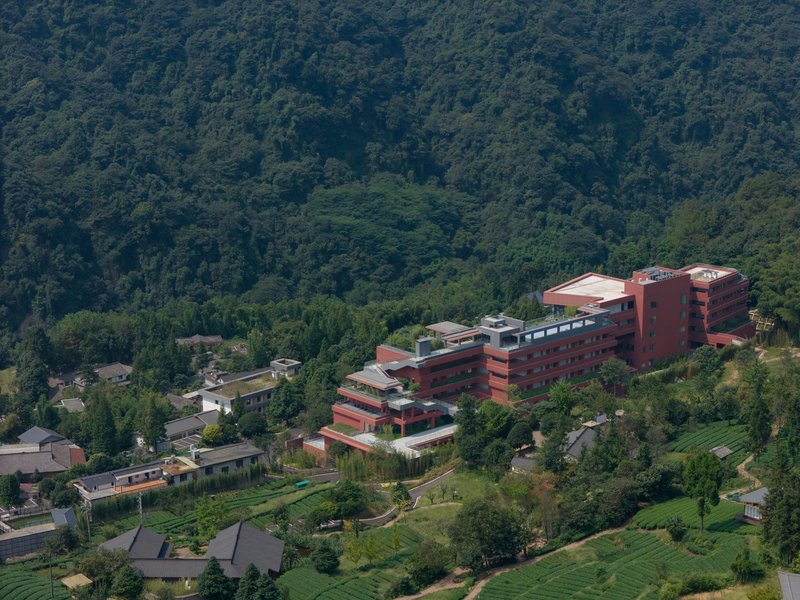
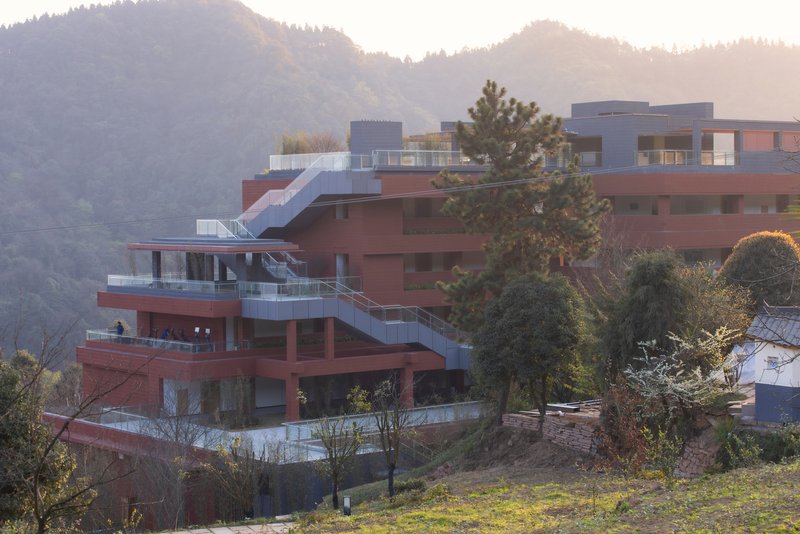
The decision to split the program into four blocks, each rotated independently, is the single most consequential move in the project. It does several things at once: it reduces perceived scale, it lets each volume capture a distinct view corridor, and it generates interstitial spaces, courtyards, terraces, planted roofs, that become the connective tissue of the resort. The aerial view reveals the logic clearly. Rather than a monolithic slab following the contour line, the blocks pivot and cascade, creating pockets of outdoor space between them.
Each block occupies a different elevation on the slope, so the ground floor of one volume might sit at the same height as the second story of the next. The architects exploited this to give every functional zone, conference center, lobby, café, restaurant, its own distinct floor level. The stepping is not ornamental; it follows the existing terrain, minimizing earthwork and preserving the site's natural drainage patterns.
The Arched Facade and Terrace Language
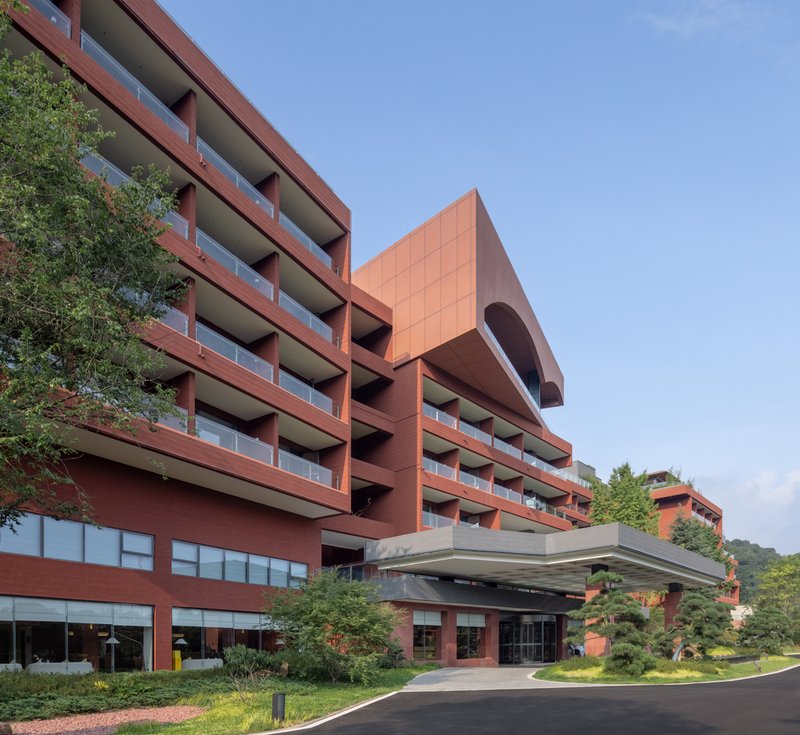
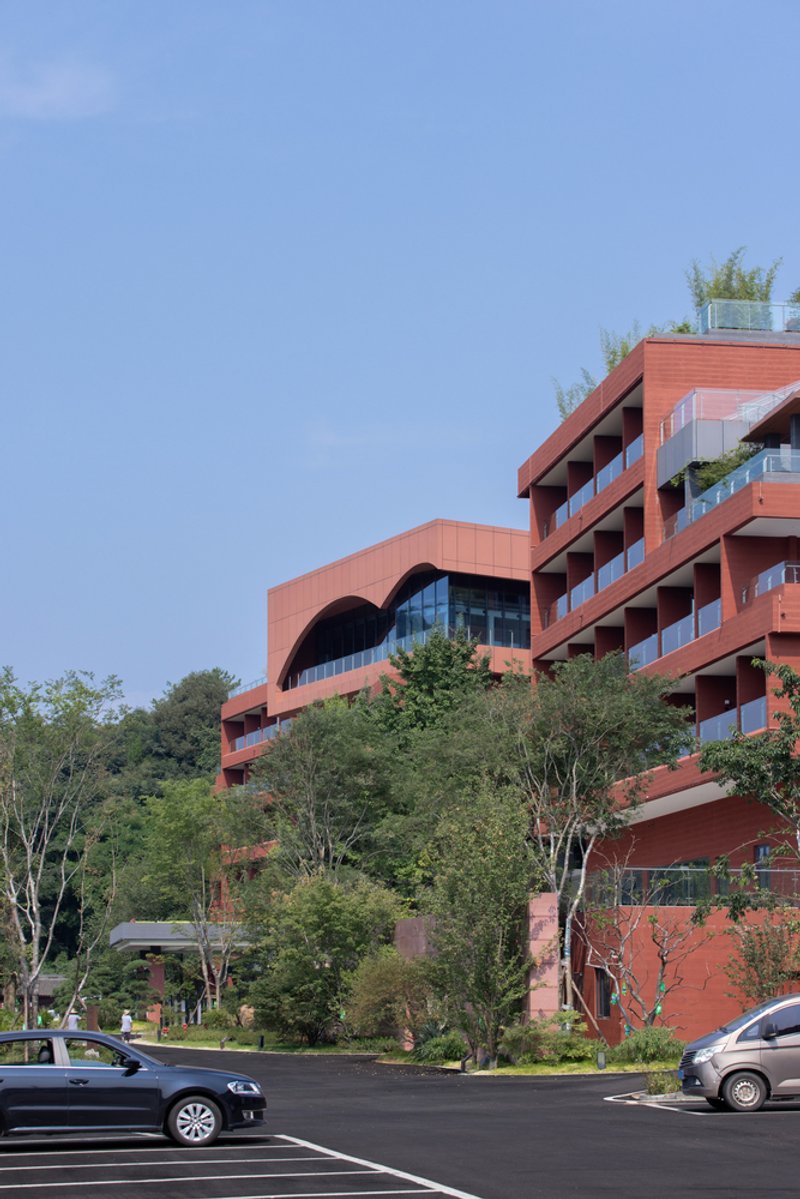
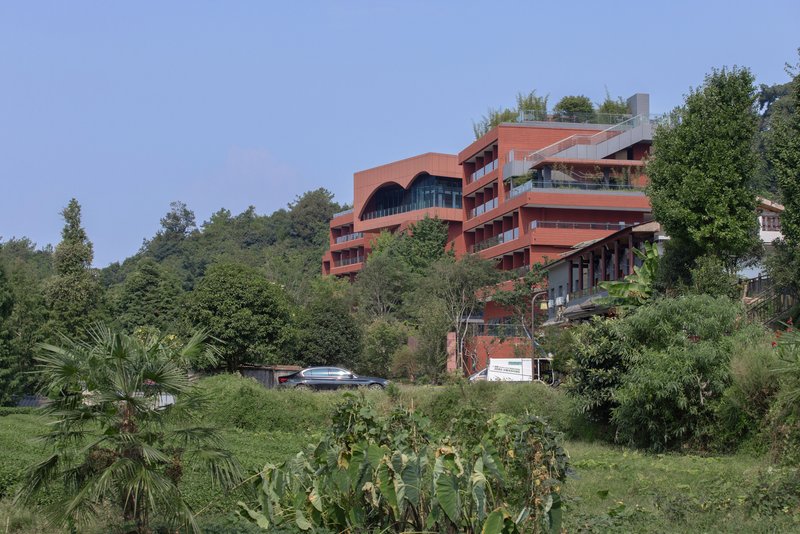
The facade system alternates between horizontal balcony bands and arched glazing openings, creating a rhythm that gives the complex a civic gravity unusual for a resort. The arched motifs at the upper levels feel almost like a covered loggia, recalling the sheltered walkways of traditional Sichuan courtyard architecture without quoting them literally. Layered horizontal balconies in red panels project outward, providing shade and rain protection while giving each guest room a private outdoor terrace with views over the valley or the tea fields.
The entry facade, with its canopy arching above mature trees, establishes the resort's intent immediately. You arrive not at a grand porte-cochère but under a sheltering volume that frames the landscape behind it. The trees are not ornamental additions; the existing rows of osmanthus were preserved and absorbed into the architectural composition, blurring the boundary between built form and planted ground.
Courtyards and Reflecting Pools
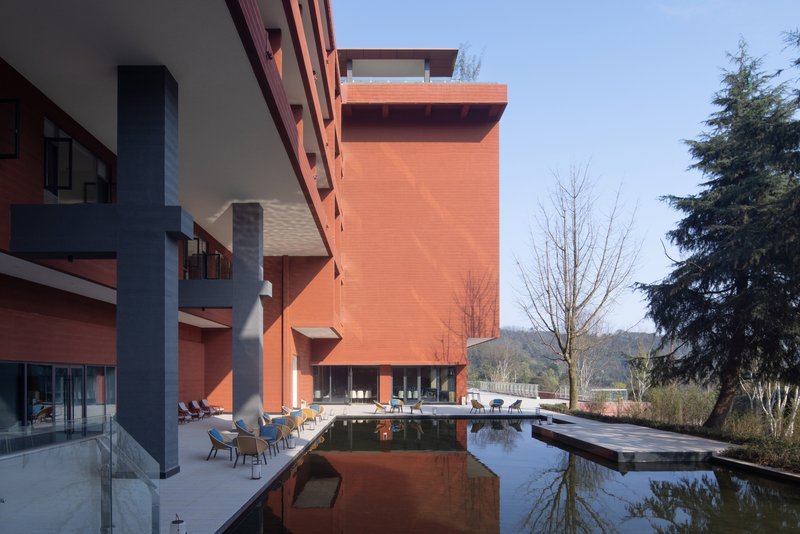
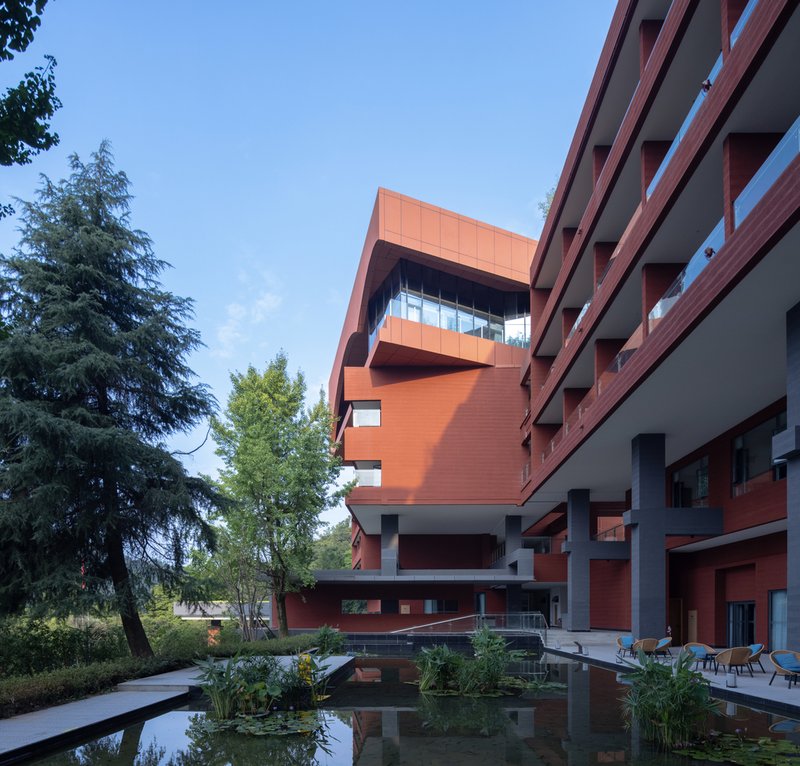
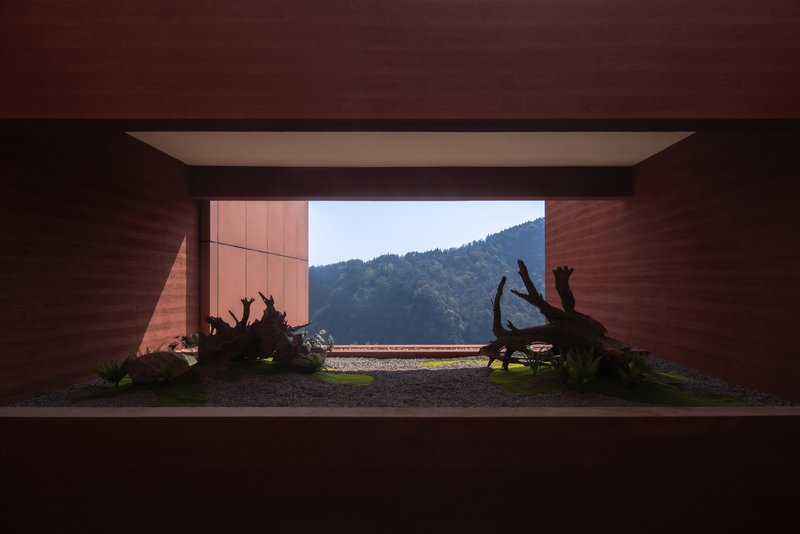
Between the blocks, epos architecture inserted a sequence of courtyards that serve as both gathering spaces and light wells. Reflecting pools sit beneath cantilevered volumes, turning the underside of the building into a ceiling that hovers over still water. The effect is atmospheric and immediate: red panels mirrored in dark water, white concrete colonnades catching low winter light, driftwood sculptures framing distant mountain silhouettes through apertures in red walls.
These outdoor rooms are the social heart of the resort. They operate at a fundamentally different pace than the guest rooms above. Where the rooms are private and view-oriented, the courtyards are communal and inward-looking, anchored by the presence of water and mature trees. The lotus pond, part of the circular climbing path, ties into this sequence, ensuring that the landscape route and the social spaces overlap without conflicting.
Interior Spaces: Timber, Light, and Framed Views
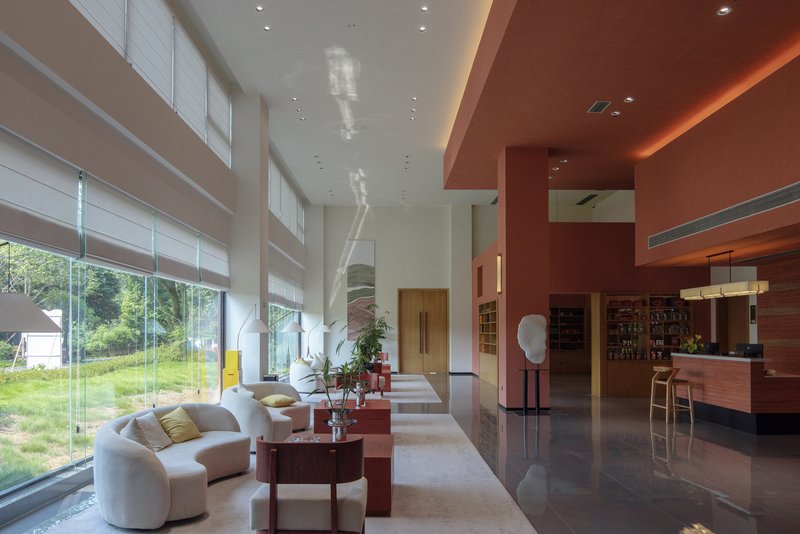
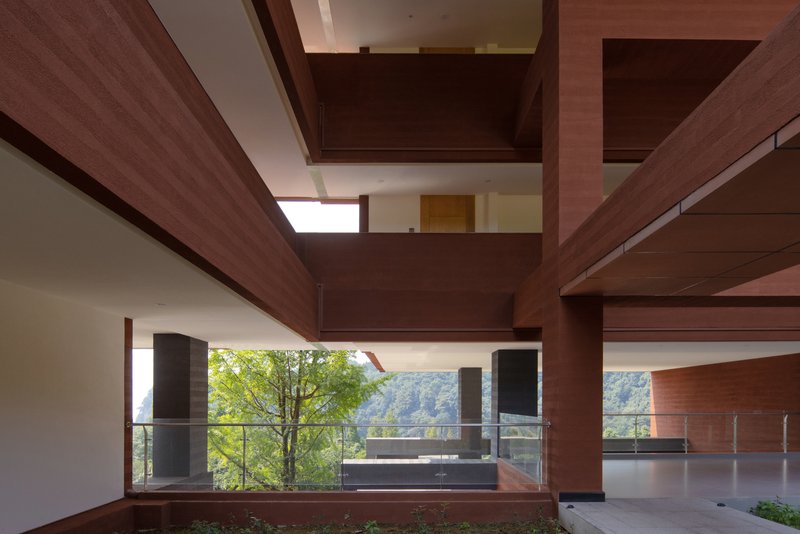
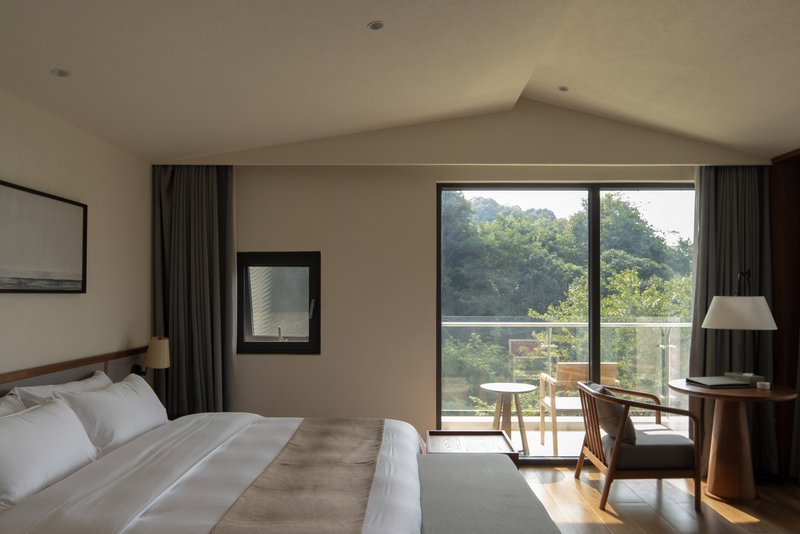
Inside, the palette shifts from red sandstone to warm timber. The double-height lobby uses red ceiling beams and floor-to-ceiling windows to establish a visual axis from the entrance straight through to the landscape beyond. The curved reception desk feels deliberately understated against the scale of the space, letting the view do the work. Looking up through the interior atrium, stacked timber-framed voids create a vertical sequence that culminates in a horizontal window framing distant hills. It is a vertical version of the same framing strategy used on the facades.
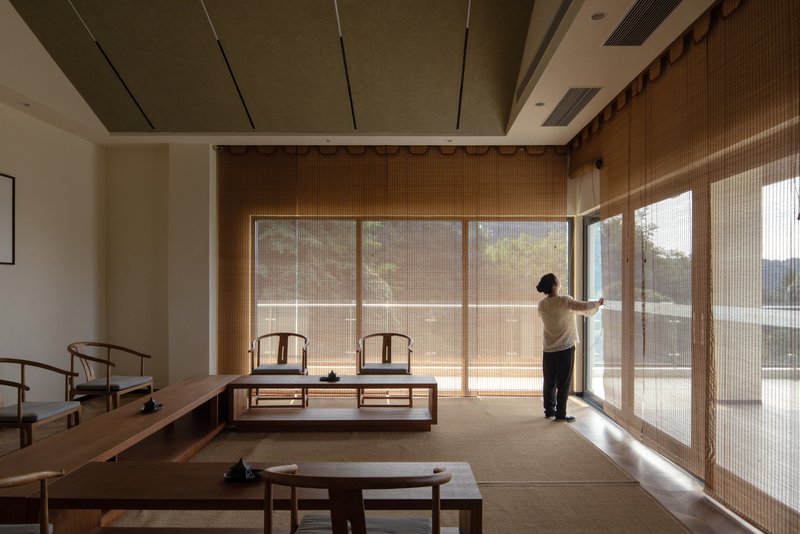
Guest rooms are straightforward in their ambition: every room faces the open landscape, with glazed balcony doors that swing open to green hillsides. Timber furniture and restrained material choices keep the interiors from competing with the views. Woven bamboo screens in the lounge areas introduce texture and filter light, referencing local craft traditions without turning the interior into an ethnographic display.
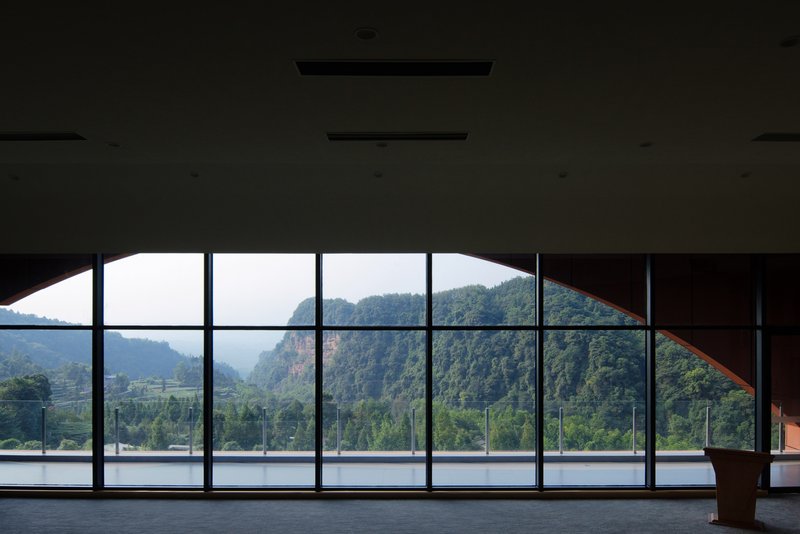
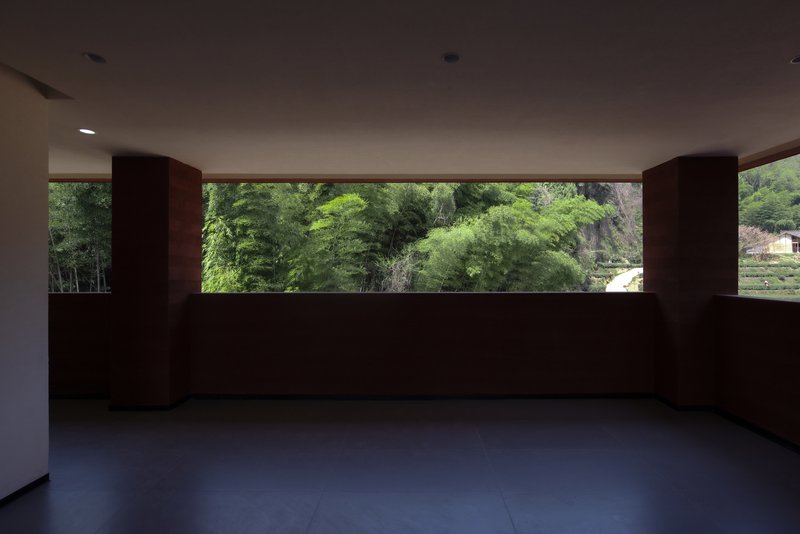
The top-floor space, referred to as "The Mountain Shadow Hall," caps the vertical sequence. From here, the full panorama of Lao'e Mountain and the surrounding valley unfolds. The covered terraces with their red concrete columns frame horizontal view slots toward the bamboo canopy, turning the act of looking out into something deliberate and composed. Corridors on the mountain side are flanked by tea fields and bamboo, so even the in-between spaces offer sensory encounters with the landscape.
The Climbing Path as Architectural Strategy
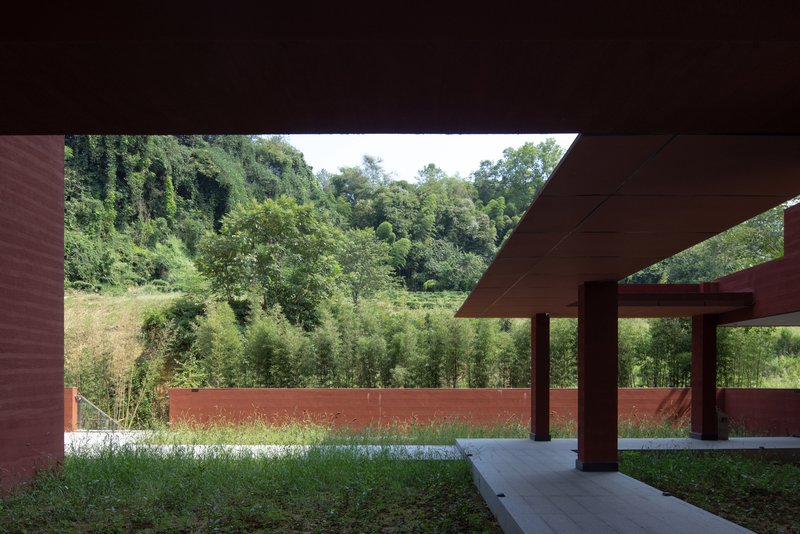
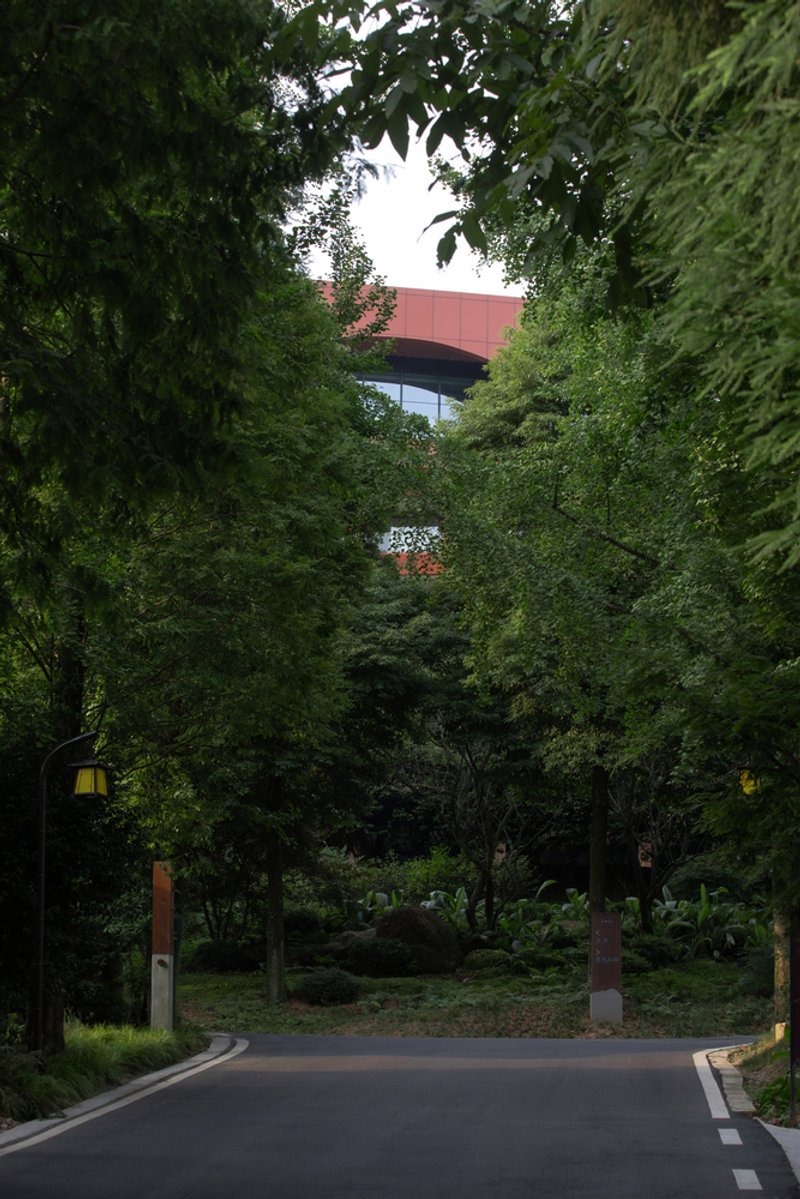
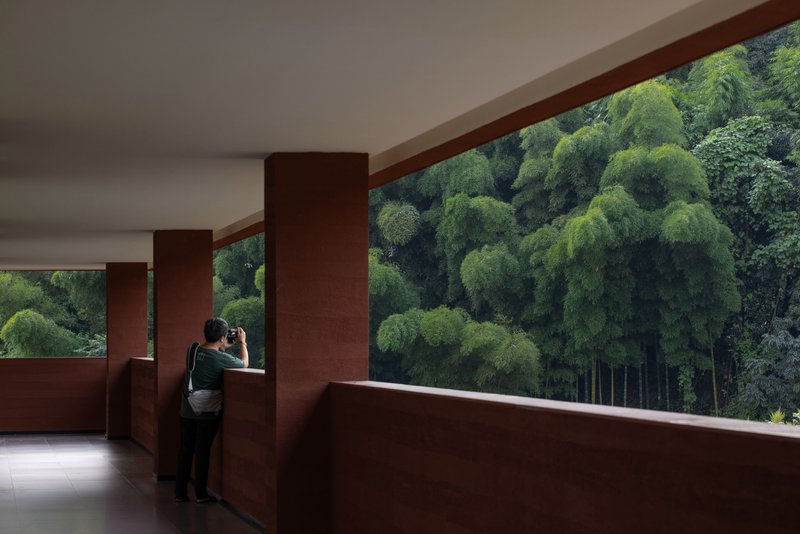
The circular climbing path is the conceptual spine of the project. It operates as an entirely independent circulation system, a route you can walk from the lowest point of the resort to the highest without passing through a single hotel function. Along the way, it threads through covered walkways with red columns overlooking the forest, bridges that span between treetops overhead, and open terraces where visitors photograph the bamboo-covered hillside below.
The path does not merely replicate the experience of hiking the mountain. It compresses it, offering the sequence of ascent, prospect, shelter, and revelation within the boundaries of the resort itself. Zigzag staircases negotiate grade changes that would otherwise require elevators. Covered colonnades protect from rain while maintaining visual continuity with the surrounding vegetation. The genius of the path is that it gives the building a second life beyond hospitality: even if the resort's function changes, the route through the landscape will remain legible and functional.
Facade Detail and Hillside Dialogue
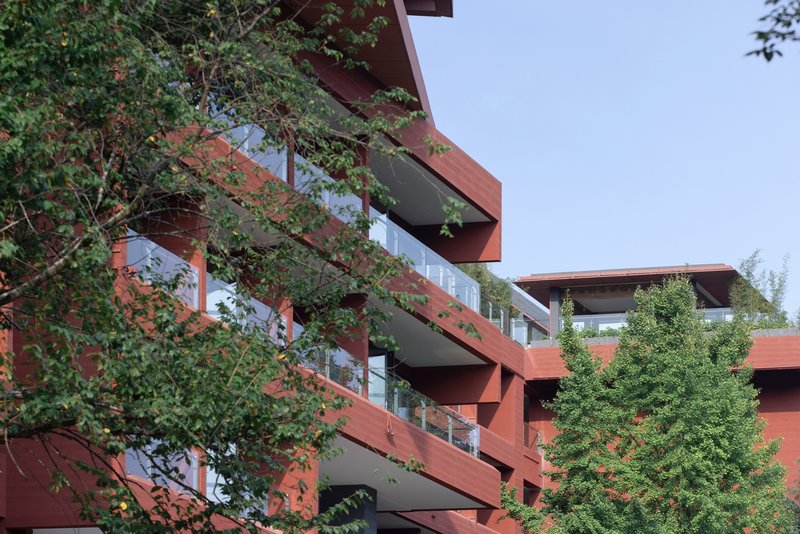
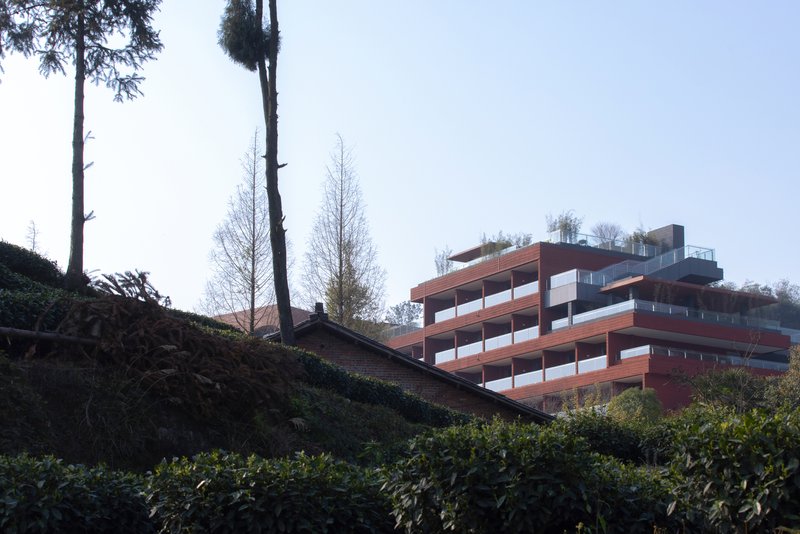
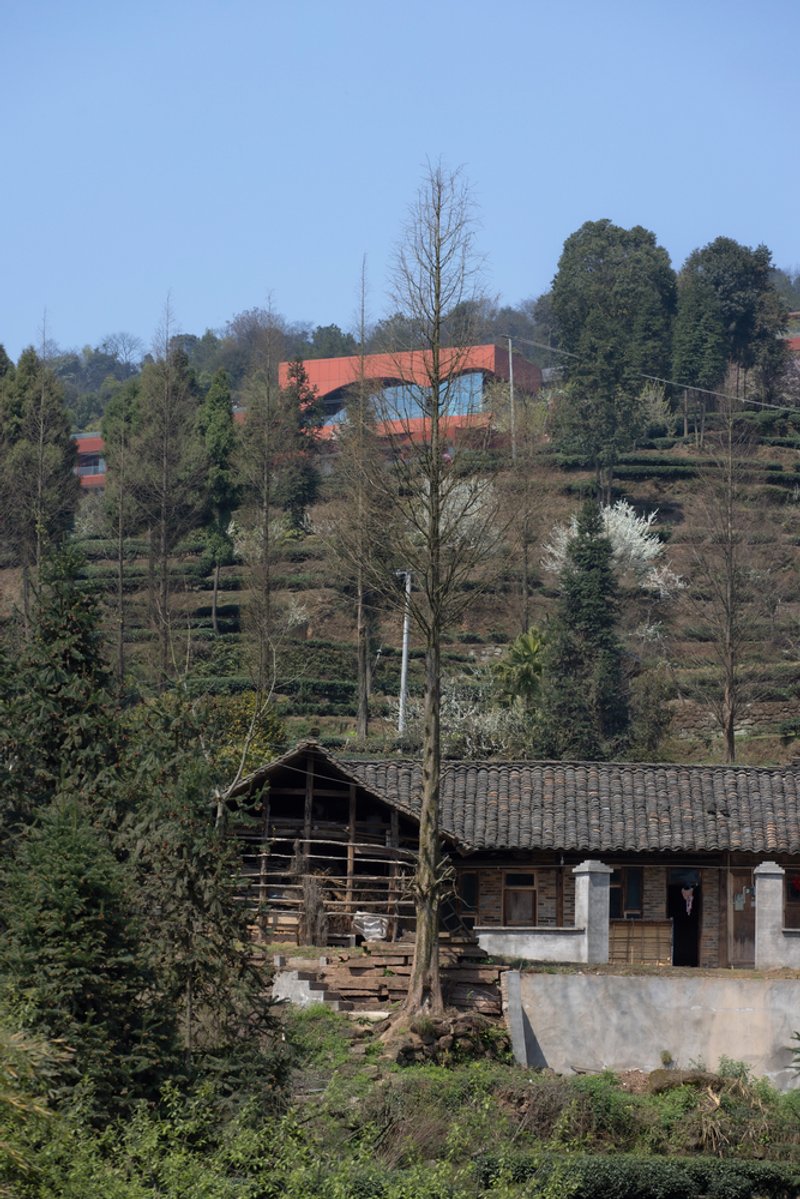
Close up, the facade reveals a more nuanced composition than the distant views suggest. Stacked terraces alternate red-orange cladding with recessed glass balconies, creating depth and shadow lines that shift throughout the day. Alternating red and white horizontal bands on some elevations introduce a secondary rhythm that prevents the complex from reading as a monochrome block. Against the older timber dwellings of the village below, the resort's arched terracotta panels register as both modern and rooted, a material language that belongs to the place without mimicking its vernacular.
Plans and Drawings
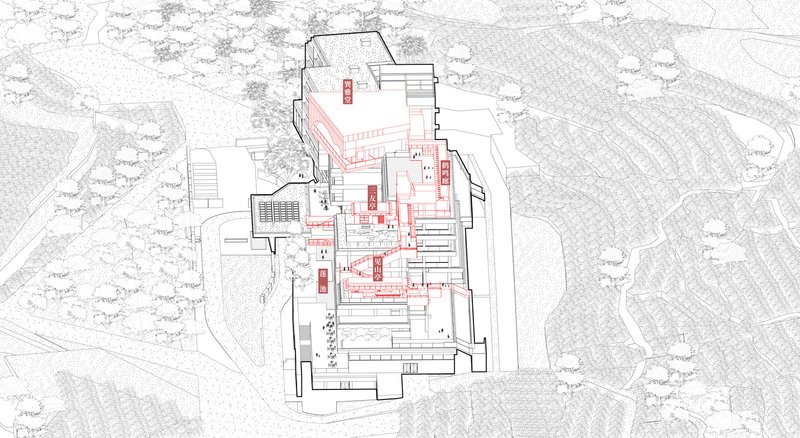
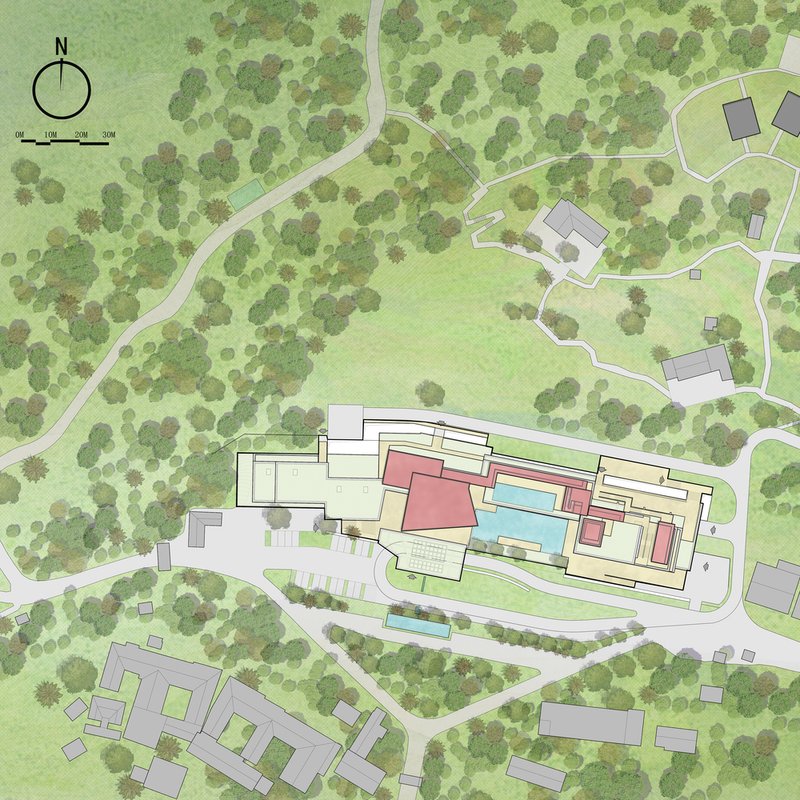
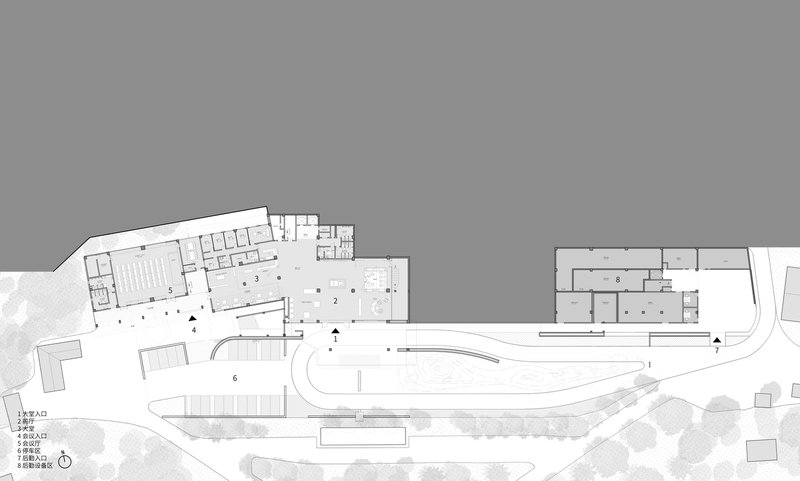
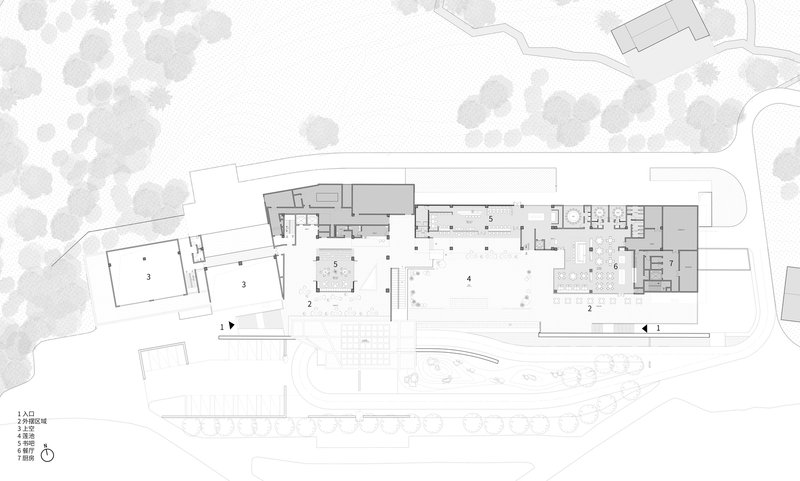
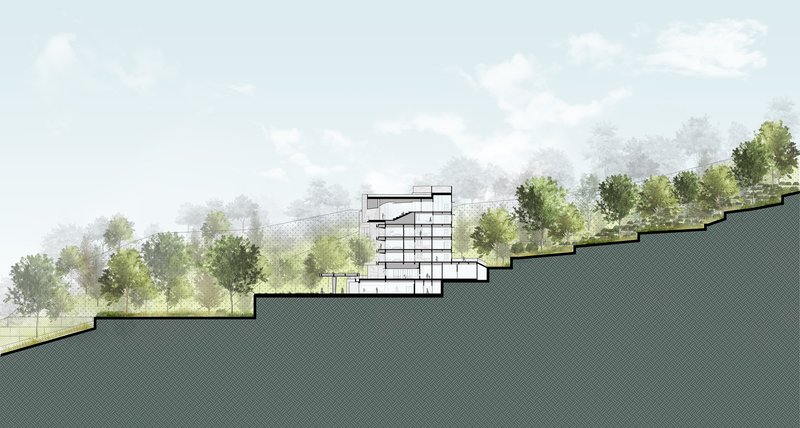
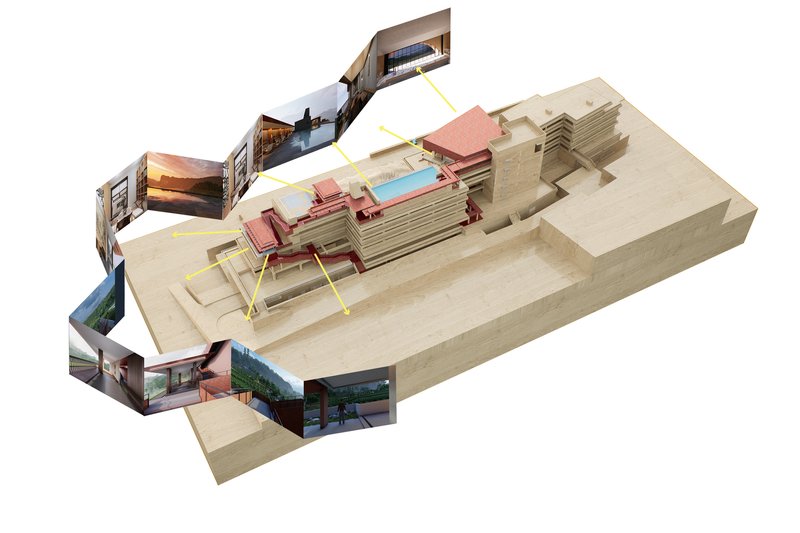
The site plans confirm what the photographs suggest: the building footprint sits within a densely wooded hillside, accessed by winding roads that limit the scale of approach. The ground floor plan shows the entry plaza funneling visitors into the stepped volumes, while the upper floor plan reveals how roof terraces are integrated as extensions of the interior. The section drawing is perhaps the most revealing: it shows the full cascade of the building down the slope, each level stepping to follow the grade, with trees framing the composition on both sides. The cutaway axonometric makes the internal variety explicit, offering vignettes of conference rooms, guest corridors, lounges, and terraces stacked within the terraced form.
Why This Project Matters
Mountain resorts in China too often default to one of two modes: the generic glass box dropped onto a scenic site, or the overwrought cultural pastiche that wears its regional identity like a costume. Danling Lao'e avoids both traps. By fragmenting the mass into four rotated blocks and grounding the material language in the local geology, epos architecture produced a building that earns its place on the hillside. The circular climbing path elevates the project further, transforming what could have been a passive hotel into an active spatial experience that rivals the mountain itself.
The project also demonstrates a convincing model for adaptive longevity. Each space is designed with enough spatial character to survive a change in program. If the conference center becomes a gallery, if the restaurant becomes a community hall, the architecture will still make sense. That kind of resilience is rare in hospitality design, where interiors tend to be optimized for a single brand identity and a five-year renovation cycle. At Lao'e Mountain, the architecture is the identity, and it was built to outlast any operator.
Danling Lao'e Mountain Resort by epos architecture. Danling, Sichuan, China. 11,212 m². Completed 2024.
About the Studio
epos architecture
Share Your Own Work on uni.xyz
If projects like this are the kind of work you want to make, uni.xyz is a place to publish your own, find collaborators, and enter design competitions.




Popular Articles
Popular articles from the community

Fausto Terán and Toro Fuse Japanese Craft with Mexican Tradition in a Lakeside Retreat
Nakamura House pairs Shou-Sugi-Ban charred pine with handmade clay tile at the foot of Atlangatepec Lagoon in Mexico.
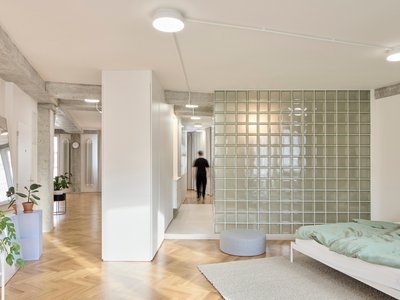
RDTH architekti Rips Out Nearly Every Wall in a Prague Apartment and Replaces Them with Furniture
A 101-square-meter post-war flat in Prague trades rigid partitions for a single rotated furniture block, curtains, and glass concrete.
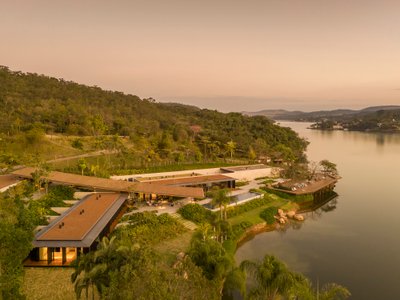
Bernardes Arquitetura Stretches a Timber Roof Along a Reservoir's Edge in Minas Gerais
Dam House in Itaúna lets a sweeping wooden canopy dissolve the boundary between hillside terrain and open water.
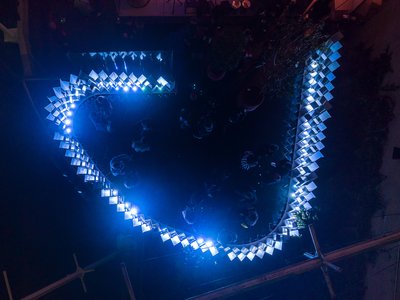
Rojkind Arquitectos and Think Parametric Build a Glueless Pavilion from 67 Interlocking Panels
A serpentine fiber-cement installation in Chapultepec Park celebrates a decade of architectural media in Mexico City.


Similar Reads
You might also enjoy these articles

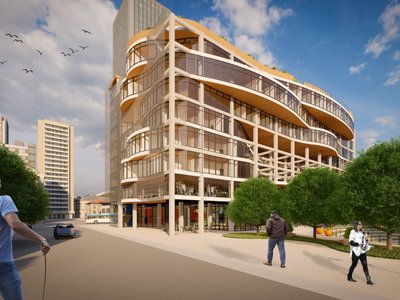
Olio Towers: A Mid-Rise for Performers That Fuses Housing, Rehearsal, and Stage
Located blocks from Houston's Theater District, this modular tower stacks living units around a central performance atrium.
Oasis: Modular Green Housing Carved into Dhaka's Urban Fabric
A shortlisted Plugin Housing entry reclaims unauthorized settlements in Dhaka with stepped concrete volumes, green roofs, and ventilation-driven design.

Black Hole: A Floating Megastructure for the Post-Physical Era
Emiliano Mazzarotto envisions a spherical, self-scaling arena where e-sports, digital hotels, and holographic stadiums replace traditional public space.
Compact & Sustainable Living in Piraeus: A Four-Level Family Home Built Around Light and Air
A narrow townhouse in one of Greece's densest port cities uses a central atrium and passive strategies to house three generations under one roof.

Explore Architecture Competitions
Discover active competitions in this discipline




The International Standard for Design Portfolios


The Global Benchmark for Architecture Dissertation Awards


The Global Benchmark for Graduation Excellence


Challenge to reimagine the Iron Throne
Comments (0)
Please login or sign up to add comments
No comments yet. Be the first to comment!