

Danske Bank Headquarters by Lundgaard & Tranberg Architects: A Modern Landmark in Copenhagen
Danske Bank’s Copenhagen HQ by Lundgaard & Tranberg features brick and glass façades, collaborative atriums, Nordic materials, and seamless urban integration.


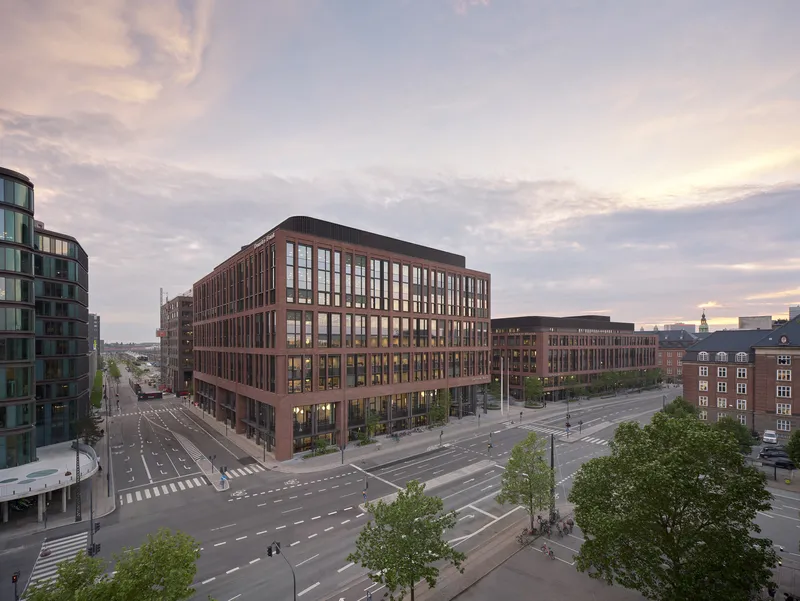
Located in the heart of Copenhagen, Denmark, Danske Bank’s new headquarters, designed by Lundgaard & Tranberg Architects, stands as a modern architectural marvel blending tradition with innovation. Completed in 2023, this 67,830 m² office complex redefines corporate architecture through transparency, collaboration, and accessibility, reflecting the bank’s progressive approach after more than 140 years of history.

Architectural Concept and Design
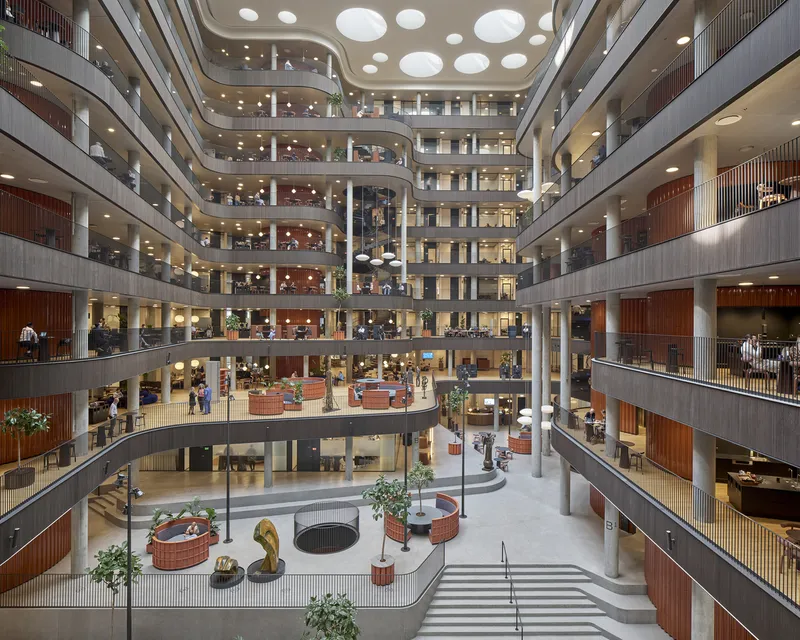
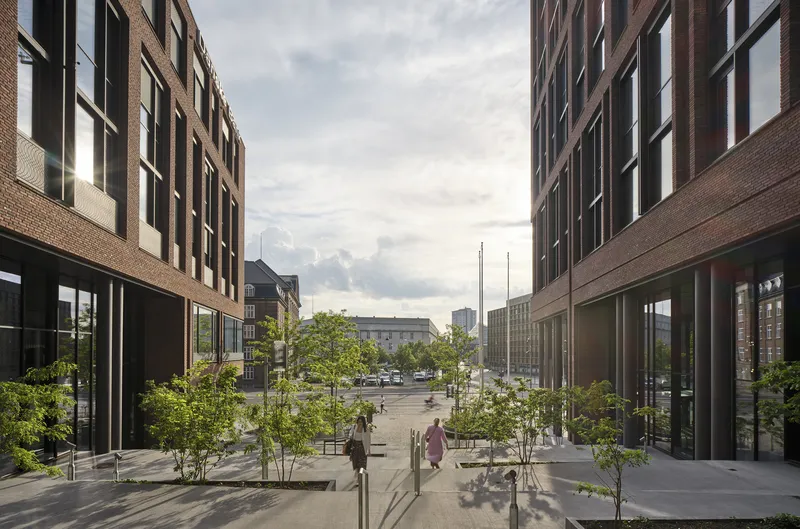
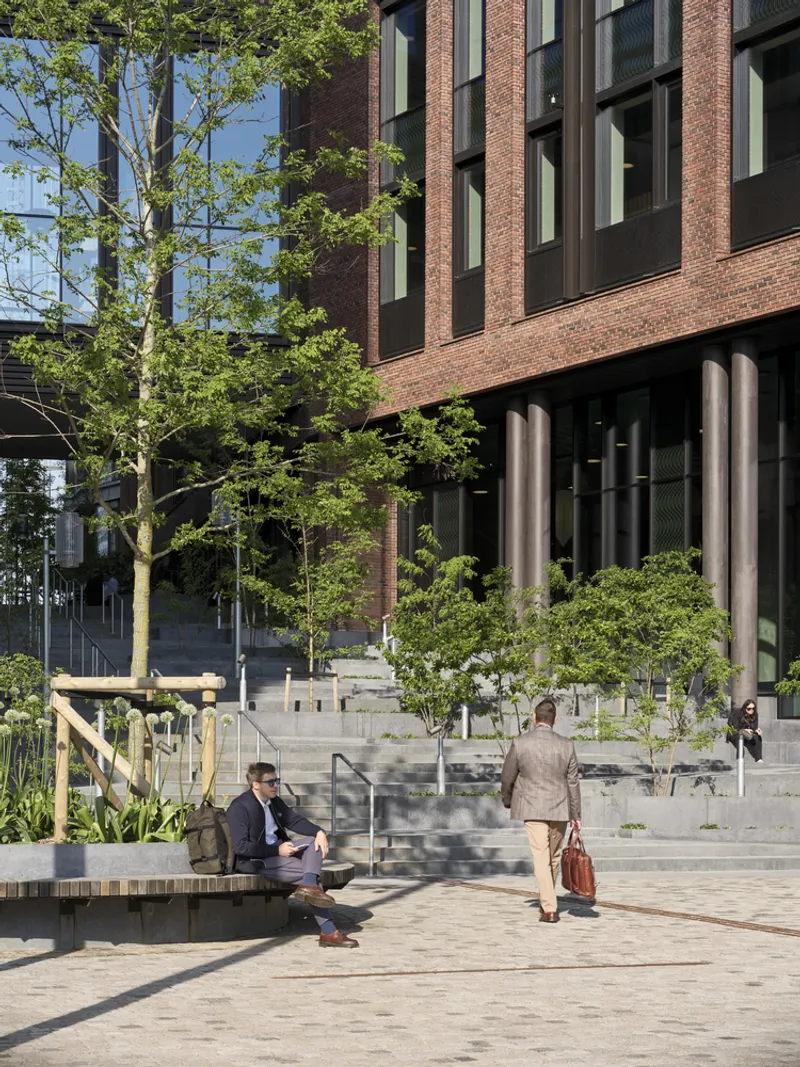
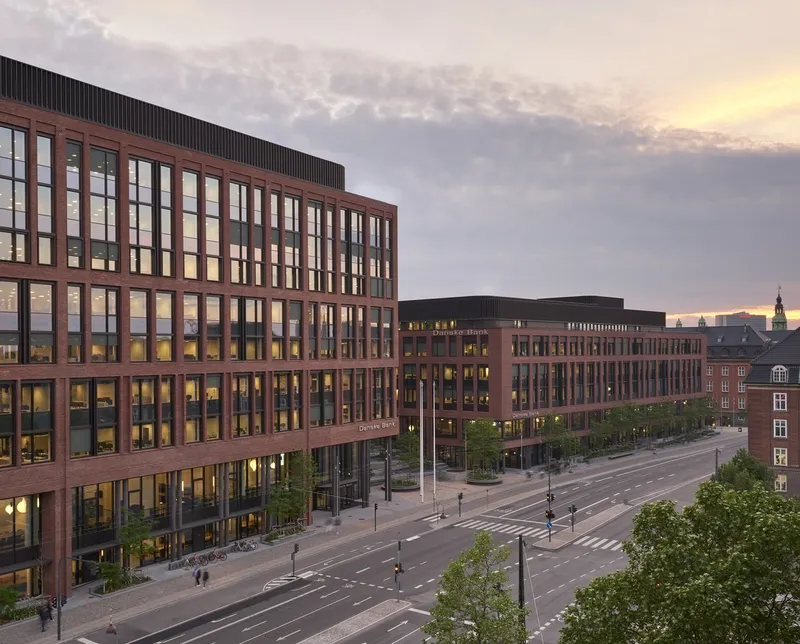
The headquarters consists of two interconnected atrium buildings, each constructed with red brick façades, paying homage to Copenhagen’s rich brick-building heritage. The design reinforces the continuity of the surrounding city blocks while introducing a dynamic visual identity that marks the entrance to the city from Kalvebod Brygge. The brick exterior gradually transitions into a transparent glass façade, inviting employees and visitors from multiple access points and creating a welcoming urban presence.
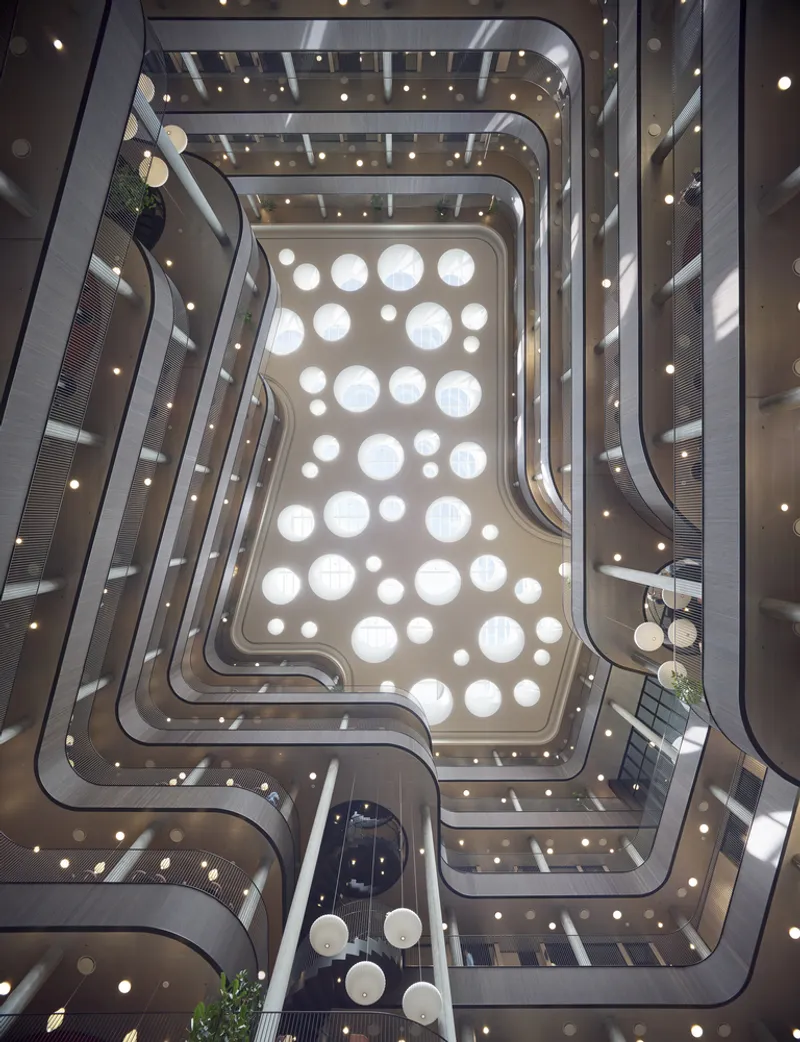
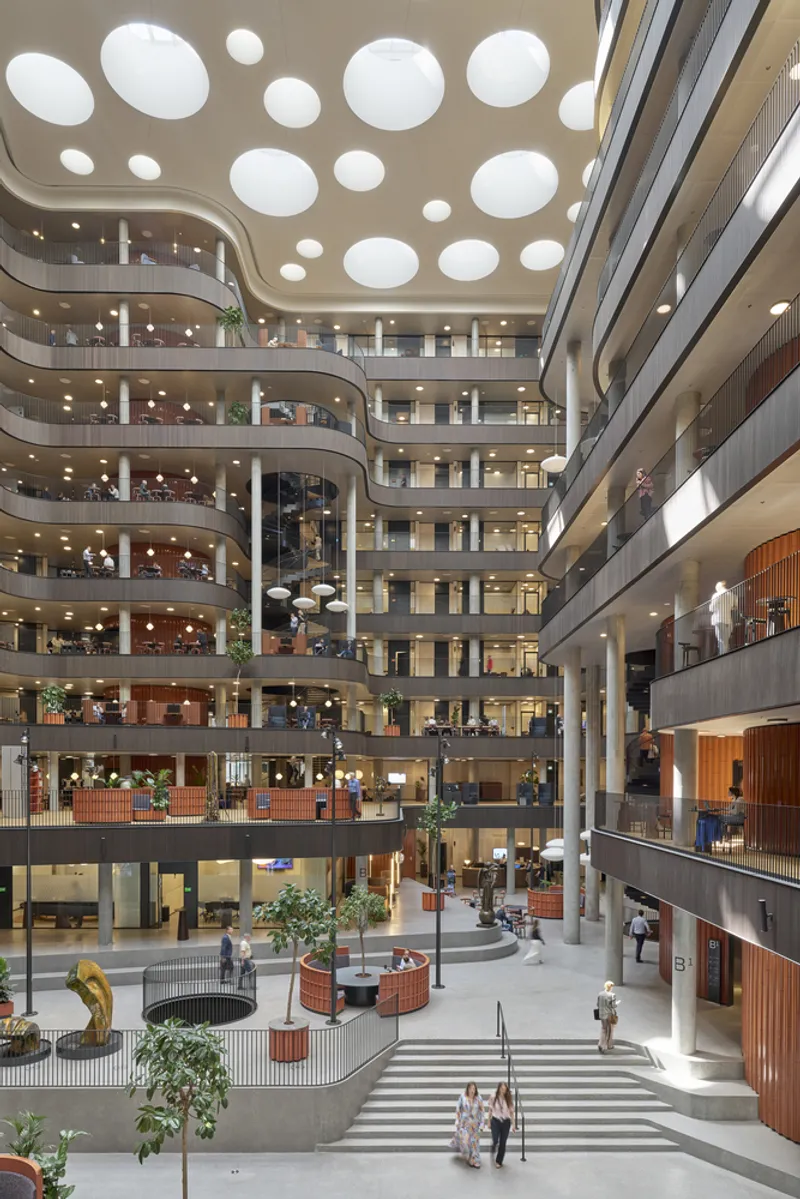
Unlike conventional corporate towers, the project embodies the concept of a bank without an executive suite, emphasizing openness and equality. The larger building features a soaring ten-story atrium rising 141 feet, fostering a vibrant, collaborative work environment where over 6,000 employees converge daily. The management offices are strategically positioned on the second floor along a central walkway connecting the two buildings, reinforcing the organization’s non-hierarchical culture.

Workspace and Collaboration
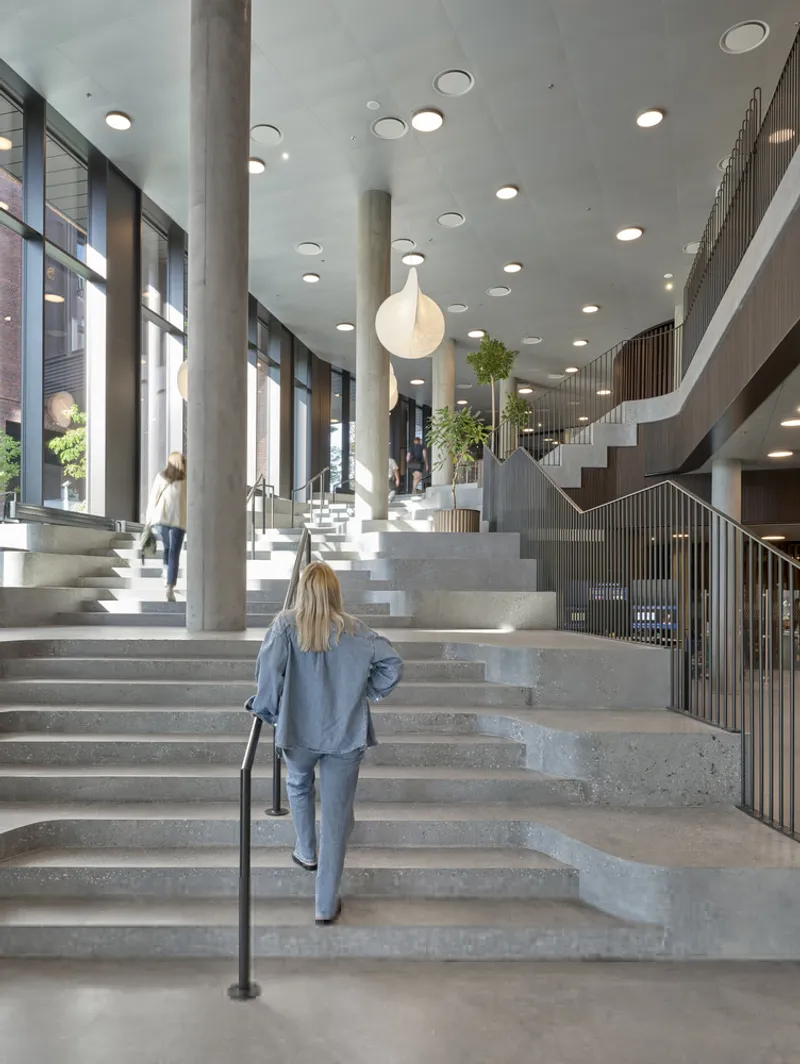
The internal layout divides the buildings into zones tailored to diverse work styles. Along the façades, quiet workspaces provide optimal daylight conditions, ideal for focused tasks. Toward the atrium center, a more intimate and dimly lit environment encourages collaboration, allowing colleagues to interact visually and share ideas across floors.
The design prioritizes accessibility, cooperation, and transparency, fostering an open workplace culture while maintaining comfort and productivity. Each spatial decision was guided by the goal of creating a human-centered, sustainable office environment where employees feel connected to both their work and the city.
Materials and Industrial Heritage
The headquarters celebrates Nordic materials and craftsmanship, using robust, honest expressions that reference the local industrial heritage and the adjacent railway. Exposed structural and technical elements highlight the building’s functionality and integrity, while all surfaces maintain a clean, pure aesthetic that underscores their natural character.
Urban Integration: Postbyen Neighborhood
Danske Bank’s headquarters serves as a central element in Copenhagen’s emerging Postbyen district. The architects’ vision was to integrate the surrounding city into this new neighborhood, creating broad urban stairways between the buildings that extend the street axes of Stoltenbergsgade and Hambrosgade, connecting the elevated urban plaza with the adjacent railway terrain. The design encourages public engagement, making the headquarters not only a workplace but also a vibrant urban landmark.
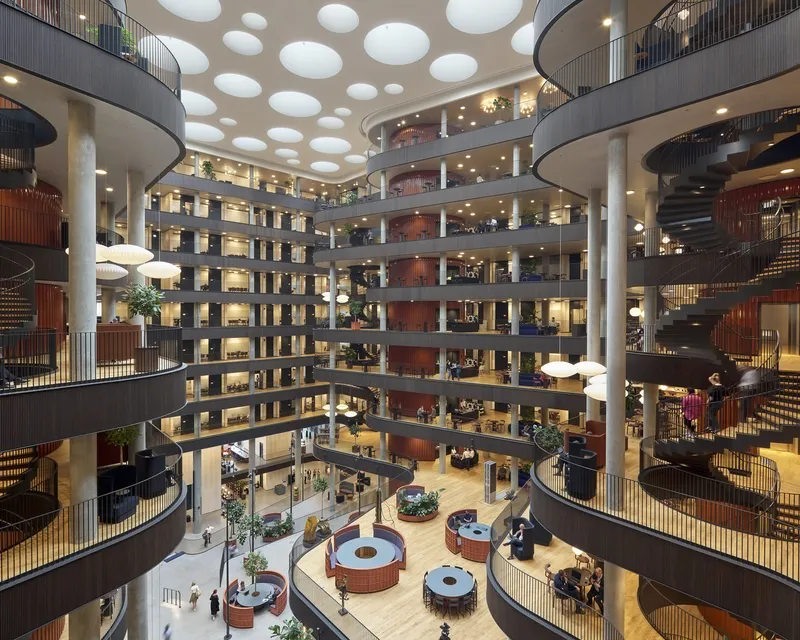

All photographs are works of Adam Mørk


Popular Articles
Popular articles from the community


GROUP A Strips a 1969 Rotterdam Harbor Headquarters to Its Frame and Wraps It in Timber Louvers
In Rotterdam's M4H harbor district, Ferro Offices reuses a 1969 frame, adds one timber storey and reaches BREEAM-NL Outstanding.

Architekt Andreas Gruber Scatters 23 Dark Timber Chalets Across a South Tyrolean Forest Edge
In Molini di Tures, Amonti Chalets breaks a resort into a hamlet of gabled timber houses, with parking, storage and services pushed into the slope.

Jaramillo Van Sluys Arquitectura and Urbanismo Turn a Demolished Registry Lot in Quito into an Orchard Plaza
In Quito's Centro Histórico, a 2,800 m² plaza exposes the San Agustín convent wall and redraws its lost Augustinian orchard in volcanic stone.

Cube Design Draws an Ecological Corridor Between Two Shenzhen Hills with the Nankai Building
Beside Shenzhen's container docks, the Nankai Building pairs stacked balconies with a climbing green screen to connect two hillsides across its height.

Similar Reads
You might also enjoy these articles


Hodi-Mandai Geram
Project Function: Preservation and revitalization of the Intangible heritage and socio-spatial identity of the Hodi by Housing, Cultural Memory Center, Sacred Grove, landscape, local tourism economy


Olio Towers: A Mid-Rise for Performers That Fuses Housing, Rehearsal, and Stage
Located blocks from Houston's Theater District, this modular tower stacks living units around a central performance atrium.

Oasis: Modular Green Housing Carved into Dhaka's Urban Fabric
A shortlisted Plugin Housing entry reclaims unauthorized settlements in Dhaka with stepped concrete volumes, green roofs, and ventilation-driven design.

Black Hole: A Floating Megastructure for the Post-Physical Era
Emiliano Mazzarotto envisions a spherical, self-scaling arena where e-sports, digital hotels, and holographic stadiums replace traditional public space.

Explore Office Building Competitions
Discover active competitions in this discipline

Challenge to reimagine the Iron Throne

Photograph architecture without architects

Illustrate the lost glory of Angkor Wat - Render Challenge

Design challenge to reuse E-waste
Comments (0)
Please login or sign up to add comments
No comments yet. Be the first to comment!