

Dark Skies: An Immersive Sound Architecture Installation in Belgium
Immersive sound installation blending architecture, acoustics, and collective experience in an open-air club space built by community participation.


A New Kind of Architectural Experience
Dark Skies is not a conventional structure but an immersive sound architecture installation conceived by Leopold Banchini Architects and Giona Bierens de Haan Architectures. Designed in collaboration with DJ and sound producer DVS1, the project redefines spatial experience through sound, presenting an architectural environment that envelops the body and senses in a collective, sonic atmosphere. Installed in Vilvoorde, Belgium, Dark Skies transforms a temporary field into an intense, democratic space of convergence, interaction, and rhythm.


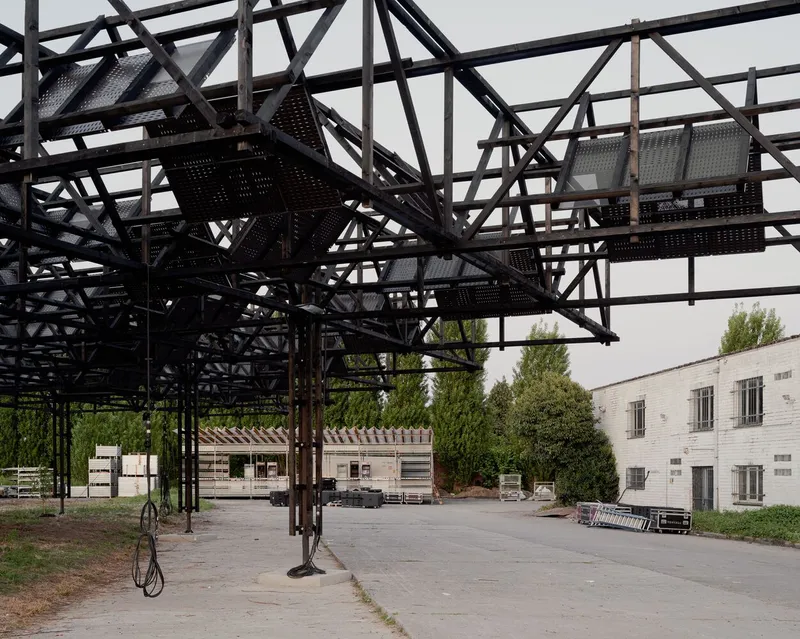
Architecture Without Walls
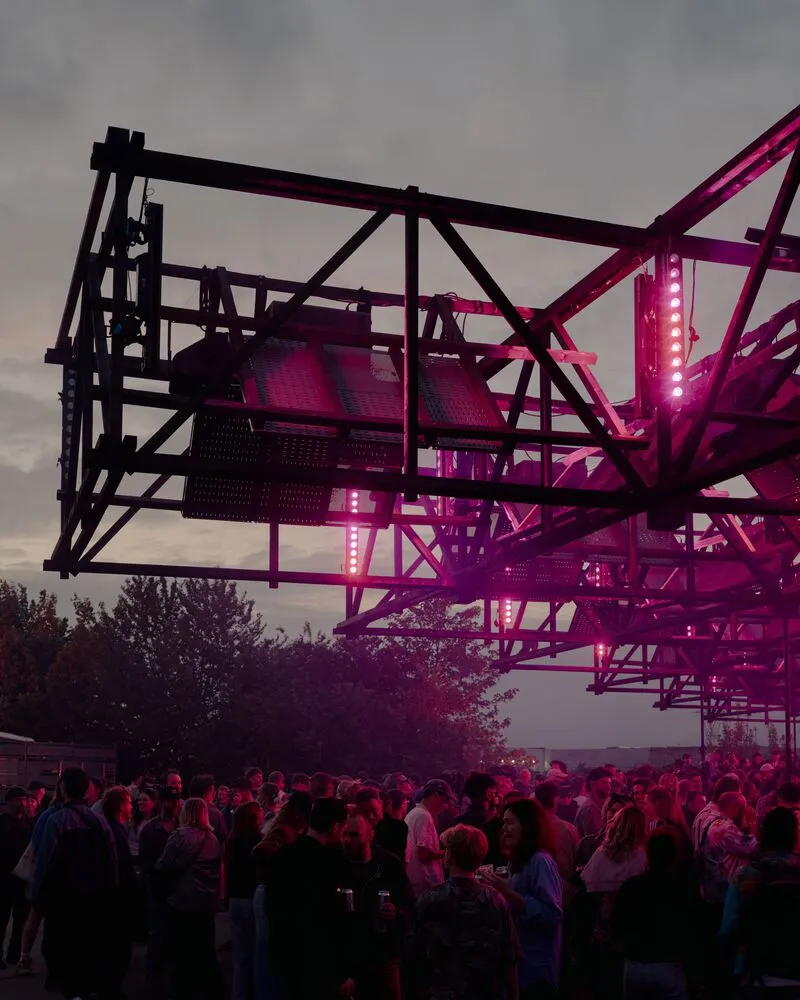
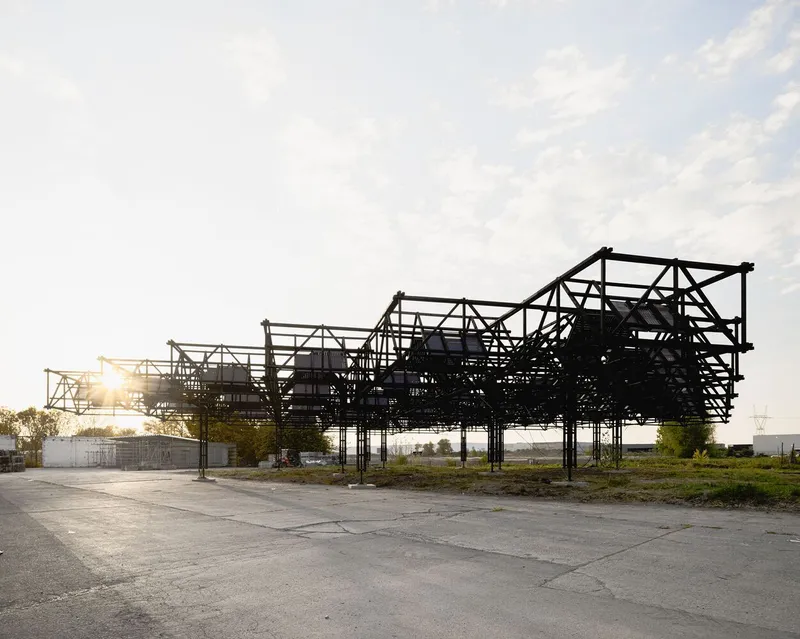
The installation abandons traditional ideas of form and enclosure. There are no walls, no physical divisions—only a suspended ceiling of sound. Composed of 116 top speakers and 58 subwoofers, this elevated structure becomes the architectural canopy. Rather than focusing on a performer, the spatial arrangement democratizes the sound experience. Every listener stands within close proximity to the audio source, dissolving the boundary between stage and audience. The sound becomes omnidirectional, unifying bodies through shared vibration and presence.
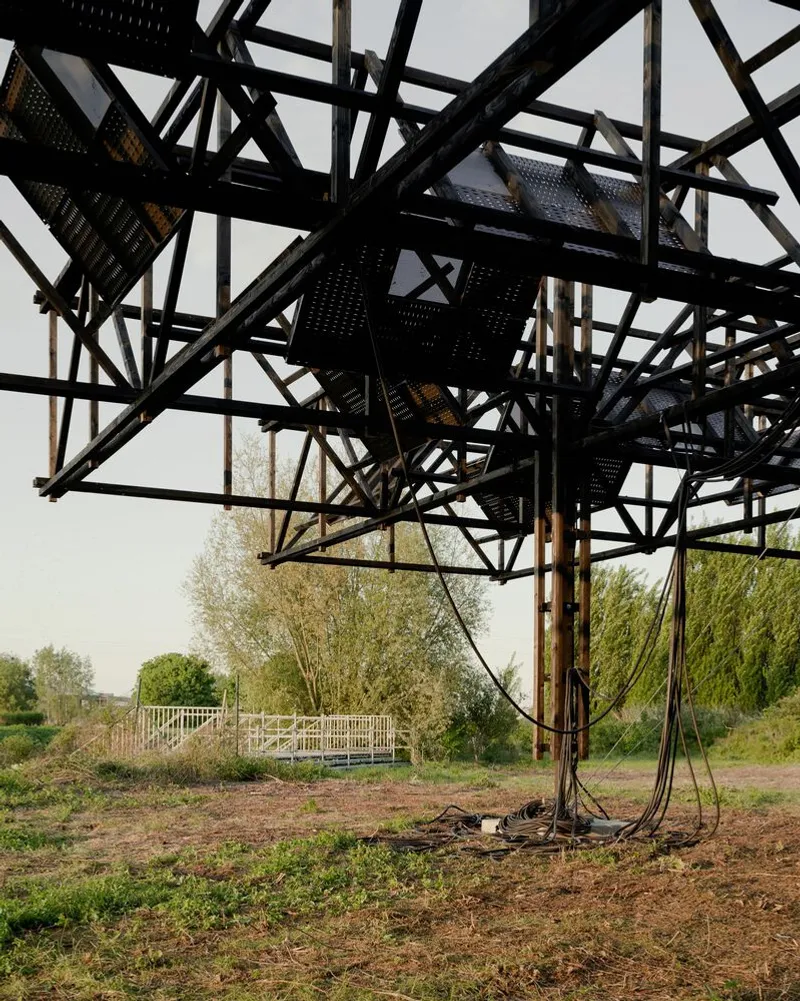


Built by Community, Powered by Reuse
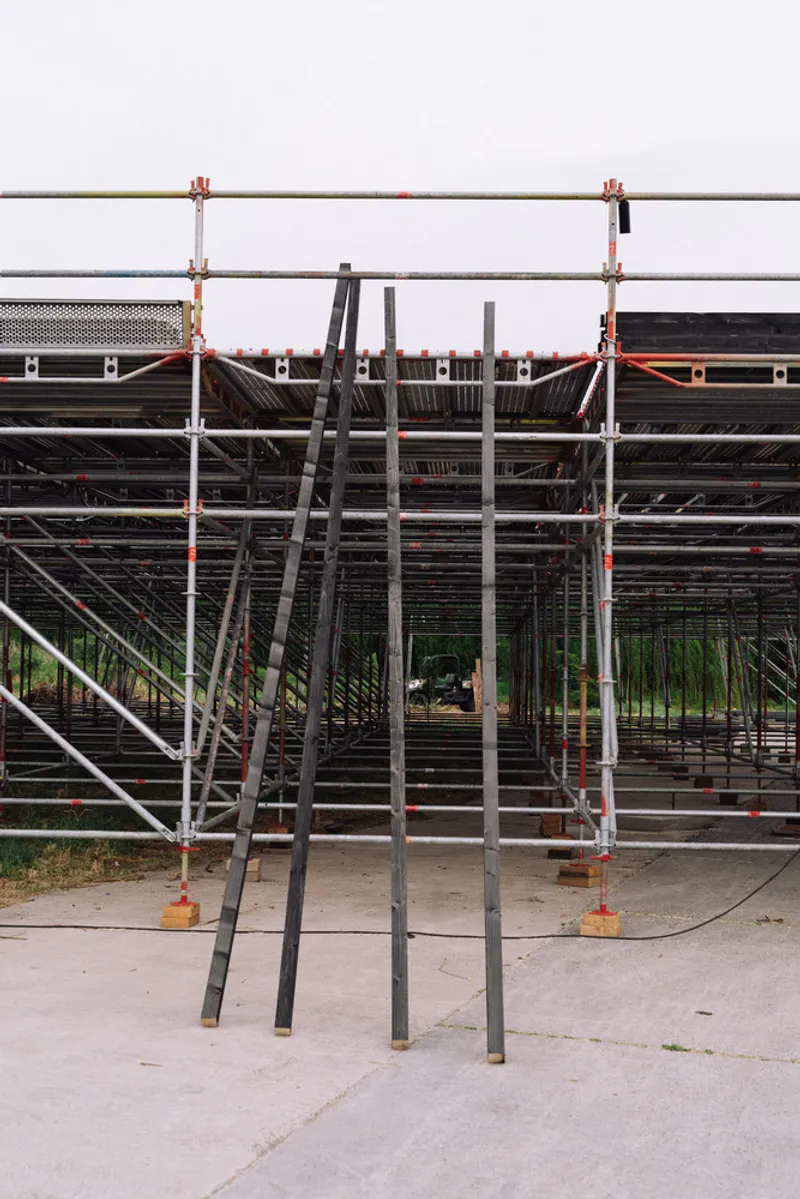
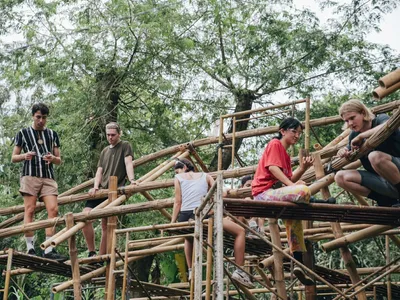
What gives Dark Skies its cultural and material resonance is its method of construction. Erected during a participatory workshop, the installation was built by non-professional volunteers using rented sound systems, recycled ceiling tiles, and standard timber beams. The process foregrounds collaboration and reuse, embedding sustainability and community into the heart of the design. The result is a temporary but powerful architectural moment that is as much social experiment as artistic endeavor.
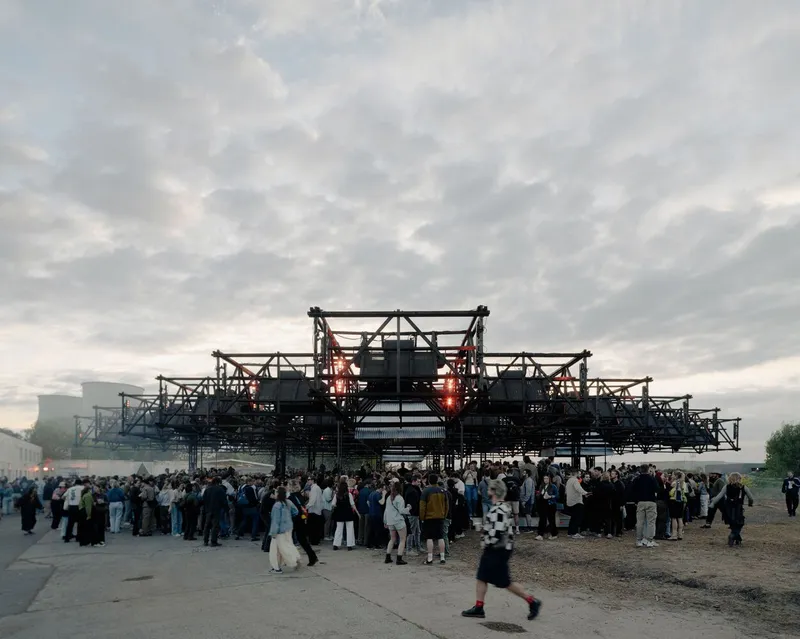
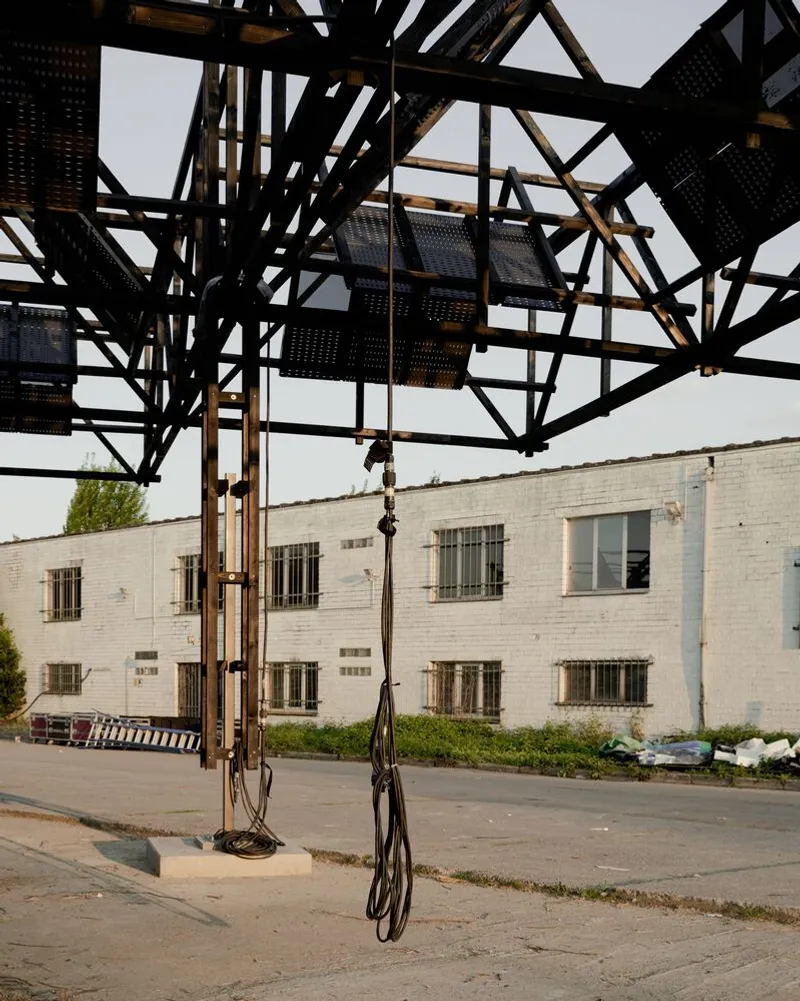

Atmosphere of Density and Lightness
Despite its large scale—spanning thousands of square meters—the structure feels simultaneously light and immersive. Suspended above a smoke-filled dancefloor, the sound ceiling hovers, drawing listeners’ attention upward and outward. The thinness of the materials contrasts with the physical intensity of the bass, while light filters through gaps in the structure, creating a theatrical, ephemeral quality. The space transforms throughout the event, animated by people, sound, and atmosphere.

Redefining the Clubbing Experience
Dark Skies is a direct response to commercial club spaces where spectacle often eclipses intimacy. In this sound architecture installation, there is no back or front, no VIP area or backstage—everyone occupies the same spatial level. The installation fosters a horizontal energy that invites deep listening, active movement, and shared experience. Sound becomes the structure; presence becomes the architecture. It’s a model of ephemeral spatial design that privileges collective emotion over fixed form.

A Model for Future Sonic Architecture
The implications of Dark Skies go beyond this single event. As an immersive sound installation, it challenges what architectural space can be when divorced from permanence and focused on the sensory. Its democratic layout, acoustic design, and participatory construction suggest a direction for future cultural architecture—spaces not just built for people, but built with them, and centered around experience rather than visual spectacle.


All Photographs are works of Jeroen Verrecht, Eline Willaert, Angelina Nikolayeva, Illias Teirlinck, Lars Duchateau, Julien Janssens, Elias Derboven



Popular Articles
Popular articles from the community


Riyadh For All: Intergenerational Urban Design for Active Aging in Rabat
Riyadh For All reimagines urban design in Rabat with intergenerational co-living, adaptive courtyards, and Moroccan cultural exchange today.

The Earth Pod: 3D Printed Homes for Resilient Refugee Communities
The Earth Pod reimagines refugee housing through 3D printed homes made from clay, combining resilience, self-sufficiency, and rapid shelter.

Conexión: Biophilic Design Reimagines High-Rise Living in Hong Kong
Conexión reimagines high-rise living in Hong Kong through biophilic design, green facades, shared spaces, daylight, water and nature within.

Hill & Cross Opera: Sculptural Opera House Architecture Shaped by Tallinn’s Landscape and Identity
Hill & Cross Opera reimagines opera house architecture in Tallinn through its sculptural hill, civic plaza, glass wave and a luminous cross.


Similar Reads
You might also enjoy these articles

Bamboo Housing Challenge 2026: Design Affordable, Sustainable Homes Using Bamboo
An international design competition by Bamboo U and IBUKU inviting architects and designers to reimagine affordable housing using bamboo — with the winning design built full-scale in Bali.

Computational Design & Education: Beegraphy Design Awards Introduces 7th Category (Featuring Jiyun's Innovative Approach)
Dive into Beegraphy’s 7th Design Awards category, where computational design meets education to create immersive, interactive learning tools, inspired by Jiyun’s work.

From Parametric Lighting to Urban Furniture: Join the 2nd Workshop in Beegraphy’s Computational Design Series
Dive into Cutting-Edge Design Techniques and Practical Applications with Industry Experts

Last Call: Unleash Your Architectural Genius in SHAK's Kindergarten Design Competition
Urgent call for architects to join SHAK's kindergarten design competition before the looming deadline


Explore Architecture Competitions
Discover active competitions in this discipline



Challenge to reimagine the Iron Throne


Photograph architecture without architects


Illustrate the lost glory of Angkor Wat - Render Challenge


Design challenge to reuse E-waste
Comments (0)
Please login or sign up to add comments
No comments yet. Be the first to comment!