
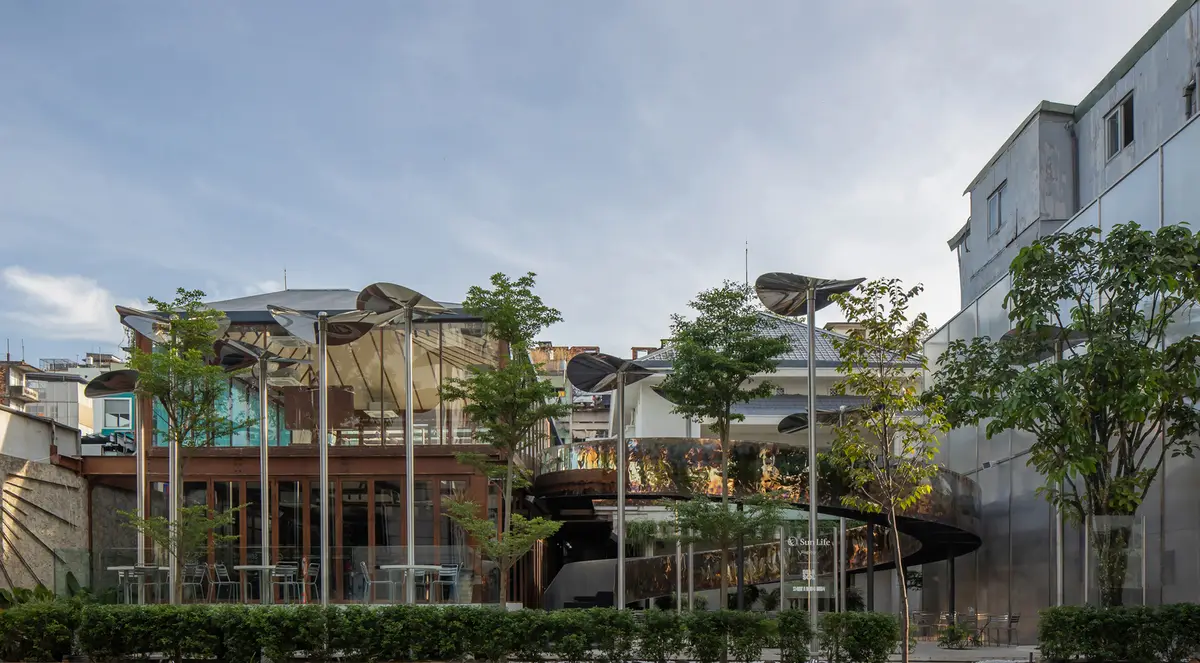
De La Sól Work and Exhibition Space by The Lab Saigon: A Dynamic Fusion of Heritage, Culture, and Contemporary Design
Adaptive reuse merges historic villa with modern steel structure, creating vibrant mixed-use space for exhibitions, coworking, retail, and community interaction.


The De La Sól Work and Exhibition Space, designed by The Lab Saigon, stands as a compelling example of mixed-use architecture in Vietnam. Completed in 2022 and spanning approximately 1,500 square meters, this innovative project merges exhibition galleries, coworking interiors, a café lounge, retail displays, and a client experience center into a single cohesive environment.
Located in the vibrant urban fabric of Ho Chi Minh City, the project reflects the city’s rapid growth while preserving its architectural heritage. Backed by Sun Life Insurance, the space embodies a forward-thinking vision that integrates culture, commerce, and community engagement.
Concept and Design Philosophy: Architecture Inspired by Growth
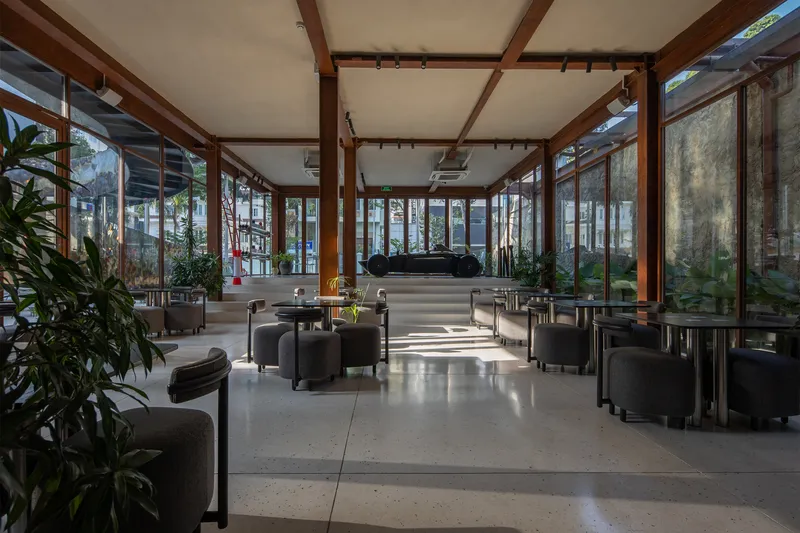
The design concept revolves around the idea of “growth”, a theme that resonates both with Sun Life’s brand identity and the evolving cityscape. The Lab Saigon translated this idea into spatial volumes that expand, overlap, and interact fluidly, creating a dynamic architectural experience.
Rather than imposing a singular structure, the architects embraced a layered design strategy. This approach allows different functions: exhibition, retail, hospitality, and workspace, to coexist while maintaining distinct spatial identities. The result is a flexible, adaptive environment that encourages interaction and exploration.

Preserving Heritage: The Old Villa as a Cultural Anchor
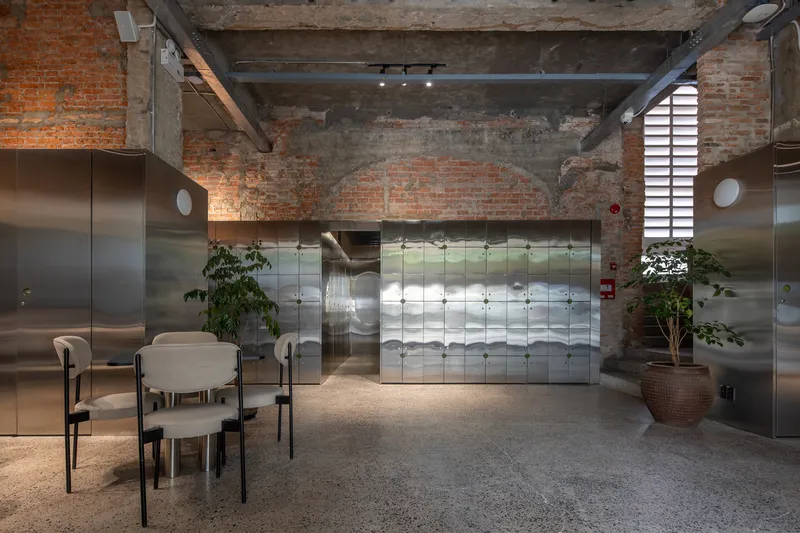
A defining feature of the project is the preservation of an existing historical villa. Instead of demolishing or heavily altering it, the architects chose to retain its original façade, celebrating its historical significance.
During the restoration process, layers of paint and plaster were carefully removed, revealing hidden architectural details such as old archways and varied brickwork from different renovation periods. These discoveries transformed the villa into a living archive, showcasing the layered history of Ho Chi Minh City.
Every exposed brick and structural element tells a story, reinforcing the project’s commitment to cultural continuity and architectural preservation.

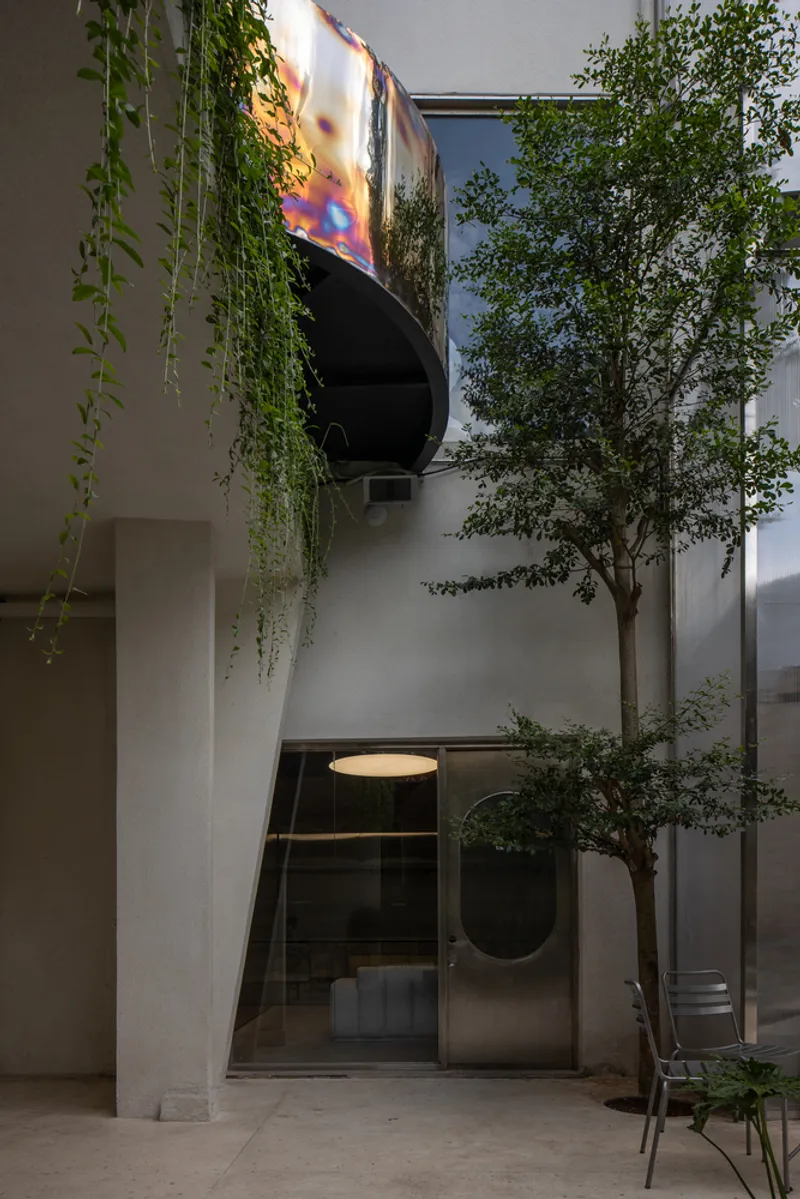
Contemporary Intervention: Steel, Glass, and Spatial Contrast
Contrasting the historic villa is a newly constructed two-story structure composed of steel and glass. This modern addition introduces transparency, lightness, and openness, creating a dialogue between old and new.
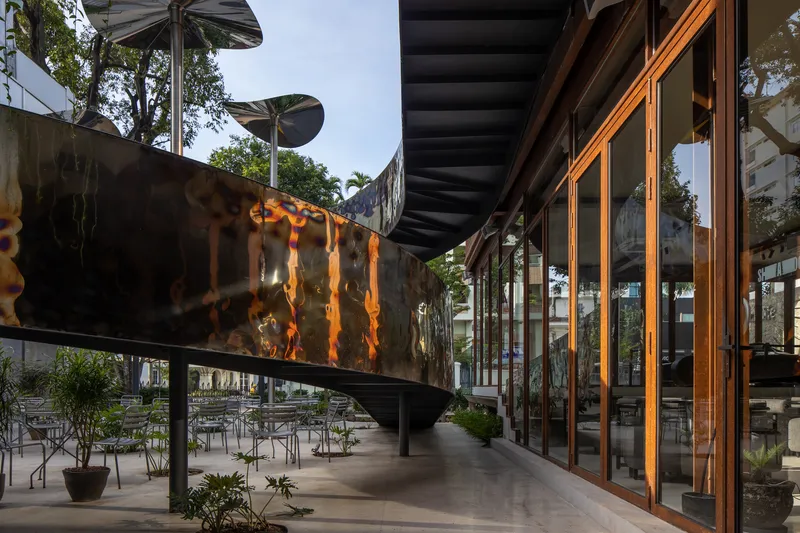
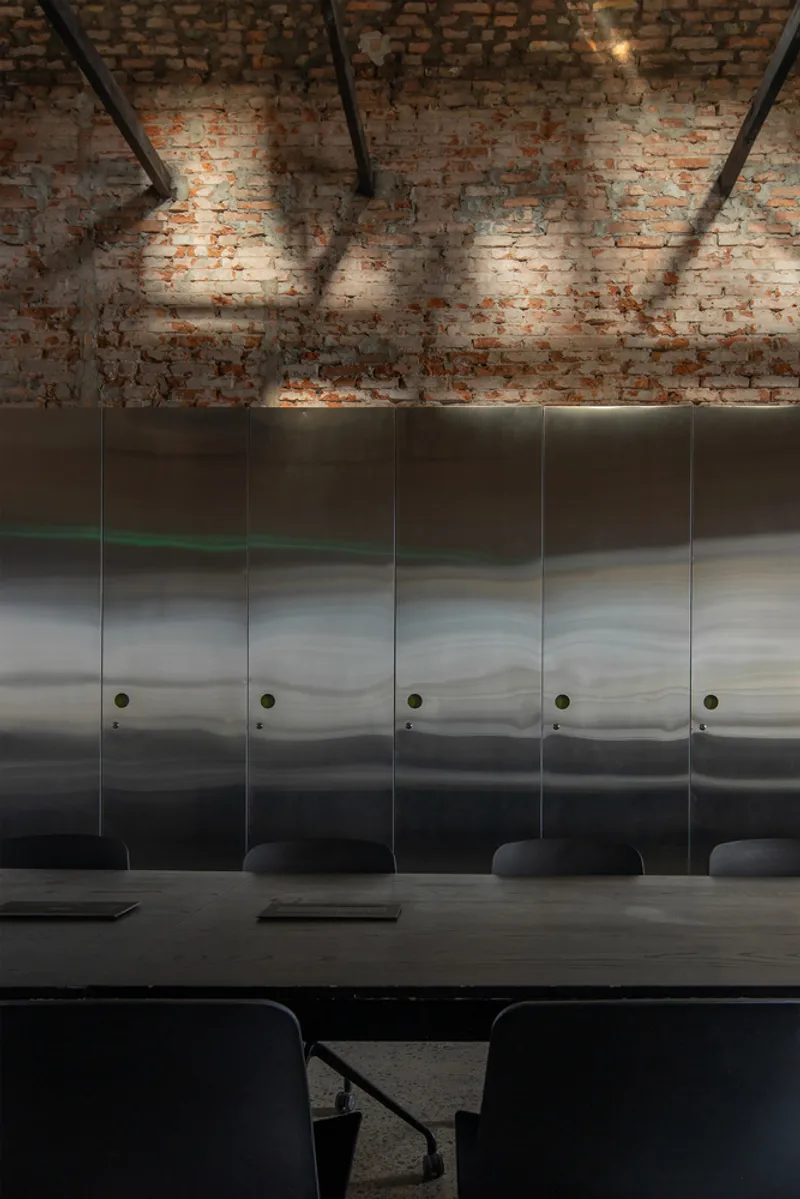
The juxtaposition of materials, aged brick and timber against sleek stainless steel, enhances the visual experience. Stainless steel was specifically chosen for its durability in Vietnam’s tropical climate, particularly during the rainy season, while also providing a reflective, contemporary aesthetic.
This contrast not only highlights the beauty of the original villa but also reinforces the project’s identity as a bridge between past and present.

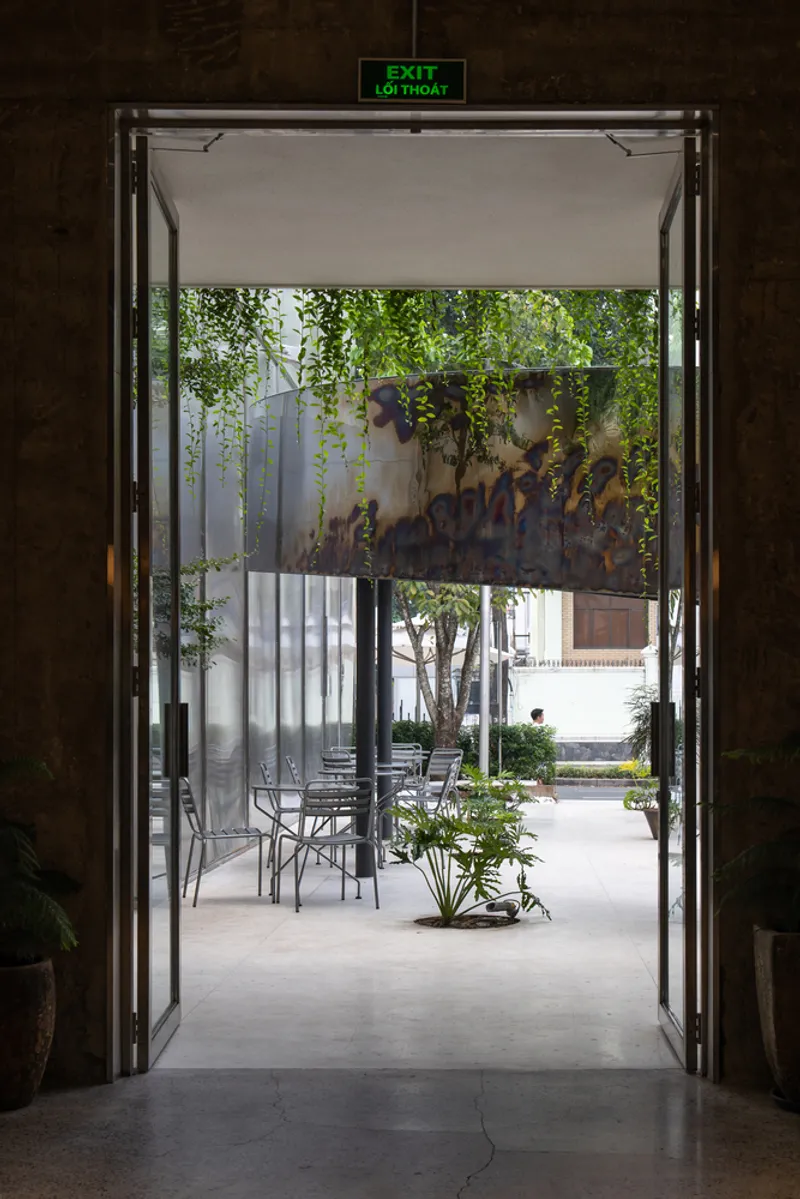
The Loop Staircase: A Sculptural and Functional Landmark
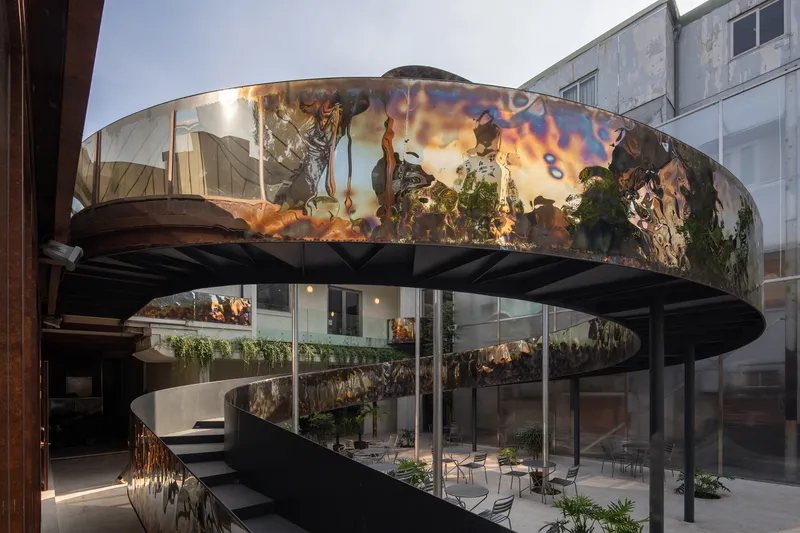
One of the most striking architectural elements is the expressive loop staircase that physically and visually connects the old and new structures. More than a circulation feature, the staircase acts as a sculptural centerpiece and spatial organizer.
It frames the outdoor deck, creating a central gathering space that functions as a multi-use lobby. Visitors can move seamlessly between levels while enjoying changing perspectives of the surrounding architecture and activities.
The staircase also doubles as a viewing platform, offering vantage points over exhibitions, social events, and daily interactions, enhancing the spatial experience.
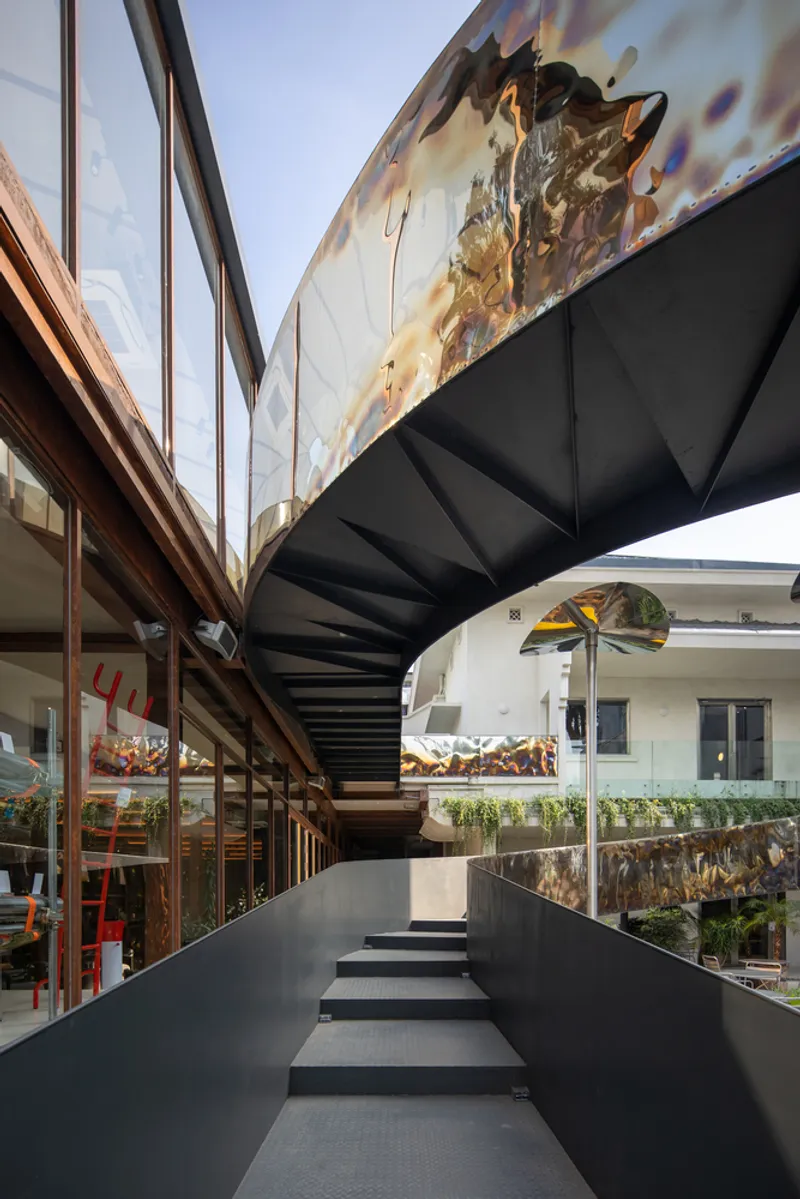
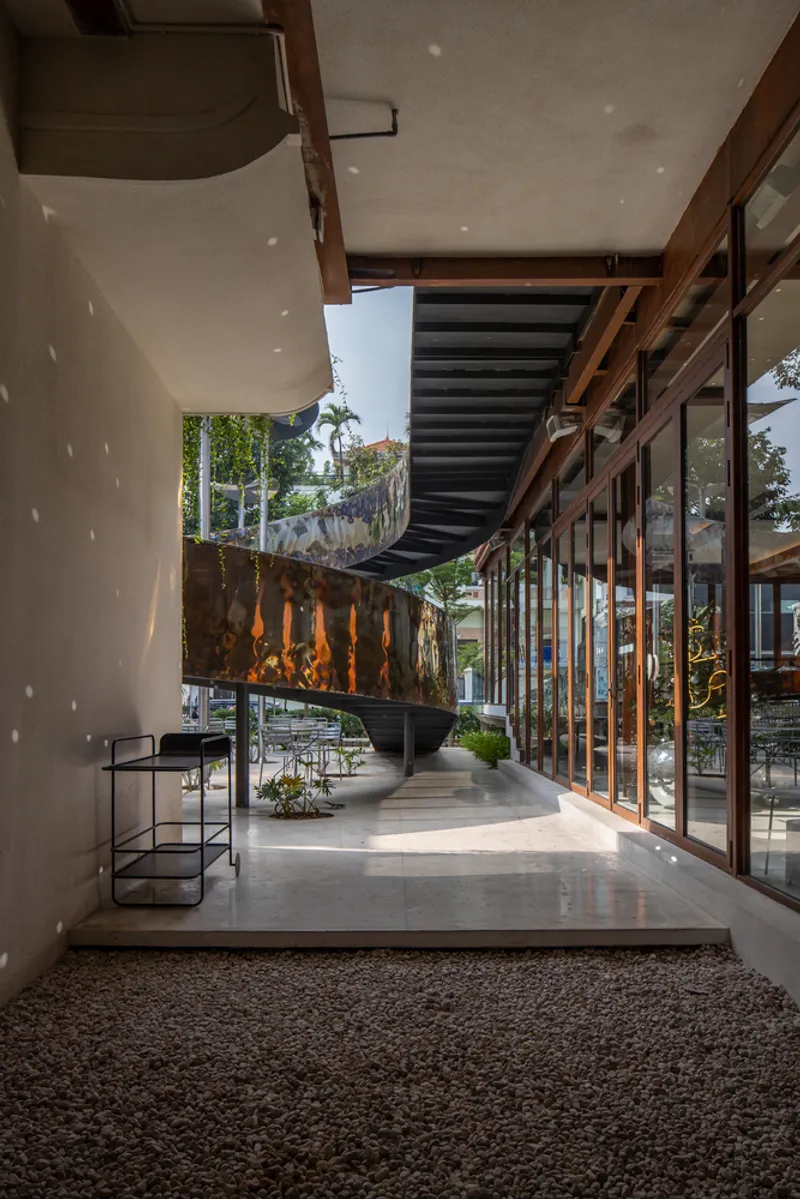
Kinetic Facade Elements: Architecture in Motion
Adding another layer of innovation, bespoke rotating kinetic sculptures are installed in the outdoor areas. These elements serve multiple purposes:
They act as shading devices, reducing heat gain while enhancing comfort. They function as visual landmarks, making the building instantly recognizable. They symbolize growth and movement, reinforcing the project’s core concept.
This integration of art, function, and symbolism elevates the architectural narrative, making the building both interactive and expressive.

Interior Design and Material Strategy
The interior design carefully balances authenticity and modernity. Original brick walls and wooden beams are preserved, maintaining the tactile and historical qualities of the villa.
In contrast, contemporary furniture and finishes introduce a clean, refined aesthetic. Collaborations with manufacturers such as B+ Furniture, District Eight, and Zero Furniture contribute to a cohesive yet diverse interior language.
Large windows and open layouts enhance natural light and ventilation, creating a comfortable environment for work, leisure, and cultural engagement.


Flexible Programming: A Space for Community and Creativity
De La Sól is designed as a multifunctional platform that supports a wide range of activities. From art exhibitions and corporate events to casual gatherings and coworking sessions, the space adapts effortlessly to different uses.
The outdoor deck and central areas encourage social interaction, fostering a sense of community. This adaptability makes the project not just a building, but a living, evolving cultural hub.


A Model for Adaptive Reuse and Urban Innovation
De La Sól Work and Exhibition Space exemplifies how architecture can successfully merge heritage preservation with contemporary design. By respecting the past while embracing innovation, The Lab Saigon has created a landmark that reflects the spirit of modern Ho Chi Minh City.
The project stands as a benchmark for adaptive reuse, mixed-use architecture, and culturally responsive design, offering valuable insights for future urban developments.

All photographs are works of
Chimnon Studio


Popular Articles
Popular articles from the community


David Ortega Stacks a Two-Story Mexico City Penthouse Around a Steel Stair and a Pergola-Shaded Roof Terrace
In Colonia Roma, a 300 m² penthouse uses oak joinery, a planted steel stair and a slatted roof pergola to make a new-build apartment feel like a house.

Architekt Andreas Gruber Scatters 23 Dark Timber Chalets Across a South Tyrolean Forest Edge
In Molini di Tures, Amonti Chalets breaks a resort into a hamlet of gabled timber houses, with parking, storage and services pushed into the slope.

longwave studio Reorganizes a 112 m² Tainan Apartment Around the Daily Routines of a Family and Two Cats
In Tainan, Taiwan, birch plywood, rust-red furniture and a freestanding plaster wall link arrival, storage, work and family life in one apartment.

Cube Design Draws an Ecological Corridor Between Two Shenzhen Hills with the Nankai Building
Beside Shenzhen's container docks, the Nankai Building pairs stacked balconies with a climbing green screen to connect two hillsides across its height.

Similar Reads
You might also enjoy these articles

Gil Mello Arquitetura Tilts a Single Roof Toward the Waterfalls on a Plateau Above Aiuruoca, Brazil
In Aiuruoca, Minas Gerais, a 200 m² house of local labor and reclaimed poles pairs a low valley veranda with a tall mountain one.

U.GA Architects Wraps an Oval Rooftop Pool in Curved Board-Formed Concrete on Busan's Jeollidan-gil
In Busan's Jeonpo-dong, a 454 m² mixed-use block stacks a neighborhood facility, guest rooms and an oval rooftop pool inside spiraling concrete walls.

Felipe Hess Arquitetos Turns a Blind Stone Wall to the Street and Opens a Brazilian House onto a Courtyard and Canal
A canal-front house in Brazil hides behind painted stone and planting, then opens to an olive-tree courtyard, a reed-ceilinged porch and a curving pool.

David Macias Steps a Doorless Stone and Plaster House Down a Tropical Colombian Hillside
In the humid hills of Colombia, Threshold House replaces the front door with an open void and terraces its 850 m² down the slope instead of fighting it.

Explore Architecture Competitions
Discover active competitions in this discipline

Challenge to reimagine the Iron Throne

Photograph architecture without architects

Illustrate the lost glory of Angkor Wat - Render Challenge

Bring back Drive In's
Comments (0)
Please login or sign up to add comments
No comments yet. Be the first to comment!