
Design Chair for Kids at Home
A child-centered furniture design that transforms seating into a safe, adaptive, and playful architectural experience for growing children at home.


In contemporary domestic architecture, children are often treated as secondary users of space. Furniture is typically scaled down from adult proportions, overlooking the physical, psychological, and behavioral needs of children. Design Chair for Kids at Home challenges this norm by proposing a child-centered furniture design approach: one that places children at the core of spatial, ergonomic, and emotional considerations.
Rather than adapting adult furniture for children, this project reimagines seating as an architectural object shaped directly by child behavior, body proportions, and movement patterns. The result is a sculptural, ground-oriented chair that functions as a seat, play surface, and spatial anchor within the home.
From Pattern Logic to Form Generation
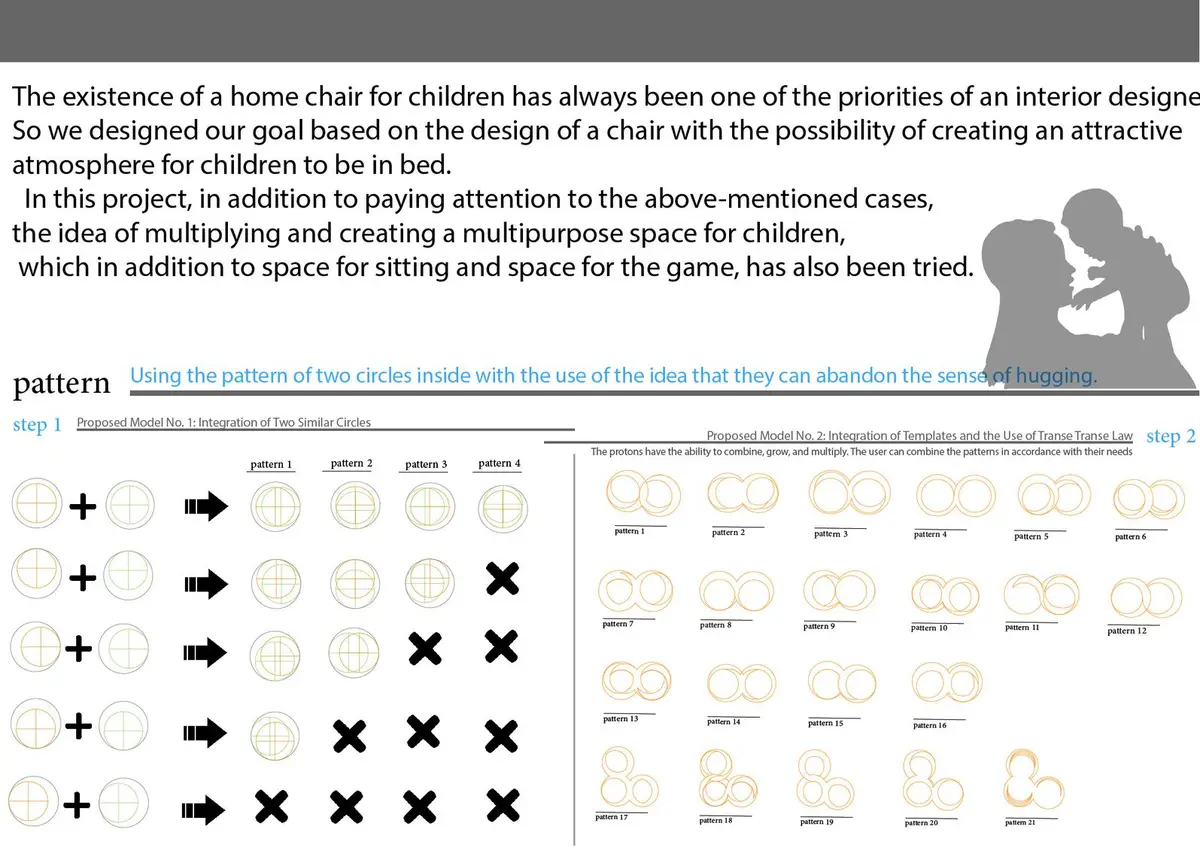
The design process begins with abstract geometric patterns that act as generative rules rather than fixed forms. Circular and overlapping loop patterns are manipulated by lifting, folding, and stretching surfaces to create backrests and seating depressions. These transformations result in multiple seating configurations, each responding to different postures such as sitting, reclining, crawling, and climbing.
Unlike conventional chairs, the form does not rely on legs. The low-profile, grounded geometry enhances stability and eliminates fall risks, an essential consideration in child-centered furniture design. The seat becomes a continuous surface, allowing children to interact with it freely and intuitively.
Ergonomics Based on Child Body Dimensions
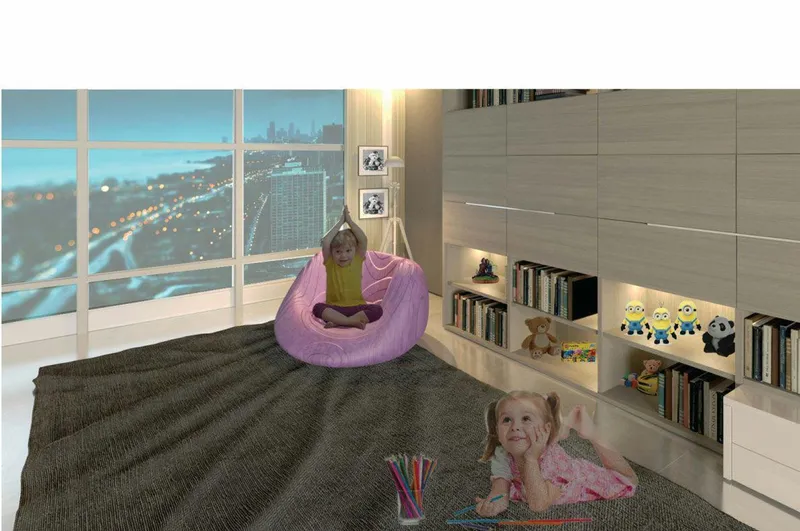
A key strength of the project lies in its rigorous study of juvenile ergonomics. Standard body dimensions for children aged 2 to 7 years inform seat height, back inclination, depth, and curvature. These dimensions ensure that the chair supports natural posture without restricting movement.
By aligning furniture scale with child anatomy, the design encourages comfort, autonomy, and prolonged engagement. The chair supports multiple activities, from drawing and reading to resting and imaginative play, without forcing a single, fixed posture.
Safety as a Design Principle
Safety is integrated into the form itself rather than added as an afterthought. The absence of sharp edges, the enveloping seat geometry, and the legless structure collectively reduce the risk of tipping or falling. The soft, continuous curves act as natural boundaries, allowing children to explore freely while remaining protected.
This approach reflects a broader architectural philosophy: safety should emerge from form, proportion, and material logic rather than external constraints.
Adaptability and Spatial Growth
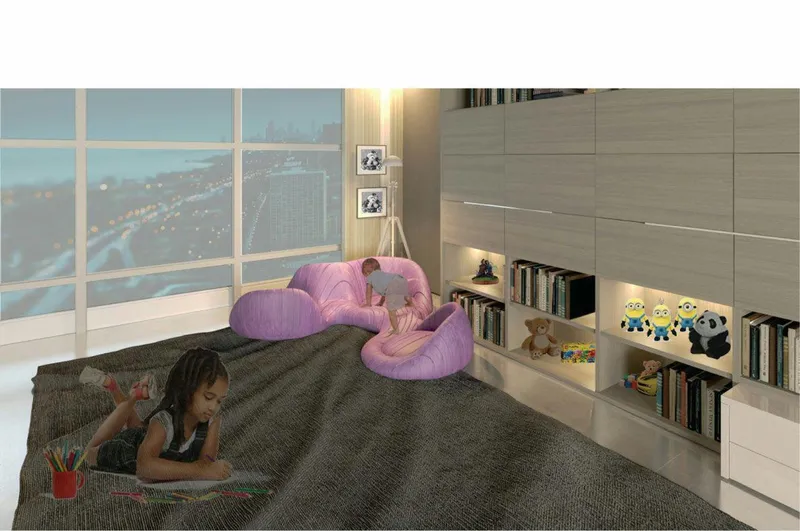
One of the defining qualities of this child-centered furniture design is its adaptability. The underlying pattern logic allows the chair to expand, contract, or connect with additional units depending on available space and user needs. As children grow, the chair evolves with them, supporting different scales of use and social interaction.
In shared domestic environments, the chair also becomes a social object. Children can sit together, face one another, or use the surface collectively, reinforcing interaction and play-based learning.
Integrating Furniture into Home Architecture
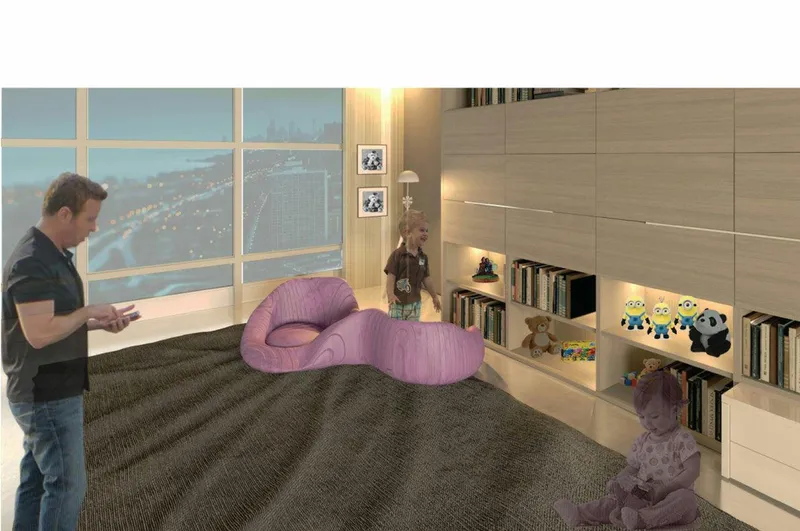
Placed within a contemporary living space, the chair acts as a soft architectural island. Its sculptural presence contrasts with rigid cabinetry and linear interiors, introducing warmth and tactility into the home. The furniture does not merely occupy space, it defines it.
By blurring the boundaries between furniture, play equipment, and architectural element, the project proposes a new role for child-focused objects within domestic design.
Design Chair for Kids at Home demonstrates how child-centered furniture design can elevate everyday objects into meaningful architectural interventions. Through pattern-based form generation, ergonomic research, and safety-driven geometry, the project redefines how children engage with space at home.
Designed by Maryam Sherafat, Sepide Shabanian, and Nazanin Esmian, the project stands as a thoughtful exploration of how furniture can grow with its users: supporting play, learning, and comfort while respecting the unique world of childhood.


Popular Articles
Popular articles from the community


Co-Life: Senior Housing Design That Reconnects Older Adults With the City
Co-Life reimagines senior housing design through healing gardens, shared streets, workshops, and a sustainable community across generations.

The Ocean Hive: Sustainable Architecture for a Self-Sufficient Civilization at Sea
The Ocean Hive imagines sustainable architecture at sea, where modular habitats, algae, wave power and ocean waste sustain a growing colony.

Lunar Spiral: Space Architecture Shaped by the Mathematics of the Universe
Lunar Spiral reimagines space architecture through Fibonacci geometry, lunar regolith, levitating habitats, and self-sustaining Moon living.

Co-life: Sustainable Architecture for Age-Friendly Community Living
Co-life reimagines sustainable architecture for seniors through courtyards, rammed earth, shared gardens, and spaces designed for belonging.

Similar Reads
You might also enjoy these articles


Maya Harvest: A Cacao Resort Village Rooted in Mayan Tradition and Local Craft
Situated within a Tabasco cacao plantation, this shortlisted resort proposal merges vernacular materials with hands-on cultural immersion.
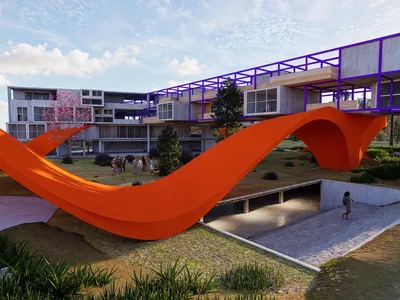
Harmonia: A River-Shaped Community That Grows Over Decades in Boa Vista
Curved pathways and modular grid structures along the Branco River create a phased settlement designed to evolve from 2030 to 2050.

The Architecture of Bathing: A Mughal Hammam Reimagined Across the Yamuna
Charlotte May's honorable mention entry for The Black Taj reinterprets Agra's bathing rituals through red sandstone, water, and framed views of the Taj Mah
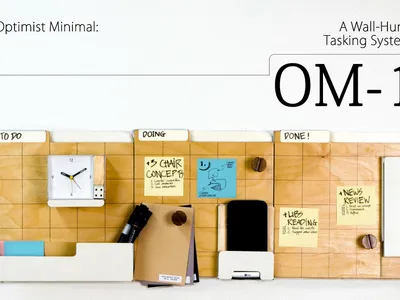
Om-1: A Wall-Hung System That Moves Your Workspace Off the Desk
Modular plywood boards, magnetic pegs, and utility elements migrate clutter from the horizontal surface to the vertical plane.

Explore Furniture Design Competitions
Discover active competitions in this discipline

Challenge to merge furniture with learning

Competition to design a workstation for architects
Comments (0)
Please login or sign up to add comments
No comments yet. Be the first to comment!