
Destrier Housing Block by Pierre Blondel Architectes — A Sustainable, Community-Driven Residential Transformation in Brussels
A sustainable housing block in Brussels combining diverse typologies, reused materials, community spaces, and human-scaled design by Pierre Blondel Architectes.


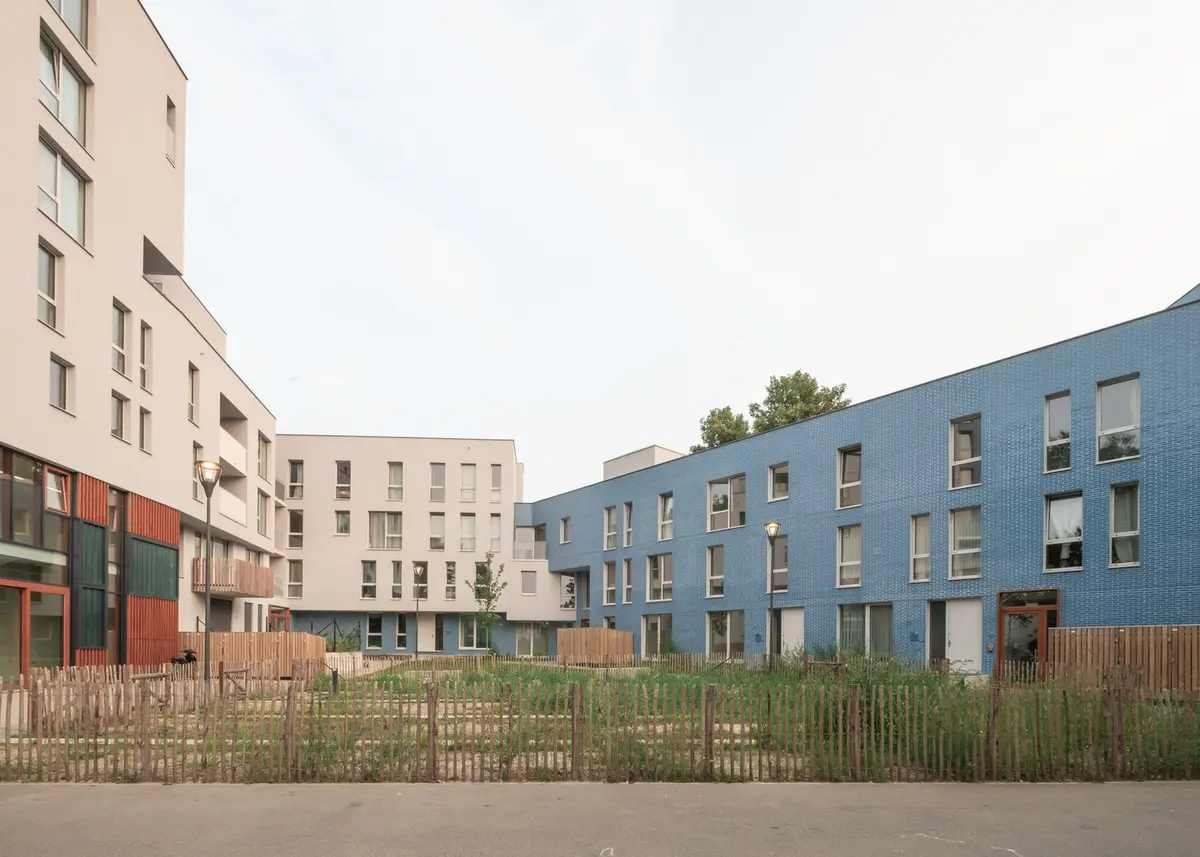
The Destrier Housing Block by Pierre Blondel Architectes is a forward-thinking residential development that redefines urban living along the bustling Chaussée de Louvain in Brussels. Set within a heterogeneous and evolving urban fabric, the 13,650 m² project introduces a human-scaled, socially inclusive, and environmentally responsible model for contemporary housing. Completed in 2024, it integrates social housing, mid-income residences, public amenities, and vibrant community spaces to create a dynamic and interconnected neighborhood.
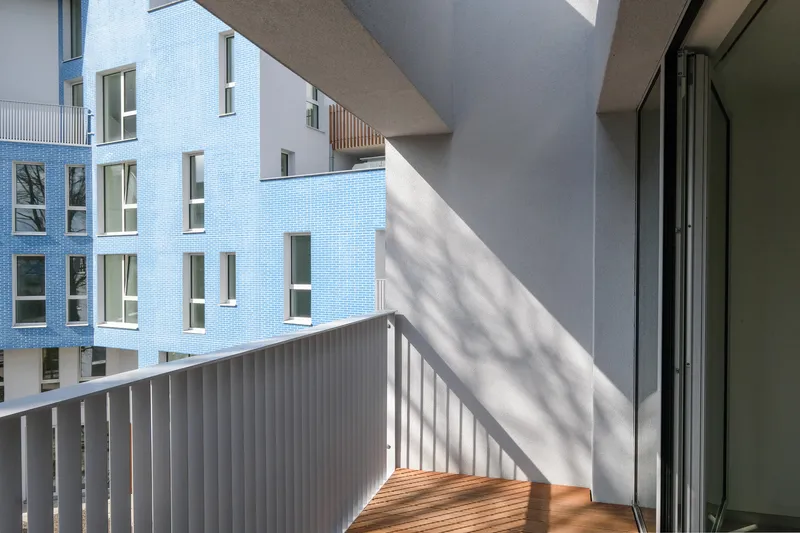
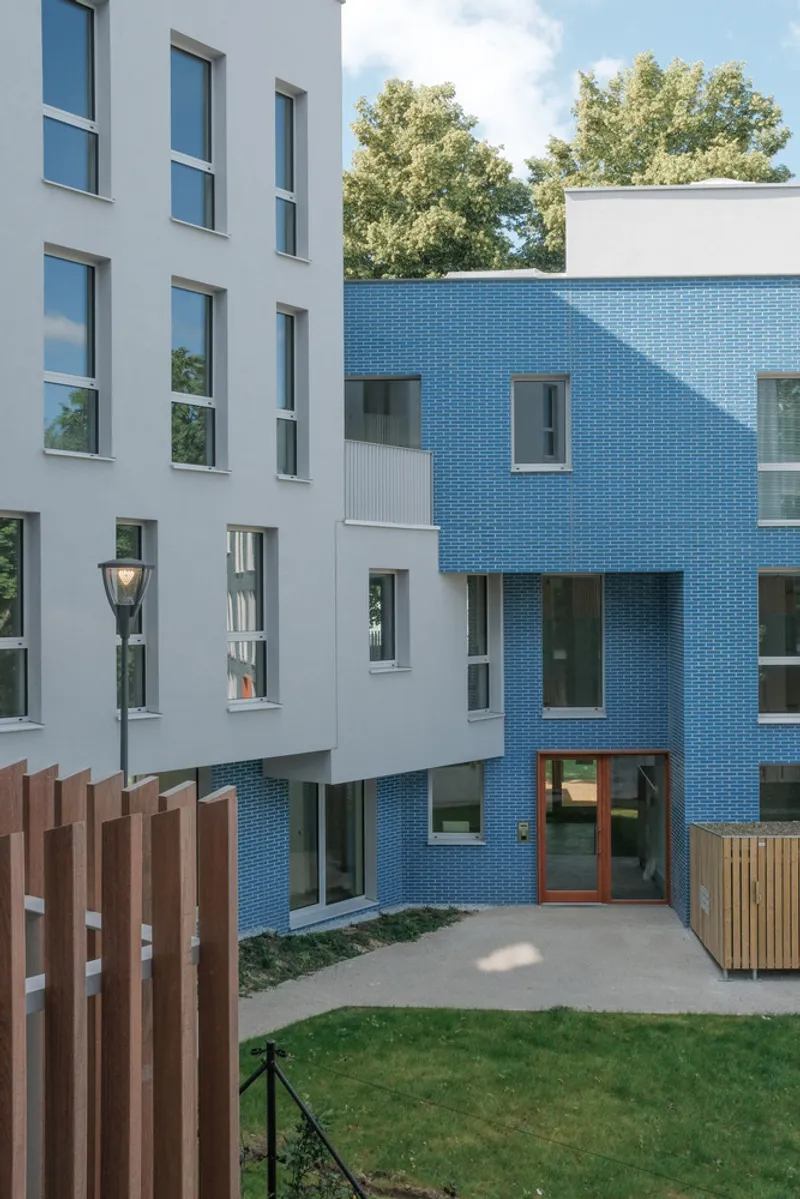
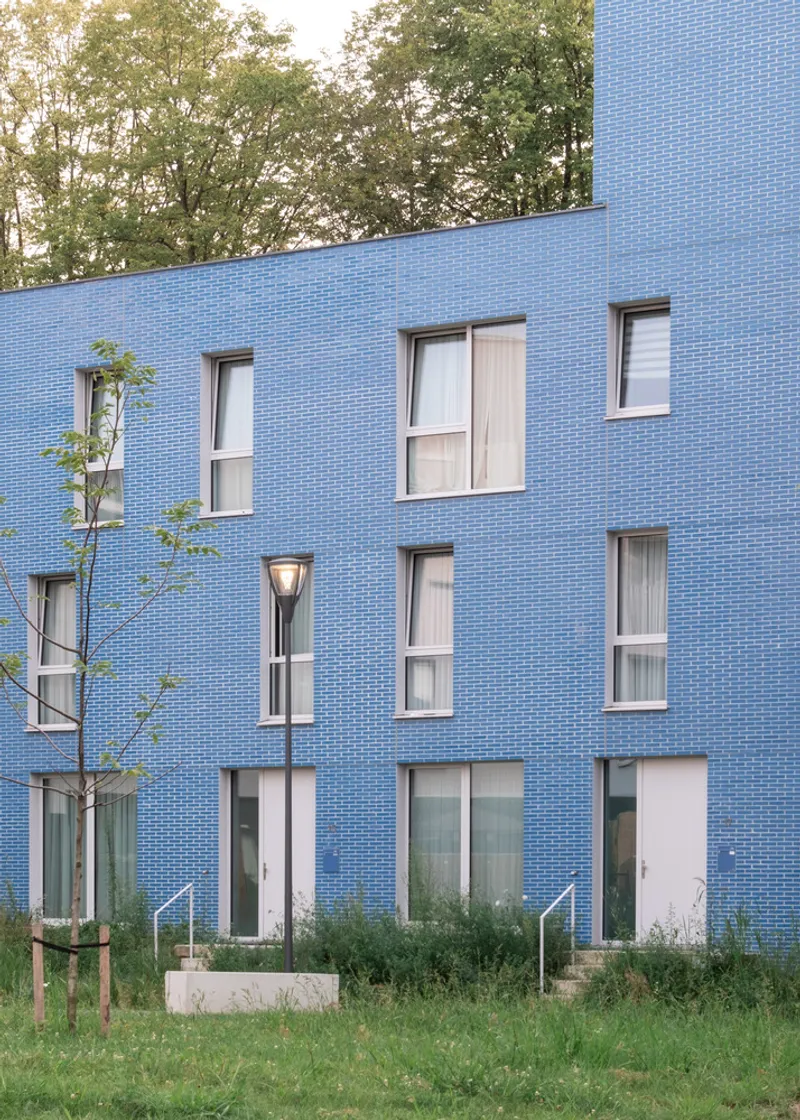
At its core, the project transforms a long, linear plot measuring 130 meters by 40–50 meters. This transformation is both deep and sensitive, beginning with the demolition and reconstruction of two outdated buildings that previously housed 43 units. In their place, the architects introduced 130 new homes that embrace typological diversity and social inclusion. These residences are distributed across 13 interconnected buildings, each with its own entrance, forming clusters of 4 to 22 units—an approach that strengthens a genuine sense of belonging and community.
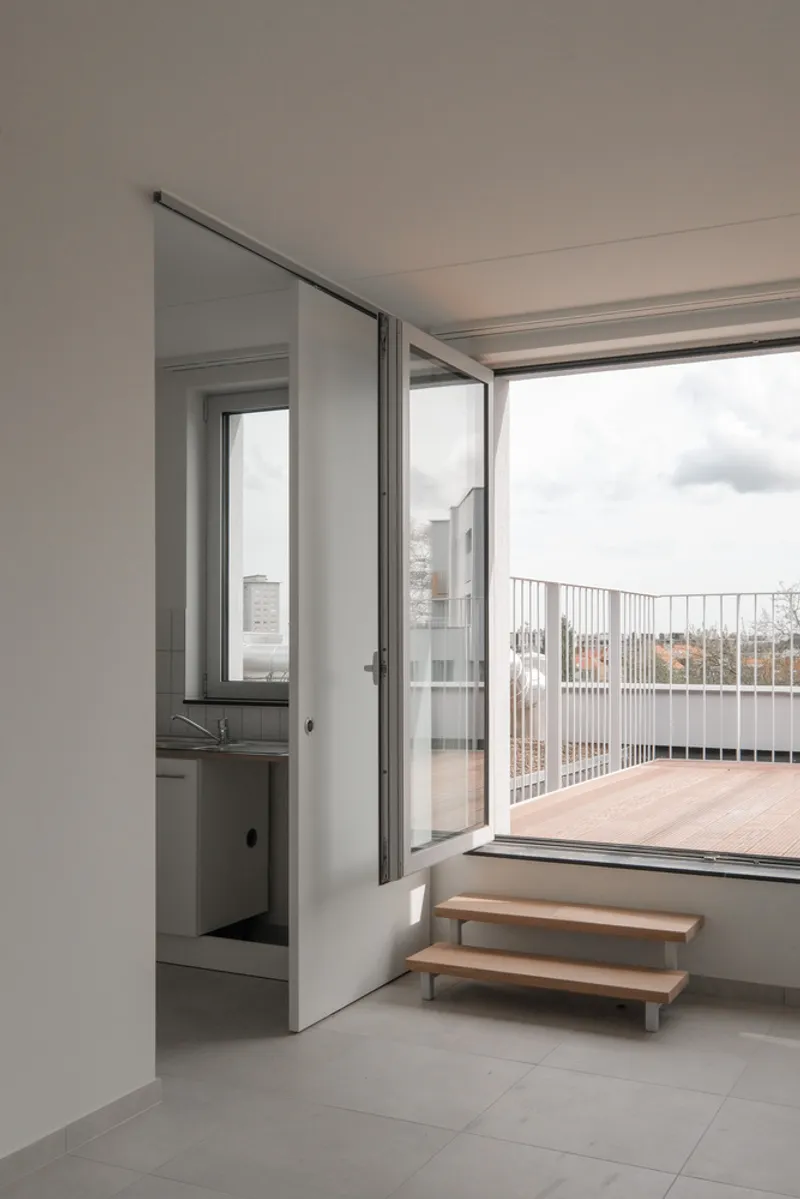
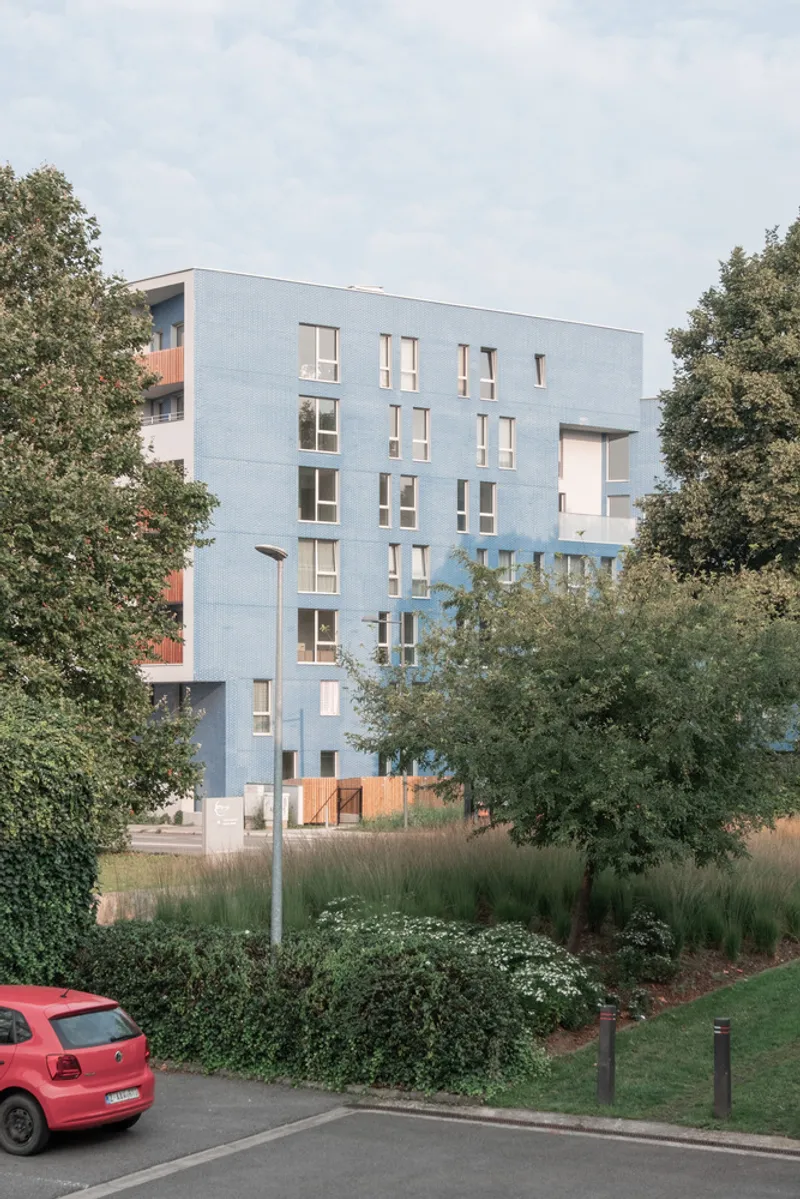
One of the project’s most defining architectural gestures is its “folded ribbon” concept, which balances built continuity with urban porosity. The strategic insertion of green pockets, visual corridors, and connections to the surrounding city softens the massing and enhances environmental comfort. Varying building heights—from five stories to three—create a smooth, respectful transition with the existing neighborhood and ensure harmonious integration with the streetscape.
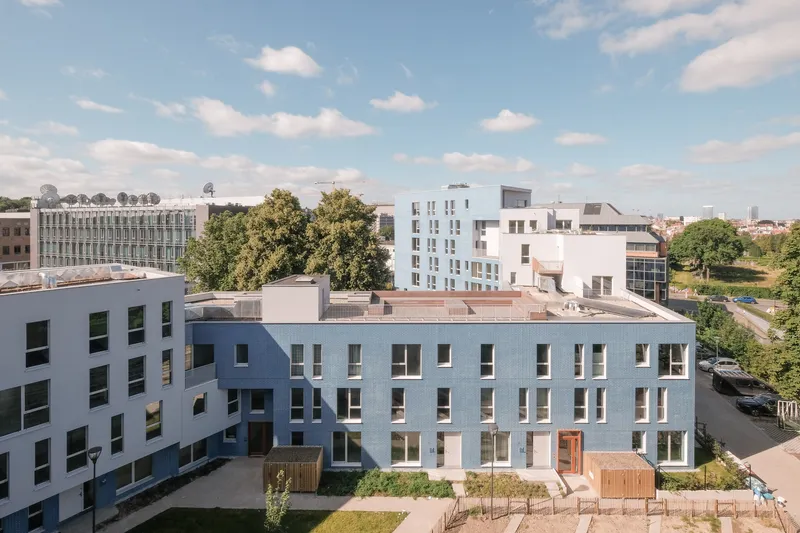
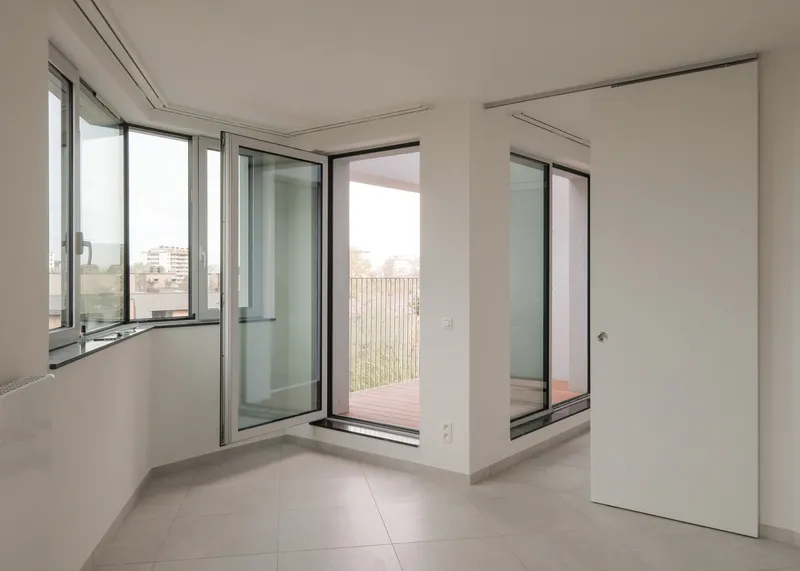
Sustainability is embedded throughout the project, not only through new construction but also through a thoughtful material reuse strategy. Reglit glass panels and cement tiles from the demolished structures were meticulously recovered, restored, and reintegrated. This act is both symbolic and practical, demonstrating that even large-scale developments can embrace circular design principles and reduce material waste.
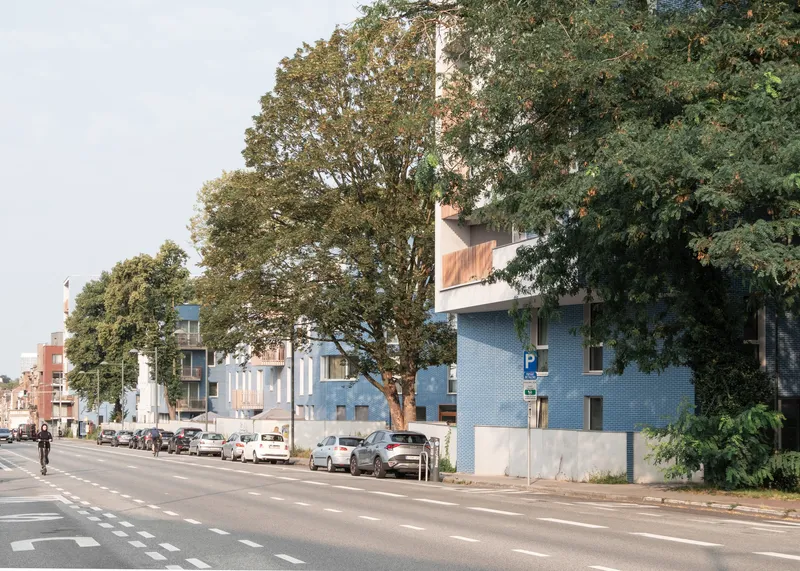
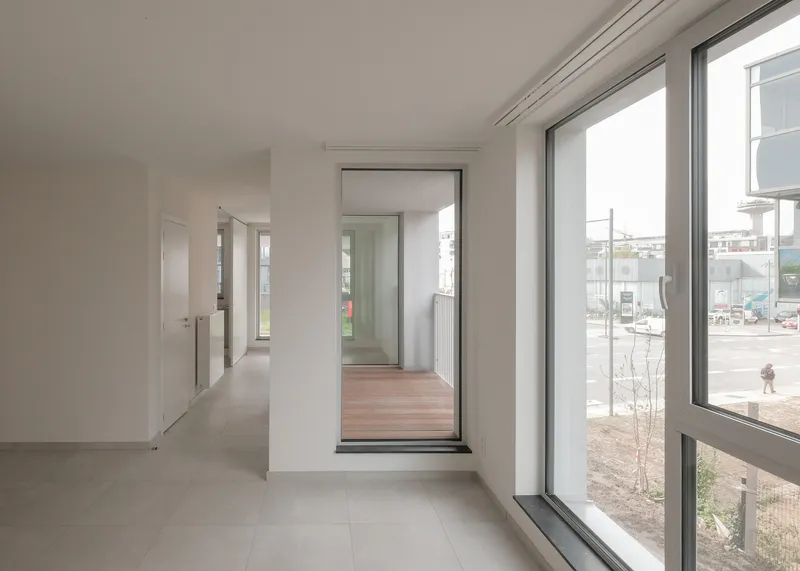
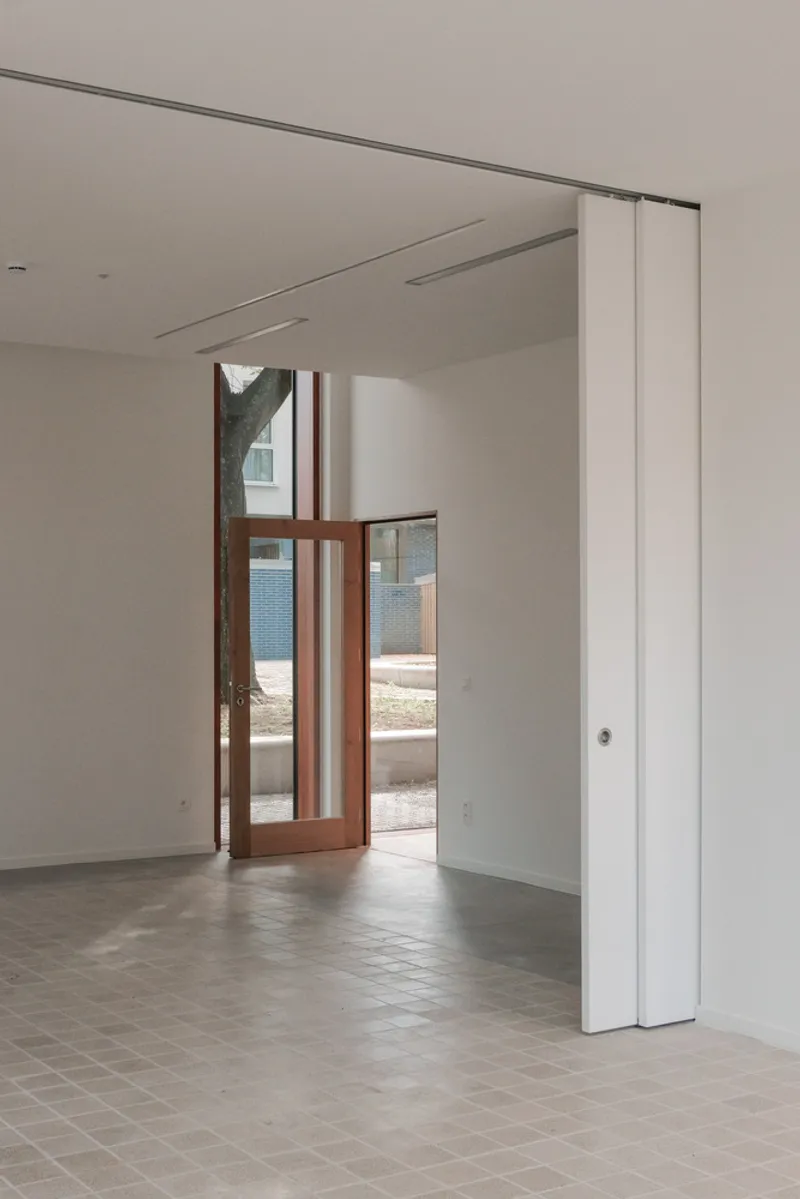
A cornerstone of the project is the Maison Destrier, a multifunctional civic hub that anchors social life within the housing block. This open, participatory space supports shared gardens, beekeeping, workshops, classes, and composting programs. Run through collaborative community management, it fosters intergenerational engagement, social cohesion, and local initiatives—transforming an architectural project into a thriving neighborhood ecosystem.
All photographs are works of Tomás Barberá Ramallo


Popular Articles
Popular articles from the community


longwave studio Reorganizes a 112 m² Tainan Apartment Around the Daily Routines of a Family and Two Cats
In Tainan, Taiwan, birch plywood, rust-red furniture and a freestanding plaster wall link arrival, storage, work and family life in one apartment.

GROUP A Strips a 1969 Rotterdam Harbor Headquarters to Its Frame and Wraps It in Timber Louvers
In Rotterdam's M4H harbor district, Ferro Offices reuses a 1969 frame, adds one timber storey and reaches BREEAM-NL Outstanding.

U.GA Architects Wraps an Oval Rooftop Pool in Curved Board-Formed Concrete on Busan's Jeollidan-gil
In Busan's Jeonpo-dong, a 454 m² mixed-use block stacks a neighborhood facility, guest rooms and an oval rooftop pool inside spiraling concrete walls.

David Ortega Stacks a Two-Story Mexico City Penthouse Around a Steel Stair and a Pergola-Shaded Roof Terrace
In Colonia Roma, a 300 m² penthouse uses oak joinery, a planted steel stair and a slatted roof pergola to make a new-build apartment feel like a house.

Similar Reads
You might also enjoy these articles


Hodi-Mandai Geram
Project Function: Preservation and revitalization of the Intangible heritage and socio-spatial identity of the Hodi by Housing, Cultural Memory Center, Sacred Grove, landscape, local tourism economy


Olio Towers: A Mid-Rise for Performers That Fuses Housing, Rehearsal, and Stage
Located blocks from Houston's Theater District, this modular tower stacks living units around a central performance atrium.

Oasis: Modular Green Housing Carved into Dhaka's Urban Fabric
A shortlisted Plugin Housing entry reclaims unauthorized settlements in Dhaka with stepped concrete volumes, green roofs, and ventilation-driven design.

Black Hole: A Floating Megastructure for the Post-Physical Era
Emiliano Mazzarotto envisions a spherical, self-scaling arena where e-sports, digital hotels, and holographic stadiums replace traditional public space.

Explore Housing Block Competitions
Discover active competitions in this discipline

Challenge to design mud housing for contemporary communities

Challenge to reimagine the Iron Throne

Photograph architecture without architects

Illustrate the lost glory of Angkor Wat - Render Challenge
Comments (0)
Please login or sign up to add comments
No comments yet. Be the first to comment!