
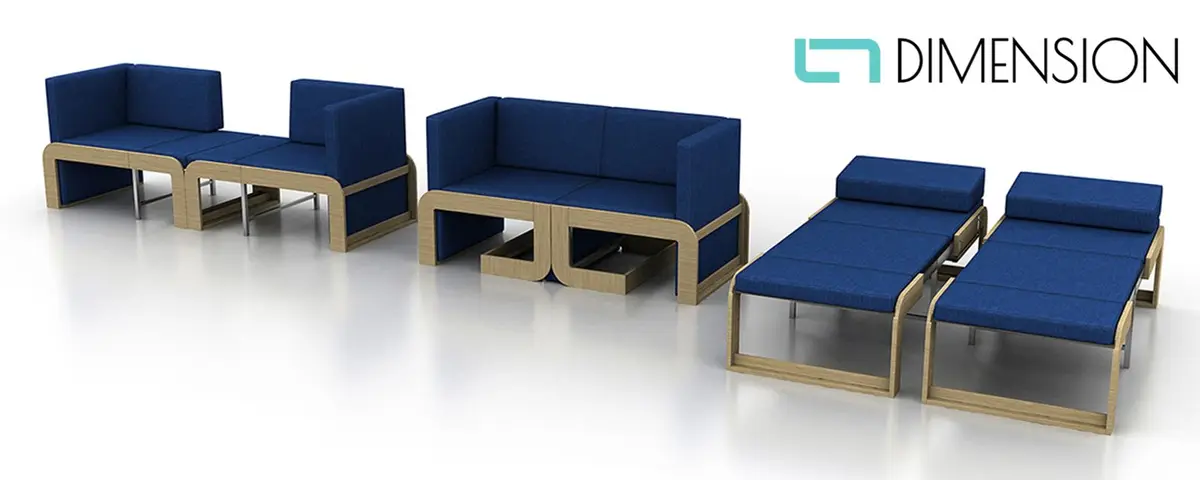
Dimension: A Two-Module Sofa Bed That Lets Furniture Rewrite the Studio Apartment Floor Plan
A pair of linked sofa modules shifts between chair, bench, bed and corner sofa, treating furniture as the movable architecture of small homes.


In a studio apartment, the sofa is rarely just a sofa. It decides where people sit, where a guest sleeps, how much floor remains for moving around, and whether hosting friends feels possible at all. Dimension starts from that fact and draws a sharp conclusion: if one piece of furniture carries that much spatial authority, it should be able to change its mind. Instead of the usual single-trick sofa bed, the project splits the object into a pair of independent yet interconnected units that can be pulled apart, recombined and reconfigured as the day demands.
Designed by Wai Ho Cheung, Dimension is pitched squarely at urban densification. The designer cites United Nations data showing that more than half of the world's population already lives in cities, a share expected to rise significantly by 2050. As housing demand climbs, units in major metropolitan areas keep shrinking. The project targets studio apartments and one-bedroom flats in high-density cities, and a specific occupant: people aged 20 to 34, including university students, early-career professionals and frequent travellers living alone.
Two Modules Instead of One Mechanism
The decisive move in Dimension is structural rather than stylistic. Conventional sofa beds rely on a single transformation, sofa to bed and back, which leaves the room locked into one layout for most of its life. By dividing the system into two modules, Cheung turns the object into a small kit of parts. Each unit works on its own or in combination with the other, so the furniture can occupy one corner of a flat or spread across it, depending on who is home and what they are doing.
This is where the project earns its claim that furniture becomes an architectural element. In a compact plan, a piece that can split in two effectively redraws circulation paths and zones. The living room stops being a fixed arrangement and becomes a set of possible arrangements, which is a more honest response to how small homes actually get used.
Six Configurations Built Around a Single Extension Mechanism
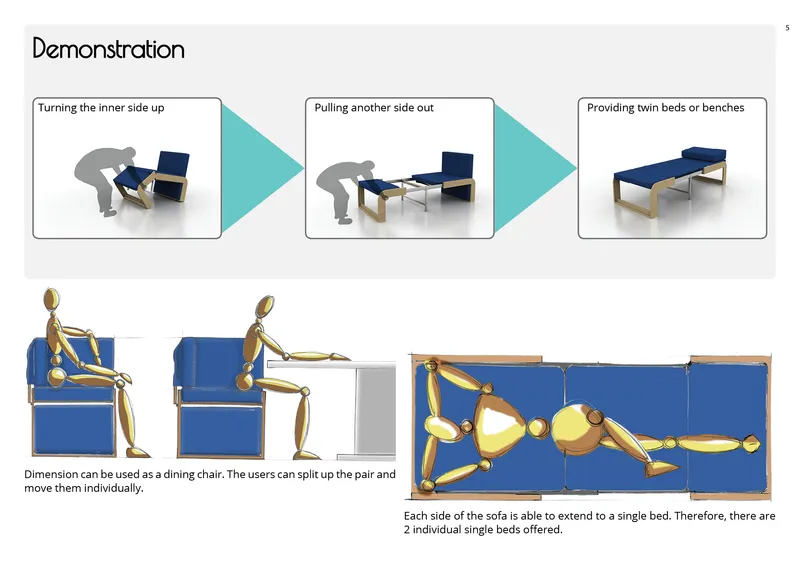
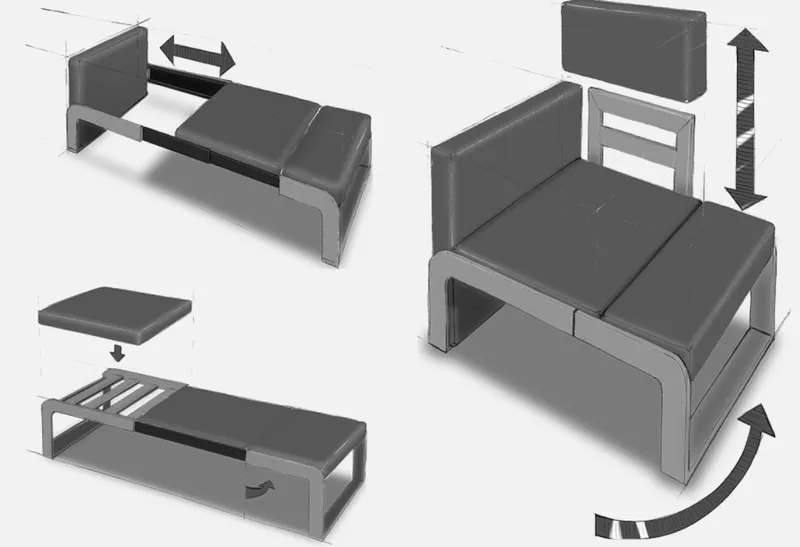
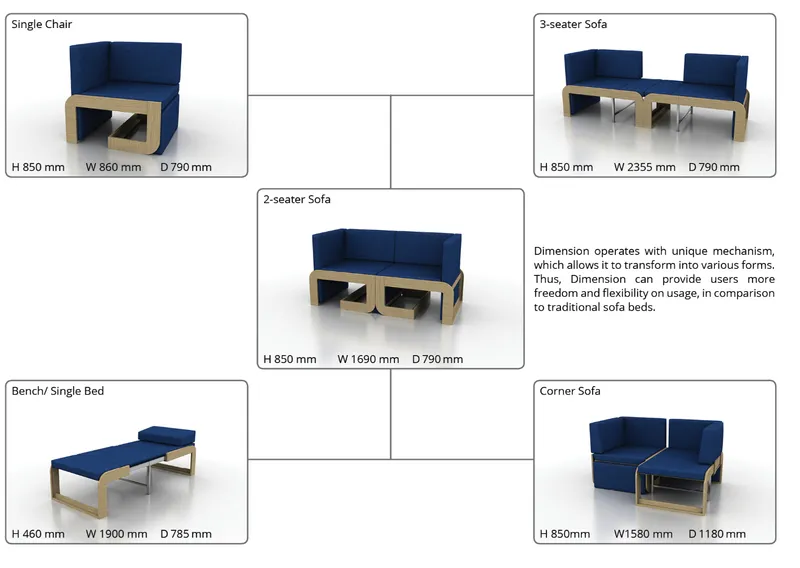
At the core of the design sits an extension mechanism that lets the modules move smoothly between functions. The configuration list is generous for such a modest footprint: a single chair for compact seating, two-seater and three-seater sofas, a corner sofa for conversation, and a bench or single bed for resting and sleeping. Each setup maps onto a real activity in a one-room life, from daily lounging and working to dining, social gatherings and overnight guests.
What matters here is not the count of modes but the ease of switching between them. A transformable piece that is awkward to transform tends to stay in one position permanently, which defeats the purpose. Dimension's emphasis on clarity of form and ease of transformation suggests the designer understood that the mechanism has to be almost invisible in daily use for the flexibility to be real rather than theoretical.
Research That Puts Hosting at the Centre of Small-Space Living
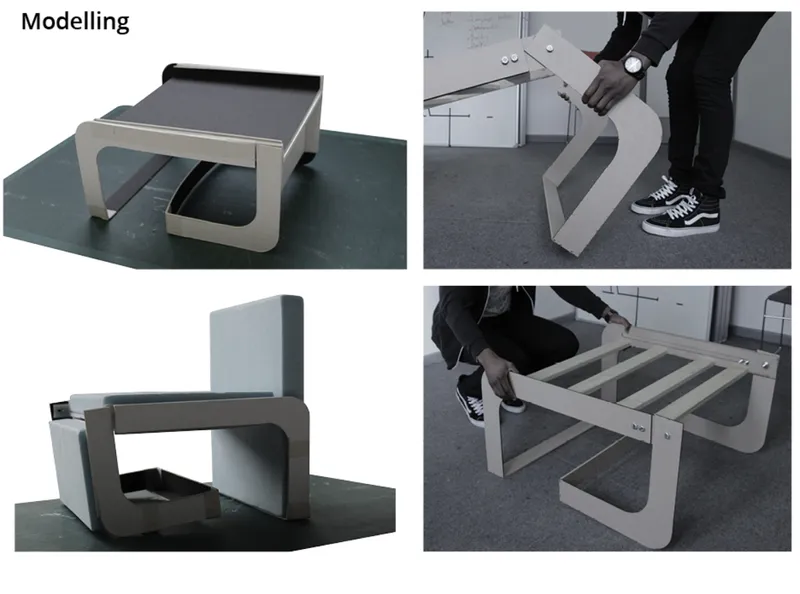
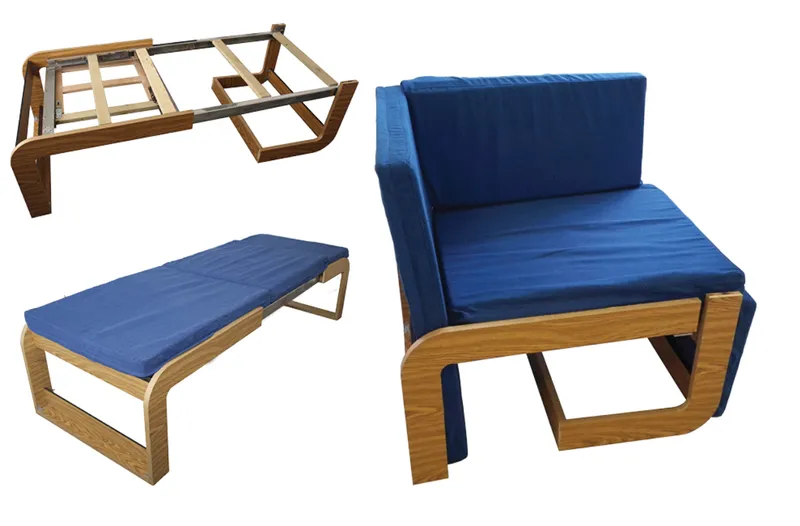
The design process drew on literature reviews, online surveys and interviews, and the findings give the project its sharpest argument. Residents of compact homes said they value space, cleanliness, privacy and comfort, particularly when hosting. A significant majority indicated they would entertain more often if their homes were better organised and more efficient. In other words, small apartments do not just limit storage; they suppress social life.
Dimension reads that finding as a design brief. The corner sofa configuration exists for conversation, the bed configuration for the guest who stays over, and the single chair for the evenings when the occupant wants the floor back. The resulting design language, defined by clear forms and a minimal spatial footprint, aims to support both private comfort and social interaction without letting either one dominate the room.
Why This Project Matters
Much of the conversation about small-space living fixates on square metres and storage tricks. Dimension shifts the focus to something less measurable: whether a tiny home can still accommodate other people. By grounding its configurations in survey and interview data about hosting, privacy and comfort, the project treats sociability as a functional requirement rather than a lifestyle extra, and that reframing is its strongest contribution.
It also makes a useful case for design thinking that crosses scales. Splitting one object into two cooperating modules is a simple idea, but in a studio flat it carries spatial consequences usually reserved for walls and partitions. For the young urban renters Cheung is designing for, that kind of adaptable furniture may do more to improve daily life than any change to the floor plan they cannot control.
View the Full Project
About the Designers
Designer: Wai Ho Cheung
Enter a Design Competition on uni.xyz
uni.xyz runs architecture and design competitions year-round that reward proposals with spatial conviction and real site intelligence.
Project credits: Dimension by Wai Ho Cheung.


Popular Articles
Popular articles from the community


Manzana Morphosis: Stretching Barcelona's Grid into a Living Landscape for 2050
A radical reworking of the Eixample manzana turns density into a tool for generous public space, vertical ecology, and environmental performance.


graciastudio Turns a Viewless Tijuana Lot Inward Around a Courtyard of Concrete, Timber and Trees
In Tijuana, Jorge Gracia's GA2 House stacks a timber-clad private floor over exposed concrete and replaces a missing view with a planted interior patio.

David Ortega Stacks a Two-Story Mexico City Penthouse Around a Steel Stair and a Pergola-Shaded Roof Terrace
In Colonia Roma, a 300 m² penthouse uses oak joinery, a planted steel stair and a slatted roof pergola to make a new-build apartment feel like a house.

Singing Woman: An Opera House That Performs Before the Curtain Rises
Ovidiu Cristian Pavel's conceptual opera house translates Estonia's choral identity into a sculpted waterfront landmark facing the Baltic Sea.

Similar Reads
You might also enjoy these articles


Maya Harvest: A Cacao Resort Village Rooted in Mayan Tradition and Local Craft
Situated within a Tabasco cacao plantation, this shortlisted resort proposal merges vernacular materials with hands-on cultural immersion.

Harmonia: A River-Shaped Community That Grows Over Decades in Boa Vista
Curved pathways and modular grid structures along the Branco River create a phased settlement designed to evolve from 2030 to 2050.

The Architecture of Bathing: A Mughal Hammam Reimagined Across the Yamuna
Charlotte May's honorable mention entry for The Black Taj reinterprets Agra's bathing rituals through red sandstone, water, and framed views of the Taj Mah
Om-1: A Wall-Hung System That Moves Your Workspace Off the Desk
Modular plywood boards, magnetic pegs, and utility elements migrate clutter from the horizontal surface to the vertical plane.

Explore Modular Furniture Competitions
Discover active competitions in this discipline

Design challenge to equip cities with modern furniture

Competition to design a workstation for architects

Packaging challenge - Design meets sustainability
Comments (0)
Please login or sign up to add comments
No comments yet. Be the first to comment!