

Discover Oppo's Mind-Blowing O-Tower: The Futuristic Infinity Loop That Will Redefine the Skyline of Hangzhou!
Designed by BIG Architects, the O-Tower's Unique Shape and Stunning Views Will Leave You Breathless

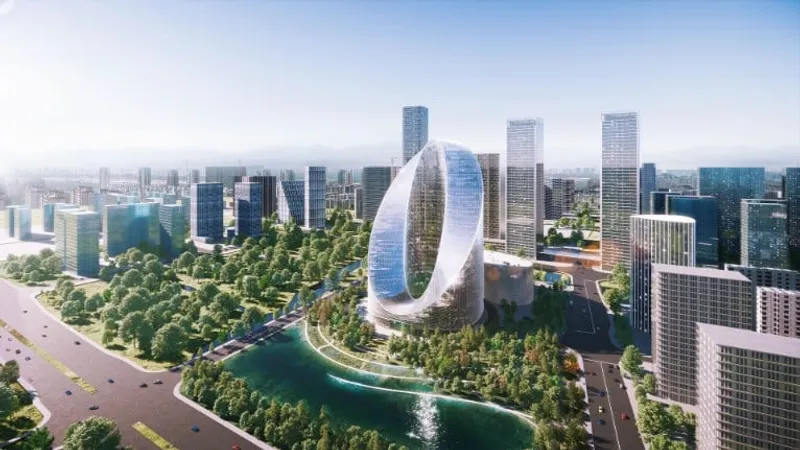
The future of smart technology is being shaped by the Chinese smartphone company, OPPO, which is set to build a new research and development headquarters in Hangzhou's Future Sci-Tech City. The building will embody OPPO's philosophy of balancing innovative technology and refined aesthetics, all while maintaining environmental, economic, and social sustainability. The project, designed by BIG - Bjarke Ingels Group, began in 2019 and aims to contribute to a better world while providing an iconic gateway to the city.
The location of OPPO's new R&D Headquarters in Hangzhou is a commitment to the brand's spirit of innovation. Hangzhou, also known as "Heaven on Earth," has had a rich cultural history in technology, information exchange, and trade for over 5,000 years. The city is home to three of the world's 57 UNESCO Heritage sites and is a hub for innovation.
The headquarters will sit at the heart of Yuhang District, between a natural lake, an urban centre, and a 10,000-square-meter park. As a prominent anchor point on a major access road stretching east to west, the OPPO R&D Headquarters Tower will be an iconic landmark and gateway to the Future Sci-Tech City and Hangzhou itself.

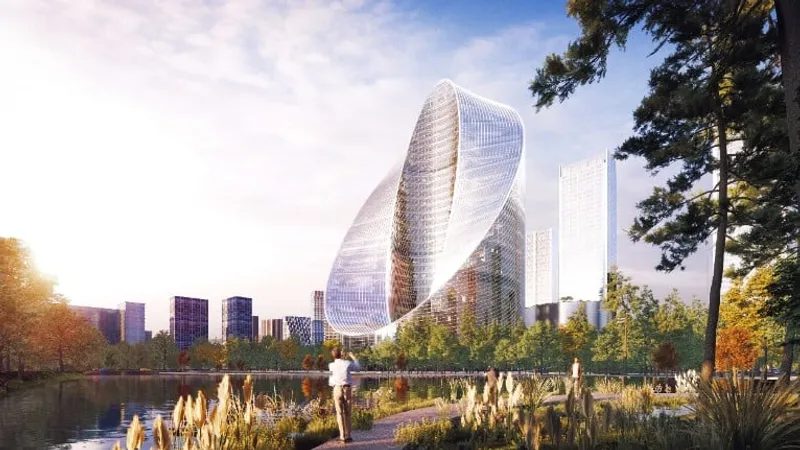
The new headquarters will be a manifestation of an OPPO product, effortlessly elegant while elevating the quality of human life in the city. The building will provide deep and flexible floor plates to support dynamic workspaces, while also optimizing employee well-being and productivity by providing access to daylight and views. The O-Tower is a cylindrical courtyard building that resolves the competing requirements by maximizing natural light while reducing energy usage.
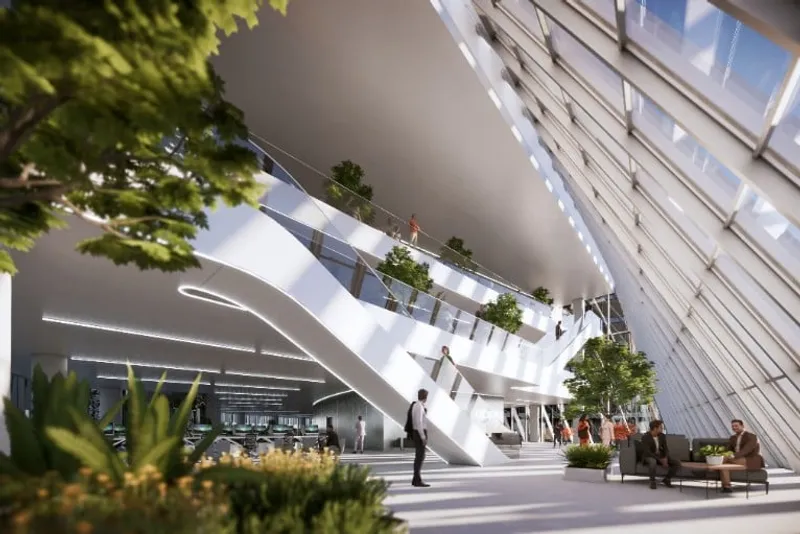
The tower features a series of triple-height void spaces and interconnected terraces that provide visual and physical connectivity between floors. These spaces will bring human interaction out to the facades, where staff can enjoy views while populating and activating the skyline of the city. The façade is wrapped in adaptive louvres that are oriented according to sun angles and building geometry, reducing solar gain by up to 52%, while providing significant savings for cooling loads.

At the heart of the O-Tower, a publicly accessible courtyard will become an urban living room for the city. The mineral hardscape at its centre transforms into a green and lush landscape at the periphery, extending out to the waterfront. This urban oasis provides fresh air, retains water, and supports a biodiverse public realm connected to the daily life of the city.
In conclusion, the new OPPO R&D Headquarters is a perfect representation of OPPO's brand identity and culture, becoming the most iconic landmark in Yuhang, Hangzhou. The headquarters embodies the spirit of innovation, sustainability, and elegance that OPPO strives to achieve, elevating the quality of human life in the city. This project is a manifestation of how technology can be seamlessly integrated into our lives, creating an architectural masterpiece that provides significant benefits to its employees and the city.
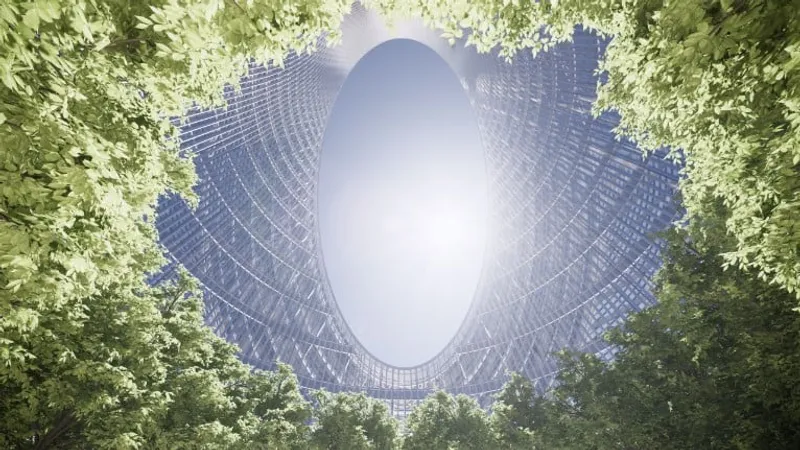
The future of work has been reimagined by Bjarke Ingels, Founder and Creative Director of BIG - Bjarke Ingels Group, in the design of the new OPPO R&D Headquarters in Hangzhou. The building has been designed with sustainability in mind, aiming to achieve a triple bottom line of economic, ecological, and social sustainability. This has been achieved through the use of a compact form that creates large, flexible floor plates, and an adaptive louvred façade that reduces incoming solar glare and thermal heat gain, thereby improving the building's passive performance. Additionally, the building's tilted loop of the warped roof provides a social shortcut for OPPO employees, and the surrounding wetland park expands the public realm into the heart of the complex.

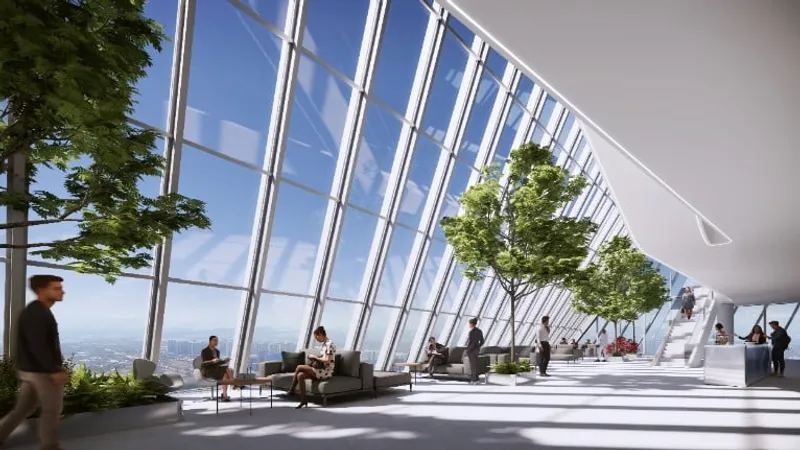
The O-Tower's ground floor will be open, creating an interconnected public space that leads visitors and staff through lobbies, exhibition spaces, or out to the park. The first three floors will be reserved for public programming, including exhibition space, conference centres, a canteen, and an incubator for external workshops. On the upper floors, there will be flexible floorplates suitable for R&D departments and special projects, as well as smaller, more traditional floors for administrative and executive functions. The upper floors will also include a dedicated OPPO canteen and executive and VIP lounges that overlook Hangzhou's wetlands.
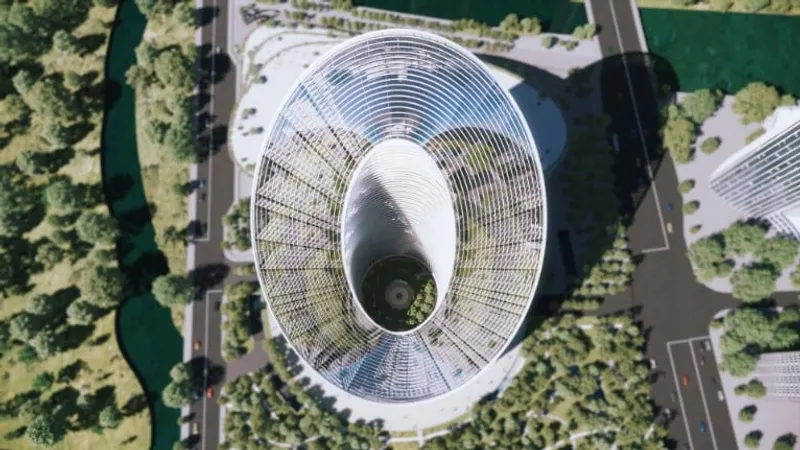
The O-Tower has been designed to integrate workspaces with biophilia and social spaces, creating a sustainable and vibrant community that will become an iconic destination on the Hangzhou waterfront. The building has been designed by BIG in collaboration with a team of experts, including ZIAD (Local Design Institute), Co-Create Golden Technique Project Management (Client Project Managers), RBS (Structural Engineers), RFR (Façade Consultants), WSP (Traffic, MEP, VT Consultant), BPI (Lighting designer), Savills (Programming consultant), TFP (Foodservice planner), and UAD (Traffic evaluation agency).

BIG has been working in China since 2010, starting with the Danish Pavilion at the Shanghai Expo, followed by the Shenzhen Energy HQ completed in 2017, and Terminus AI City in Chongqing, which was announced in 2020. The OPPO R&D HQ in Hangzhou is the latest addition to BIG's impressive portfolio of projects in China.
References (1)


Popular Articles
Popular articles from the community


Singing Woman: An Opera House That Performs Before the Curtain Rises
Ovidiu Cristian Pavel's conceptual opera house translates Estonia's choral identity into a sculpted waterfront landmark facing the Baltic Sea.


graciastudio Turns a Viewless Tijuana Lot Inward Around a Courtyard of Concrete, Timber and Trees
In Tijuana, Jorge Gracia's GA2 House stacks a timber-clad private floor over exposed concrete and replaces a missing view with a planted interior patio.

Juan García Correa, John González and Claudia Rueda Sink a Circular Amphitheater into a Manizales Engineering Building
On the La Nubia campus in Manizales, Colombia, the S1 Building folds labs and offices into a hillside of ramped lawns that double as a campus route.

FCC Arquitectura Expands a Portuguese Granite House with a Board-Marked Concrete Wing
In Portugal, JV House pairs a cleaned-up whitewashed and granite dwelling with a timber-shuttered concrete extension, courtyards and a garden pool.

Similar Reads
You might also enjoy these articles

Rede Arquitetos Turns Circulation into Civic Space at the Educar II SESC School in Fortaleza
In Fortaleza, Brazil, Educar II SESC-CE trades a signature form for mesh screens, yellow thresholds and courtyard walkways built for equatorial heat.
116 Rokeby Building, Collingwood
Sustainable Collingwood office building featuring double-skin façade, natural ventilation, rooftop amenities, and carbon-neutral design focused on wellbeing and longevity.
Contemporary Apartment Renovation in Spain: RV House by BIAN Opens Up to the Sea
A minimalist 1930s apartment in Santander is transformed into a flexible, sea-facing home through contemporary Spanish renovation.
3 Marías House: A Contemporary Mediterranean Courtyard Retreat by Bajet Giramé + Burckhardt
Mediterranean courtyard home blending traditional architecture with modern design, terracotta flooring, flexible interiors, sustainable climate strategies, and garden integration.

Explore Skyscraper Competitions
Discover active competitions in this discipline


Challenge to reimagine the Iron Throne

Photograph architecture without architects

Illustrate the lost glory of Angkor Wat - Render Challenge

Design challenge to reuse E-waste
Comments (0)
Please login or sign up to add comments
No comments yet. Be the first to comment!