
DK.52 House by Studio Avana: A Modern Tropical House Design Rooted in Light, Nature, and Family Connection
A modern tropical house in Bandung blending biophilic design, spatial voids, and family connectivity through light, wood, and indoor gardens.


A Tropical Residence in Bandung That Redefines Modern Indoor-Outdoor Living
Nestled in a tranquil neighborhood of Bandung, Indonesia, the DK.52 House by Studio Avana represents a thoughtful approach to modern tropical house design, blending natural materials, spatial openness, and biophilic principles. Spanning 437 square meters, this three-story home emphasizes family interaction, light penetration, and seamless transitions between indoor and outdoor spaces—all while maintaining privacy and thermal comfort in a humid tropical climate.
Ironwood Cladding and a Sculpted Secondary Skin
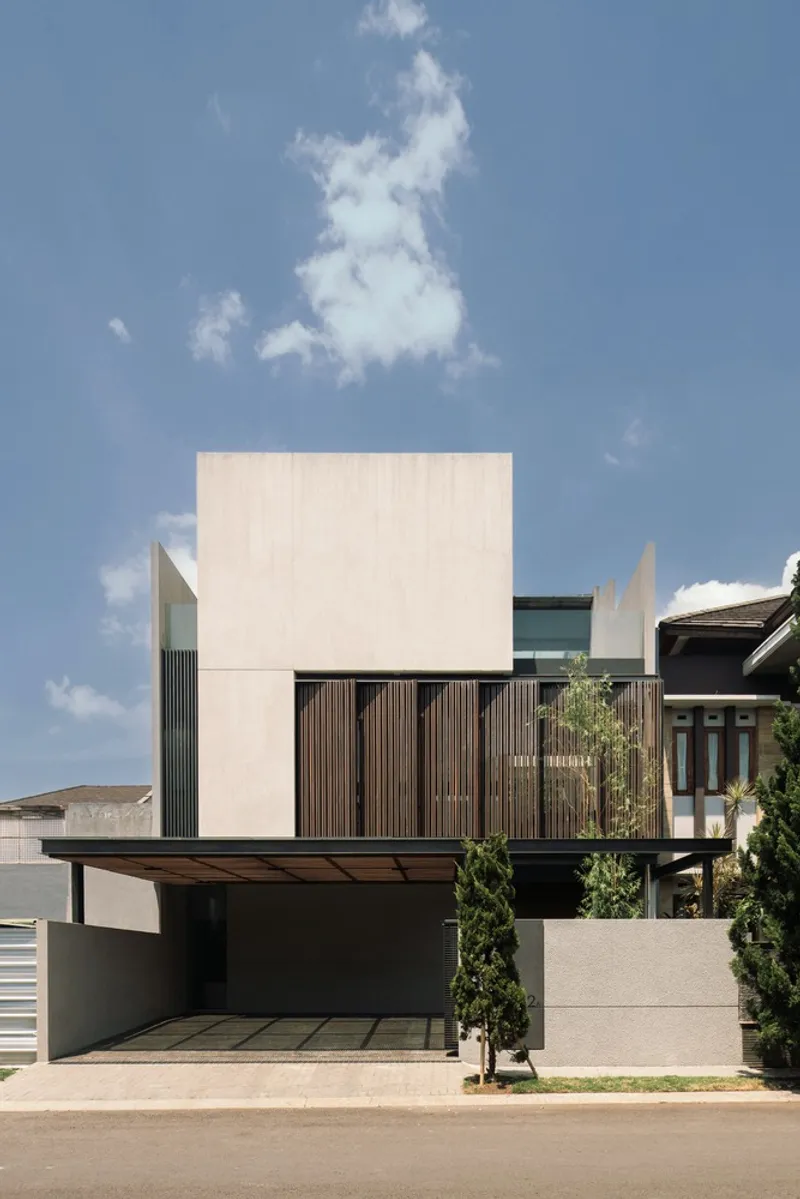
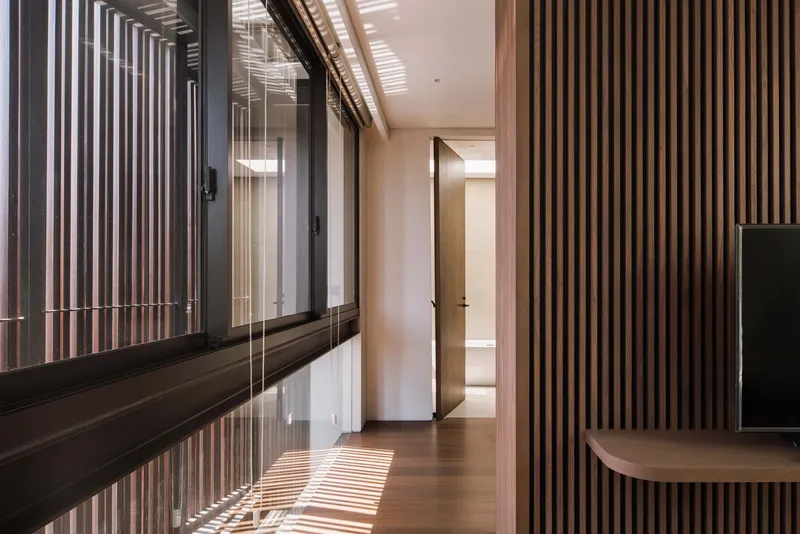
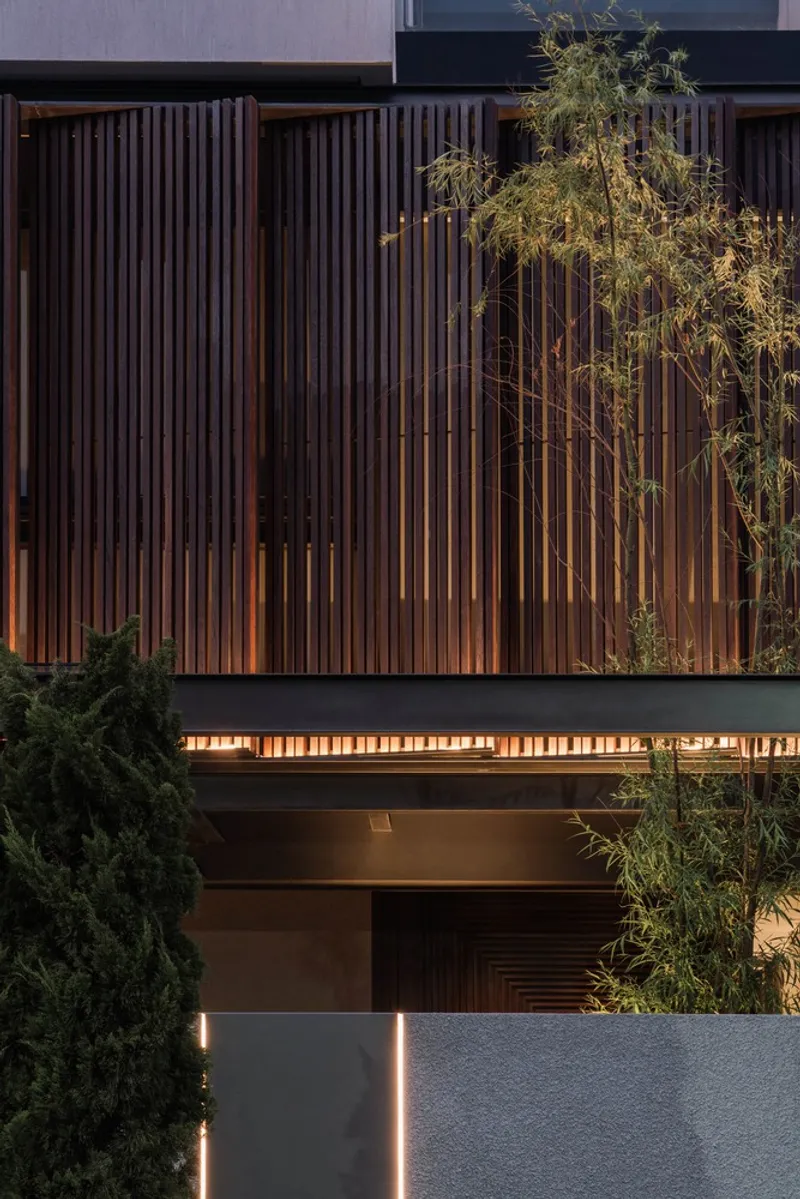
From the outside, the house presents a bold yet refined presence, defined by a contemporary secondary skin of ironwood slats. This architectural feature serves multiple purposes: it shades the interior from the harsh tropical sun, preserves visual privacy for its residents—particularly in the master suite on the second floor—and enriches the facade with a rhythmic, natural texture. The design exemplifies how material selection in tropical homes can enhance both aesthetics and environmental performance.
A Grand Entry Anchored by Nature
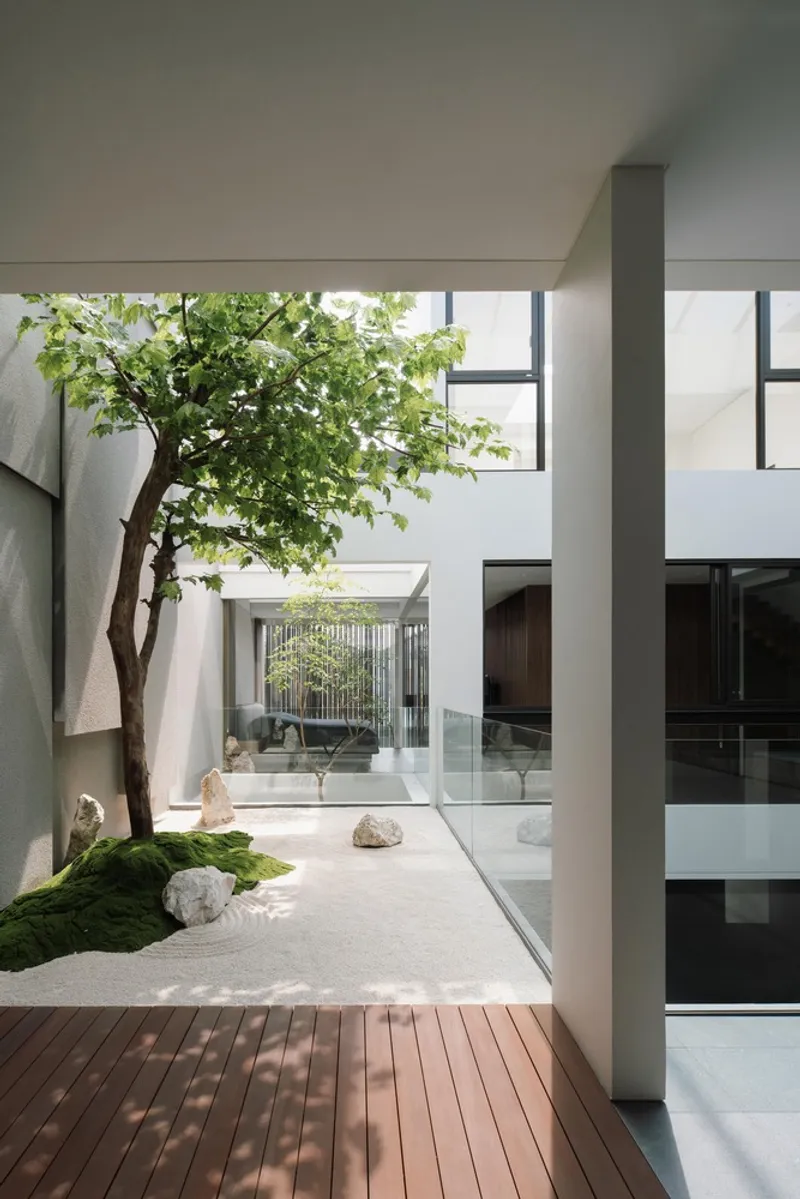
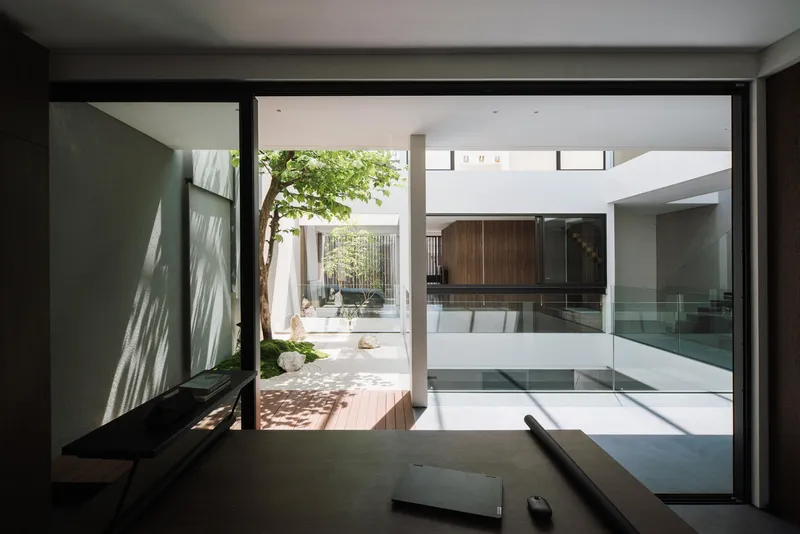
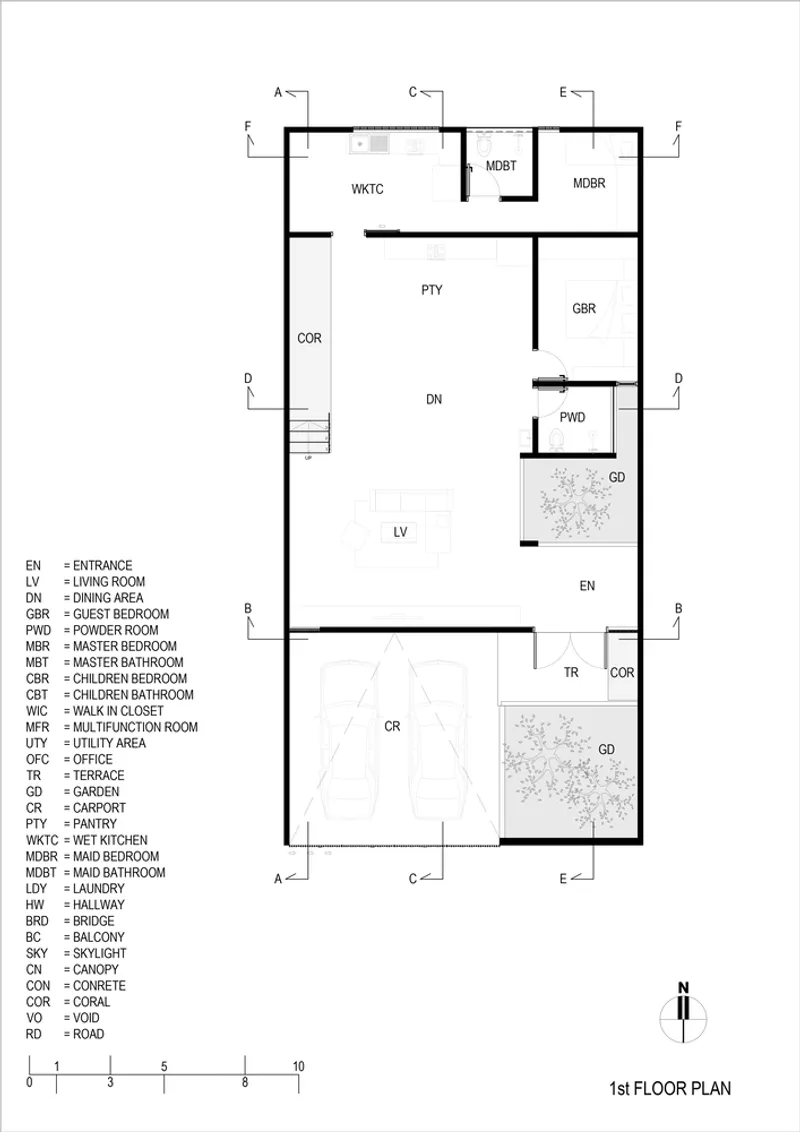
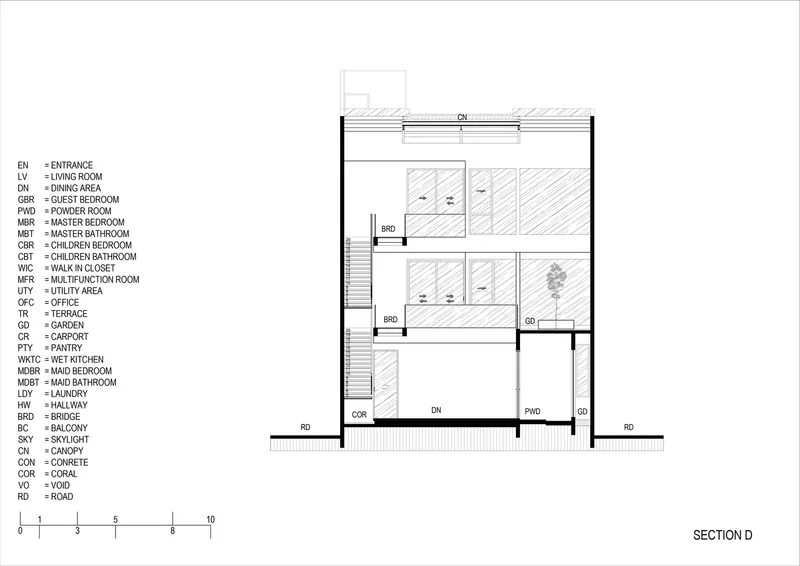
Visitors enter the house through a large wooden pivot door that opens into a calming inner courtyard. This foyer garden—bordered by lush foliage and a welcoming bench—establishes an immediate sense of serenity. More than a visual element, this space acts as a transitional buffer, mediating the shift from urban life to domestic retreat. It also encourages informal interactions, bridging the public and private spheres with grace.
A Three-Story Void That Connects and Illuminates
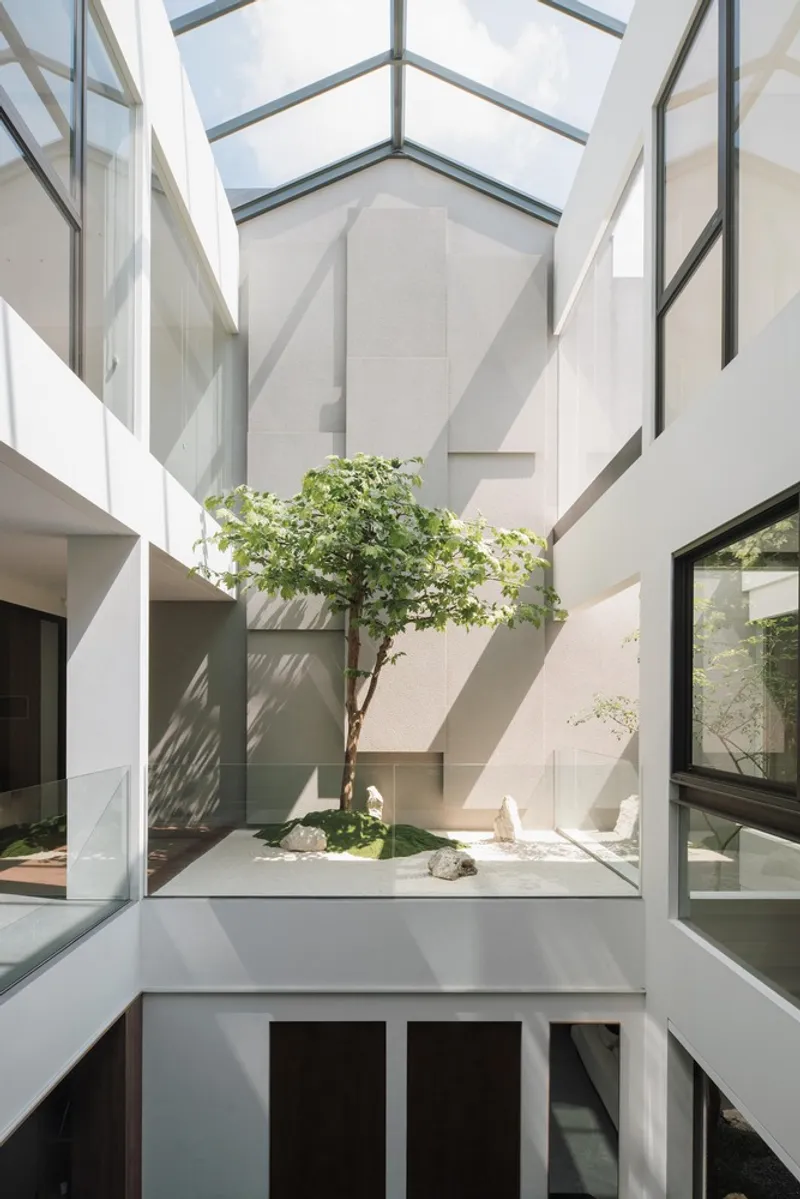
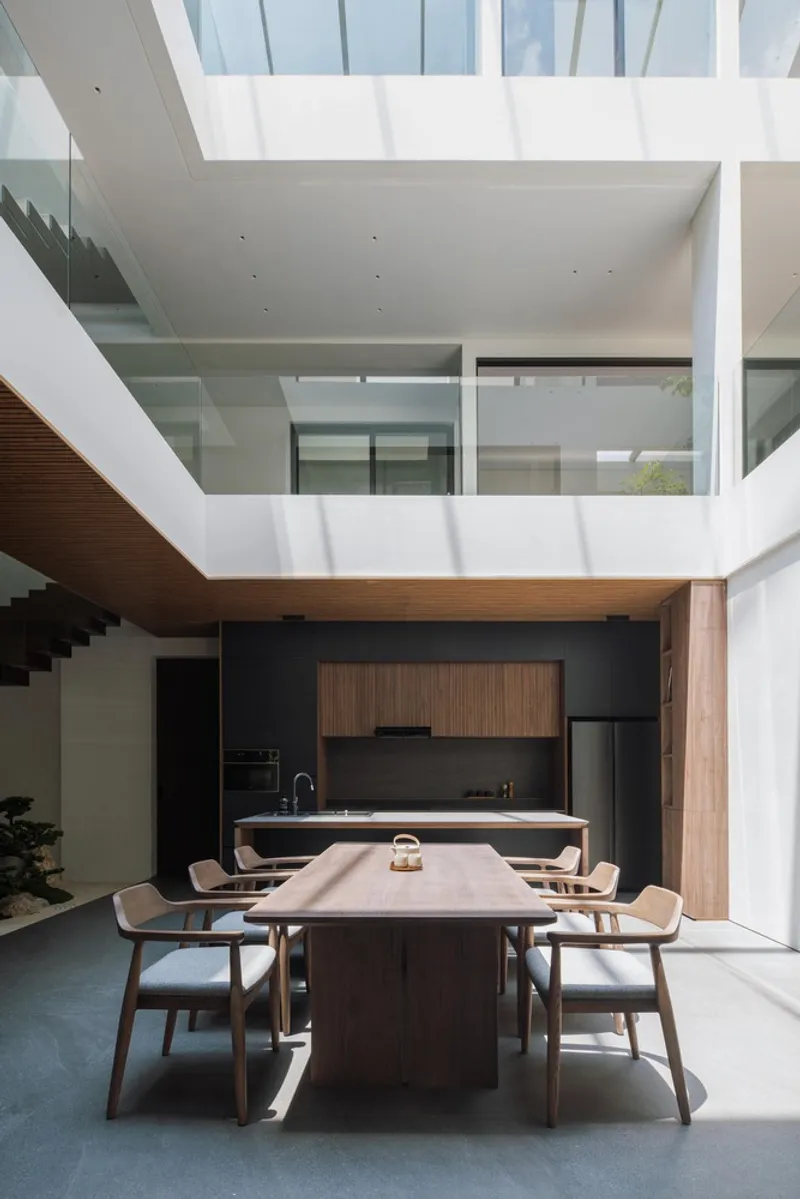
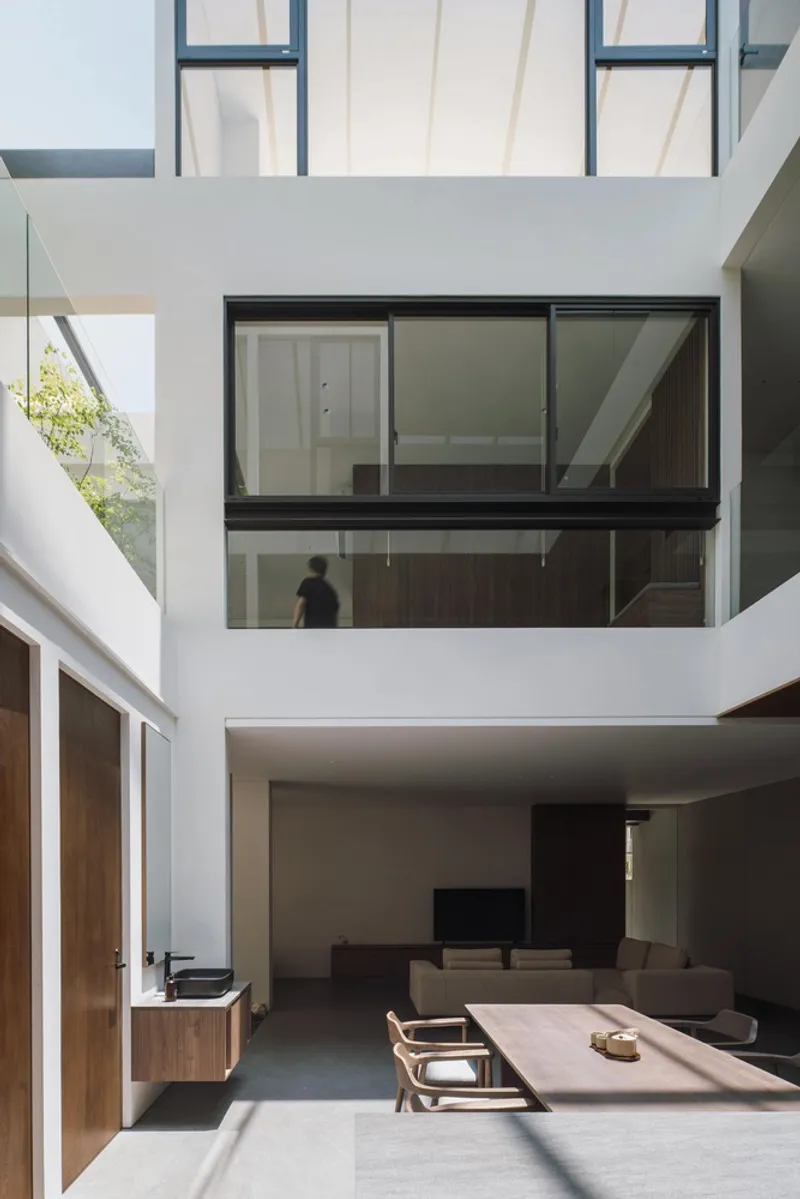
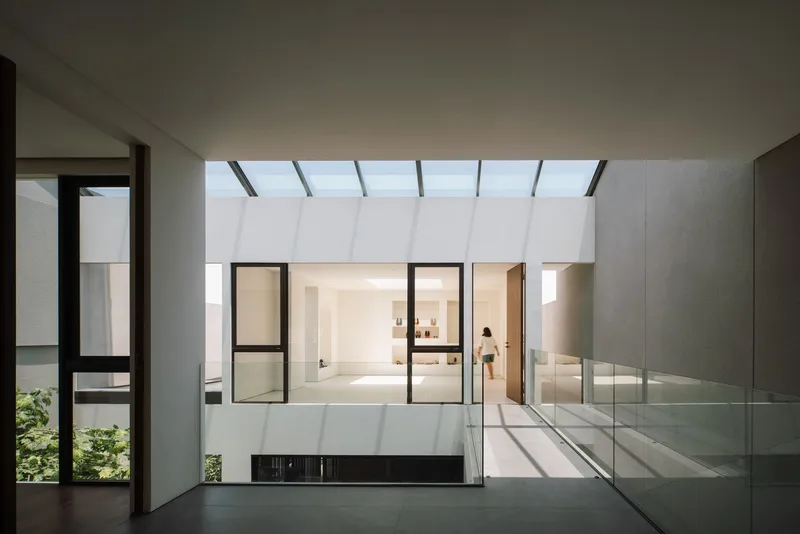
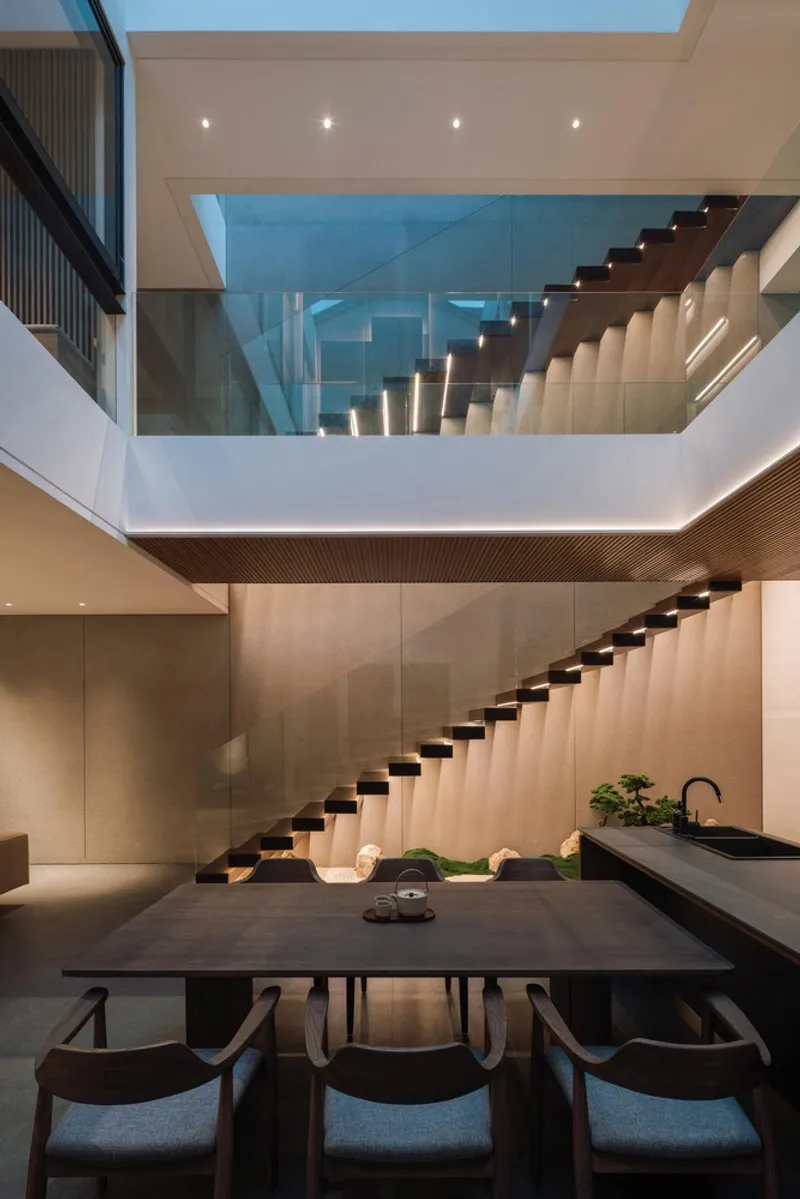
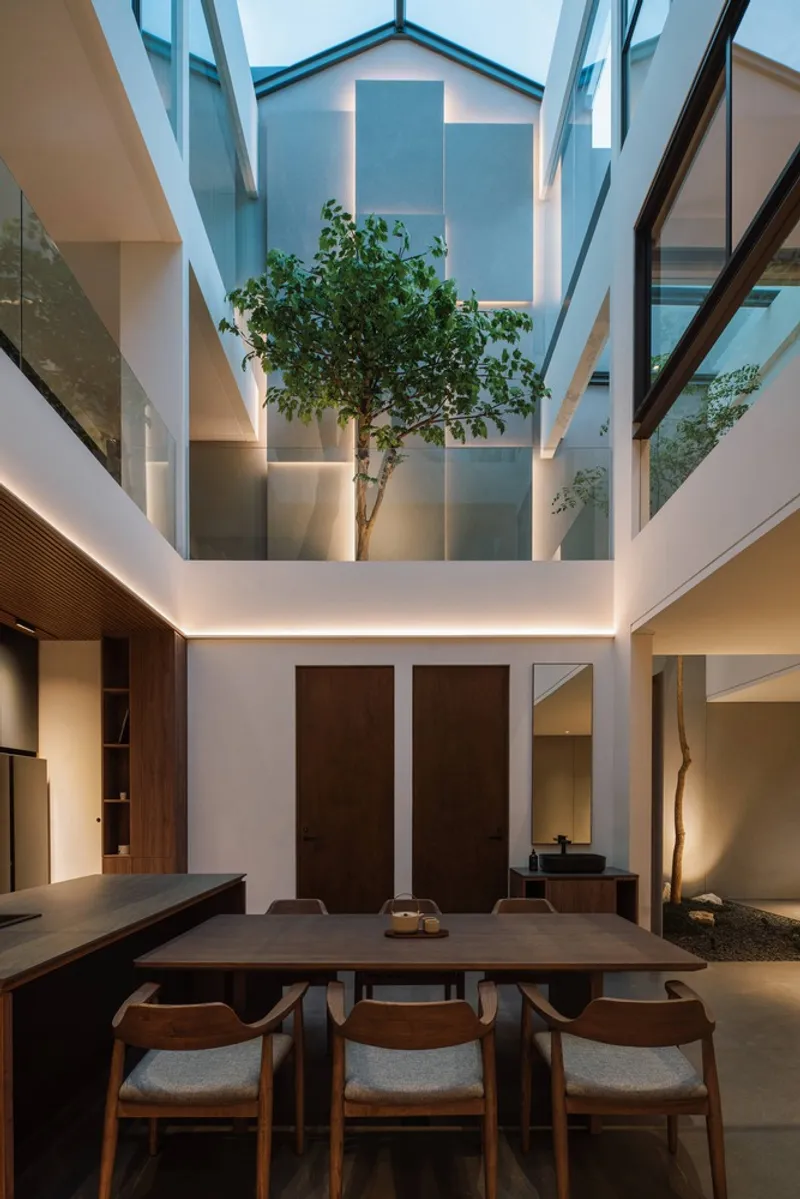
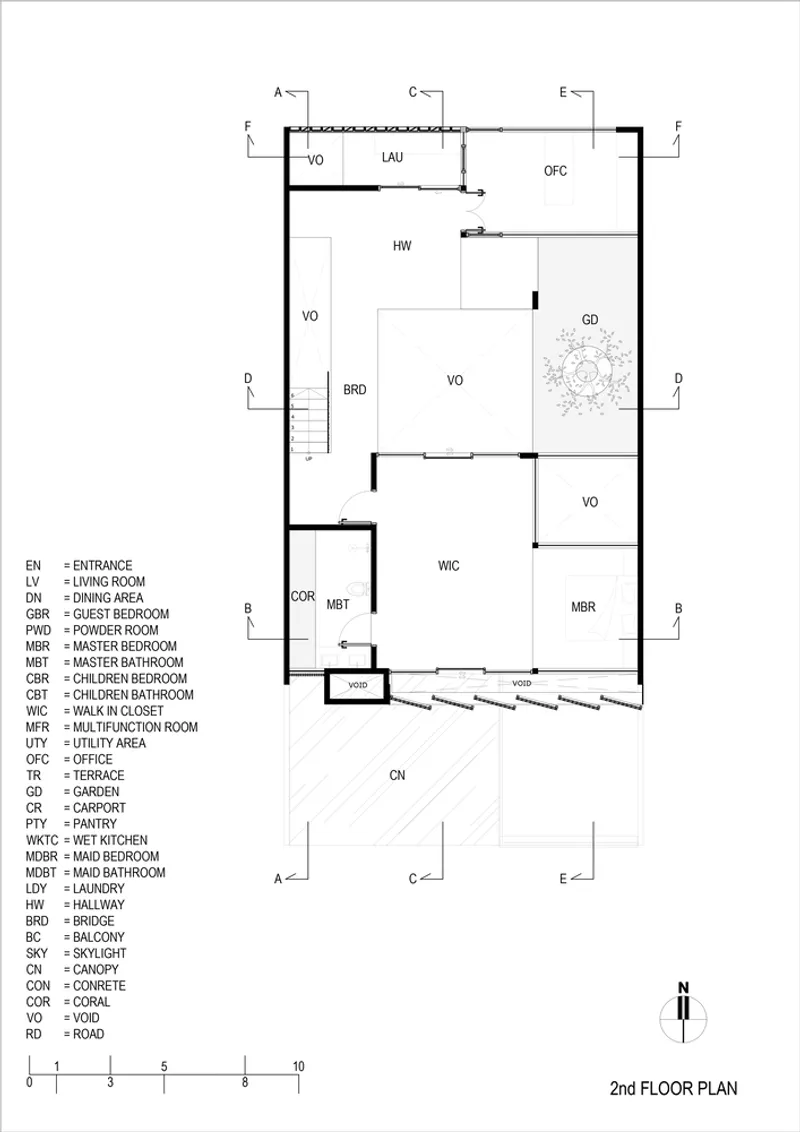
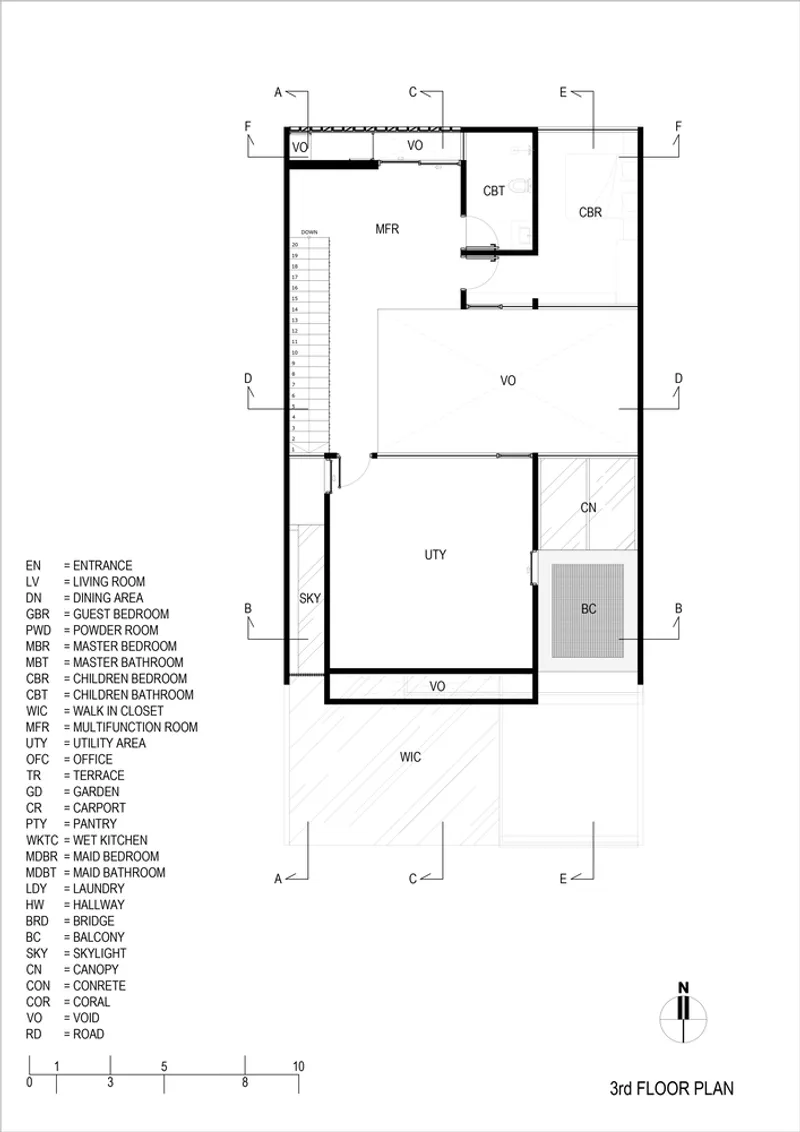
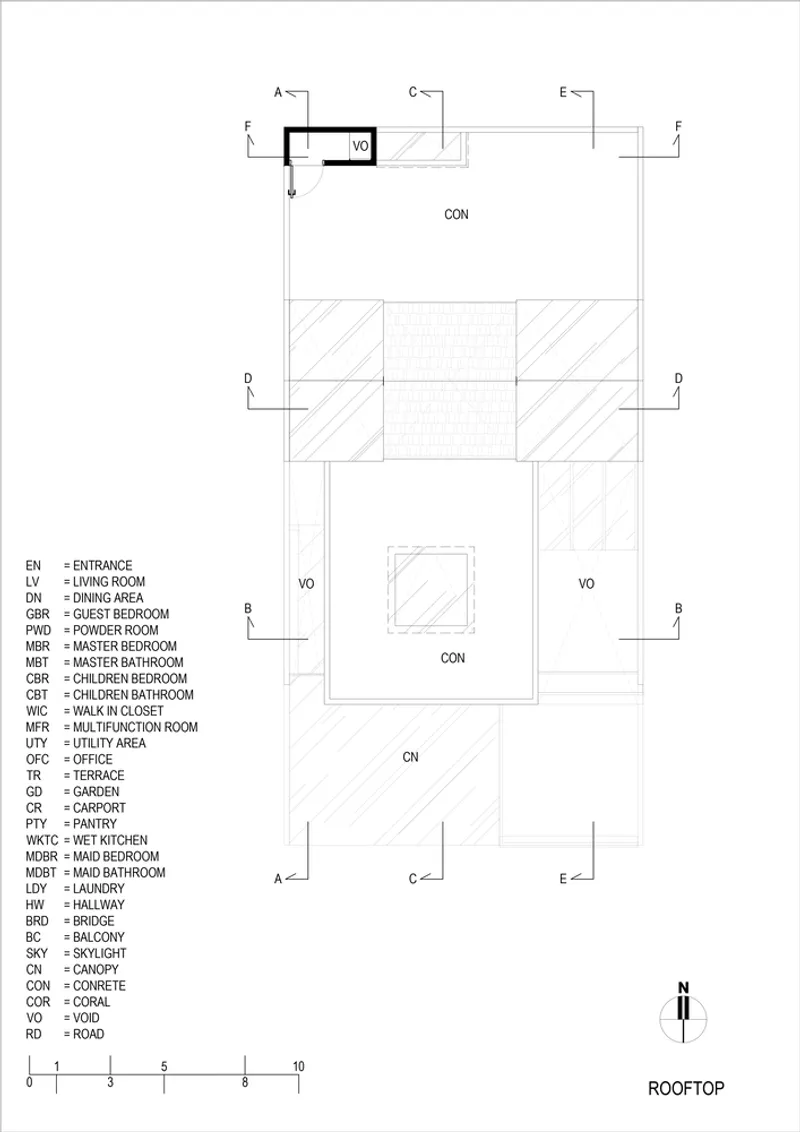
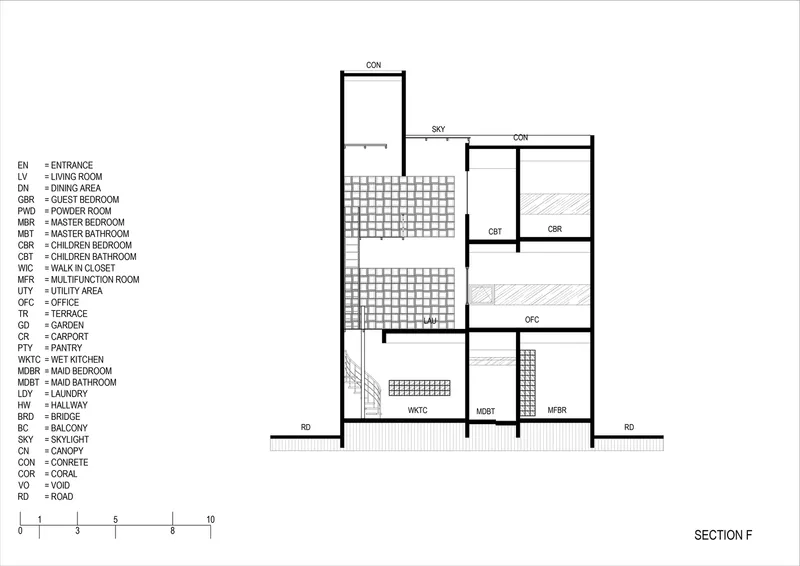
Central to the spatial strategy is an open vertical void that cuts through all three levels of the home, crowned with a skylight that floods the interiors with natural daylight. This void not only enhances cross-ventilation and light diffusion but also fosters communication and visual connection across family members on different floors—making it a literal and symbolic heart of the residence.
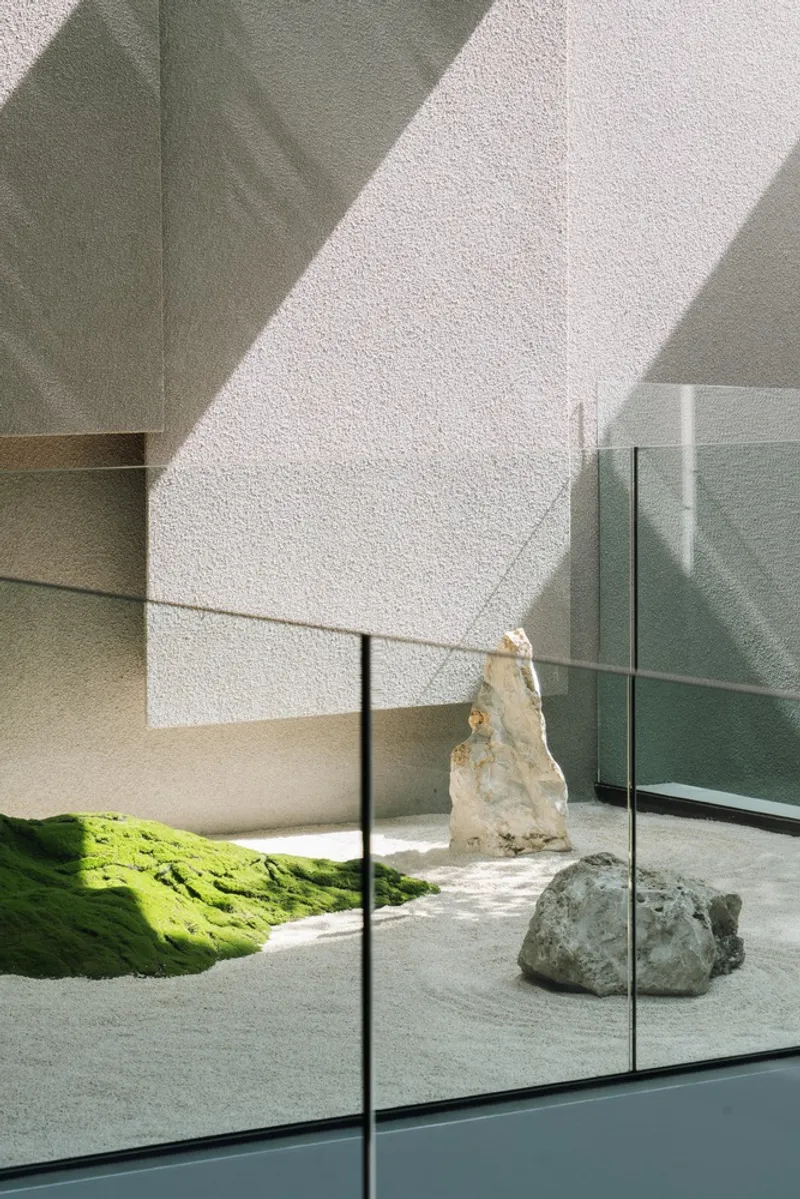
The floating staircase with frameless glass railings adds a sculptural quality while reinforcing visual openness. Below the stairs, a minimalist zen garden reinforces the house’s commitment to tranquility and natural grounding.
A Master Bedroom That Balances Openness and Seclusion
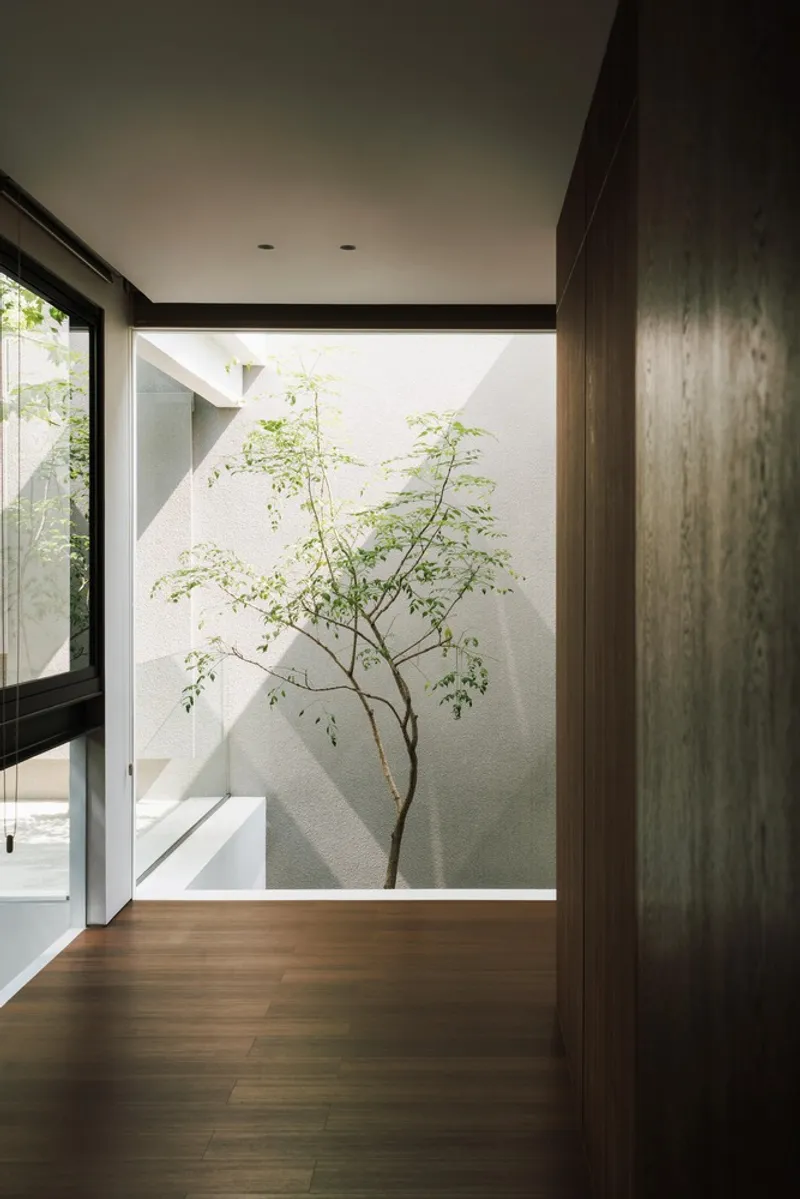
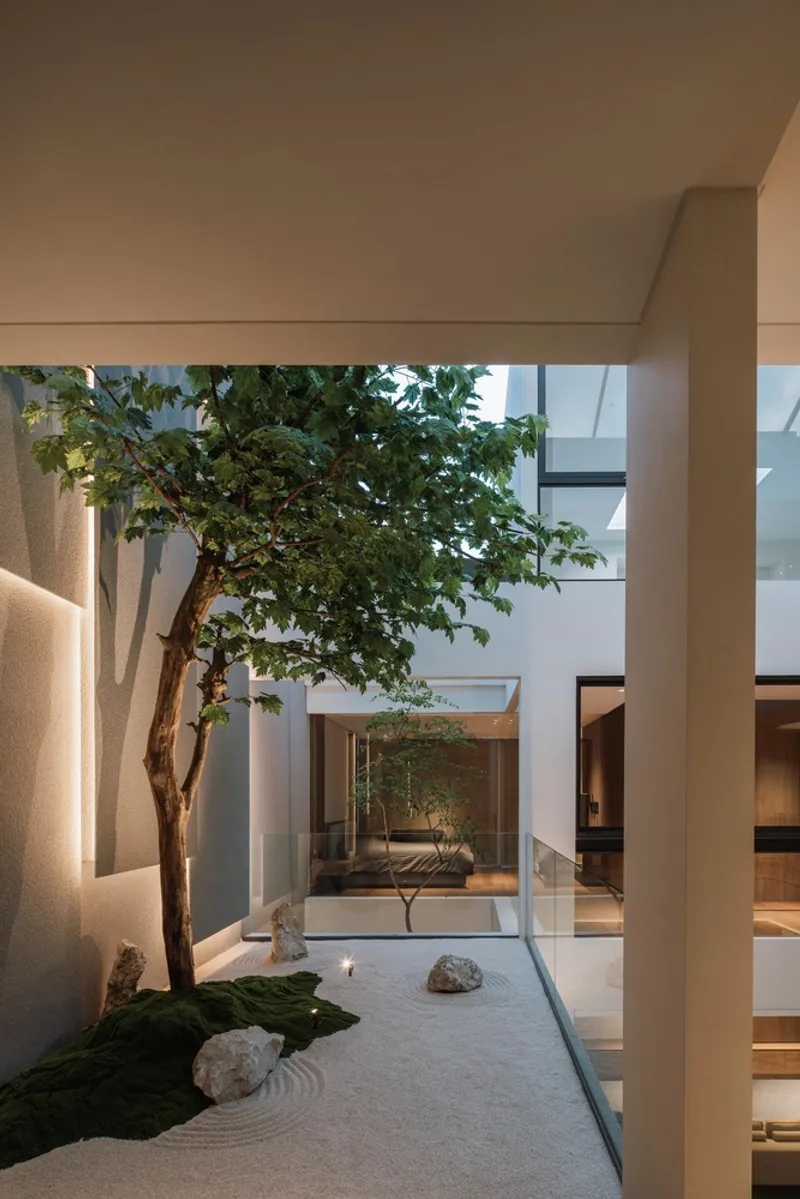
The master bedroom occupies a prime location on the second floor, overlooking the central void. Its sliding window system—which doubles as a railing—offers safe and controlled visual connection to the rest of the home. Facing the inner garden, the bedroom enjoys lush views of a kop tree, further immersing occupants in nature. The use of biophilic design strategies in this private zone underscores the house’s holistic living philosophy, balancing introspection, interaction, and sensory experience.
A Flexible Third Floor for Evolving Needs
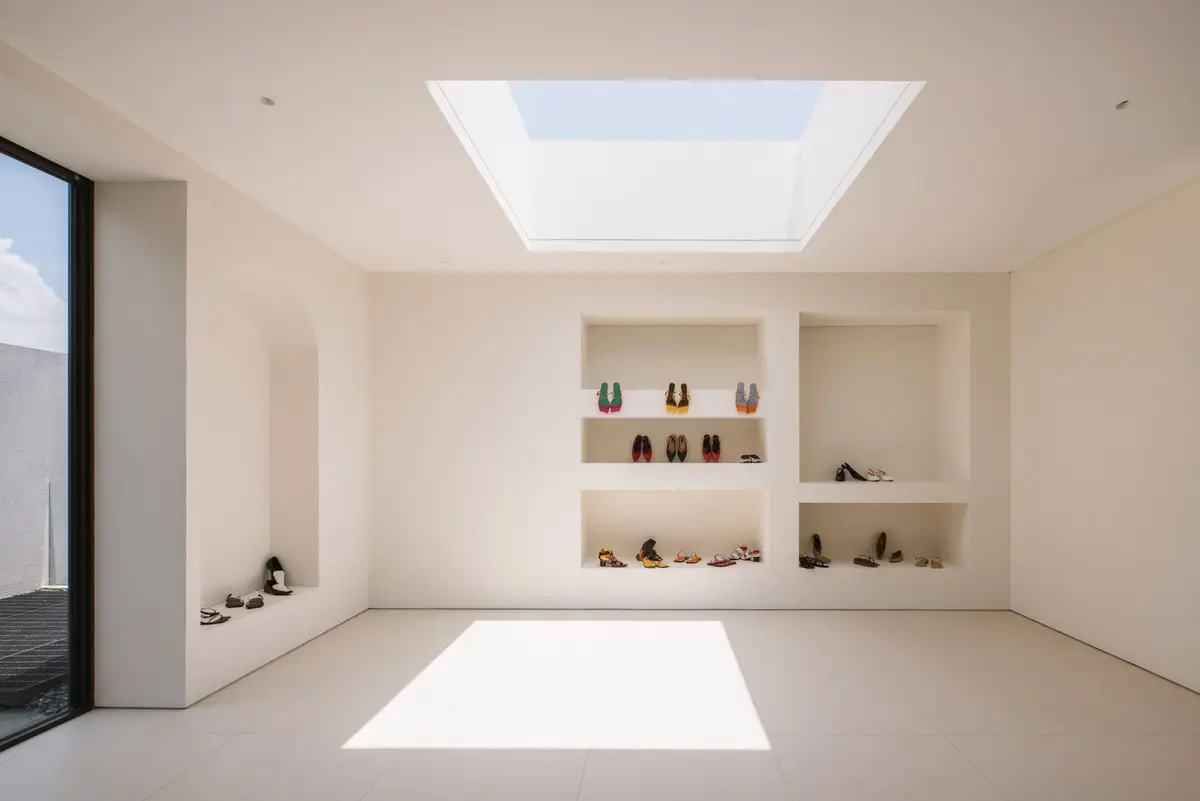
Above, the third floor houses the children’s rooms, bathroom, and a multi-functional skylit room. This adaptable space currently serves as a home photo studio, allowing the family’s lifestyle to evolve without architectural compromise. Like the rest of the house, this area receives generous daylight, promoting wellness and productivity.
Designing for Climate, Comfort, and Connection
The DK.52 House is not merely a stylish tropical dwelling—it is a climate-responsive architectural solution. Through a mix of passive design techniques, integrated landscaping, and natural ventilation strategies, the house remains comfortable throughout the year without relying heavily on mechanical cooling. Every detail, from the shading systems to the layered thresholds, reflects a deep understanding of tropical living.
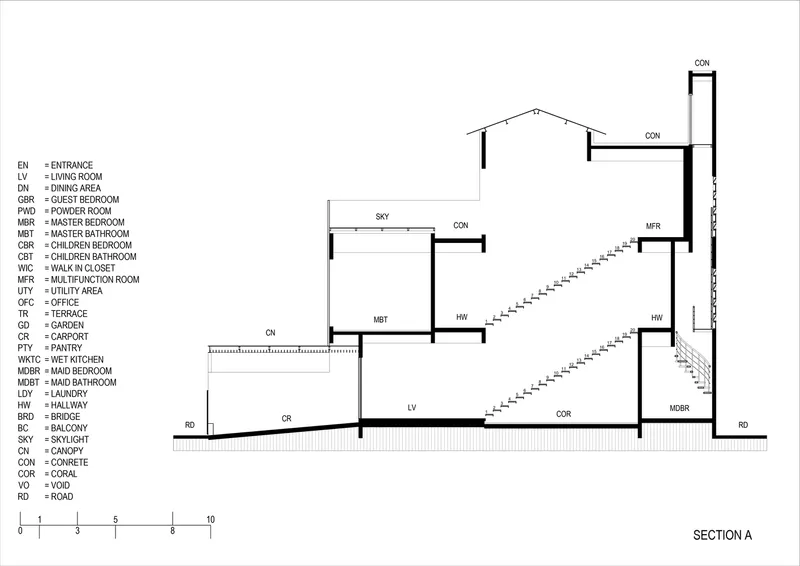
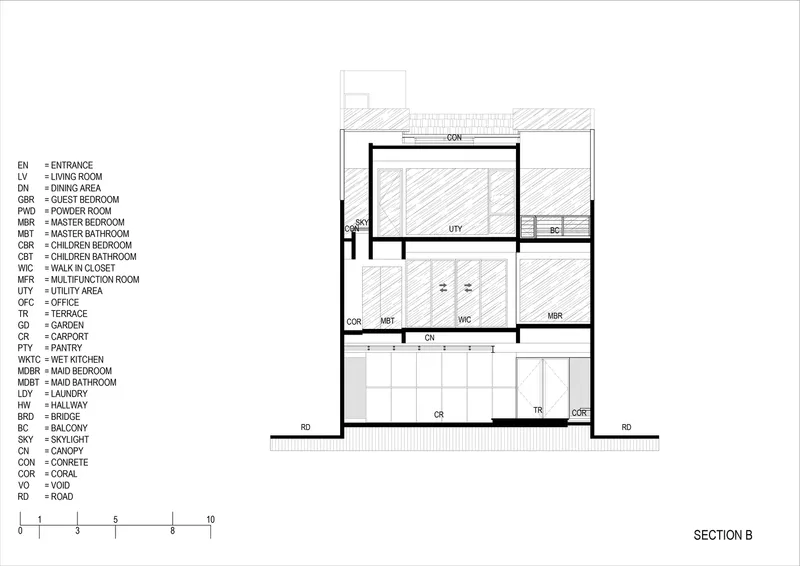
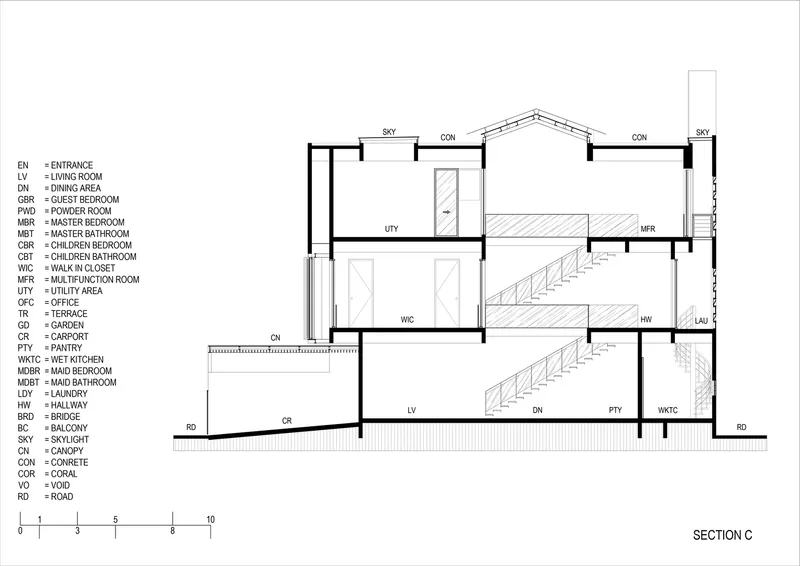
At its core, this home redefines what it means to live modernly in a tropical environment—merging minimalist aesthetics, environmental performance, and strong family values into a cohesive architectural narrative.
All Photographs are works of Ernest Theofilus


Popular Articles
Popular articles from the community


Cube Design Draws an Ecological Corridor Between Two Shenzhen Hills with the Nankai Building
Beside Shenzhen's container docks, the Nankai Building pairs stacked balconies with a climbing green screen to connect two hillsides across its height.

U.GA Architects Wraps an Oval Rooftop Pool in Curved Board-Formed Concrete on Busan's Jeollidan-gil
In Busan's Jeonpo-dong, a 454 m² mixed-use block stacks a neighborhood facility, guest rooms and an oval rooftop pool inside spiraling concrete walls.

GROUP A Strips a 1969 Rotterdam Harbor Headquarters to Its Frame and Wraps It in Timber Louvers
In Rotterdam's M4H harbor district, Ferro Offices reuses a 1969 frame, adds one timber storey and reaches BREEAM-NL Outstanding.

longwave studio Reorganizes a 112 m² Tainan Apartment Around the Daily Routines of a Family and Two Cats
In Tainan, Taiwan, birch plywood, rust-red furniture and a freestanding plaster wall link arrival, storage, work and family life in one apartment.

Similar Reads
You might also enjoy these articles

Gil Mello Arquitetura Tilts a Single Roof Toward the Waterfalls on a Plateau Above Aiuruoca, Brazil
In Aiuruoca, Minas Gerais, a 200 m² house of local labor and reclaimed poles pairs a low valley veranda with a tall mountain one.
U.GA Architects Wraps an Oval Rooftop Pool in Curved Board-Formed Concrete on Busan's Jeollidan-gil
In Busan's Jeonpo-dong, a 454 m² mixed-use block stacks a neighborhood facility, guest rooms and an oval rooftop pool inside spiraling concrete walls.

Felipe Hess Arquitetos Turns a Blind Stone Wall to the Street and Opens a Brazilian House onto a Courtyard and Canal
A canal-front house in Brazil hides behind painted stone and planting, then opens to an olive-tree courtyard, a reed-ceilinged porch and a curving pool.

David Macias Steps a Doorless Stone and Plaster House Down a Tropical Colombian Hillside
In the humid hills of Colombia, Threshold House replaces the front door with an open void and terraces its 850 m² down the slope instead of fighting it.

Explore Architecture Competitions
Discover active competitions in this discipline

Challenge to reimagine the Iron Throne

Photograph architecture without architects

Illustrate the lost glory of Angkor Wat - Render Challenge

Design challenge to reuse E-waste
Comments (0)
Please login or sign up to add comments
No comments yet. Be the first to comment!