
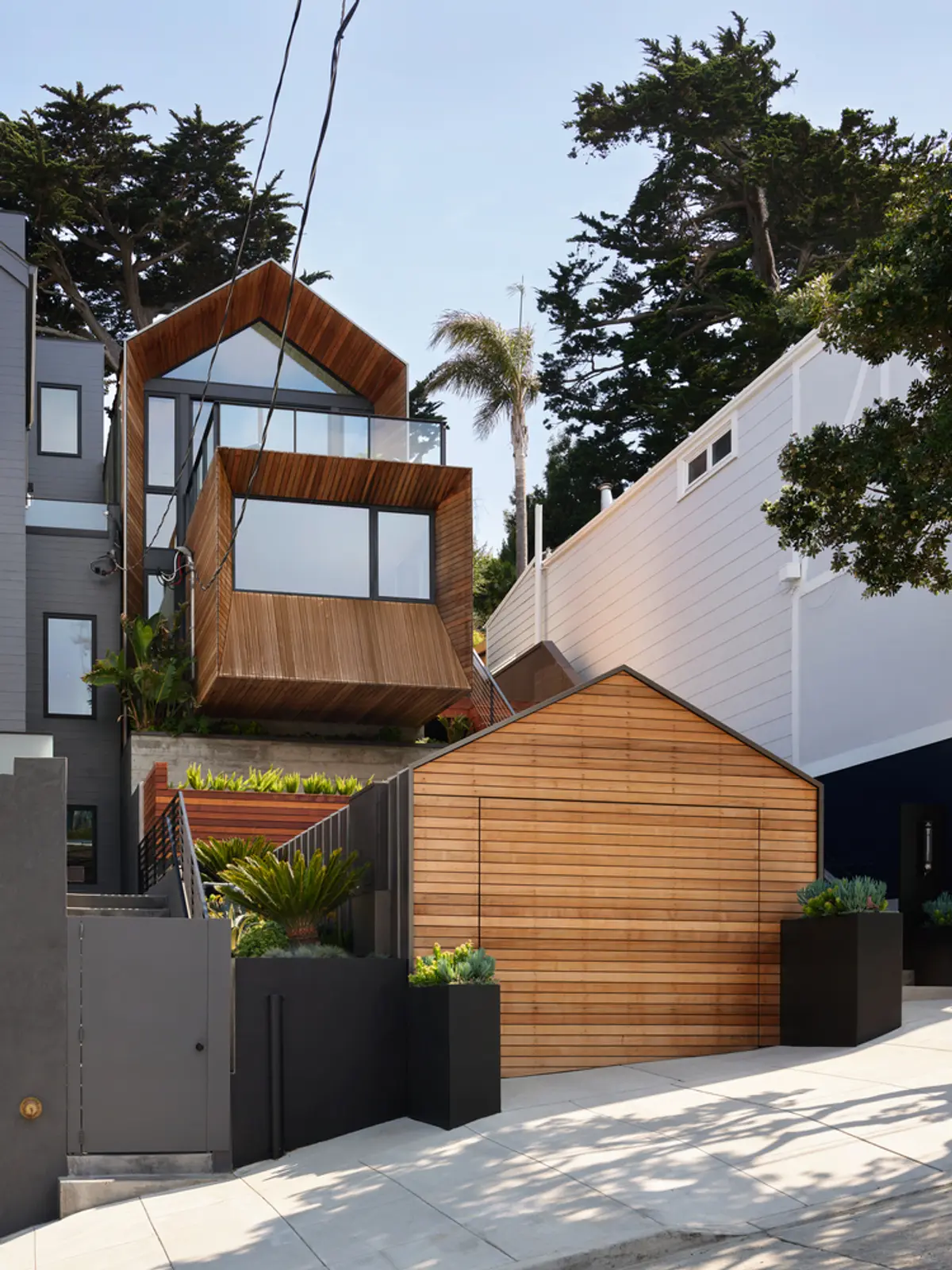
Dolores Heights Residence by Jones Haydu: Modern San Francisco Home with Panoramic Views
Dolores Heights Residence by Jones Haydu blends modern renovation, open-plan interiors, panoramic San Francisco views, sustainable materials, and thoughtful architectural design.


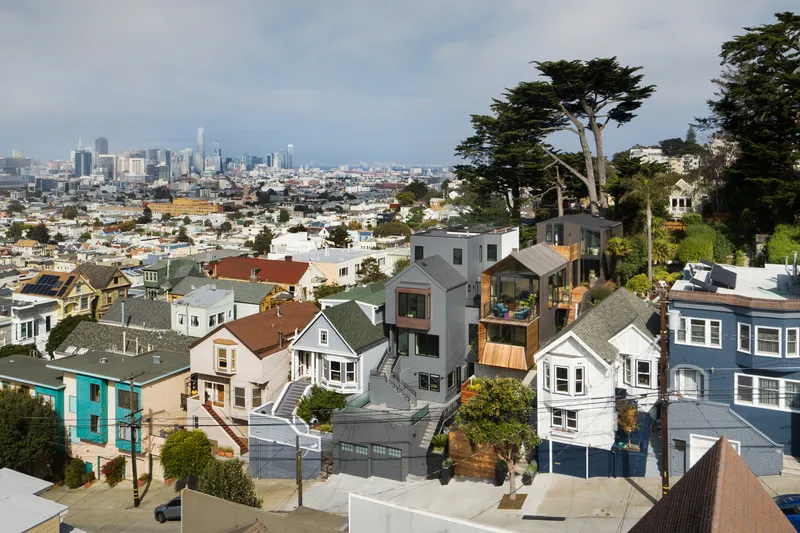
Nestled within San Francisco’s iconic Dolores Heights neighborhood, the Dolores Heights Residence by Jones Haydu exemplifies the seamless integration of contemporary architecture with the city’s storied architectural vernacular. Completed in 2021, this 295 m² home reimagines a modest, earthquake-era cottage through a sensitive expansion and comprehensive renovation. The collaboration with Sawyers Design, who also co-owns the residence, demonstrates a commitment to creating open, harmonious spaces that embrace the natural slope of the west-facing site, sweeping city views, and the iconic Sutro Tower.
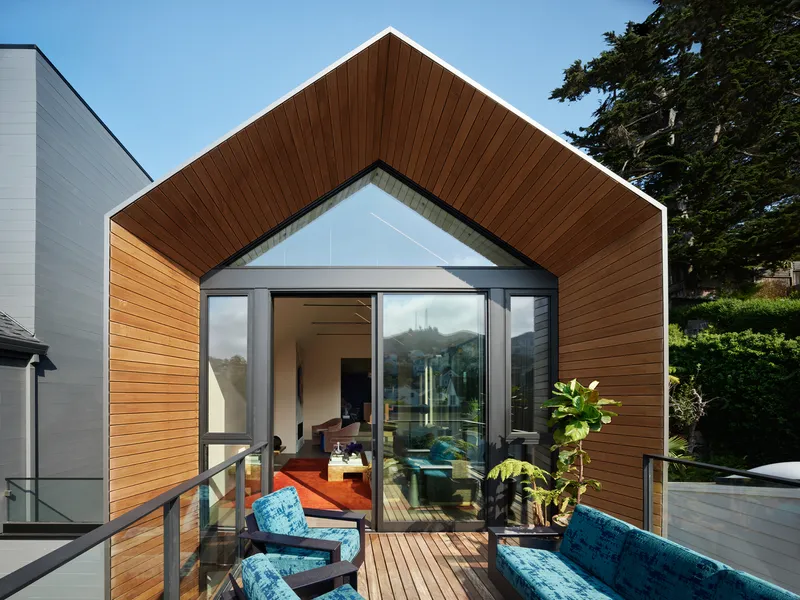
This project represents more than just a home; it is a meticulous orchestration of form, materiality, and spatial experience, creating a dynamic residential environment that responds to both its urban context and natural surroundings.
Site Context and Architectural Vision
Dolores Heights is a neighborhood renowned for its steeply sloping streets, panoramic vistas, and historic residences that reflect San Francisco’s diverse architectural styles. The site for this residence is notably challenging due to its westward slope, offering breathtaking views over the city and glimpses of the distant Sutro Tower. The homeowners sought to maximize these natural advantages while also transforming an existing earthquake cottage that had been added onto piecemeal over the years. The result was a project that addresses both functional and aesthetic aspirations, reshaping awkwardly connected rooms into a cohesive, open-plan living experience.
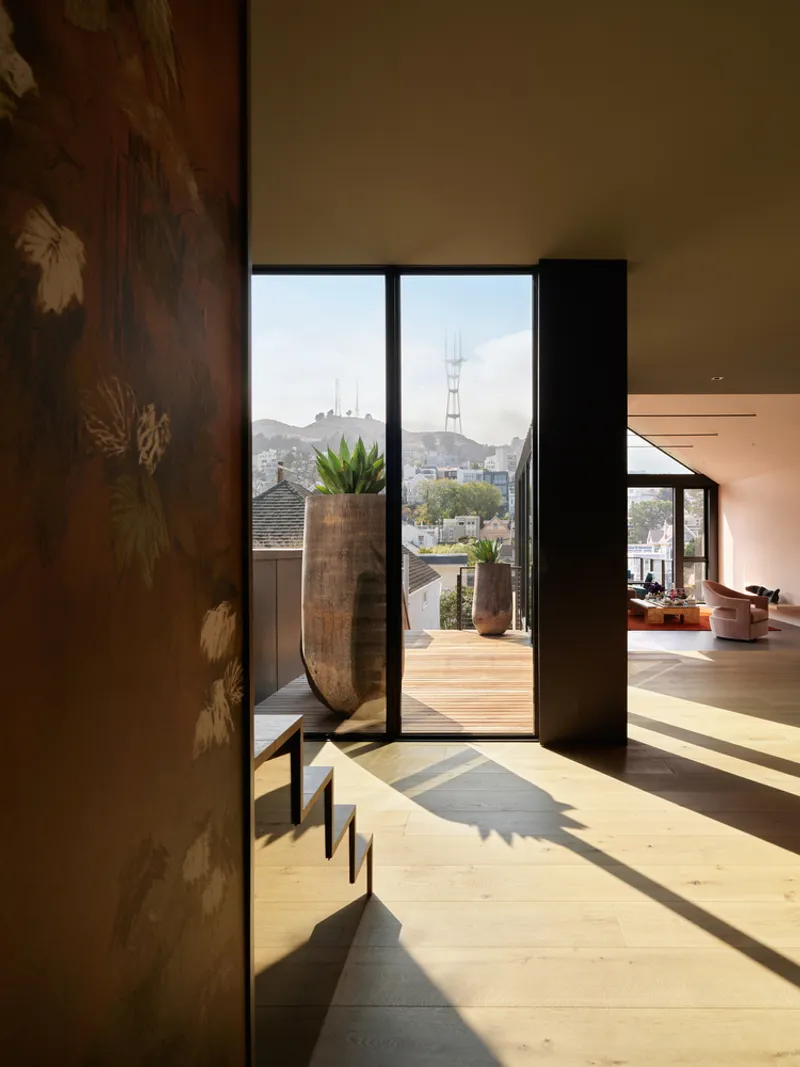
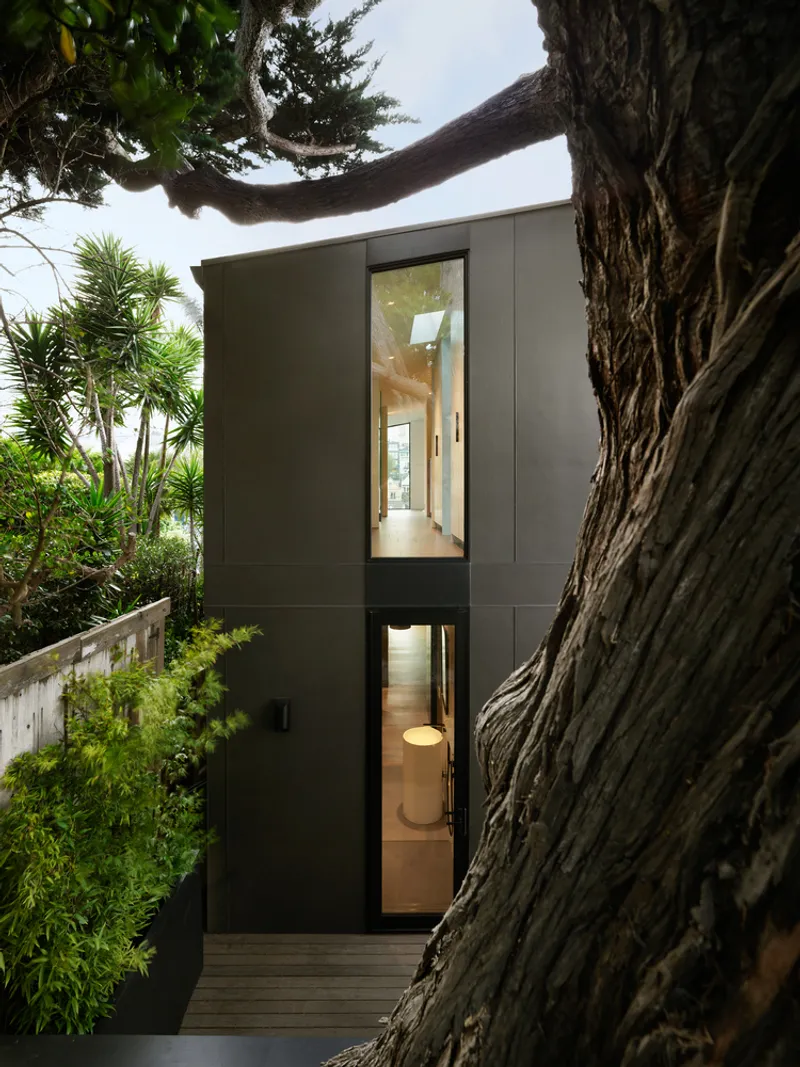
The architects employed a clear design strategy: the circulation through the site and home follows a linear axis, anchoring the spatial experience at both ends. The downhill perspective aligns with Sutro Tower, a defining landmark of San Francisco, while the uphill viewpoint frames a magnificent Monterey cypress tree, offering a natural counterbalance. This intentional alignment creates a sense of harmony between urban and natural elements, making the home feel intimately connected to its surroundings.
Architectural Design and Form
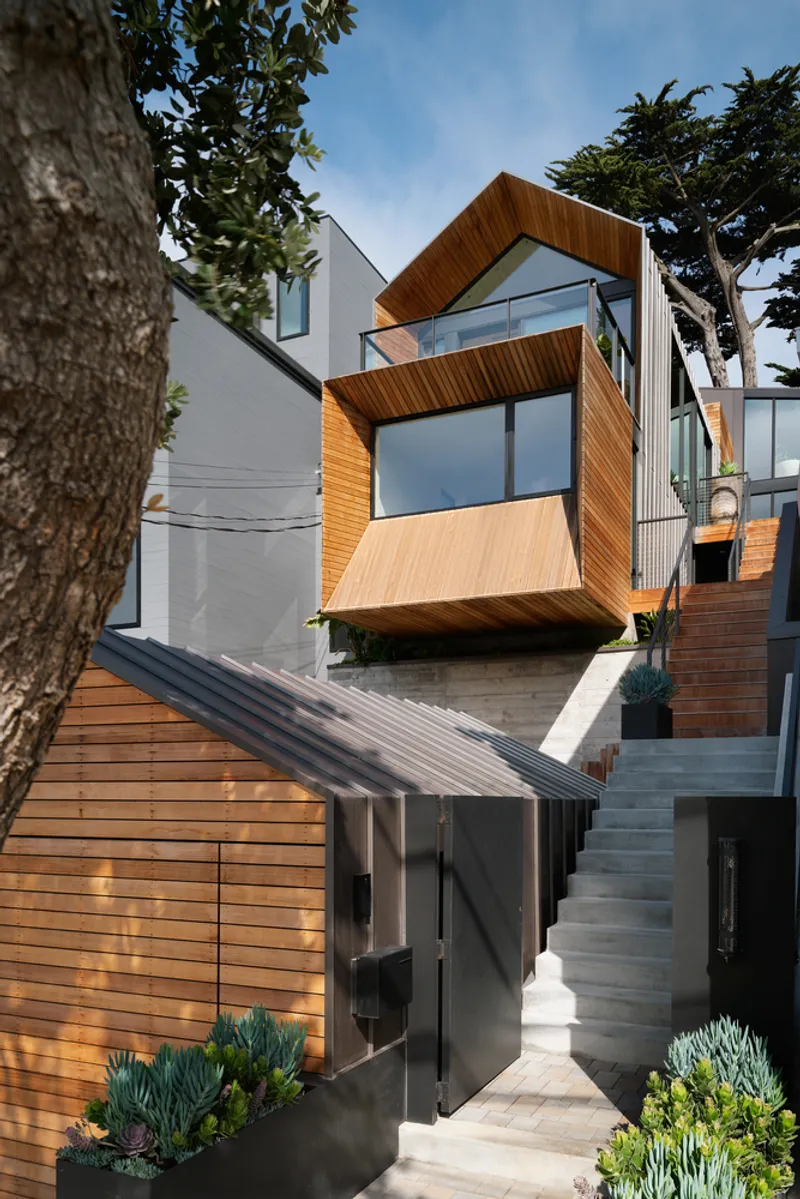
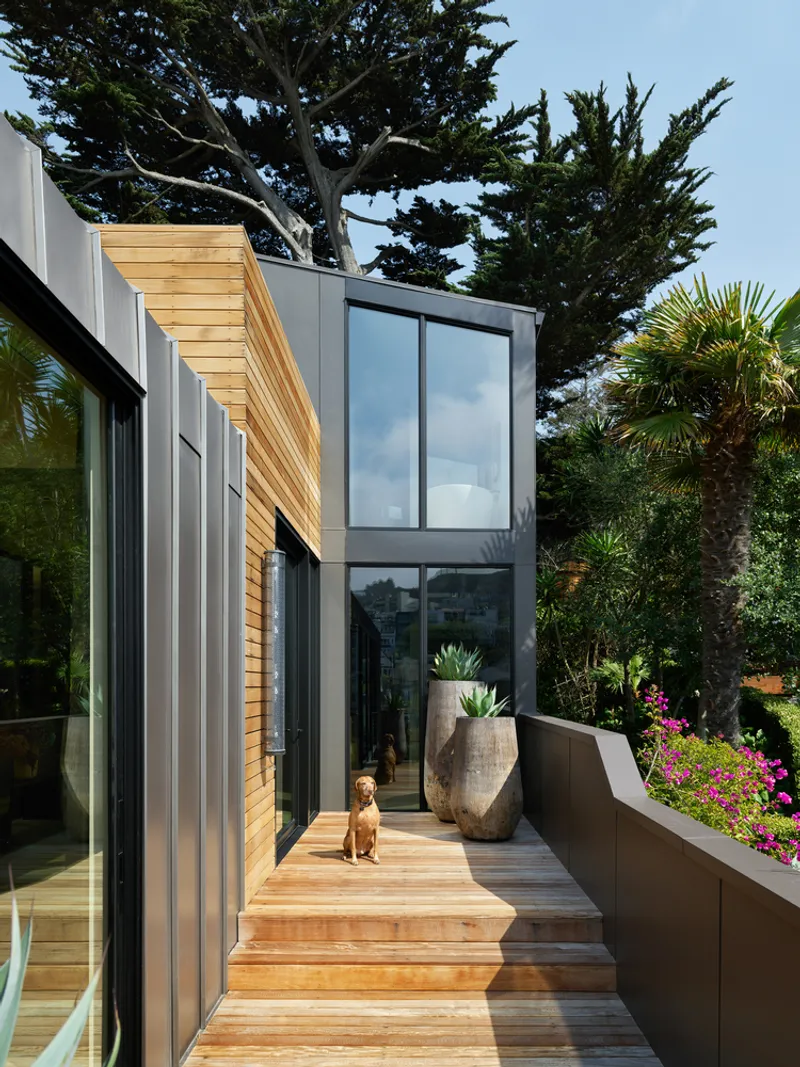
The architectural language of the Dolores Heights Residence is defined by nested forms and a carefully curated material palette. The exterior combines warm cedar cladding, standing seam metal panels, and cementitious surfaces, reflecting both modern sensibilities and San Francisco’s vernacular architectural traditions. The interplay of these materials articulates distinct volumes while maintaining a cohesive aesthetic across the structure.
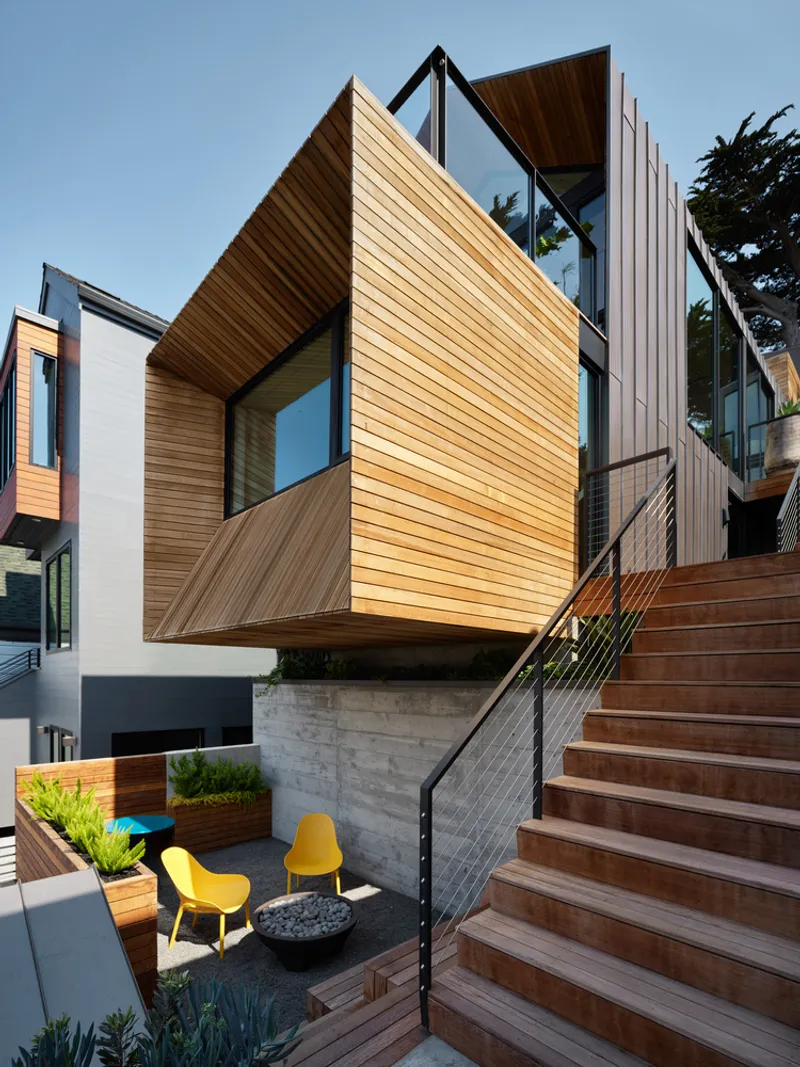
One of the most striking design elements is the “inverted” Bay window, which cantilevers eight feet from the facade. This feature creates layered experiences of the so-called “urban forest.” The lowest level of the window frames the exterior fire pit, evocative of a forest floor, while the central portion frames the interior living space, representing the “trunk” level. Finally, the roof deck extends from the top of the Bay window, offering elevated perspectives of the surrounding treetops and cityscape, embodying the “canopy” experience. This architectural gesture allows residents to engage with the site in multiple dimensions, blurring the boundaries between interior and exterior.
The composition of forms culminates at the front of the residence, echoing the playful gables and pitched roofs that characterize San Francisco’s traditional homes. Yet, the interpretation here is contemporary, volumes intersect, creating open and light-filled interiors, while the exterior remains elegantly restrained.
Interior Design: Open-Plan Harmony
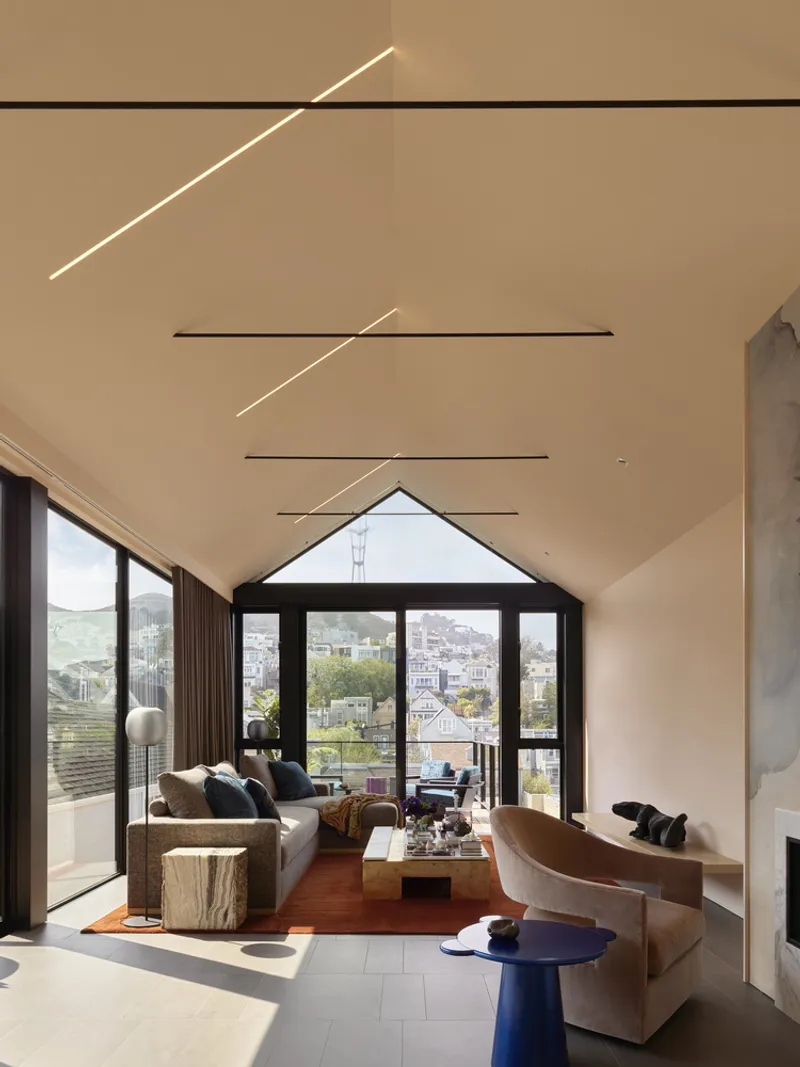
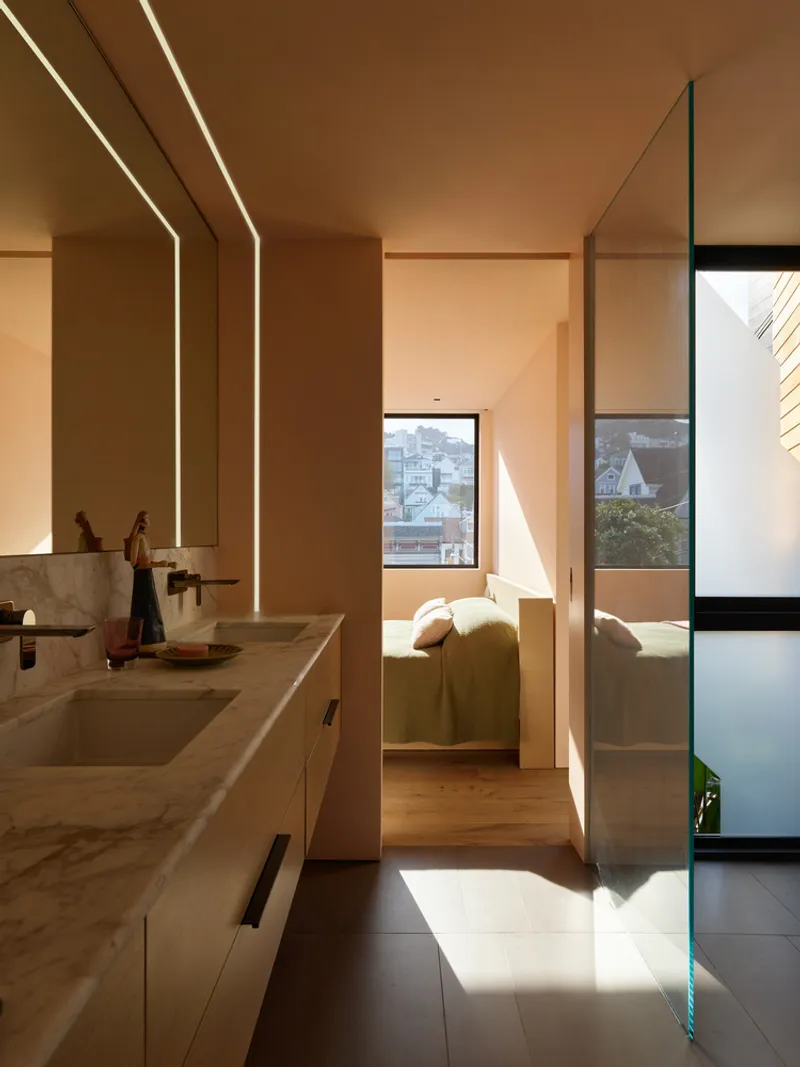
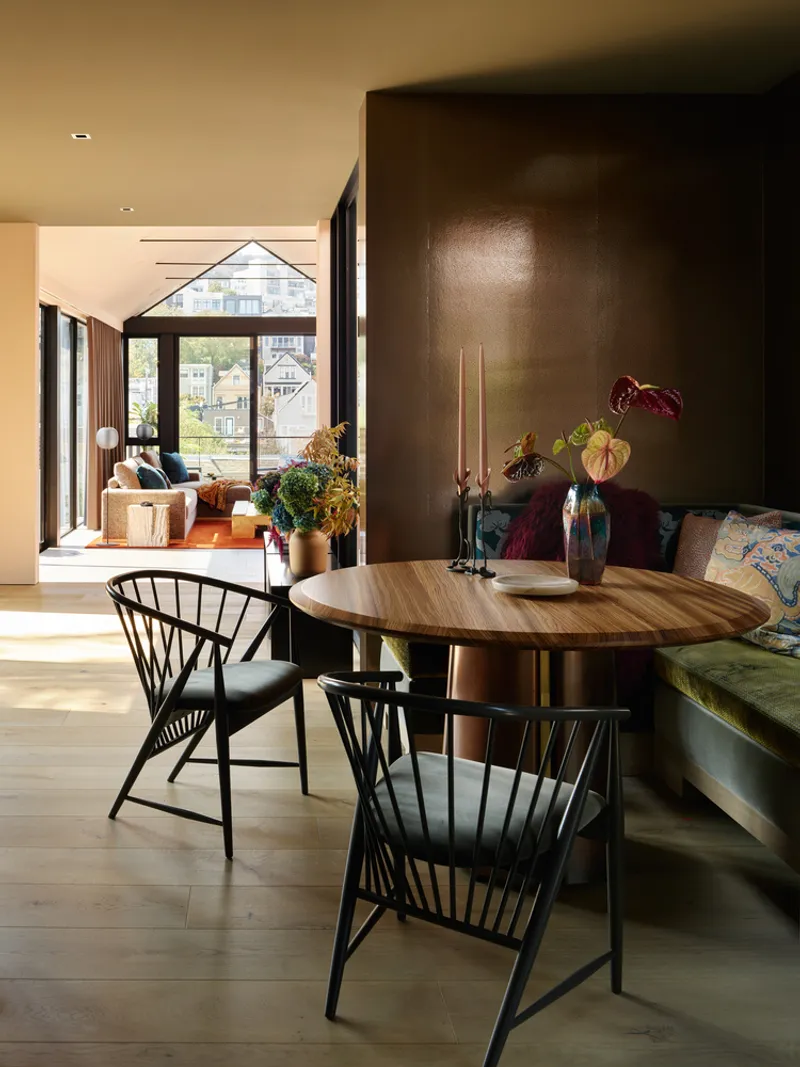
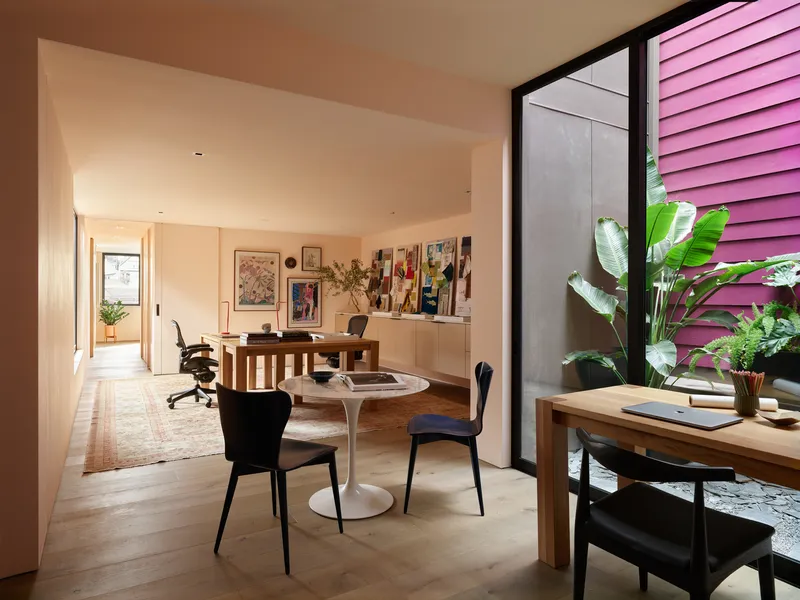
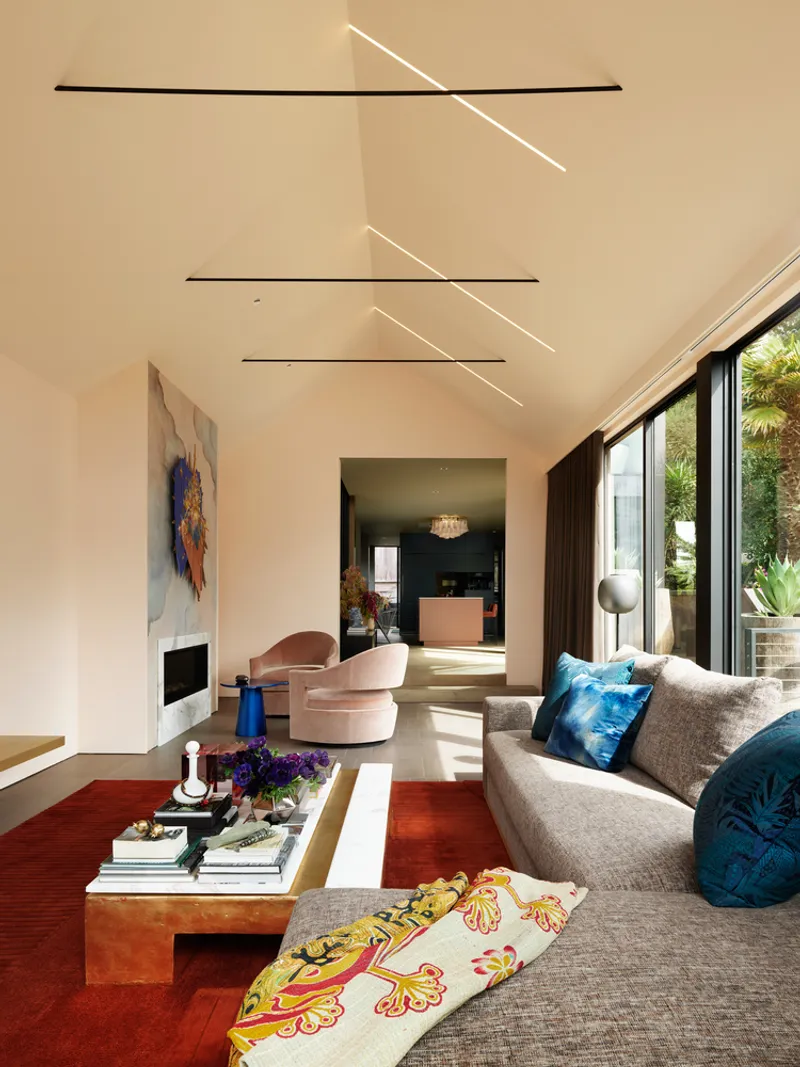
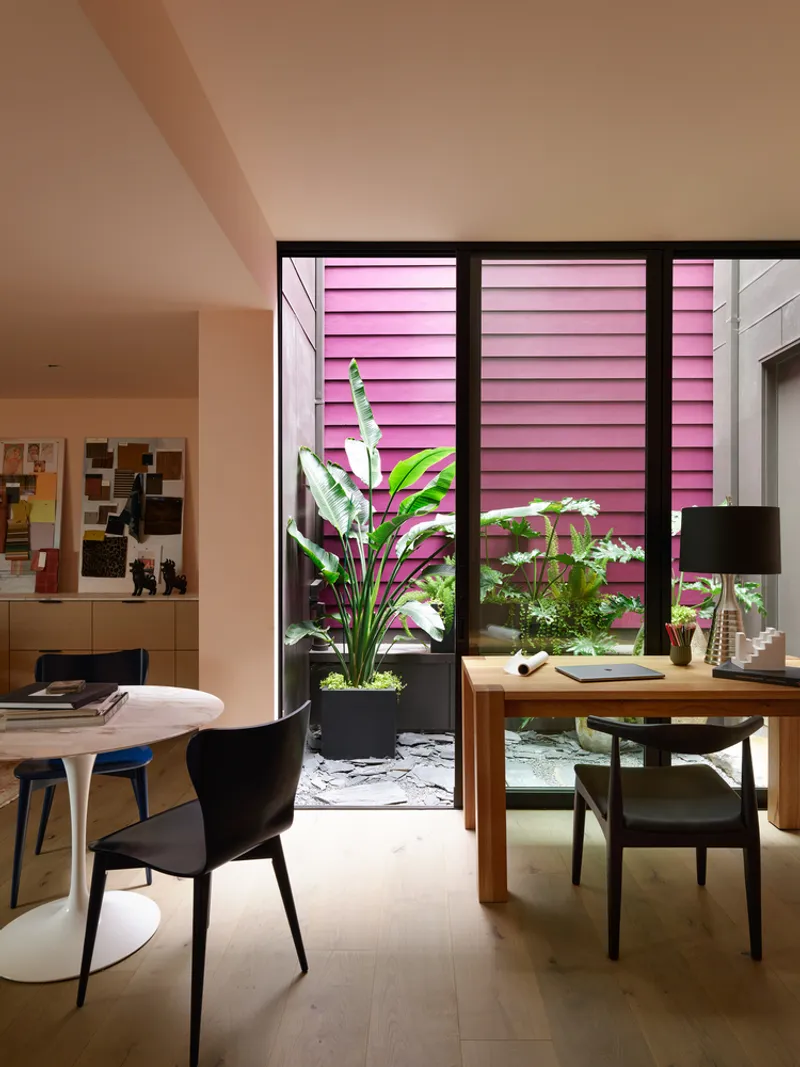
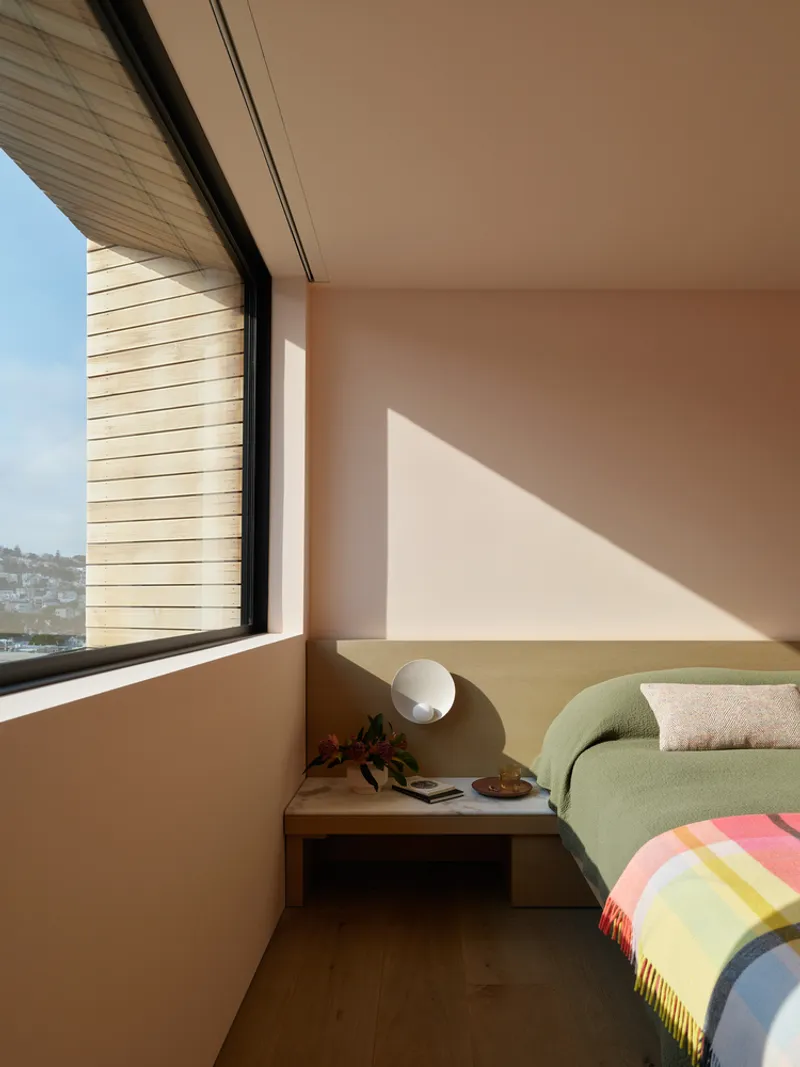
Inside, the Dolores Heights Residence celebrates openness and natural light. Designed in collaboration with Sawyers Design, the interiors reflect a balance of comfort, functionality, and sophistication. The open-plan layout allows for fluid movement between living, dining, and kitchen areas, with the linear circulation axis extending through the entire home. Each space maintains visual connections to both the city and natural surroundings, ensuring that the spectacular views remain central to the living experience.
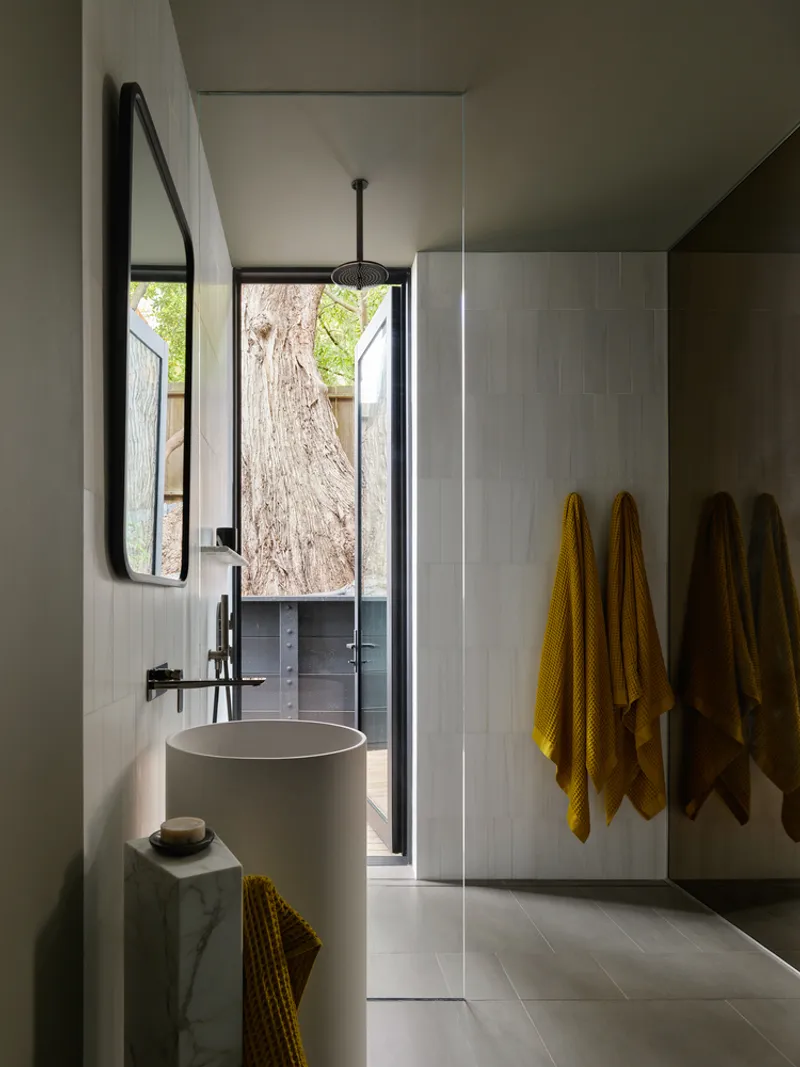
Custom furniture, thoughtfully selected finishes, and warm textures contribute to a cohesive aesthetic. Materials such as natural wood, concrete, and metal surfaces are repeated throughout the interior, creating a dialogue with the exterior cladding. Structural beams and ceiling details are exposed where appropriate, adding depth and highlighting the craftsmanship involved in the renovation.
Lighting design is subtle yet intentional, emphasizing the architectural forms and enhancing the sense of openness. Large windows, strategically placed skylights, and glass doors ensure that daylight permeates the interiors, reducing the need for artificial lighting while enhancing the connection to the outdoors.
Spatial Experience and Circulation
Circulation in the Dolores Heights Residence is one of its most defining characteristics. The architects created a strong, clear axis that guides movement from the entrance to key interior and exterior viewpoints. As visitors traverse the home, the views of Sutro Tower and the Monterey cypress tree are constantly referenced, anchoring the experience and creating a sense of place.
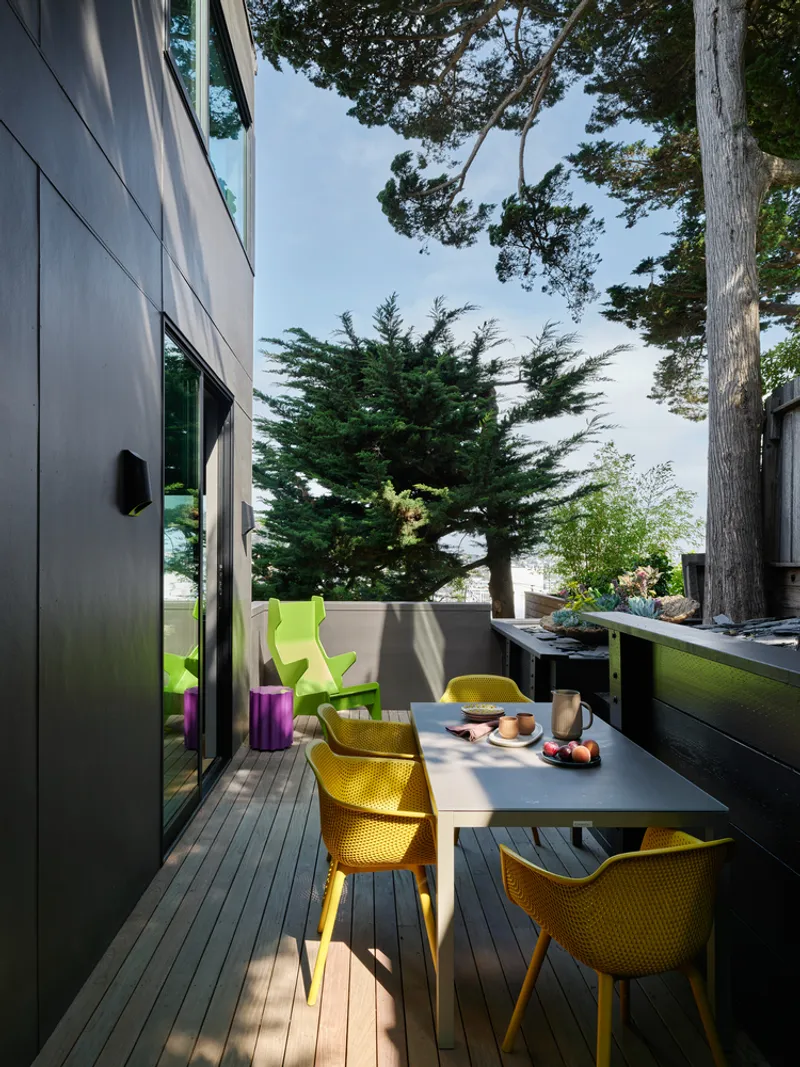
The circulation strategy also extends to outdoor spaces. Terraces, decks, and patios are positioned to complement the interior layout, encouraging interaction with the site and the cityscape. The roof deck, integrated with the inverted Bay window, functions as both a social gathering space and a vantage point, offering a layered experience of urban and natural environments.
The interplay of horizontal and vertical circulation emphasizes the home’s multi-dimensional approach. Staircases, for instance, are not mere functional elements but sculptural features that contribute to the overall aesthetic while connecting different levels of living spaces.
Materiality and Sustainability
Material selection played a crucial role in achieving both aesthetic and functional goals for the Dolores Heights Residence. The combination of cedar, standing seam metal, and cementitious panels offers durability and weather resistance while creating visual texture and depth. The use of natural wood adds warmth and tactility to both interiors and exteriors, softening the modern lines and enhancing the connection to nature.
Sustainable practices were considered throughout the renovation. Large operable windows allow for cross-ventilation, reducing reliance on mechanical cooling systems. The linear circulation axis, coupled with strategically placed skylights and light wells, maximizes natural daylighting. These choices not only reduce the home’s environmental footprint but also enhance the quality of life for its occupants.
Fixtures and fittings, sourced from manufacturers such as Western Window Systems, Blu Bathworks, Graff, Mosa, and others, reflect a commitment to both quality and sustainable sourcing. Every element, from plumbing fixtures to cabinetry, was chosen to complement the home’s material palette and overall design ethos.
Architectural Collaboration
The success of the Dolores Heights Residence is rooted in collaboration. Jones Haydu, led by J. Hulett Jones, Paul Haydu, and Grace Leung, partnered closely with Kevin Sawyers of Sawyers Design, creating a design that reflects both professional expertise and personal vision. The general contractor, Jeff King and Company, and structural engineers from Strandberg Engineering ensured that construction adhered to the ambitious design vision while meeting rigorous safety and structural requirements.
The collaborative process extended to interior design, material selection, and custom details, ensuring that every aspect of the home is coherent and meticulously executed. This partnership between architects, designers, engineers, and owners demonstrates how residential architecture can balance creativity, functionality, and responsiveness to site constraints.
Outdoor Living and Landscape Integration
The Dolores Heights Residence blurs the boundary between indoor and outdoor living. Outdoor terraces, patios, and the roof deck provide opportunities for relaxation and social interaction while maintaining privacy. The placement of these spaces responds to the slope of the site, optimizing sunlight, views, and accessibility.
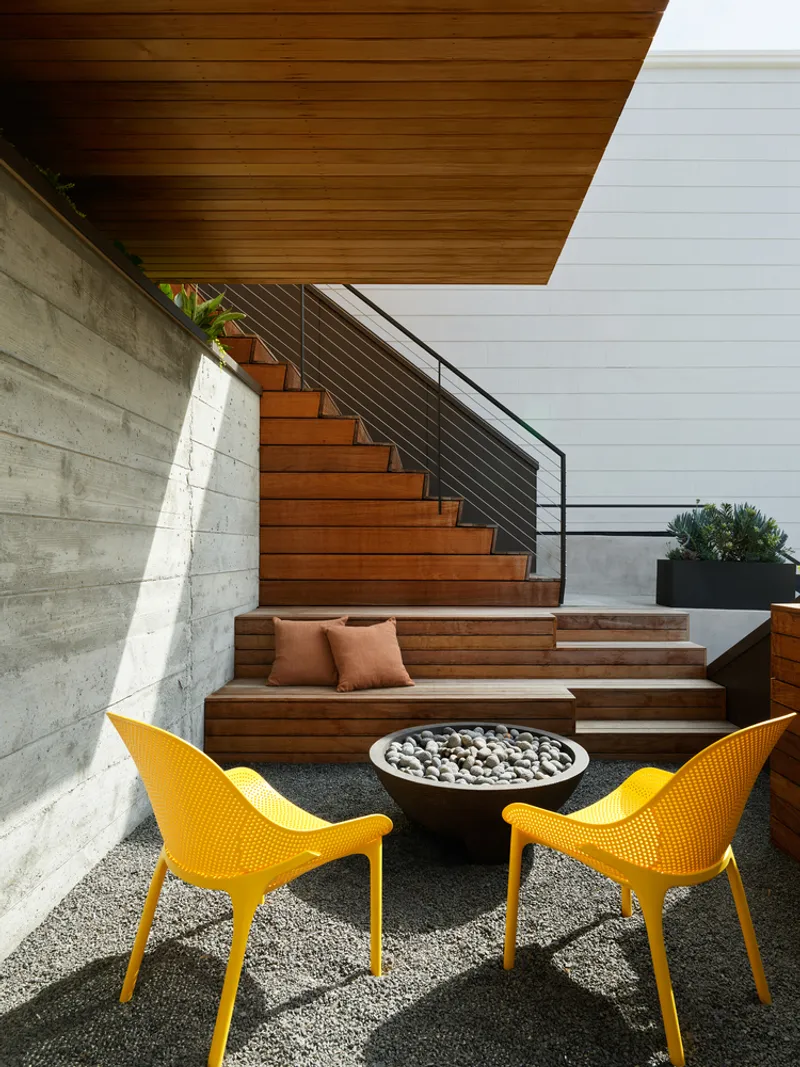
Landscaping elements are integrated seamlessly with the architecture. The cypress tree anchors the site, while native planting and minimalist design contribute to a sense of serenity. The exterior fire pit at the base of the Bay window offers a contemplative outdoor space, complementing the “forest floor” concept and reinforcing the home’s multi-layered approach to spatial experience.
A Contemporary Take on San Francisco Vernacular
While the Dolores Heights Residence is unequivocally modern, it maintains a dialogue with San Francisco’s architectural heritage. The gabled volumes, material contrasts, and careful attention to scale nod to traditional homes, while the contemporary forms and open interiors push the design into the 21st century. The result is a home that feels both familiar and innovative, a residence that respects its context while asserting a unique architectural identity.
The Dolores Heights Residence by Jones Haydu is a masterclass in residential renovation and contemporary design. It exemplifies how thoughtful architecture can transform an existing structure into a modern home that engages with its site, maximizes views, and creates memorable spatial experiences. From the nested forms and material palette to the inverted Bay window and open-plan interiors, every element is deliberate, enhancing both aesthetic appeal and functional living.
This project sets a benchmark for residential design in San Francisco, demonstrating how collaboration, careful site analysis, and attention to materiality can result in a home that is elegant, sustainable, and deeply connected to its environment.
All photographs are works of
Matthew Millman


Popular Articles
Popular articles from the community


David Ortega Stacks a Two-Story Mexico City Penthouse Around a Steel Stair and a Pergola-Shaded Roof Terrace
In Colonia Roma, a 300 m² penthouse uses oak joinery, a planted steel stair and a slatted roof pergola to make a new-build apartment feel like a house.

U.GA Architects Wraps an Oval Rooftop Pool in Curved Board-Formed Concrete on Busan's Jeollidan-gil
In Busan's Jeonpo-dong, a 454 m² mixed-use block stacks a neighborhood facility, guest rooms and an oval rooftop pool inside spiraling concrete walls.

Juan García Correa, John González and Claudia Rueda Sink a Circular Amphitheater into a Manizales Engineering Building
On the La Nubia campus in Manizales, Colombia, the S1 Building folds labs and offices into a hillside of ramped lawns that double as a campus route.

longwave studio Reorganizes a 112 m² Tainan Apartment Around the Daily Routines of a Family and Two Cats
In Tainan, Taiwan, birch plywood, rust-red furniture and a freestanding plaster wall link arrival, storage, work and family life in one apartment.

Similar Reads
You might also enjoy these articles

Bamboo Housing Challenge 2026: Design Affordable, Sustainable Homes Using Bamboo
An international design competition by Bamboo U and IBUKU inviting architects and designers to reimagine affordable housing using bamboo — with the winning design built full-scale in Bali.

Computational Design & Education: Beegraphy Design Awards Introduces 7th Category (Featuring Jiyun's Innovative Approach)
Dive into Beegraphy’s 7th Design Awards category, where computational design meets education to create immersive, interactive learning tools, inspired by Jiyun’s work.

From Parametric Lighting to Urban Furniture: Join the 2nd Workshop in Beegraphy’s Computational Design Series
Dive into Cutting-Edge Design Techniques and Practical Applications with Industry Experts

Last Call: Unleash Your Architectural Genius in SHAK's Kindergarten Design Competition
Urgent call for architects to join SHAK's kindergarten design competition before the looming deadline

Explore Architecture Competitions
Discover active competitions in this discipline

Challenge to reimagine the Iron Throne

Photograph architecture without architects

Illustrate the lost glory of Angkor Wat - Render Challenge

Design challenge to reuse E-waste
Comments (0)
Please login or sign up to add comments
No comments yet. Be the first to comment!