
Dongdan Grassland “Sea Ruins” Station by Mur Mur Lab: Architecture Meets Coastal Landscape
Dongdan Grassland “Sea Ruins” Station by Mur Mur Lab blends steel structure, natural materials, and scenic framing, creating immersive coastal prairie experiences.


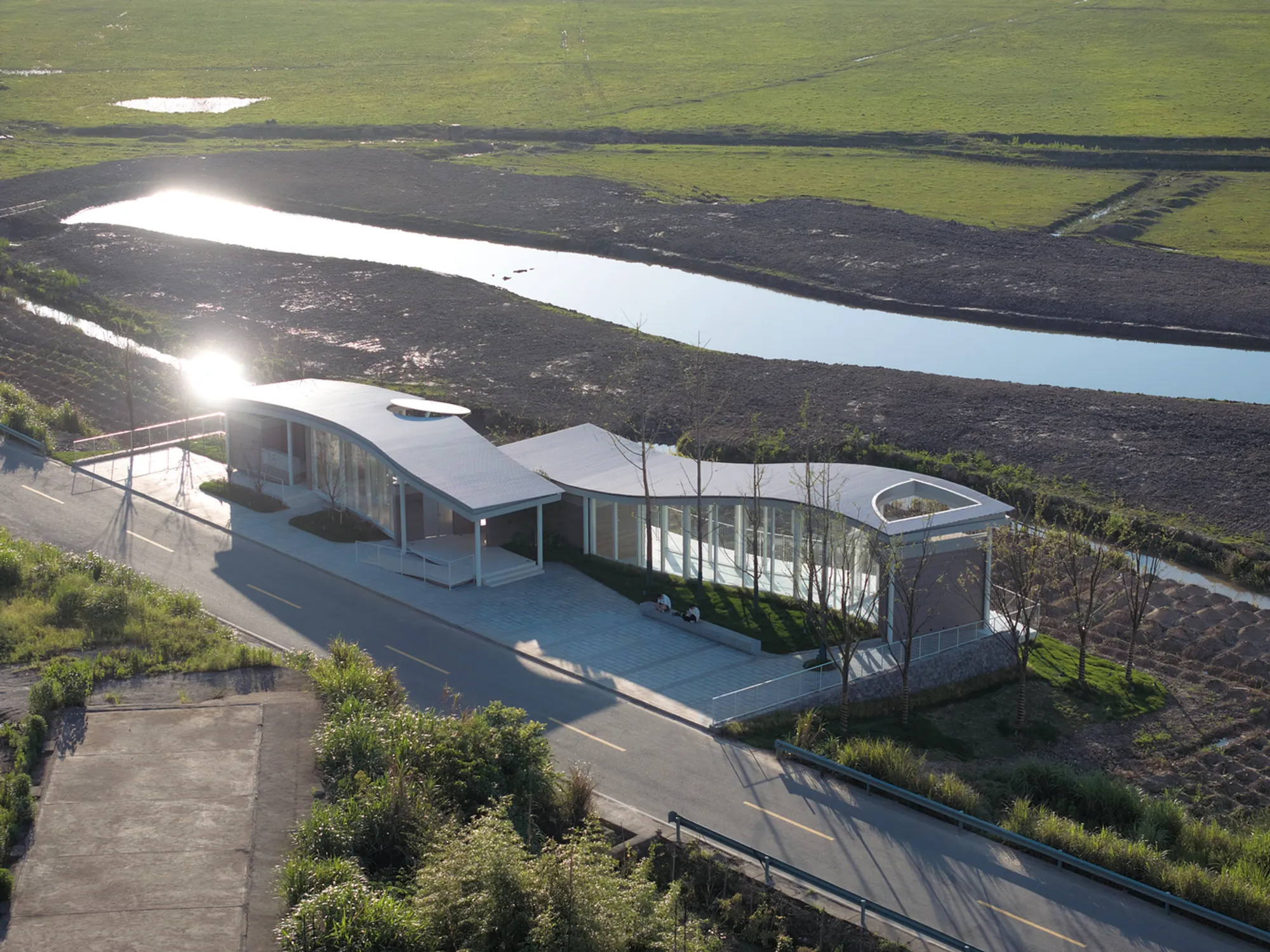
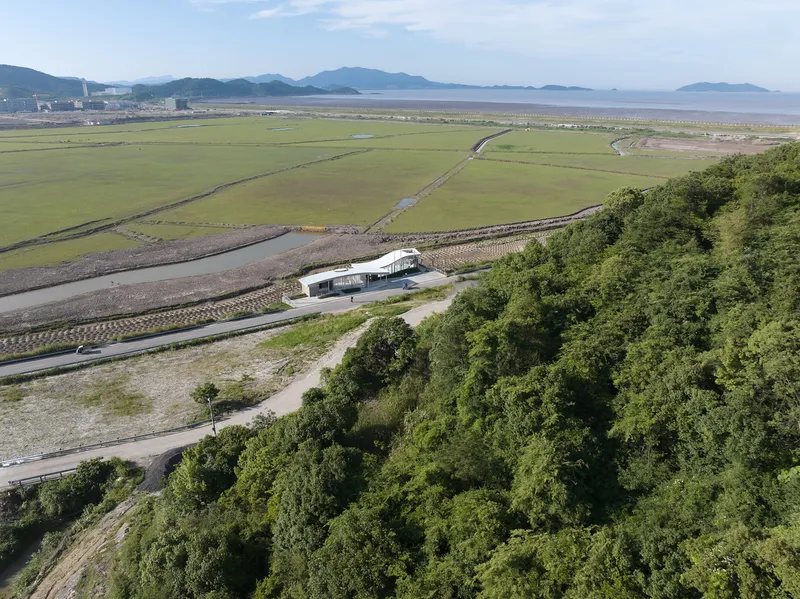
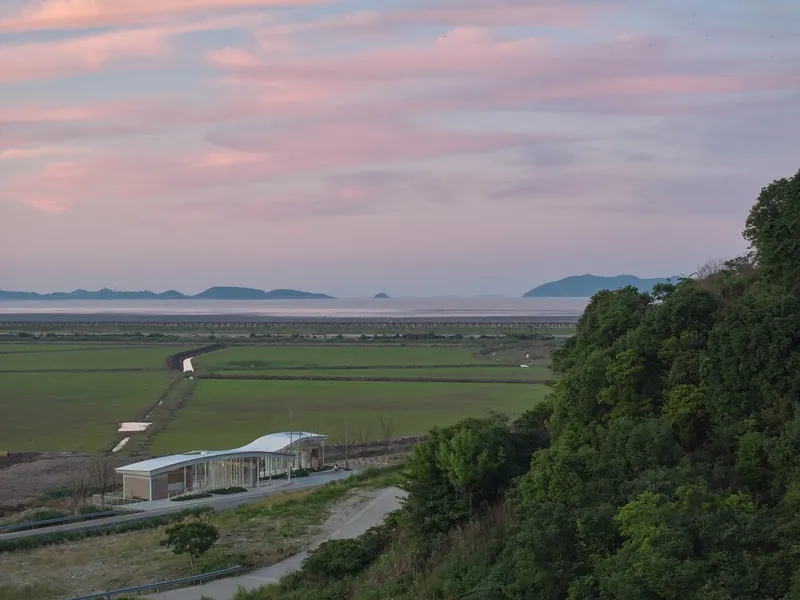
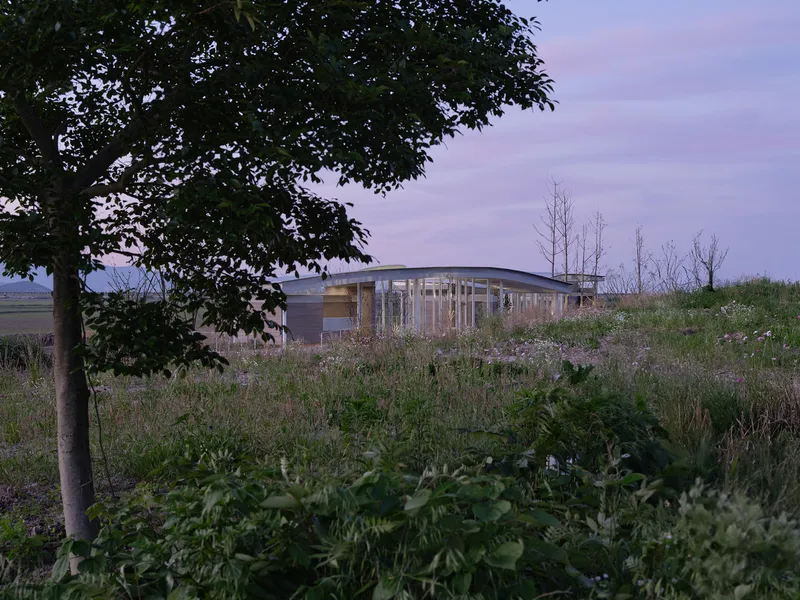
Nestled in the unique coastal intersection of mountains and sea, the Dongdan Grassland “Sea Ruins” Station by Mur Mur Lab is a striking example of architecture that harmonizes with nature while serving as a functional public hub. Located in Xiangshan Dongchen Township, a little-known coastal prairie along the East China Sea, this project transforms a reclaimed mudflat pasture into a thoughtfully designed station that engages both visitors and the surrounding environment.

A Coastal Prairie Preserved
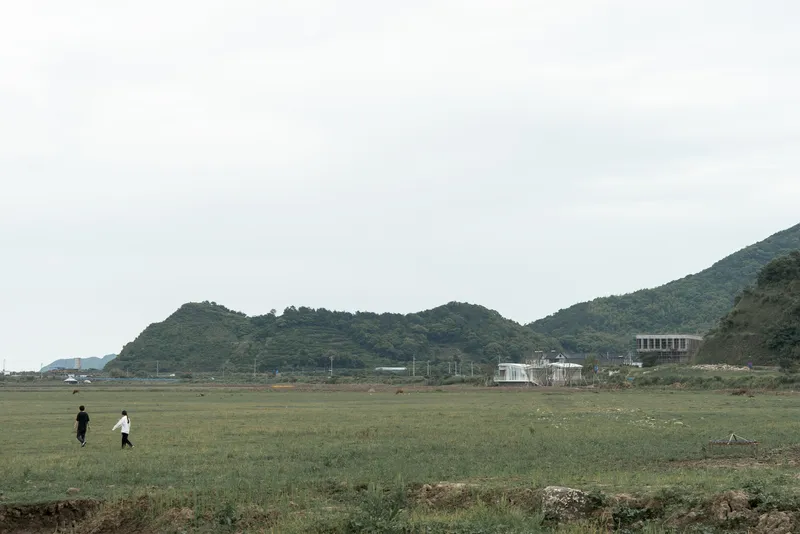
Over the past two decades, the region has maintained its natural pastoral landscape despite land reclamation efforts. Stretching nearly a thousand acres, this East China Sea prairie remains a sanctuary for cattle, seabirds, and local biodiversity. The station is strategically positioned on the southern edge of the prairie, adjacent to the road leading to Wangjialan Village and backed by the remnants of Dawanshan. As a transit hub, it connects the southern coastal highway to the Damuyang coastal area, providing a gateway for travelers to explore the expansive coastal grasslands.

Architectural Vision: Framing Nature
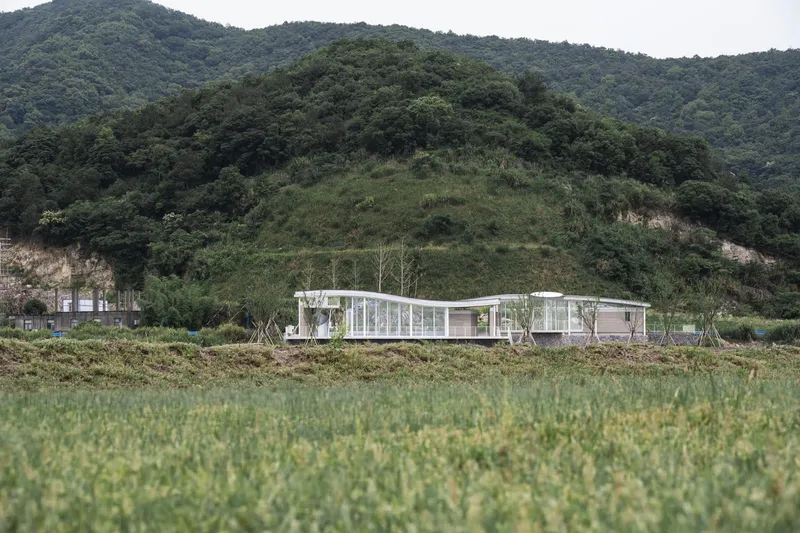
At the heart of Mur Mur Lab’s design is the concept of scenic framing. Instead of merely offering views, the architecture orchestrates the way the landscape is experienced. Visitors encounter the prairie gradually: first through a screen, then a window, followed by a corridor, and finally, from an elevated platform where the full scope of the grassland is revealed.


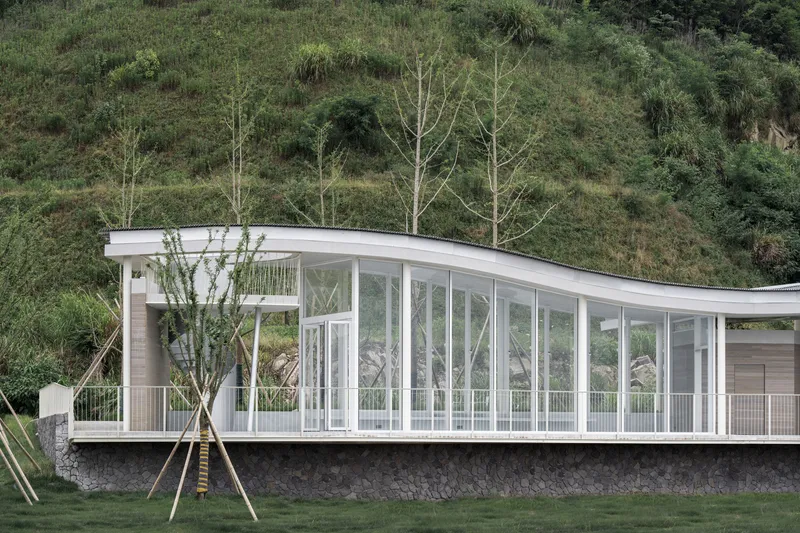
A row of ginkgo trees strategically placed at the center of the station creates a natural screen, shielding visitors from the nearby southern mountain and introducing a moment of visual suspense. The station’s layout is divided into two distinct zones: a public-facing area with reception, retail, and restrooms, and a more private dining area tucked behind the trees. The two areas are set at different elevations, one aligned with the road, the other rising above the prairie, connected by an outdoor walkway framed by walls and a roof. This walkway forms a narrow, precise opening, offering visitors a framed, almost cinematic view of the landscape.
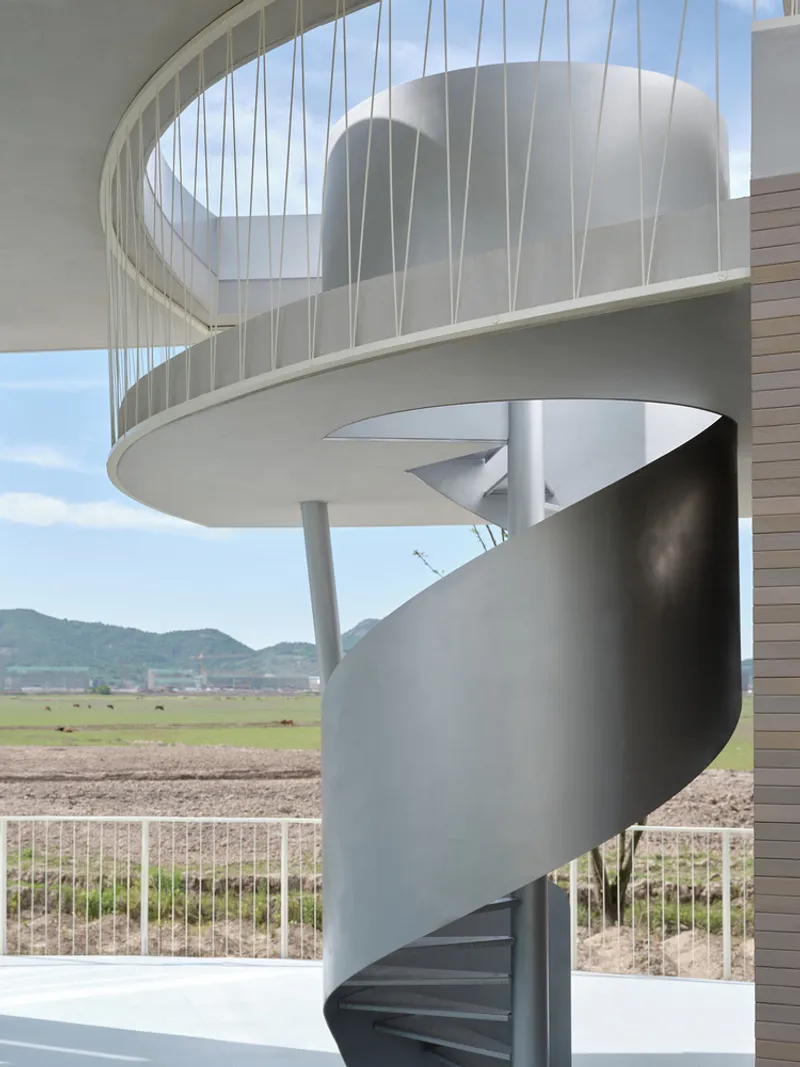
Ascending a spiral staircase at the corridor’s end, the platform opens up to the sky, transforming the previously intimate views into a panoramic experience of the coastal prairie. The progression from enclosed spaces to elevated openness creates a dynamic, narrative-driven interaction with nature.

Structural Elegance and Materiality
The station’s steel frame structure provides a clear architectural skeleton, supporting detached curtain walls and interior floors while allowing the roof’s undulating concrete slabs to float above. Inside, continuous concrete slabs act as reflectors, distributing light evenly from fixtures installed on the steel framework. This interplay of materials reinforces the station’s balance between structural clarity and spatial fluidity.
Material choices were meticulously curated to connect the station to its surroundings. The flooring combines beige exposed aggregate concrete, rough and primitive like the surrounding rocky terrain, with light blue terrazzo, smooth and reflective, echoing the distant Damuyang waters. Walls of Siberian larch introduce a tactile, mottled texture, ensuring the station feels grounded in its natural setting while aging gracefully over time.
A Living Public Space
Upon completion, the Dongdan Grassland “Sea Ruins” Station transcends its role as a functional infrastructure project. After more than thirty visits over two years during the design and construction process, Mur Mur Lab ensured that the station embodies both resilience and sensitivity. Exposed to sun, rain, and the passage of time, it is designed to offer a generous, dignified public experience for visitors, blending seamlessly with the coastal landscape while retaining its architectural identity.
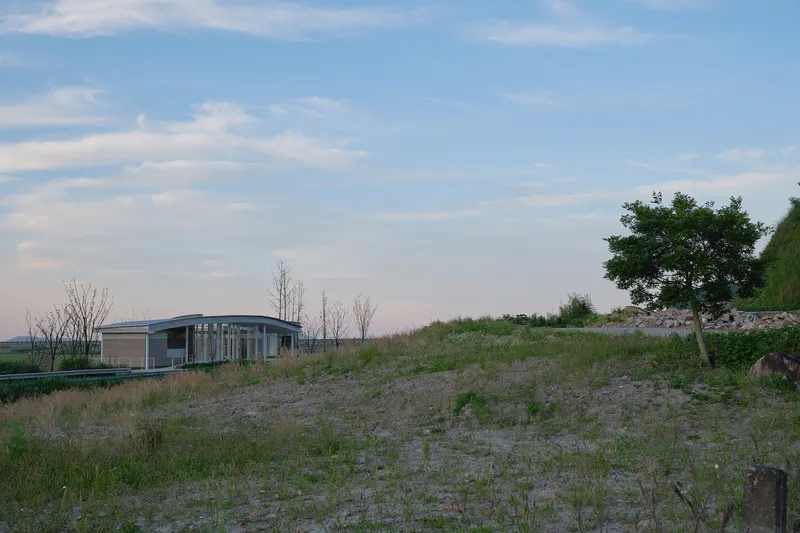
All photographs are works of Kejia Mei, WDi




Popular Articles
Popular articles from the community


Co-Life: Senior Housing Design That Reconnects Older Adults With the City
Co-Life reimagines senior housing design through healing gardens, shared streets, workshops, and a sustainable community across generations.

Co-life: Sustainable Architecture for Age-Friendly Community Living
Co-life reimagines sustainable architecture for seniors through courtyards, rammed earth, shared gardens, and spaces designed for belonging.
AL-JANNAH: Sustainable Architecture and Permaculture for Afghan Widows
AL-JANNAH uses sustainable architecture and permaculture to create resilient oasis of housing, learning, work and renewal for Afghan widows.

The Earth Pod: 3D Printed Homes for Resilient Refugee Communities
The Earth Pod reimagines refugee housing through 3D printed homes made from clay, combining resilience, self-sufficiency, and rapid shelter.


Similar Reads
You might also enjoy these articles


Hodi-Mandai Geram
Project Function: Preservation and revitalization of the Intangible heritage and socio-spatial identity of the Hodi by Housing, Cultural Memory Center, Sacred Grove, landscape, local tourism economy


Olio Towers: A Mid-Rise for Performers That Fuses Housing, Rehearsal, and Stage
Located blocks from Houston's Theater District, this modular tower stacks living units around a central performance atrium.

Oasis: Modular Green Housing Carved into Dhaka's Urban Fabric
A shortlisted Plugin Housing entry reclaims unauthorized settlements in Dhaka with stepped concrete volumes, green roofs, and ventilation-driven design.

Black Hole: A Floating Megastructure for the Post-Physical Era
Emiliano Mazzarotto envisions a spherical, self-scaling arena where e-sports, digital hotels, and holographic stadiums replace traditional public space.


Explore Infrastructure Design Competitions
Discover active competitions in this discipline



Challenge to reimagine the Iron Throne


Photograph architecture without architects


Illustrate the lost glory of Angkor Wat - Render Challenge


Design challenge to reuse E-waste
Comments (0)
Please login or sign up to add comments
No comments yet. Be the first to comment!