
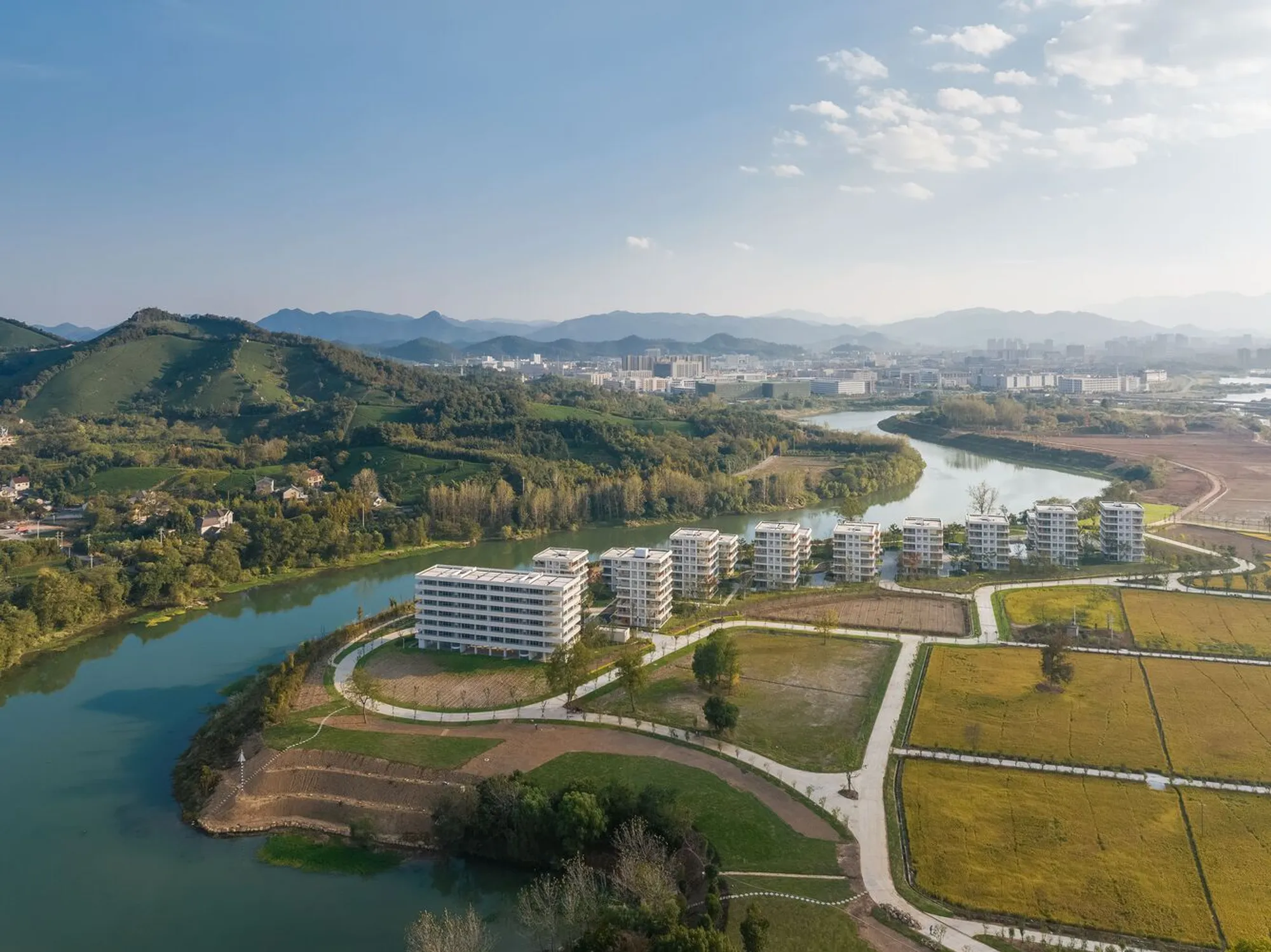
Dongshan Island Healthy Living Community by MORE Architecture
A mid-rise, car-free community blending urban comfort with rural landscape, offering healthy living, flexible homes, shared amenities, and immersive nature connections.


Dongshan Island in Huzhou represents a pioneering shift in contemporary Chinese urbanization. Designed by MORE Architecture, this 25,000-square-meter development proposes a new model for high-density living that merges urban comfort with rural heritage. Instead of the typical gated, high-rise xiaoqu, the project introduces an open, mid-rise neighborhood that prioritizes health, sustainability, community interaction, and a human-scaled urban experience.
A New Urban Typology for China’s Evolving Cities
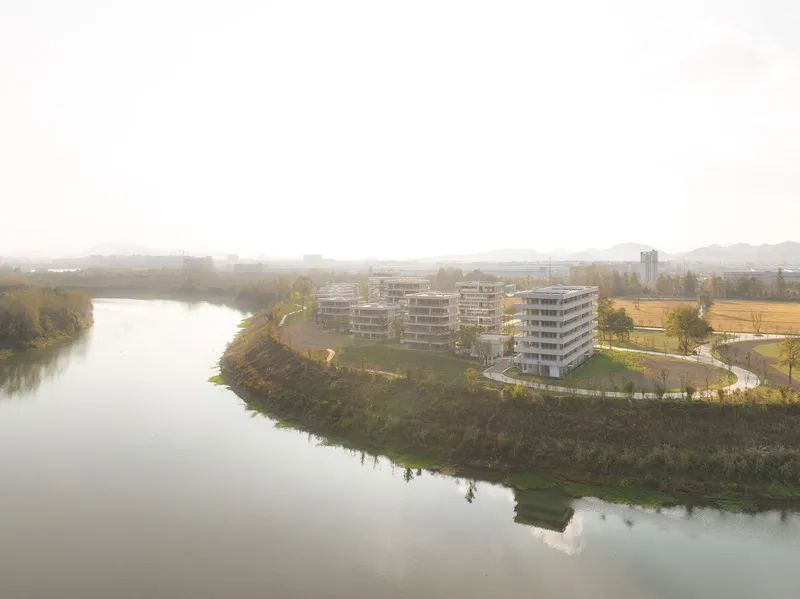
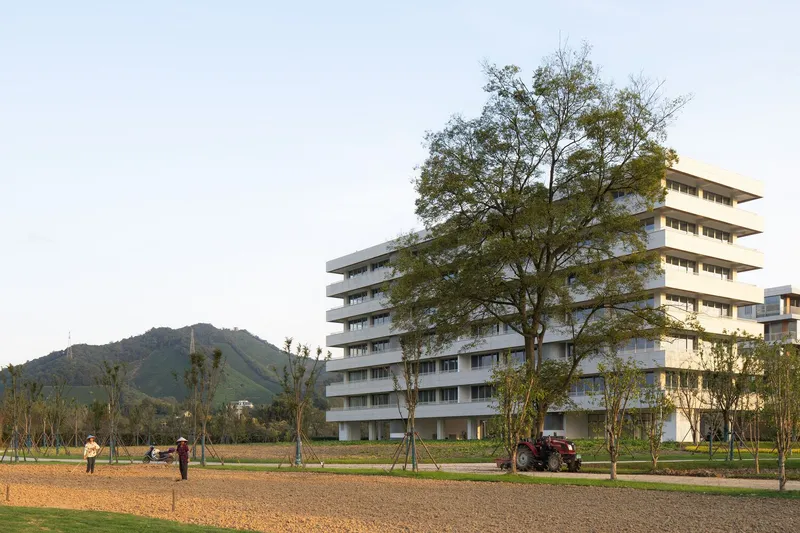
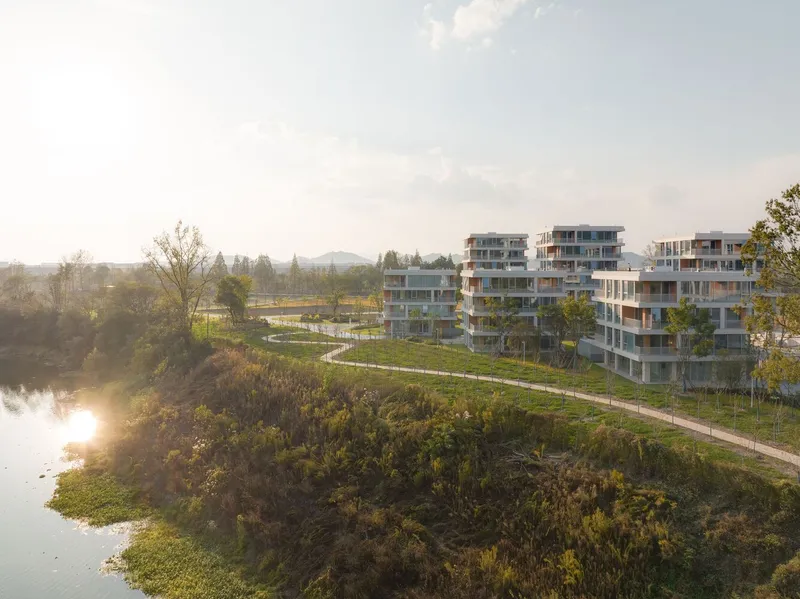
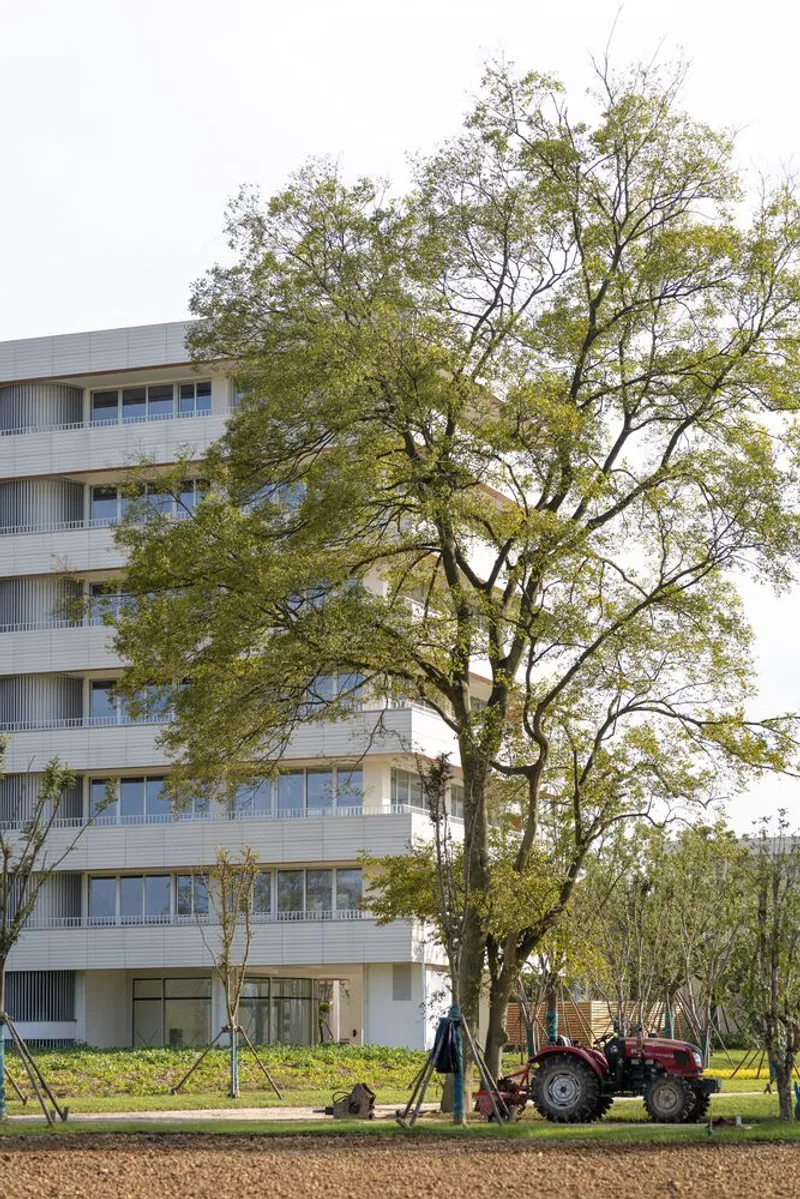
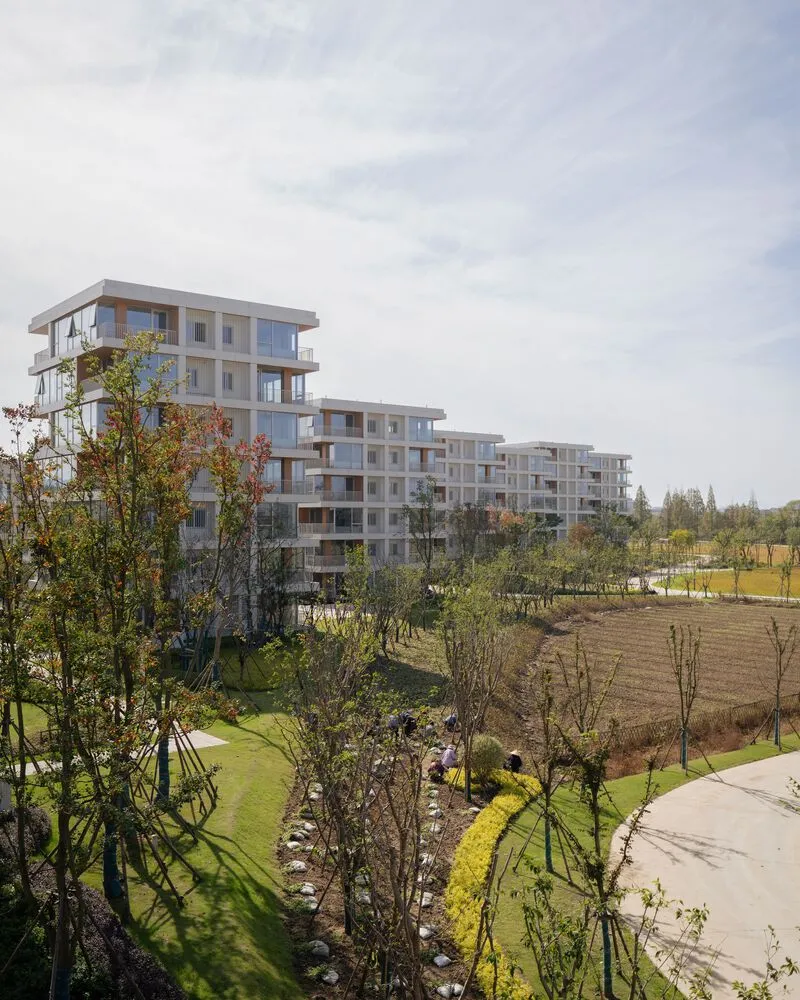
Dongshan Island is envisioned as a healthy community-based residential model that challenges the traditional high-rise residential tower. Despite the relatively high density of 100 homes per hectare, the neighborhood retains an intimate scale through mid-rise structures with a maximum height of 24 meters. By eliminating cars from the site and dedicating surrounding land to allotment gardens and farming, the development connects residents to nature and promotes healthier lifestyles.
Urban Meets Rural: Reinventing Chinese Residential Living
The client, Huazhang Real Estate, sought a new way to blend urban convenience with rural living quality. Rather than relying on the typical north-south oriented tower blocks, MORE Architecture developed a mid-rise urban villa system, creating a vibrant, comfortable neighborhood structured around human scale, community life, and natural views.
Key Features of the Mid-Rise Urban Scheme
- Urban villas limited to 24 meters high
- Four-story buildings along the waterfront and six–seven-story buildings further inland
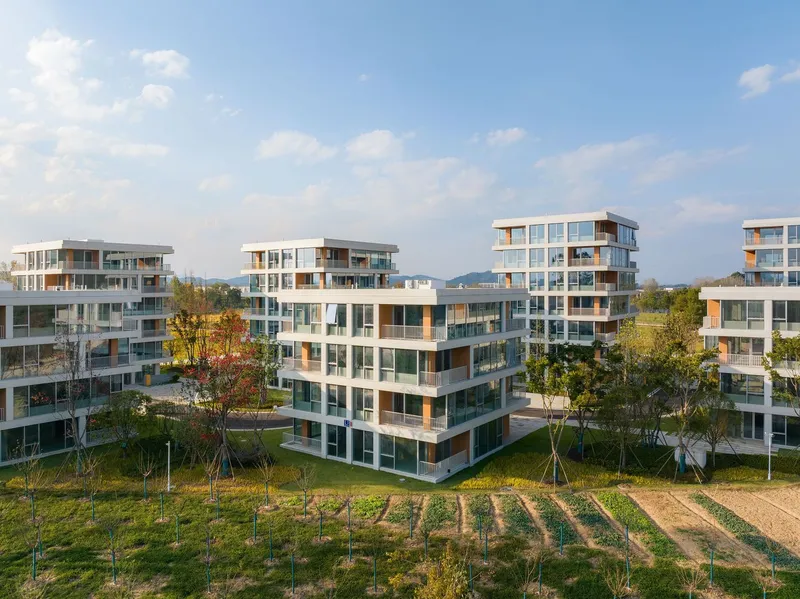
- A block typology measuring 18×18 meters, centered around a core—uncommon in Chinese housing design
- Flexible apartment layouts allowing 1, 2, or 4 units per floor, plus duplex options
- A northern block designed with a slab typology and dual cores for panoramic views
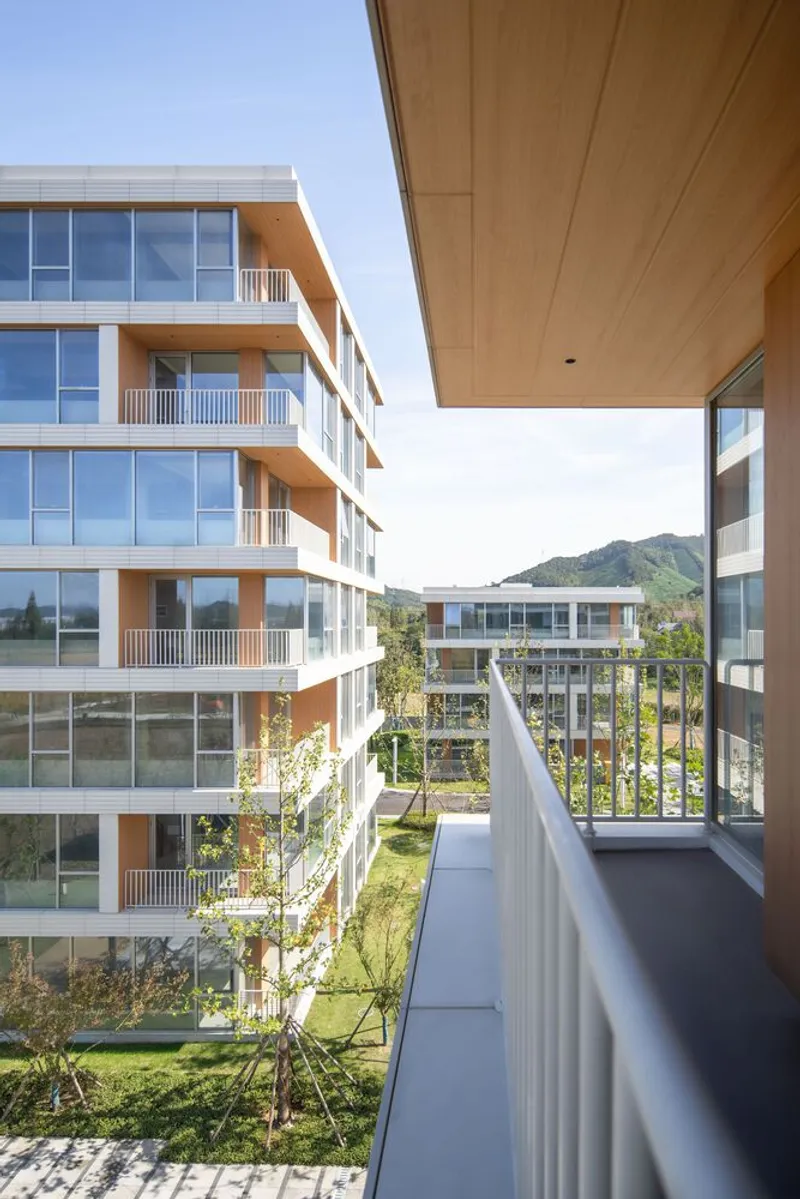
This new typology creates diversity, improves ventilation, enhances daylight, and provides every unit with open views to surrounding hills, tea plantations, and rivers.
Reinterpreting China’s Urbanization Background
China’s rapid urban expansion has long relied on the xiaoqu model—gated compounds of identical high-rise towers. MORE Architecture’s research into residential typologies identified the shortcomings of this system, including overheated facades, monotony, and the lack of community interaction. Dongshan Island therefore intentionally rejects the gated model, instead becoming an open, permeable neighborhood where residents of all ages can meet, walk, and engage freely.
Architecture Shaped by Landscape
Nature plays a central role in the project. Each building is designed with 360-degree orientation, allowing uninterrupted views and natural light. The architects used a concrete column-and-floor system to provide long-term flexibility; internal walls can be reconfigured as residents’ needs evolve.
Material Expression and Façade Design
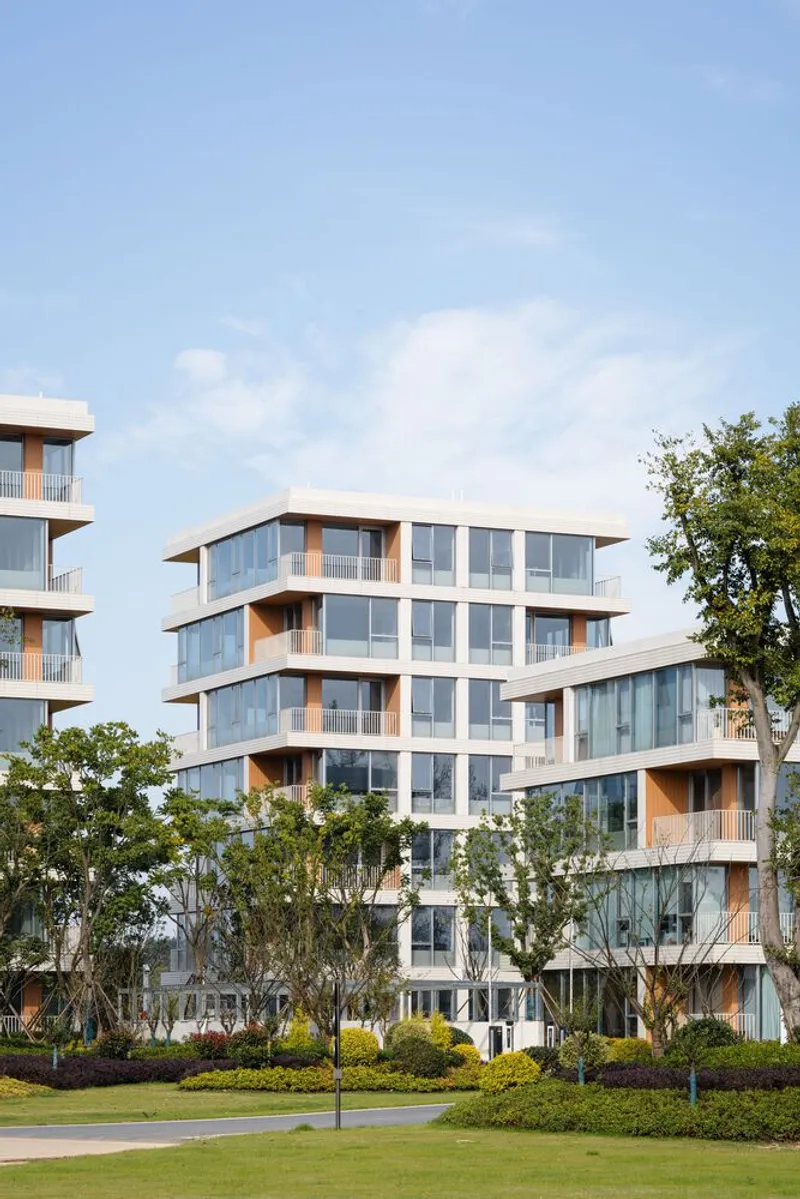
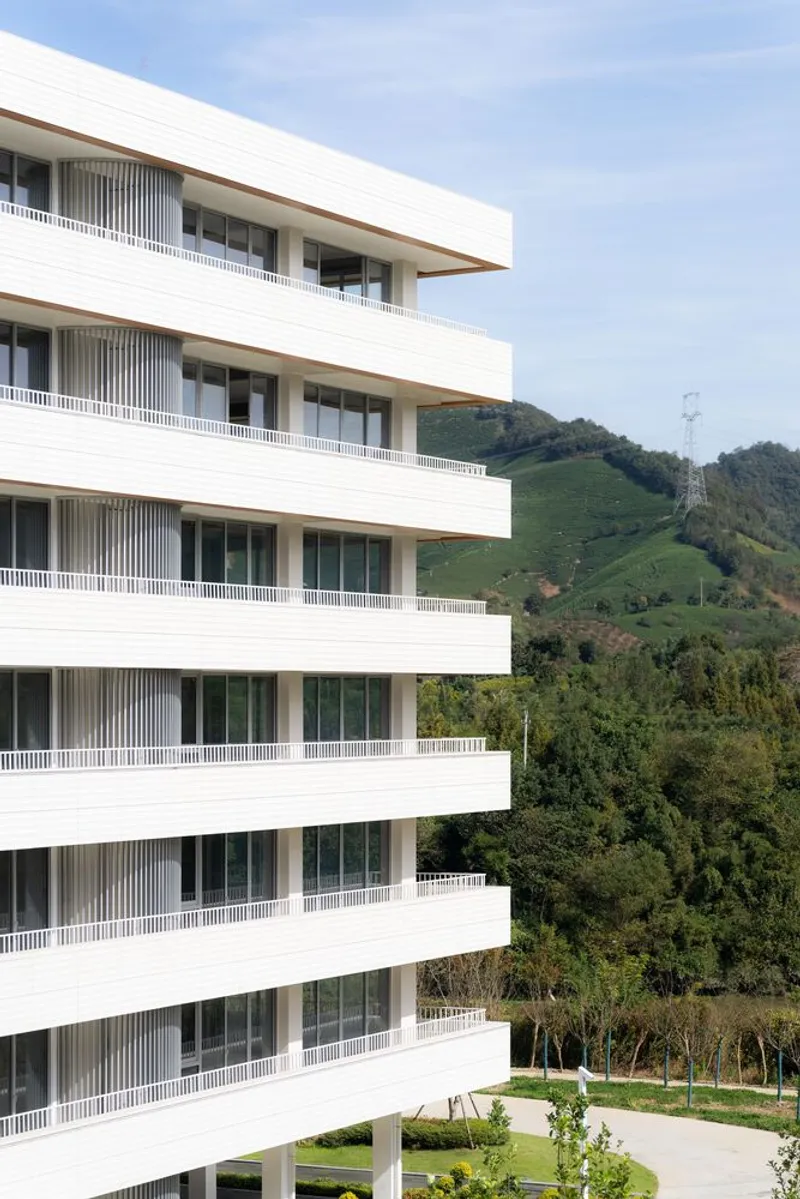
- Facades finished with white ceramic tiles featuring subtle curved patterns referencing bamboo
- Balconies framed in warm timber with distinctive curved handrails
- Integrated spaces for mechanical installations to keep facades clean and cohesive
- Limited color palette for timeless simplicity and harmony with the green hills
Adaptable Interior Structures
The structural system allows the apartments to evolve through time, supporting more sustainable, long-lasting residential use.
A Community Designed for All Ages and Lifestyles
At its core, Dongshan Island is a people-first, inclusive community. It provides diverse apartment types suitable for young buyers, families, and seniors. On the ground floors, certain buildings are interconnected to house shared amenities such as a kindergarten, fitness facilities, and common spaces, fostering deeper community bonds.
Healthy Living and Car-Free Urban Design
Healthy living sits at the heart of the master plan. Dongshan Island is completely car-free, encouraging residents to adopt walking or cycling for daily movement. This not only promotes physical well-being but also significantly reduces emissions and improves overall air quality.
Integration with Farming and Local Food Culture
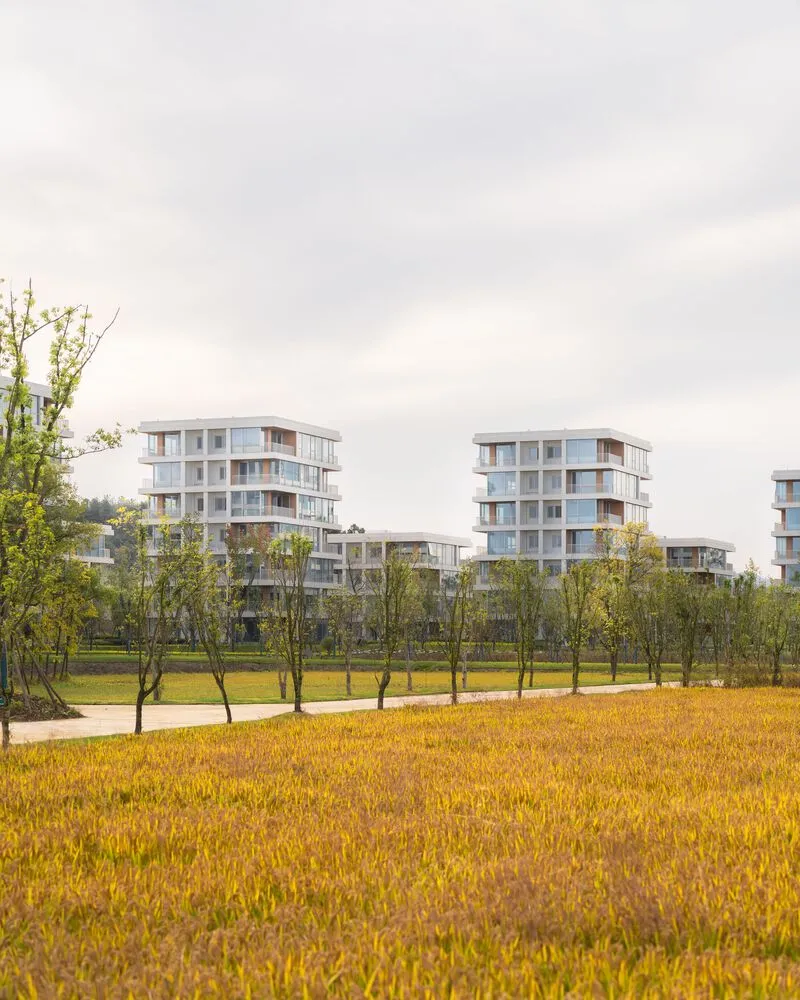
Surrounded by farmland and allotment gardens, the neighborhood reconnects people with food production. Inspired by Agnes Denes’ iconic Wheatfield, the design allows residents to participate in agricultural activities, encouraging healthier eating habits and a grounded relationship with nature.
A Model for Future Sustainable Neighborhoods in China
Dongshan Island stands as a landmark example of how architecture can merge high-density living with environmental harmony, human-scale design, and healthy living principles. It is not just a residential development; it is a vision for the future of Chinese urbanization—balanced, community-driven, and rooted in the landscape.
All photographs are works of Kris Provoost



Popular Articles
Popular articles from the community


The Ocean Hive: Sustainable Architecture for a Self-Sufficient Civilization at Sea
The Ocean Hive imagines sustainable architecture at sea, where modular habitats, algae, wave power and ocean waste sustain a growing colony.

Conexión: Biophilic Design Reimagines High-Rise Living in Hong Kong
Conexión reimagines high-rise living in Hong Kong through biophilic design, green facades, shared spaces, daylight, water and nature within.
EW PARK: Sustainable Architecture Reimagines the Future of Urban Parking
EW PARK reimagines city parking as a modular wooden tower combining automation, solar energy, electric mobility, and adaptable urban design.

Co-Life: Senior Housing Design That Reconnects Older Adults With the City
Co-Life reimagines senior housing design through healing gardens, shared streets, workshops, and a sustainable community across generations.


Similar Reads
You might also enjoy these articles


Hodi-Mandai Geram
Project Function: Preservation and revitalization of the Intangible heritage and socio-spatial identity of the Hodi by Housing, Cultural Memory Center, Sacred Grove, landscape, local tourism economy


Olio Towers: A Mid-Rise for Performers That Fuses Housing, Rehearsal, and Stage
Located blocks from Houston's Theater District, this modular tower stacks living units around a central performance atrium.

Oasis: Modular Green Housing Carved into Dhaka's Urban Fabric
A shortlisted Plugin Housing entry reclaims unauthorized settlements in Dhaka with stepped concrete volumes, green roofs, and ventilation-driven design.

Black Hole: A Floating Megastructure for the Post-Physical Era
Emiliano Mazzarotto envisions a spherical, self-scaling arena where e-sports, digital hotels, and holographic stadiums replace traditional public space.


Explore Urban Design Competitions
Discover active competitions in this discipline



Challenge to reimagine the Iron Throne


Photograph architecture without architects


Illustrate the lost glory of Angkor Wat - Render Challenge


Design challenge to reuse E-waste
Comments (0)
Please login or sign up to add comments
No comments yet. Be the first to comment!