
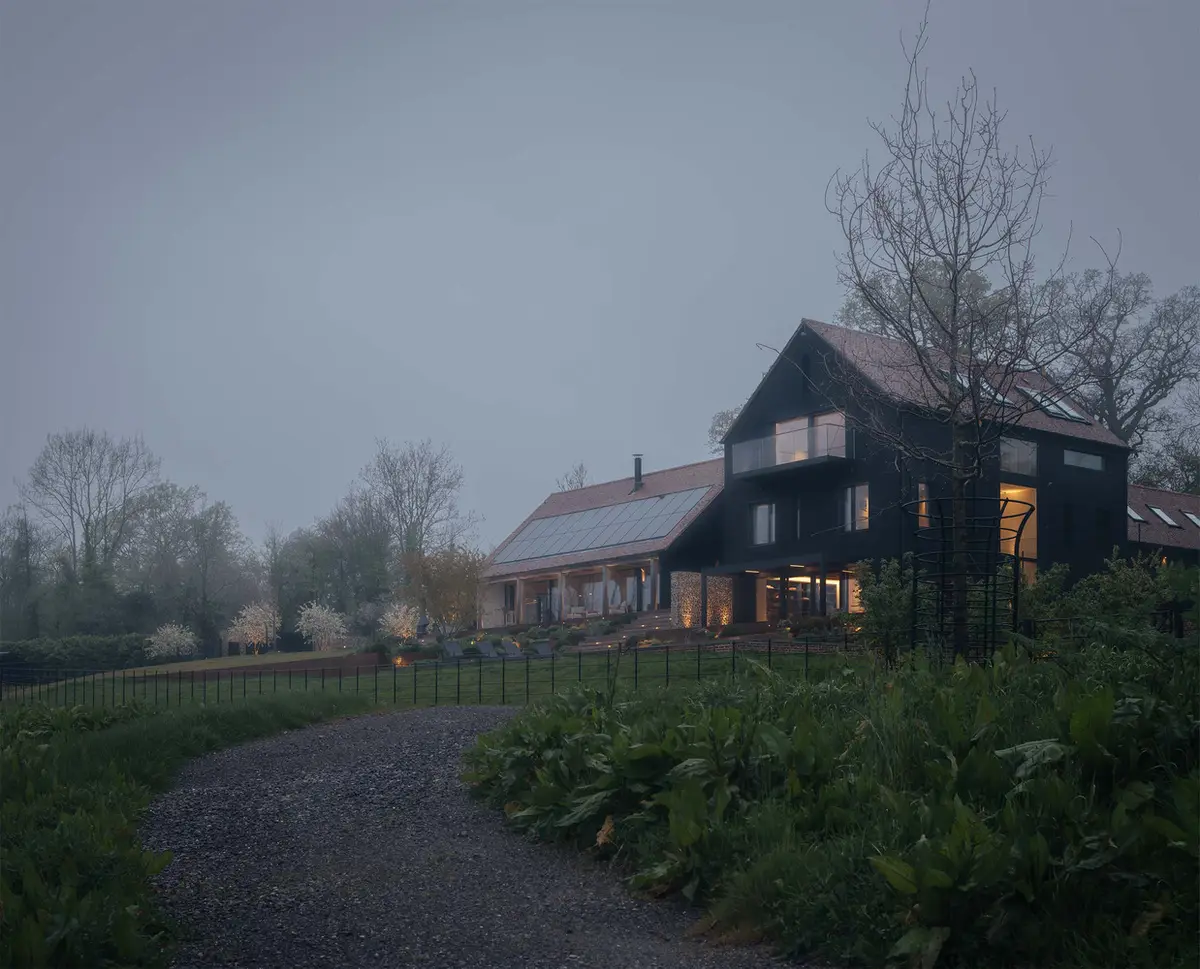
Downland Barns: A Contemporary Timber Retreat Rooted in Tradition and Sustainability
A sustainable timber-framed countryside home blending traditional craft, modern design, restored historic barns, and off-grid systems within a serene North Downs landscape.


Downland Barns in Frensham redefines the relationship between contemporary residential architecture and the rural landscapes of the North Downs. Designed by McLean Quinlan, this 654-square-meter family home merges modern sustainable design with traditional craft, creating a distinctive architectural retreat that feels both innovative and timeless. Completed in 2023 and captured through the lens of photographer Jim Stephenson, the project demonstrates how craftsmanship, heritage materials, and low-carbon construction can come together to shape a sophisticated rural dwelling.
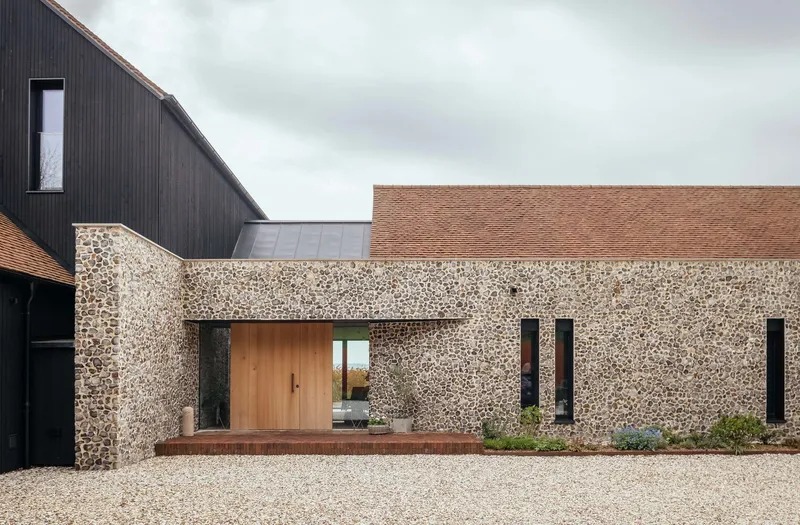
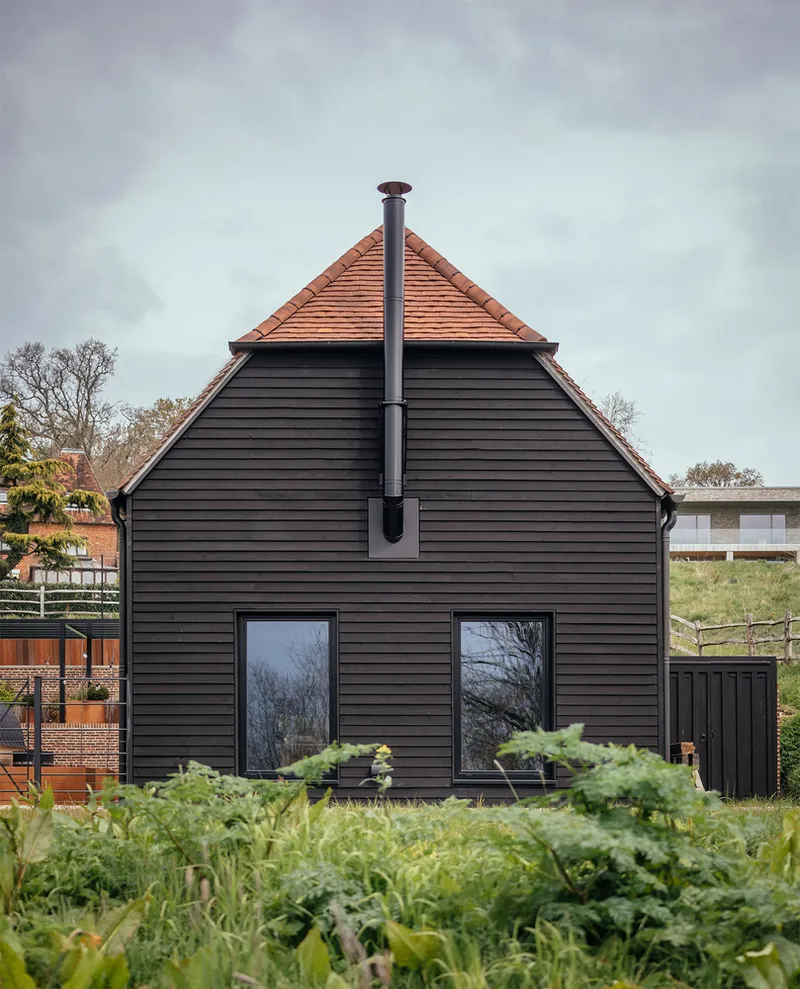
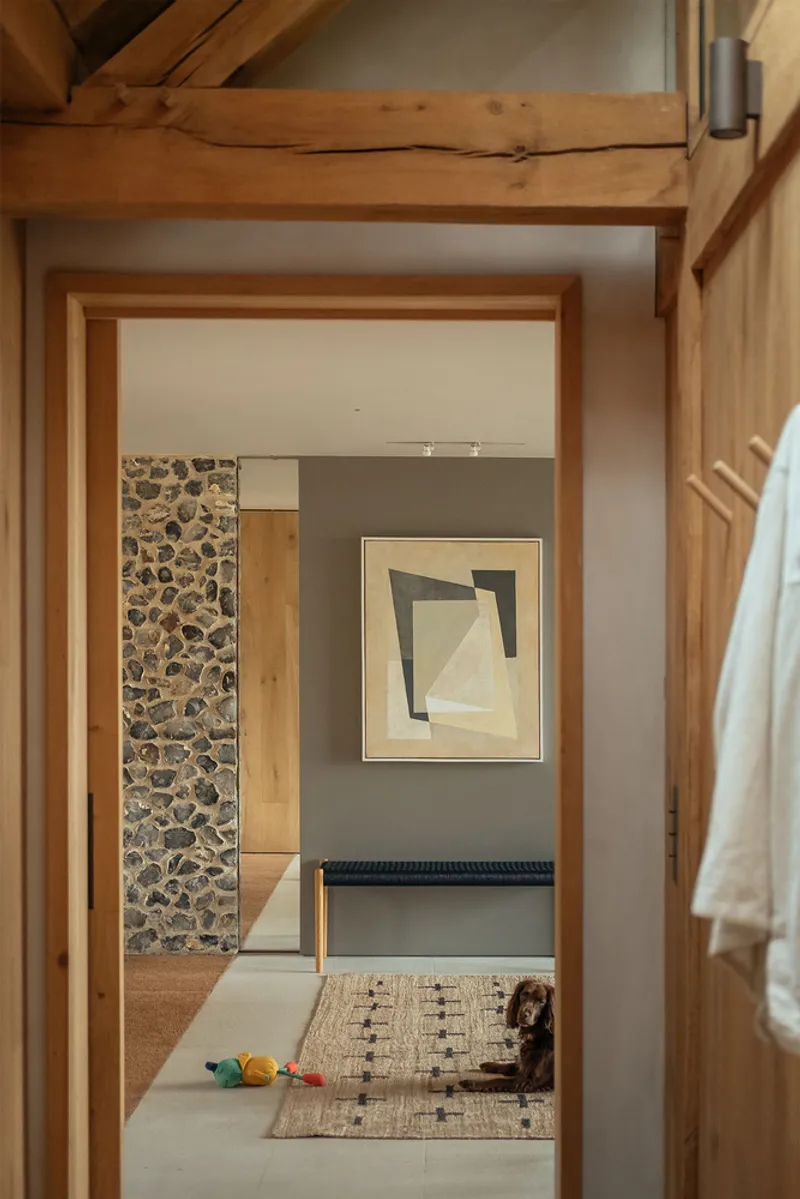
Nestled seamlessly into a gentle hillside, the home embraces panoramic countryside views while maintaining a quiet presence in its natural surroundings. The architectural concept centers on a timber-framed structure anchored by local vernacular references, including flint walls, blackened timber, clay tiles, and traditional roof pitches. These elements create an aesthetic that feels deeply connected to the site’s rural history while supporting a modern lifestyle embedded in comfort, efficiency, and environmental responsibility.
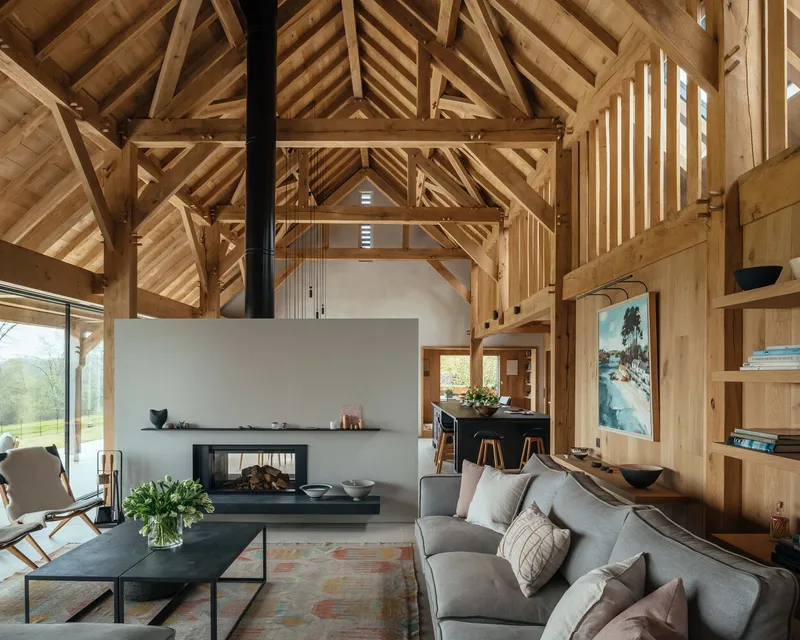
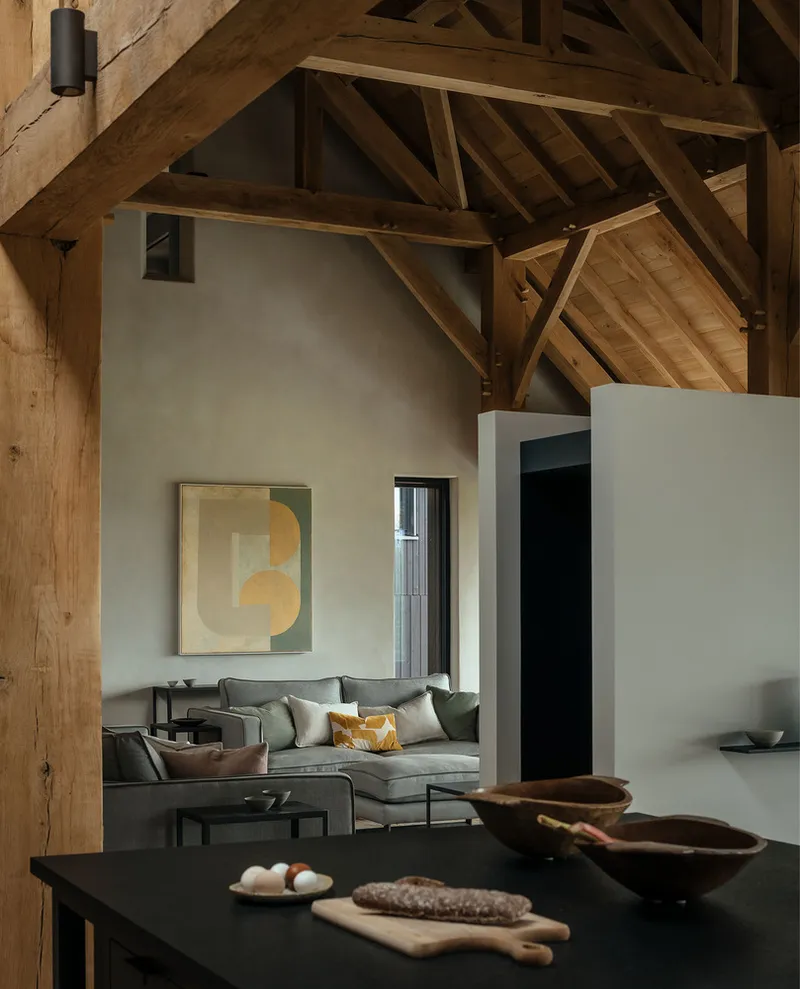
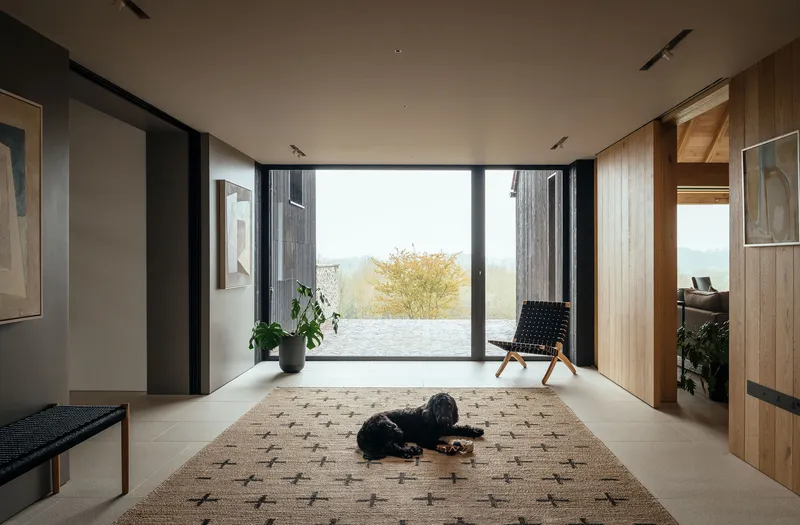
At the heart of Downland Barns is a striking green oak timber-framed volume that forms the social core of the house. This double-height living barn creates a warm, uplifting interior atmosphere, enhanced by handmade timber pegs—over a thousand of them—used to join the frame using traditional woodworking techniques. Daylight washes the clay-plastered walls, revealing the natural textures and varying tones of the materials, while full-height glazing along the south-facing terrace opens to expansive views of the rewilded woodlands and fields surrounding the property.
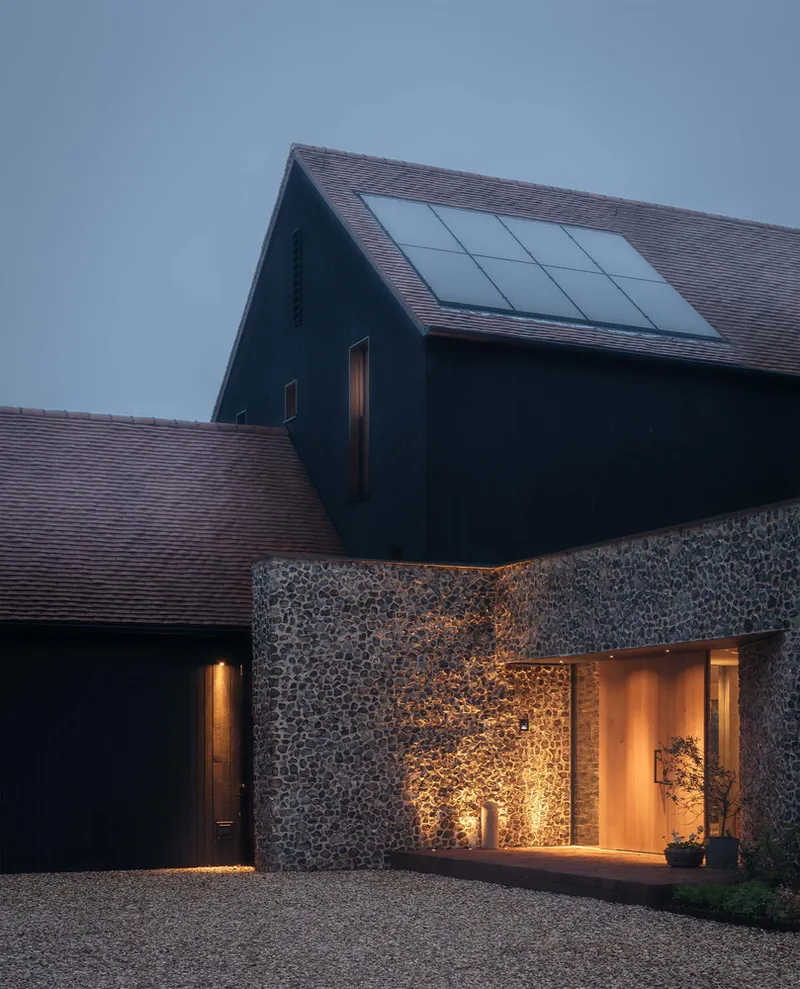
The home is organized as three interlinked structures enclosed within a flint boundary, echoing the arrangement of historic farmsteads scattered across the region. One of the secondary barn-like volumes steps down half a level, accommodating additional living areas, a study, a gym, and serene bedroom suites that maintain a sense of privacy without compromising spatial continuity. This careful sectional planning allows each space to respond to light, views, and daily rhythms with clarity and comfort.
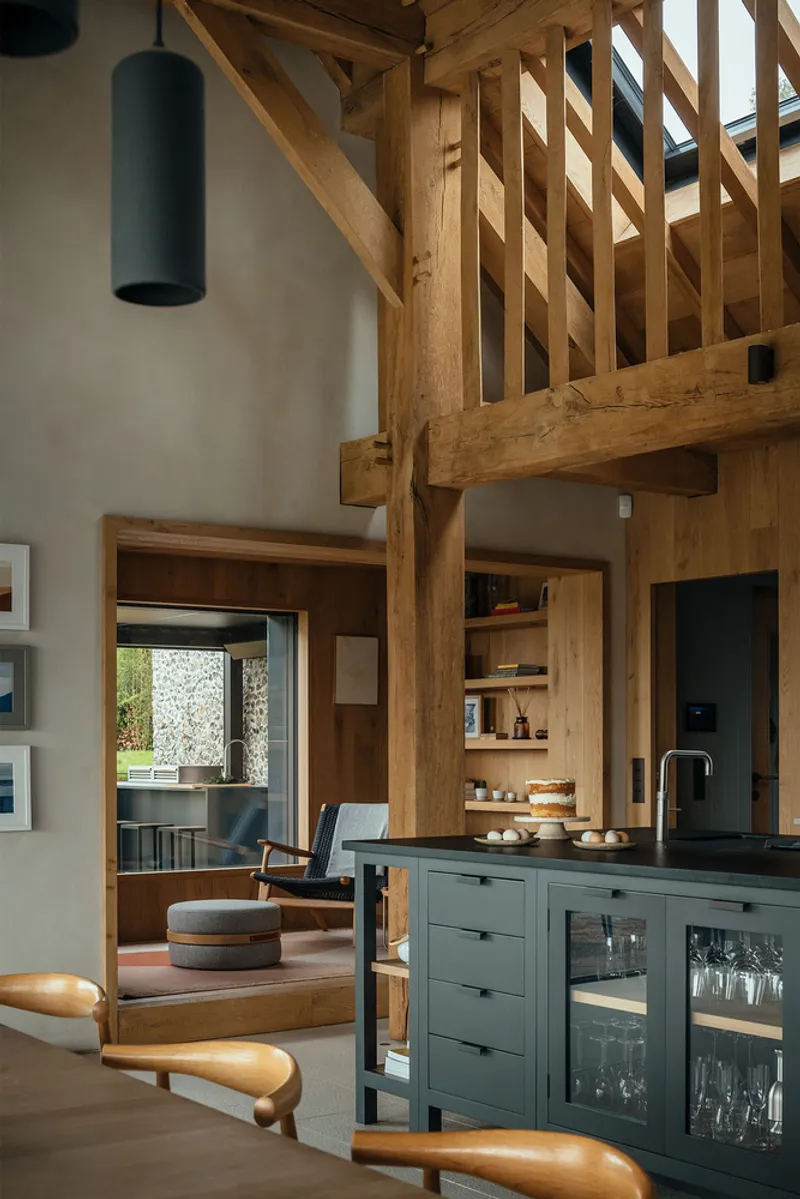
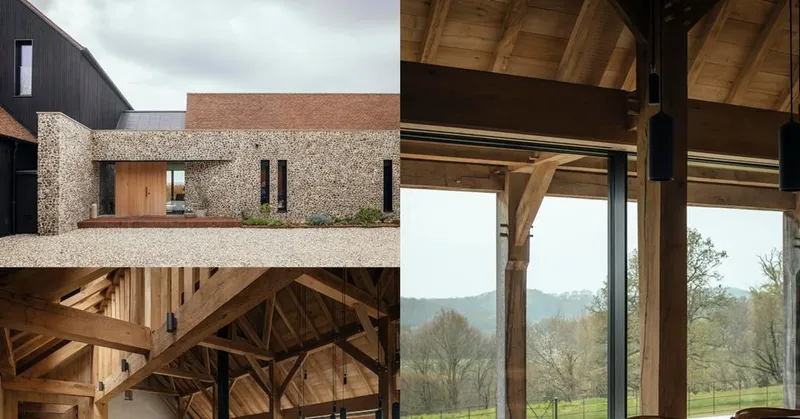
Sustainability is embedded in every layer of the project. The structure was fabricated off-site using high-performance preassembled timber panels sourced from responsibly managed forests, reducing construction waste and improving energy efficiency. Natural clay plaster, zero-VOC materials, and minimized use of plastics ensure a healthy indoor environment, while underfloor heating, mechanical heat recovery ventilation, LED lighting, and smart home automation underscore the home's energy-conscious approach. Tesla Powerpack batteries allow the residence to operate fully off-grid for short periods, supporting the family’s aspiration for resilience and low-impact living. Outdoors, a rainwater harvesting system nourishes the terraced garden, enhancing the ecological landscape design and supporting ongoing rewilding efforts across the property.
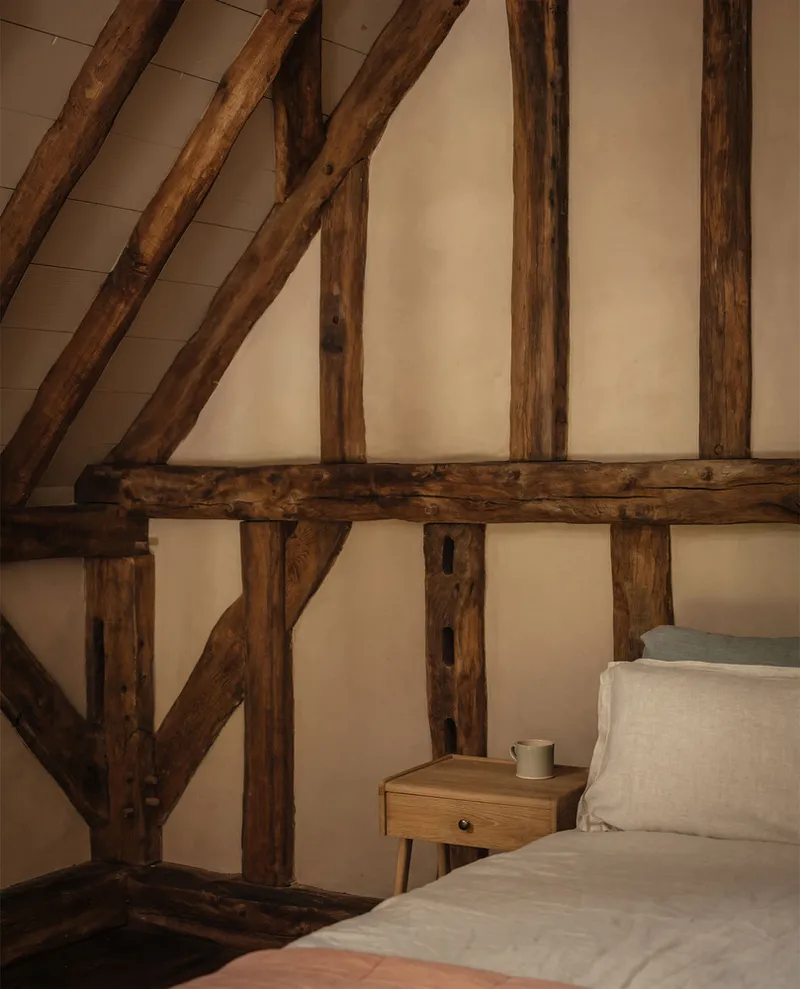
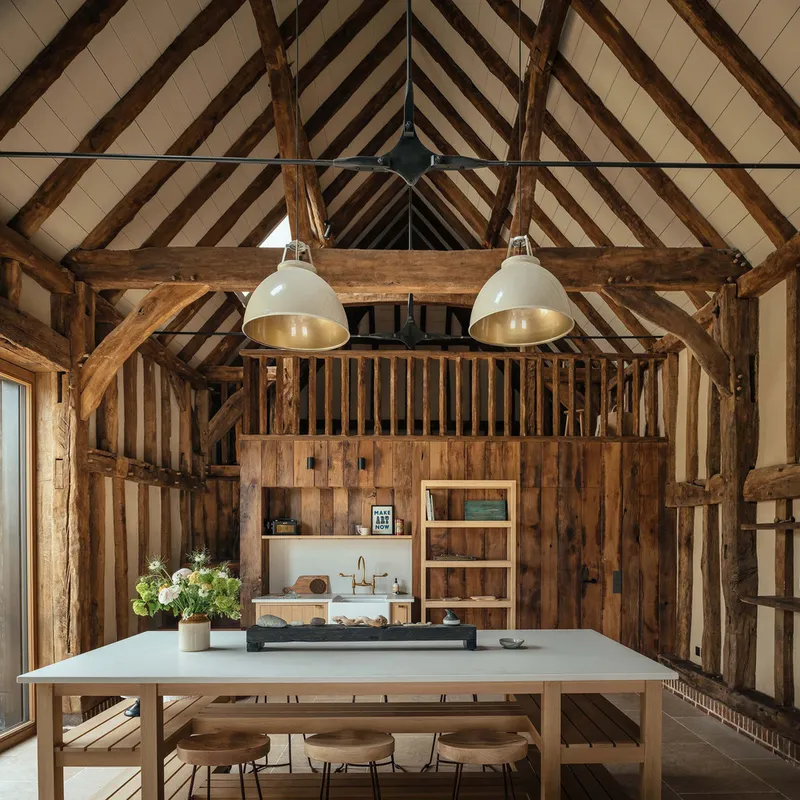
A restored historic barn, believed to be around 400 years old, completes the ensemble. Dismantled, transported, and meticulously reassembled, it incorporates salvaged timber from structures of similar age to maintain authenticity. Interior elements such as flooring and paneled walls use even older timber—some dating back 600 years—creating a deeply layered material narrative that celebrates history, reuse, and permanence.
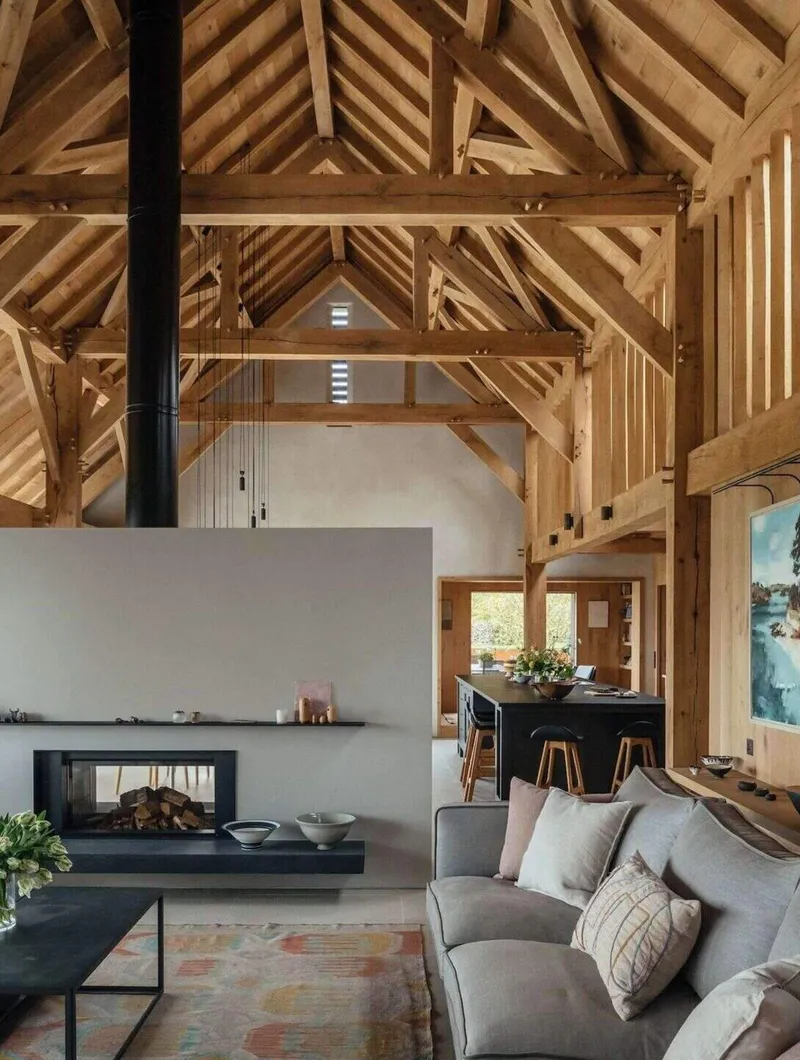
All photographs are works of Jim Stephenson


Popular Articles
Popular articles from the community


Aquadapt: An Underwater Habitat That Rewrites Its Rooms by the Hour
Curved modules ring the seabed while one shell shifts from breakfast room to cinema, farm and football pitch as residents' needs change.

Opera on the Sea: Driftwood Logic Shapes a Timber Opera House on Estonia's Coast
Trevor Orgill's opera house translates the entangled drift of floating timber into a civic building where wood, water, and music converge.

The Amber Palace Opera: A Geological Fiction Surfaces on Tallinn's Baltic Waterfront
Pierre Brillard reimagines a Baltic legend as a public landscape, opera house, and waterfront promenade rooted in Tallinn's coastal identity.


Cube Design Draws an Ecological Corridor Between Two Shenzhen Hills with the Nankai Building
Beside Shenzhen's container docks, the Nankai Building pairs stacked balconies with a climbing green screen to connect two hillsides across its height.

Similar Reads
You might also enjoy these articles


Hodi-Mandai Geram
Project Function: Preservation and revitalization of the Intangible heritage and socio-spatial identity of the Hodi by Housing, Cultural Memory Center, Sacred Grove, landscape, local tourism economy


Olio Towers: A Mid-Rise for Performers That Fuses Housing, Rehearsal, and Stage
Located blocks from Houston's Theater District, this modular tower stacks living units around a central performance atrium.

Oasis: Modular Green Housing Carved into Dhaka's Urban Fabric
A shortlisted Plugin Housing entry reclaims unauthorized settlements in Dhaka with stepped concrete volumes, green roofs, and ventilation-driven design.

Black Hole: A Floating Megastructure for the Post-Physical Era
Emiliano Mazzarotto envisions a spherical, self-scaling arena where e-sports, digital hotels, and holographic stadiums replace traditional public space.

Explore Barn Conversion Competitions
Discover active competitions in this discipline

Challenge to design mud housing for contemporary communities

Challenge to reimagine the Iron Throne

Photograph architecture without architects

Illustrate the lost glory of Angkor Wat - Render Challenge
Comments (0)
Please login or sign up to add comments
No comments yet. Be the first to comment!