
Dragon House: A Visionary Sustainable Home Renovation by no.ma architecten
Dragon House redefines sustainable home renovation by integrating upcycled materials, passive energy solutions, and innovative spatial design for a modern, energy-efficient residence.

The Dragon House in Belgium, transformed by no.ma architecten, exemplifies the potential of sustainable home renovation. This project reimagines an outdated structure into a dynamic and energy-efficient family home, blending flexibility, environmental responsibility, and innovative design. By integrating a high-performance insulation shell and upcycled materials, the architects create a residence that fosters both spatial fluidity and a strong connection to its natural surroundings.
A New Architectural Identity
Originally purchased for its location overlooking Vlierbeek Abbey rather than its design, the house lacked spatial connectivity and engagement with the outdoors. The renovation process introduced a new volume atop the existing basement floor, allowing for an entirely redefined architectural composition.
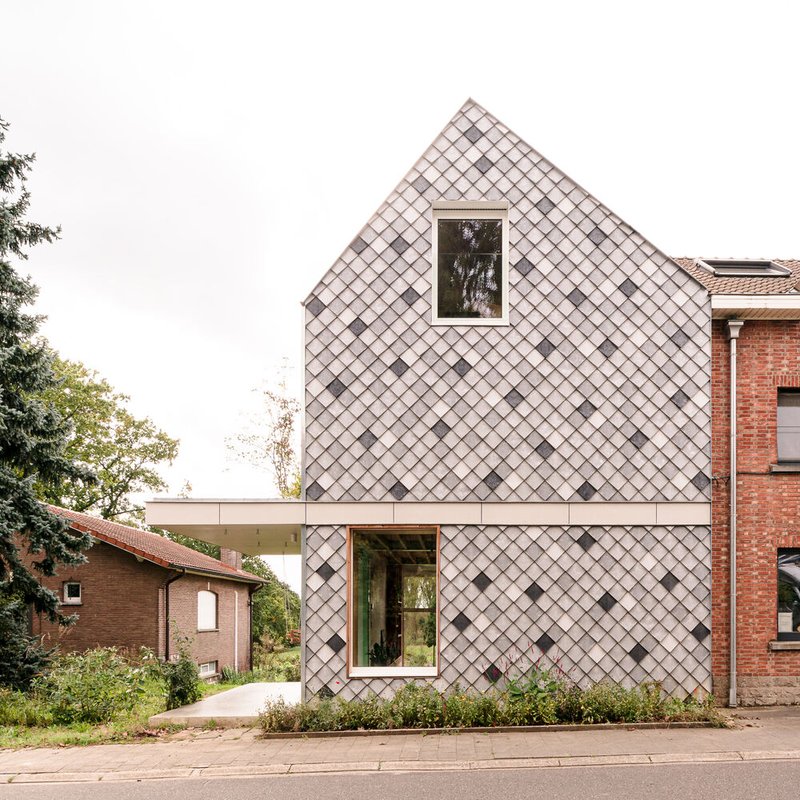
The design introduces split-level arrangements, diagonal sightlines, and carefully positioned window openings to dissolve the boundaries between indoor and outdoor spaces. This strategic spatial planning not only enhances natural light penetration but also maximizes scenic views while maintaining privacy. By alternating between opaque and glass surfaces, the house carefully controls its visual relationships with the surroundings, ensuring both openness and seclusion where necessary.
Sustainable Materials and Passive Energy Strategies
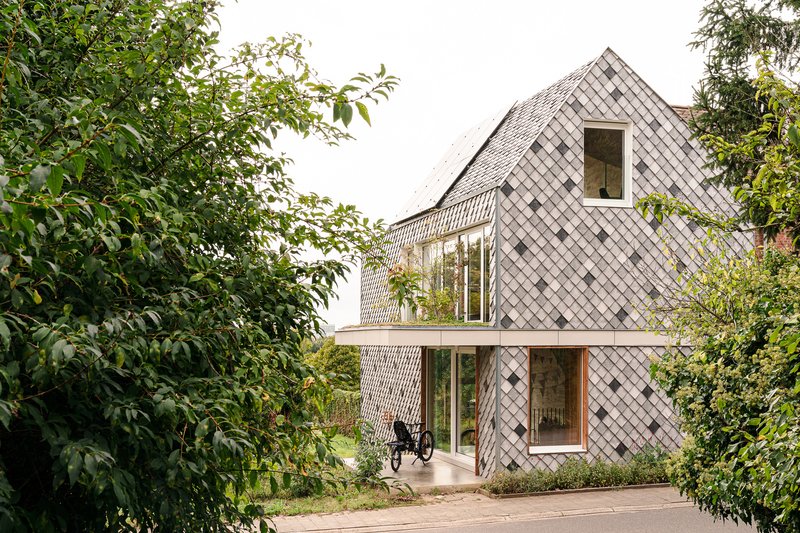
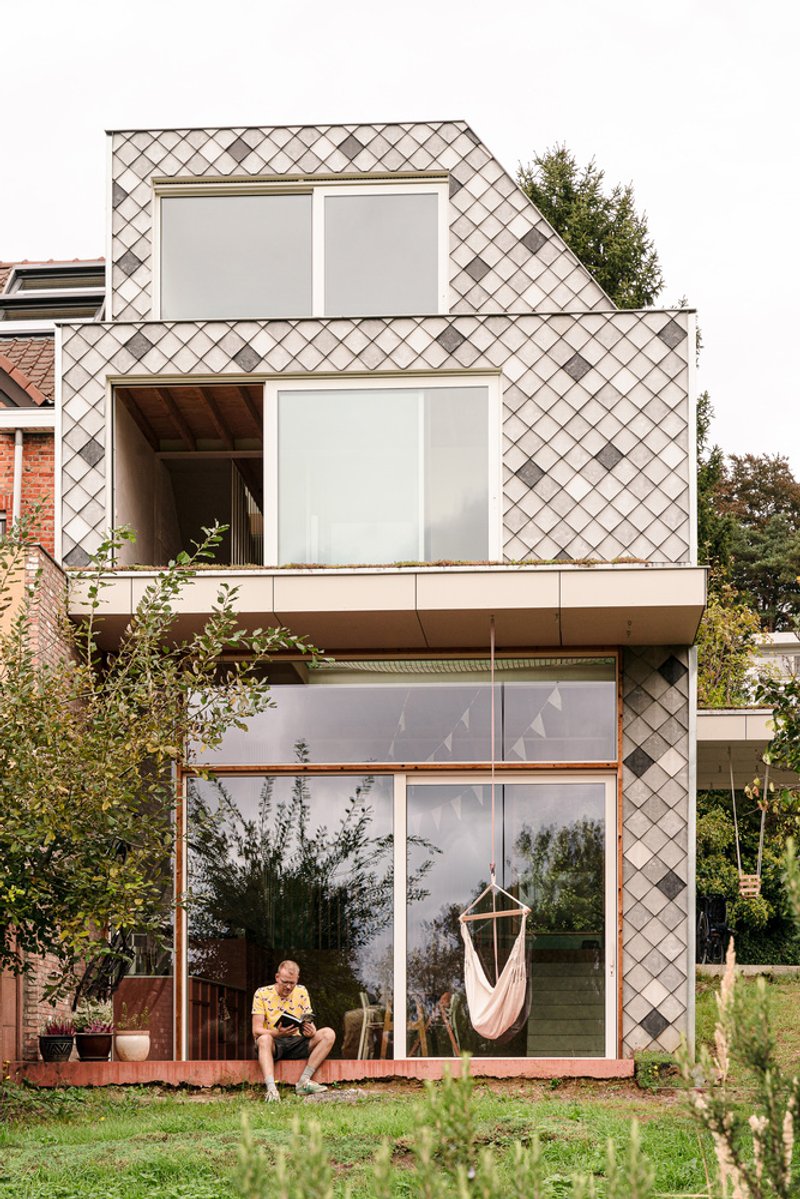
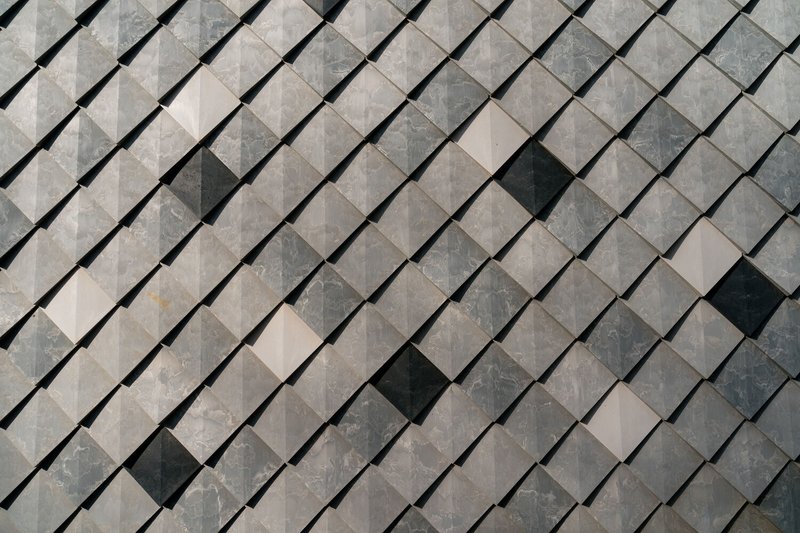
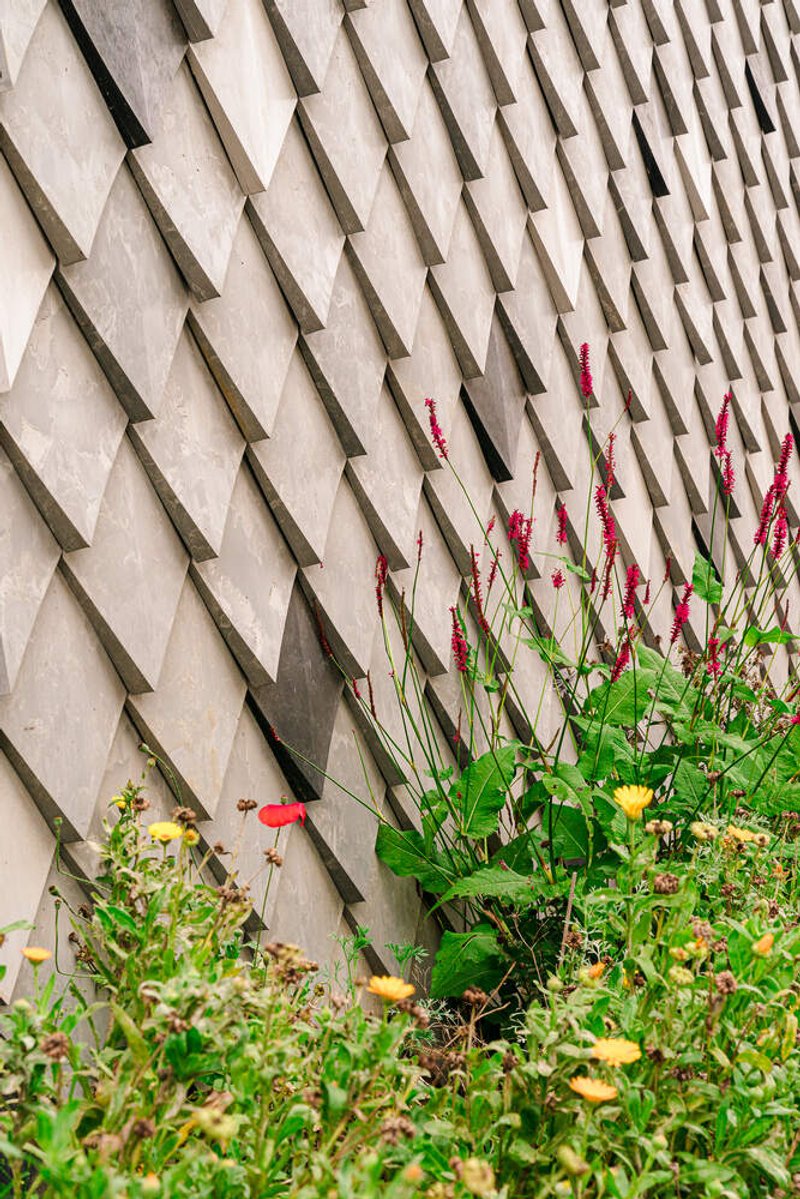
A key aspect of this renovation is its dedication to sustainability. The exterior features a pioneering use of plastic diamond slats—a first in Belgium—following the upcycle principle. These elements contribute to both environmental responsibility and aesthetic appeal, offering a unique interplay of shading and color variations.
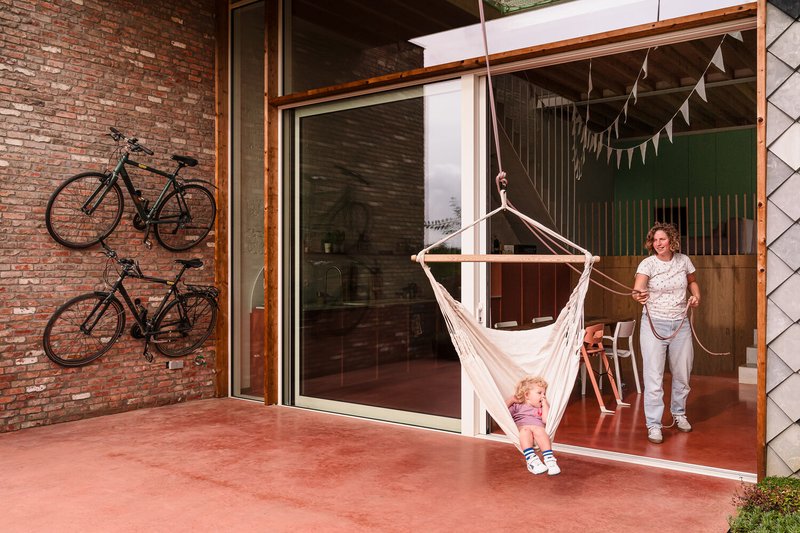
Passive sun protection is seamlessly incorporated through extended canopies, which shelter the bike port and terrace while fostering greenery at upper levels. These design elements regulate indoor temperatures by reducing direct solar exposure, minimizing the need for mechanical cooling. The rear façade, equipped with expansive sliding windows, further enhances energy efficiency by facilitating cross-ventilation and seamless indoor-outdoor integration.
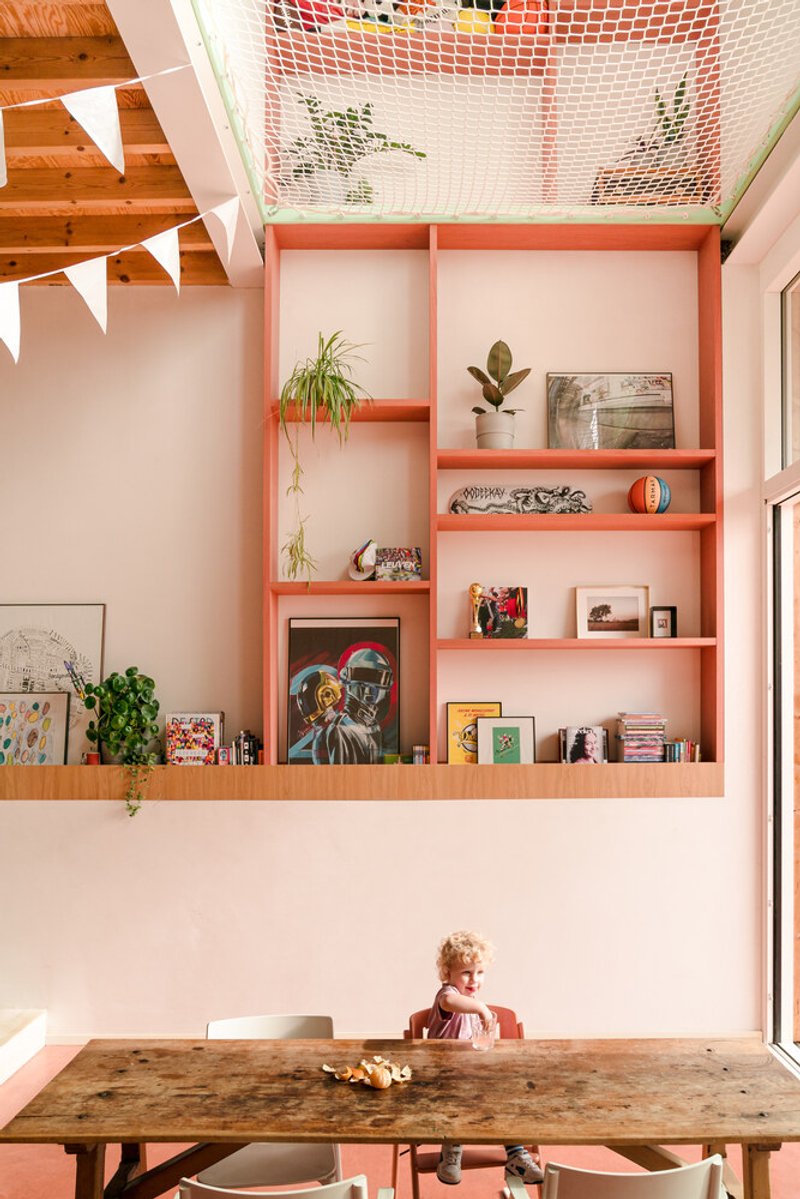
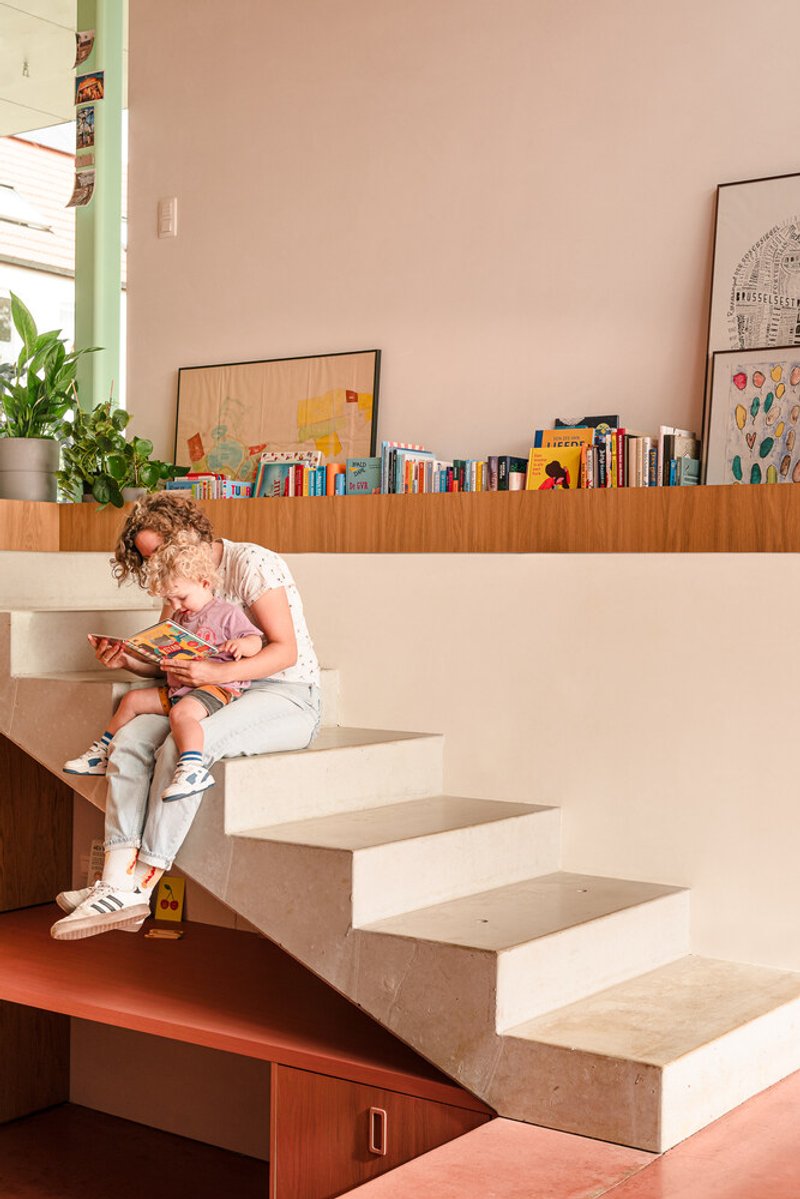
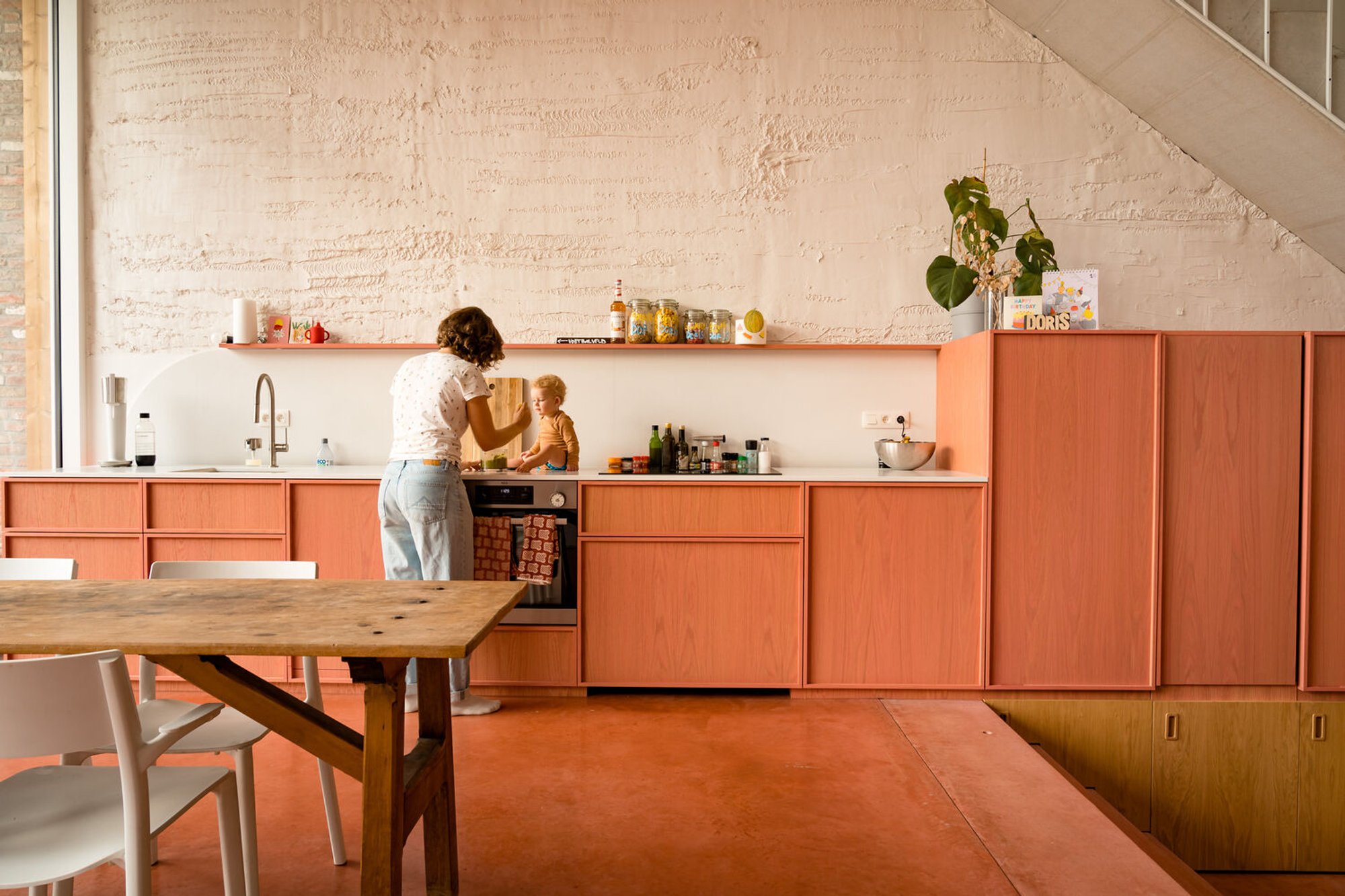
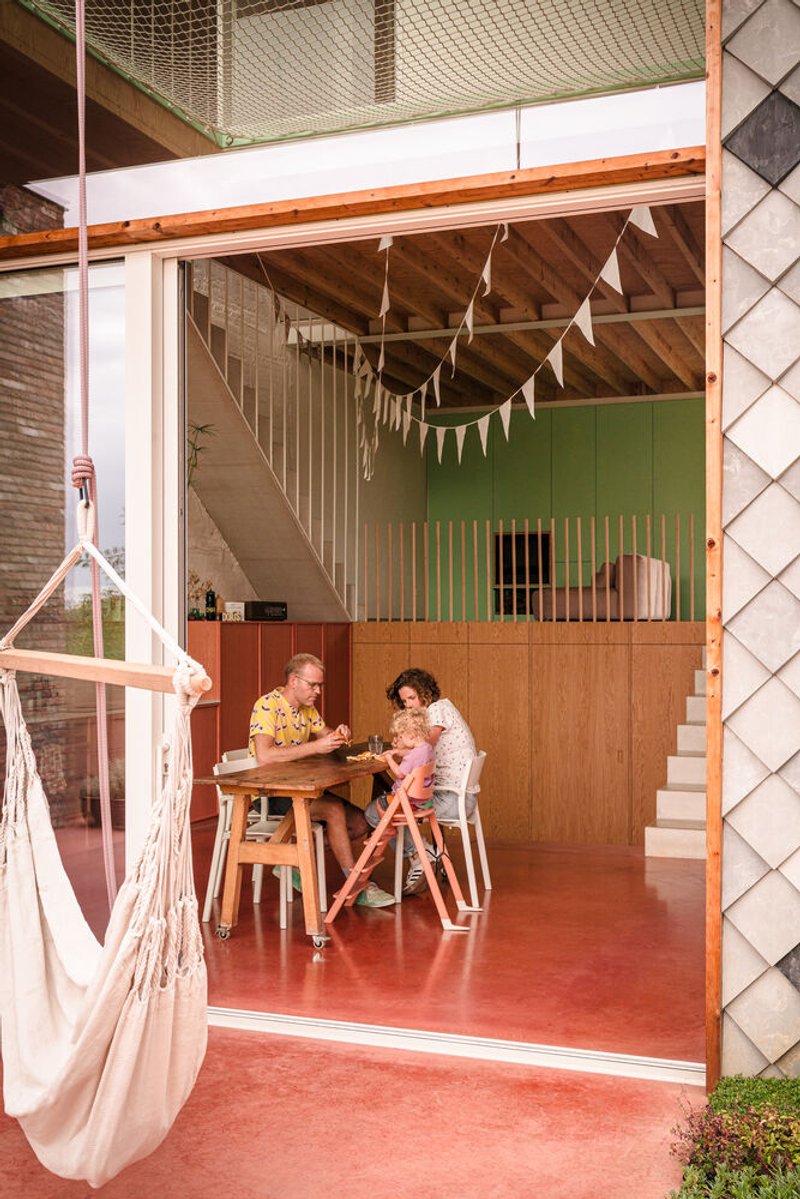
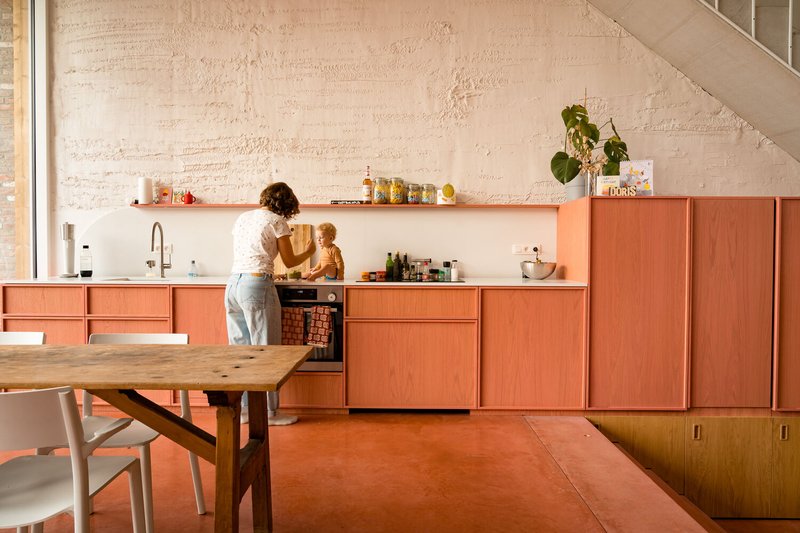
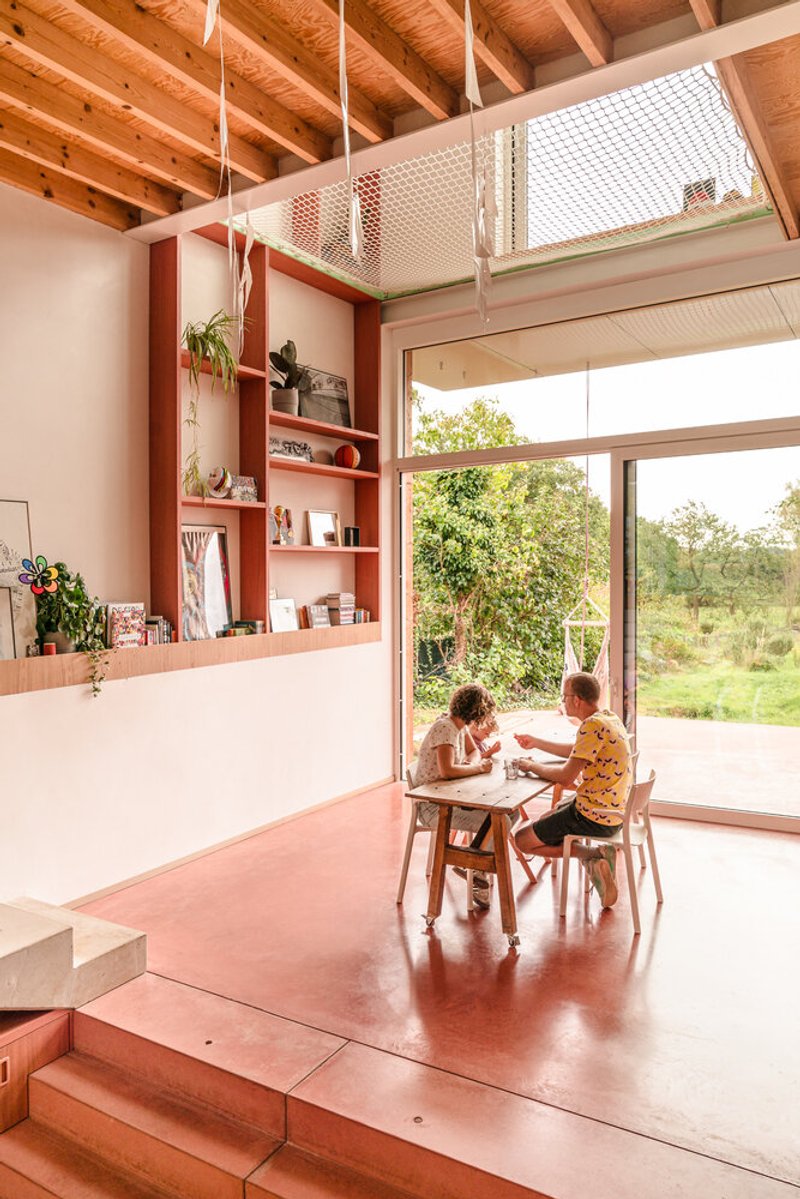
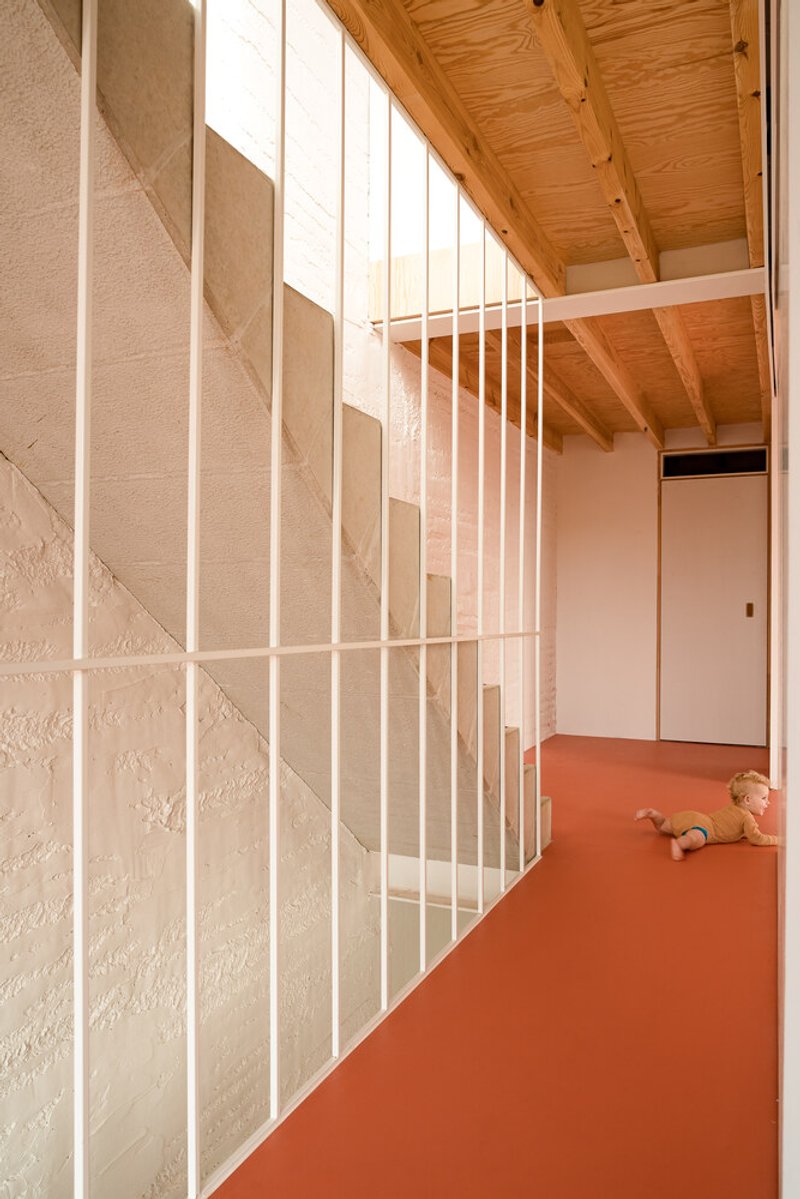
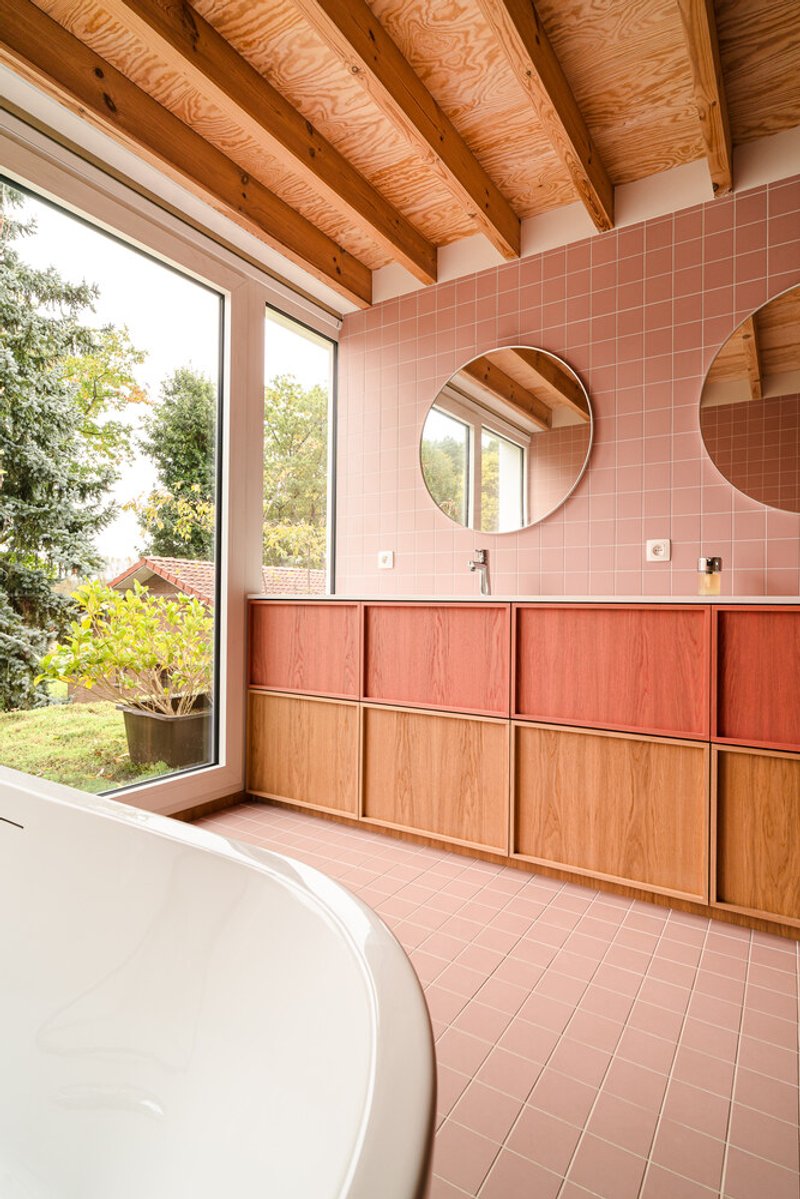
Inside, the material palette continues this sustainable ethos. White walls contrast with exposed steel girders and wooden beams, while the flooring selections include red-pigmented concrete and vibrant red vinyl. Oak veneer cabinetry and green-painted furniture elements introduce warmth and character, reinforcing the home’s bold yet harmonious aesthetic.
Flexible and Functional Living Spaces
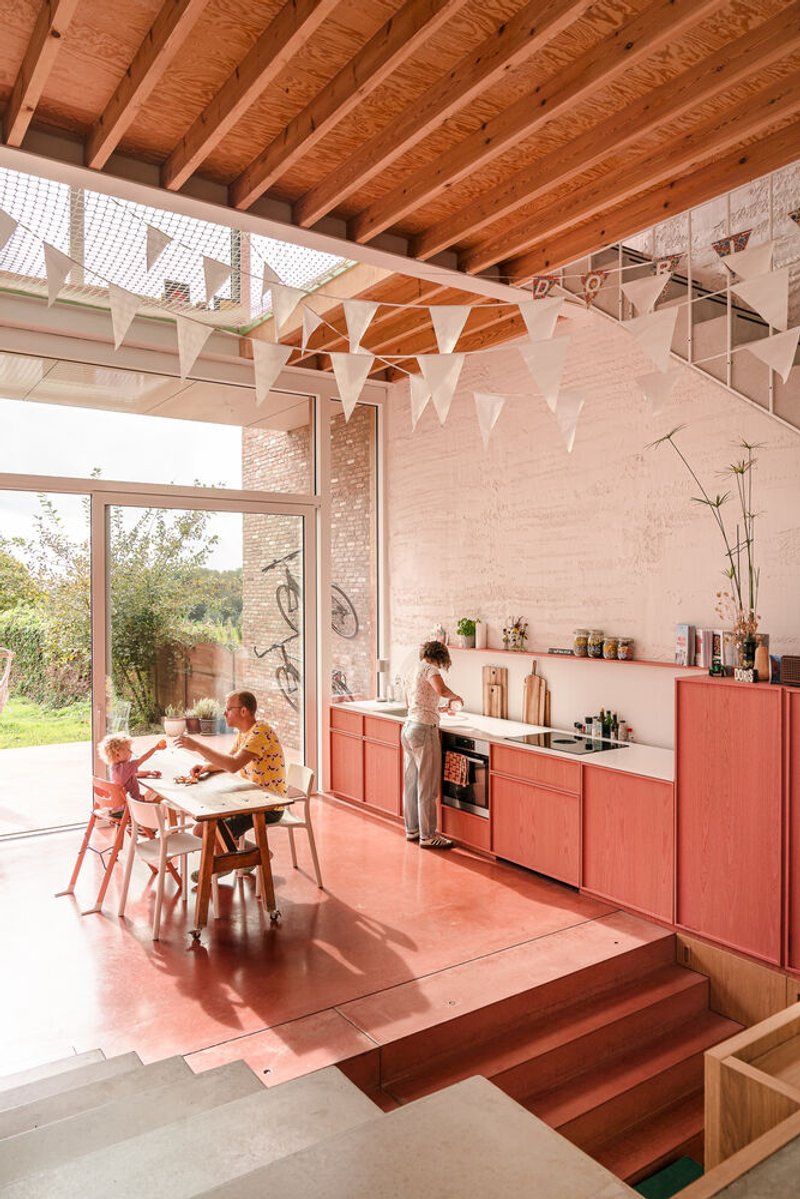
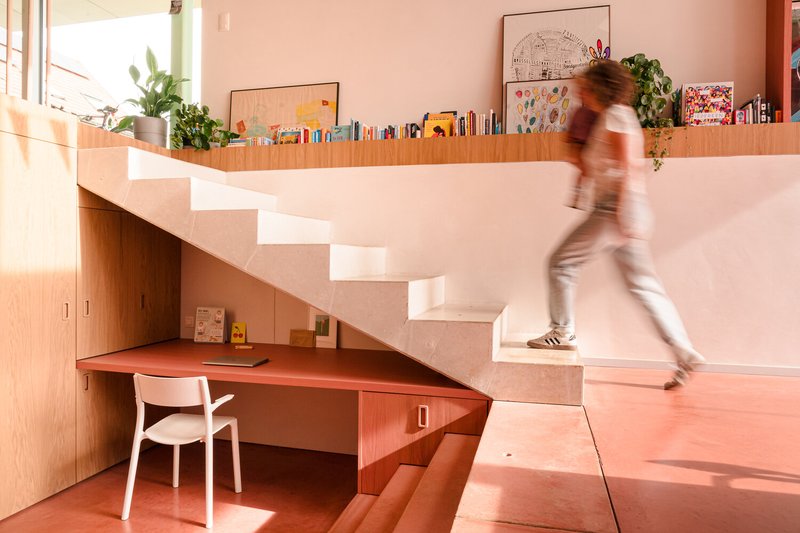
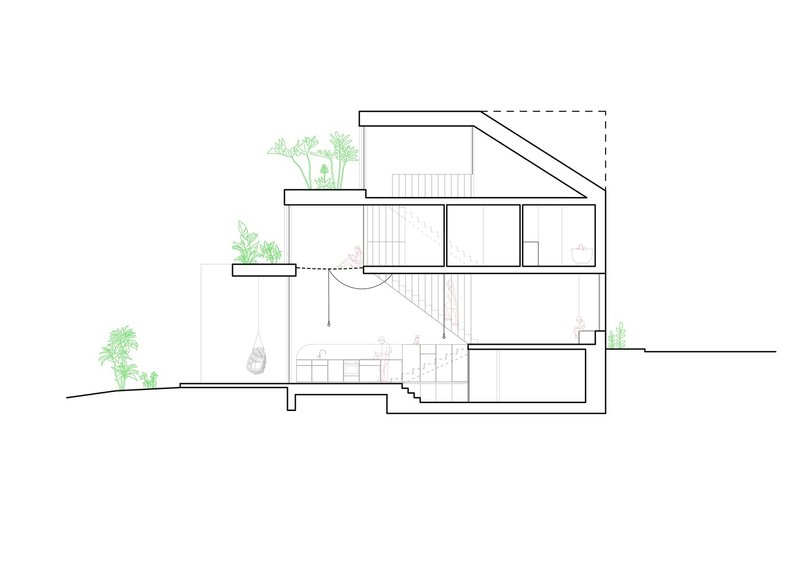
The Dragon House is designed for adaptability, ensuring that spaces can evolve alongside the needs of its occupants. Upon entry, the home immediately establishes its multi-level character. A conventional staircase ascends to the upper floors, while a gradual, "lazy" staircase descends to the kitchen, positioned at backyard level.
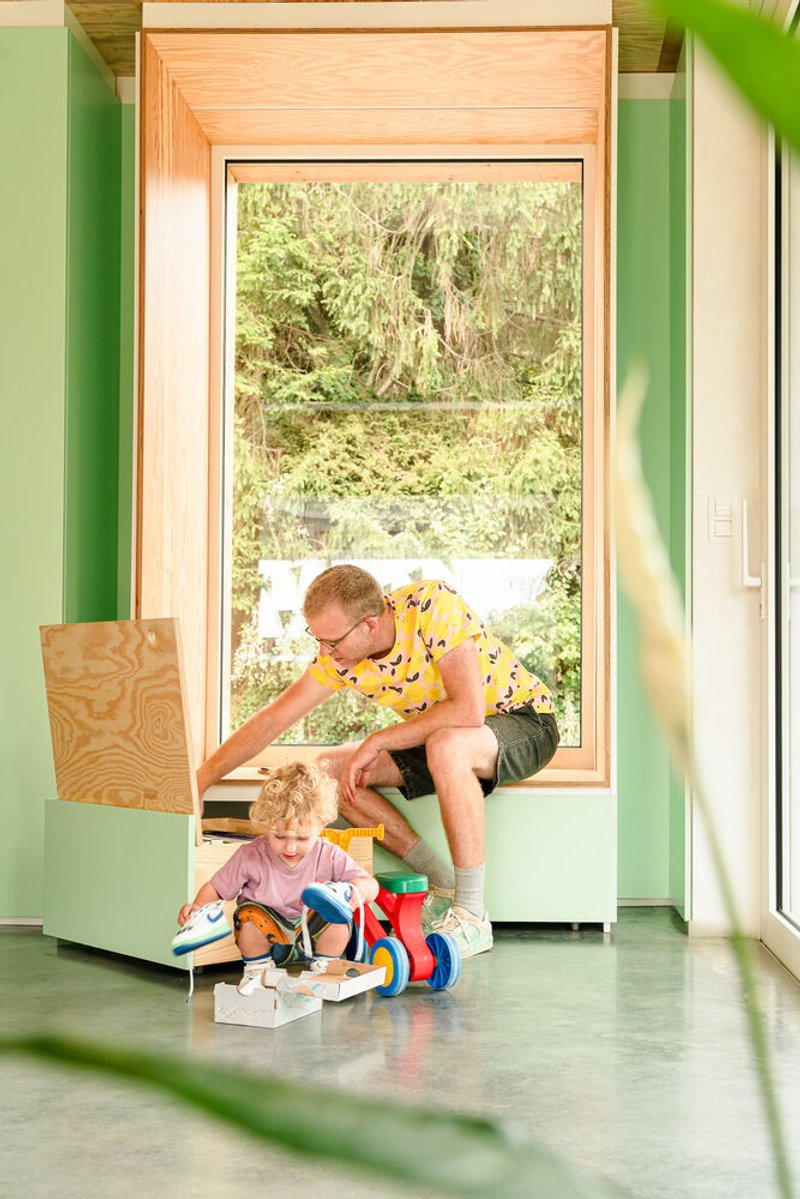
This central kitchen space integrates practical storage solutions, where cabinetry seamlessly incorporates access to the basement’s technical room and guest facilities. The sunken living room, connected to the kitchen via flowing red-pigmented concrete steps, offers an intimate yet open gathering area. A built-in desk beneath the staircase optimizes space efficiency while maintaining a visual connection with the rest of the home.
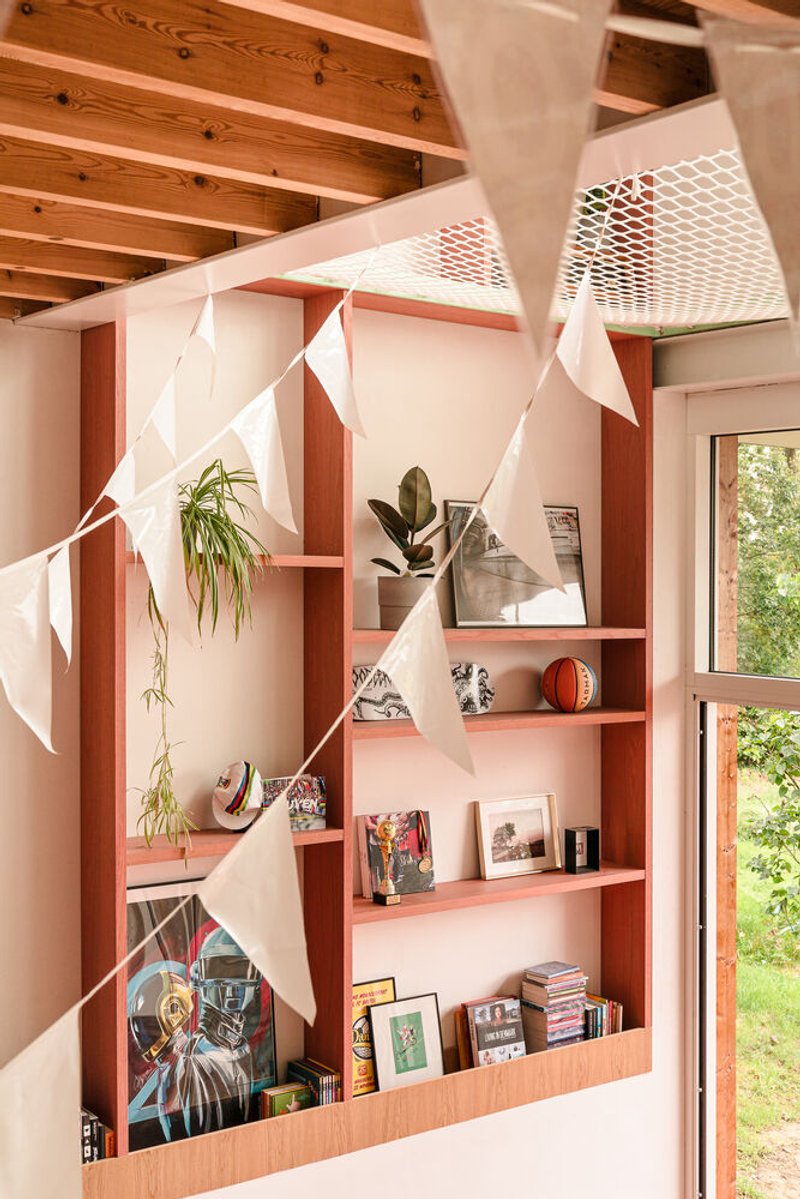
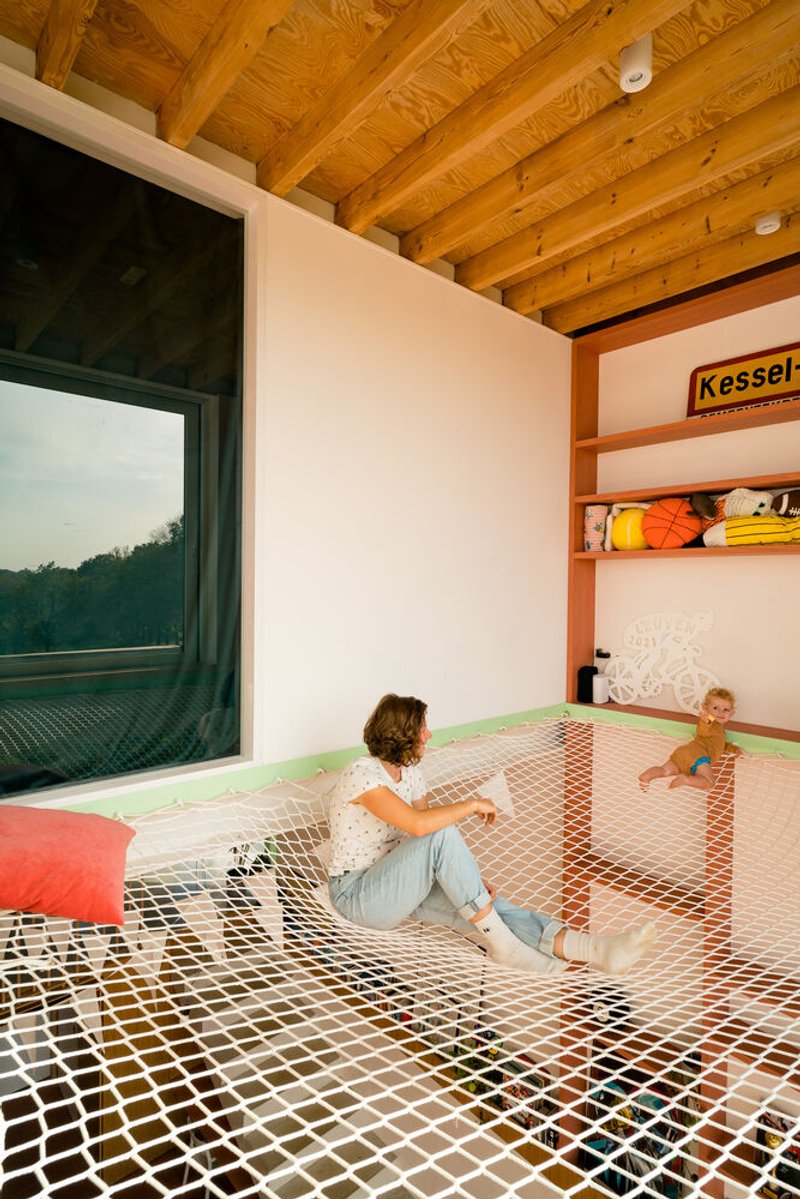
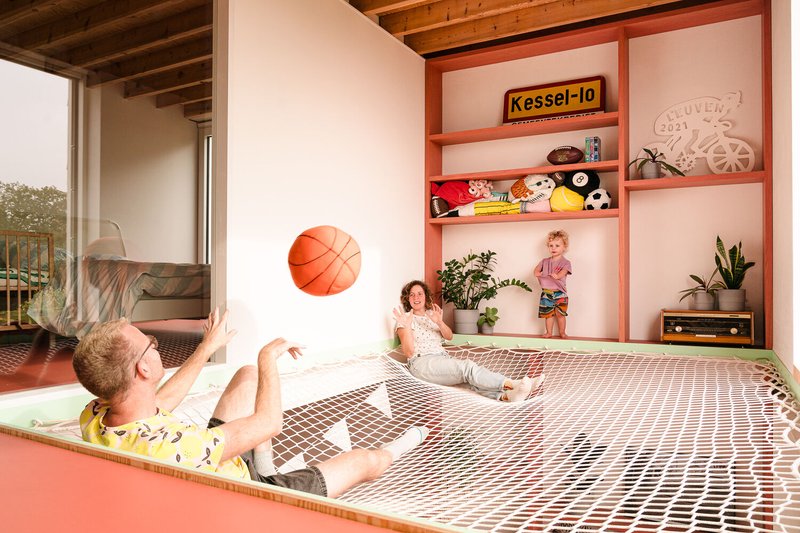
On the second floor, the children's bedrooms, a bathroom, and an additional toilet maintain the home’s commitment to flexibility and natural light. A distinctive feature is the void above the kitchen, where a trap net stretches across the space, creating both an engaging play area and a means of enhancing spatial openness. This design choice allows sunlight to filter deeper into the home, further reinforcing the interplay between different levels.
A Model for Sustainable Home Renovation
Dragon House is a testament to the transformative power of sustainable home renovation. By integrating upcycled materials, passive energy solutions, and spatial ingenuity, no.ma architecten redefine how existing structures can be adapted for modern living.
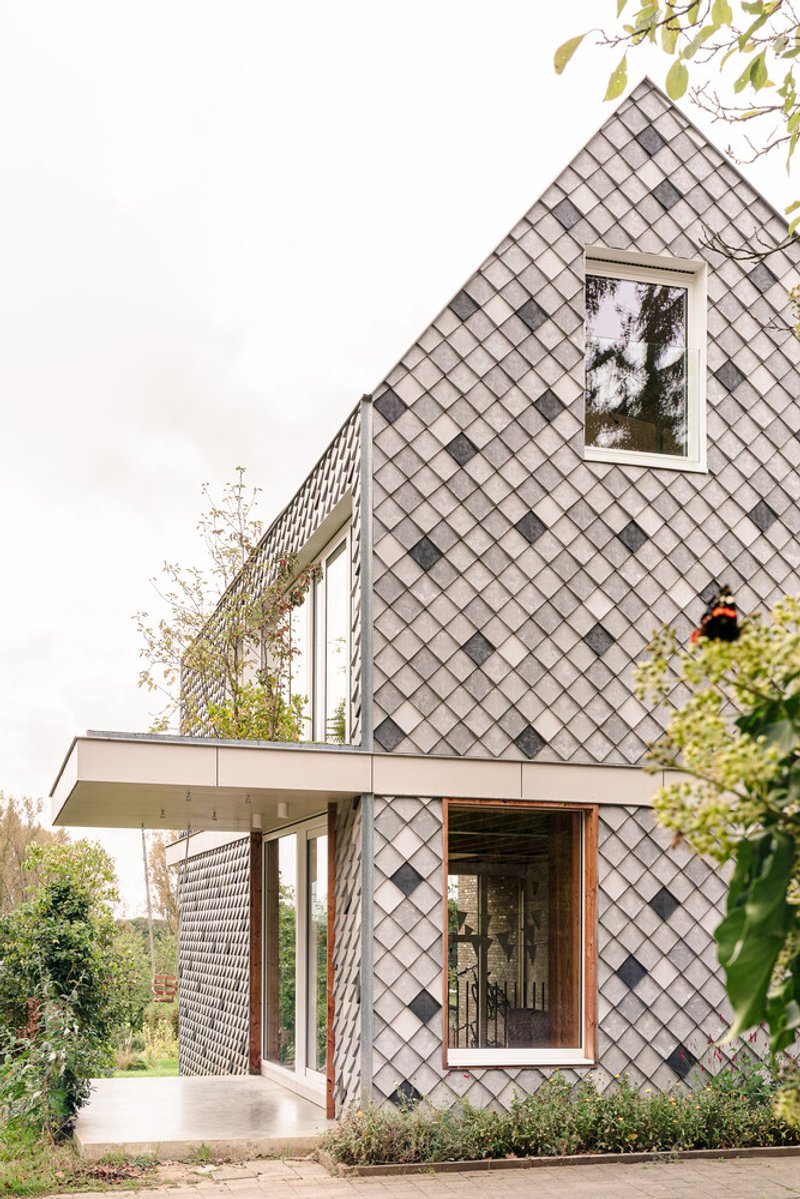
This project demonstrates that sustainability and architectural innovation can go hand in hand, proving that an old house can become an inspiring, high-performing home without sacrificing character or environmental responsibility. With its bold material choices, flexible layouts, and energy-efficient strategies, Dragon House serves as a model for future residential renovations, inspiring homeowners and architects alike to embrace sustainability as a driving force in design.
All Photographs are works of Stijn Knapen




Popular Articles
Popular articles from the community

Constanti Architects Builds a Fortress of Privacy in Nicosia with House 345
A concrete and timber residence in Cyprus reinterprets the traditional introverted courtyard house for a new urban landscape.


Cyber Oyster: A Visionary Adaptive Reuse Architecture Project Transforming Abandoned Oil Rigs Through Oyster Bionics
An adaptive reuse architecture concept transforming abandoned offshore oil platforms into self-healing marine ecosystems inspired by oyster bionics.
Three Studios Build 200 Affordable Units for Tulum's Displaced Hospitality Workers
Casa Selva embeds dark concrete housing blocks into Yucatán rainforest, offering dignified shelter to those priced out by the tourism they serve.
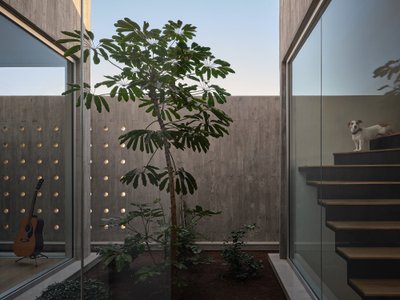
Driss Kettani Carves a Private World from Concrete Boxes on a Tight Casablanca Plot
Villa Polo stacks perforated concrete volumes around courtyards and a rooftop pool to shield a family home from the dense urban fabric.


Similar Reads
You might also enjoy these articles

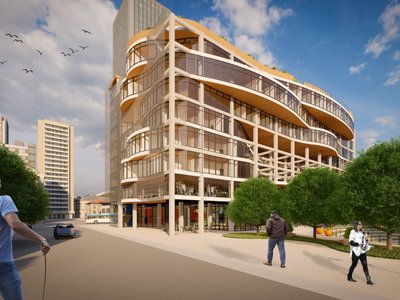
Olio Towers: A Mid-Rise for Performers That Fuses Housing, Rehearsal, and Stage
Located blocks from Houston's Theater District, this modular tower stacks living units around a central performance atrium.
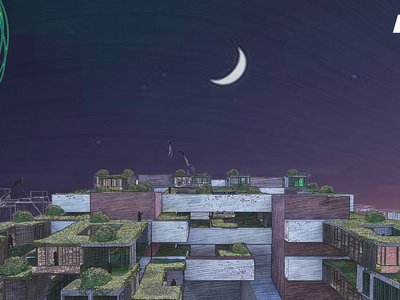
Oasis: Modular Green Housing Carved into Dhaka's Urban Fabric
A shortlisted Plugin Housing entry reclaims unauthorized settlements in Dhaka with stepped concrete volumes, green roofs, and ventilation-driven design.

Black Hole: A Floating Megastructure for the Post-Physical Era
Emiliano Mazzarotto envisions a spherical, self-scaling arena where e-sports, digital hotels, and holographic stadiums replace traditional public space.
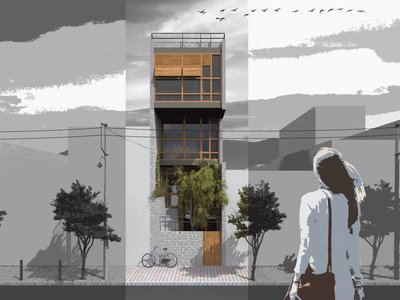
Compact & Sustainable Living in Piraeus: A Four-Level Family Home Built Around Light and Air
A narrow townhouse in one of Greece's densest port cities uses a central atrium and passive strategies to house three generations under one roof.

Explore Architecture Competitions
Discover active competitions in this discipline




The International Standard for Design Portfolios


The Global Benchmark for Architecture Dissertation Awards


The Global Benchmark for Graduation Excellence


Challenge to reimagine the Iron Throne
Comments (0)
Please login or sign up to add comments
No comments yet. Be the first to comment!