
Cornetta Arquitetura Lifts a Timber Pavilion into the Atlantic Forest Canopy in São Roque
A 212-square-meter weekend cabin built from glulam and charred pine hovers above preserved native forest outside São Paulo.

Weekend houses in forested settings tend to fall into one of two traps: they either bulldoze the site to create a clearing, or they try so hard to disappear that they become architecturally inert. Cornetta Arquitetura's Guapuruvus House in São Roque, Brazil, does neither. Instead, lead architect Pedro Cornetta and his team treated the project as a working laboratory for ecological construction, lifting a prefabricated timber volume above the sloping terrain of the Mata Atlântica while preserving over 70% of the native vegetation on site.
What makes this 212-square-meter house genuinely interesting is not its green ambitions alone but how those ambitions produced specific architectural decisions. The building splits into two construction phases and two material logics: a heavy concrete and masonry base embedded into the hillside, and a lightweight glulam and steel pavilion assembled on top. A single charred pine wall, blackened using the Japanese shou sugi ban technique, divides the upper volume into public and private halves along a central axis. The result is a house that reads as a glowing timber box floating in the canopy, a piece of infrastructure that touches the ground as lightly as something this permanent can.
A Pavilion in the Mist
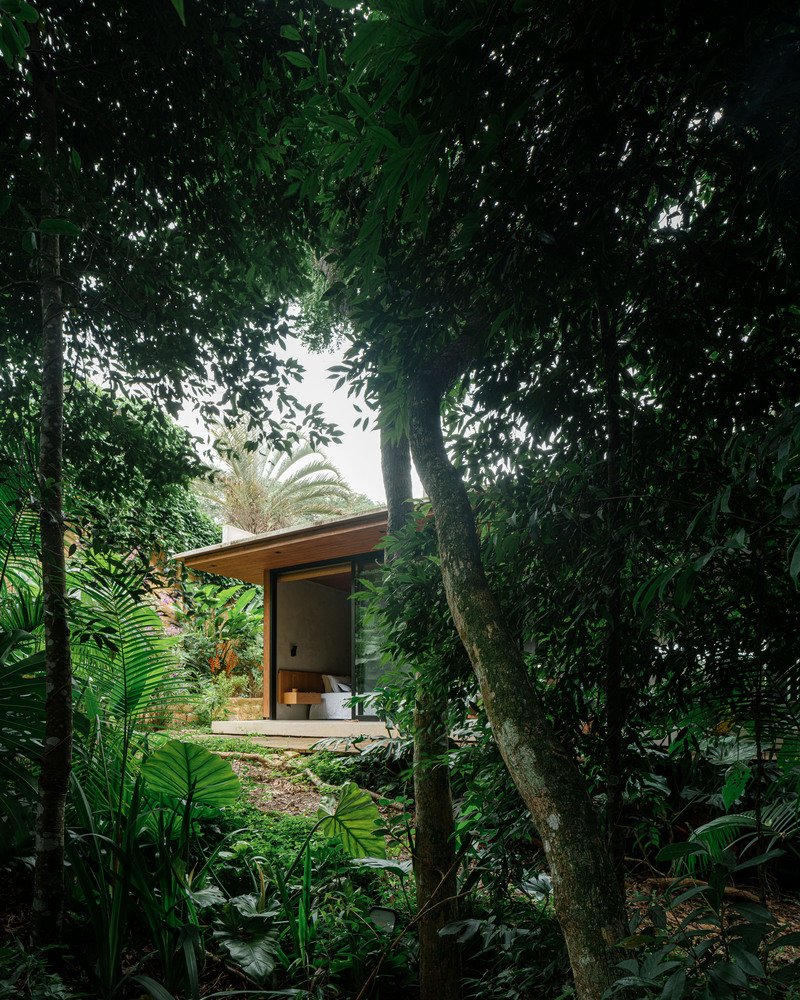
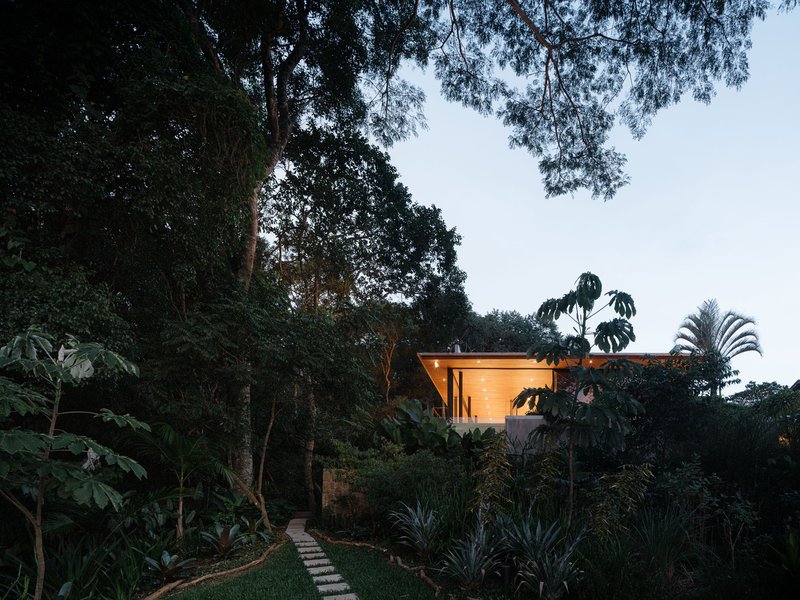
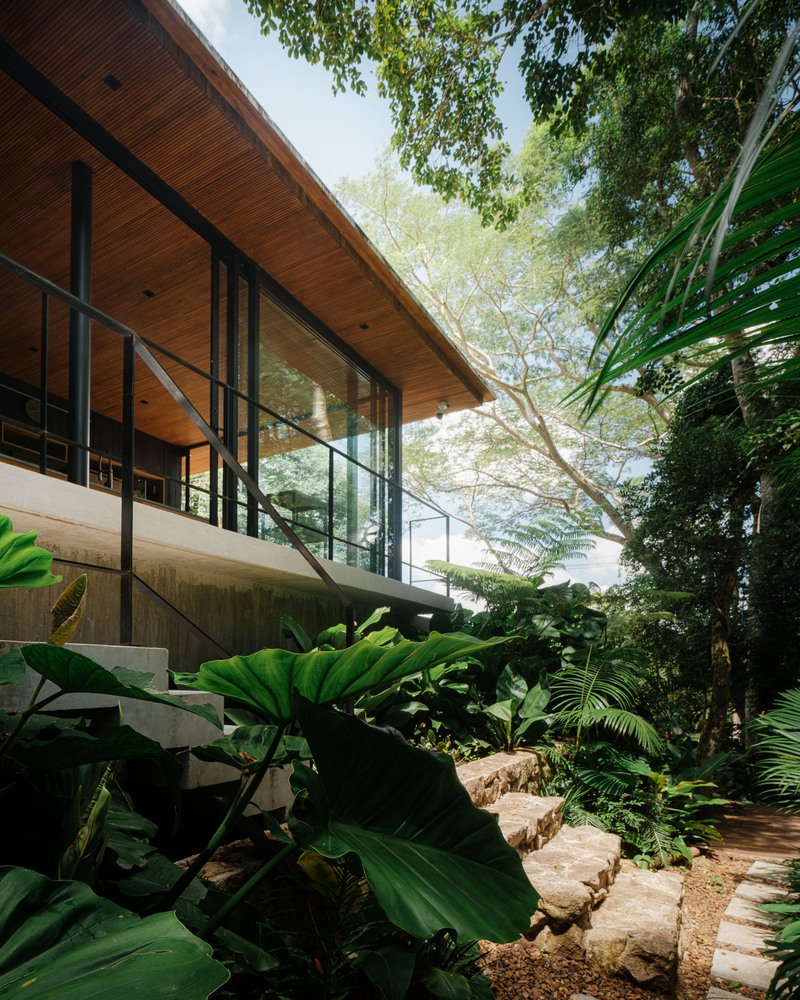
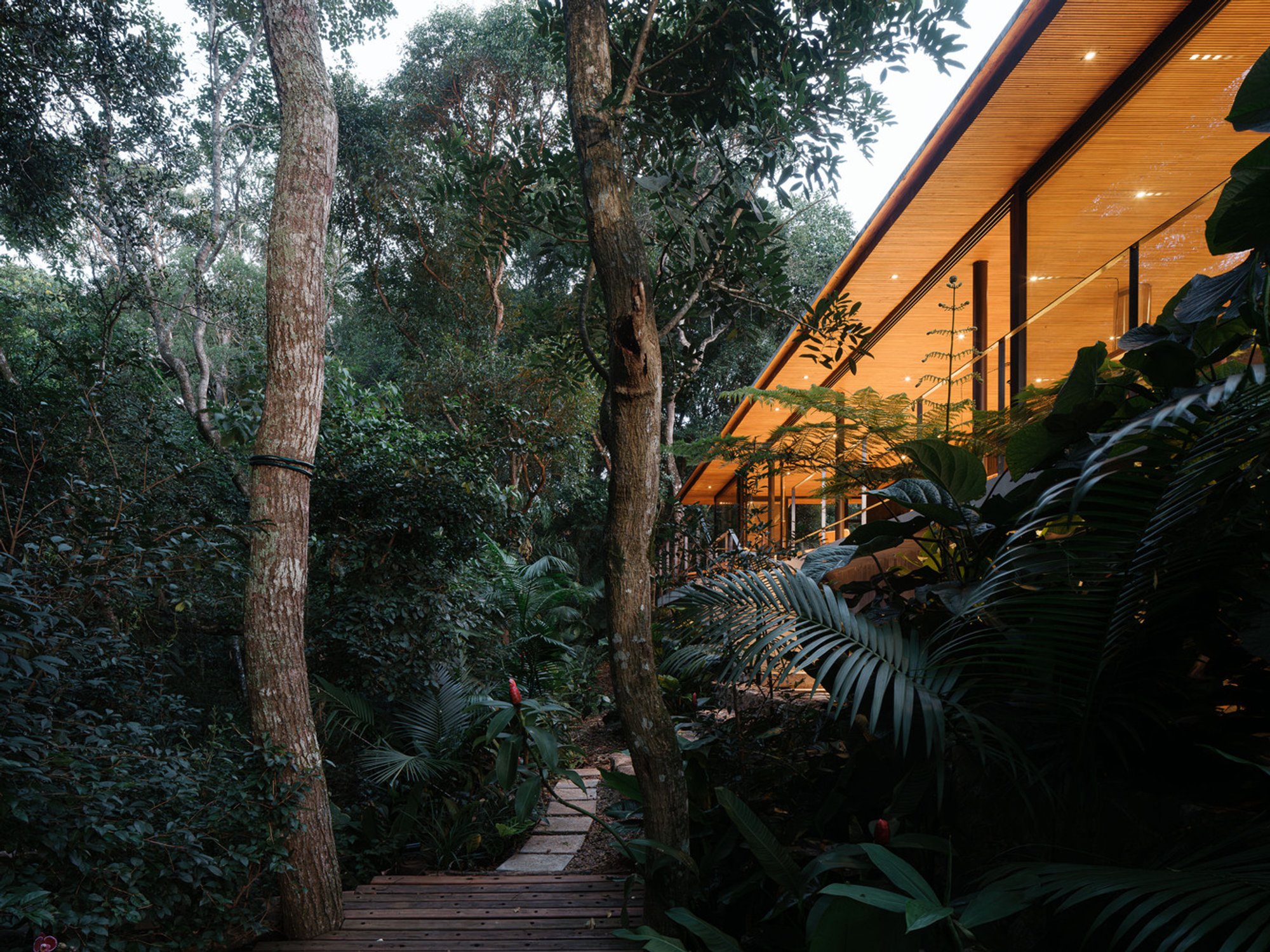
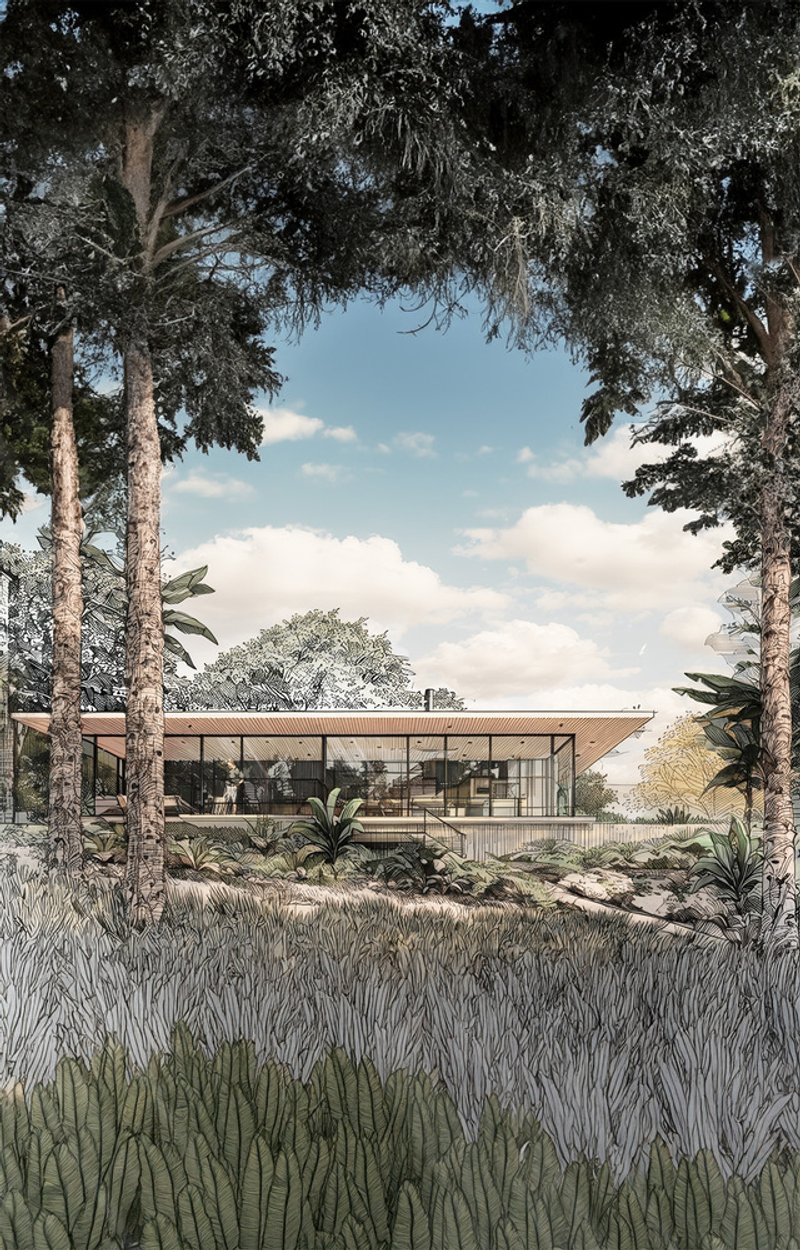
Seen from a distance through the understory, the house reveals its core strategy: elevation. The main living floor sits at canopy height, supported by black metal columns and the masonry plinth below. The effect, particularly in the humid mornings common to this stretch of Atlantic Forest, is of a lantern suspended among palms and ferns. At dusk the floor-to-ceiling glazing turns the interior into a warm beacon, legible from garden paths below but never dominating the landscape.
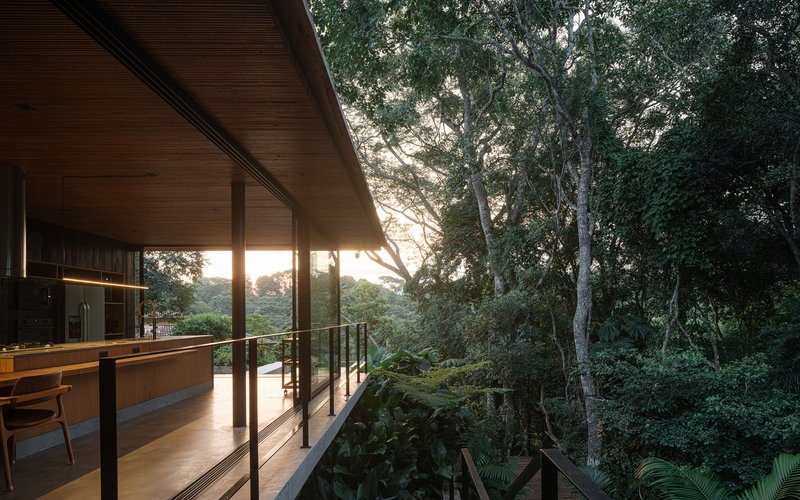
The cantilevered timber soffit extends beyond the glass line, creating deep overhangs that shield the interior from direct tropical sun while framing views of the forested hillside. It is a simple move, but it works hard: the overhang doubles as a rain screen, a solar shade, and a visual threshold between the domestic interior and the wildness outside.
Ground Strategy: Building Where the Land Was Already Disturbed
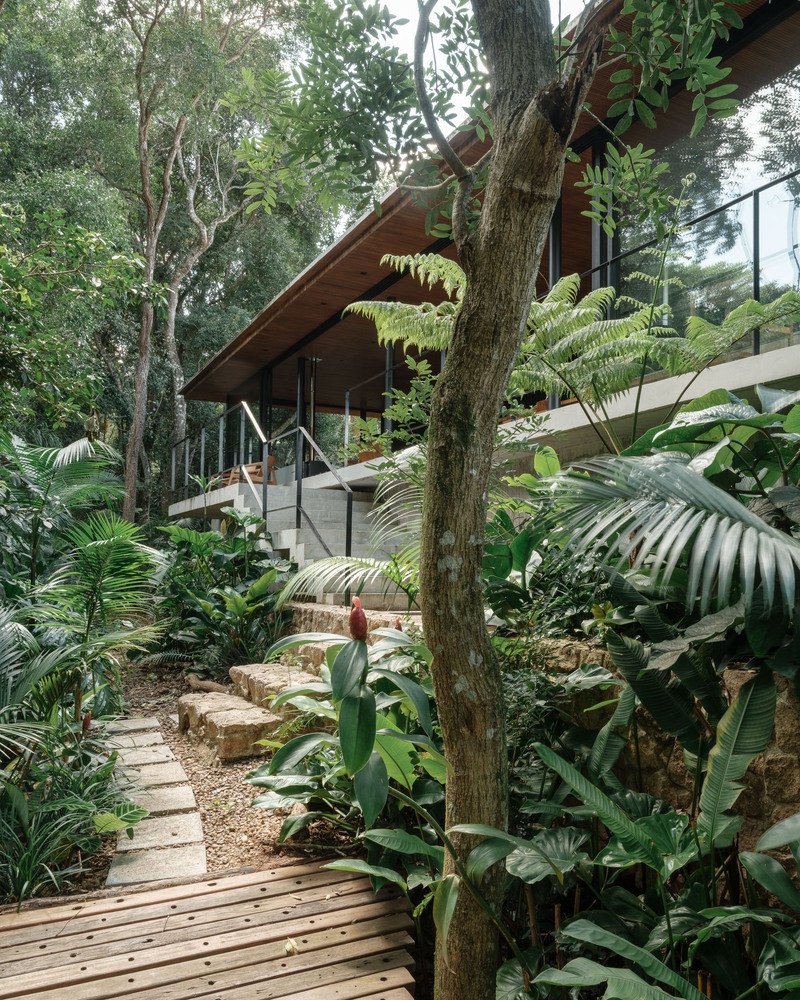
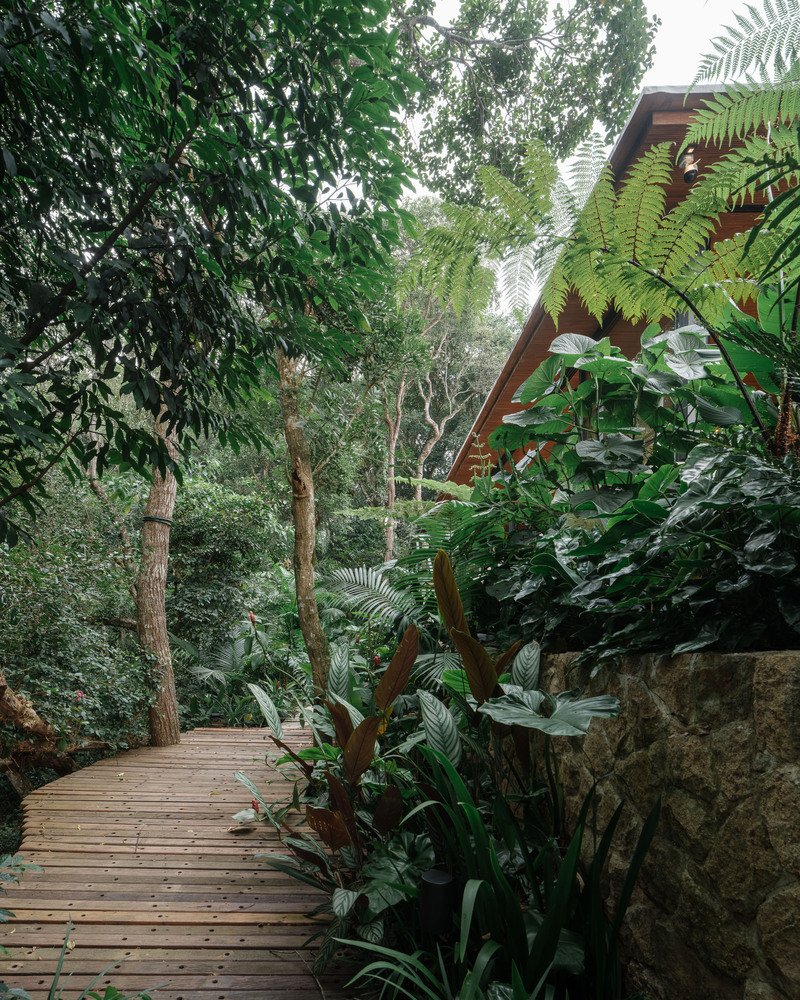
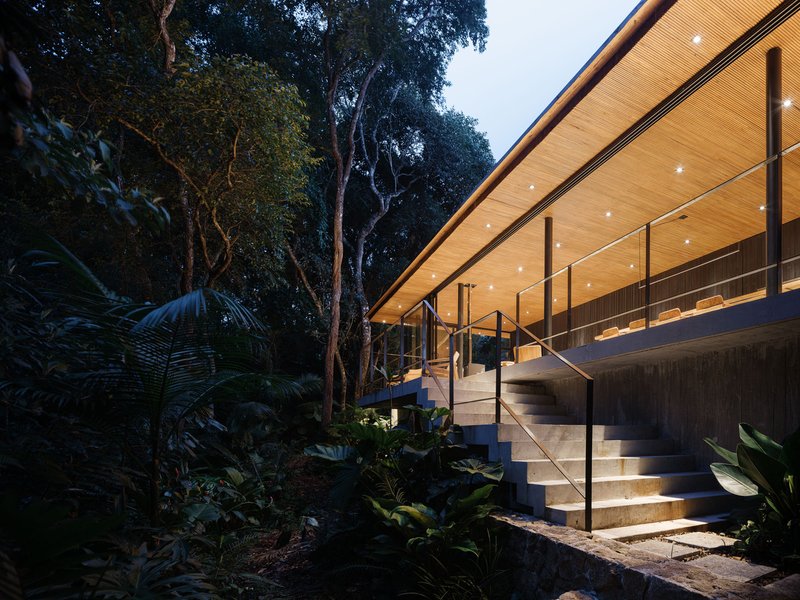
Cornetta's team chose to place the building footprint on a portion of the site that had already been altered by previous interventions, leaving the densest native forest untouched. Landscape architect Nik Sabey then reintroduced indigenous species only in those previously disturbed zones, so the new planting reads as ecological repair rather than ornamental gardening. Timber boardwalks and concrete staircases thread through the replanted beds, keeping foot traffic off the soil and allowing root systems to establish beneath.
The exposed concrete retaining walls at the lower level make no attempt to hide. They are honest about the engineering required to build on a slope, and their raw surface creates a satisfying material contrast with the warm timber and lush vegetation above. Steel railings and glass balustrades along the stairs keep the circulation open and visually light, reinforcing the idea that the architecture is a series of walkways connecting tree to tree.
Living Among the Trees
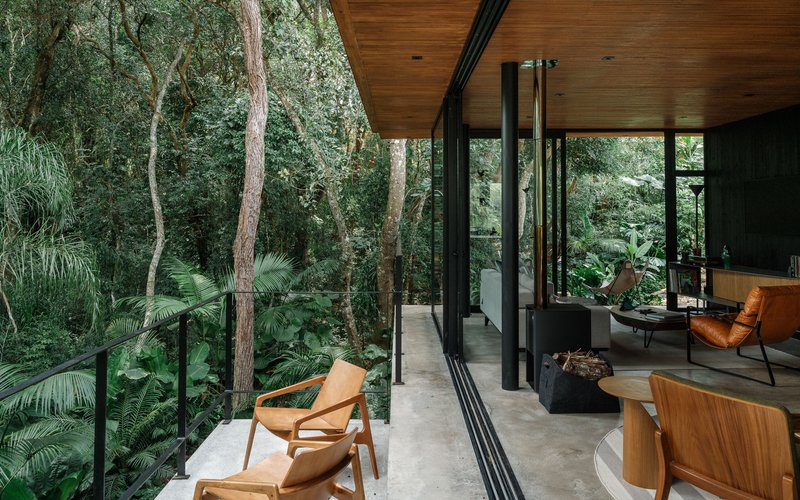
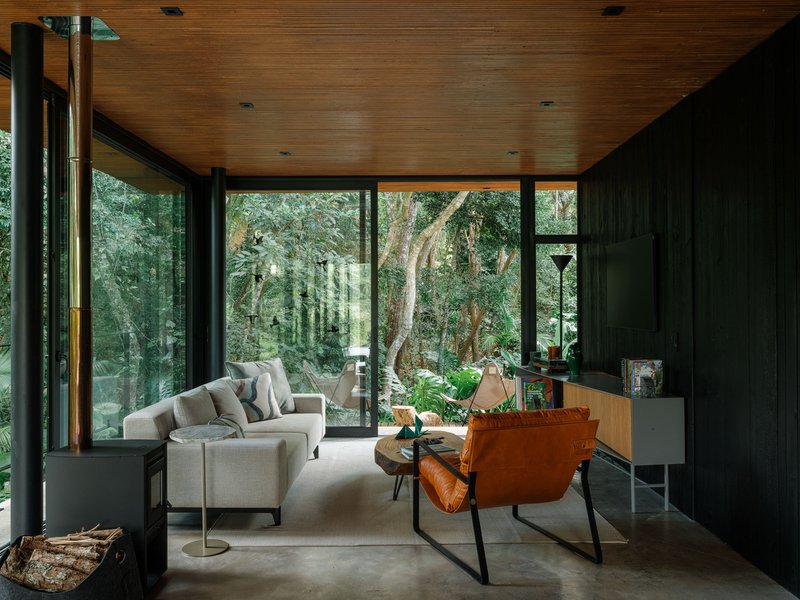
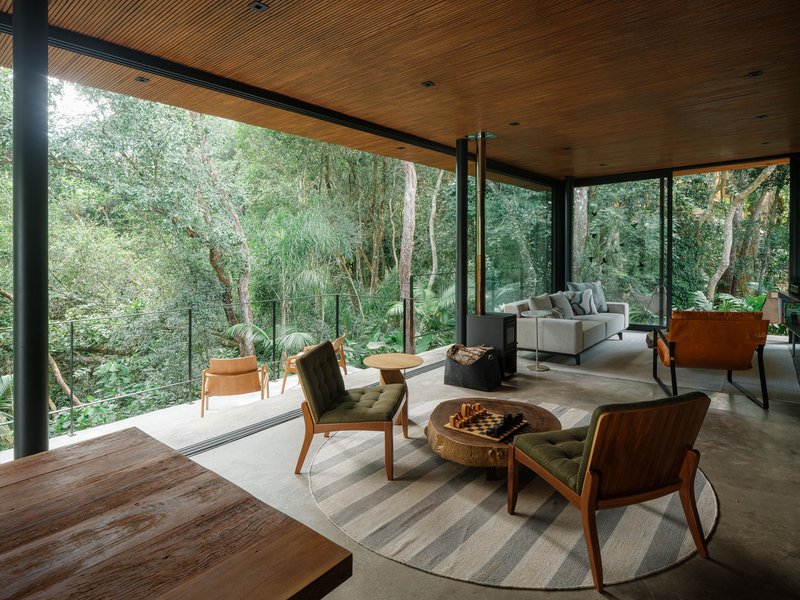
The main living area is a single open volume defined by its timber ceiling of nailed laminated timber slabs and its glass walls. Mature tree trunks stand close enough to the glazing that the canopy fills the peripheral vision from every seat. A freestanding wood stove anchors the living room, its chimney pipe rising through the timber ceiling, providing a focal point that feels appropriately cabin-like without veering into rusticity.
The floor-to-ceiling glass is not just scenographic. It is the primary ventilation and daylighting strategy, replacing mechanical systems with operable panels that catch cross-breezes from the valley. When the doors slide open, the boundary between the interior and the forest dissolves entirely, which is exactly the point for a house conceived as a weekend camping trip in architectural form.
The Charred Wall and Material Palette
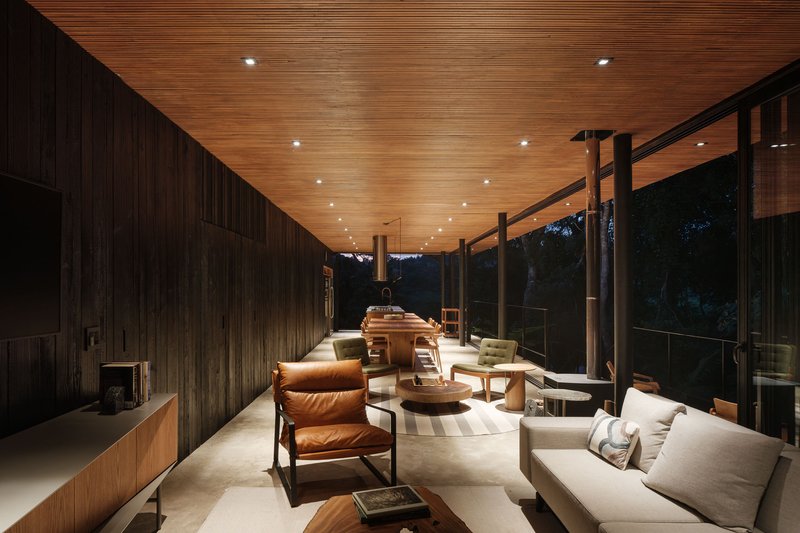
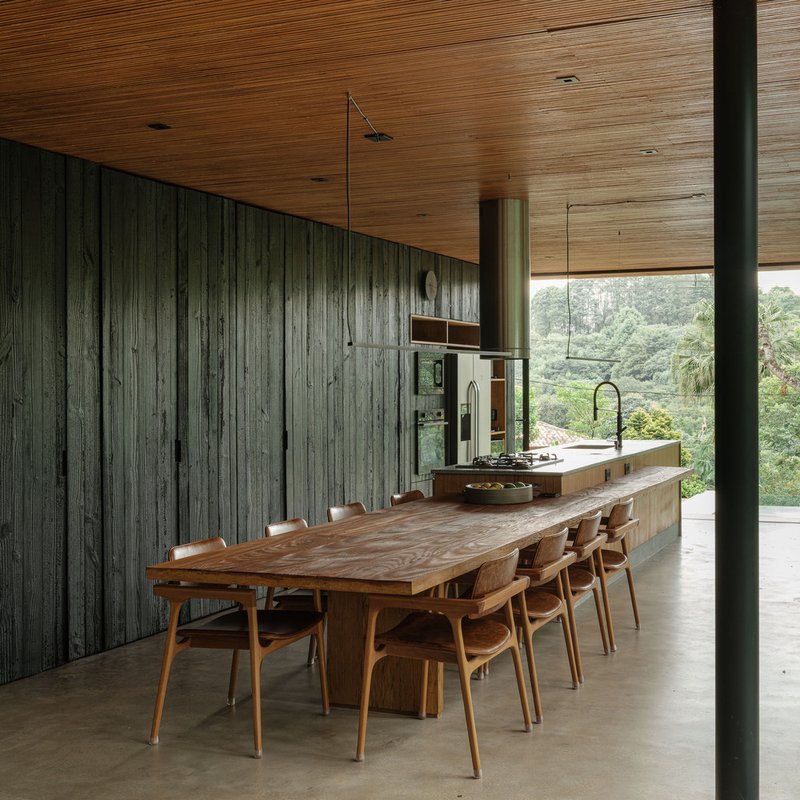
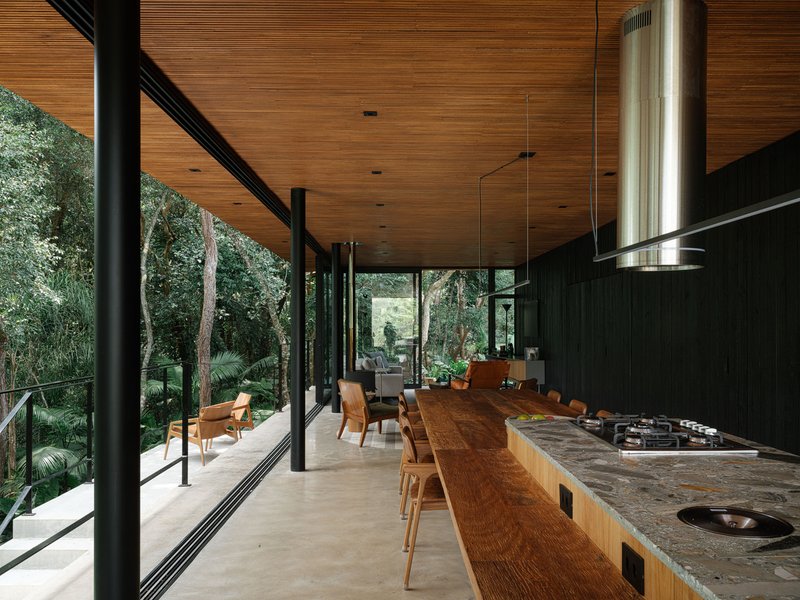
A wall of pine boards charred in the shou sugi ban tradition runs the length of the house, acting as the spatial divider between the open living and dining zone on one side and the bedrooms on the other. The blackened surface absorbs light and gives depth to the interior, creating a moody counterpoint to the pale glulam beams and the bright green of the forest visible through every window. It is also a practical choice: the charring process makes the pine more resistant to insects, moisture, and fungal decay, all serious concerns in a tropical forest setting.
Elsewhere, the material palette stays deliberately restrained. Black steel columns support the timber structure with minimal visual weight. The kitchen island features a stone countertop beneath a pendant hood, and the dining table is a slab of reclaimed peroba rosa, a native hardwood given a second life. These are not decorative flourishes; they are material decisions tied to the project's ethos of reuse and locality.
Bedrooms, Bunks, and the Family Cabin Ethos
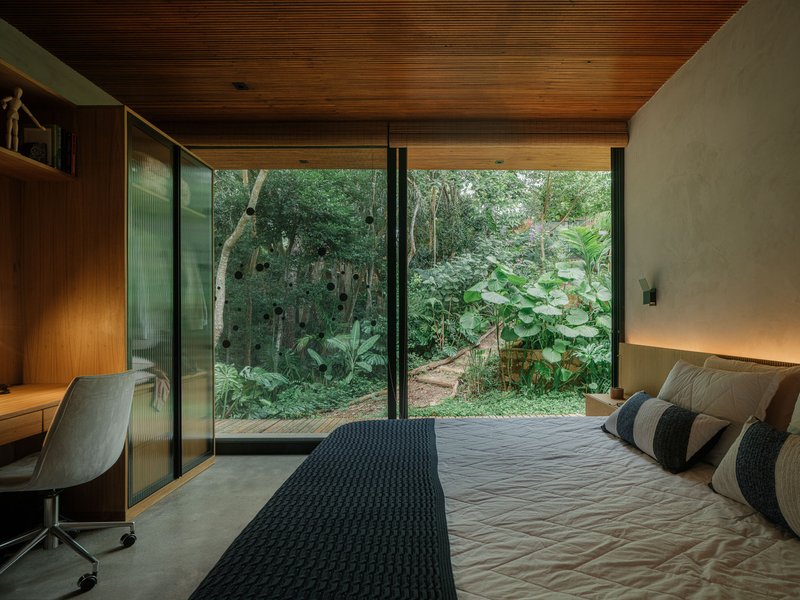
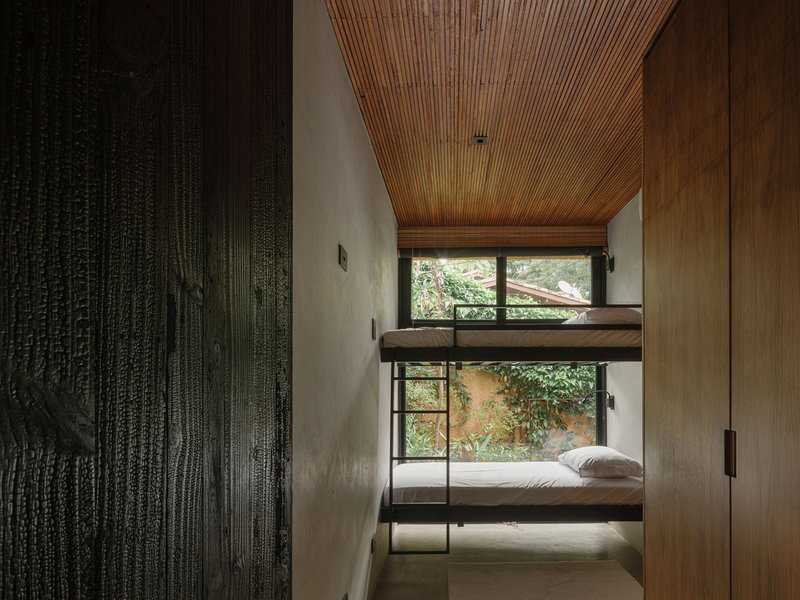
The private rooms sit on the quieter side of the charred wall, each with its own floor-to-ceiling glass opening onto planted garden paths. The children's room features built-in bunk beds with a metal ladder, tucked beneath a curved timber slat ceiling and flanked by blackened pine panels. It is compact, playful, and unmistakably part of the cabin narrative the family wanted: a house that makes weekends feel like an expedition rather than a retreat.
The bedroom proportions are modest by Brazilian country-house standards, and intentionally so. The 212-square-meter total area is tight for a house that includes a pool, a solarium, laundry, and storage. Cornetta compressed the sleeping spaces to give the communal areas and outdoor terraces the room they need, a trade-off that makes sense when the whole point is to spend your time outside.
Terraces, Pool, and the Lower Level
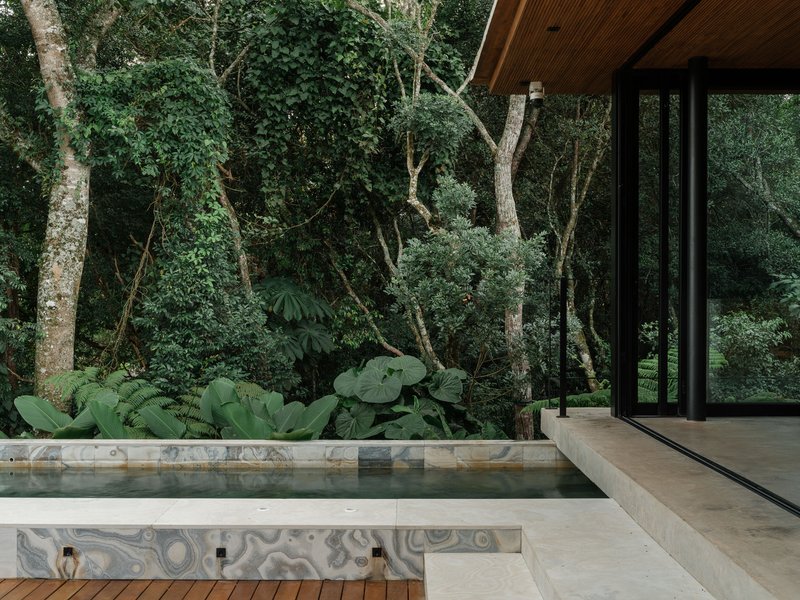
The basement level, embedded into the slope, houses a rectangular swimming pool edged in swirling stone and timber decking, facing directly into the dense jungle canopy. A solarium, laundry, and storage rooms complete the program below. Because this level sits within the topography rather than above it, the pool terrace feels like a clearing carved into the hillside, sheltered and private.
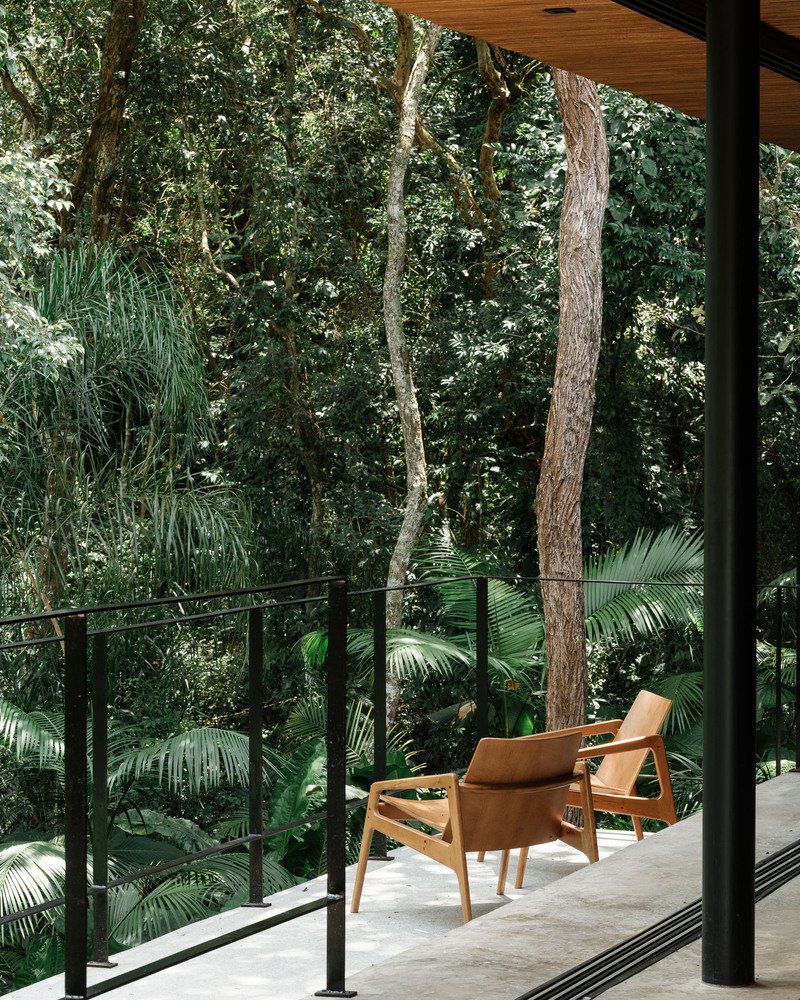
Above, the upper terrace with its steel railing and lounge chairs offers a completely different experience: open sky, treetop views, and the long perspective of the valley at sunset. The house stacks two distinct modes of outdoor living, one intimate and one expansive, using the same slope that dictated the structural split between masonry and timber.
Arrival and the Forest Threshold
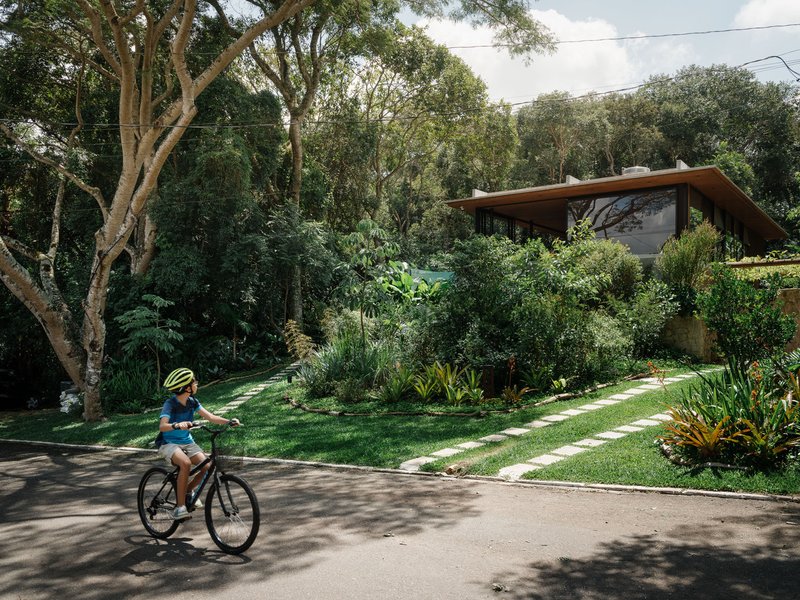
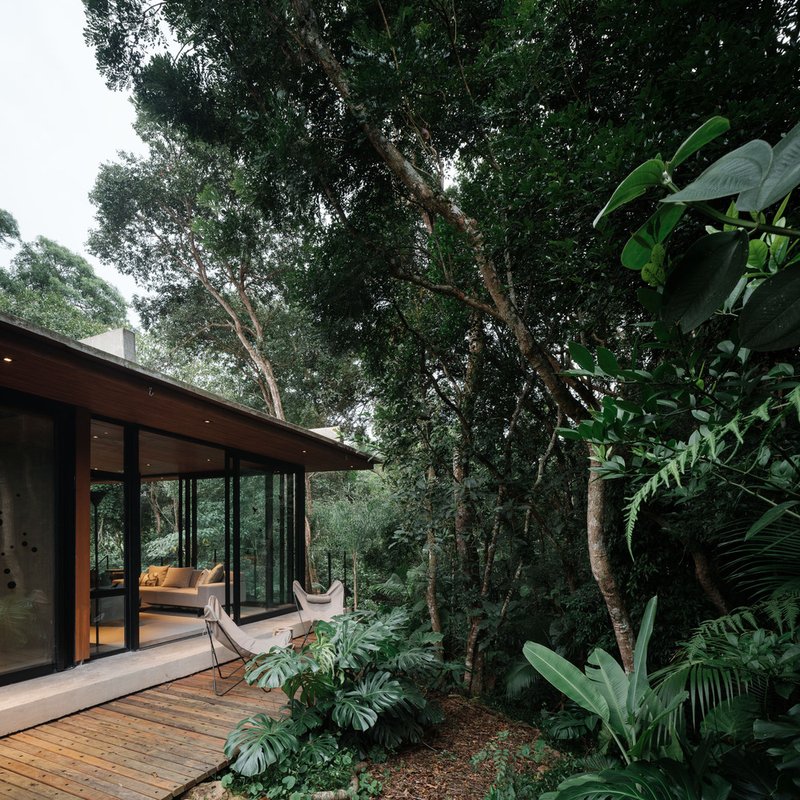
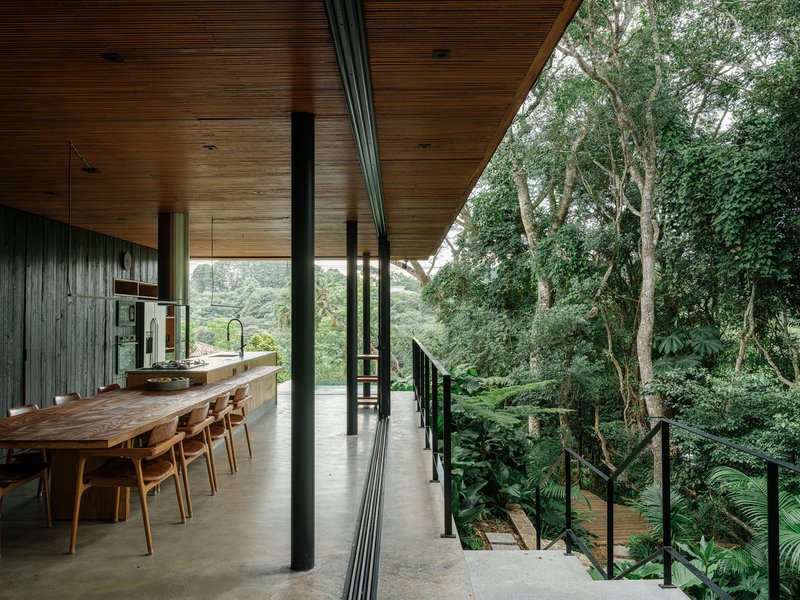
From the street, the house barely registers. A planted lawn with stepping stones and a child on a bicycle could belong to any São Roque property. The architecture reveals itself gradually: first through the timber deck surrounded by monstera and mature trunks, then through the open dining terrace with its live-edge table facing the forested hillside. The sequence is calibrated to transition you from suburban road to forest interior in a few dozen steps.
That transition is the real design achievement. The house does not announce itself; it unfolds. By the time you are seated at the dining table looking out over steel railings into the green, the road feels much farther away than it actually is.
Plans and Drawings
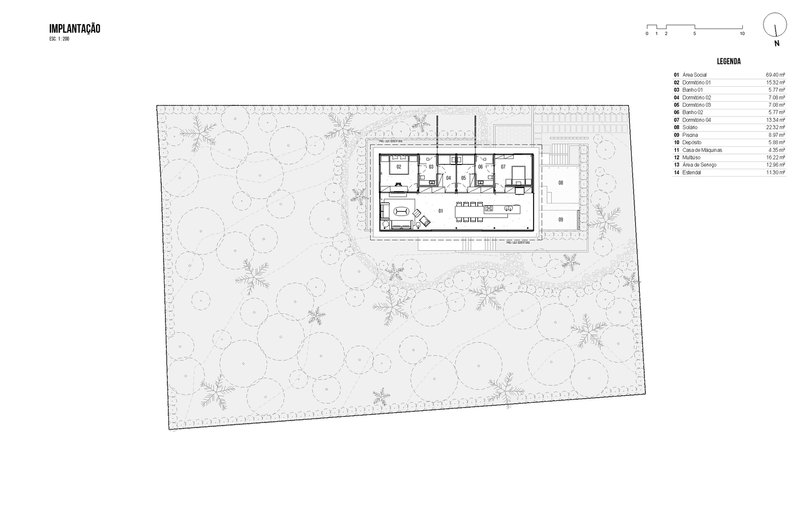
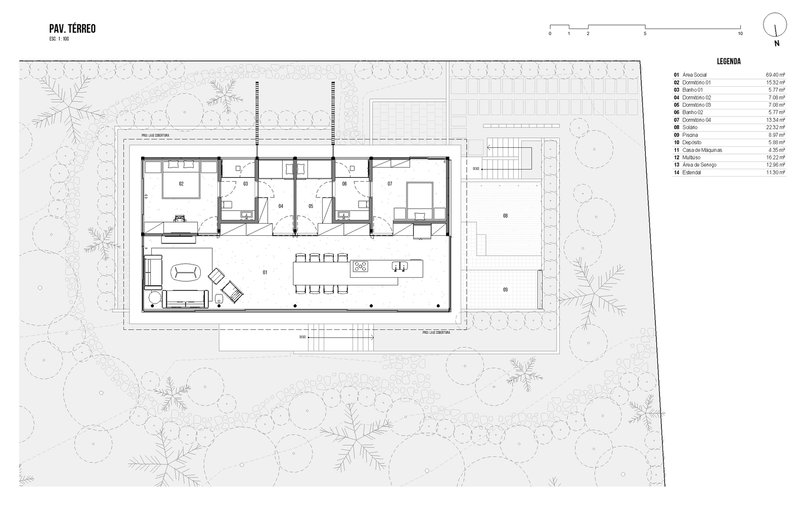
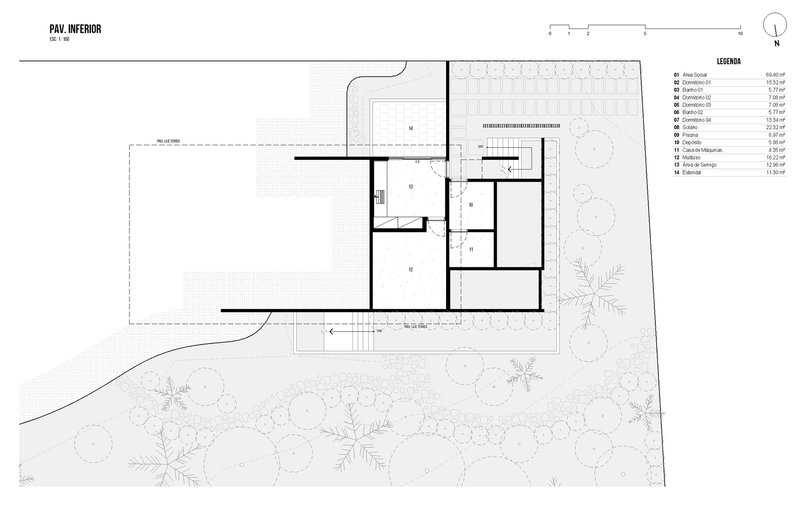
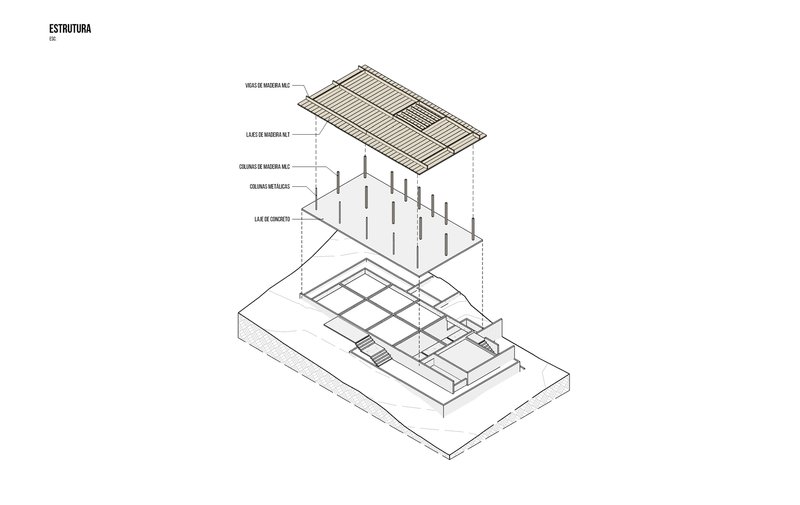
The site plan confirms how small the building footprint is relative to the forested lot. The rectangular volume sits neatly on the previously disturbed zone, with circulation paths radiating outward into the replanted landscape. The ground floor plan reveals the logic of the central axis: living, dining, and kitchen on one side, bedrooms and bathrooms on the other, divided by the charred pine wall. The upper mezzanine adds two rooms and a roof terrace, tucked efficiently into the pitched timber structure.
The exploded axonometric is the most revealing drawing. It peels apart the two-phase construction strategy layer by layer: concrete slab and masonry base below, glulam beams and NLT slabs above, with light steel framing for walls sandwiched between. You can see how the prefabricated timber components would arrive on site and slot together with minimal heavy equipment, reducing both construction time and disturbance to the surrounding forest.
Why This Project Matters
The Guapuruvus House matters because it treats ecological responsibility not as an add-on but as a generative constraint. Every interesting move in the project, the elevation, the two-phase construction, the charred pine divider, the modest footprint, stems from the decision to preserve the Atlantic Forest on site. Cornetta Arquitetura proves that working within tight environmental limits does not produce timid architecture; it produces architecture with a reason for every detail.
It also offers a credible model for weekend houses in biodiverse settings across Latin America and beyond. Rather than clearing land and importing materials, the project demonstrates how prefabricated timber systems, local stone, and reclaimed wood can create a high-quality domestic space that sits lightly on its site. At 212 square meters, it is not a grand gesture. It is a proof of concept, and a convincing one.
Guapuruvus House by Cornetta Arquitetura (lead architect: Pedro Cornetta; design team: Renan Antiqueira, Luigi Borges Campos; landscape: Nik Sabey; structural timber: Rewood). São Roque, Brazil. 212 m². 2023.
About the Studio
Share Your Own Work on uni.xyz
If projects like this are the kind of work you want to make, uni.xyz is a place to publish your own, find collaborators, and enter design competitions.




Popular Articles
Popular articles from the community

Kerry Kounnapis Packs 800 Daily Coffees into a 43-Square-Metre Melbourne Laneway Bar
Palace Coffee channels Pellegrini's and European standing bars through oxide-red steel and spotted gum timber in a Ridgway Place sliver.

The Faith: Modular Architecture for Play, Learning, and Hope in Kutupalong Refugee Camp
A modular playground architecture project in Bangladesh where play, learning, safety, and hope rebuild childhood inside a refugee camp anew.
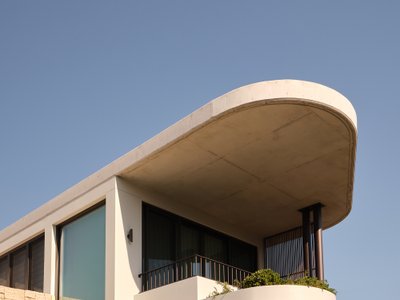
Stanton Architects Sculpts a Curving Family Home into Sydney's Inner West Fabric
Five Dock House uses cantilevers, curved concrete, and layered courtyards to carve out privacy on a tight suburban lot in Sydney.
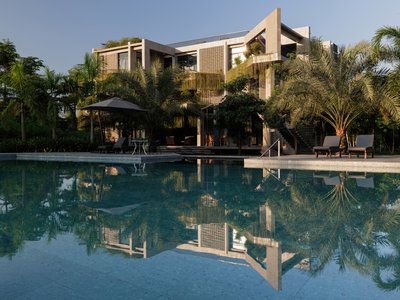
Reincarnation Weaves a Three-Story Retreat into the Green Landscape of Rural Bangladesh
Ara Manor in Narsingdi dissolves the line between domestic architecture and its lush surroundings through screens, courtyards, and planted rooftops.


Similar Reads
You might also enjoy these articles

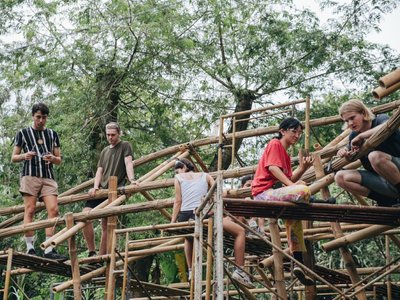
Bamboo Housing Challenge 2026: Design Affordable, Sustainable Homes Using Bamboo
An international design competition by Bamboo U and IBUKU inviting architects and designers to reimagine affordable housing using bamboo — with the winning design built full-scale in Bali.

Computational Design & Education: Beegraphy Design Awards Introduces 7th Category (Featuring Jiyun's Innovative Approach)
Dive into Beegraphy’s 7th Design Awards category, where computational design meets education to create immersive, interactive learning tools, inspired by Jiyun’s work.

From Parametric Lighting to Urban Furniture: Join the 2nd Workshop in Beegraphy’s Computational Design Series
Dive into Cutting-Edge Design Techniques and Practical Applications with Industry Experts

Introducing Sphere by UNI: Pioneering a New Era in AEC Industry
Unlocking Global Potential with BIM and Agile Management


Explore Housing Competitions
Discover active competitions in this discipline




The International Standard for Design Portfolios


The Global Benchmark for Architecture Dissertation Awards


The Global Benchmark for Graduation Excellence


Challenge to reimagine the Iron Throne
Comments (0)
Please login or sign up to add comments
No comments yet. Be the first to comment!