

Mange Bekker Arkitektur Raises a Timber Hotel on Stilts Above Norway's Flood Line in Voss
Elva Hotel scatters 14 rooms across five stilt-borne tower houses on a former industrial site along the Vangsvatnet lakefront.


Voss is a small Norwegian town that trades on its dramatic scenery and its reputation as a magnet for extreme sports. It is not, on the face of it, a place where you would expect to find a 14-room boutique hotel perched on stilts above a flood plain, its dark timber volumes scattered like a cluster of watchtowers along a lakefront that, until recently, was an industrial waste site. Yet that is exactly what Mange Bekker Arkitektur has delivered with Elva Hotel, completed in 2023. The 860-square-meter project replaces contaminated ground with restored wetland habitat and a constellation of five freestanding tower houses, each named after a river near Voss, each room named after a waterfall along that river.
What makes Elva Hotel genuinely interesting is the way it treats constraint as a generative force. The site sits two to four meters below the projected 200-year flood level, a reality that forced every building above the restaurant to be lifted on stilts. Rather than hiding this structural necessity, the architects turned it into the project's defining spatial idea: the raised volumes create covered outdoor zones beneath them, the stilts become a visible structural expression of the building's relationship with water, and the entire ensemble reads as an act of careful negotiation between architecture and an unpredictable landscape.
Tower Houses on a Remediated Shoreline


The five tower houses hold between one and three hotel rooms each, stacked vertically and balanced on top of one another. Four of them, named Myrkdalselva, Raundalselva, Vosso, and Teigdalselva, contain two or three units. The fifth, Tvinnefossen, stands alone at the water's edge as a single room. The towers are clad in deep, dark-stained timber that absorbs light rather than reflecting it, letting the buildings recede into the birch trees and dry grasses around them rather than competing for attention.
The site strategy extends well beyond building placement. The architects oversaw the removal of industrial waste and invasive plant species, reestablishing native wetland along the lakefront. Outdoor spaces are planted with local meadow grasses and wildflowers designed to attract native bird and insect populations. The result is a project that gave more ecological ground back to the site than it took.
Structure as Flood Defense

The angled columns and diagonal bracing visible at twilight are not decorative gestures. They are the structural logic of a building that must remain above a statistical worst-case flood event. Concrete is used exclusively in foundations and below the flood line; everything above is pre-cut timber, assembled on site with minimal waste. The restaurant is the sole exception, sitting below the 200-year flood level. Its walls use water-resistant materials, and every technical installation, electrical panel, HVAC unit, and plumbing connection, sits at least 1.4 meters above the floor.
Elevating the buildings also solves a secondary problem. The freestanding units sit 1.5 meters below the adjacent parking area, connected to the main building by a lowered, covered walkway that is fully wheelchair accessible. This sunken path creates a smooth grade transition and simultaneously reduces the visual impact of the hotel on neighboring houses. You arrive at the hotel by descending into it, which sets up a feeling of retreat even before you reach your room.
Rooms Framed by Landscape


Inside the tower houses, the rooms are deliberately compact and oriented outward. Double beds are placed in window niches, putting guests directly against the glass with views of the river, lake, and mountains. Some units offer additional sleeping on mezzanine lofts, adding vertical space without expanding the footprint. The dark timber walls, carried through from the exterior, create an interior atmosphere that feels like a cabin rather than a conventional hotel room, something closer to a hide than a suite.
The transparency works in both directions. Each room is crafted to offer a private connection with the surrounding scenery, but the architects also maintained visual transparency through and between buildings toward the waterfront. The experience from within the hotel is one of private seclusion in nature, despite the fact that the site is in a relatively built-up area of Voss. That tension between intimacy and openness is what elevates the project above a standard nature retreat.
Communal Spaces at the Water's Edge


The main building consolidates the hotel's public program: reception, conference room, four accessible guest rooms, and a restaurant that serves locally sourced food. A connection to the existing activities center adds a bar, café, kitchen, and spa. The gathering spaces are organized around floor-to-ceiling windows that face the lake and the forested mountains beyond. In winter, the view includes snow-capped peaks and a frozen lake; in autumn, mist and pine. The architecture does not try to upstage what is already there.
Timber chairs arranged in rows facing the glass in the conference and lounge areas turn these rooms into viewing platforms as much as functional spaces. It is a simple move, but it reinforces the hotel's core proposition: you are here for the landscape, and every surface, every seat, every sight line has been calibrated to make sure you do not forget it.
Material Restraint and Detail

The material palette is narrow and deliberate. Exterior walls are stained a deep, near-black tone. Interior surfaces alternate between vertical timber cladding and dark-stained panels, with custom-built wardrobes and cupboards fabricated by Styve Møbelsnikkeri. The bathrooms introduce a shift: blue resin surfaces and glass enclosures under linear ceiling lighting provide a cooler, more polished counterpoint to the warm timber everywhere else. It is one of the few moments where the hotel allows itself a material departure, and it works precisely because it is unexpected.
The consistency of the timber language, from structural frame to interior finish, gives the project a coherence that many boutique hotels lack. There is no moment where a material change signals a shift in budget or ambition. The pre-cut timber construction, supplied by Bergene Holm, served a practical purpose during building: it reduced waste and accelerated the schedule. But it also ensured a level of precision in the joinery that you can feel in the finished rooms.
Why This Project Matters
Elva Hotel is a case study in how environmental constraint can produce better architecture, not just safer architecture. The flood risk did not result in a defensive bunker or an elevated platform that ignores its ground plane. Instead, it generated a spatial sequence of descent, shelter, and prospect that gives the hotel a character no brief could have invented. The ecological restoration of the site, from industrial waste ground to functioning wetland, adds a layer of ethical seriousness that too many hospitality projects skip entirely.
For architects working on climate-exposed sites, the project offers a practical model: use concrete only where water demands it, build in pre-cut timber to reduce waste, raise the program above the risk threshold, and turn the resulting undercroft into usable outdoor space. For everyone else, it is a reminder that the best small hotels are not designed to impress on arrival but to disappear into their setting, revealing themselves slowly through the quality of what you see from inside them.
Elva Hotel by Mange Bekker Arkitektur. Voss, Norway. 860 m². Completed 2023. Photography by Sam Hughes.
About the Studio
Share Your Own Work on uni.xyz
If projects like this are the kind of work you want to make, uni.xyz is a place to publish your own, find collaborators, and enter design competitions.


Popular Articles
Popular articles from the community

Extended Shell: Retrofitting Kolkata's Balconies as Living Urban Thresholds
A modular retrofit system recovers the social and environmental intelligence of Kolkata's historic verandas for contemporary Park Street residents.
Opera by the Sea Estonia: Three Shells Dissolving Architecture into Tallinn's Coastline
A winning opera house proposal replaces monumental form with interconnected shells that blur the boundary between building, park and Baltic Sea.
Cloaked Colonization: A Mobile Underwater Habitat That Moves Like a Fish
Micah Abaya's shortlisted EHC Pacific entry reimagines ocean settlement as a dispersed network of self-sustaining architectural organisms.
Tsunami Convergenics: Turning Catastrophic Ocean Forces into Underwater Housing Infrastructure
A speculative underwater settlement off the coast of Onagawa, Japan, treats tsunamis and typhoons as energy sources rather than threats.

Similar Reads
You might also enjoy these articles

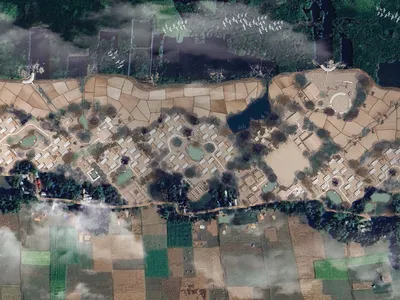
Hodi-Mandai Geram
Project Function: Preservation and revitalization of the Intangible heritage and socio-spatial identity of the Hodi by Housing, Cultural Memory Center, Sacred Grove, landscape, local tourism economy

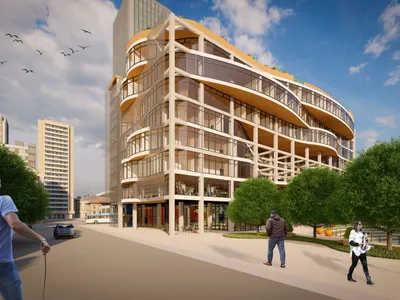
Olio Towers: A Mid-Rise for Performers That Fuses Housing, Rehearsal, and Stage
Located blocks from Houston's Theater District, this modular tower stacks living units around a central performance atrium.
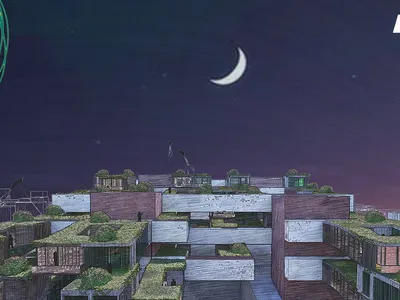
Oasis: Modular Green Housing Carved into Dhaka's Urban Fabric
A shortlisted Plugin Housing entry reclaims unauthorized settlements in Dhaka with stepped concrete volumes, green roofs, and ventilation-driven design.

Black Hole: A Floating Megastructure for the Post-Physical Era
Emiliano Mazzarotto envisions a spherical, self-scaling arena where e-sports, digital hotels, and holographic stadiums replace traditional public space.

Explore Architecture Competitions
Discover active competitions in this discipline

Challenge to reimagine the Iron Throne

Photograph architecture without architects

Illustrate the lost glory of Angkor Wat - Render Challenge

Design challenge to reuse E-waste
Comments (0)
Please login or sign up to add comments
No comments yet. Be the first to comment!