
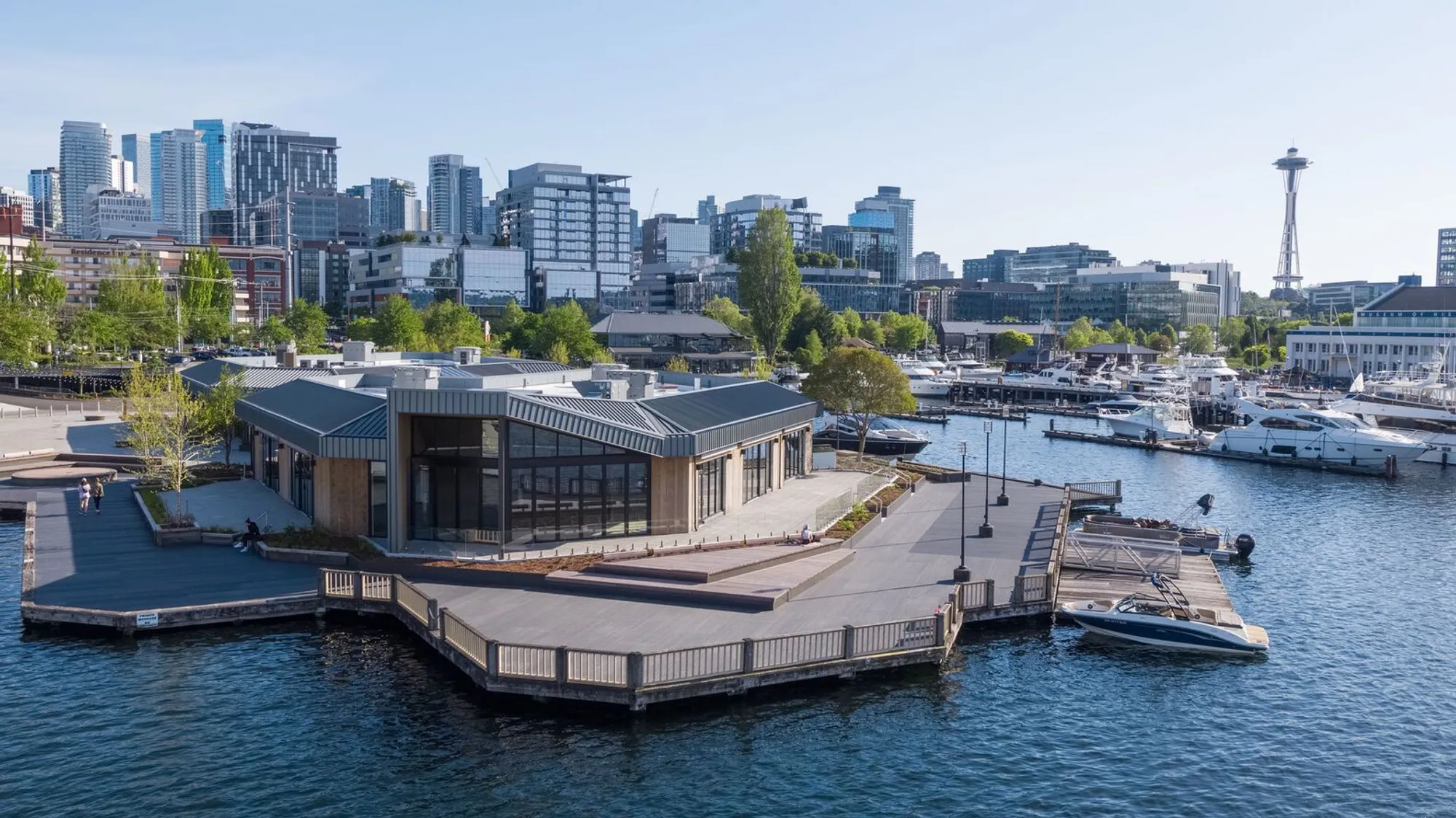
EMission Zero Hub at Lake Union Piers by Miller Hull Partnership
Adaptive reuse waterfront hub achieves full embodied carbon offset, showcasing collaborative sustainability, refined metal-wood architecture, and public activation in Seattle.


The EMission Zero Hub at Lake Union Piers, designed by The Miller Hull Partnership, marks a significant milestone in sustainable architecture and carbon-neutral development in the United States. Located in Seattle’s South Lake Union neighborhood, this revitalized waterfront complex demonstrates how adaptive reuse, collaborative decarbonization, and environmental accountability can redefine contemporary cultural and commercial architecture.
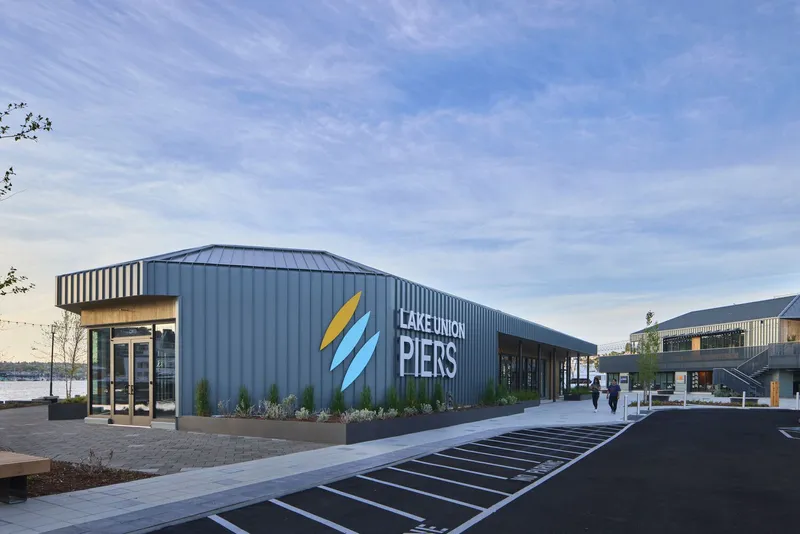
Completed in 2024, the project is the first built work to fully realize Miller Hull’s EMission Zero initiative, in which the owner, contractor, and architect collectively offset 100 percent of the project’s embodied carbon emissions. Developed in partnership with Vulcan Real Estate and Abbott Construction, Lake Union Piers establishes a new precedent for shared responsibility in reducing greenhouse gas emissions within the built environment.
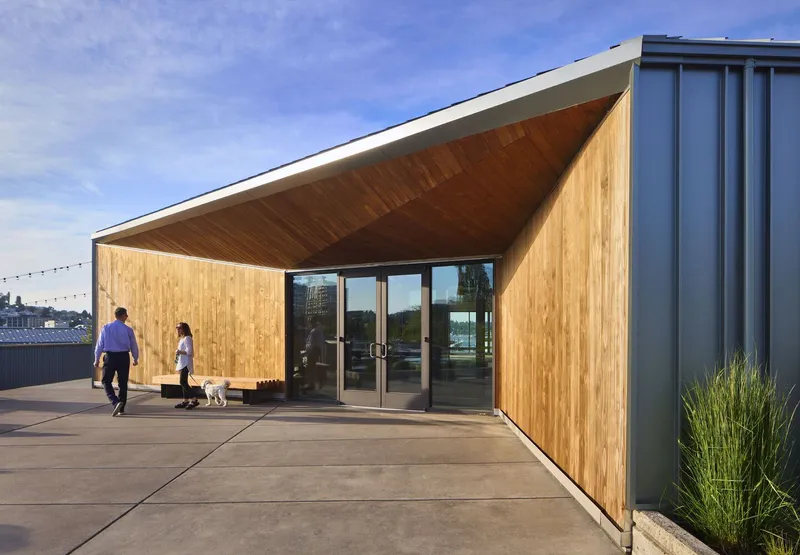
EMission Zero: From Design Ethics to Built Reality
Launched in 2021, EMission Zero is Miller Hull’s firm-wide commitment to eliminating greenhouse gas emissions associated with architectural projects. Grounded in the principles to Educate, Advocate, and Offset, the initiative addresses carbon emissions through design strategies, material selection, and ultimately, verified carbon offsets.
At Lake Union Piers, this framework was applied to the project’s A1: A3 embodied carbon emissions, encompassing the superstructure, substructure, building envelope, and fixed interior elements. The total upfront embodied carbon impact was calculated at 495 metric tons of CO₂ equivalent, a figure comparable to driving an average passenger vehicle nearly 1,000 round trips between Seattle and San Diego.
Rather than placing responsibility on a single stakeholder, Miller Hull, Vulcan Real Estate, and Abbott Construction each committed to offsetting 165 tCO₂e, collectively achieving full carbon neutrality. The offsets support HFC emissions reduction in spray foam insulation and renewable wind energy development, ensuring tangible environmental benefits beyond the project site.
Adaptive Reuse as a Low-Carbon Strategy
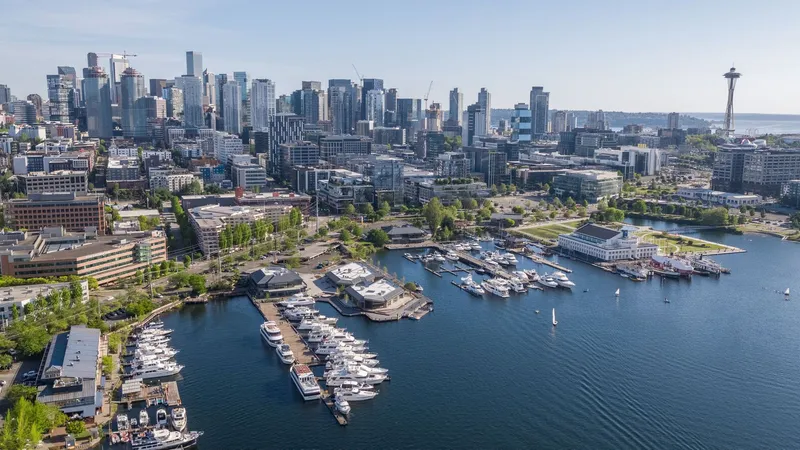
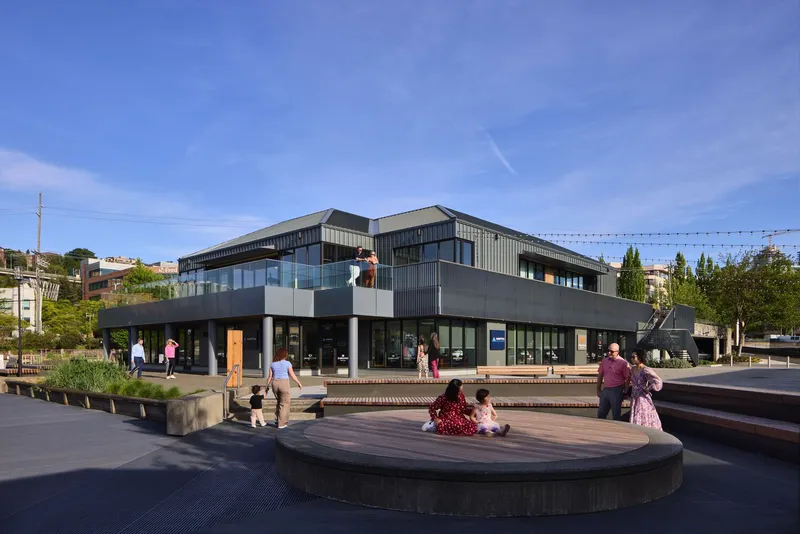
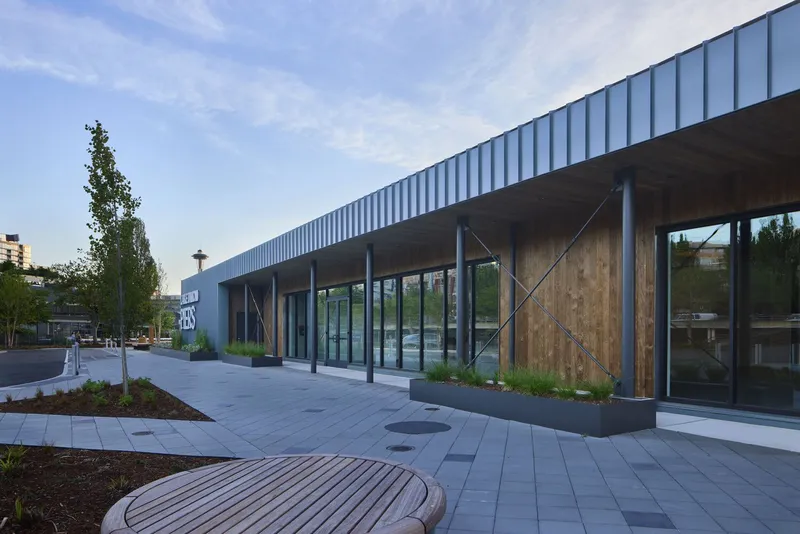
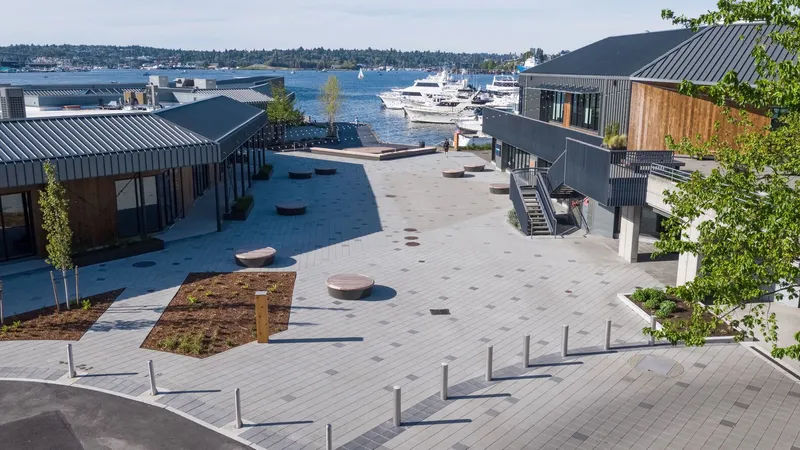
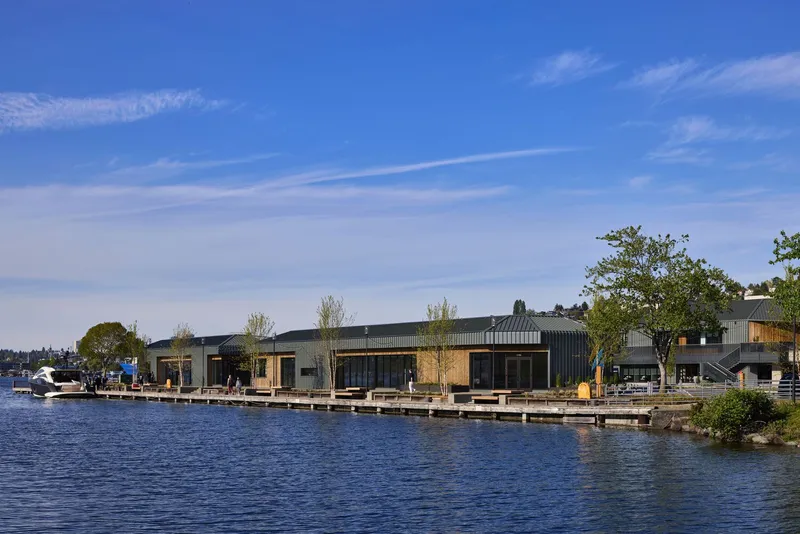
Formerly known as Chandler’s Cove, Lake Union Piers occupies a five-acre waterfront site at the southern edge of Lake Union. Instead of pursuing demolition and new construction, Vulcan Real Estate made the strategic decision to renovate and reuse three existing buildings from the 1980s, significantly reducing carbon emissions associated with material extraction and construction.
This commitment to reuse resulted in an estimated less than half the emissions that would have been generated by a comparable new development. The project reinforces Miller Hull’s long-standing belief in the environmental and cultural value of existing buildings, positioning adaptive reuse as one of the most effective tools in sustainable urban development.
Architectural Renewal and Public Waterfront Activation
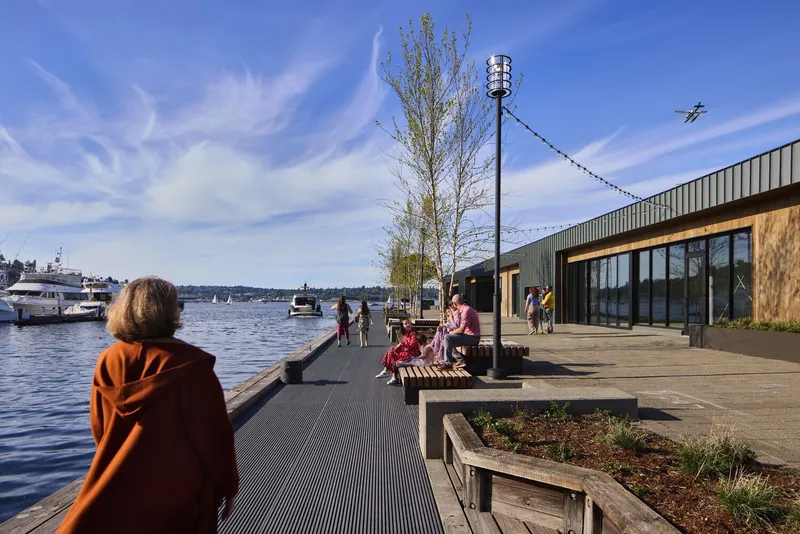
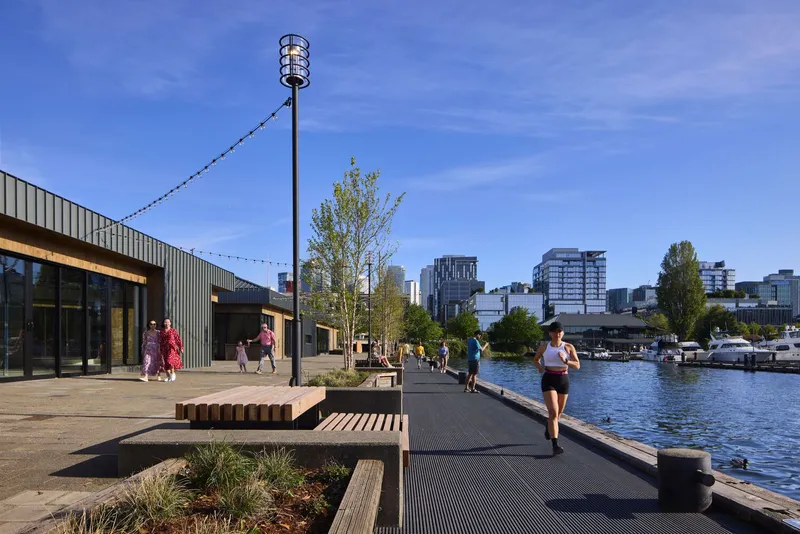
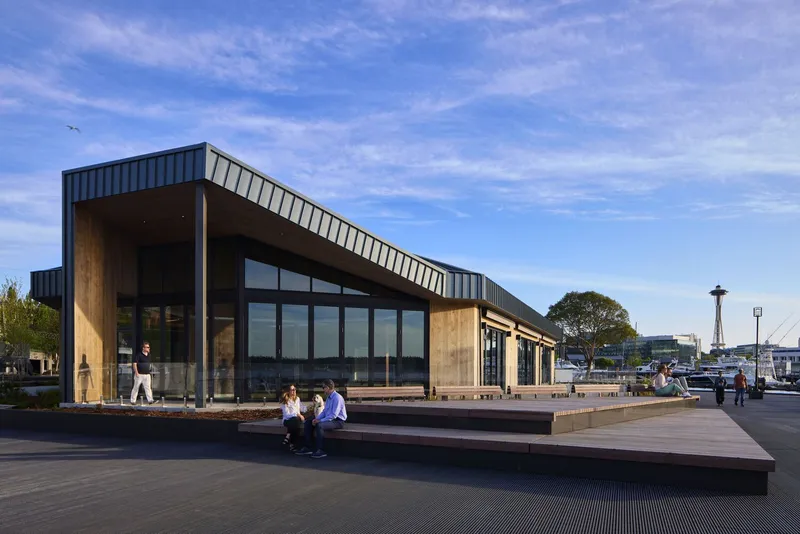
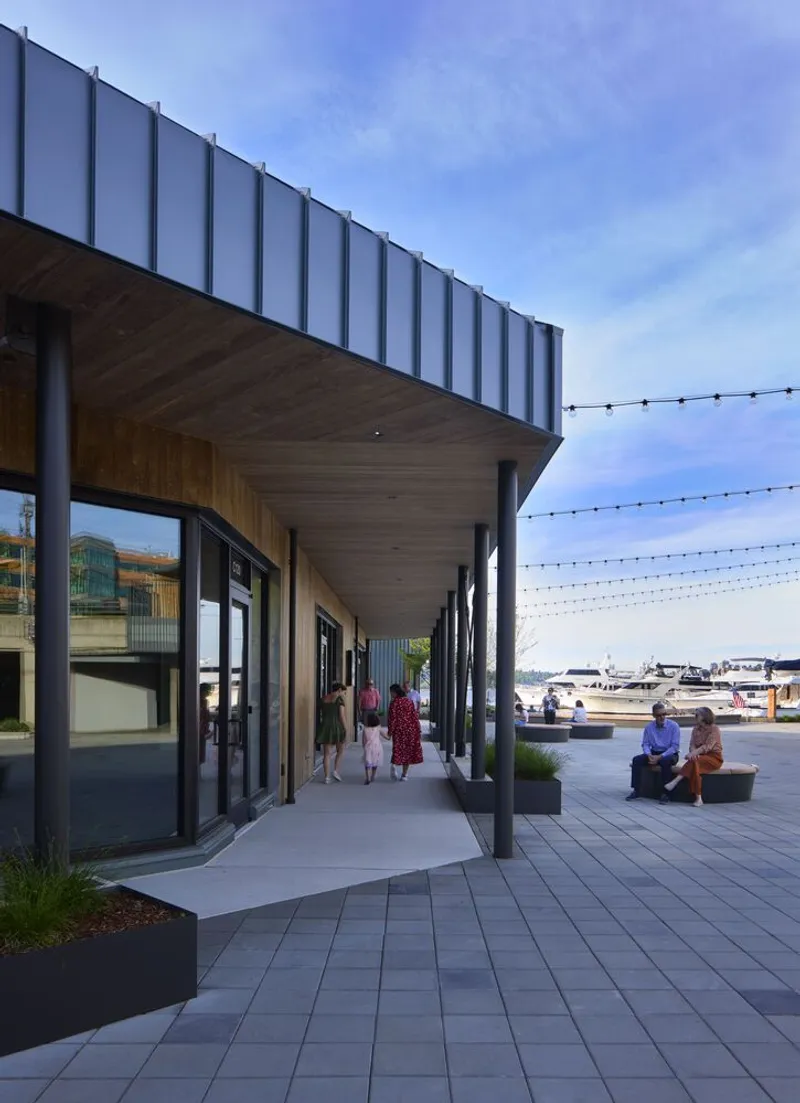
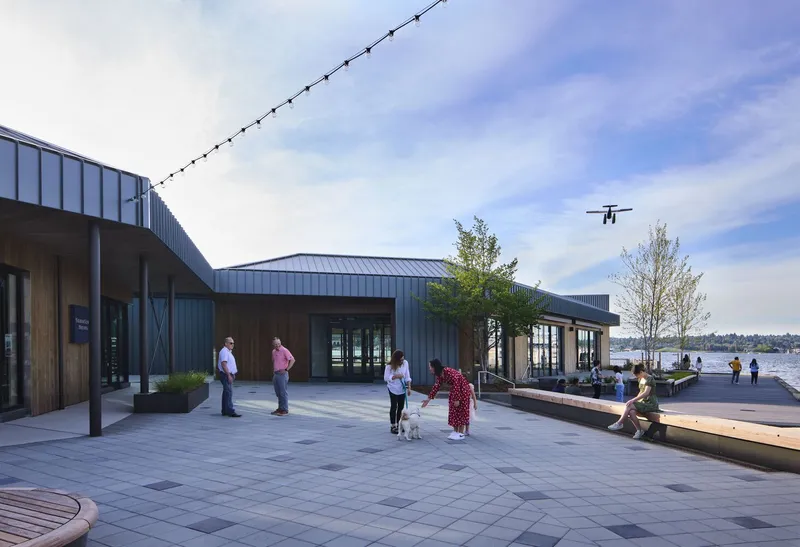
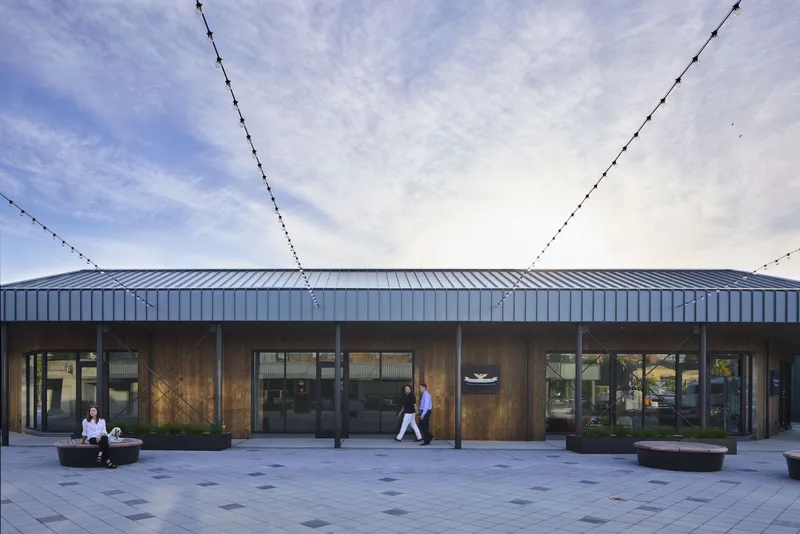
The renovation introduces a refined exterior palette of metal and wood, balancing durability with warmth while complementing the natural context of Lake Union. Outdoor patios, public walkways, and waterfront-facing gathering spaces were enhanced to strengthen the relationship between the architecture, the landscape, and the surrounding community.
Designed as a retail and entertainment hub, Lake Union Piers reactivates the waterfront as a publicly accessible destination, supporting dining, leisure, and social interaction. The architectural interventions prioritize openness, visibility, and environmental connection, transforming the once inward-looking complex into an inclusive civic asset.
A Model for Collaborative Sustainability
Beyond its architectural and environmental achievements, Lake Union Piers stands as a model for collaborative decarbonization in the construction industry. By aligning the values and commitments of architect, developer, and contractor, the project demonstrates that meaningful climate action requires shared accountability across disciplines.
Since launching EMission Zero, Miller Hull has offset one-third of the embodied carbon emissions from 26 built projects, totaling more than 41,000 metric tons of CO₂e. Lake Union Piers represents the first complete realization of this ambition, offering a replicable framework for future projects seeking carbon neutrality.
All photographs are works of Vulcan Real Estate, Ben Benschnieder



Popular Articles
Popular articles from the community


Play: Fragments of Their World
Familiar architecture becomes modular playground design, creating safe spaces where displaced children can learn, connect, imagine and play.

Co-life: Sustainable Architecture for Age-Friendly Community Living
Co-life reimagines sustainable architecture for seniors through courtyards, rammed earth, shared gardens, and spaces designed for belonging.

Co-Life: Senior Housing Design That Reconnects Older Adults With the City
Co-Life reimagines senior housing design through healing gardens, shared streets, workshops, and a sustainable community across generations.

Riyadh For All: Intergenerational Urban Design for Active Aging in Rabat
Riyadh For All reimagines urban design in Rabat with intergenerational co-living, adaptive courtyards, and Moroccan cultural exchange today.


Similar Reads
You might also enjoy these articles


Hodi-Mandai Geram
Project Function: Preservation and revitalization of the Intangible heritage and socio-spatial identity of the Hodi by Housing, Cultural Memory Center, Sacred Grove, landscape, local tourism economy


Olio Towers: A Mid-Rise for Performers That Fuses Housing, Rehearsal, and Stage
Located blocks from Houston's Theater District, this modular tower stacks living units around a central performance atrium.

Oasis: Modular Green Housing Carved into Dhaka's Urban Fabric
A shortlisted Plugin Housing entry reclaims unauthorized settlements in Dhaka with stepped concrete volumes, green roofs, and ventilation-driven design.

Black Hole: A Floating Megastructure for the Post-Physical Era
Emiliano Mazzarotto envisions a spherical, self-scaling arena where e-sports, digital hotels, and holographic stadiums replace traditional public space.


Explore Cultural Architecture Competitions
Discover active competitions in this discipline



Challenge to reimagine the Iron Throne


Photograph architecture without architects


Illustrate the lost glory of Angkor Wat - Render Challenge


Bring back Drive In's
Comments (0)
Please login or sign up to add comments
No comments yet. Be the first to comment!