
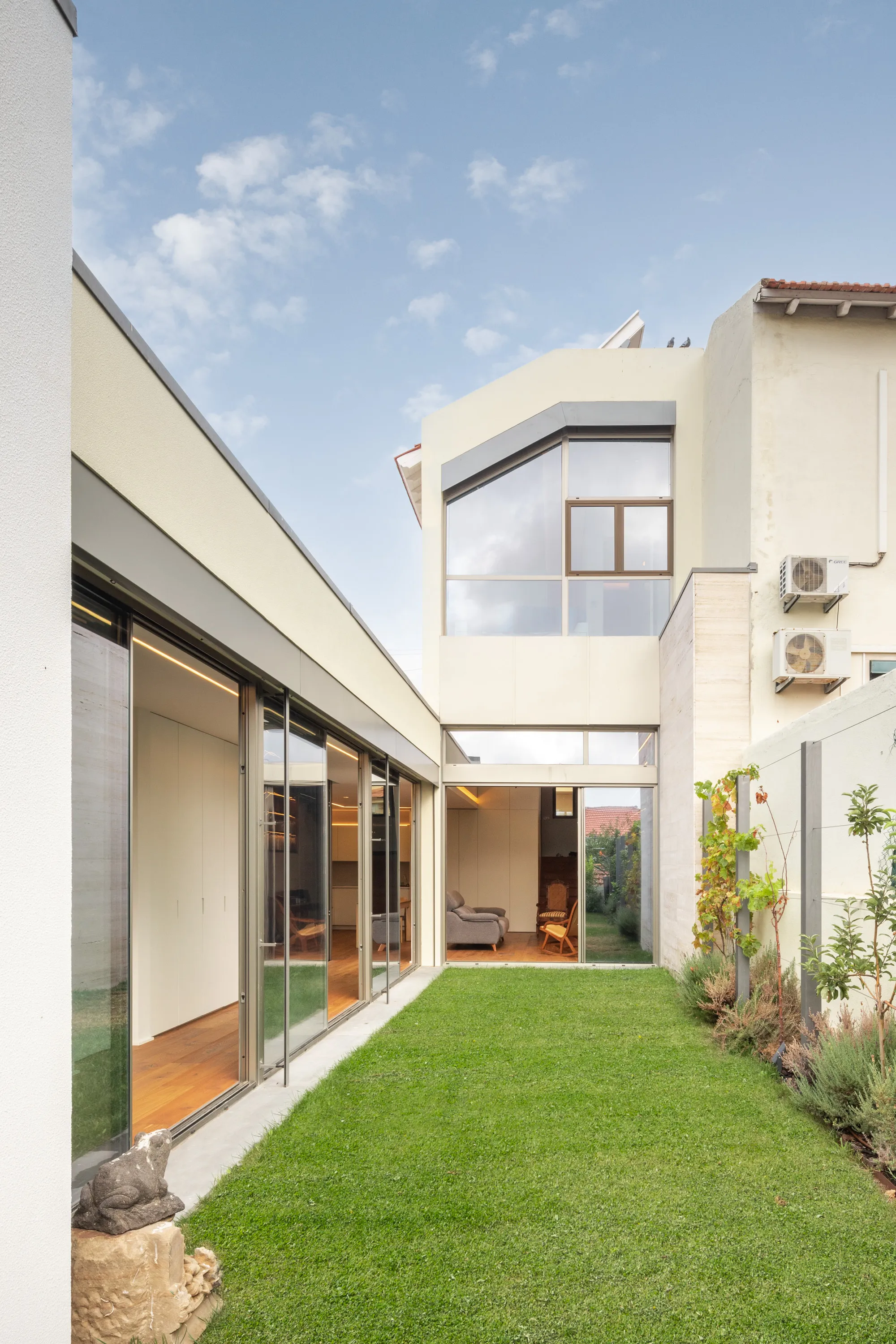
Empty Space Architecture Carves Courtyards Through a Lisbon House to Pull the Garden Inside
A 160-square-meter renovation in Lisboa reorganizes domestic life around planted courtyards and a double-height library wall.

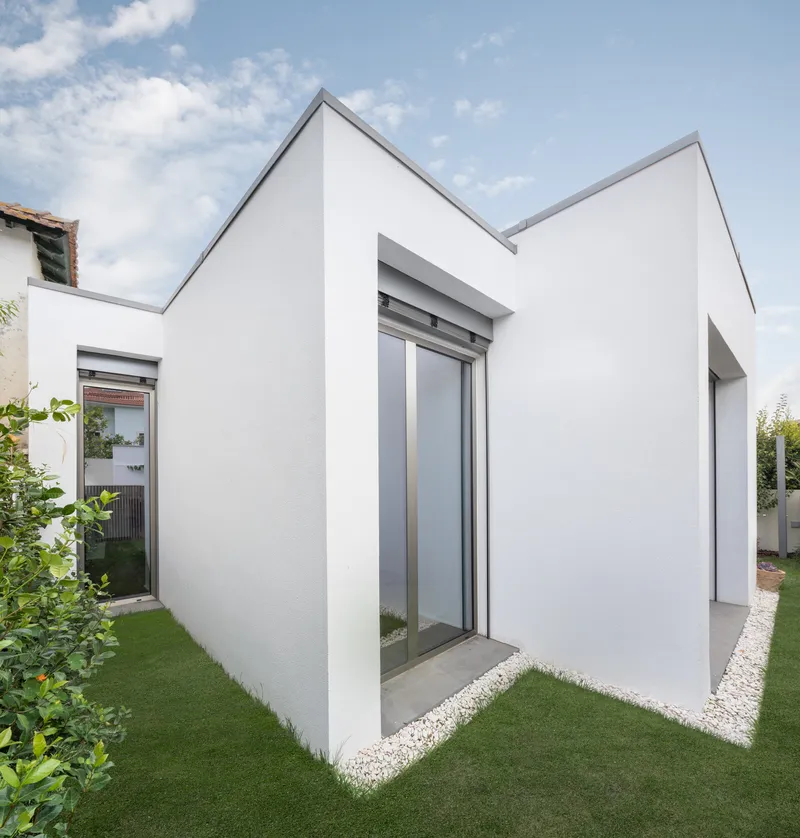
From the street, the KITKAT House in Lisboa reads as a quiet pair of white gabled volumes, almost unremarkable against the city's residential fabric. That restraint is deliberate. Empty Space Architecture, led by Luis Mendes, José Maria Santos, Ciriaco Ferreira, and Vera Pereira, took an existing house and chose to preserve its exterior image almost entirely, concentrating every move on a radical reorganization of what happens behind those rendered walls.
The real project is the void, not the solid. By expanding the lower level and threading courtyards between the two volumes, the architects broke a conventional floor plan into a sequence of indoor and outdoor rooms that feel far larger than 160 square meters. A double-height bookshelf wall anchors the interior and gives the house its sectional drama, while board-formed concrete, timber decking, and floor-to-ceiling glass create a material palette that shifts cleanly between old and new.
Two Volumes, One Lawn
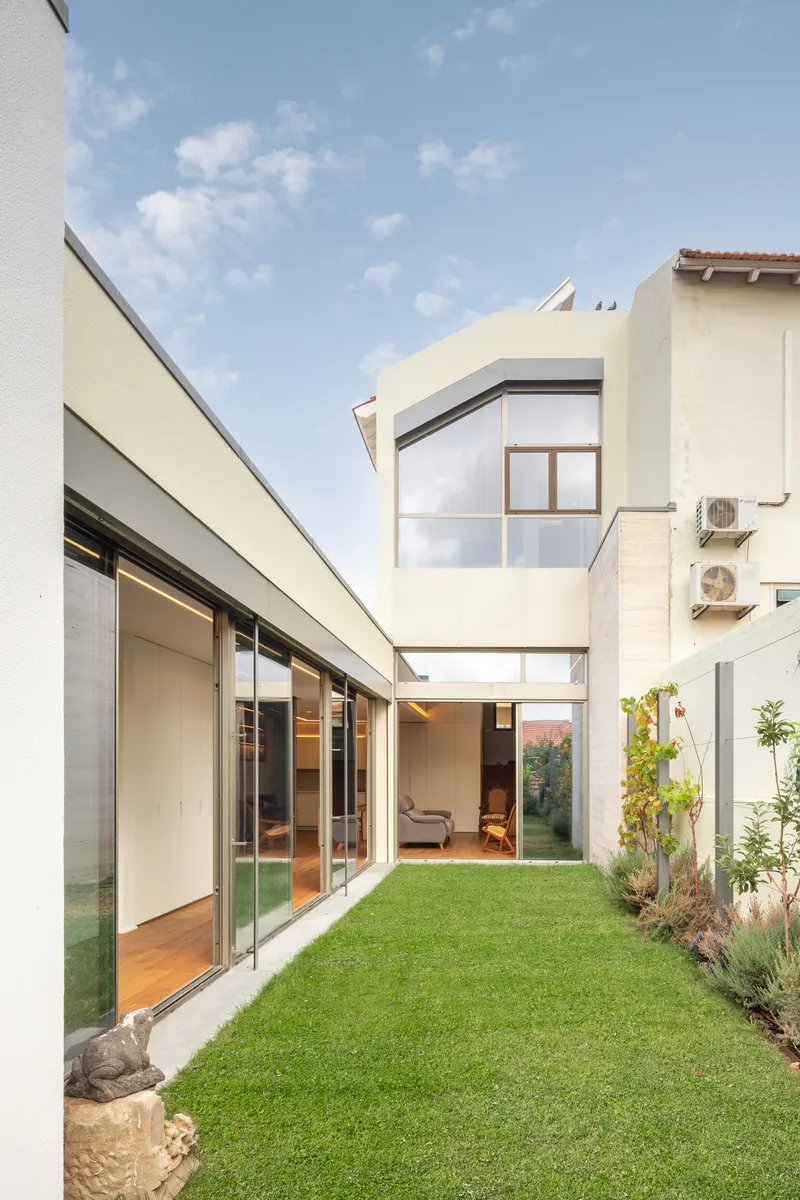
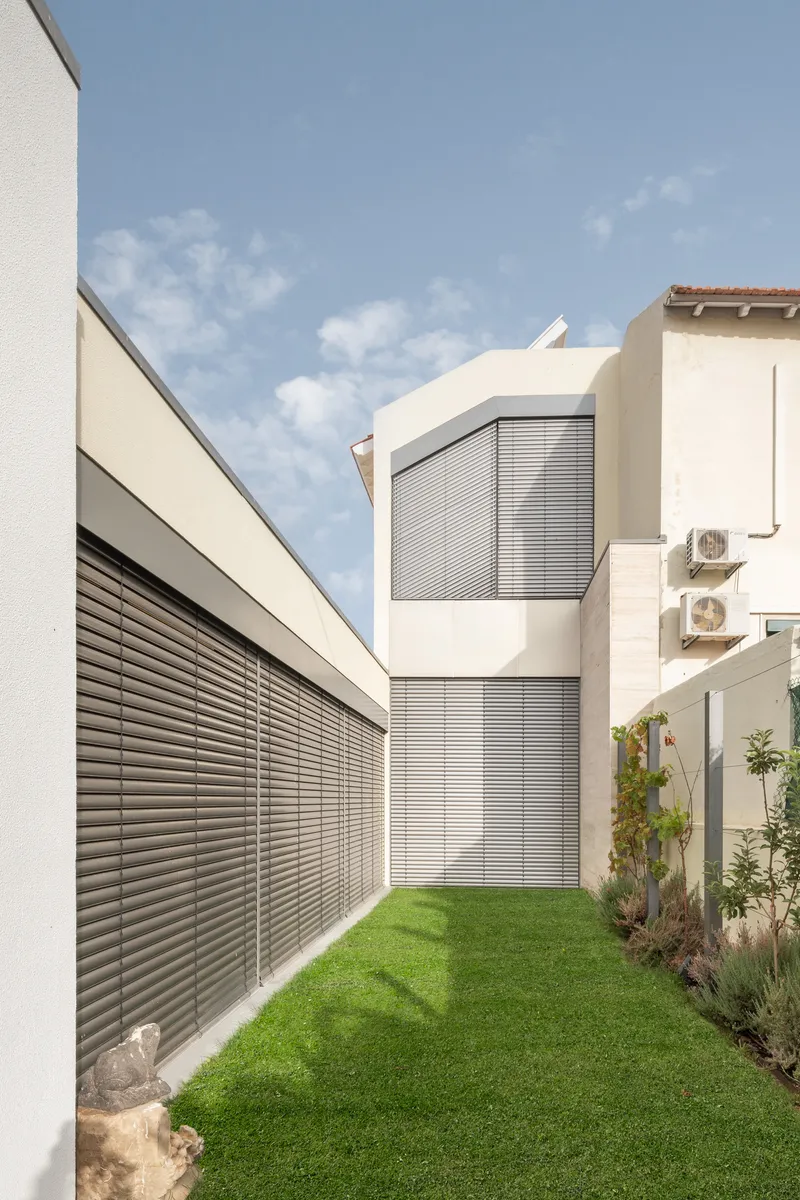
The house splits into two white stucco volumes joined by a connecting element that is more void than mass. A grass courtyard sits between them, open to the sky and framed on both sides by full-height glazing. Horizontal louvers screen the facades where privacy is needed, but the dominant gesture is transparency: each wing looks directly into the other through the lawn.
This is a domestic plan organized around the gap between buildings rather than the buildings themselves. The approach gives every major room at least two orientations, one inward to the courtyard and one outward to the garden, which eliminates the corridor-lit gloom that plagues many Lisbon row-house renovations.
The Library Wall

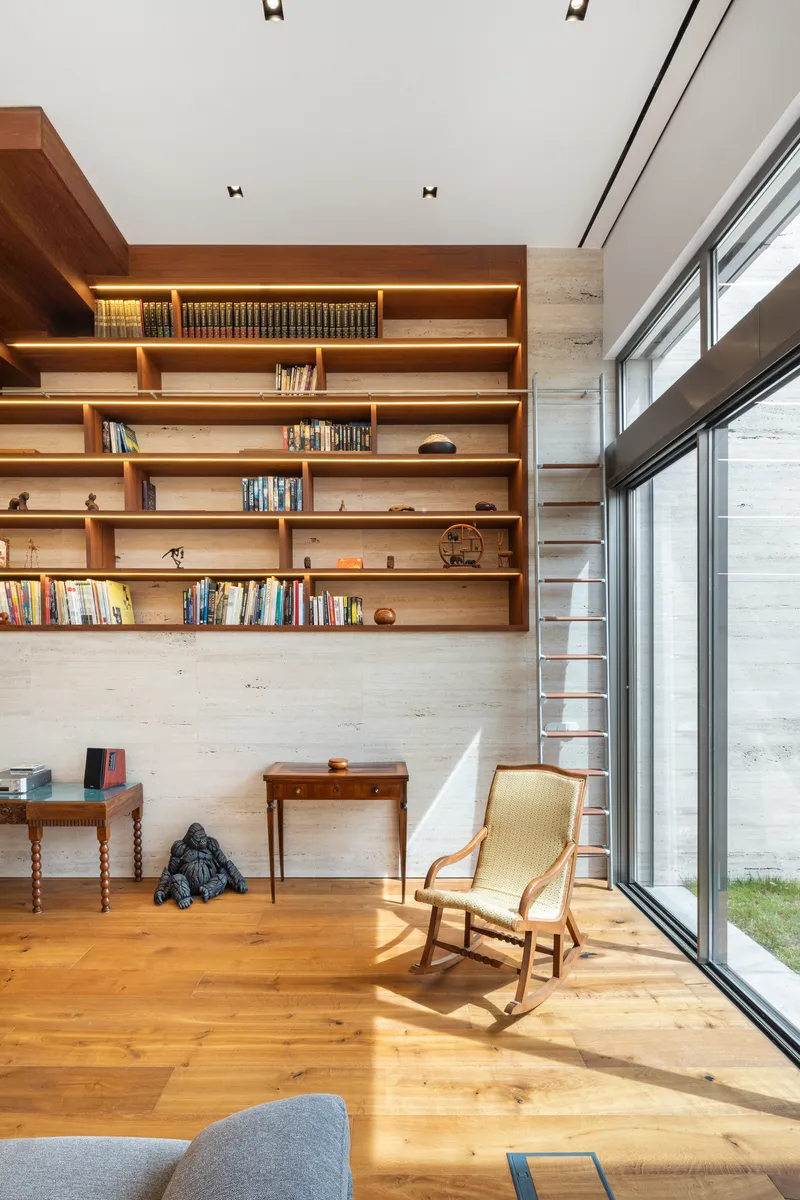
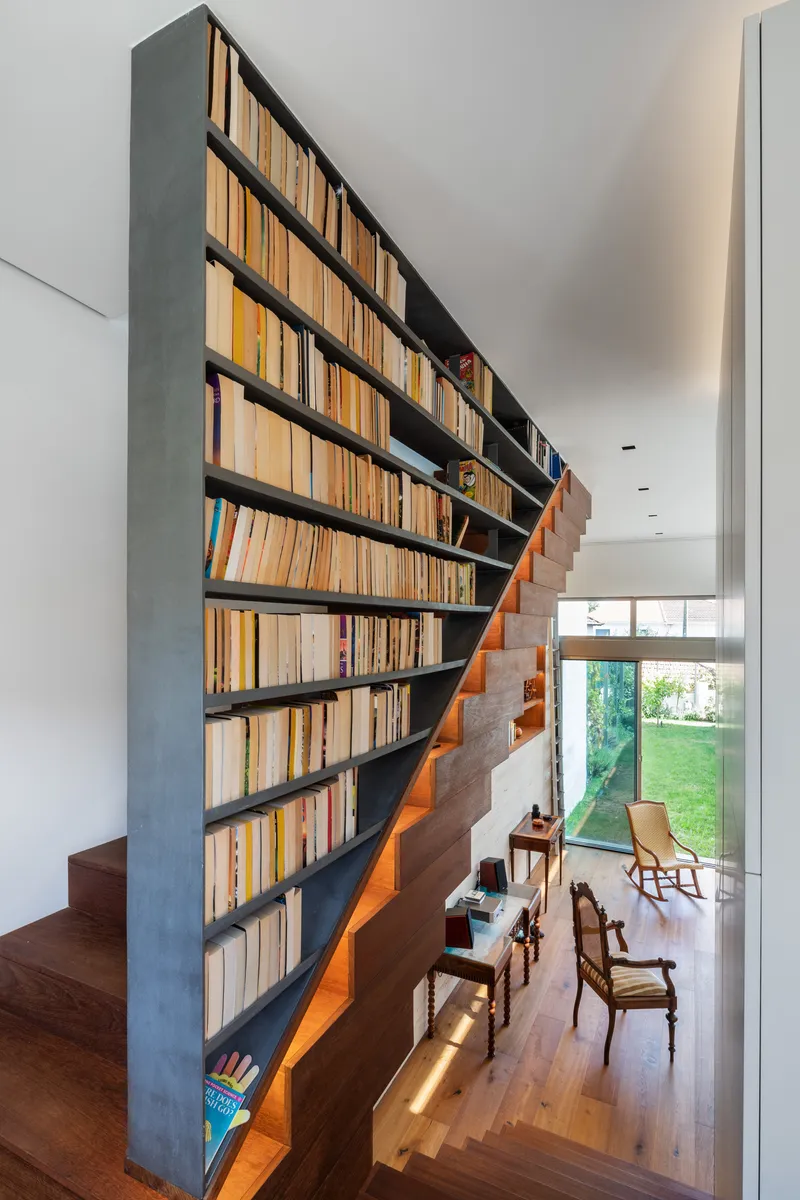
The double-height bookshelf wall is the project's signature section. Floor-to-ceiling timber shelving rises beside a floating staircase, with a rolling library ladder providing access to the upper reaches. Integrated lighting washes the spines of books and the wide-plank oak flooring below, turning what could be simple storage into the spatial event that organizes the whole house.
Viewed from the upper level, the staircase cantilevering past the shelves reads as a piece of furniture at an architectural scale. The tall glazed wall beside it pulls the courtyard lawn into direct conversation with the books, so the library is never a closed room. It is, instead, a threshold between the house's public life and the garden.
Living Through the Section
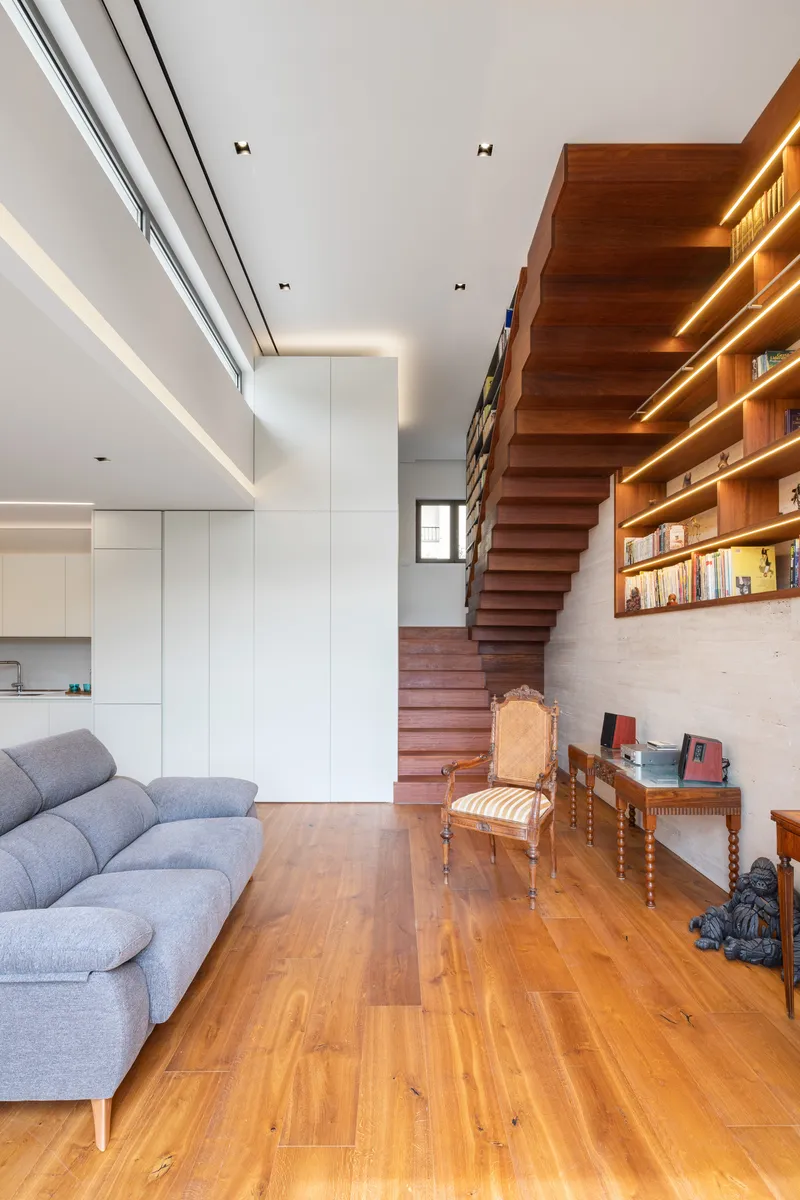
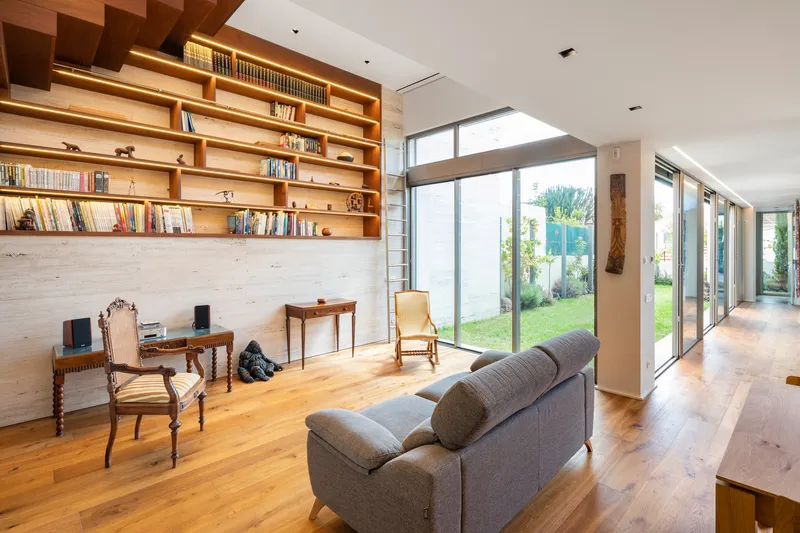
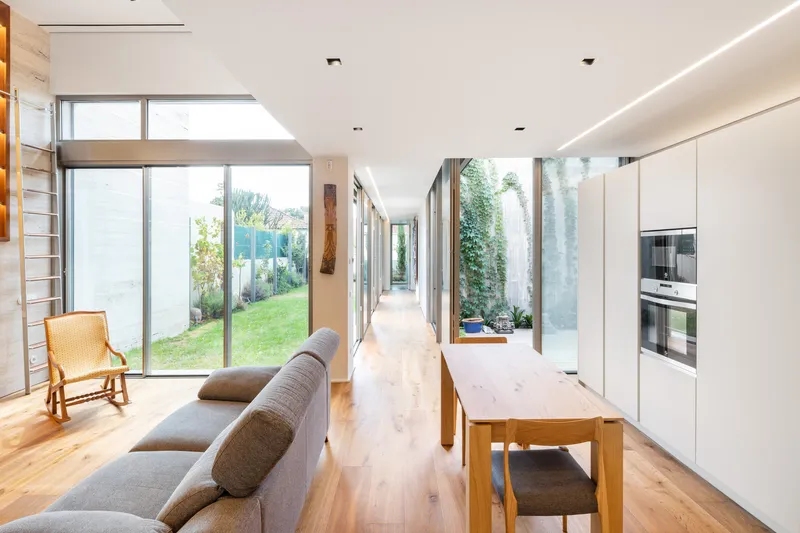
The living and kitchen zones occupy a long, open plan connected by a corridor that threads past planted courtyards on both sides. Clerestory windows above the kitchen bring light deep into the plan where the courtyard glazing alone cannot reach. The white handleless cabinetry is deliberately recessive; the architects clearly want your eye pulled to the timber, the concrete, and the garden beyond, not the appliances.
Expanding the lower level was the key structural decision here. It allowed the living spaces to step down into the sloping site, gaining ceiling height and direct garden access that the original house apparently lacked. The result is a staggered section where you descend into the social heart of the house rather than ascending to it.
Board-Formed Concrete and Planted Thresholds

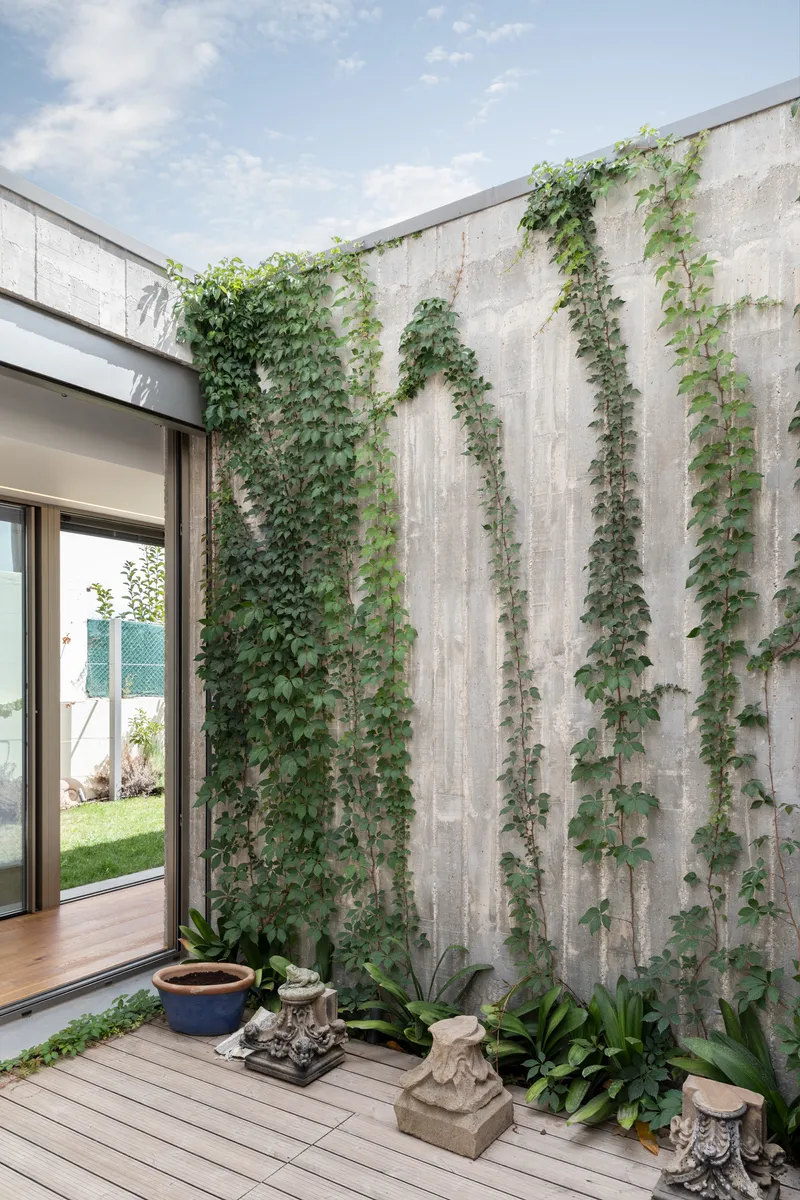
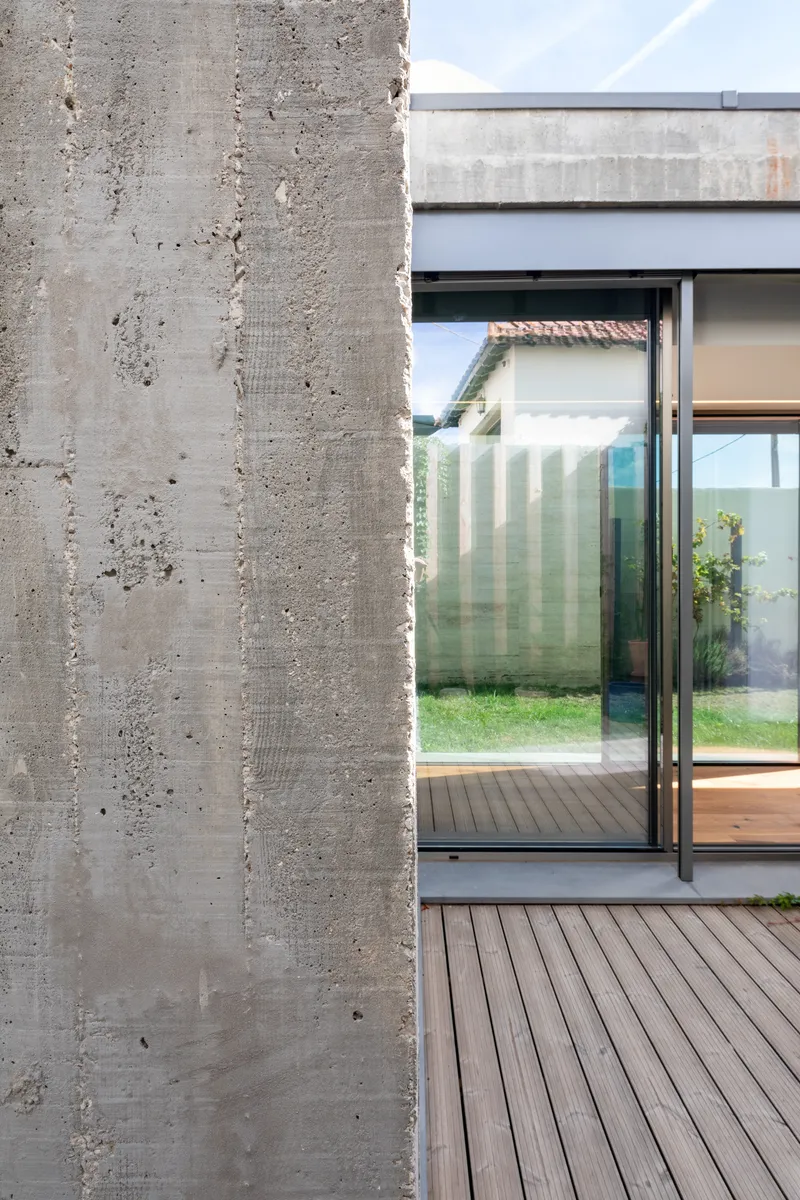
Where the new structure meets the old, the material shifts from white render to board-formed concrete. The grain of the formwork is legible on every surface, giving these walls a deliberate roughness that contrasts with the smooth stucco of the original volumes. Climbing vines are already colonizing the concrete, a soft acknowledgment that the new additions are meant to be absorbed by the landscape over time.
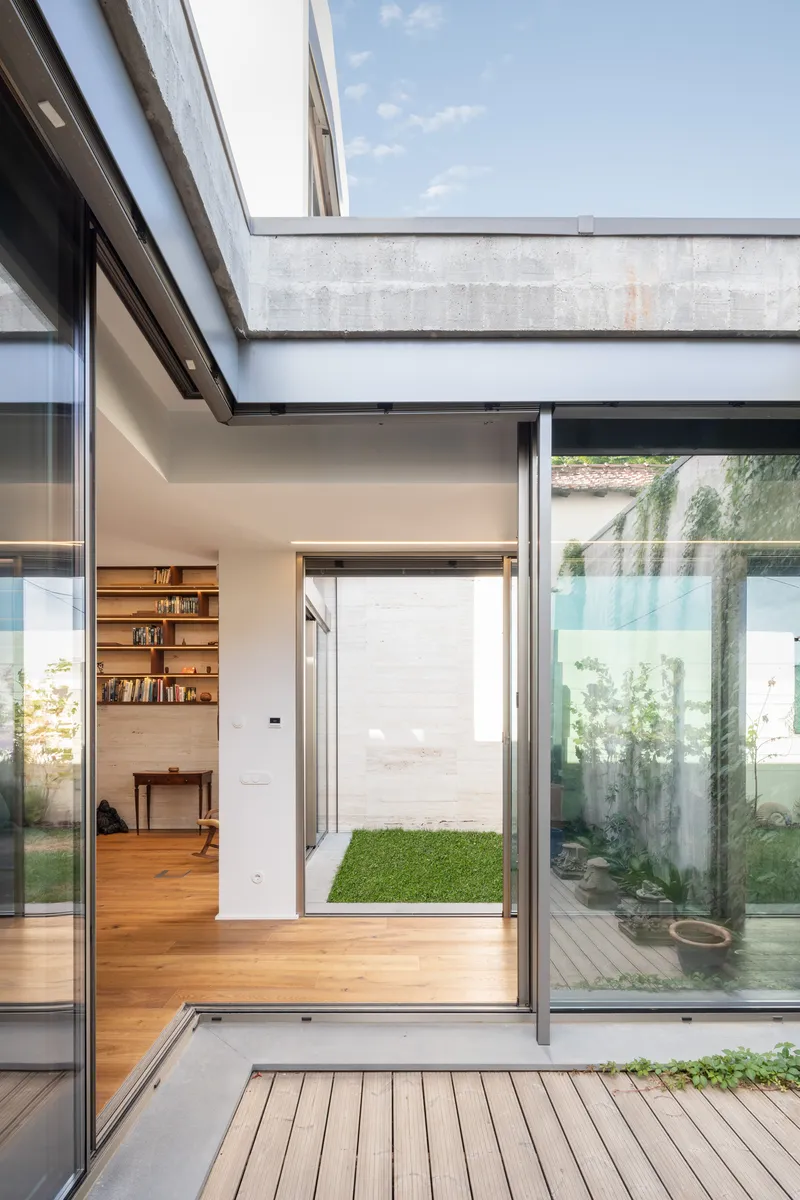
Timber-decked courtyards sit at the base of these concrete walls, creating outdoor rooms that are sheltered from wind but open to the sky. They serve as secondary light wells for the lower level and as planted buffers between the house and its boundaries. The detailing at the junction of concrete, glass, and timber is clean without being precious: flush thresholds, minimal frames, and a restrained color palette of grey, white, and warm oak.
Courtyards as Connective Tissue
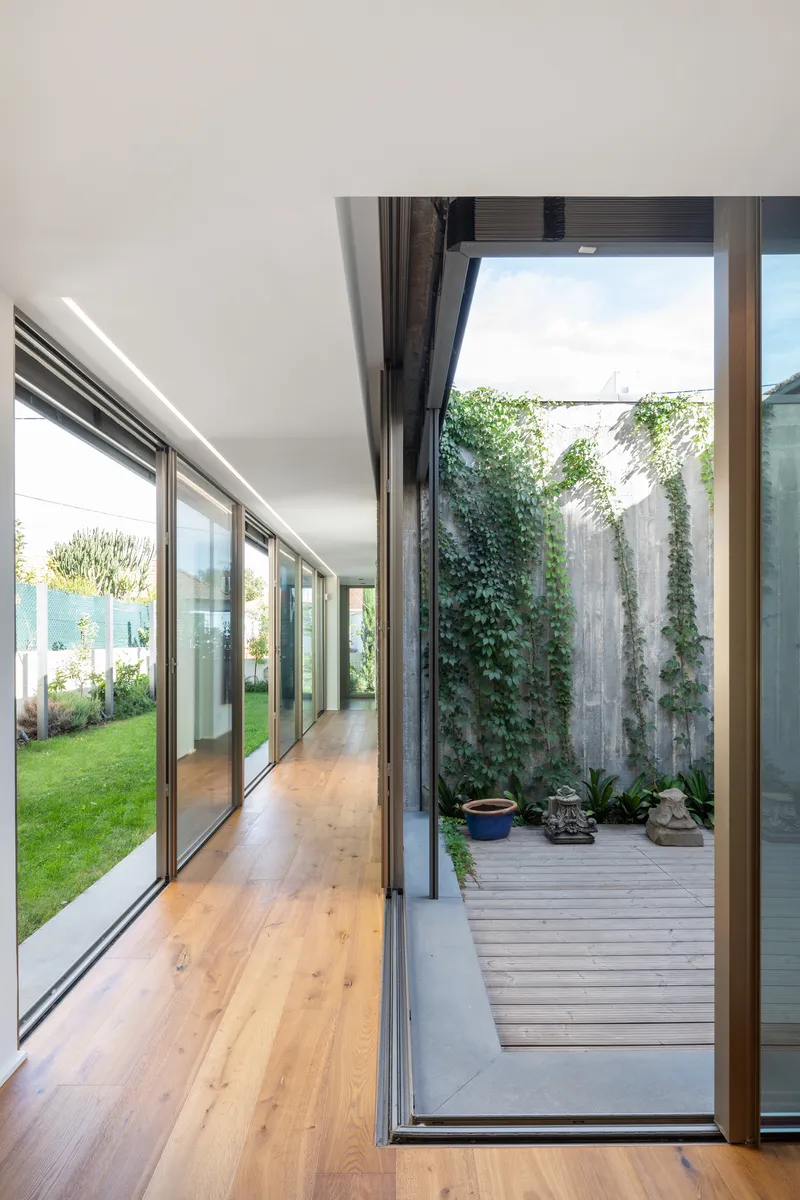
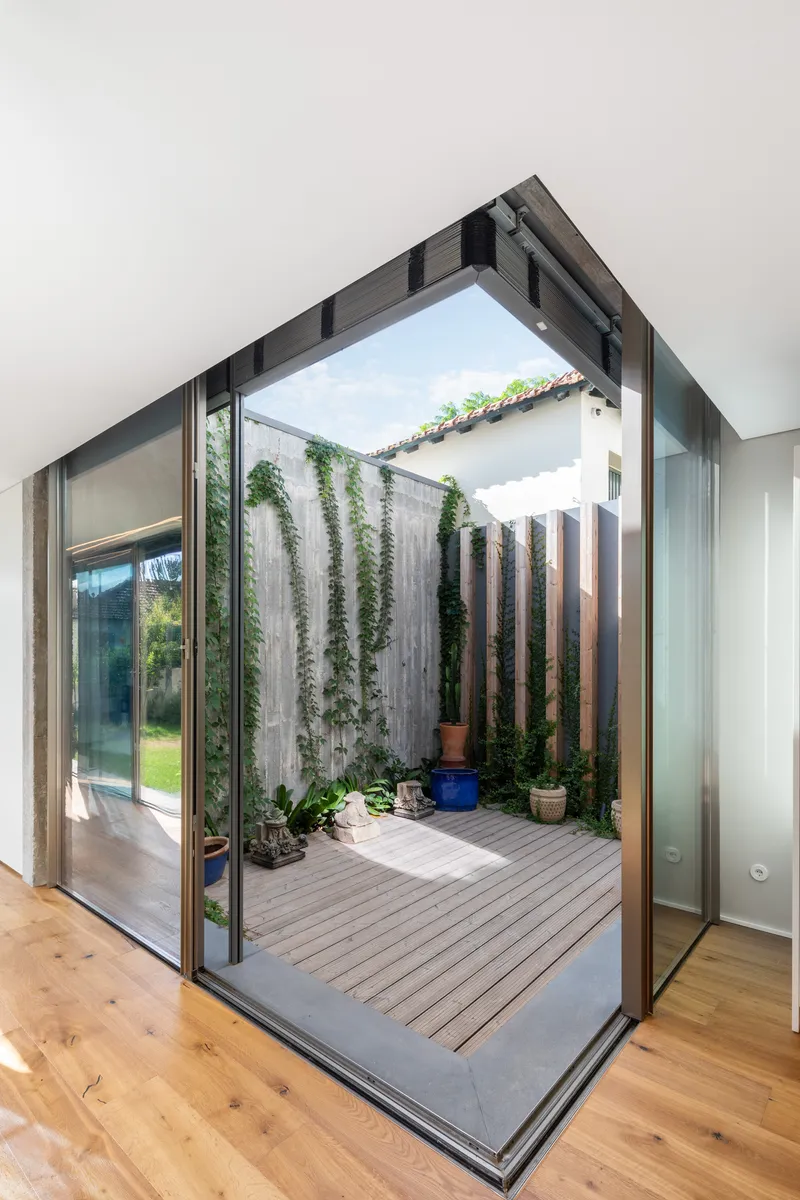
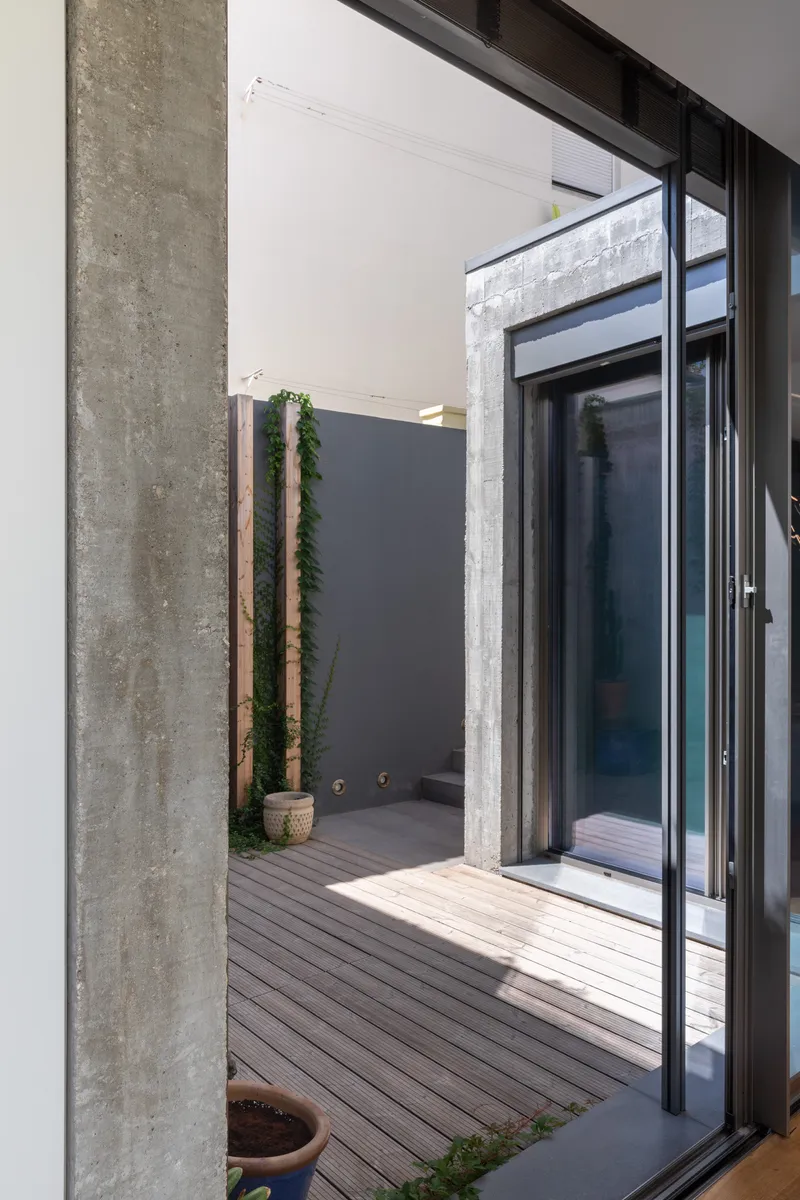
The smaller courtyards scattered through the plan are not leftover spaces. They are the project's structural logic made visible. Each one pulls light into the lower floor, ventilates the deep plan, and provides an intimate garden experience distinct from the main lawn. Potted plants, climbing vines, and exposed concrete columns give these voids a character somewhere between a Portuguese quintal and a Japanese tsuboniwa.
Sliding glass walls dissolve the boundary between corridor and courtyard. In summer, these rooms effectively double the living area by becoming extensions of the interior circulation. The timber flooring continues through the glass line onto the decking, reinforcing the idea that inside and outside are a single continuous surface interrupted only by weather.
The Exterior Stair and Site Strategy
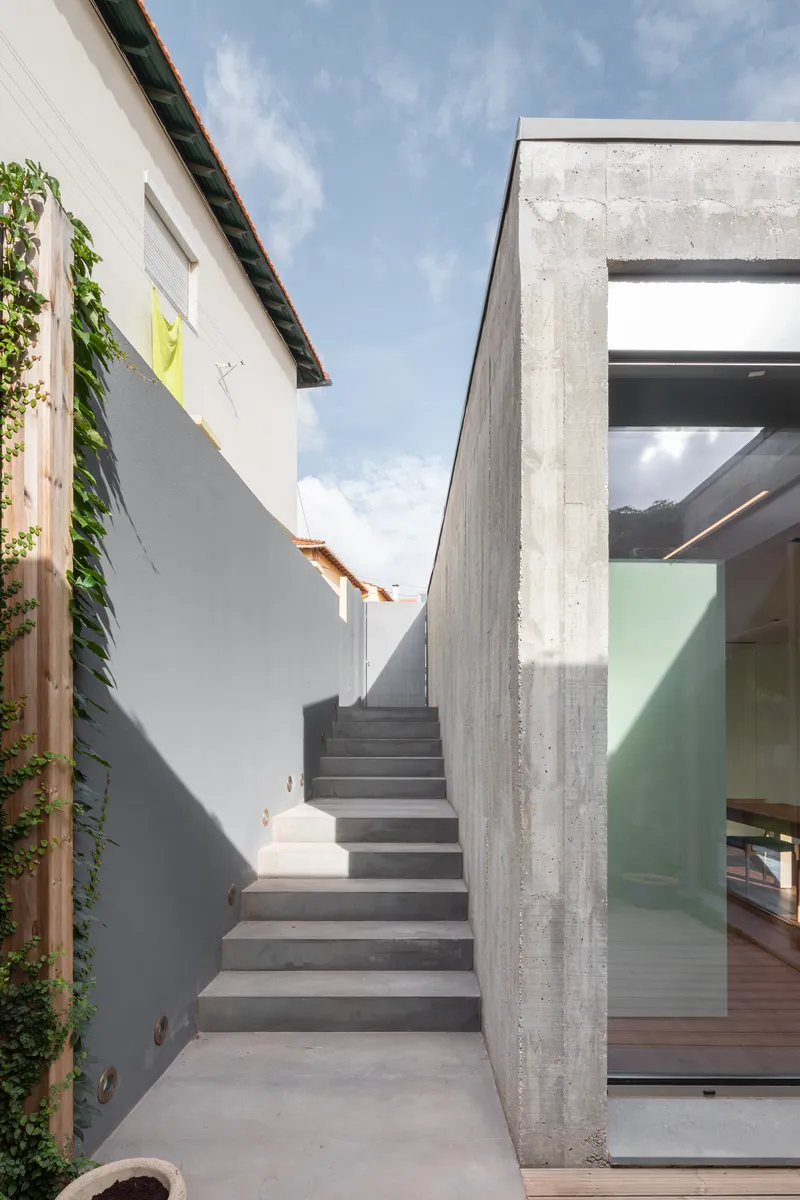
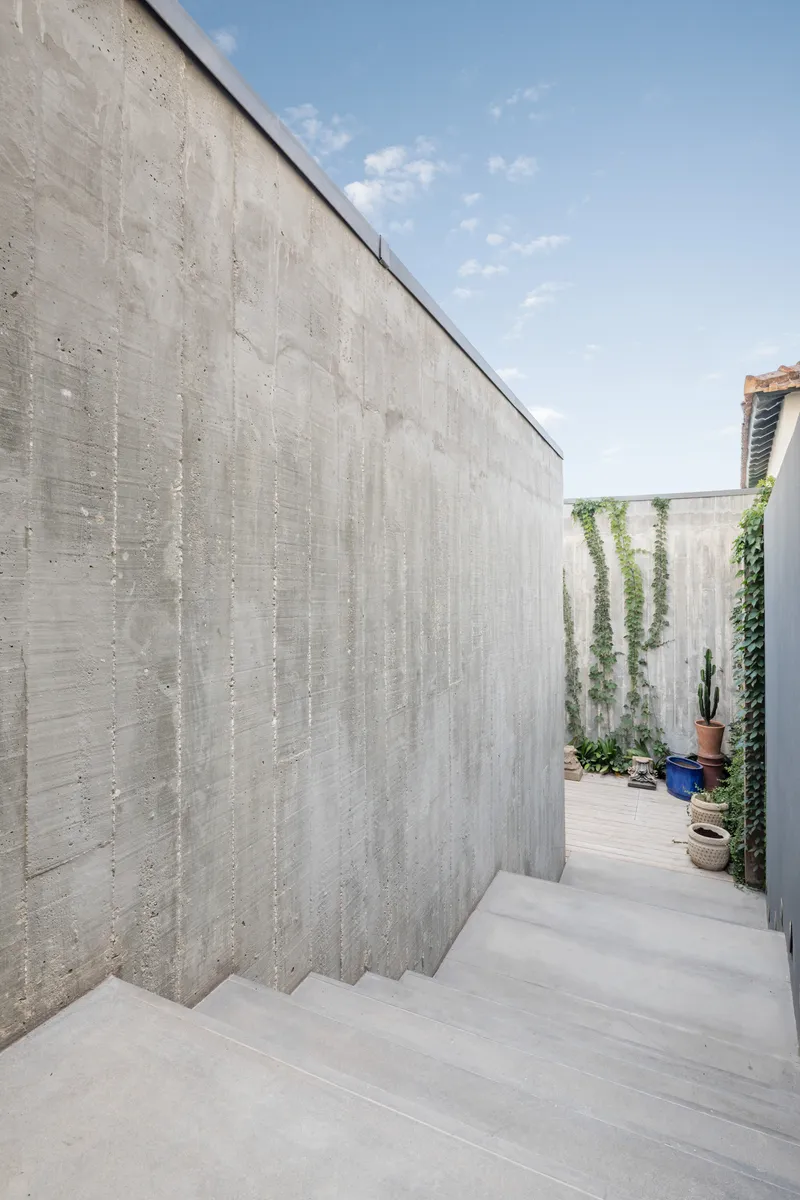
An exterior concrete staircase descends between the board-formed walls and the existing white rendered building, connecting the upper garden level to the expanded lower floor. The stair is deliberately exposed to the elements, positioned where it mediates between the old house and its new addition. It reads as infrastructure rather than architecture, a functional piece that makes the section work.
The concrete beam spanning above the timber deck on the lower level reveals the structural gymnastics required to open the facade to full-height glass. Structural engineer Marco Caixa's work is visible in these moments: the deep beam, the slender column, and the cantilevered slab above all contribute to an openness that the original house's load-bearing walls could never have achieved.
Interior Details
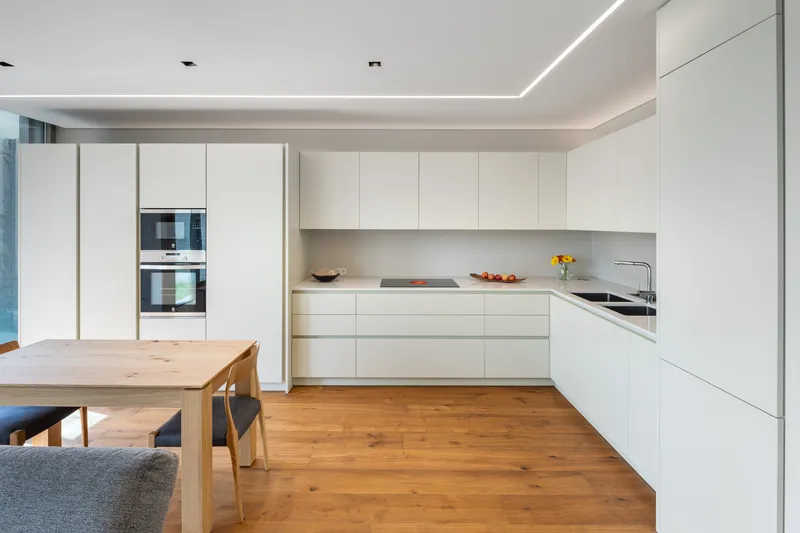
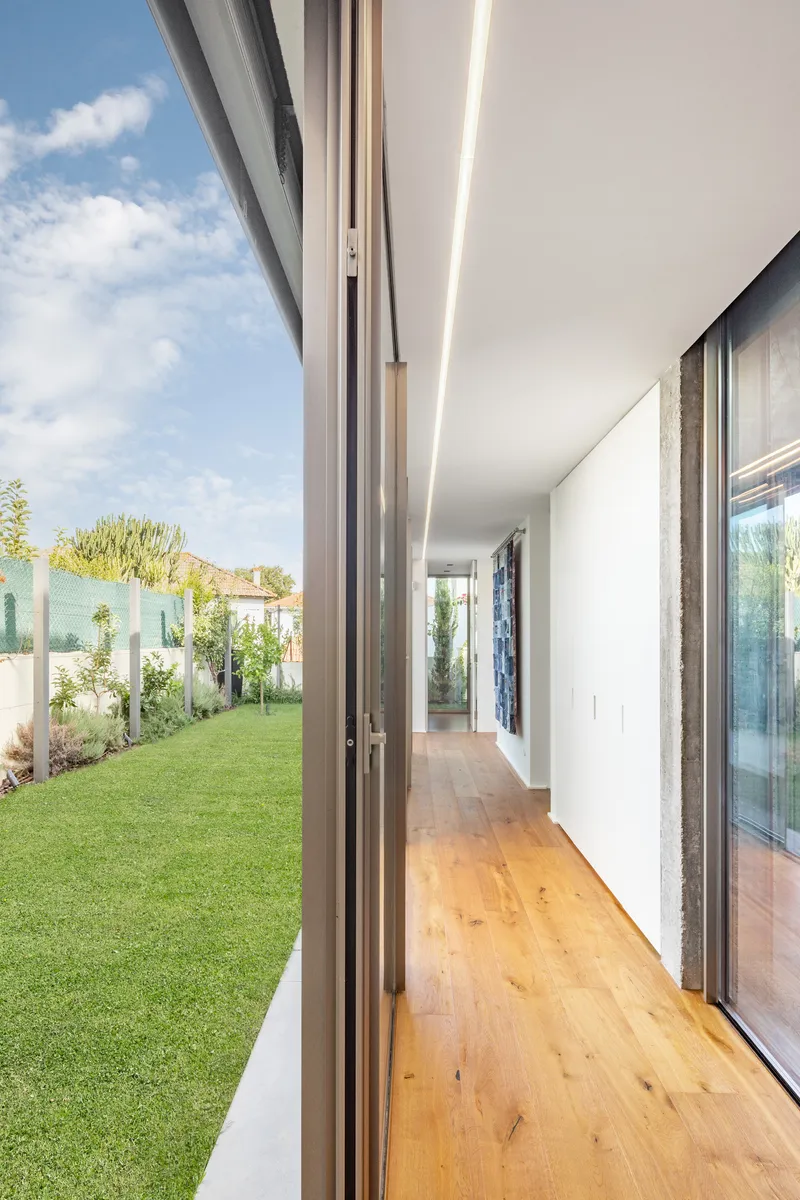
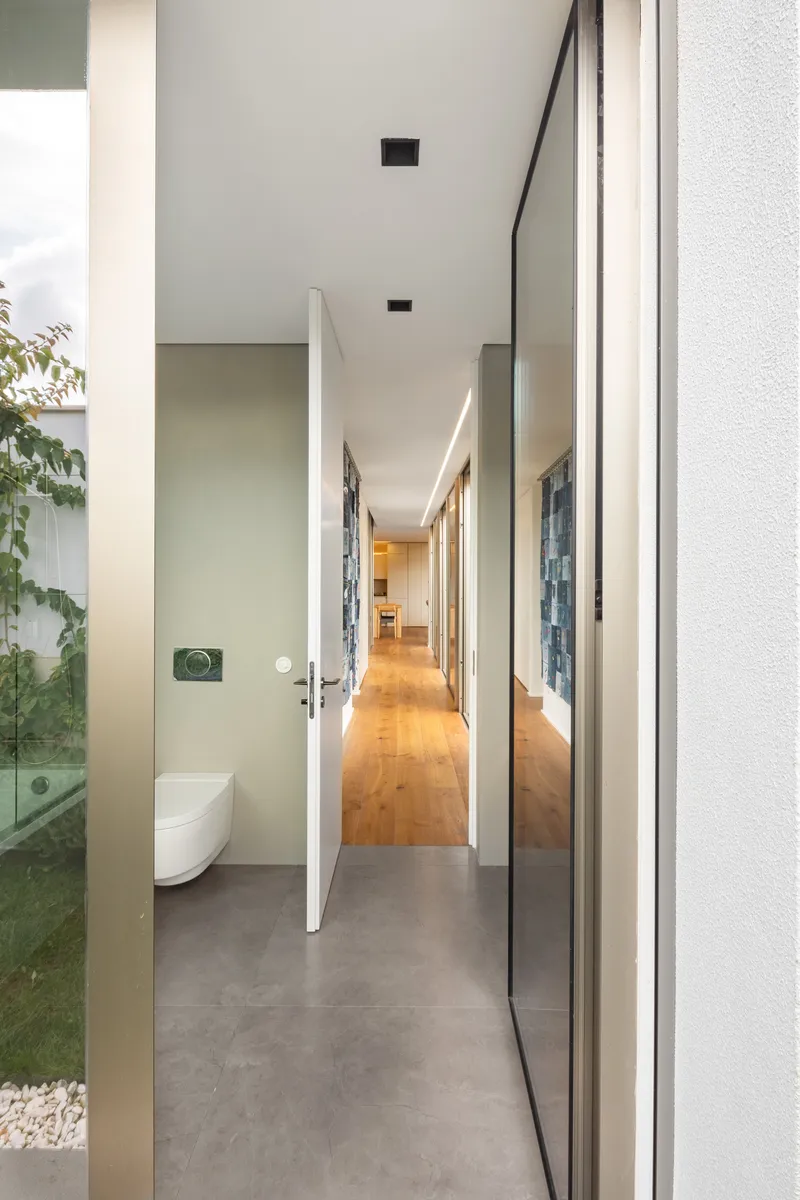
The kitchen's continuous cove lighting and handleless fronts produce a calm, gallery-like atmosphere that relies on material warmth rather than decorative effort. Oak timber floors run through every interior space, their wide planks providing a consistent datum that ties together rooms of very different character, from the polished concrete corridor outside the bathroom to the sunlit library.
Corridors are treated as inhabited spaces rather than circulation leftovers. Sliding glass walls, planted views at both ends, and generous widths mean that even the most transitional moments in the plan offer something to look at. The house never asks you to hurry through.
Plans and Drawings

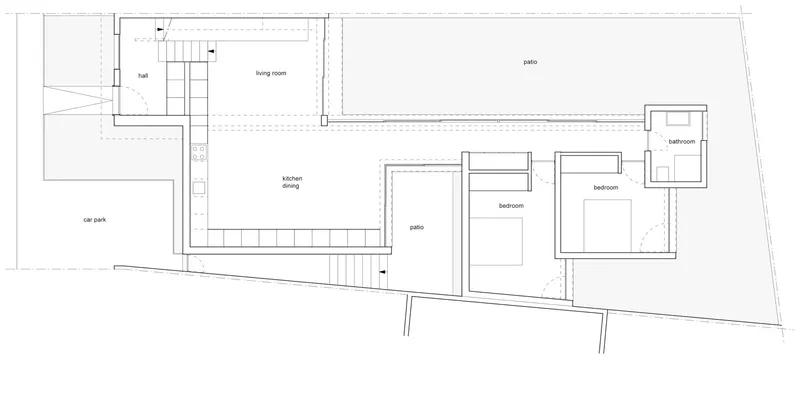
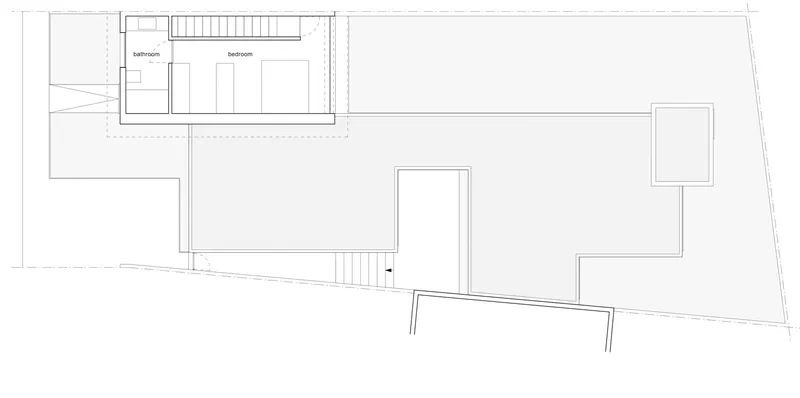
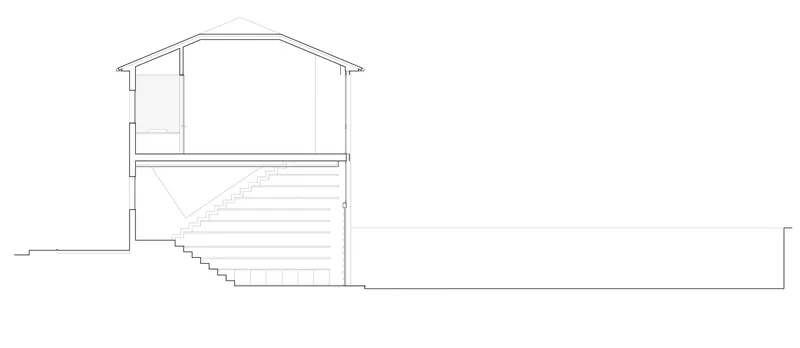
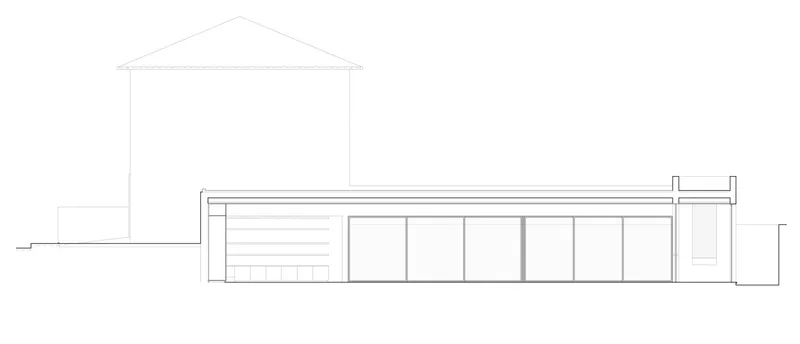
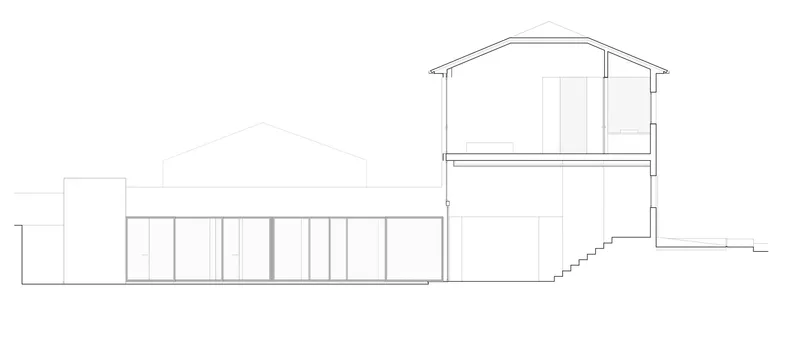
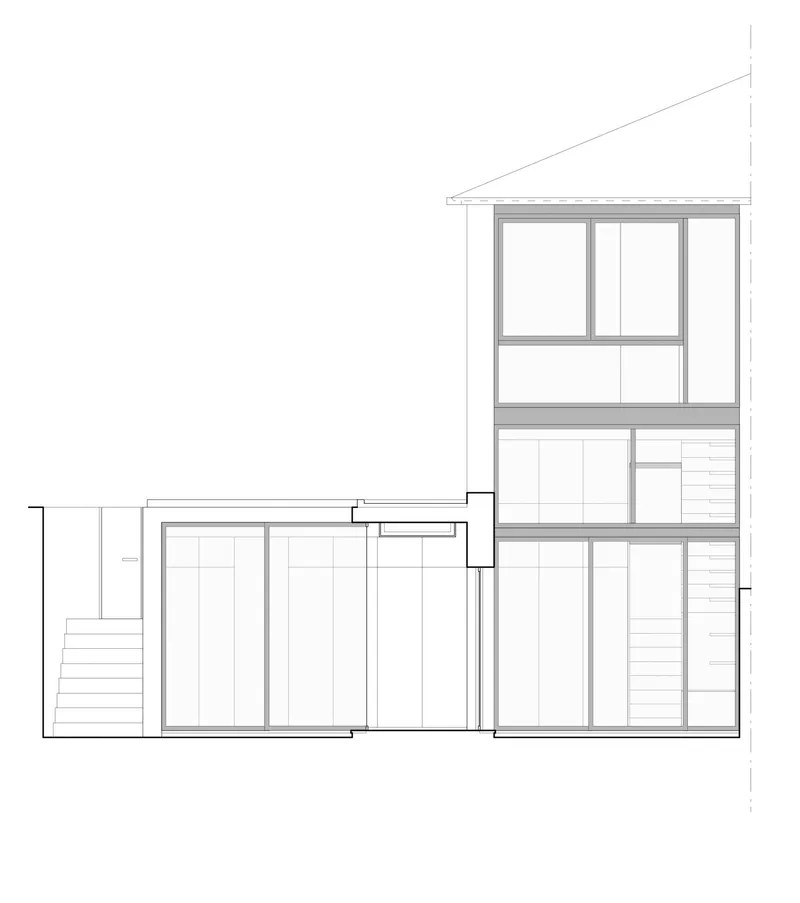

The floor plan confirms what the photographs suggest: living spaces wrap around two distinct patio areas, with a car park tucked to one side. The roof plan shows the two gabled volumes joined by a flat connecting element, and the sections reveal the staggered floor plates that make the lower level expansion legible. The elevations are restrained, almost deceptively simple, a low horizontal wing with glazed openings adjoining the pitched-roof structure. The sections do the real storytelling here, showing how the house steps down the slope and opens its full height to the courtyards.
Why This Project Matters
Renovation projects in Lisbon too often fall into one of two traps: either they gut the existing building and insert a generic open plan, or they preserve the shell so reverentially that the interior remains dark and disconnected from its site. The KITKAT House avoids both. By keeping the exterior volume nearly unchanged and concentrating every intervention on the section, the courtyards, and the relationship between the two levels, Empty Space Architecture produced a house that looks familiar from the outside and feels genuinely inventive inside.
The lesson here is about economy of means. A limited material palette, a clear structural strategy for opening the lower level, and a willingness to carve voids rather than add mass turned a conventional Lisbon house into something that feels twice its 160 square meters. The courtyards are not decorative; they are the project's engine, pulling light, air, and garden life into every room. That move, quiet as it appears, is the one worth studying.
KITKAT House by Empty Space Architecture. Lisboa, Portugal. 160 m². Completed 2022. Photography by Attilio Fiumarella.
About the Studio
Share Your Own Work on uni.xyz
If projects like this are the kind of work you want to make, uni.xyz is a place to publish your own, find collaborators, and enter design competitions.




Popular Articles
Popular articles from the community

Wiyoga Nurdiansyah Composes Three Volumes into a Quiet Family Compound in South Jakarta
RJH House splits domestic life across a cube, a cylinder, and a service block, laced together by courtyards and raw concrete.
DIM Architecture Studio Revives the Iranian Courtyard Inside a Mashhad Apartment Building
A 2,500-square-meter mid-rise infill project reinterprets the traditional hashti and central courtyard within the dense urban fabric of Mashhad, Iran.
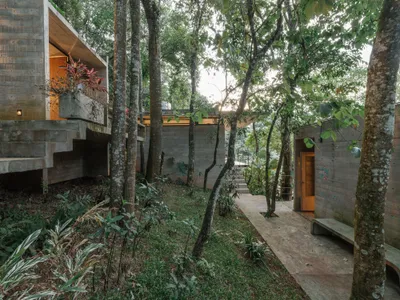
Terra e Tuma Scatters Four Concrete Pavilions Through the Atlantic Forest in Mairiporã
A fragmented compound of music studio, art studio, chapel, and living quarters preserves every tree on a steep forested hillside near São Paulo.


The Memory of World: Skyscraper Architecture as a Vertical Exhibition of Human Civilization
A vertical museum in Hong Kong transforms skyscraper architecture into a journey through six eras of humanity, nature, memory, and progress.


Similar Reads
You might also enjoy these articles
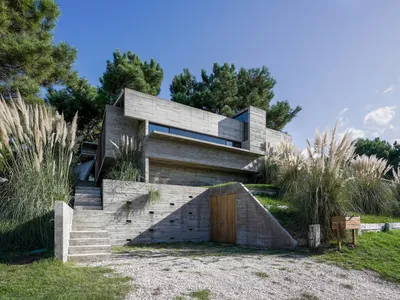
Loma House by Besonias Almeida Arquitectos: Modern Coastal Living in Costa Esmeralda
Loma House by Besonias Almeida Arquitectos is a modern coastal home in Costa Esmeralda, blending exposed concrete, wood, and natural dunes.
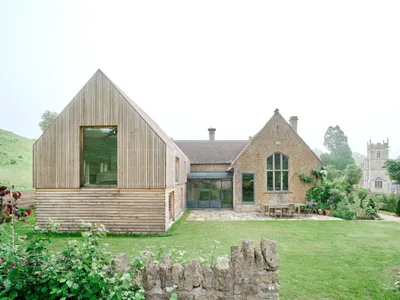
“Pitcombe’s Old School House Renovation by Bindloss Dawes: Blending Heritage and Contemporary Design”
Bindloss Dawes transformed Pitcombe’s 19th-century Somerset schoolhouse with a sustainable timber extension, blending historic charm, contemporary design, and panoramic countryside views.
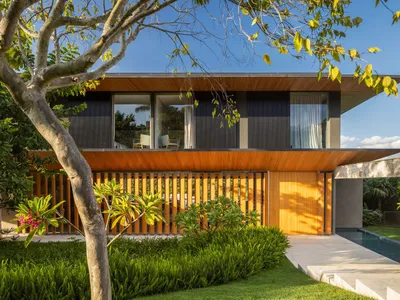
F3 Residence by Belluzzo Martinhão Arquitetos: Contemporary Luxury in São Paulo’s Countryside
F3 Residence in São Paulo blends contemporary design, natural materials, multigenerational living, hillside integration, expansive glass, infinity pool, and seamless indoor-outdoor flow.
Private Villa in Ubud by BAMM ARCHITECTS: Contemporary Design Amidst Bali’s Jungle
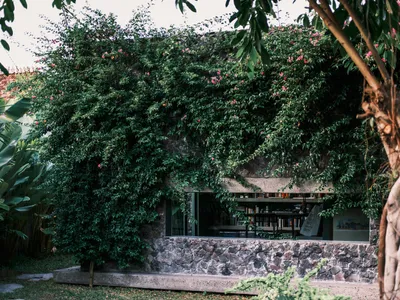
Private Villa in Ubud blends contemporary design with tropical landscape, featuring open-air pavilion, stone and wood materials, suspended master bedroom, and jungle pool views.


Explore Residential Building Competitions
Discover active competitions in this discipline




The Global Benchmark for Architecture Dissertation Awards


Challenge to design public laboratory


Challenge to design mud housing for contemporary communities
Comments (0)
Please login or sign up to add comments
No comments yet. Be the first to comment!