
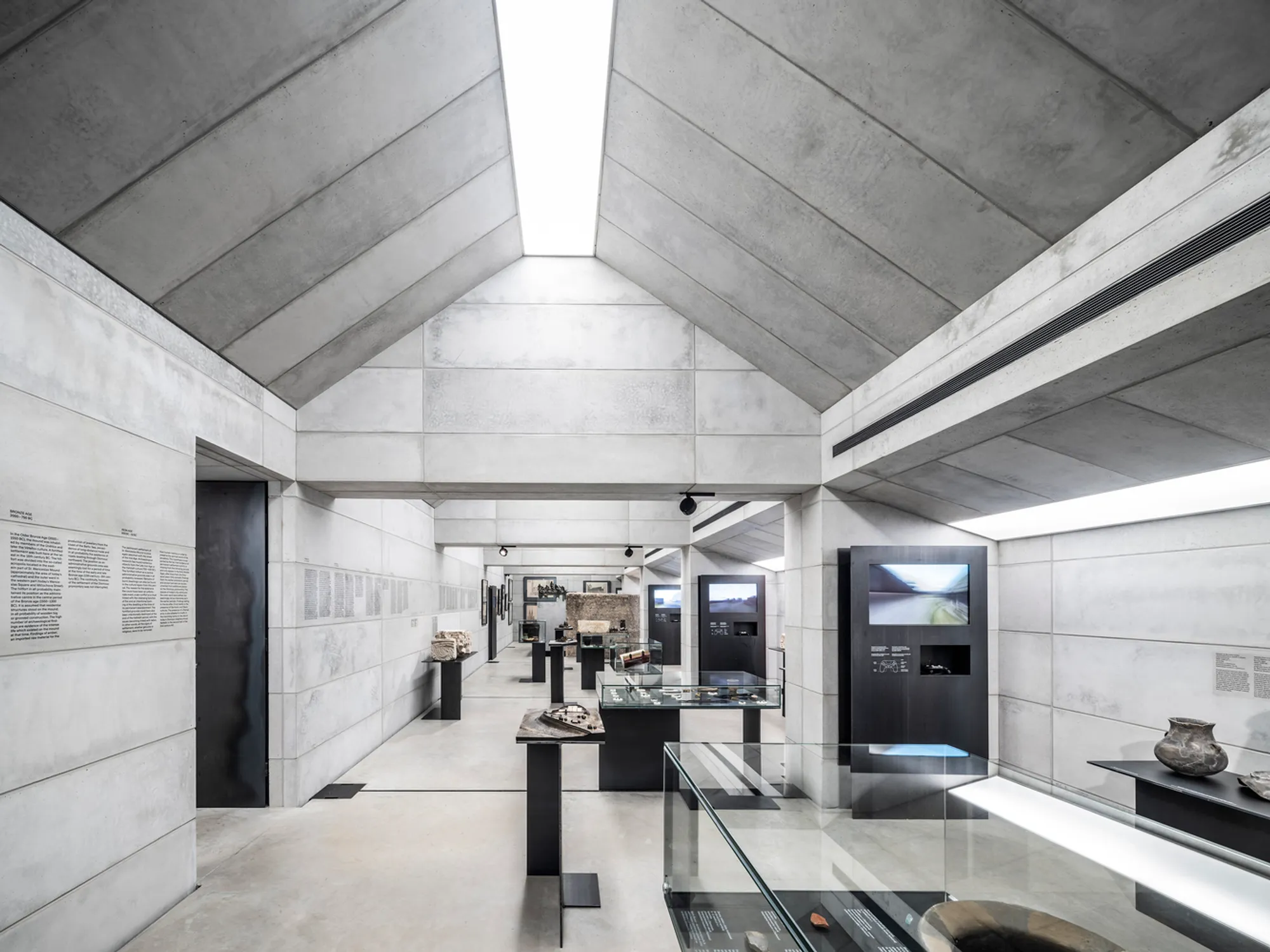
Exhibition Hall in the Attic of the Olomouc Archdiocesan Museum by Šépka Architekti: A Dialogue Between History and Contemporary Design
A contemporary concrete exhibition hall inserted within a historic attic, blending modern design with preserved heritage at Olomouc Archdiocesan Museum.


In the heart of Olomouc, Czechia, the attic of the Chapter Deanery within the Olomouc Archdiocesan Museum has been transformed into a compelling exhibition space by Šépka architekti. Completed in 2023 and encompassing 152 square meters, this innovative architectural intervention balances preservation and modern functionality, reflecting a deep respect for historical integrity while introducing a bold new spatial narrative.
Architectural Vision: A House Within a House
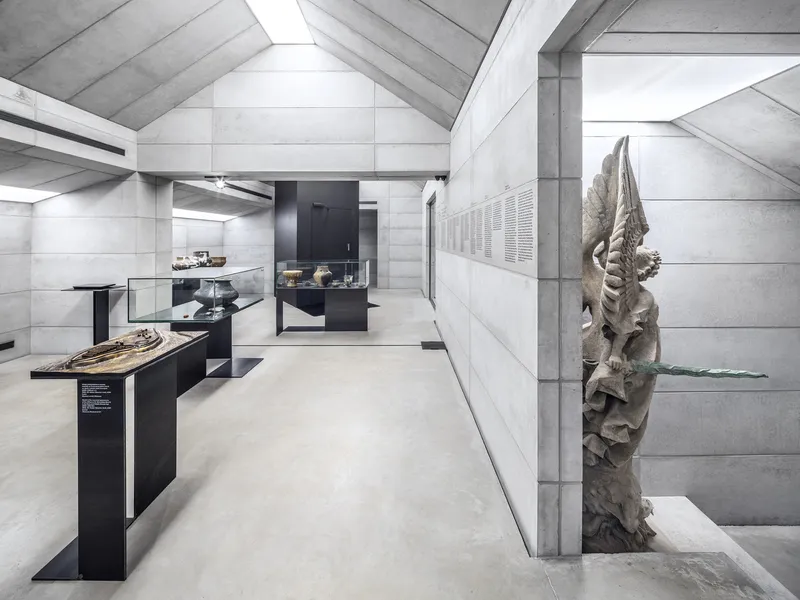
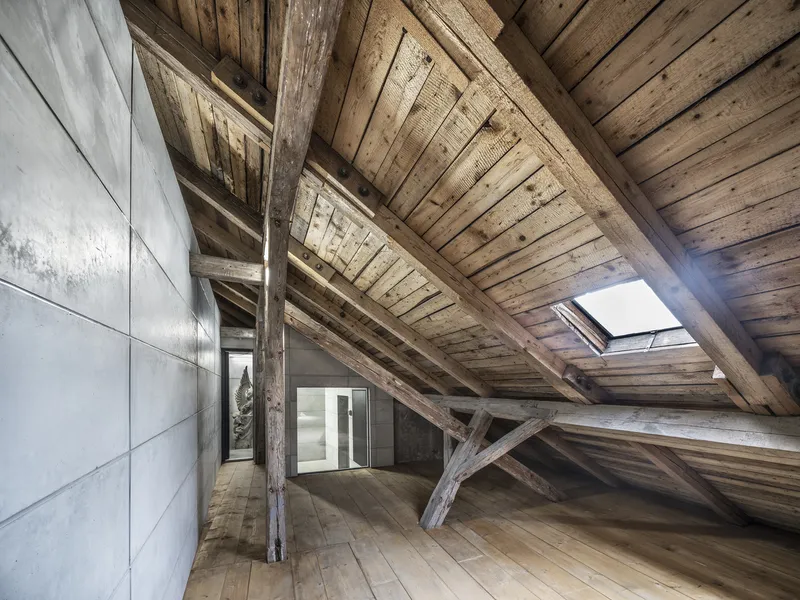
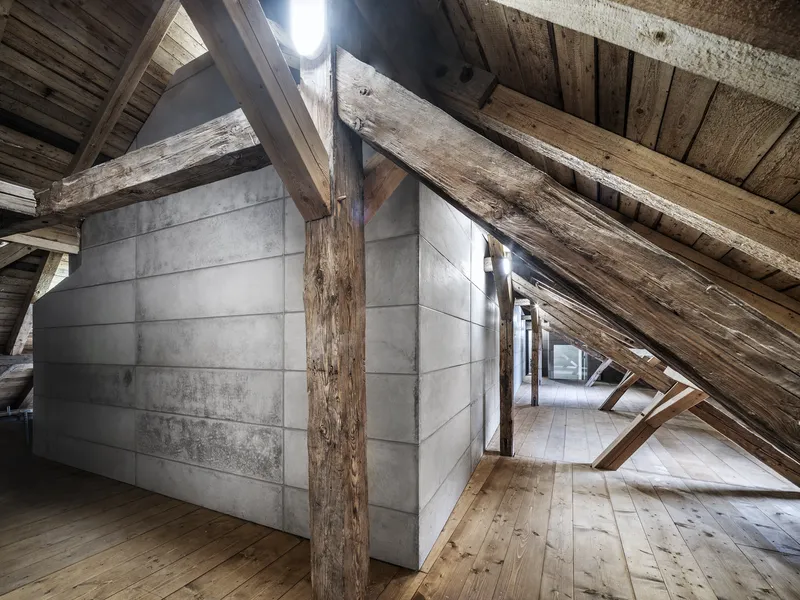
This attic renovation follows earlier modifications made between 1998 and 2006 during the establishment of the Olomouc Archdiocesan Museum. Faced with the question of how much to intervene in the attic's existing state, the architects chose a minimalist approach: preserving the original wooden structure and the historic roof, rejecting conventional insulation methods to maintain the attic’s authenticity.
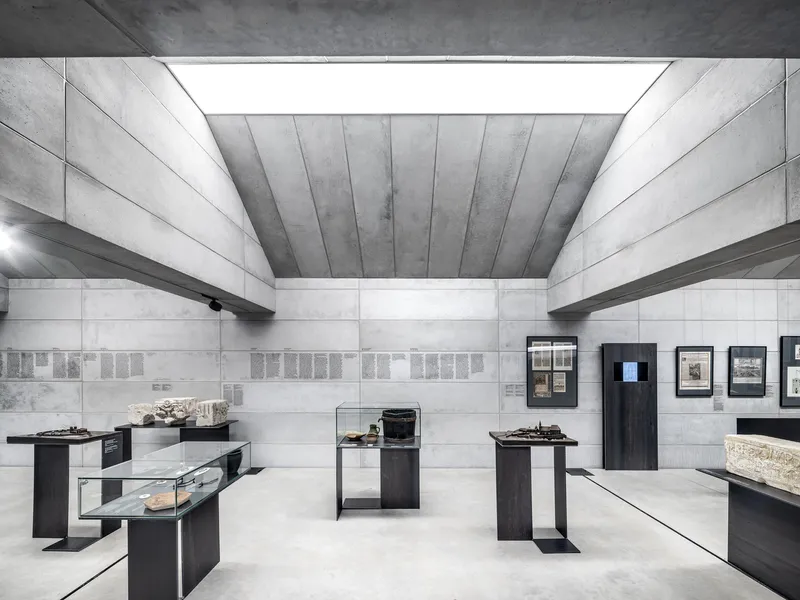
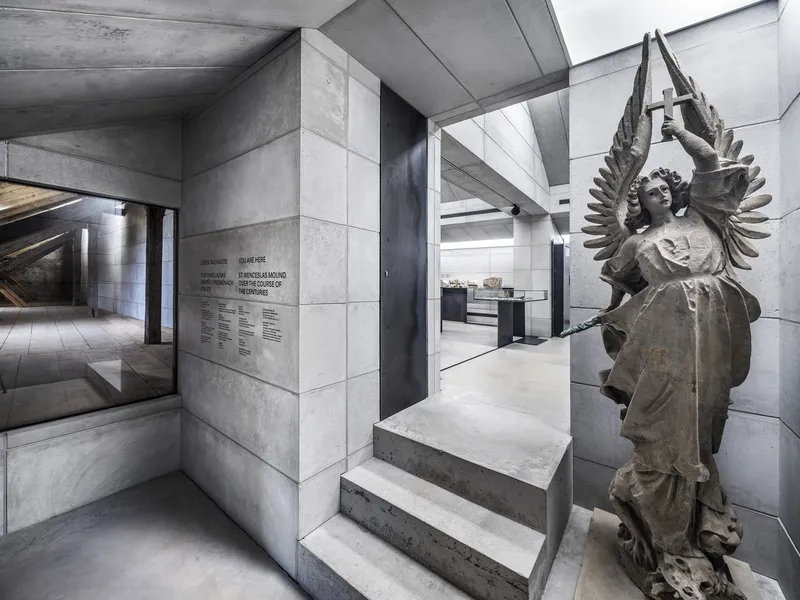
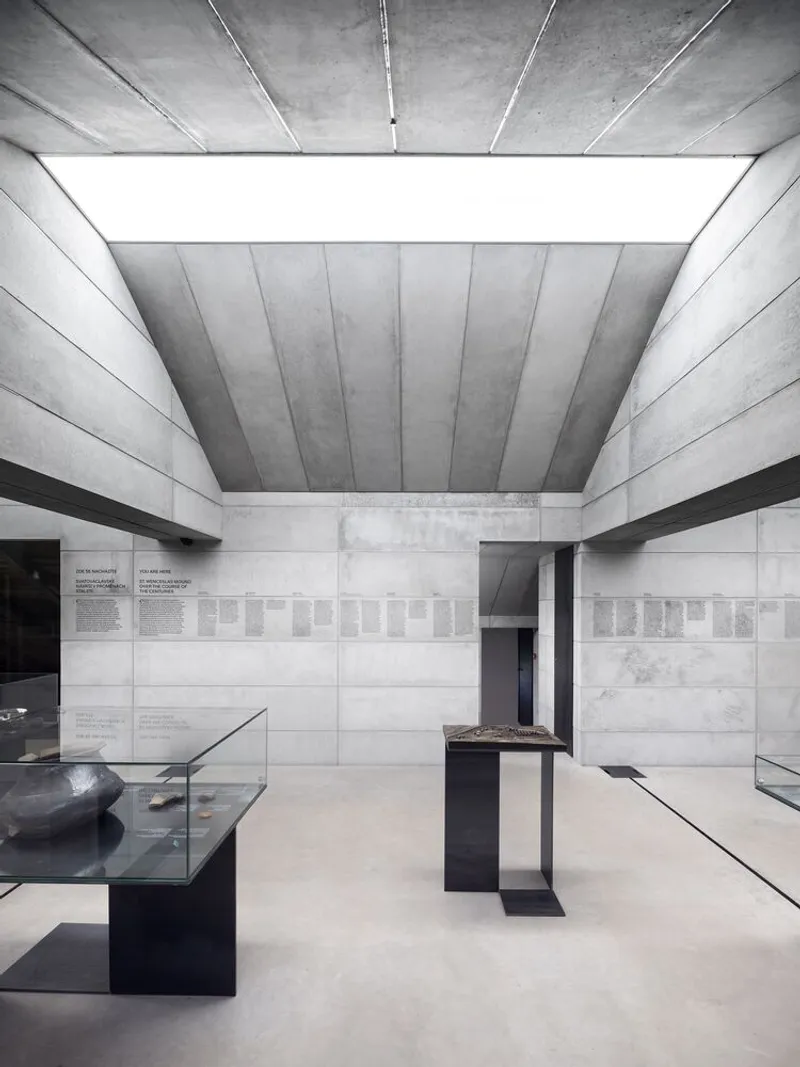
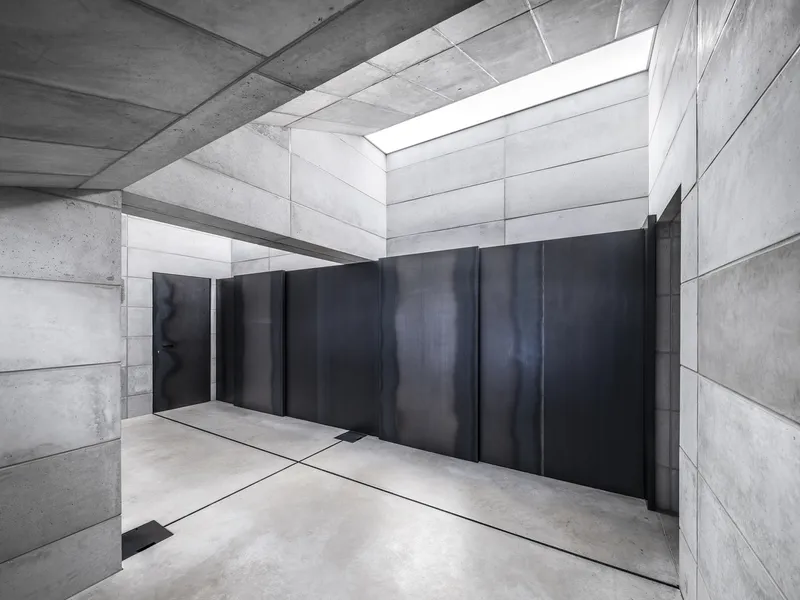
Instead, Šépka architekti introduced a freestanding concrete structure within the attic, effectively creating a “house within a house.” This new volume mirrors the geometry of the attic’s sloped ceilings but maintains a respectful distance from the original elements. With overhead lighting and ample vertical wall space, the new insertion functions as a climate-controlled exhibition hall while visually floating within the historic framework.
Interior Strategy: Technology Meets Tradition
Designed as though it were placed in an open-air environment, the inserted structure includes integrated systems for heating, air conditioning, cooling, and lighting, all neatly enclosed within the perimeter walls. The existing attic required no new technologies or thermal insulation, allowing it to retain its patina and aged atmosphere, fostering a contrast that highlights the dialogue between old and new.
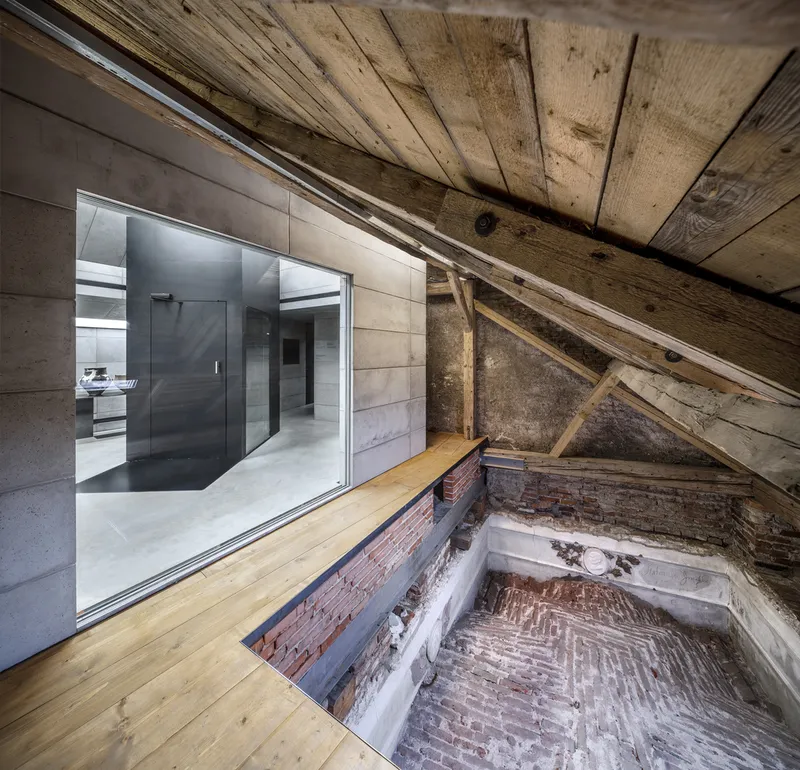
The visual experience is enhanced by strategic glazing, allowing visitors to view the historic vaulted ceiling above and the untouched sections of the attic. These moments offer a glimpse into the architectural evolution of the chapter deanery, enriching the cultural and historical context of the museum experience.
Curated Experience: From Prehistory to Present
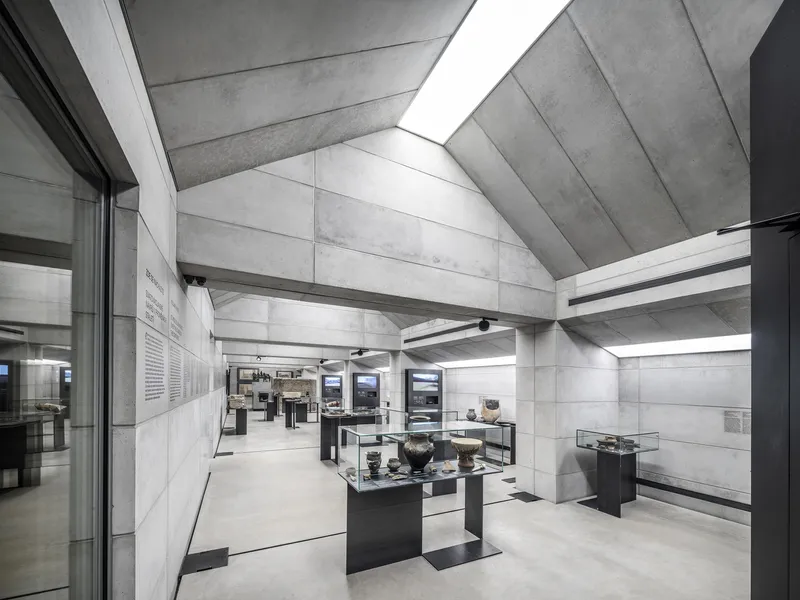
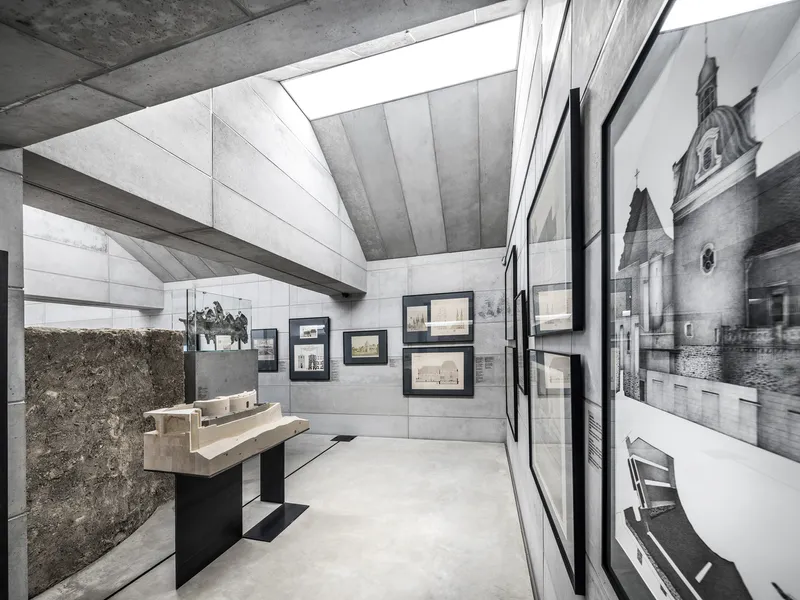
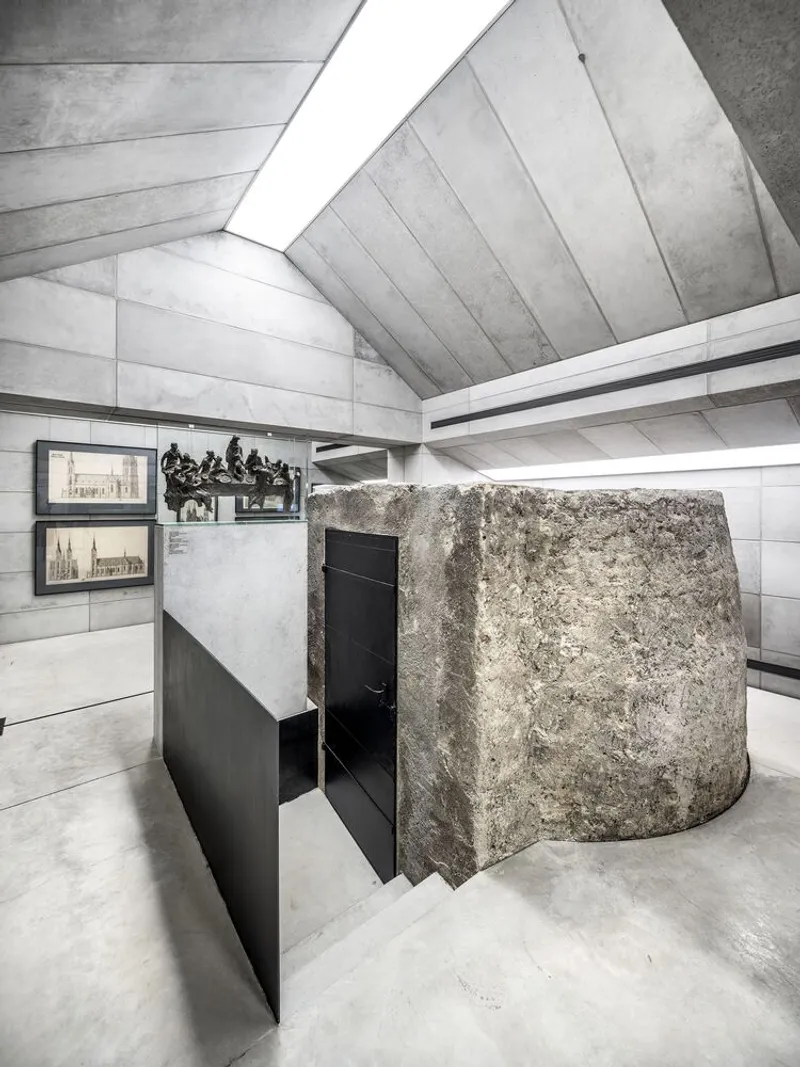
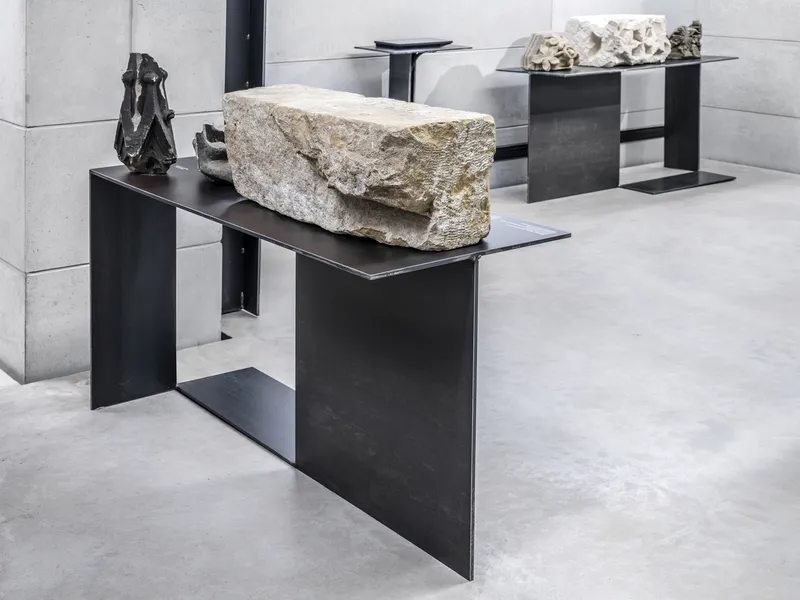
The permanent exhibition within this contemporary envelope traces the history of St Wenceslas Hill, from its prehistoric origins to the modern era. Metal pedestals and custom-designed stands support both physical artifacts and interactive digital experiences, including virtual walks through the hill’s landscape. The spatial design also includes an educational room with storage facilities, making the attic not only a site of display but also a dynamic environment for learning and discovery.
A Sensitive Intervention for Cultural Heritage
The Exhibition Hall in the Attic of the Olomouc Archdiocesan Museum exemplifies sensitive architectural intervention. Šépka architekti’s approach neither romanticizes the past nor overwrites it—instead, it layers contemporary spatial logic onto historic fabric with care and precision. The resulting dialogue between the new concrete form and the aged timber roof structure celebrates adaptive reuse, heritage conservation, and contemporary exhibition design in perfect harmony.
All Photographs are works of Aleš Jungmann.




Popular Articles
Popular articles from the community


Riyadh For All: Intergenerational Urban Design for Active Aging in Rabat
Riyadh For All reimagines urban design in Rabat with intergenerational co-living, adaptive courtyards, and Moroccan cultural exchange today.

The Earth Pod: 3D Printed Homes for Resilient Refugee Communities
The Earth Pod reimagines refugee housing through 3D printed homes made from clay, combining resilience, self-sufficiency, and rapid shelter.

Play: Fragments of Their World
Familiar architecture becomes modular playground design, creating safe spaces where displaced children can learn, connect, imagine and play.

Co-Life: Senior Housing Design That Reconnects Older Adults With the City
Co-Life reimagines senior housing design through healing gardens, shared streets, workshops, and a sustainable community across generations.


Similar Reads
You might also enjoy these articles


Hodi-Mandai Geram
Project Function: Preservation and revitalization of the Intangible heritage and socio-spatial identity of the Hodi by Housing, Cultural Memory Center, Sacred Grove, landscape, local tourism economy


Olio Towers: A Mid-Rise for Performers That Fuses Housing, Rehearsal, and Stage
Located blocks from Houston's Theater District, this modular tower stacks living units around a central performance atrium.

Oasis: Modular Green Housing Carved into Dhaka's Urban Fabric
A shortlisted Plugin Housing entry reclaims unauthorized settlements in Dhaka with stepped concrete volumes, green roofs, and ventilation-driven design.

Black Hole: A Floating Megastructure for the Post-Physical Era
Emiliano Mazzarotto envisions a spherical, self-scaling arena where e-sports, digital hotels, and holographic stadiums replace traditional public space.


Explore Exhibition Space Competitions
Discover active competitions in this discipline



Challenge to reimagine the Iron Throne


Photograph architecture without architects


Illustrate the lost glory of Angkor Wat - Render Challenge


Bring back Drive In's
Comments (0)
Please login or sign up to add comments
No comments yet. Be the first to comment!