
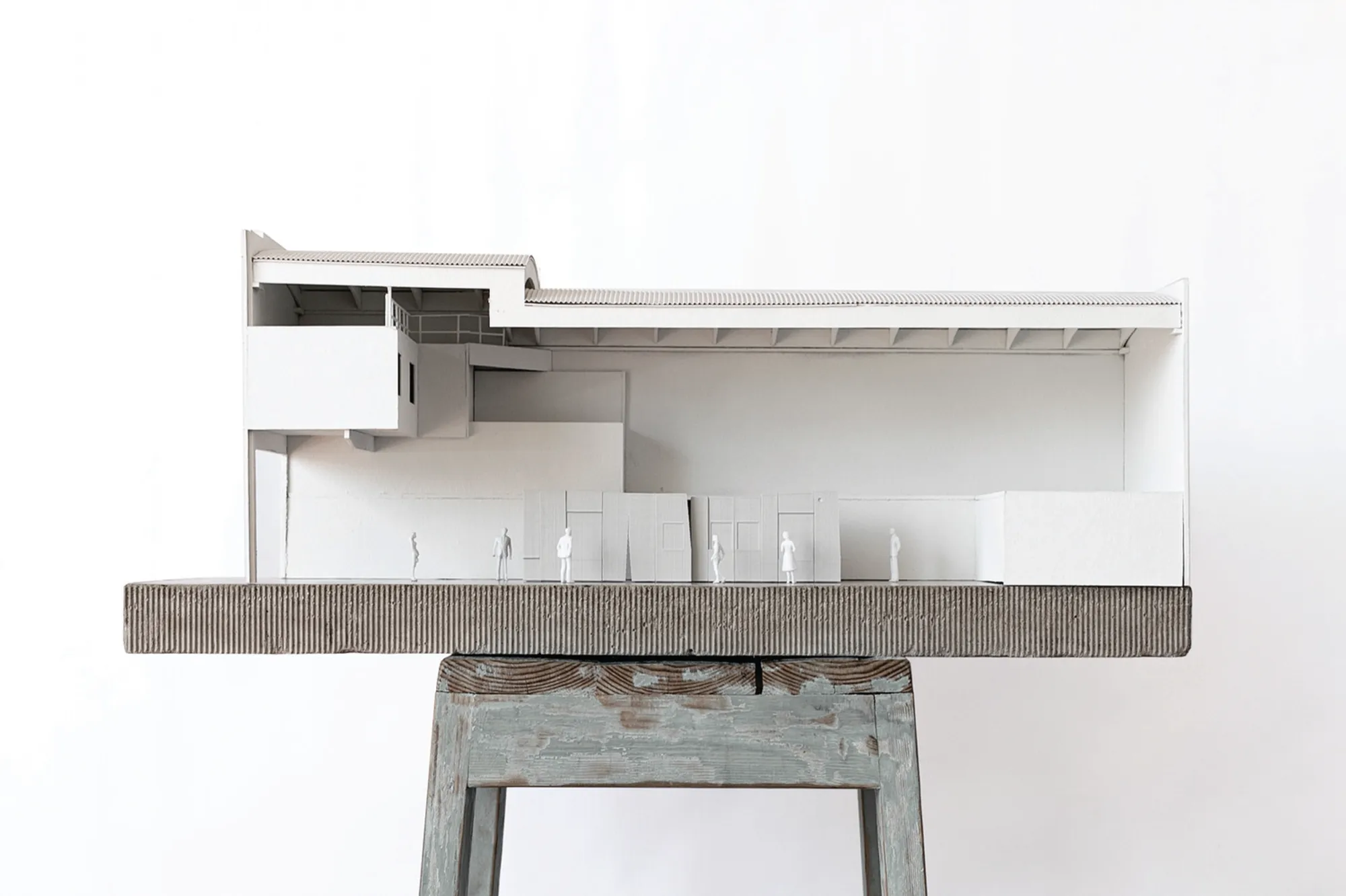
Exhibition “Ideas Fijas” by MATER and Cecilia Szalkowicz – A Fusion of Architecture, Sculpture, and Photography in Buenos Aires
“Ideas Fijas” in Buenos Aires fuses photography, sculpture, and architecture, featuring modular lightened concrete walls enabling immersive, mobile, and experimental exhibition experiences.


The 2024 exhibition “Ideas Fijas” in Buenos Aires, Argentina, is a striking collaboration between artist Cecilia Szalkowicz and the architectural studio MATER, led by architects Leticia Virguez Lalli and Gabriel Huarte. Curated by Valentina Díaz and documented through the lens of Javier Agustín Rojas, the exhibition explores the intersection of architecture, sculpture, and photographic art, presenting a compelling dialogue between material, space, and perception.
Conceptual Vision and Artistic Approach
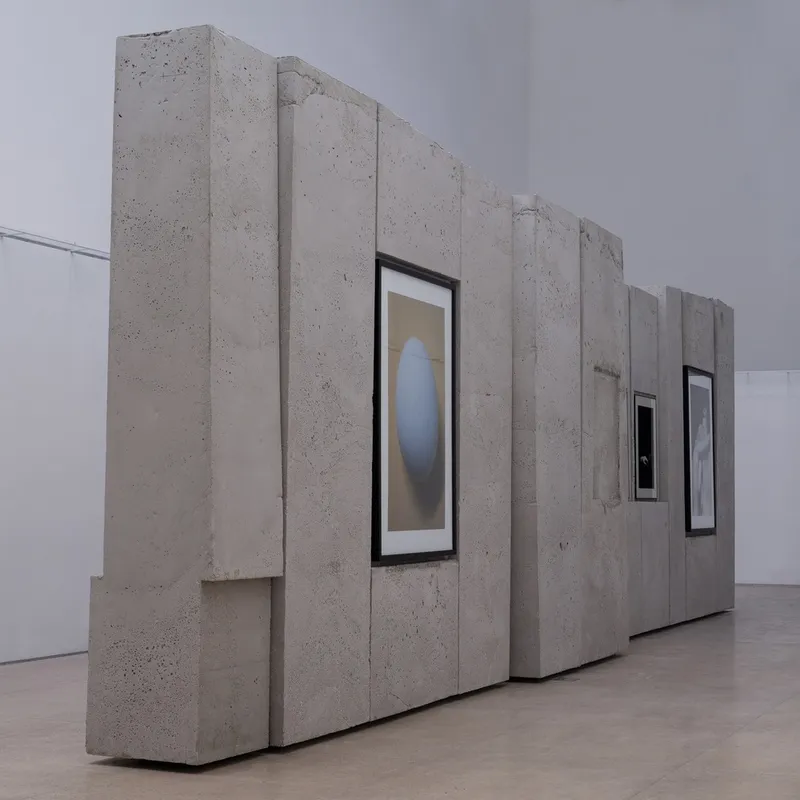
“Ideas Fijas” immerses visitors in a multidimensional experience that blends the subjective, the experimental, and the performative. The exhibition navigates through feelings, intentions, and political statements while engaging with symbolic and referential explorations. The work challenges conventional display methods by transforming the spatial experience into a central part of the exhibition itself, merging the artistic and the architectural into one cohesive narrative.
Architectural Collaboration and Spatial Design
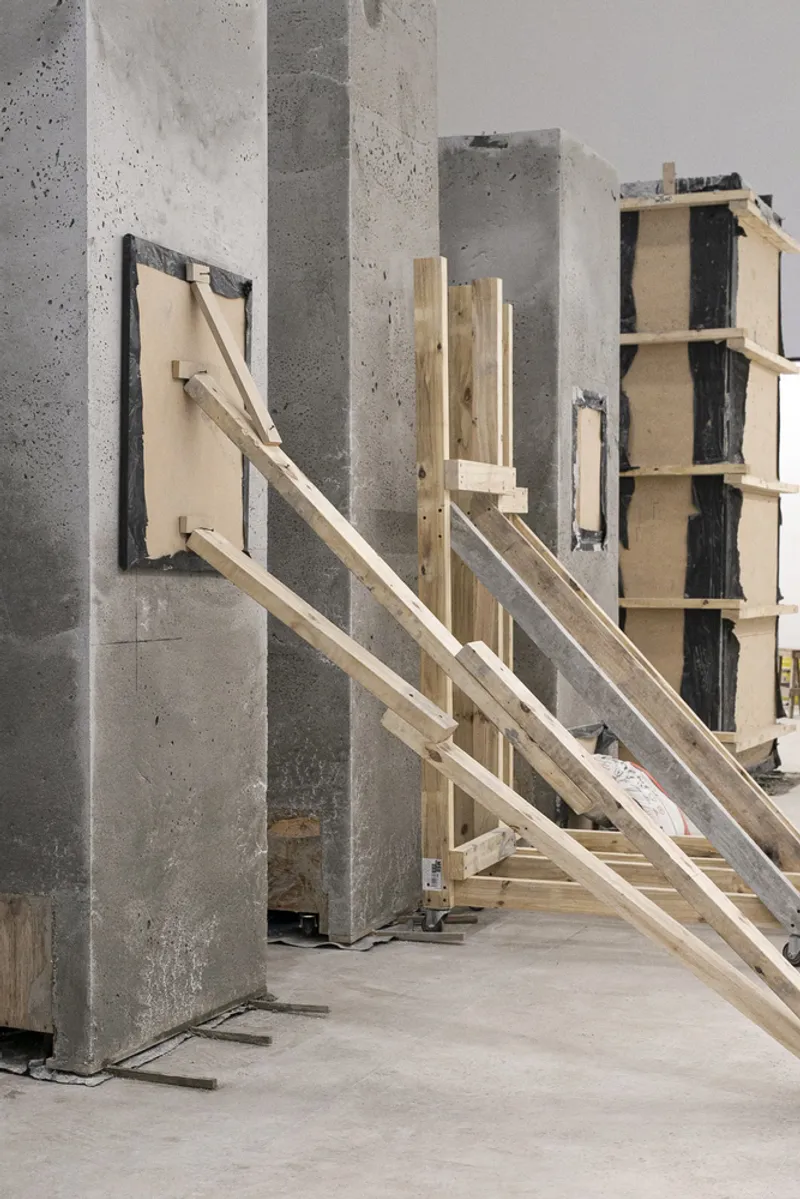
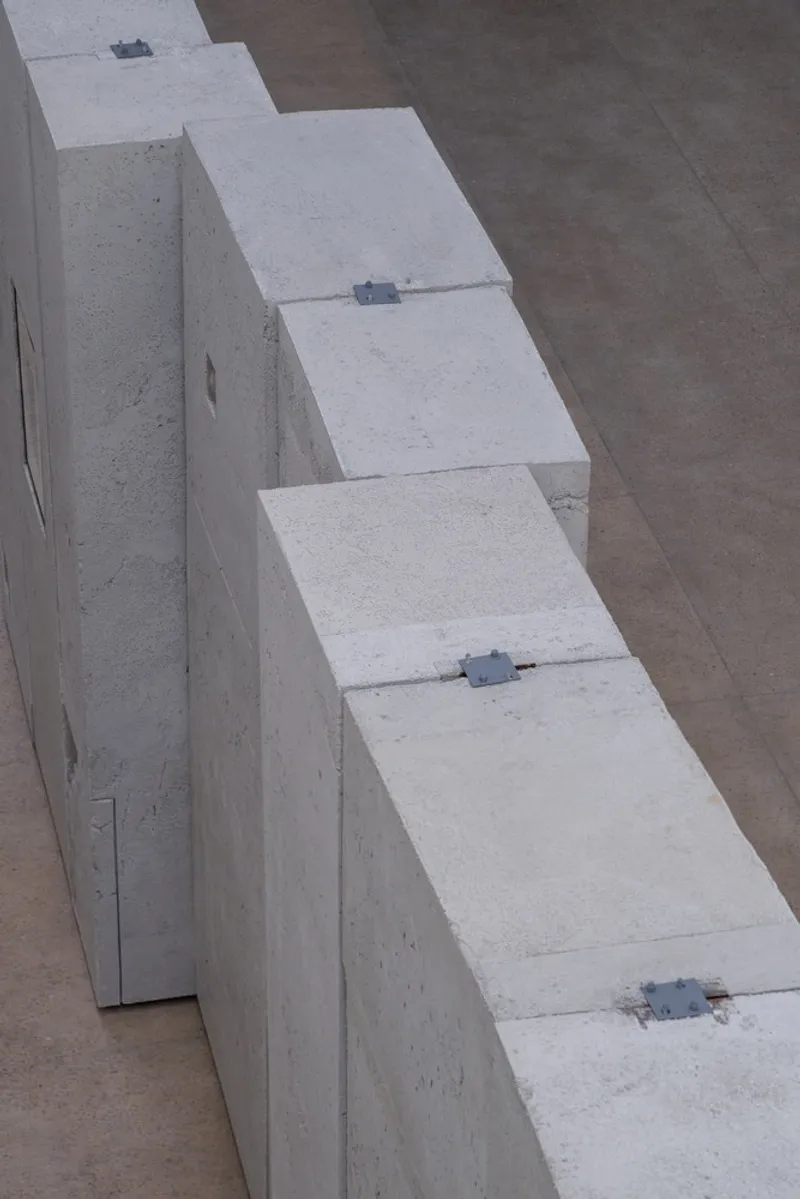
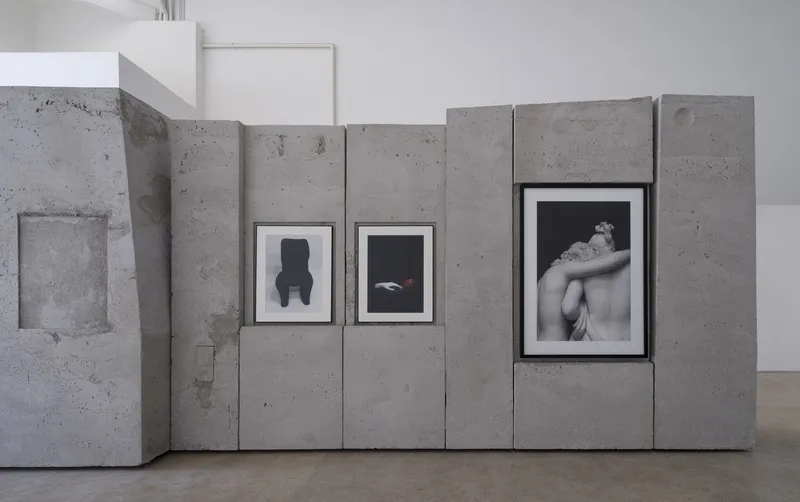
In collaboration with MATER, Cecilia Szalkowicz developed an innovative installation wall, composed of twelve pieces of lightened concrete in three distinct modulations. Spanning 10.50 meters in length and 3.10 meters in height, the wall functions not only as a mounting system for the photographs but also as an integral sculptural element of the exhibition.
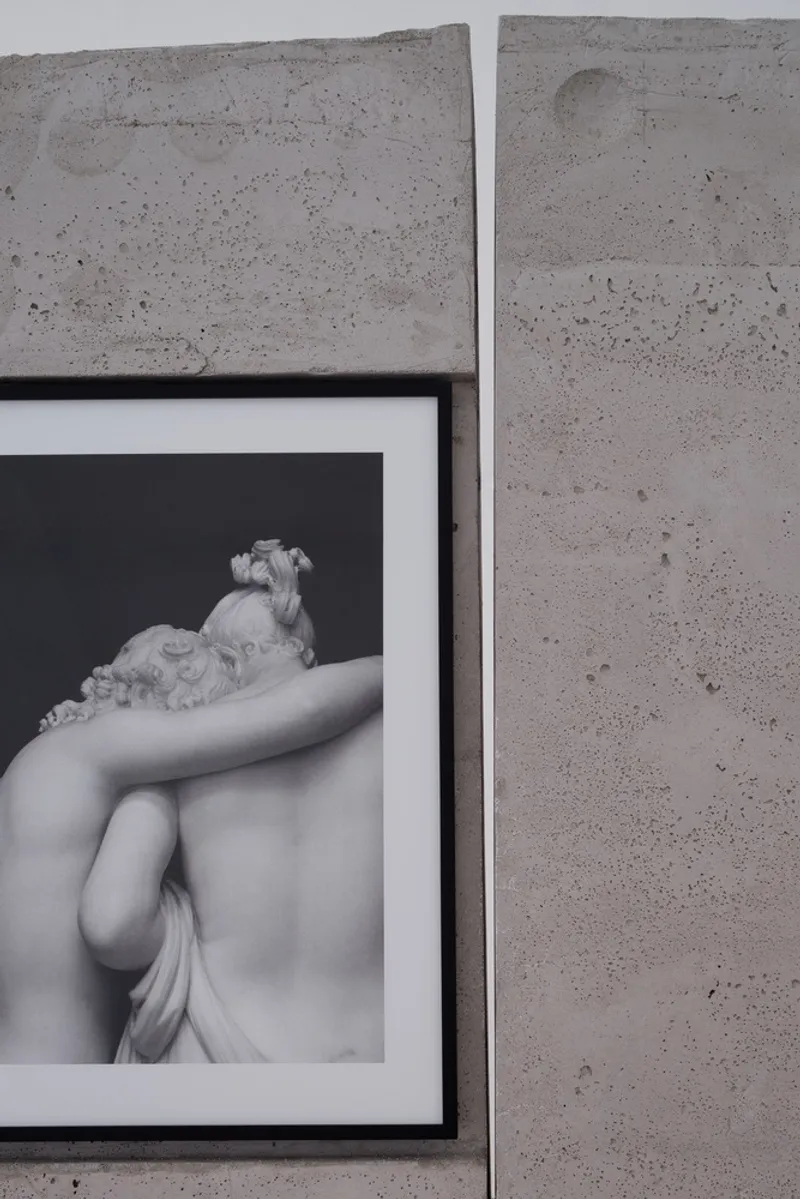
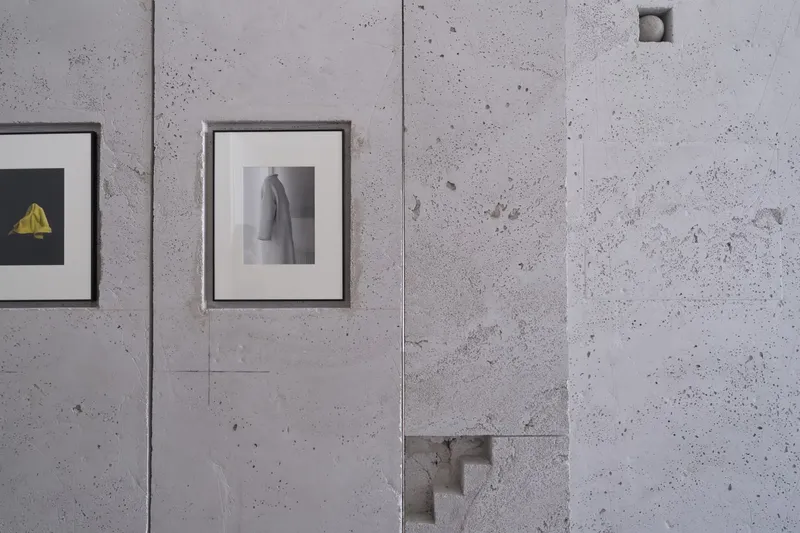
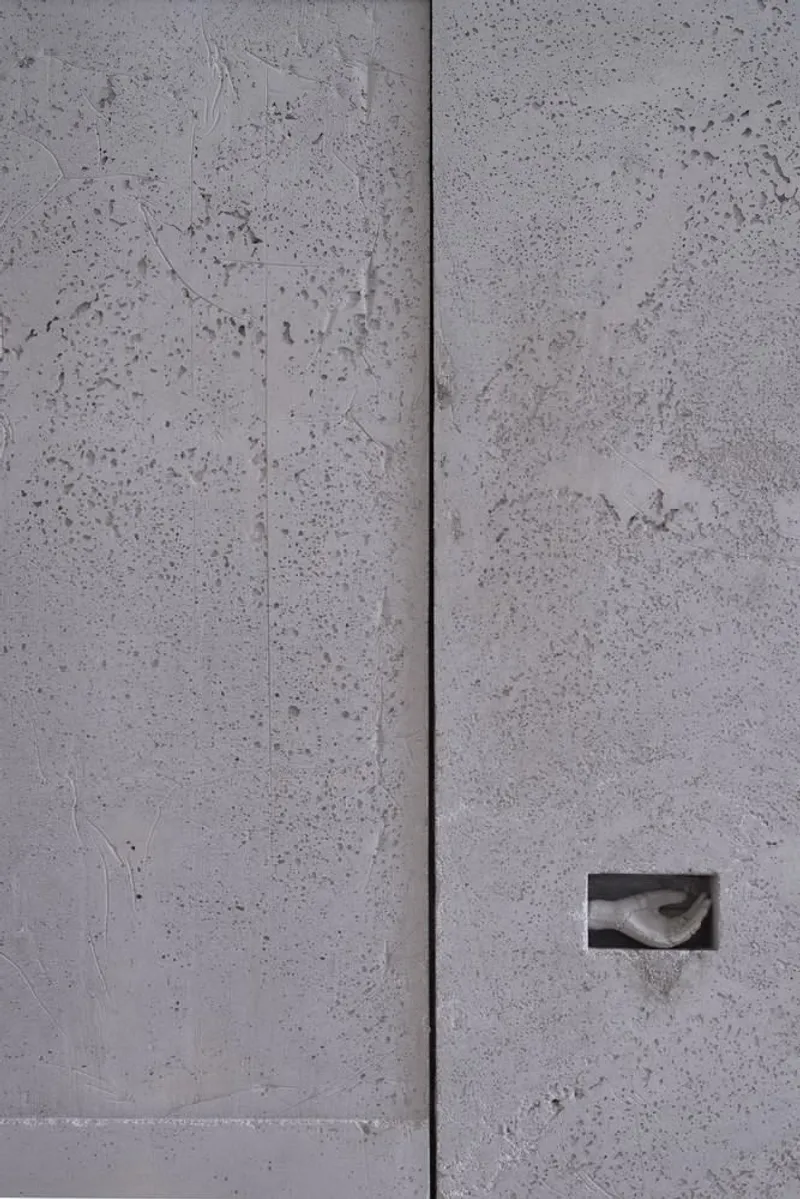
Each piece was meticulously designed through a series of morphological operations to ensure a harmonious relationship between the photographs, the individual concrete elements, and the overall installation. Breaks, inclinations, textures, and symbolic imprints create a visual dialogue between singularity and totality, offering visitors both detailed observation and an overarching perspective.
Engineering Innovation and Materiality
The exhibition’s structural system demonstrates an inventive use of reinforced concrete and lightweight EPS bricks, achieving a 50% reduction in weight and an average of 600kg per element. A reinforced concrete box acts as a beam, redistributing loads to four rotating wheels while maintaining the center of gravity near the ground, allowing for safe mobility and adaptable spatial configurations.
The choice of material was guided by three priorities: low cost, lightweight construction, and malleability for shaping. Multiple prototypes were developed to optimize the consistency, stability, and surface finish of the concrete elements. In addition, steel reinforcement ensures dimensional stability and supports bending stresses generated by movement, reflecting a thoughtful balance between engineering precision and artistic expression.
On-Site Construction and Visitor Experience
Constructed in situ over three weeks, the installation transformed the exhibition space into a dynamic workshop. Visitors witness not only the final artwork but also the careful craftsmanship, experimentation, and material exploration that shaped it. The installation encourages an immersive experience, where the act of observing becomes a participatory engagement, completing a circular journey from conceptualization to perception.
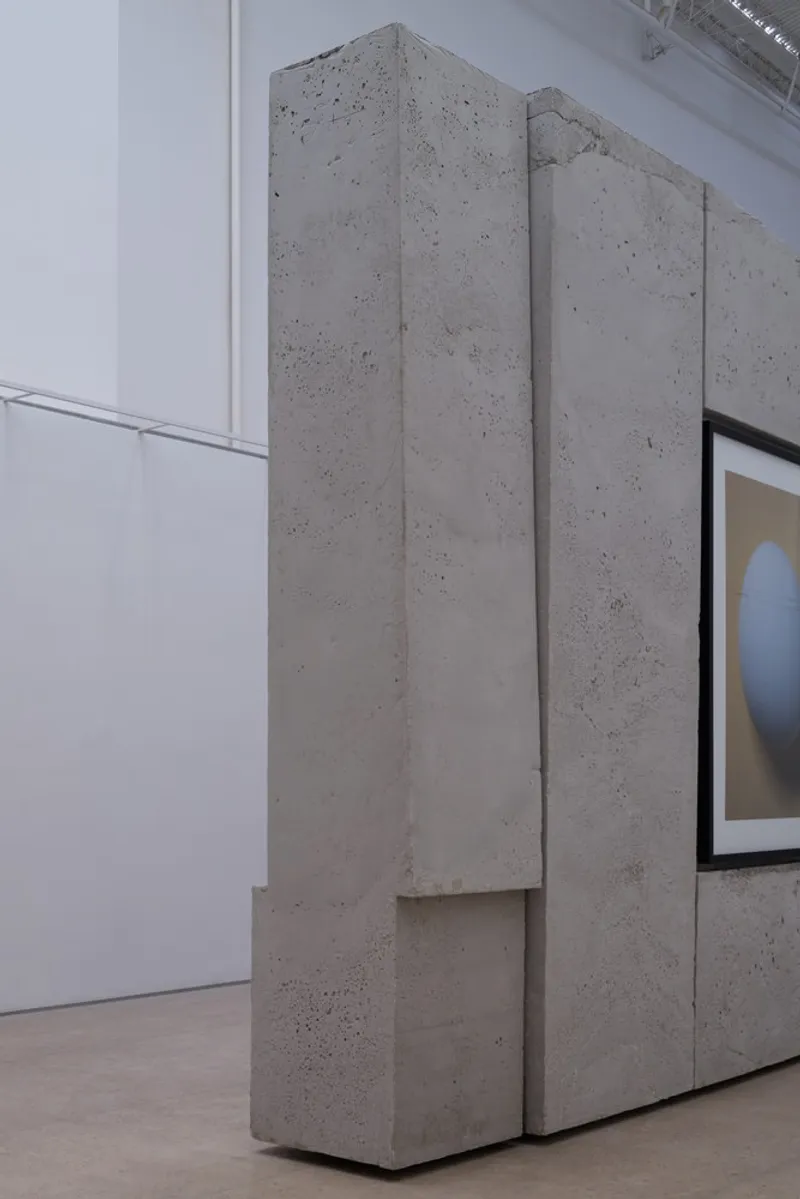
All photographs are works of Javier Agustín Rojas


Popular Articles
Popular articles from the community


The Earth Pod: 3D Printed Homes for Resilient Refugee Communities
The Earth Pod reimagines refugee housing through 3D printed homes made from clay, combining resilience, self-sufficiency, and rapid shelter.

The Musturak Paradise: Senior Living Architecture for a Connected Future in Temara, Morocco
The Musturak Paradise reimagines senior living architecture in Temara via private homes, social spaces, culture, community, and shared care.

Hill & Cross Opera: Sculptural Opera House Architecture Shaped by Tallinn’s Landscape and Identity
Hill & Cross Opera reimagines opera house architecture in Tallinn through its sculptural hill, civic plaza, glass wave and a luminous cross.

Co-Life: Senior Housing Design That Reconnects Older Adults With the City
Co-Life reimagines senior housing design through healing gardens, shared streets, workshops, and a sustainable community across generations.
Similar Reads
You might also enjoy these articles


Hodi-Mandai Geram
Project Function: Preservation and revitalization of the Intangible heritage and socio-spatial identity of the Hodi by Housing, Cultural Memory Center, Sacred Grove, landscape, local tourism economy


Olio Towers: A Mid-Rise for Performers That Fuses Housing, Rehearsal, and Stage
Located blocks from Houston's Theater District, this modular tower stacks living units around a central performance atrium.

Oasis: Modular Green Housing Carved into Dhaka's Urban Fabric
A shortlisted Plugin Housing entry reclaims unauthorized settlements in Dhaka with stepped concrete volumes, green roofs, and ventilation-driven design.

Black Hole: A Floating Megastructure for the Post-Physical Era
Emiliano Mazzarotto envisions a spherical, self-scaling arena where e-sports, digital hotels, and holographic stadiums replace traditional public space.

Explore Exhibition Space Competitions
Discover active competitions in this discipline


Challenge to design a portable theatre

Challenge to design a portable music platform

Challenge to design an open learning module for the elderly


Challenge to reimagine the Iron Throne
Comments (0)
Please login or sign up to add comments
No comments yet. Be the first to comment!