

Exploring Identity and Innovation: likeuu Concept Exploration Center by Studio 10
The likeuu Concept Exploration Center by Studio 10 in Beijing inspires teenagers through multi-sensory, interactive spaces exploring identity, dualities, and curiosity.


Located in Beijing, China, the likeuu Concept Exploration Center designed by Studio 10 is a 94 m² retail interior project completed in 2024, photographed by Chao Zhang. This innovative space reimagines the retail experience by focusing on adolescent personality development, self-awareness, and interactive exploration.
Inspired by Nietzsche’s philosophy that adolescence is a critical stage for forming independent identity, the design encourages teenagers to explore their sense of self and engage deeply with their surroundings. Through a carefully orchestrated multi-sensory experience, the center connects visual, tactile, and spatial stimuli, sparking curiosity, critical thinking, and reflection on the relationship between appearance and essence.


Exploring Dualities Through Design
The design of the center emphasizes dialectical thinking and explores dualities such as softness versus hardness, stability versus change, reality versus illusion, and restriction versus freedom. These abstract concepts are expressed physically through materials, forms, and spatial structures, allowing teenagers to experience and contemplate complex philosophical ideas through their interaction with the environment.

The layout features open storefronts at both ends while solid walls define the sides. Enclosed areas like fitting rooms and storage are embedded within these walls, wrapped in semi-transparent tensioned membranes. This approach creates faintly visible volumes and edges while generating irregular, transitional display spaces. The soft, ambiguous membranes contrast sharply with the hard, defined inner structures, reinforcing the dialogue between appearance and substance, restriction and freedom, within personal growth.


Materiality and Form
Materials and physical forms are deliberately juxtaposed to challenge perception. Exhibition walls, display tables, and column bases appear soft and flowing like fabric, yet are constructed from rigid fiberglass gypsum. Textures range from delicate to rough, emphasizing the contradictions of the physical world and the tension between sensory perception and cognitive understanding.
The space predominantly employs a beige tonal palette to accentuate the geometric essence of the objects and highlight the colorful products on display. Strategic pops of the brand's visual identity (VI) colors peek from behind membranes or corners of displays, subtly encouraging exploration and discovery.


Teen-Centric Functionality
Understanding teenagers’ psychological and social needs, the design introduces a “teenage fitting room” concept. Unlike traditional fitting rooms, these areas are separated from the public zones by non-full-height exhibition walls, ensuring privacy while maintaining connectivity. Semi-private transitional spaces behind these walls provide companions or parents with comfortable areas to rest, fostering interaction while respecting the teenager’s independence.


By integrating philosophical inspiration, material innovation, and adolescent-centered functionality, the likeuu Concept Exploration Center stands as a leading example of retail interior design that transcends conventional shopping spaces, transforming them into immersive environments for exploration, learning, and personal growth.


All photographs are works of Chao Zhang


Popular Articles
Popular articles from the community

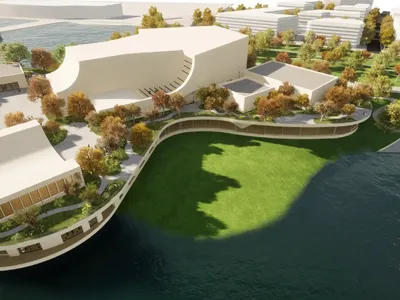
The Amber Palace Opera: A Geological Fiction Surfaces on Tallinn's Baltic Waterfront
Pierre Brillard reimagines a Baltic legend as a public landscape, opera house, and waterfront promenade rooted in Tallinn's coastal identity.
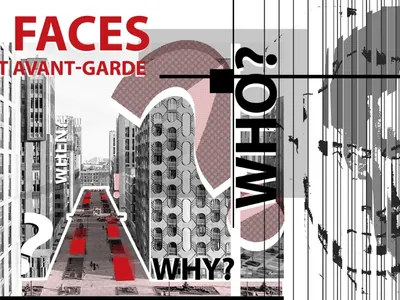
Faces of the Soviet Avant-Garde: Turning Moscow's Street Names into an Open-Air Museum
A network of sculptural installations across a Moscow residential district transforms forgotten architect names into spatial encounters with cultural memor
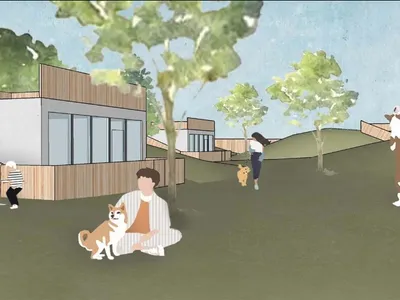
Temporary Home for Dogs: A Reversed Zoo Rethinks Animal Shelter Architecture
In Bucharest, a sinuous corridor and freed landscape flip the logic of containment, designing a shelter that works to make itself unnecessary.
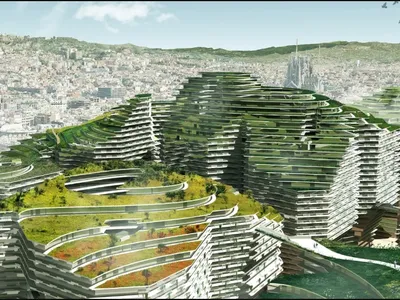
Manzana Morphosis: Stretching Barcelona's Grid into a Living Landscape for 2050
A radical reworking of the Eixample manzana turns density into a tool for generous public space, vertical ecology, and environmental performance.

Similar Reads
You might also enjoy these articles


Hodi-Mandai Geram
Project Function: Preservation and revitalization of the Intangible heritage and socio-spatial identity of the Hodi by Housing, Cultural Memory Center, Sacred Grove, landscape, local tourism economy

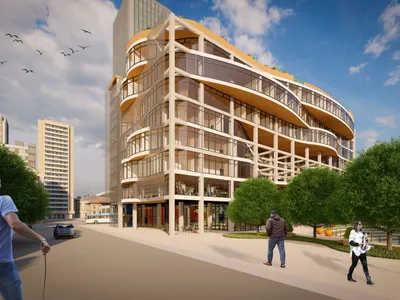
Olio Towers: A Mid-Rise for Performers That Fuses Housing, Rehearsal, and Stage
Located blocks from Houston's Theater District, this modular tower stacks living units around a central performance atrium.
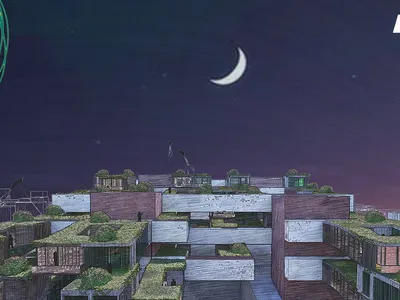
Oasis: Modular Green Housing Carved into Dhaka's Urban Fabric
A shortlisted Plugin Housing entry reclaims unauthorized settlements in Dhaka with stepped concrete volumes, green roofs, and ventilation-driven design.

Black Hole: A Floating Megastructure for the Post-Physical Era
Emiliano Mazzarotto envisions a spherical, self-scaling arena where e-sports, digital hotels, and holographic stadiums replace traditional public space.

Explore Interior Design Competitions
Discover active competitions in this discipline

Challenge to design luxury tourism on rails

Challenge to reimagine the Iron Throne

Photograph architecture without architects

VR headsets Storefront design competition
Comments (0)
Please login or sign up to add comments
No comments yet. Be the first to comment!