

An insight into the futuristic approaches towards retail infrastructure.
Exploring the retail panorama


Introduction
Over the years, public spaces have seen many restorations which got updated with time. Market places and retail hubs played an important role in providing a one-stop solution. Socializing platforms for people of all backgrounds is another function that they served.
To make retail infrastructure more architecturally significant, the experiences they provide need to be characterized by innovative use of space and technology.
Retail Architecture at a glance
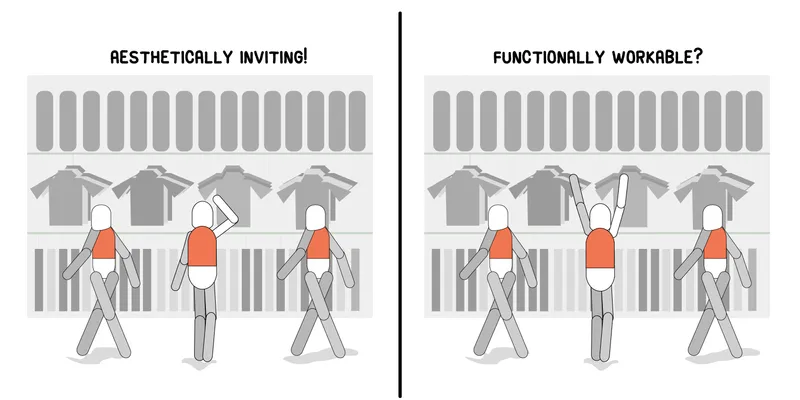
Retail design is one of the most challenging new fields that embraces the creative disciplines of architecture, industries and communication. It also explores some depths of sociology such as environmental psychology, and marketing/management. Commercial architecture is a connection source for responsibly developing and extending communications between the brand, its spatial properties and the customer. It also involves an understanding not only of what will work aesthetically within the space but how it will perform functionally and commercially.
Ongoing developments in technology, in particular e-commerce, has very much driven discussions among architects on innovation in the retail landscape.
Innovations in Retail Design
Worldwide, designers are now investigating the physical creative solutions that embrace the e-commerce phenomenon. New visions have seen enlightenment as designers and architects are brainstorming and coming up with creative concepts. These include interesting combinations of technology, engineering, material science and imagination with design.
Different to this approach, shopping malls and public spaces are also being re-imagined as micro-cities providing entertainment, wellness and personalized product matching. One reason for the same is that they have a large piece of real estate. This approach is being incorporated with technology, creating phygital retail experiences for better productivity.
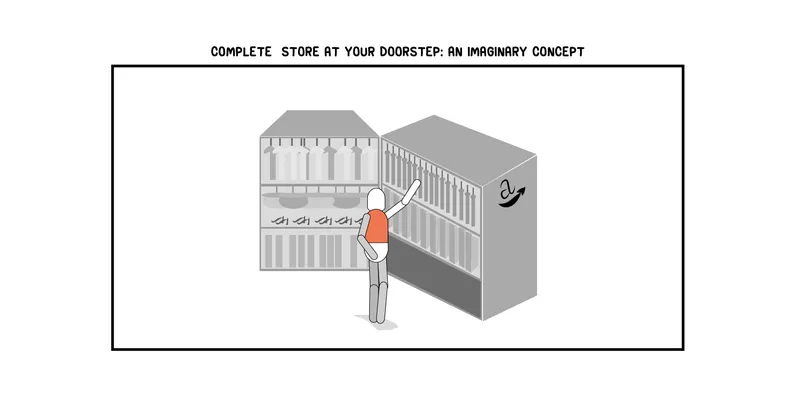
Making brick and mortar relevant to the futuristic architectural inventions
Designers have started thinking about new innovations providing an easy shopping experience that an online store offers along with phygital retail experiences that an offline platform can cater to. Involving artificial intelligence and predictive analytics to convert customer data into personalised experiences are being given the green flag. At the same time, human interactions between automated processes and customers, combining physical and digital engagement is another take on it.
Exploring more: Case studies
Case Study of - Durasport Store, Singapore
Ministry of Design, an architecture firm based in Singapore, has come up with Durasport Store, situated in Jewel Changi Airport. This commercial store enables a customer to try out sportswear and equipment in simulated environments before buying them. Adopting a three-stage retail strategy for the in-store experience – excite, immerse and convince – the store features experiential zones.
More ways to interact with the consumers through the creation of developed spatial qualities can be emphasized to come up with upcoming technology-oriented creativity.
A conventional yet experiential approach for a different retail experience
Case Study of - House of Vans, London
The global American brand for footwear has come up with an experiential retail solution that focuses on providing actual space belonging to the respective function by utilizing unused infrastructure.
They have attempted to create a mini sports arena by converting an abandoned network of tunnels below Waterloo Station into an epi-centre of multi-use creativity. This arena is a skating rink that remains open for the public to visit the store and have a quality experience for a day. Covering an area of 3000 sqm, this underground commercial space serves as a lively place for skaters and street artists to socialize and also to shop.
As the city goes about its business above, down in the bowels of the Earth the creative centre is crackling with activity once more as a music venue, gallery, artist labs, cafes, cinema, bars and skatepark jolts into life.
Case Study of - Late Night Chameleon Cafe, London (LN-CC)
Existing as an example of a retail space that is also an art installation, LN-CC has attempted to redefine the principles of offline shopping. They have integrated creativity by giving a tunnel-like entry pathway leading to a chamber. This chamber is their main shopping cum exhibition area, where the products are displayed in innovative forms of furnishings and spatial characteristics.
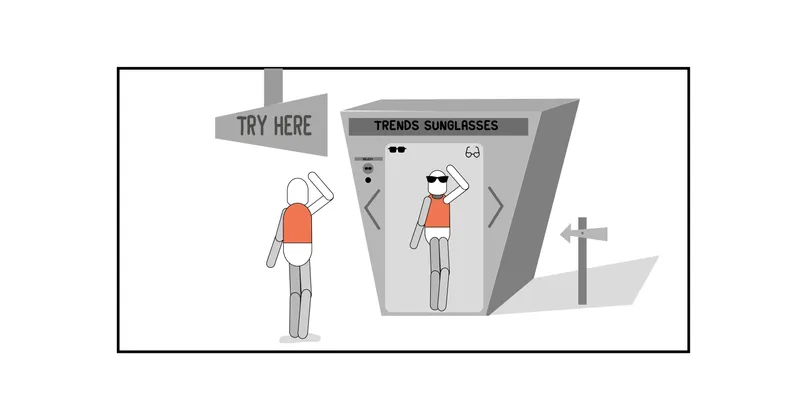
Retailtainment - Exploration of the elements providing in-store experiences
Commercial spaces that consumers feel connected to, communicate with them. This is why the interactiveness of public spaces can revolve around customers by providing them with unique experiences. They should feel as if they have entered a different world of retail, which is why originality is a significant factor to consider. Designers may create places through spatial approaches involving elements of surprise giving the onlooker unexpectedness, making architectural as well as brand identity.
Towards future-friendly architectural advancements
It is quite clear that the vision of the future retail infrastructure has been challenged by e-commerce and is undergoing an evolution in its history - 24-hour access to shopping. 85% - 90% of purchases that are made, come from a physical retail warehouse. So the question becomes – how can real retail stores be made appealing for people to come to visit?
Commercial infrastructure is now not limited to just providing a retail experience, but also incorporating the shopping arenas with museum/store/restaurant - all integrated into one.
New innovations in retail architecture need to be explored that are adaptable to the future lifestyle. There are diverse undiscovered ideas and with technology advancing at a fast pace, it will be something to look forward to.
To know more visit https://uni.xyz/competitions/upcycling-retail
Resources :
-
https://www.atkinsglobal.com/en-gb/angles/all-angles/the-future-of-retail-design
-
http://www.designcurial.com/news/paradigm-shift-for-future-of-retail-design-7050105/
-
https://www.thestorefront.com/mag/7-case-studies-prove-experiential-retail-future/
-
https://www.dezeen.com/2019/04/26/durasport-store-ministry-singapore-airport/
-
https://www.trendhunter.com/slideshow/futuristic-retail-spaces
-
https://www.archdaily.com/914415/cavatina-reimagines-polish-public-space-with-futuristic-city-plan
-
https://www.trendhunter.com/slideshow/futuristic-retail-spaces
-
https://www.archdaily.com/914415/cavatina-reimagines-polish-public-space-with-futuristic-city-plan


Popular Articles
Popular articles from the community

Opera on the Sea: Driftwood Logic Shapes a Timber Opera House on Estonia's Coast
Trevor Orgill's opera house translates the entangled drift of floating timber into a civic building where wood, water, and music converge.

Manzana Morphosis: Stretching Barcelona's Grid into a Living Landscape for 2050
A radical reworking of the Eixample manzana turns density into a tool for generous public space, vertical ecology, and environmental performance.

Singing Woman: An Opera House That Performs Before the Curtain Rises
Ovidiu Cristian Pavel's conceptual opera house translates Estonia's choral identity into a sculpted waterfront landmark facing the Baltic Sea.

Opera by the Sea Estonia: Three Shells Dissolving Architecture into Tallinn's Coastline
A winning opera house proposal replaces monumental form with interconnected shells that blur the boundary between building, park and Baltic Sea.

Similar Reads
You might also enjoy these articles

Pixel Gardens: One Repeated Module Stacked Into a Terraced Social Housing Tower for Famagusta
Salem Bader's shortlisted housing tower builds a vertical neighbourhood from one repeated module, offsetting units to carve terraces, light and air.

Bao Huynh Watercolor Atelier: A Serene Art Retreat in Hội An
Bao Huynh Watercolor Atelier in Hội An blends multifunctional art spaces, sustainable design, local materials, and family-friendly living in a serene environment.

Atelier Macri Concept Store Interior Design by CASE-REAL
Atelier Macri store features a "ko" counter, walnut wood details, cork displays, blending retail, gallery, and seamless customer experiences.

Manuel Vargas Izquierdo Stadium and High-Performance Sports Center: Architectural Excellence in Jalpa de Méndez
The Manuel Vargas Izquierdo Stadium blends sustainable design, inclusive sports facilities, and cultural-inspired architecture, revitalizing Jalpa de Méndez’s public spaces.


Comments (0)
Please login or sign up to add comments
No comments yet. Be the first to comment!