

The Unknown: Journey to the Depths of the Ocean
What mysteries lie hidden in the uncharted territories of the deep sea?


Fardaa, a London-based architecture and design studio, has successfully repurposed a ruined basalt barn into a dining hall and restaurant on the Isle of Mull, Scotland. The project, named Croft 3, embodies Fardaa's approach to place, social and environmental responsibility, and economy of means. The remote Scottish isles, with their close-knit communities, are supported by tourism and small-scale farming known as Crofting. The adaptive reuse of the dilapidated stone barn has provided a valuable community resource for the coastal community and marks the first completed project by Fardaa.
Client Jeanette Cutlack purchased a disused Croft on the island’s South in 2019 to expand her busy local restaurant, which previously operated out of a home kitchen. The restaurant sources all meat and fish from the island and makes the island's only commercially available haggis. Jeanette has plans to bring the craft back into use to directly supply the restaurant with meat and vegetables.
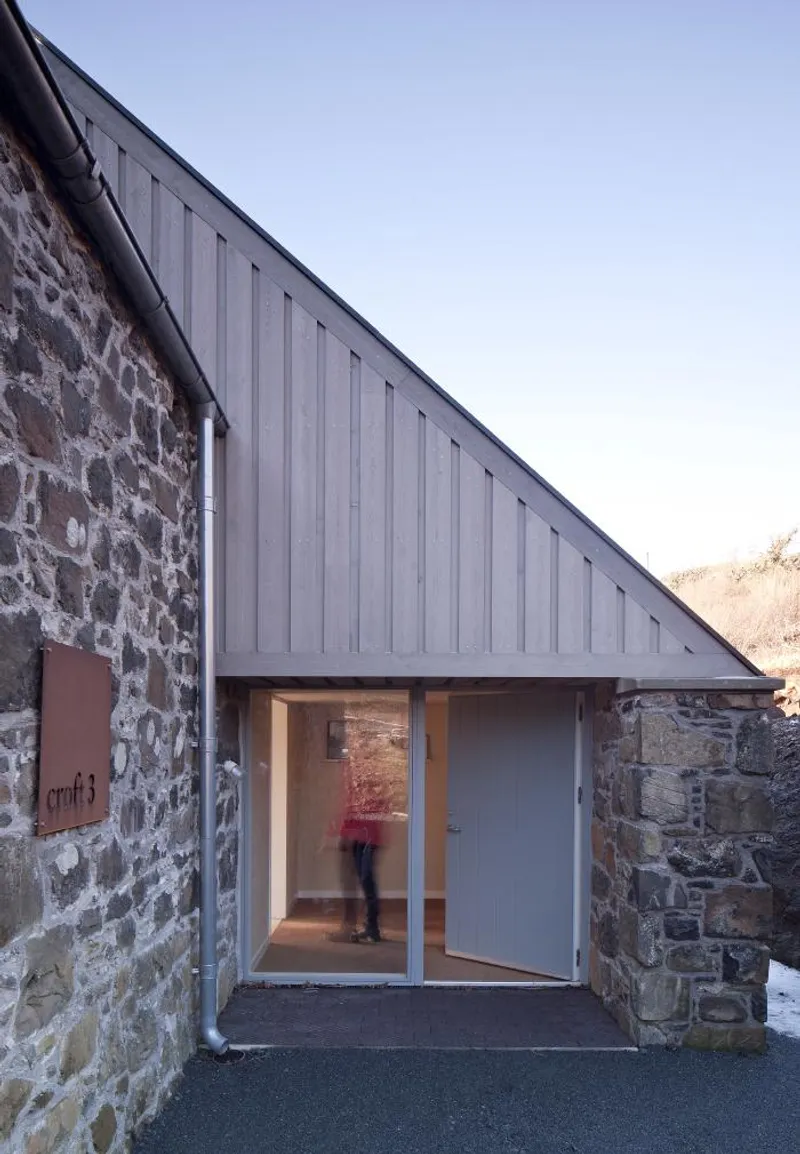
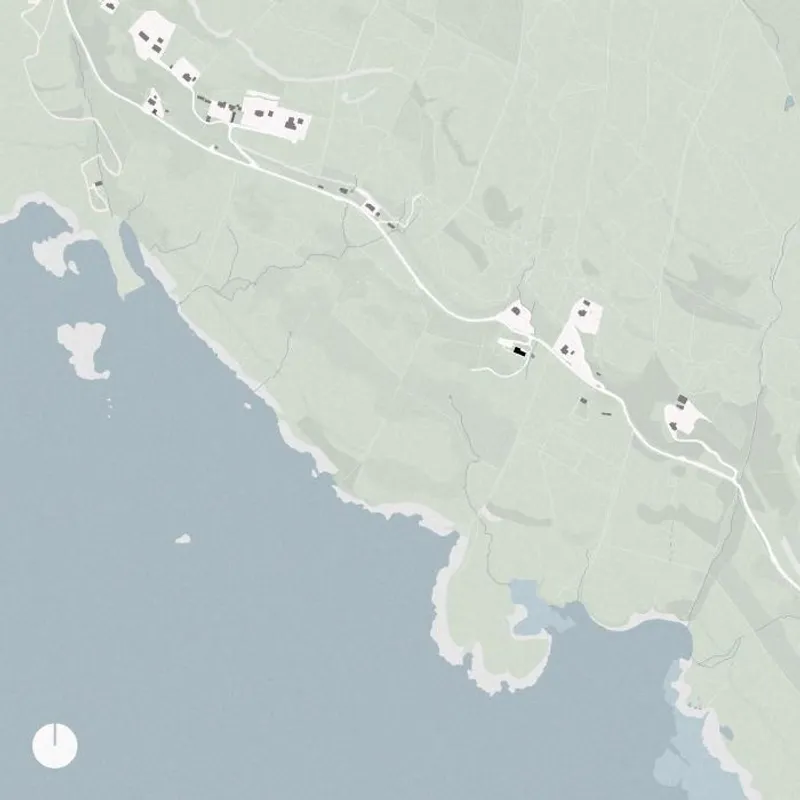
Croft 3 is located on a coastal site overlooking the nearby island, Ulva across Loch Tuath Bay. The design is defined by two offset pitched volumes that echo the twin hellscape of Ulva across the bay, designed so neither is subservient to the other. The contrasting gables - one of stone, one of timber - take their cues from the local vernacular and offer a strong profile regardless of the direction of approach. Visitors approach the restaurant from the road above and behind, the long black roofs of the building appearing lower than the sea and Ulva beyond.
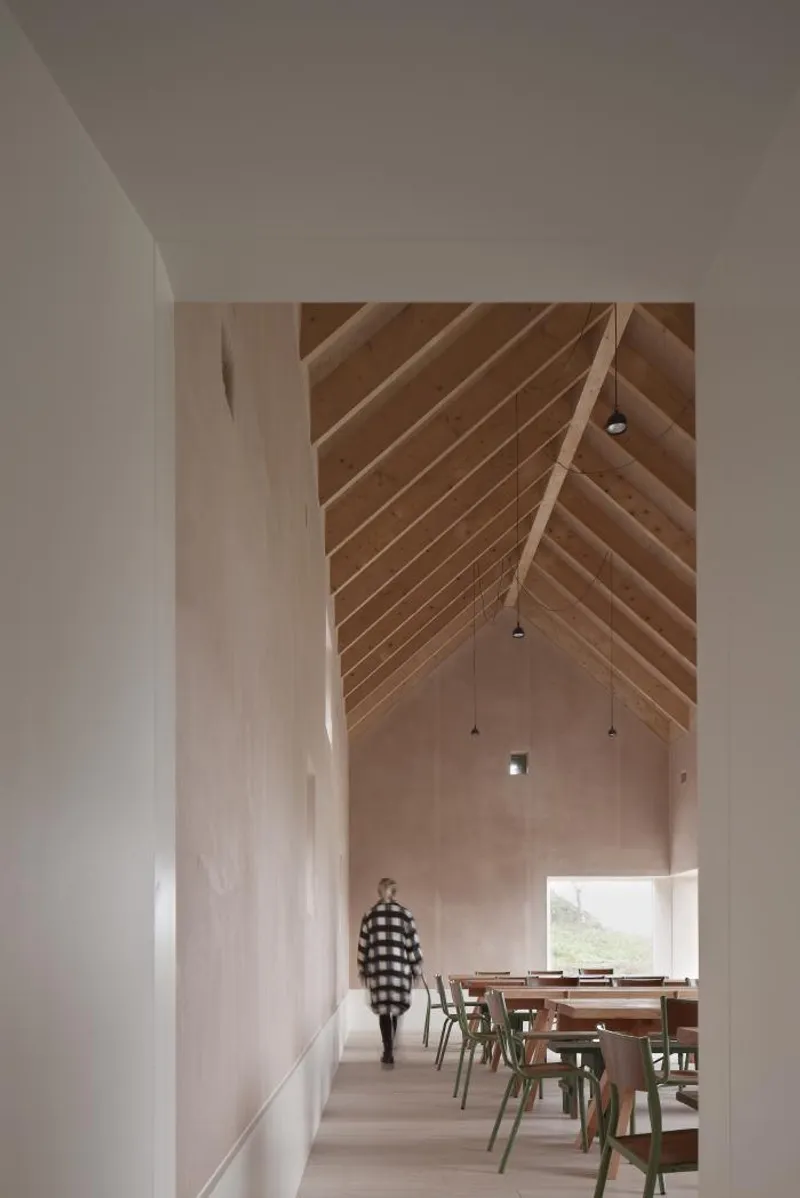
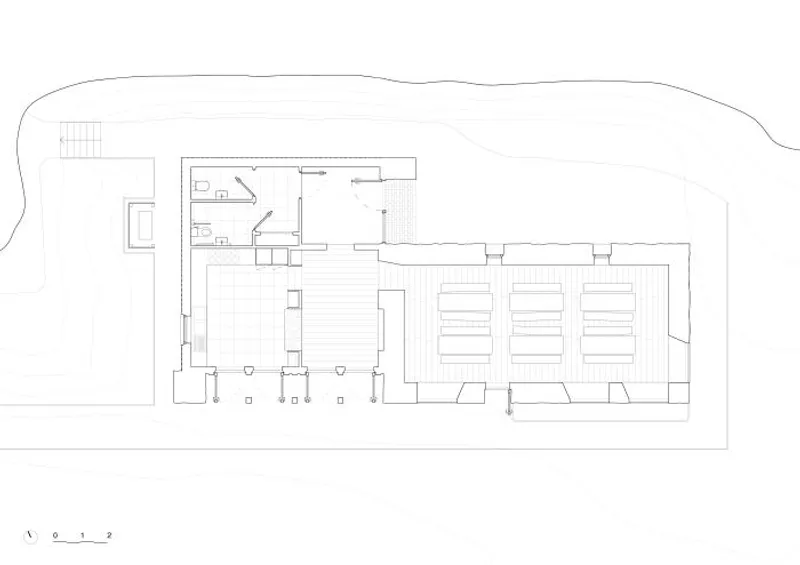
The development sees the adaptive reuse of a dilapidated stone barn into a dining hall, connected to a new timber-clad extension housing foyer, chef’s kitchen, and visitor facilities. The existing structure has been restored using lime mortar and salvaged basalt from the original stone structure. Overhead, an exposed timber ceiling of pine rafters and plywood adds a gentle warmth to the tall, open space.
The sequence of approach and entry is designed to heighten the sense of space and connection to the landscape beyond by first disassociating visitors from the scale and grandeur of the setting. Visitors enter via a low, intimate foyer before turning into a tall, light hallway and then through a deeply compressed doorway and into a grand dining room with spectacular views of the sea, bay, and islands beyond.
Fardaa's approach to repurposing the ruined barn as a dining hall and restaurant has not only provided a valued community resource for the coastal community but also showcases the studio's commitment to social and environmental responsibility. Croft 3 is a testament to Fardaa's design ethos and is a standout example of adaptive reuse in the architectural community.
Fardaa Croft 3 has recently caught the attention of the architectural community with its unique design that enhances the grand setting of the island while preserving the appearance of the original building. The structure boasts a heavily insulated thick building envelope, which reduces heat loss, punctuated by existing and new openings.
The windows and doors are set deep in the wall for the original apertures, while new windows are flush with the external face to trace the form of the original building, creating a seamless blend of old and new. The interiors of Croft 3 are defined by simple, raw materials, showcasing Fardaa's commitment to sustainability.
In the dining hall, American White Ash timber floors complement the soft salmon tones of raw plaster walls, creating a low-cost textural dining backdrop that catches light and changes throughout the day. Tall, white-painted skirting and door surrounds contrast with these more varied tones, providing robust surfaces in high-traffic areas. The dining room is furnished with reclaimed French cafe chairs and brewers' benches, and long, communal dining tables made on the island from a single Douglas fir.
Fardaa Croft 3's extension features two solid stone pylons at the southwest and northeast corners, acting as anchors for the new kitchen and entrance, strengthening a datum relating to the existing stone doorway, and extending to new windows, doors, and eaves. This extension enhances the original building's close-coupled massing of traditional island farmsteads while opening up the interior to spectacular distant views.
The dining hall of Croft 3 was completed in October 2022, showcasing Fardaa's capability to design contextual, sustainable architecture that values and enhances community and culture. Overall, Fardaa Croft 3 stands out as an excellent example of modern architecture that respects its history while embracing sustainable materials and design elements.








Architects: fardaa
Area: 98 m²
Year: 2022
Photographs: David Barbour
Structural Engineer: SF Structures
Main Contractor: Mull Joiners Ltd
Design Team: Edward Farleigh-Dastmalch, Donald Moir, Will Thorne Jenny Wyness, Jon Barnard, Maya Patel
Approved Building Inspector: Argyll & Bute Council
Country: United Kingdom


Popular Articles
Popular articles from the community


GROUP A Strips a 1969 Rotterdam Harbor Headquarters to Its Frame and Wraps It in Timber Louvers
In Rotterdam's M4H harbor district, Ferro Offices reuses a 1969 frame, adds one timber storey and reaches BREEAM-NL Outstanding.

LT2A and OPEN Architectes Thread a Brick and Glass High School Through a Wooded Belgian Campus
In Braine-l'Alleud, a 3,000 m² wing for Collège Cardinal Mercier pairs pale brick with a glazed colonnade, deferring to a small chapel and a dense wood.

David Macias Steps a Doorless Stone and Plaster House Down a Tropical Colombian Hillside
In the humid hills of Colombia, Threshold House replaces the front door with an open void and terraces its 850 m² down the slope instead of fighting it.

Architekt Andreas Gruber Scatters 23 Dark Timber Chalets Across a South Tyrolean Forest Edge
In Molini di Tures, Amonti Chalets breaks a resort into a hamlet of gabled timber houses, with parking, storage and services pushed into the slope.

Similar Reads
You might also enjoy these articles


Vereda Arquitetos Renovates a 40-Square-Meter Apartment Inside Niemeyer's Copan Building
A compact unit in São Paulo's most iconic residential tower gets a material overhaul that pairs exposed concrete with bold blue Formica.

Shakur's House: Exposed Brick as an Interior Organiser in a 168 m² Mashhad Residence
Brick moves indoors in this Mashhad residence, where masonry walls, glass partitions and teal planes sequence a compact home without closing it off.

Day and Night Park: A Time-Based Urban Newsstand in Beijing
A temporary urban newsstand in Beijing blending travel, light, and reading through poetic colors, compact form, and community-focused design.

Modernist Patio Renovation in El Masnou, Barcelona by Oliver Segura Arquitectura + Cebrià Arquitectura
Modernist patio renovation blending tradition and innovation with a movable pool, leveled floors, and Catalan materials in El Masnou.

Explore Architecture Competitions
Discover active competitions in this discipline


Challenge to reimagine the Iron Throne

Photograph architecture without architects

Illustrate the lost glory of Angkor Wat - Render Challenge

Design challenge to reuse E-waste
Comments (0)
Please login or sign up to add comments
No comments yet. Be the first to comment!