
Studio 163 Excavates Light and Storage into a Narrow Victorian Terrace in Kentish Town
A polished concrete datum line, reclaimed brick walls, and finned rooflights turn a dark London ground floor into a luminous family home.


Victorian terraces in London's conservation areas are among the most constrained canvases an architect can work with. Narrow plans, low ceilings, party walls on both sides, and planning restrictions that limit what you can do to the street elevation. The ground floors of these houses tend to be the darkest, tightest spaces in the city's domestic stock. For a young family in Kentish Town, Studio 163, led by architect Lea Grange, took on exactly this problem: how to make a compressed, underlit ground floor feel generous without blowing out the modest scale of the house.
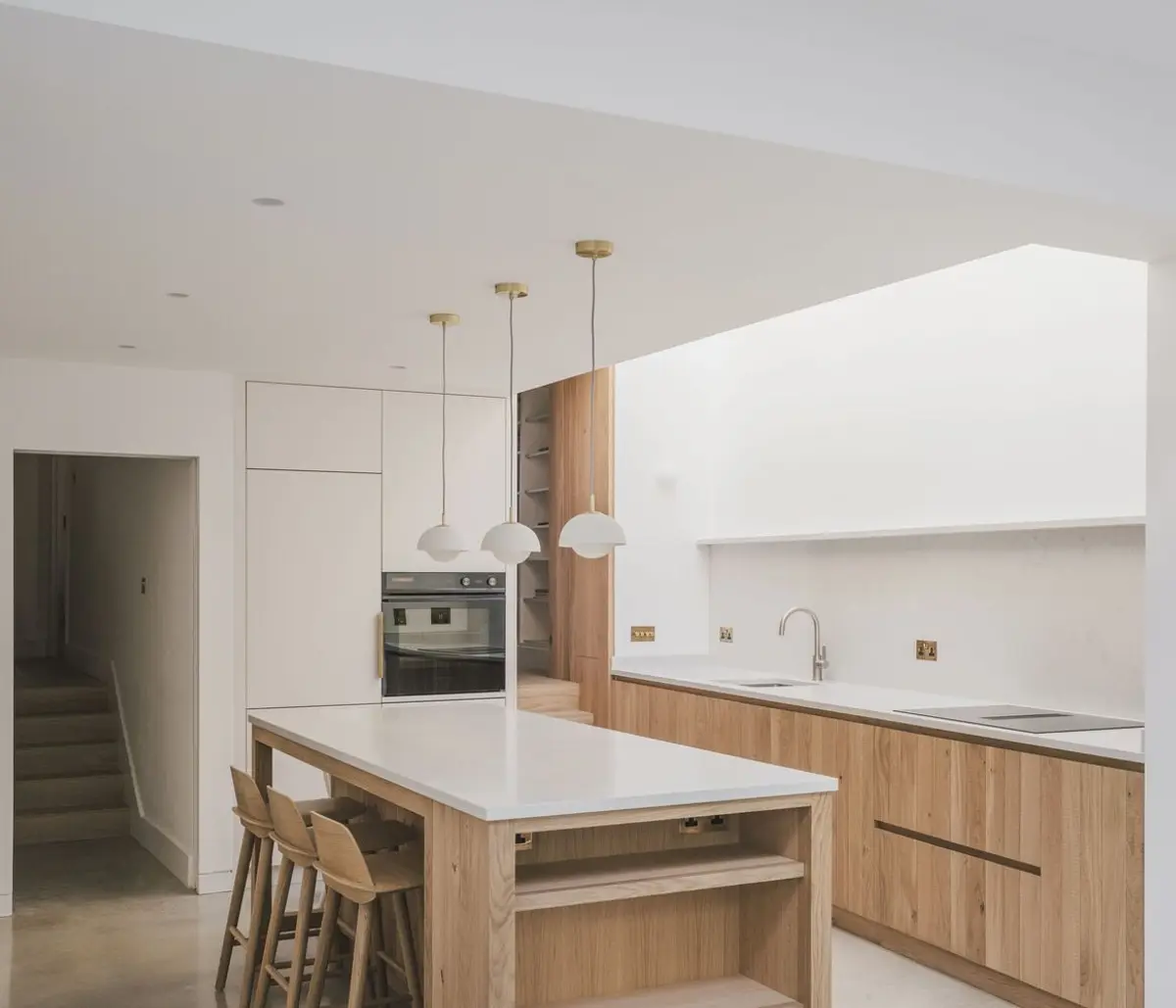
The answer, completed in 2022, is less about dramatic gestures and more about the accumulation of precise decisions. The rear of the house was extended and excavated to gain ceiling height. Two rooflights were punched into the new roof, one fitted with privacy fins that cast shifting shadow lines across the interior. A single material, Lazenby Henley Buff polished concrete, was poured as a continuous floor from the living space through the kitchen and out onto the patio, where it rises to form built-in planters. An oak threshold with concealed storage marks the seam between old and new. Every detail works double duty, and the whole project reads as a lesson in doing more with less.
Reading the Ground: Excavation and Level Changes

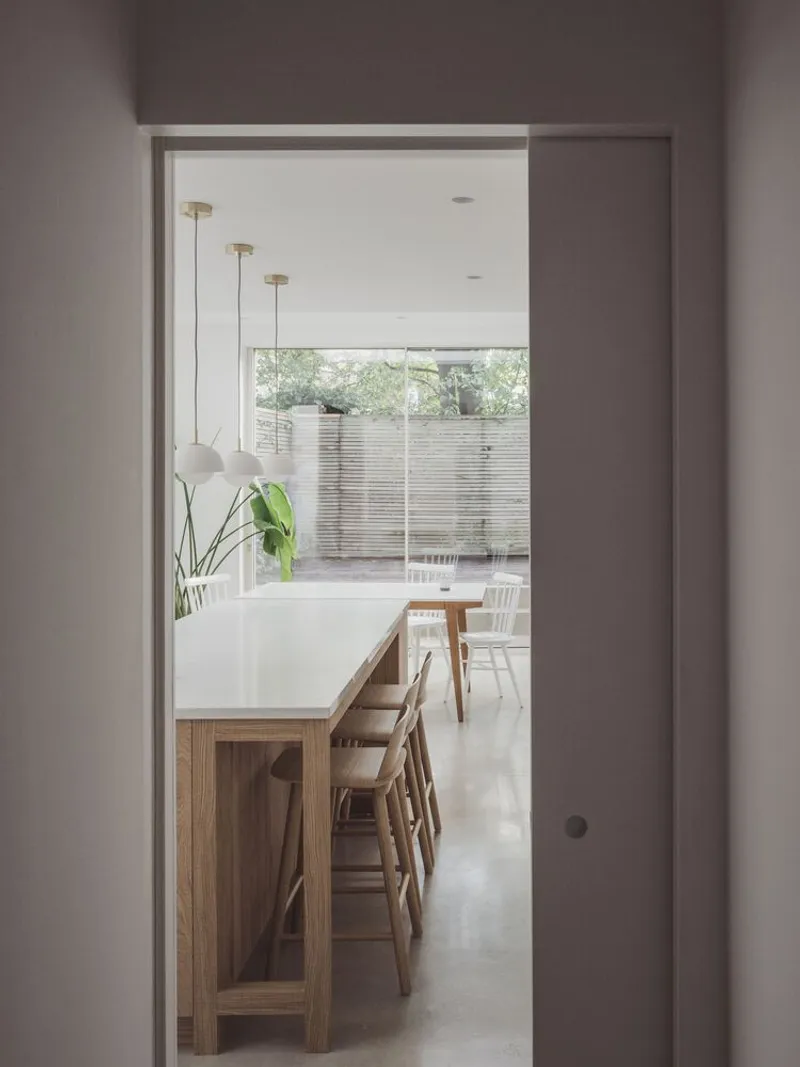
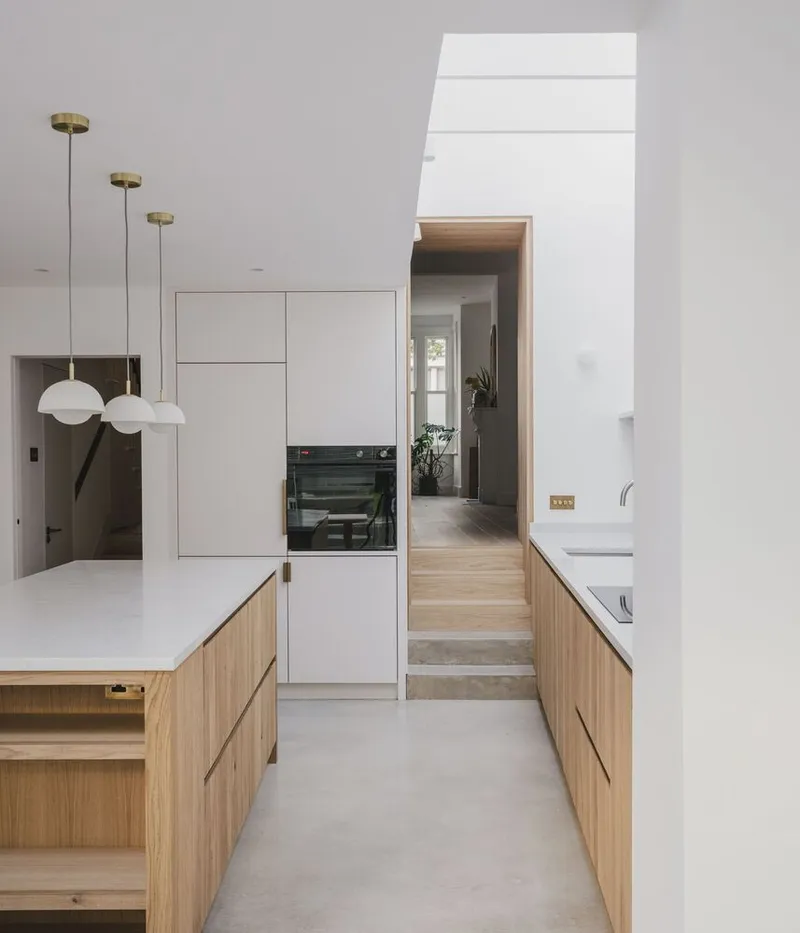
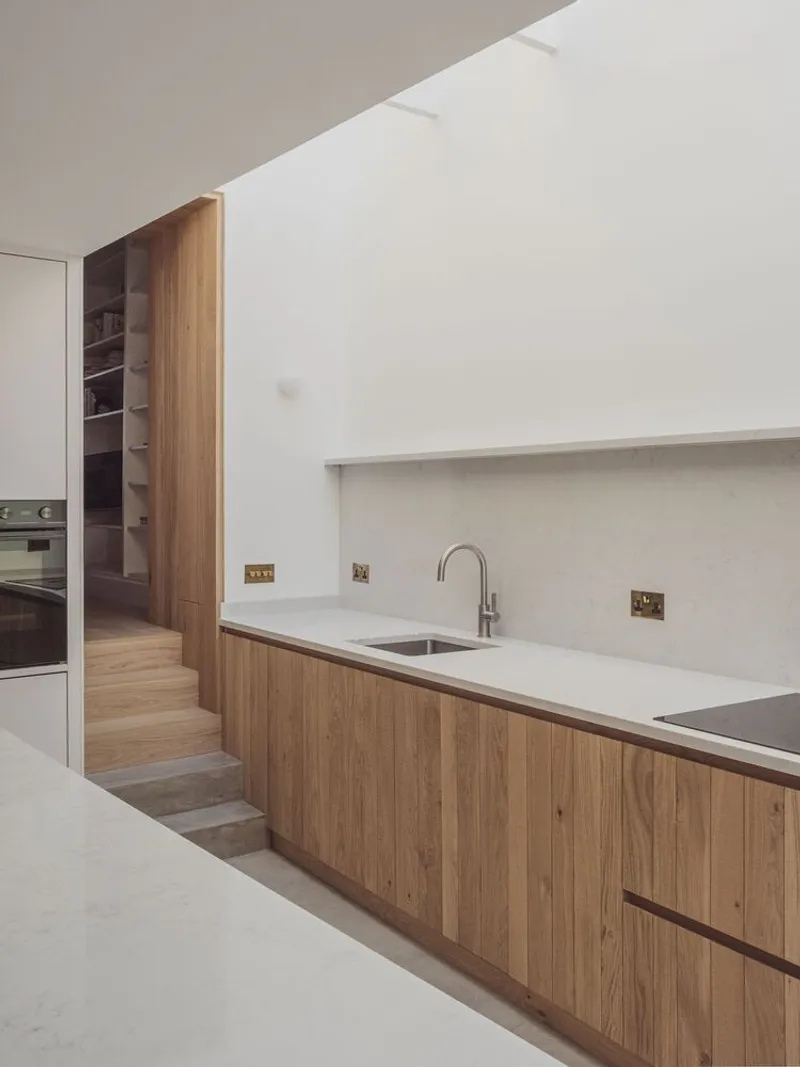
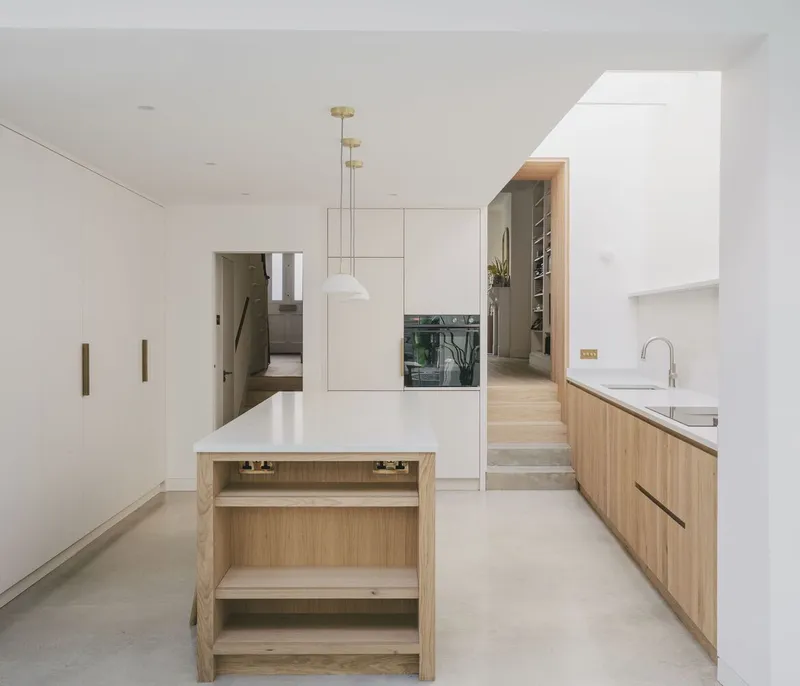
The most structurally ambitious move here is invisible to anyone who doesn't look at the sections. Studio 163 excavated the rear of the ground floor to increase head height in the new extension, creating a subtle change of level between the front living room and the kitchen and dining area. Rather than treating this step as a problem to be minimized, the architects turned it into a spatial event. The beige polished concrete forms a datum line that expresses the original floor level of the house, so you can literally read the excavation in the architecture.
The level change also generates functional opportunities. The step itself incorporates storage, and the shift in ceiling height from the existing front rooms into the taller extension creates a sense of release as you move through the plan. A new opening between front and rear improves circulation and sightlines, letting you see from the entrance hallway all the way through to the garden.
A Concrete Floor That Does Everything
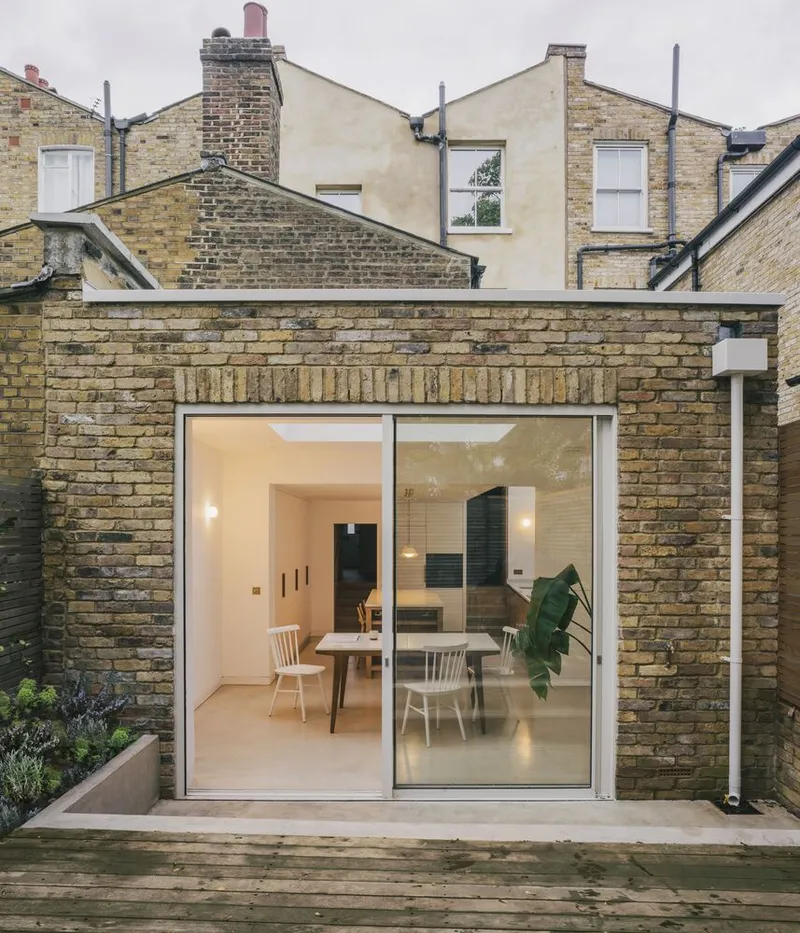
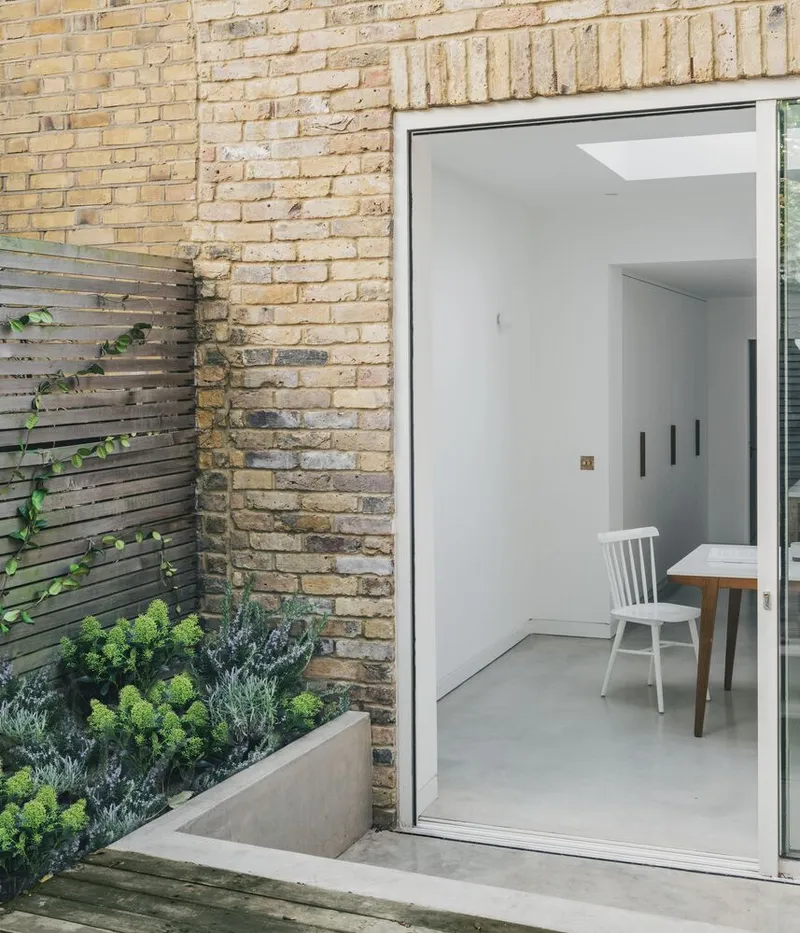
The polished concrete floor is the project's most consequential material choice. It runs continuously from the interior through the full-height glazed doors and onto the patio, erasing the typical domestic boundary between inside and out. Where it meets the garden, the concrete rises to form integrated planters against the weathered yellow brick boundary walls. The effect is to make the patio feel like an extension of the kitchen rather than a separate outdoor room.
The warm buff tone of the concrete was deliberately chosen to avoid the coldness that polished floors can sometimes introduce. Paired with Havwoods oak flooring in the existing front rooms and the oak threshold that bridges the two, the palette stays within a narrow tonal range: cream, honey, sand. It's a disciplined material strategy, and it works because nothing fights for attention.
Rooflights, Fins, and Controlled Daylight
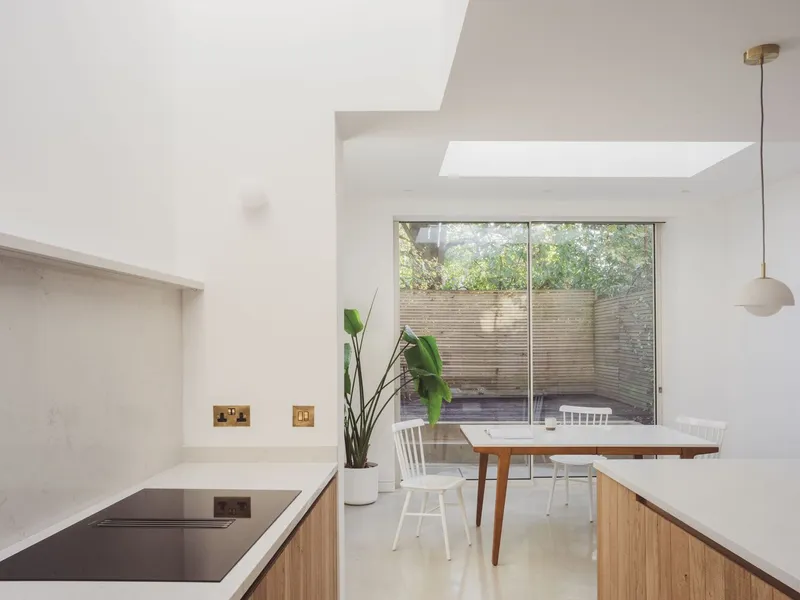
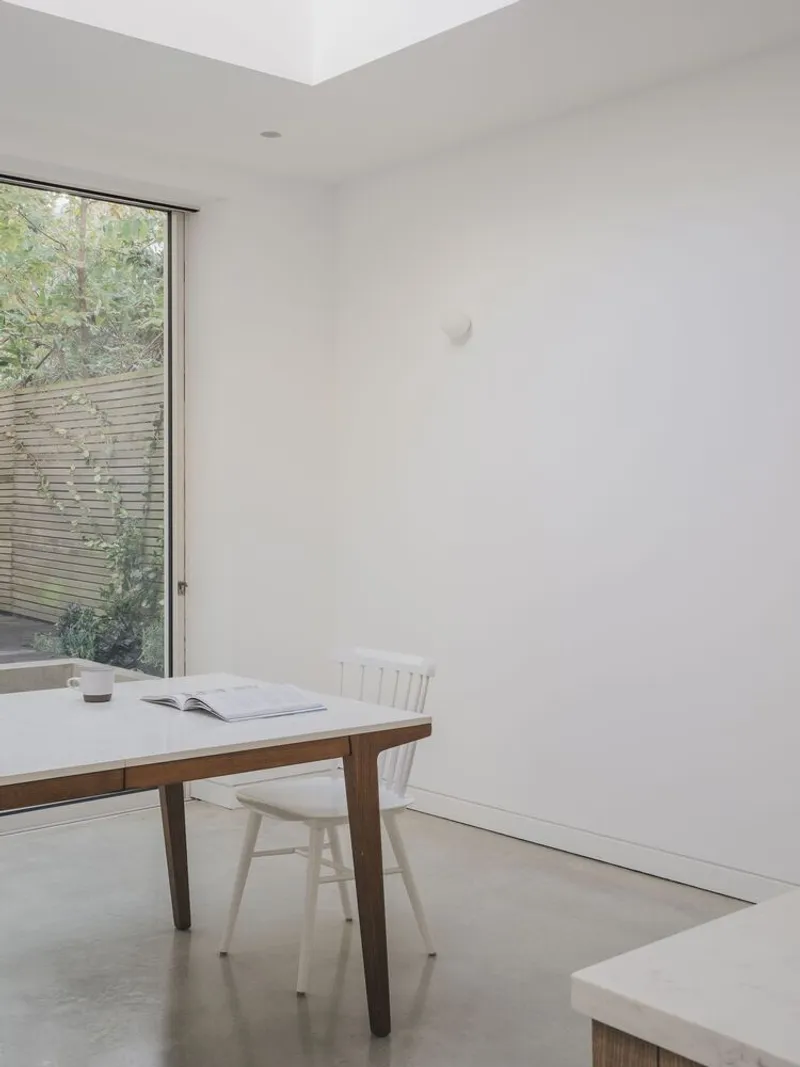
Two large rooflights are the primary light sources in the extension, and they are handled quite differently from each other. One sits above the kitchen island, a straightforward recessed opening that floods the worktop with even, overhead light. The other, above the dining area, is fitted with vertical fins that accomplish two things: they screen sightlines from neighboring upper floors for privacy, and they generate dynamic shadow patterns that shift across the walls throughout the day.
The Maxlight glazed doors at the rear use minimal frames to maximize both the aperture and the visual connection to the courtyard garden. A horizontal timber slat screen on the far boundary filters the view without blocking it. Together, these elements create a layered sequence of transparency: glass, then air, then screen, then planting. For a house that was formerly starved of daylight, the result is transformative.
Oak Joinery and the Art of Concealment
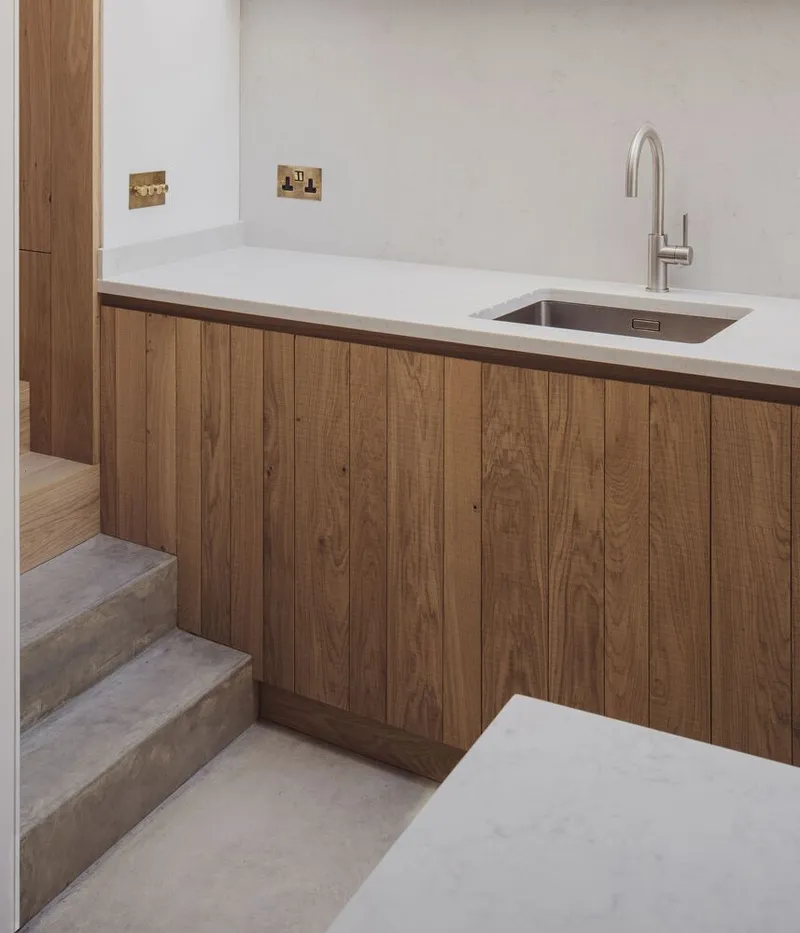
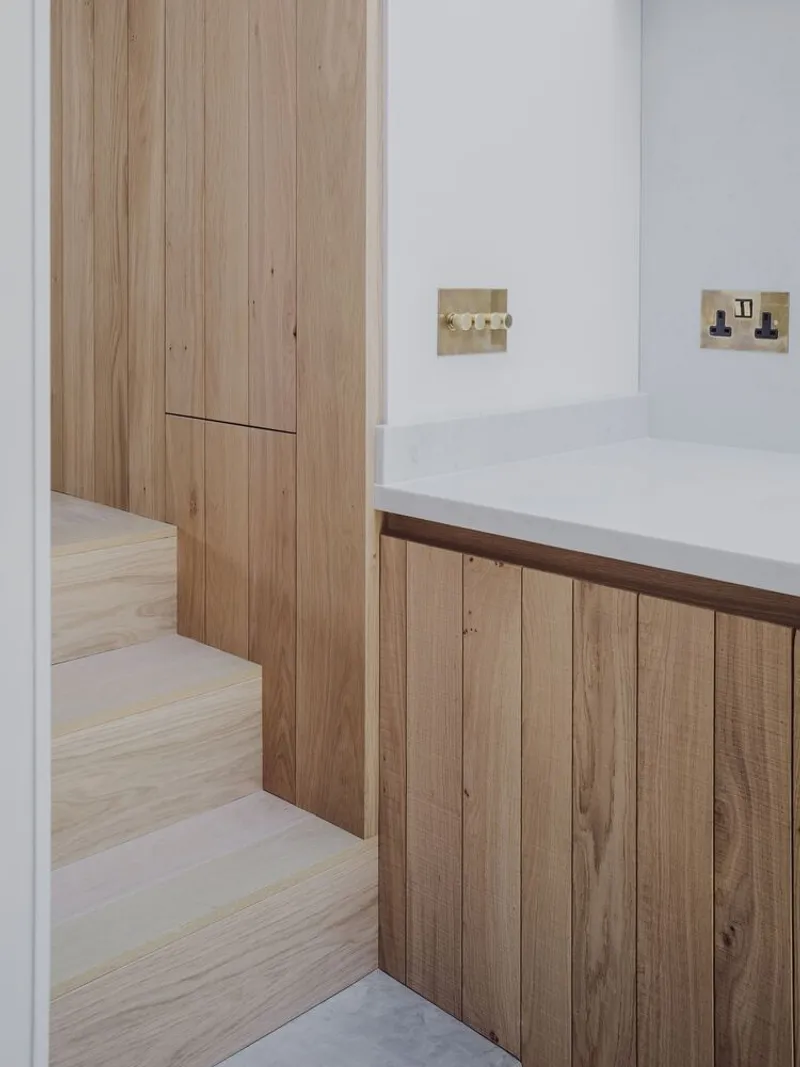
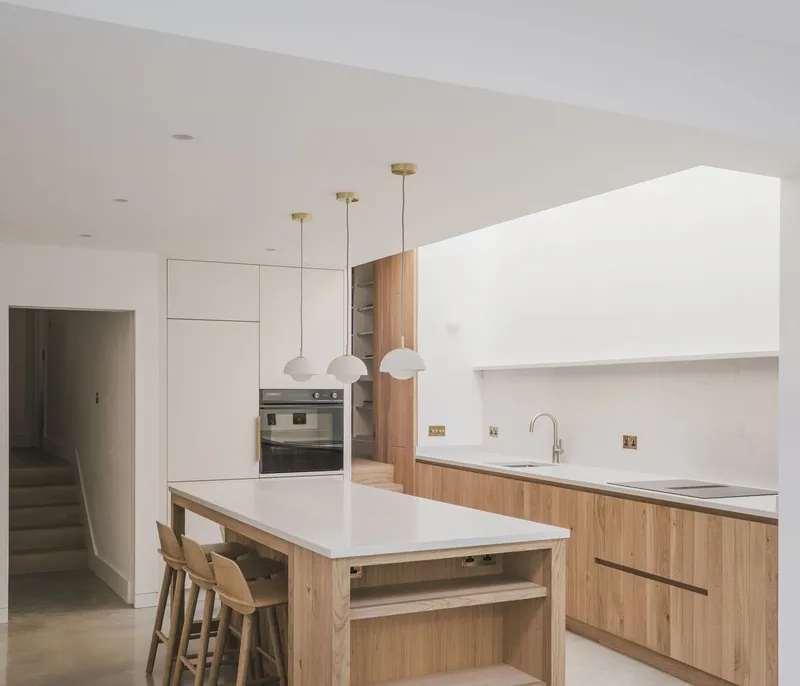
The bespoke joinery throughout the house carries a disproportionate amount of the design's success. The kitchen island and base cabinets are oak with white countertops, their proportions carefully calibrated against the concrete step detail where cabinetry meets the change in floor level. Full-height cupboards elsewhere are finished in a neutral tone that recedes into the walls. The oak threshold between old and new incorporates concealed storage, turning what could have been a simple detail into a functional element.
Small details matter here: brass pendant lights over the dining area, brass electrical switches set against white walls, an undermount sink that keeps the countertop line clean. None of these choices are revolutionary, but their consistency is what gives the interior its coherence. Studio 163 clearly understood that in a small house, every visible surface is doing atmospheric work.
Thresholds and Transitions
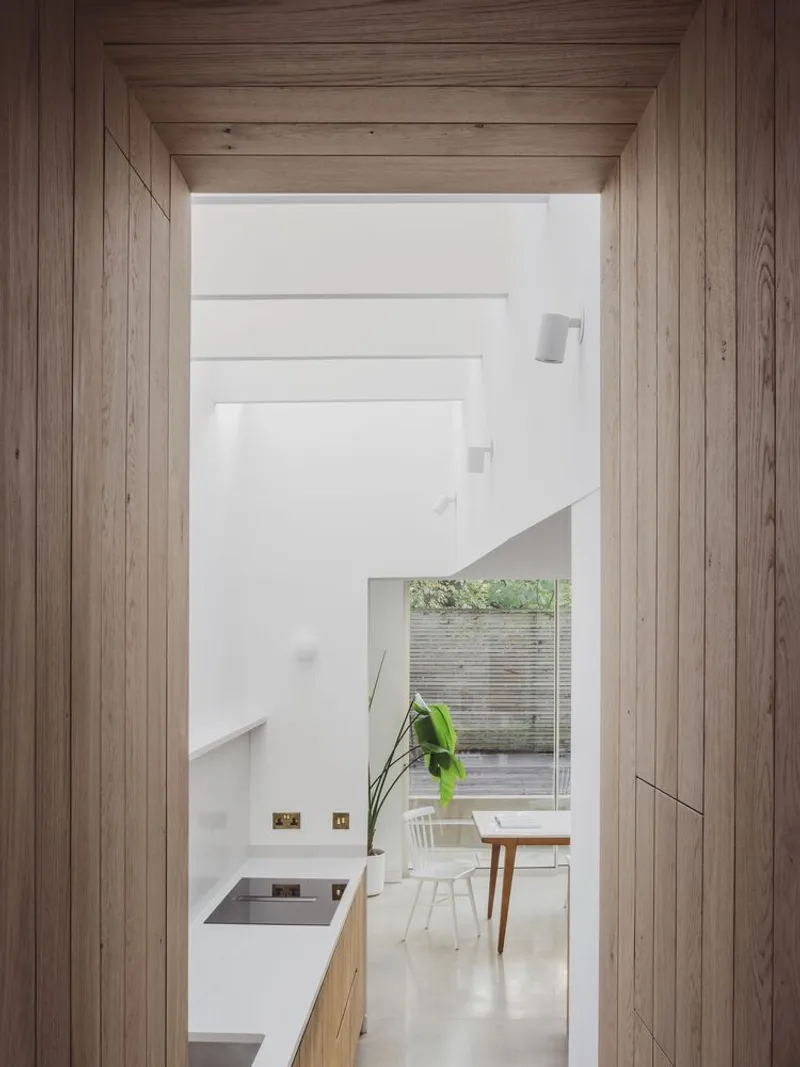

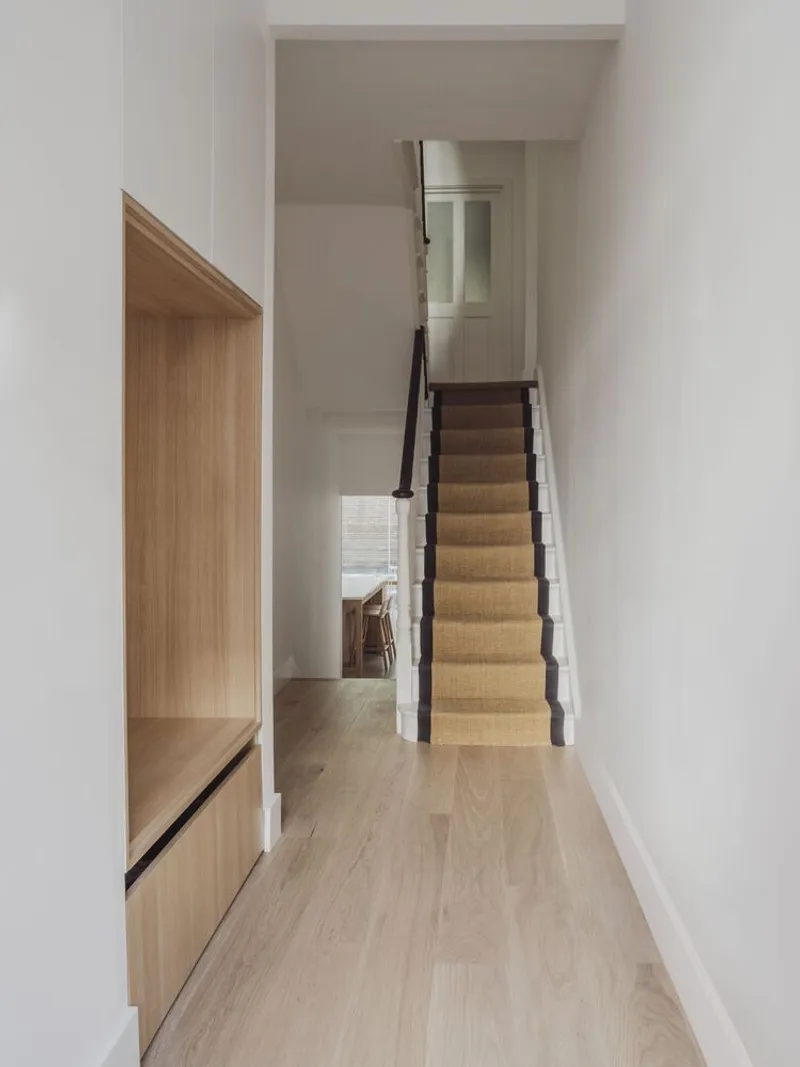
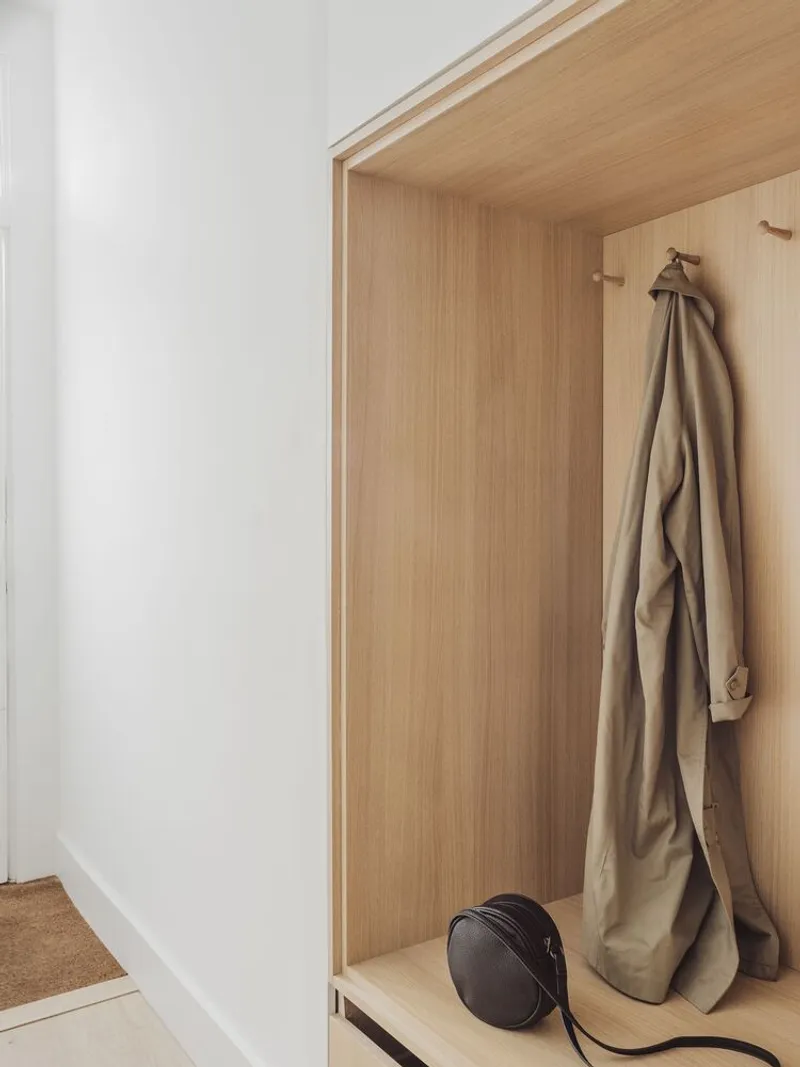
One of the project's quiet strengths is its attention to the moments between rooms. The timber-framed doorway from the living space into the kitchen is detailed with vertical paneling and stepped reveals that give it depth and visual weight. A timber-lined passageway frames sequential views through to the dining area and the slatted screens beyond. Even the entrance hallway gets a built-in oak bench with storage, a practical move for a family with young children that also signals a transition from public to private.
The staircase, with its black metal balustrade and oak treads, provides a vertical punctuation in the plan. Where the timber stair treads meet the oak cabinetry, the joinery is resolved with care, each material running to its logical edge without fudged junctions. These are the details that separate considered architecture from mere refurbishment.
Reclaimed Materials and Conservation Context
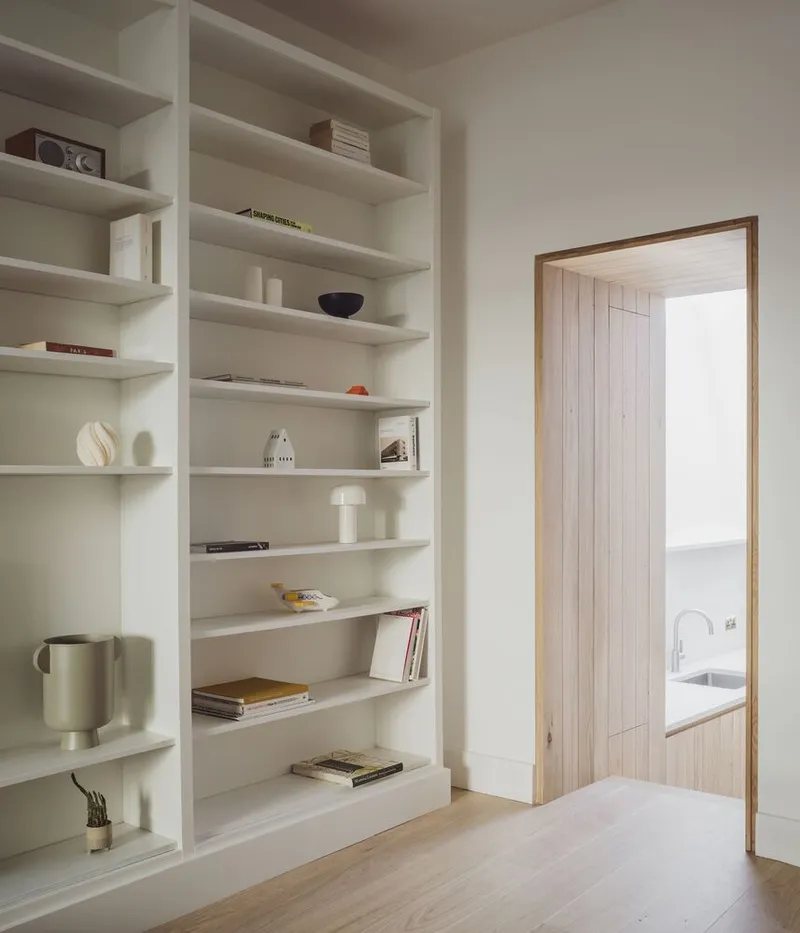

Sitting within the Kentish Town Conservation Area, the project had to be sensitive to its surroundings. The rear facade was re-rendered and left unpainted, its natural buff color chosen to harmonize with the London stock bricks of neighboring properties. Reclaimed bricks were used for new wall construction, and reclaimed timber was laid as the patio deck. Bespoke coping and rainwater pipes were designed to match the window frame color, a small detail that signals how carefully the exterior was composed.
Sustainability here isn't performed through photovoltaic panels or green roofs but through resourcefulness: reusing what exists, specifying durable materials that will age well, and designing storage that reduces the impulse to buy new furniture. The timber-lined coat alcove, the cork flooring in secondary spaces, the yellow-tiled bathroom with its wall-mounted taps: each choice reflects a preference for longevity over novelty.
Plans and Drawings

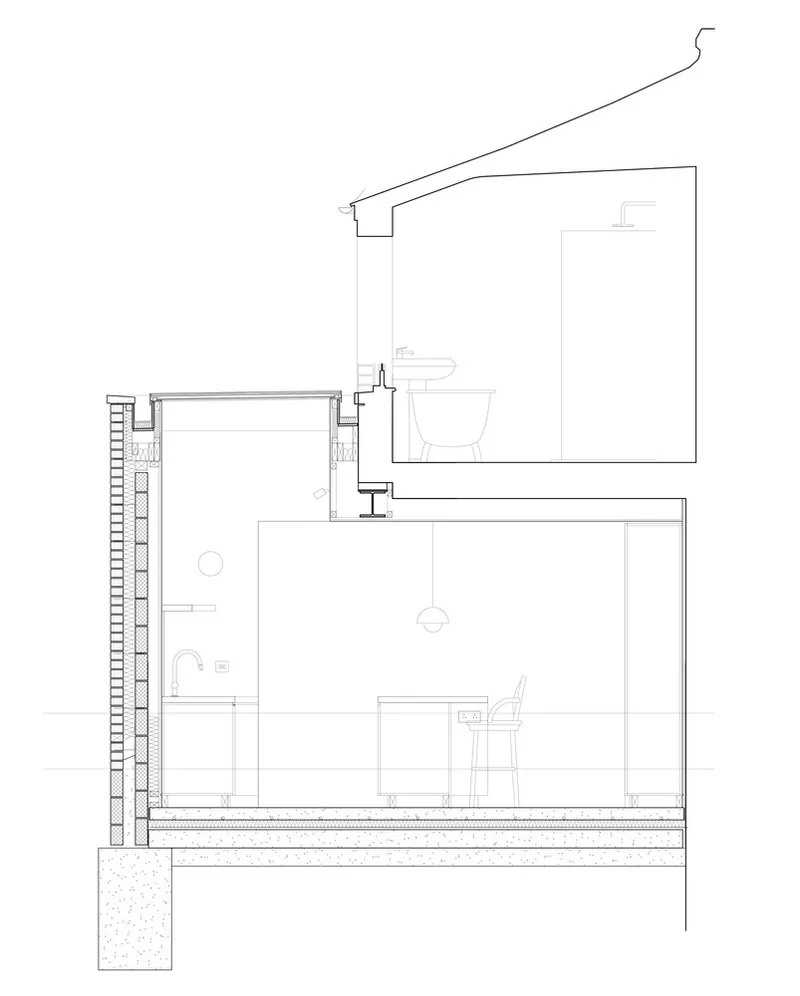
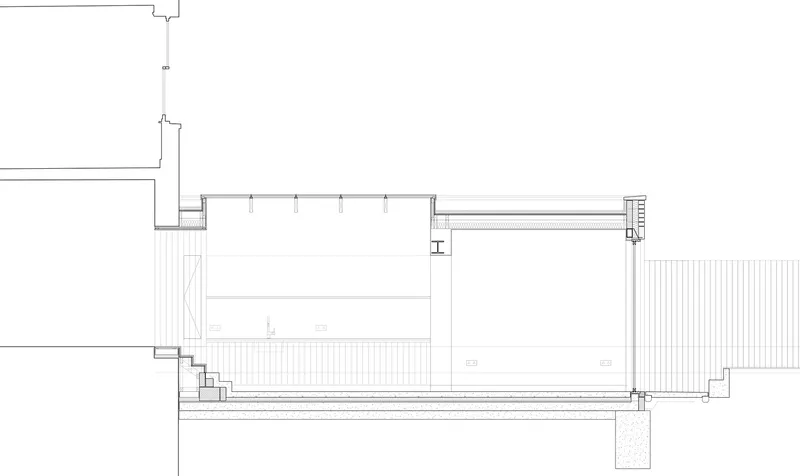
The longitudinal section is the most revealing drawing. It shows the full spatial sequence from the existing front rooms through the level change and into the taller rear extension, making legible the excavation strategy and the way ceiling heights shift to define different zones. The detail sections clarify how the bathroom sits above the kitchen, with timber joists exposed and drainage carefully routed, and how the rear terrace steps mediate between the internal floor and the garden level. Vertical cladding at the boundaries appears in section as a clean edge condition against the neighboring stock brick.
Why This Project Matters
London is full of Victorian terraces with dark, cramped ground floors, and the rear extension has become the default solution. Most of them are competent but unremarkable: a glass box bolted onto the back, a kitchen island, some bifold doors. What Studio 163 has done at Falkland Road is subtler and more rigorous. The excavation to gain height, the continuous concrete floor that binds inside and out, the finned rooflight that turns privacy into a design feature: these are specific, earned moves that respond to the actual constraints of this particular house.
The project also demonstrates that sustainability in domestic architecture doesn't require grand gestures. Reclaimed materials, a tight palette, bespoke storage that eliminates clutter: these are pragmatic choices that collectively reduce waste and extend the life of the building. For a family growing into their home, Studio 163 has created spaces that feel both generous and precise, a combination that is far harder to achieve than it looks.
Falkland Road House Extension by Studio 163 (lead architect: Lea Grange), Kentish Town Conservation Area, London, United Kingdom. Completed 2022. Construction by North Pole / Andrew Pool. Photography by Lorenzo Zandri.
About the Studio
Share Your Own Work on uni.xyz
If projects like this are the kind of work you want to make, uni.xyz is a place to publish your own, find collaborators, and enter design competitions.


Popular Articles
Popular articles from the community


Little Red Riding Hood: Architectural Design as a Journey Through Fear, Light, and Storytelling
Little Red Riding Hood reimagines the fairy tale through architectural design shaped by fear, light, scale, memory, uncertainty, and choice.

Conexión: Biophilic Design Reimagines High-Rise Living in Hong Kong
Conexión reimagines high-rise living in Hong Kong through biophilic design, green facades, shared spaces, daylight, water and nature within.

Co-Life: Senior Housing Design That Reconnects Older Adults With the City
Co-Life reimagines senior housing design through healing gardens, shared streets, workshops, and a sustainable community across generations.

Play: Fragments of Their World
Familiar architecture becomes modular playground design, creating safe spaces where displaced children can learn, connect, imagine and play.

Similar Reads
You might also enjoy these articles


Hodi-Mandai Geram
Project Function: Preservation and revitalization of the Intangible heritage and socio-spatial identity of the Hodi by Housing, Cultural Memory Center, Sacred Grove, landscape, local tourism economy


Olio Towers: A Mid-Rise for Performers That Fuses Housing, Rehearsal, and Stage
Located blocks from Houston's Theater District, this modular tower stacks living units around a central performance atrium.

Oasis: Modular Green Housing Carved into Dhaka's Urban Fabric
A shortlisted Plugin Housing entry reclaims unauthorized settlements in Dhaka with stepped concrete volumes, green roofs, and ventilation-driven design.

Black Hole: A Floating Megastructure for the Post-Physical Era
Emiliano Mazzarotto envisions a spherical, self-scaling arena where e-sports, digital hotels, and holographic stadiums replace traditional public space.

Explore Building Extension Competitions
Discover active competitions in this discipline

Challenge to reimagine the Iron Throne

Photograph architecture without architects

Illustrate the lost glory of Angkor Wat - Render Challenge

Design challenge to reuse E-waste
Comments (0)
Please login or sign up to add comments
No comments yet. Be the first to comment!