
Family House Dehtáry by Šťastný Pavel Architekt and SP-AM
Intergenerational rural home combining renovated heritage and minimalist extension, emphasizing spatial clarity, sustainability, and seamless indoor-outdoor living in Czechia.


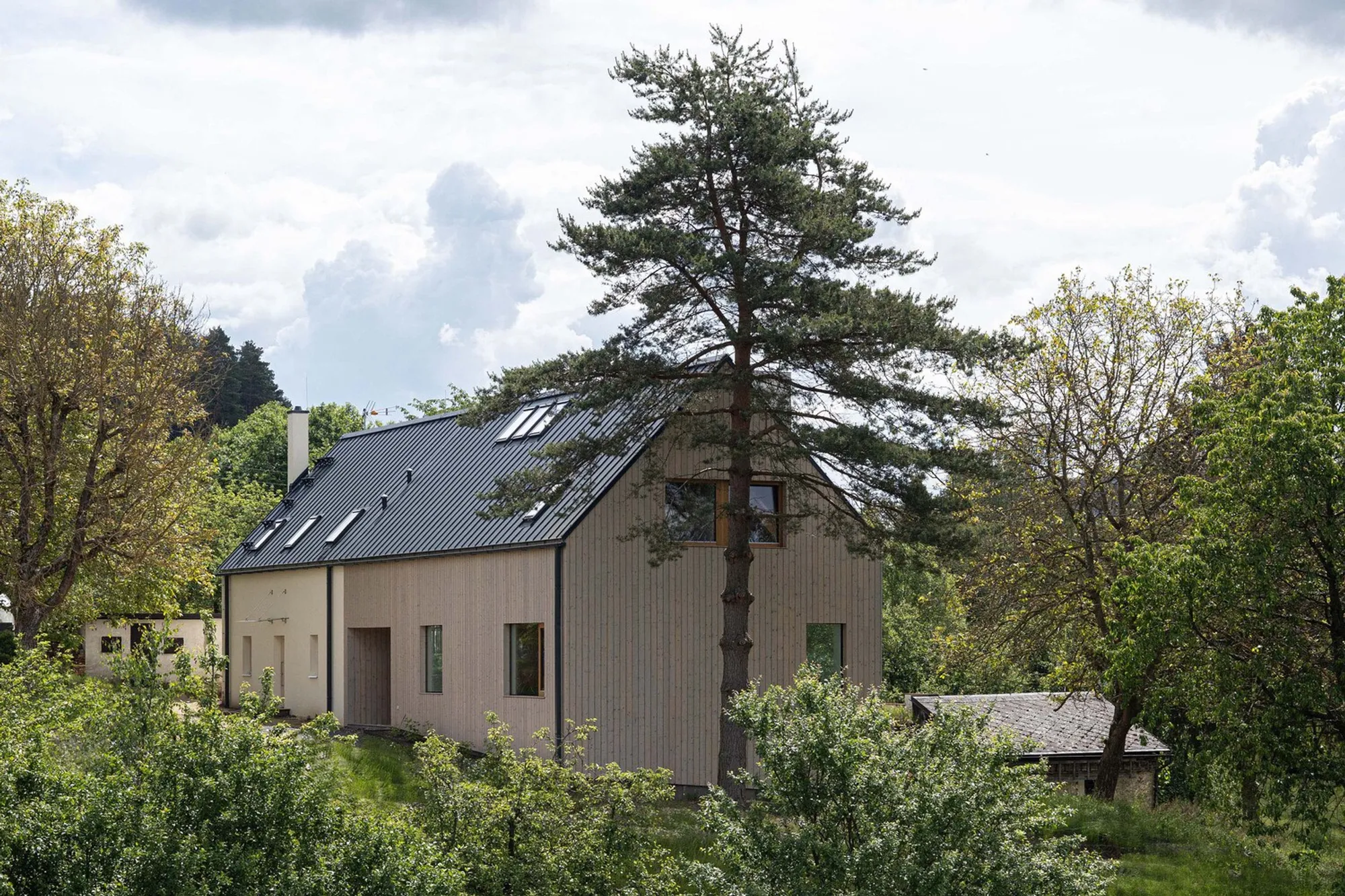
Located in the rural village of Dehtáry in the Liberec Region of Czechia, the Family House Dehtáry is a carefully considered residential renovation and extension project by Šťastný Pavel Architekt | SP-AM. Completed in 2024, the 190-square-meter house transforms an original single-apartment rural dwelling into a contemporary two-unit family home, thoughtfully designed to support intergenerational living while preserving the character of the original structure.
Set within an open landscape defined by scattered rural development, the project responds sensitively to both context and family needs. The client’s brief called for the reconstruction of the existing house to accommodate two independent residential units: one for the grandparents on the ground floor of the original building, and a newly constructed extension for a young family. This dual-living strategy allows close family proximity while maintaining privacy and autonomy for both households.
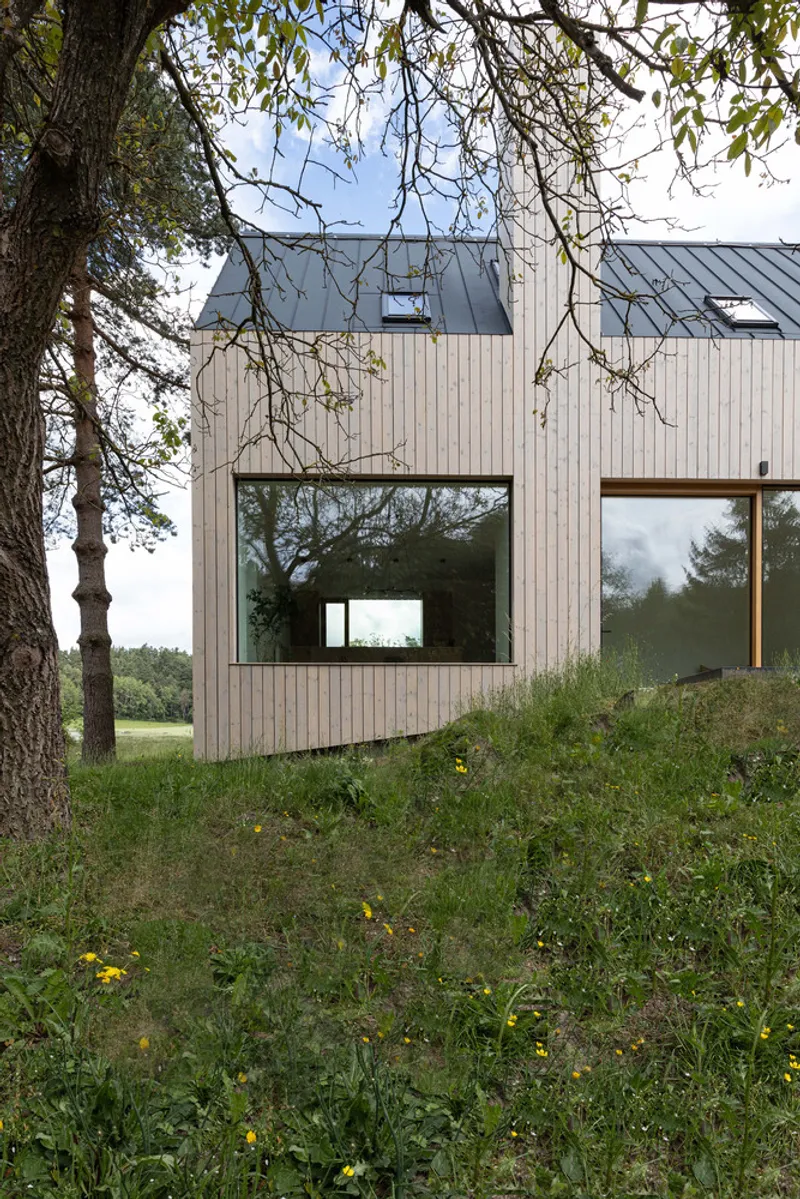
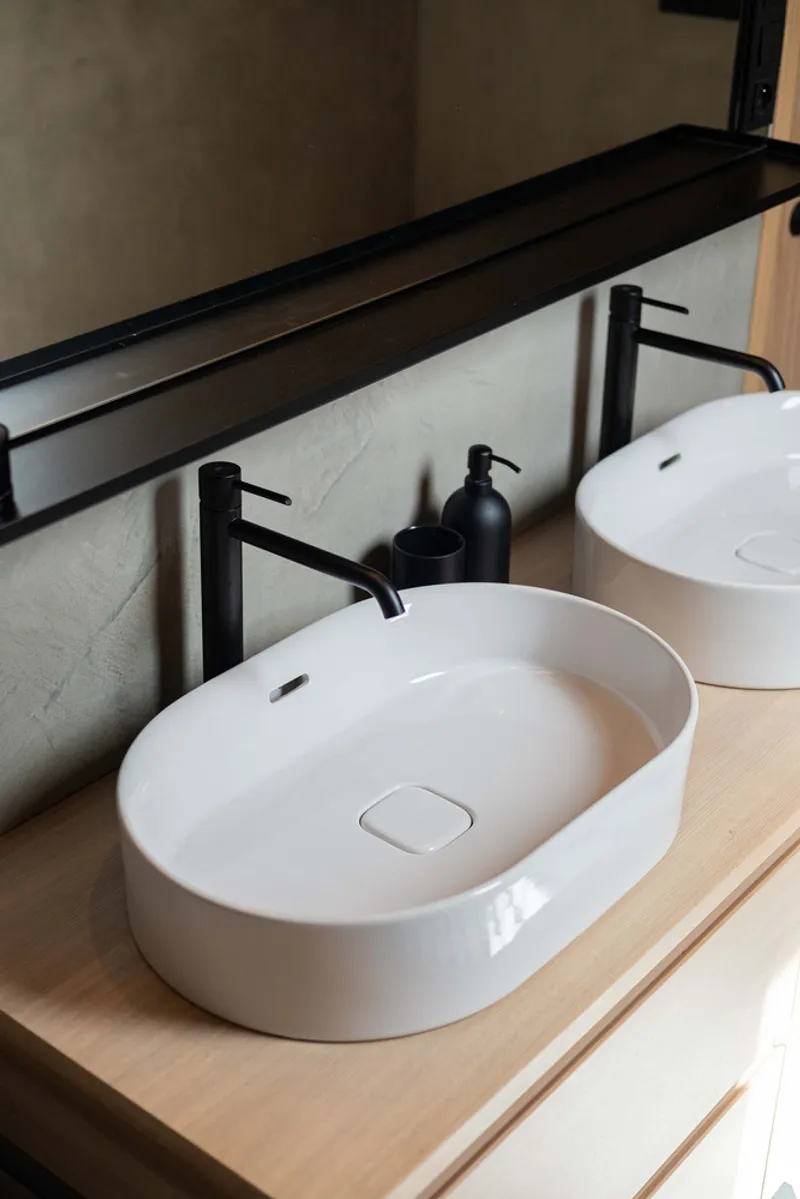
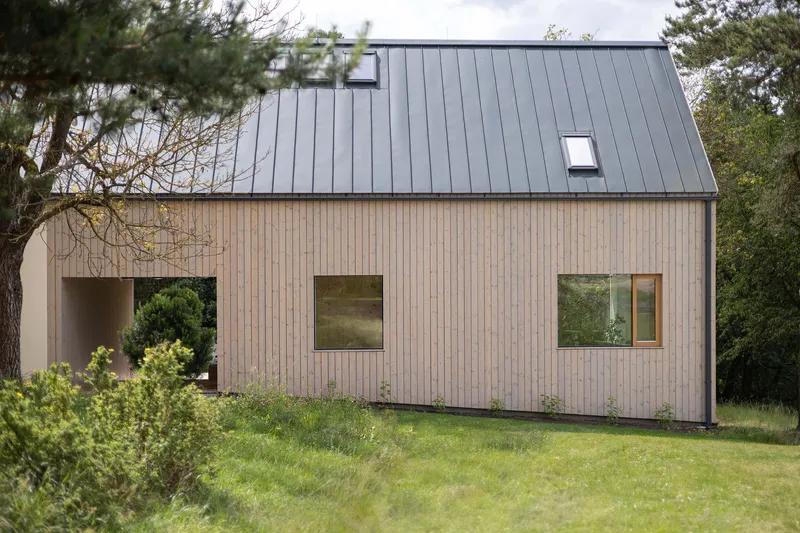
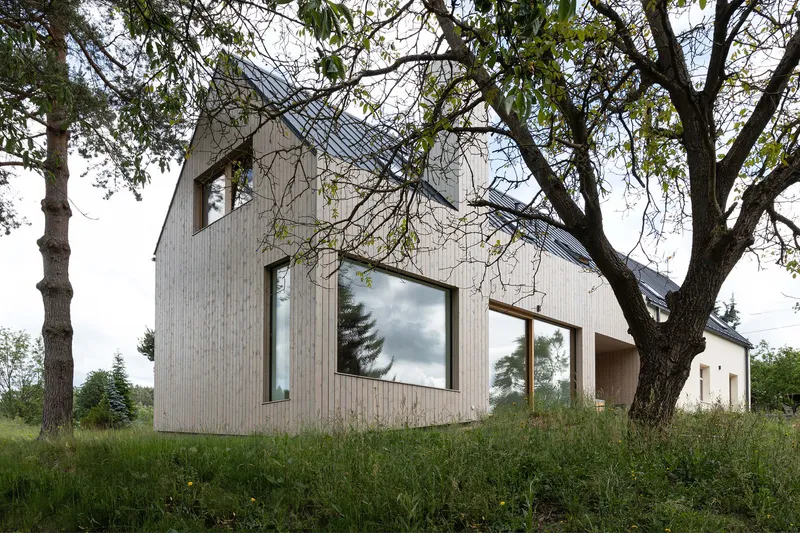
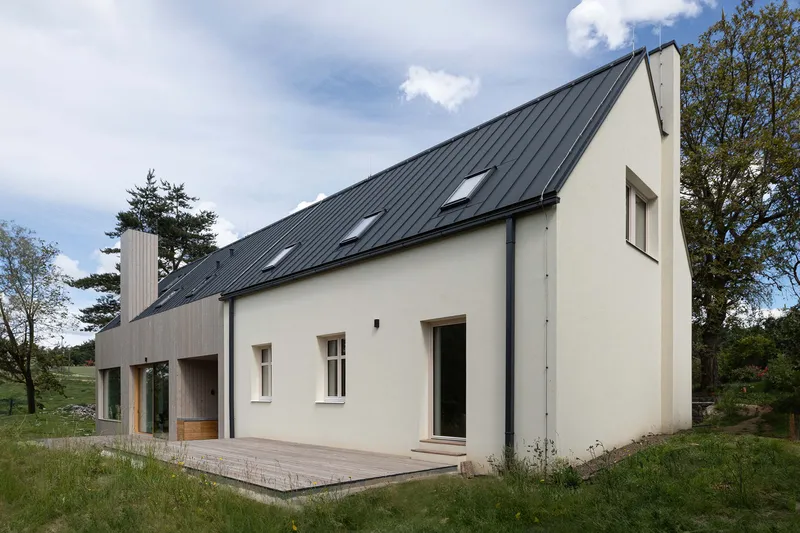
A key architectural move involved the removal of unsympathetic annexes from the original structure. This intervention clarified and cleaned the front elevation, which was then linearly extended to form a cohesive architectural composition. The elongated volume is deliberately interrupted at its center by a generous opening that visually and physically connects the space in front of the house with the garden behind. This void creates a subtle separation between the old and new parts of the house while simultaneously forming a covered outdoor seating area, enhancing everyday outdoor living and spatial permeability.
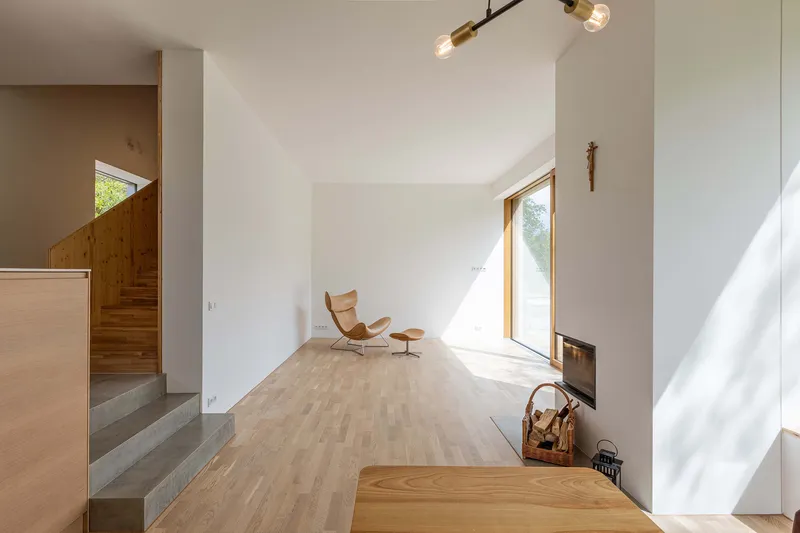
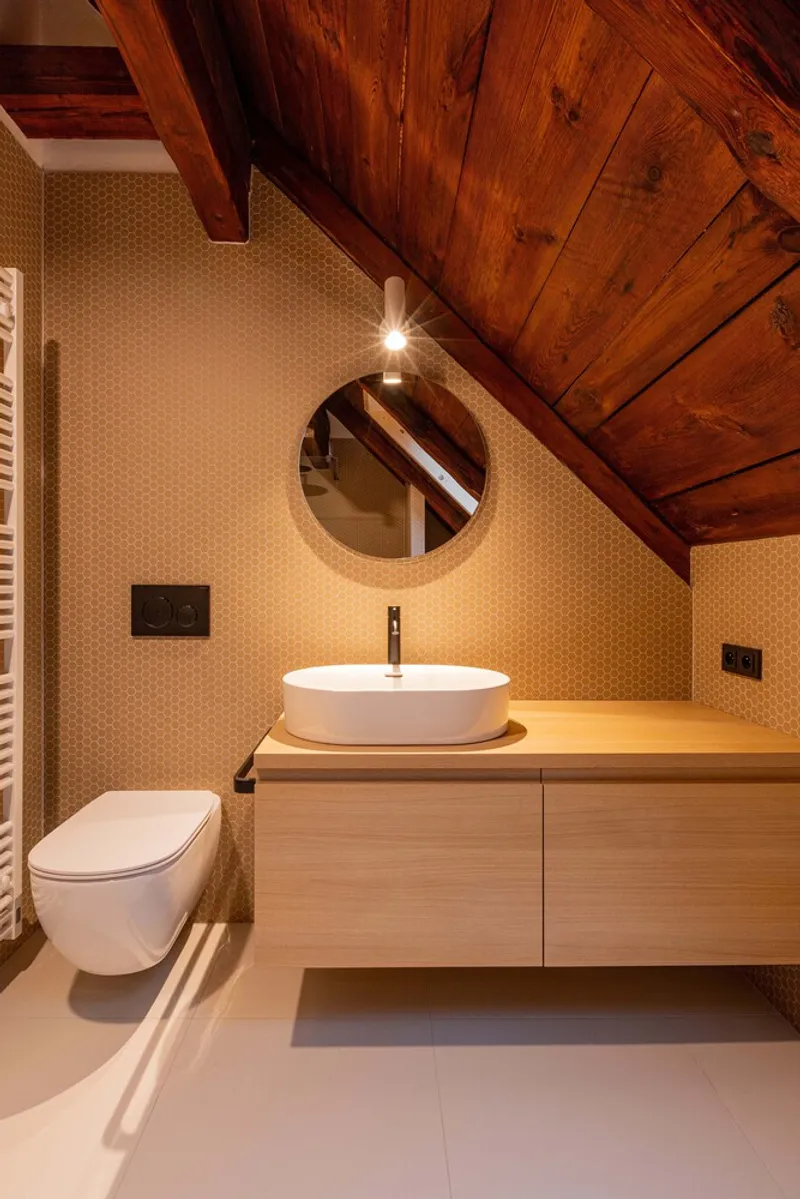
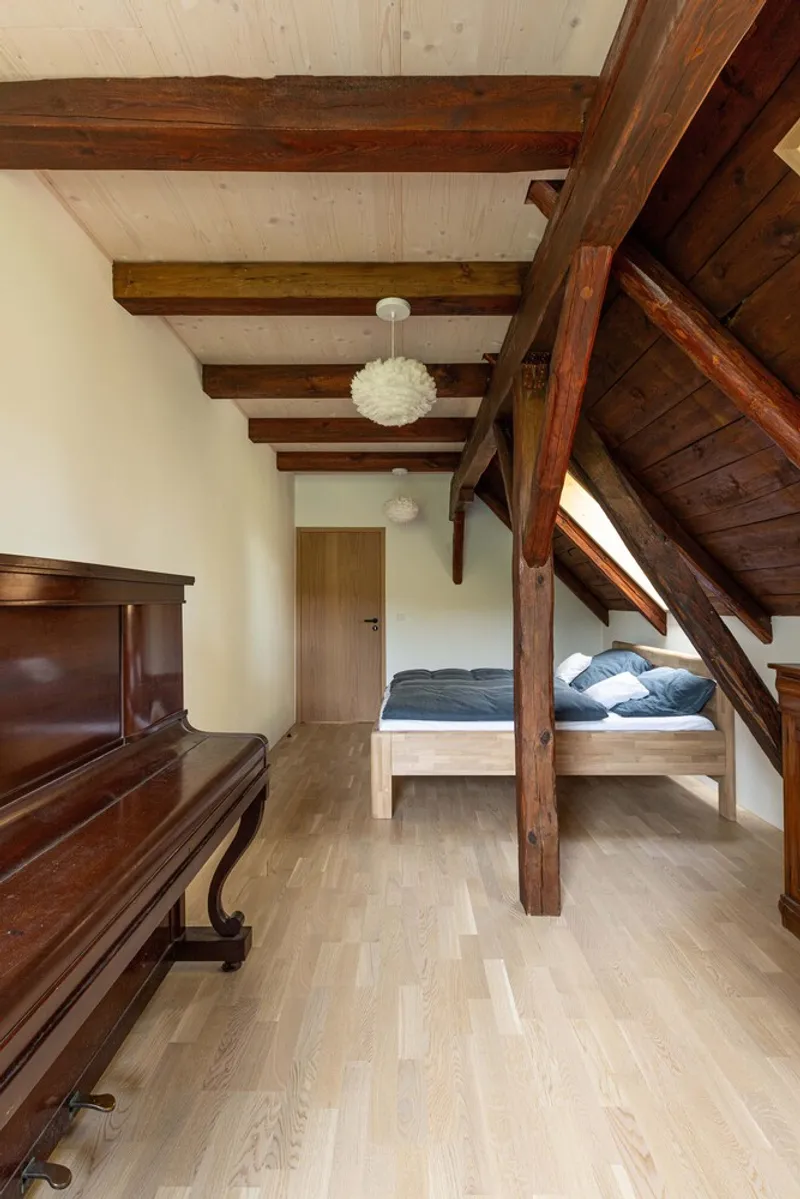
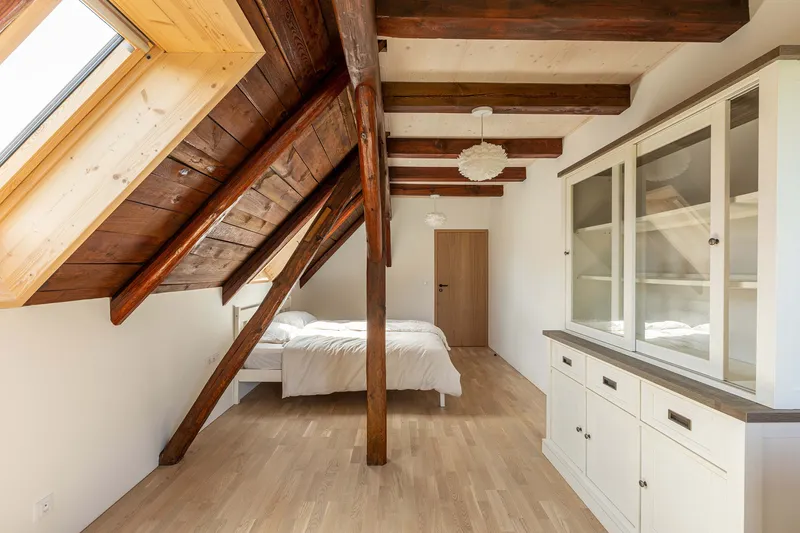
The architectural language clearly distinguishes between old and new, using materiality and detailing to express temporal layers. The new extension adopts a minimalist architectural expression, characterized by clean lines, restrained details, and contemporary construction methods. In contrast, the original house integrates preserved structural elements and newly introduced fragments, creating a dialogue between past and present. This contrast is legible both on the exterior and within the interior spaces, reinforcing the project’s narrative of respectful transformation.


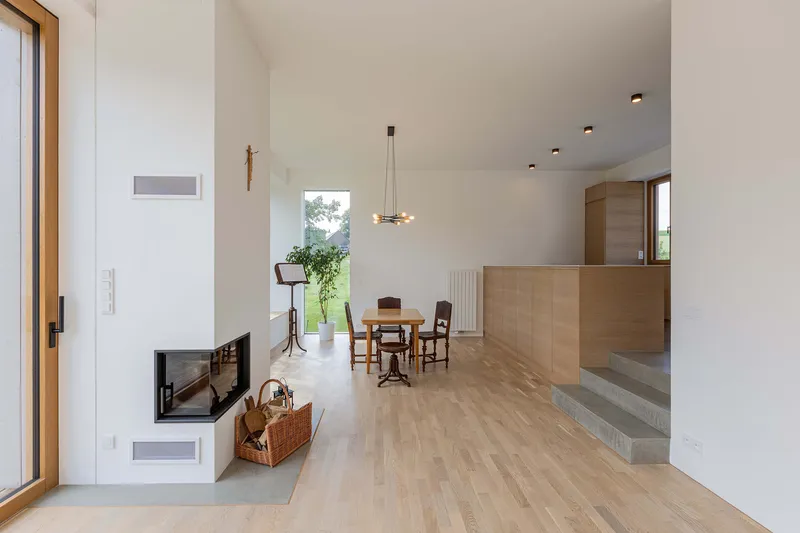
Internally, the layout follows a clear and logical spatial organization. Living areas are positioned on the ground floor and oriented toward the private garden and southern exposure, ensuring optimal daylight and a strong indoor, outdoor relationship. The kitchen is strategically placed to overlook the entrance to the property, reinforcing visual control and connection to daily arrival sequences. Bedrooms and quiet retreat spaces are located on the upper level, providing privacy and separation from communal activities.
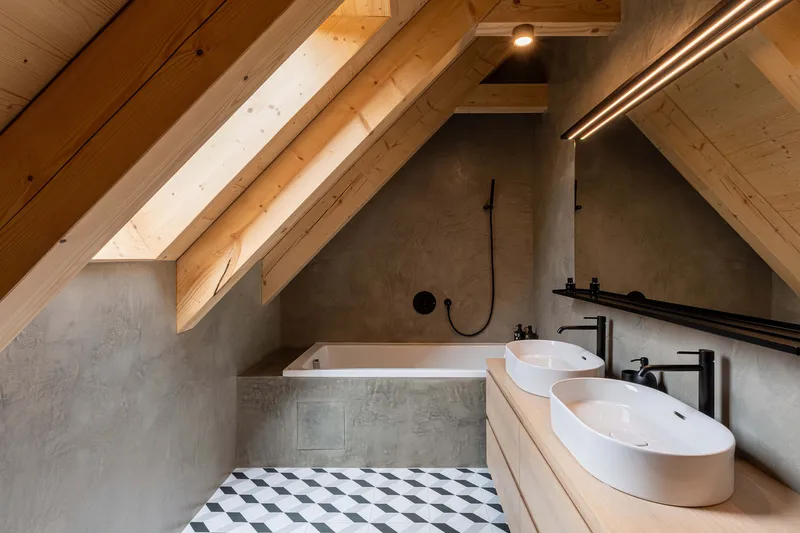
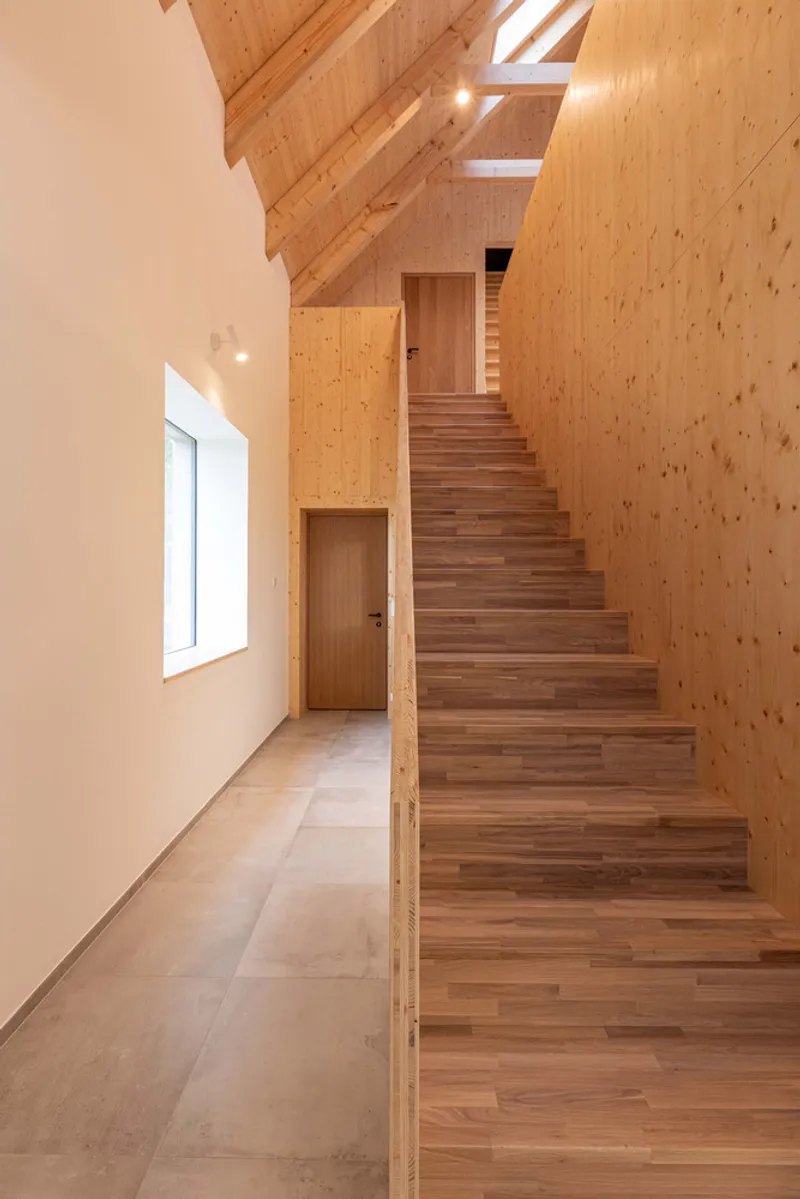
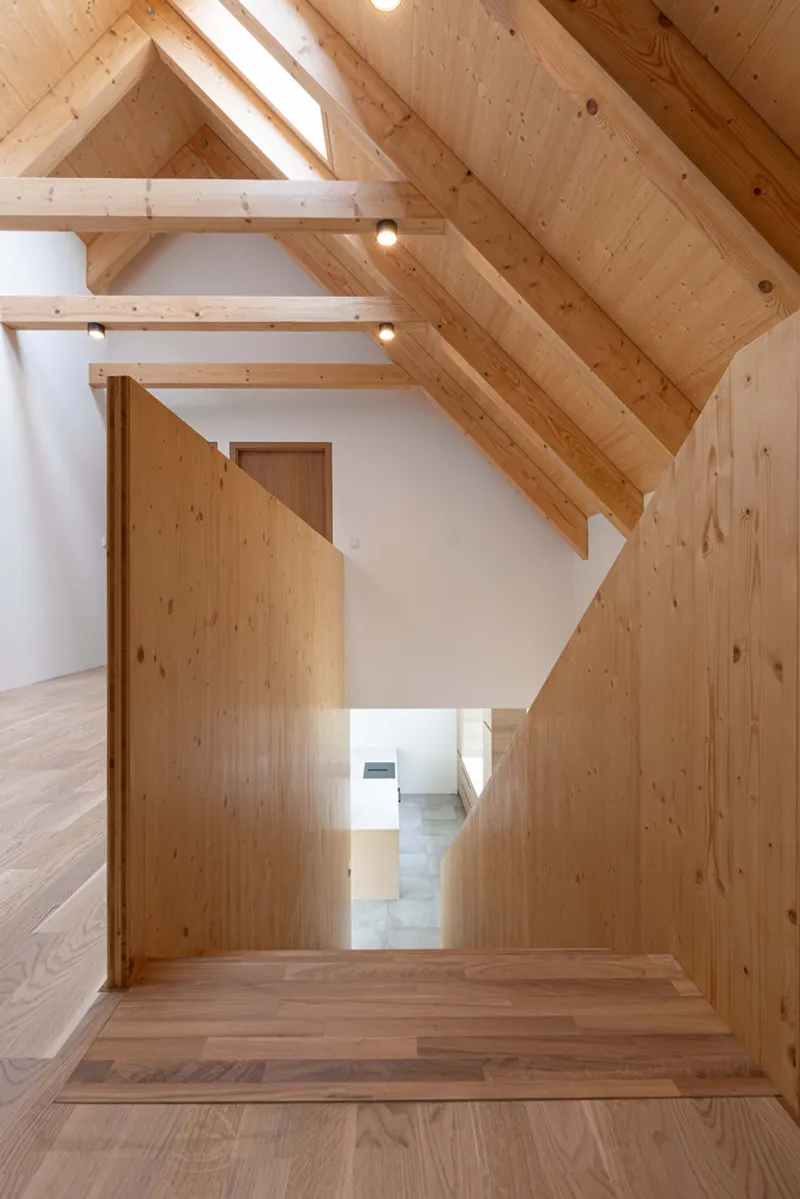
The project also responds sensitively to the natural terrain of the site. On the ground floor, the dining and living areas are set slightly lower than the entrance level, reflecting the site’s topography and subtly enhancing spatial differentiation. Vertical circulation connecting the ground floor and upper level is concentrated within the entrance zone, ensuring intuitive movement throughout the house. A defining quality of the new extension is its spatial airiness, achieved through generous openings, visual continuity, and a strong connection between interior and exterior environments.
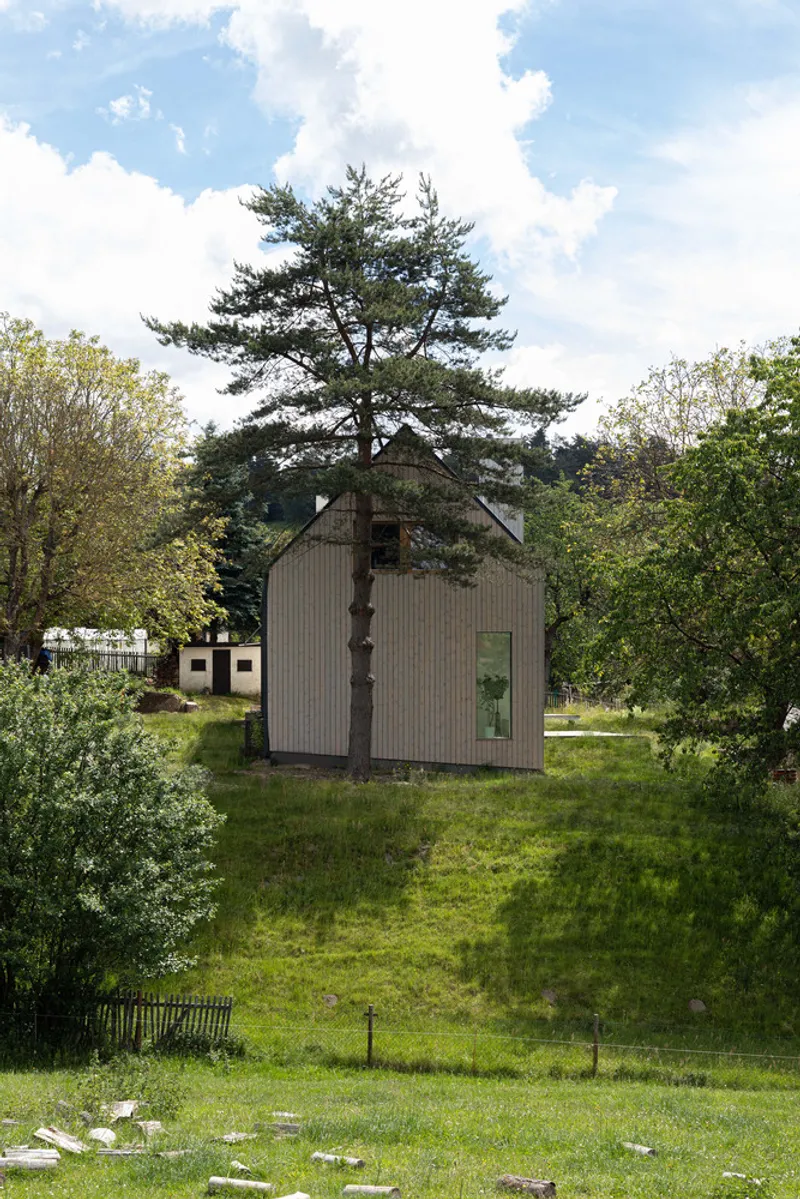
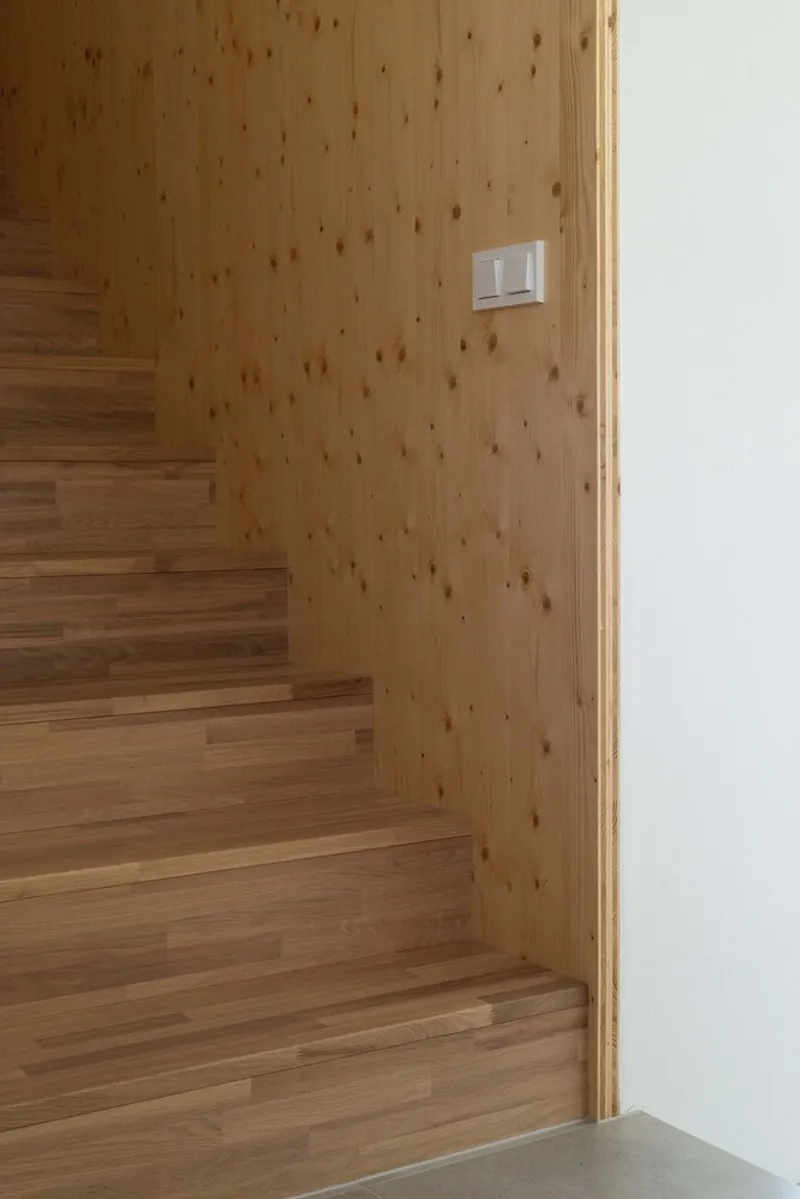
From a construction standpoint, the extension is built using a brick wall system on foundation passes, topped with a monolithic reinforced concrete ceiling slab. The roof structure is timber, incorporating over-rafter insulation to enhance thermal performance. Stairs are cast in monolithic concrete, reinforcing the building’s structural clarity. The exterior of the new volume is clad in spruce wood with a protective color coating, complemented by wooden windows that reinforce the natural material palette.
Sustainability plays an important role in the project’s technical strategy. The house utilizes captured rainwater for internal flushing, reducing water consumption, while heating is provided by an air-to-water heat pump, supporting energy-efficient operation. In the original part of the house, the existing brick masonry structure is preserved, externally insulated to meet contemporary performance standards. The ceiling beam structure and original roof construction are locally reinforced, ensuring longevity while minimizing unnecessary demolition.
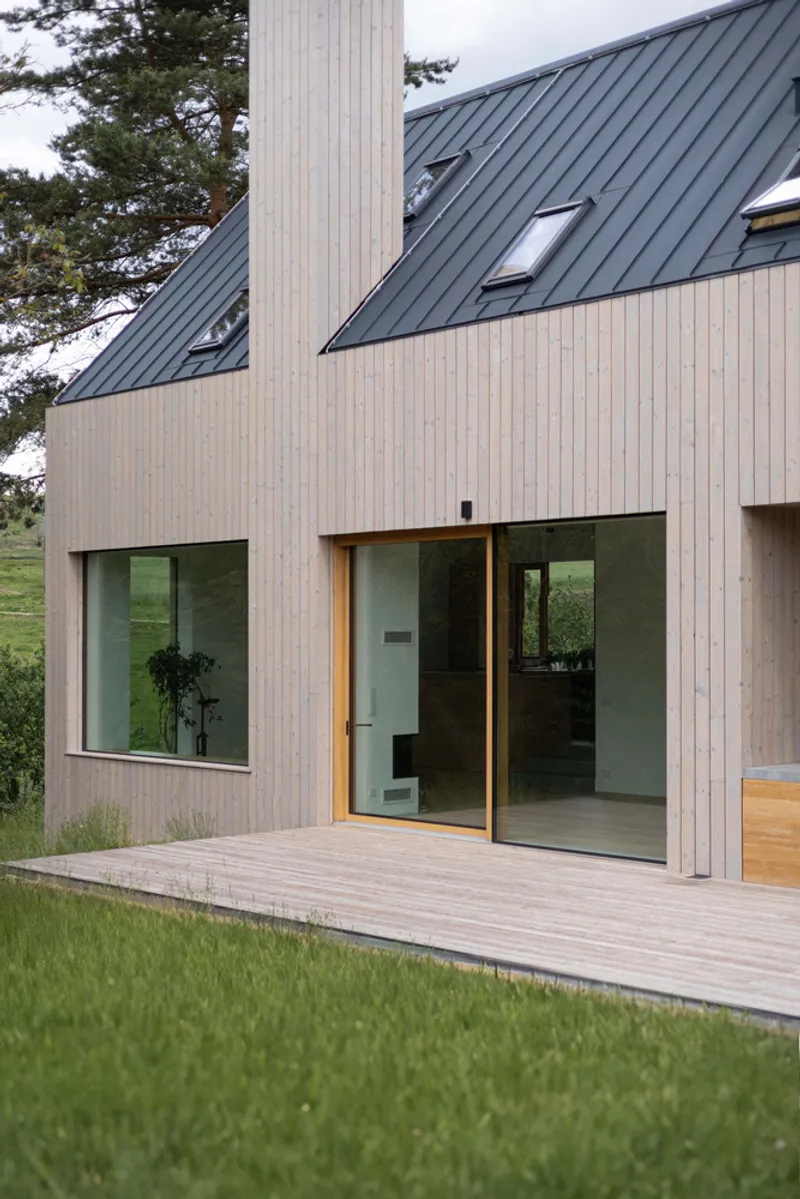
Both the old and new volumes are unified by a consistent light corrugated metal roof covering, reinforcing visual cohesion across the transformed house. The original façade is finished with fine-grained plaster, contrasting subtly with the timber cladding of the extension and emphasizing the layered architectural approach.

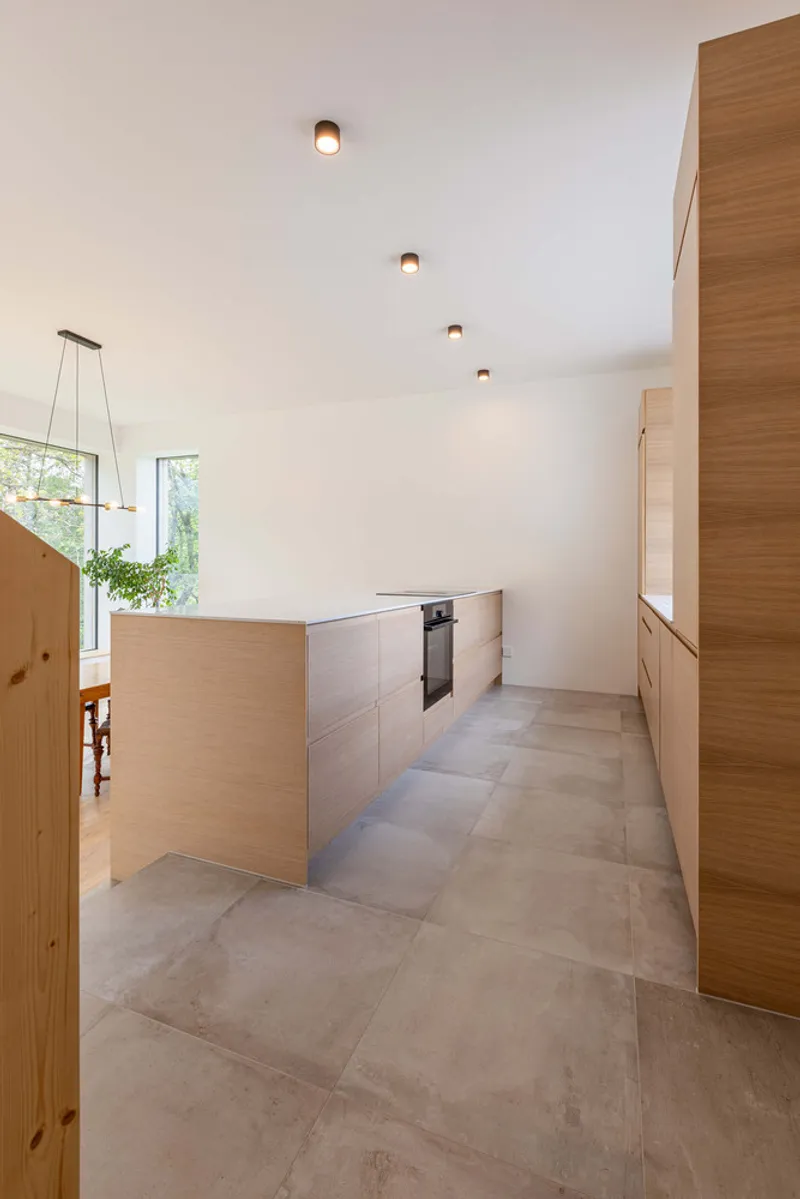
Family House Dehtáry stands as a refined example of contemporary residential renovation, demonstrating how thoughtful architectural interventions can support multi-generational living, improve environmental performance, and maintain a strong connection to rural context. Through clarity of form, material honesty, and spatial generosity, the project successfully bridges tradition and modern living.
All photographs are works of
Pavla Frauenterková




Popular Articles
Popular articles from the community


Riyadh For All: Intergenerational Urban Design for Active Aging in Rabat
Riyadh For All reimagines urban design in Rabat with intergenerational co-living, adaptive courtyards, and Moroccan cultural exchange today.

The Ocean Hive: Sustainable Architecture for a Self-Sufficient Civilization at Sea
The Ocean Hive imagines sustainable architecture at sea, where modular habitats, algae, wave power and ocean waste sustain a growing colony.

Hill & Cross Opera: Sculptural Opera House Architecture Shaped by Tallinn’s Landscape and Identity
Hill & Cross Opera reimagines opera house architecture in Tallinn through its sculptural hill, civic plaza, glass wave and a luminous cross.

Co-Life: Senior Housing Design That Reconnects Older Adults With the City
Co-Life reimagines senior housing design through healing gardens, shared streets, workshops, and a sustainable community across generations.

Similar Reads
You might also enjoy these articles


Hodi-Mandai Geram
Project Function: Preservation and revitalization of the Intangible heritage and socio-spatial identity of the Hodi by Housing, Cultural Memory Center, Sacred Grove, landscape, local tourism economy


Olio Towers: A Mid-Rise for Performers That Fuses Housing, Rehearsal, and Stage
Located blocks from Houston's Theater District, this modular tower stacks living units around a central performance atrium.

Oasis: Modular Green Housing Carved into Dhaka's Urban Fabric
A shortlisted Plugin Housing entry reclaims unauthorized settlements in Dhaka with stepped concrete volumes, green roofs, and ventilation-driven design.

Black Hole: A Floating Megastructure for the Post-Physical Era
Emiliano Mazzarotto envisions a spherical, self-scaling arena where e-sports, digital hotels, and holographic stadiums replace traditional public space.


Explore Archip Prague Competitions
Discover active competitions in this discipline



Challenge to reimagine the Iron Throne


Photograph architecture without architects


Illustrate the lost glory of Angkor Wat - Render Challenge


Design challenge to reuse E-waste
Comments (0)
Please login or sign up to add comments
No comments yet. Be the first to comment!