
FLY HIGH
Creating relationship between birds and humans
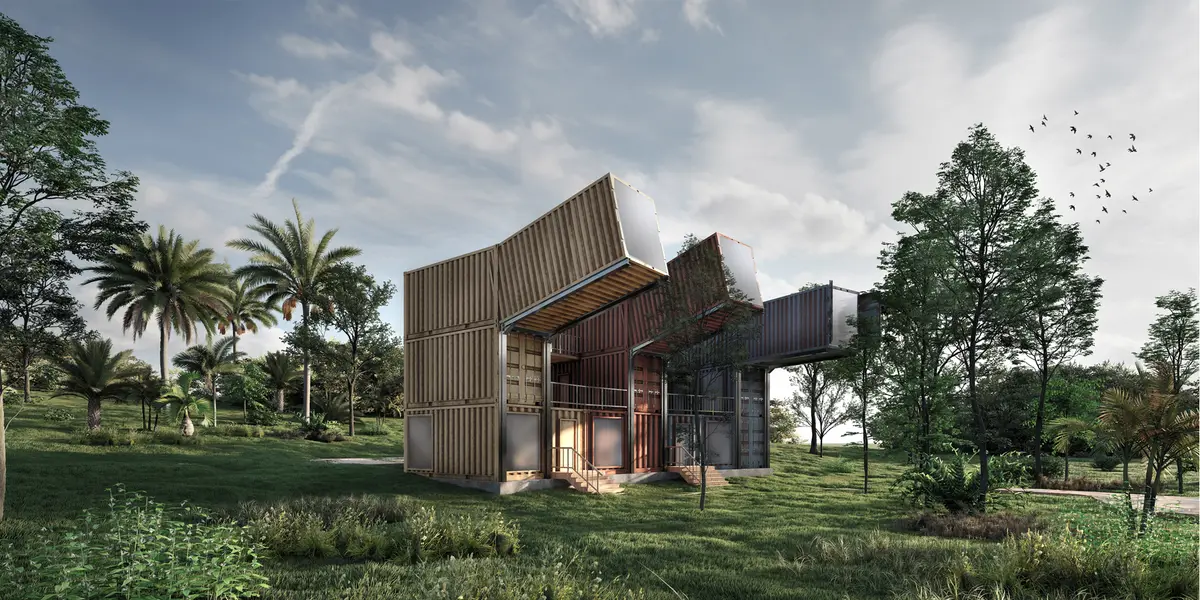
The aim of the project was to design an observatory which would bring attention to the sources of various threats to birds that humans have to face in order to protect them. The goal was to bring up an idea that would blend into India's culture and natural environment while using sustainable methods.
The main danger for the birds in the coastal areas of Alibaug are interventions into their natural habitat. This area is a popular recreational destination for citizens of Mumbai City, which results in the ongoing devastation of the environment. In addition, the coastline is not under any protection leaving the local birds at the tourist’s mercy. Due to these factors it is necessary to raise awareness about the issue with the natural biodiversity among the local inhabitants and tourists. The project of a sustainable observatory with a visitor’s center was designed to be the answer for that.
Creation of the building that would blend into its surroundings and local landscape was one of the main challenges that appeared during creating the idea of the project. Vivid colors are characteristic of Indian culture. They are used not only for decorations but also for religious, celebration and even political purposes. After analyzing the local area it is clear that bright colors are common among Alibaug coastlines too – it can be seen in religious places, houses or local development. Designed building may also benefit from the use of such colors, attracting the tourist’s attention and, as a result, increasing the awareness for the ecological problem. The idea of bringing the vibrant colors into the composition was connected with a carefully chosen construction method.
Recently, container architecture is growing in popularity thanks to its pro-ecologic principles. The foundation of this approach is the recycling of existing containers, used widely in maritime transport. There are countless containers at ports around the world only waiting for their next shipment, which often never comes. It’s not profitable for their owners to request for empty containers to return, so they simply use new one, abandoning former ones at their destination. In addition to the ecological value, reusing of such containers as buildings is also cheaper, faster and easier to assemble them in even unusual places. Moreover, if necessary, such containers can be recycled again, which further extends their service life. Possible disadvantages of this solution, such as thermal conductivity of steel, can be mitigated with proper insulation for the target environment. The container approach is a great alternative for conventional constructions and a sign of our times - representing one of the solutions for current ecological problems that the whole planet is facing.
The vision was to create a form suitable for observation of nature, based on a modular structure. The main principle of the project was to adjust the building to the landscape by aligning it to the contour lines with regard to the existing trees. The aim of architectural design was to create a variety of spaces, blending interior and exterior and allowing for undisturbed observation of various species of birds. In search of an ideal form meeting said requirements, the three viewing decks connected by terraces were created. Thanks to them the visitors can participate in the daily life of birds, viewing them discreetly from the tranquility of the observatory.
The foundation of the building is the entrance area, reception, exhibition area, toilets and staff room. This level is intended for the awareness and learning spaces, in which the informational boards about the sources of threat to different bird species would be placed. Such boards could be set up at higher levels to accompany the visitor. From this part of the building, tourists can enter the outdoor recreation area, designed as another form of observation among the trees. The first floor level connects the exhibition area with a terrace, giving a panoramic view over the whole place. The second floor level focuses mainly on views from specifically oriented containers. The blue one is positioned horizontally to fit between the trees, whereas red and yellow containers were slightly rotated to expand the view onto the sky and the treetops. The final form is completed by the container's frame, creating a space for terraces and stairs. Construction was made of standard 6-meter containers supported on I-beams and columns. The empty spaces between the containers are filled with natural materials such as wood.
The project was designed with sustainability and responsibility in mind. The idea was aimed at reducing the resource consumption and imitation of the carbon footprint. The main purpose of the building is to try to create a bond between humans and birds. It would be enough for people to learn to admire flying creatures, love them and ultimately focus on preserving their beauty along the coast. The title of the project can be understood in two ways. It is supposed to encourage people to be confident and to have aspirations to change their surroundings for the better, and directly speaking, it represents birds at their best moments.

Popular Articles
Popular articles from the community


Singing Woman: An Opera House That Performs Before the Curtain Rises
Ovidiu Cristian Pavel's conceptual opera house translates Estonia's choral identity into a sculpted waterfront landmark facing the Baltic Sea.

Opera by the Sea Estonia: Three Shells Dissolving Architecture into Tallinn's Coastline
A winning opera house proposal replaces monumental form with interconnected shells that blur the boundary between building, park and Baltic Sea.

Cloaked Colonization: A Mobile Underwater Habitat That Moves Like a Fish
Micah Abaya's shortlisted EHC Pacific entry reimagines ocean settlement as a dispersed network of self-sustaining architectural organisms.

Tsunami Convergenics: Turning Catastrophic Ocean Forces into Underwater Housing Infrastructure
A speculative underwater settlement off the coast of Onagawa, Japan, treats tsunamis and typhoons as energy sources rather than threats.

Similar Reads
You might also enjoy these articles
The Rhythm of Seasons
A Farmers' Market Connecting Nature and the City

More Than a Building-Designing a Living System
More Than a Building-Designing a Living System
Base Beyond
DESERT COMPOUND ARID: TOURISM OF ABSENCE AND ABUNDANCE

Comments (0)
Please login or sign up to add comments
No comments yet. Be the first to comment!