

Forschungsbau – ECAP Laboratory Building
Sustainable research facility integrating labs, offices, and meeting zones with minimalist materials and spatial clarity for astroparticle physics innovation.


A New Benchmark for Astroparticle Research Facilities
The Forschungsbau – ECAP Laboratory Building, located at the Friedrich-Alexander-Universität Erlangen-Nürnberg, is a pioneering research facility designed to advance global efforts in high-energy astroparticle physics. Conceived by ARGE dichter + Glass Kramer Löbbert, the project emerged from a winning competition entry in 2017 and was completed in 2022.
Dedicated to the Erlangen Centre for Astroparticle Physics (ECAP), this laboratory acts as a key node in international collaborations such as CTA/HESS, IceCube, and KM3Net. With a built area of 8,630 square meters, the building supports experimental research through cutting-edge labs, collaborative workspaces, and dynamic office environments.

Architecture Rooted in Functionality and Collaboration
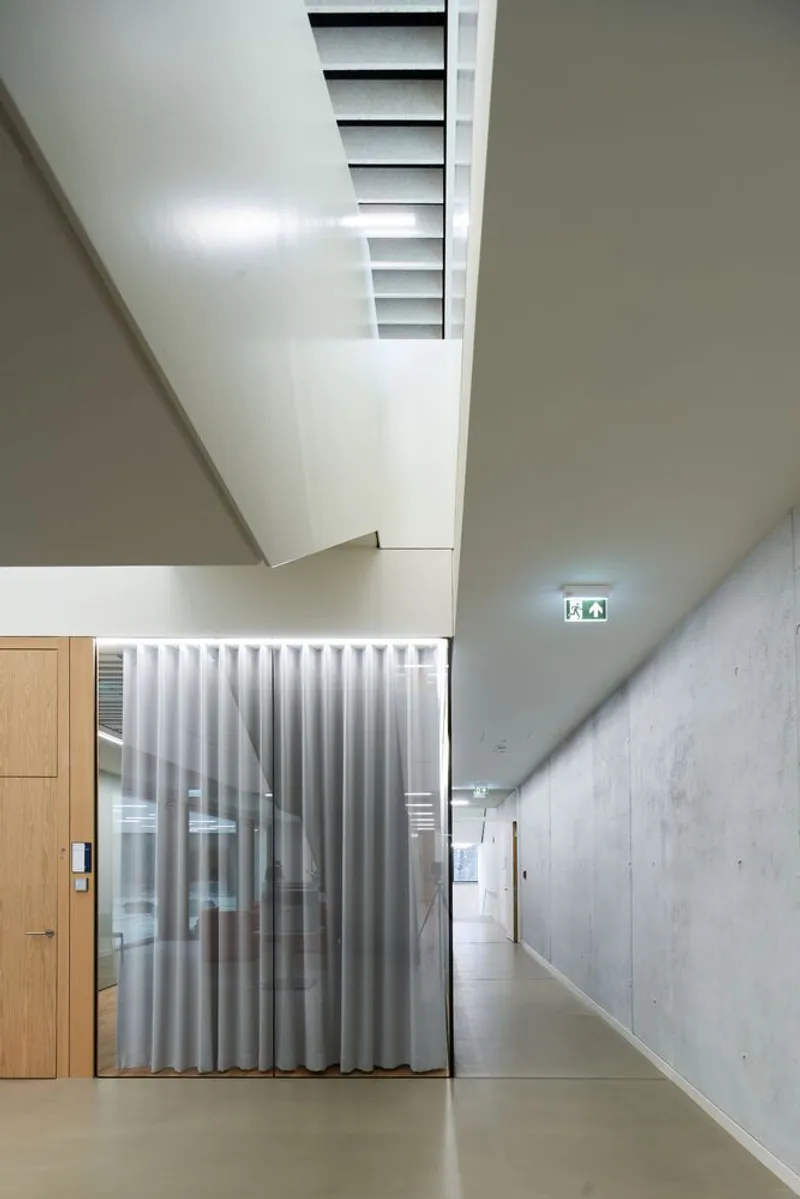
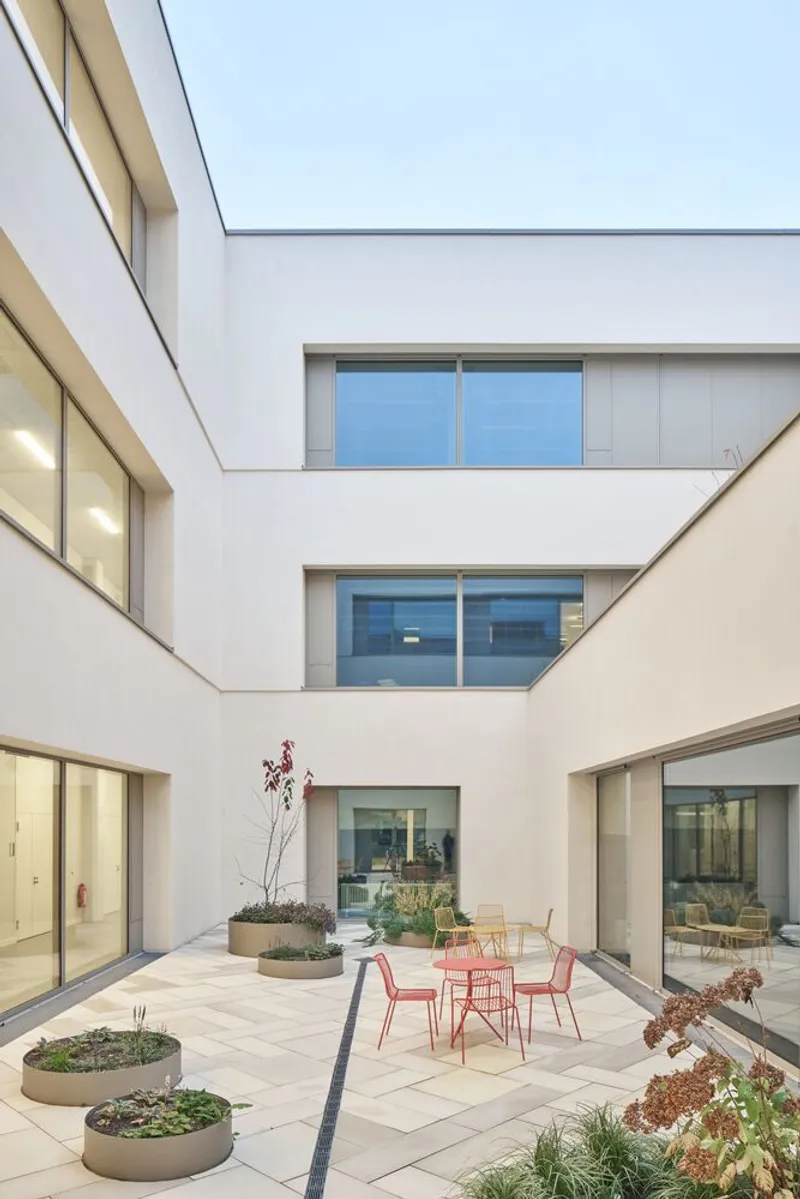
At its core, the building promotes scientific innovation through spatial flexibility. A central circulation zone forms the backbone of the design—featuring open meeting areas, informal workspaces, and coffee points to encourage interdisciplinary dialogue. Framed by two tiered courtyards, the triple-height staircase stitches together all levels, creating visual continuity and orientation throughout.
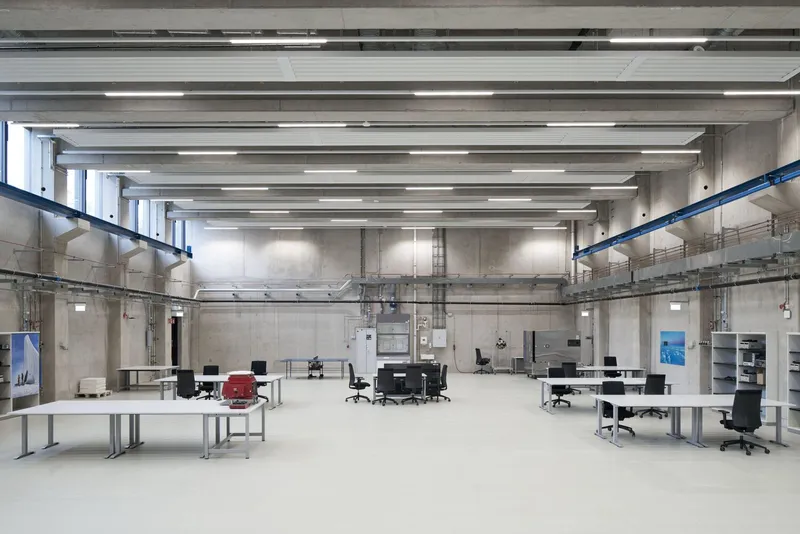
The layout blends laboratories, workshops, and meeting zones to foster a collaborative research environment. The foyer and main entry extend this ethos outward, gesturing toward the newly envisioned campus plaza, shared by future research buildings at the southern end of the university.
Material Expression and Sustainable Form
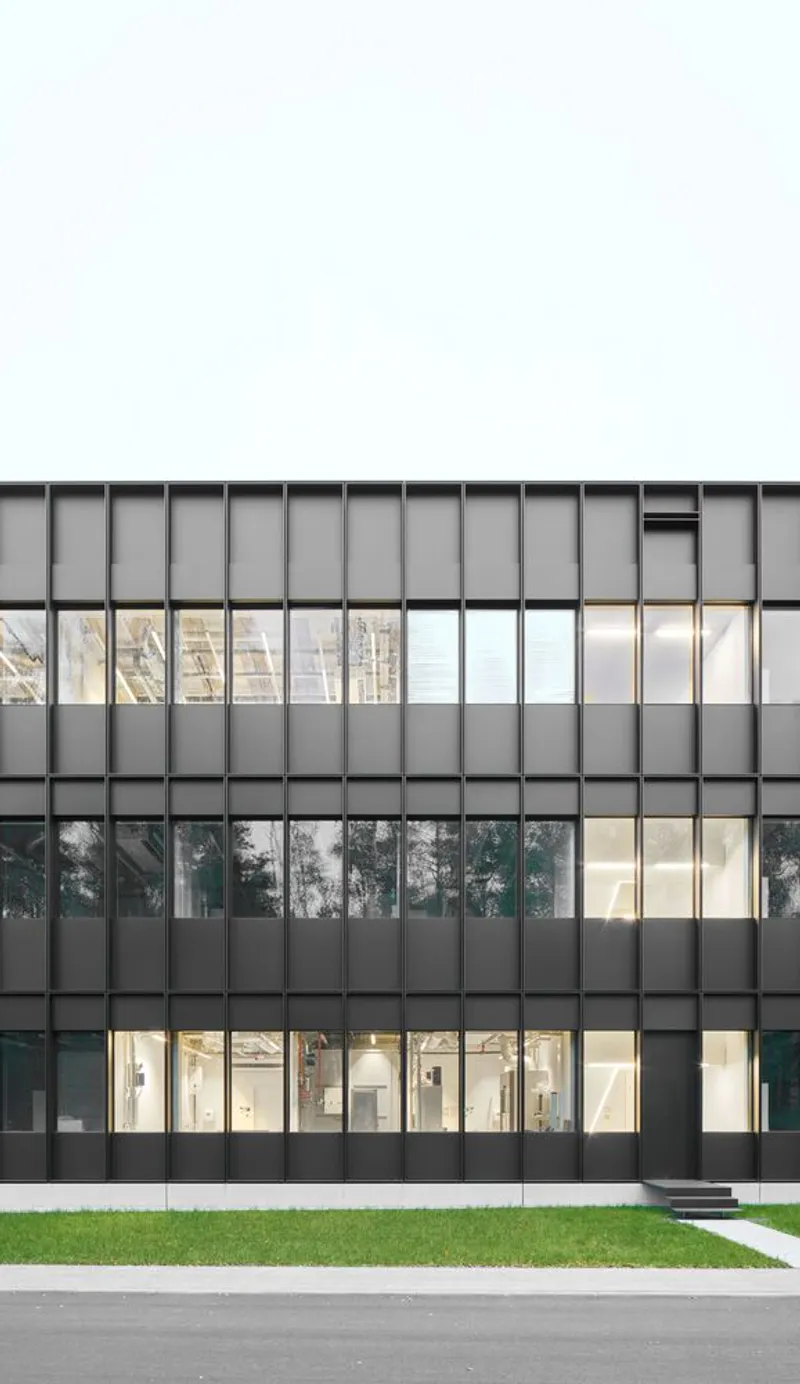
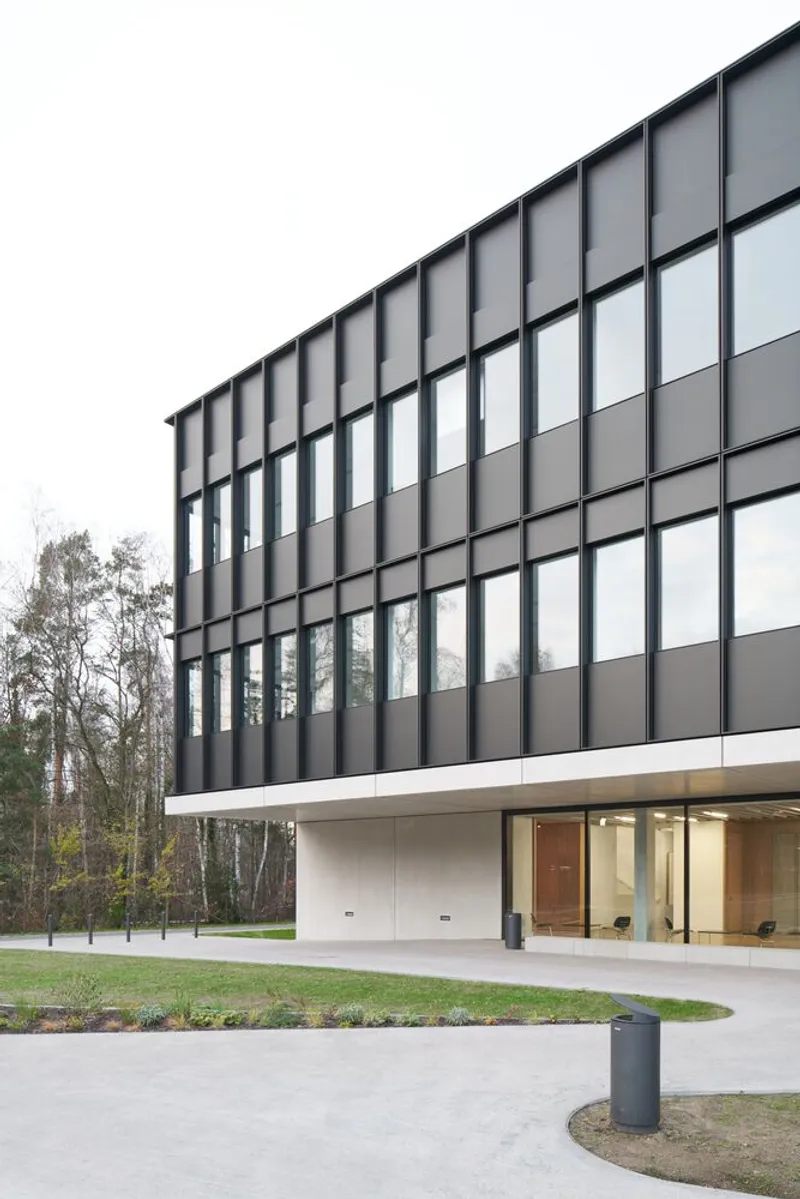
The architectural language of the ECAP Laboratory juxtaposes dark aluminum façade panels with a white concrete plinth that folds upward to form a sculptural entrance. This material duality creates a stark yet refined exterior identity, symbolizing both precision and openness.
Inside, natural light fills the workspaces, while mineral surfaces paired with wooden accents establish a calm, airy atmosphere conducive to deep focus. This clarity in materials extends the building’s identity as a place of scientific clarity and environmental integration.

Energy Efficiency Through Low-Tech Innovation
The design adopts a low-tech sustainability strategy to ensure long-term efficiency and adaptability. Its compact volume enhances the building’s thermal performance, reducing energy demands for heating and cooling. Combined with optimized daylighting and passive ventilation strategies, the building stands as a model for sustainable laboratory architecture in academic research environments.
The ECAP Laboratory Building is not just a scientific facility—it’s a statement of architectural clarity, sustainable innovation, and spatial intelligence. By integrating flexible lab typologies with inviting communal zones, it nurtures both individual research and collaborative discovery, embodying the mission of the university and the future of research architecture.
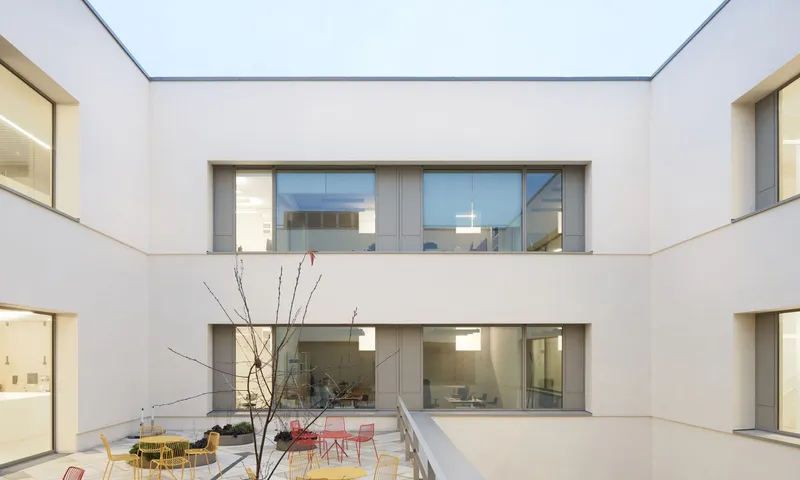


All Photographs are works of Naumann | Friedel Architekturfotografen



Popular Articles
Popular articles from the community


Conexión: Biophilic Design Reimagines High-Rise Living in Hong Kong
Conexión reimagines high-rise living in Hong Kong through biophilic design, green facades, shared spaces, daylight, water and nature within.

AL-JANNAH: Sustainable Architecture and Permaculture for Afghan Widows
AL-JANNAH uses sustainable architecture and permaculture to create resilient oasis of housing, learning, work and renewal for Afghan widows.
EW PARK: Sustainable Architecture Reimagines the Future of Urban Parking
EW PARK reimagines city parking as a modular wooden tower combining automation, solar energy, electric mobility, and adaptable urban design.

Riyadh For All: Intergenerational Urban Design for Active Aging in Rabat
Riyadh For All reimagines urban design in Rabat with intergenerational co-living, adaptive courtyards, and Moroccan cultural exchange today.

Similar Reads
You might also enjoy these articles


Hodi-Mandai Geram
Project Function: Preservation and revitalization of the Intangible heritage and socio-spatial identity of the Hodi by Housing, Cultural Memory Center, Sacred Grove, landscape, local tourism economy


Olio Towers: A Mid-Rise for Performers That Fuses Housing, Rehearsal, and Stage
Located blocks from Houston's Theater District, this modular tower stacks living units around a central performance atrium.

Oasis: Modular Green Housing Carved into Dhaka's Urban Fabric
A shortlisted Plugin Housing entry reclaims unauthorized settlements in Dhaka with stepped concrete volumes, green roofs, and ventilation-driven design.

Black Hole: A Floating Megastructure for the Post-Physical Era
Emiliano Mazzarotto envisions a spherical, self-scaling arena where e-sports, digital hotels, and holographic stadiums replace traditional public space.

Explore Academic Building Competitions
Discover active competitions in this discipline



Challenge to reimagine the Iron Throne


Photograph architecture without architects


Illustrate the lost glory of Angkor Wat - Render Challenge


Design challenge to reuse E-waste
Comments (0)
Please login or sign up to add comments
No comments yet. Be the first to comment!